
Plasma cell Disorders From MGUS to multiple myeloma

- Slides: 17
Plasma cell Disorders From MGUS to multiple myeloma Vi Dao, MD, FRCPC vdao@cancercare. mb. ca
Presenter Disclosure • Faculty: Vi Dao • Relationships with commercial interests: none
Mitigating Potential Bias • Not Applicable
Learning Objectives 1. Distinguish MGUS from multiple myeloma 2. Understand the overall prognosis and management of patients with multiple myeloma
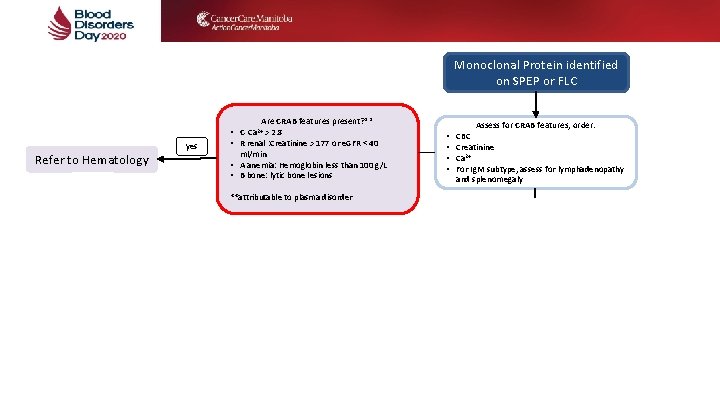
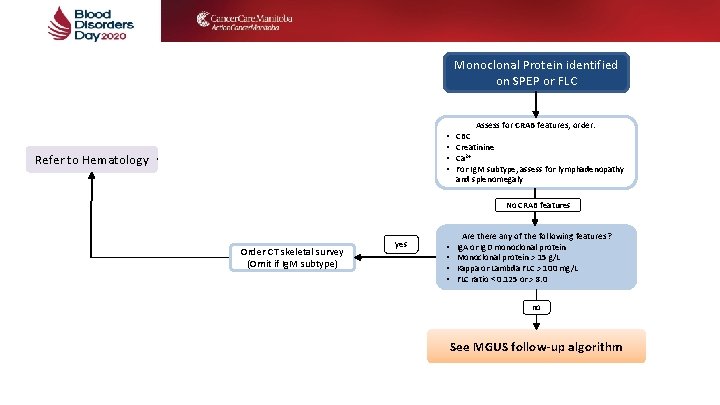
Monoclonal Protein identified on SPEP or FLC Are CRAB features present? ** Refer to Hematology yes • C Ca 2+ > 2. 8 • R renal : Creatinine > 177 or e. GFR < 40 • • ml/min • A anemia: Hemoglobin less than 100 g/L • B bone: lytic bone lesions **attributable to plasma disorder Order CT skeletal survey (Omit if Ig. M subtype) Assess for CRAB features, order: CBC Creatinine Ca 2+ For Ig. M subtype, assess for lymphadenopathy and splenomegaly No CRAB features yes • • Are there any of the following features? Ig. A or Ig. D monoclonal protein Monoclonal protein > 15 g/L Kappa or Lambda FLC > 100 mg/L FLC ratio < 0. 125 or > 8. 0 no See MGUS follow-up algorithm
Monoclonal Protein identified on SPEP or FLC Are CRAB features present? ** Refer to Hematology yes • C Ca 2+ > 2. 8 • R renal : Creatinine > 177 or e. GFR < 40 • • ml/min • A anemia: Hemoglobin less than 100 g/L • B bone: lytic bone lesions **attributable to plasma disorder Order CT skeletal survey (Omit if Ig. M subtype) Assess for CRAB features, order: CBC Creatinine Ca 2+ For Ig. M subtype, assess for lymphadenopathy and splenomegaly No CRAB features yes • • Are there any of the following features? Ig. A or Ig. D monoclonal protein Monoclonal protein > 15 g/L Kappa or Lambda FLC > 100 mg/L FLC ratio < 0. 125 or > 8. 0 no See MGUS follow-up algorithm
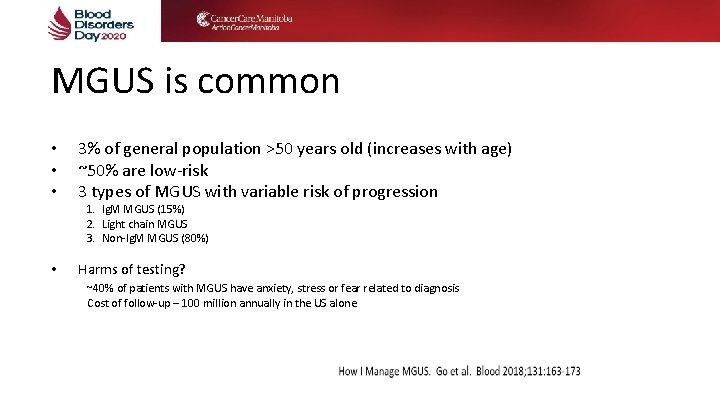
MGUS is common • • • 3% of general population >50 years old (increases with age) ~50% are low-risk 3 types of MGUS with variable risk of progression 1. Ig. M MGUS (15%) 2. Light chain MGUS 3. Non-Ig. M MGUS (80%) • Harms of testing? ~40% of patients with MGUS have anxiety, stress or fear related to diagnosis Cost of follow-up – 100 million annually in the US alone
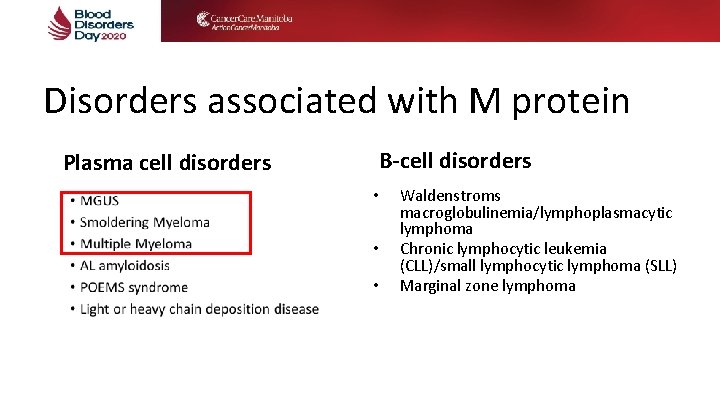
Disorders associated with M protein Plasma cell disorders B-cell disorders • • • Waldenstroms macroglobulinemia/lymphoplasmacytic lymphoma Chronic lymphocytic leukemia (CLL)/small lymphocytic lymphoma (SLL) Marginal zone lymphoma
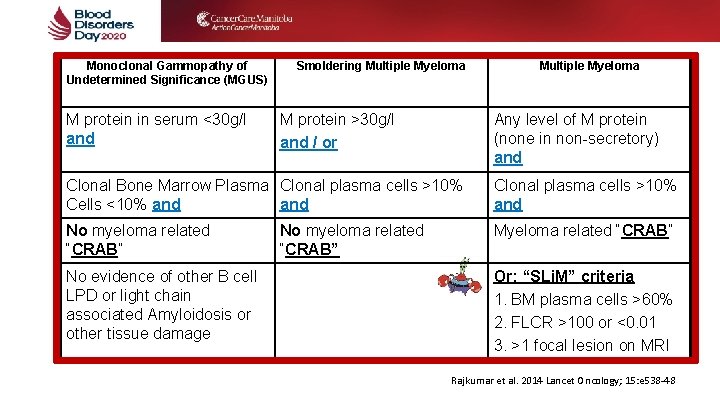
Monoclonal Gammopathy of Undetermined Significance (MGUS) M protein in serum <30 g/l and Smoldering Multiple Myeloma M protein >30 g/l and / or Multiple Myeloma Any level of M protein (none in non-secretory) and Clonal Bone Marrow Plasma Clonal plasma cells >10% Cells <10% and Clonal plasma cells >10% and No myeloma related “CRAB” Myeloma related “CRAB” No evidence of other B cell LPD or light chain associated Amyloidosis or other tissue damage No myeloma related “CRAB” Or: “SLi. M” criteria 1. BM plasma cells >60% 2. FLCR >100 or <0. 01 3. >1 focal lesion on MRI Rajkumar et al. 2014 Lancet Oncology; 15: e 538 -48
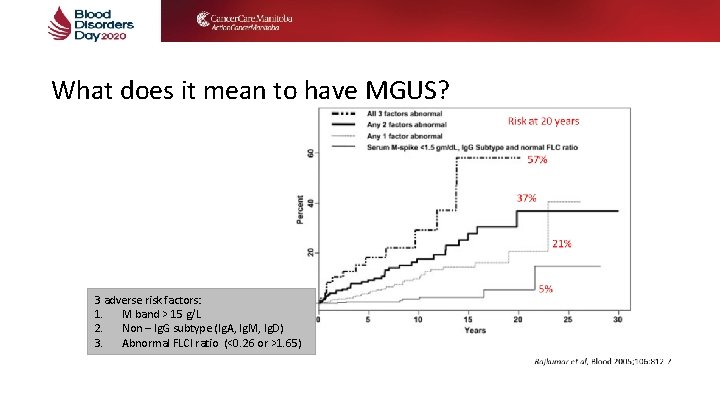
What does it mean to have MGUS? 3 adverse risk factors: 1. M band > 15 g/L 2. Non – Ig. G subtype (Ig. A, Ig. M, Ig. D) 3. Abnormal FLCI ratio (<0. 26 or >1. 65)
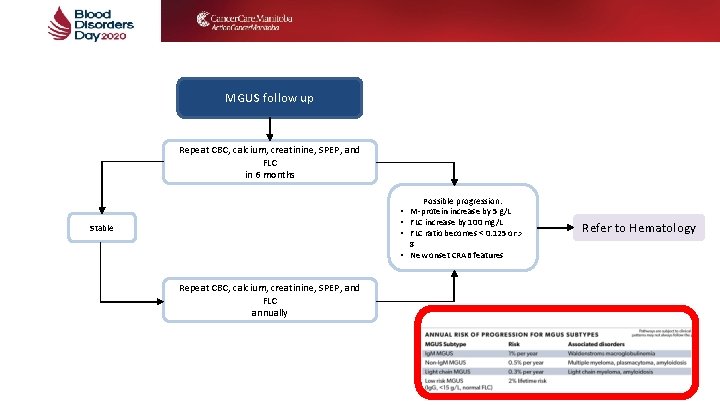
MGUS follow up Repeat CBC, calcium, creatinine, SPEP, and FLC in 6 months Possible progression: • M-protein increase by 5 g/L • FLC increase by 100 mg/L • FLC ratio becomes < 0. 125 or > Stable 8 • New onset CRAB features Repeat CBC, calcium, creatinine, SPEP, and FLC annually Refer to Hematology
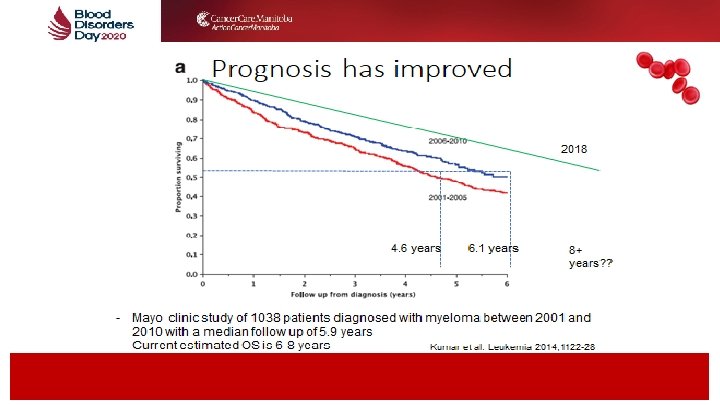
What is multiple myeloma? • 1% of all cancers and 15% of hematologic malignancies – ~2, 700 new cases in Canada in 2015 • (estimated 80 new cases per year in Manitoba) – Prevalence of ~7, 500 across Canada • Median age at diagnosis of 69 years • Incurable malignancy characterized by multiple relapse • Risk factors: first degree relative with MM, nuclear radiation exposure, occupational exposure to petroleum and pesticides
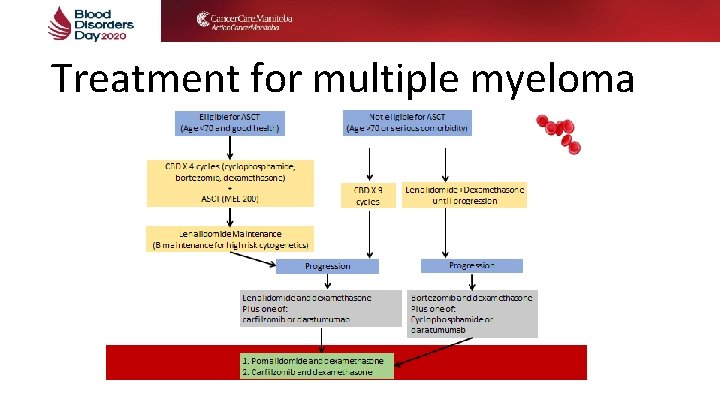
Treatment for multiple myeloma
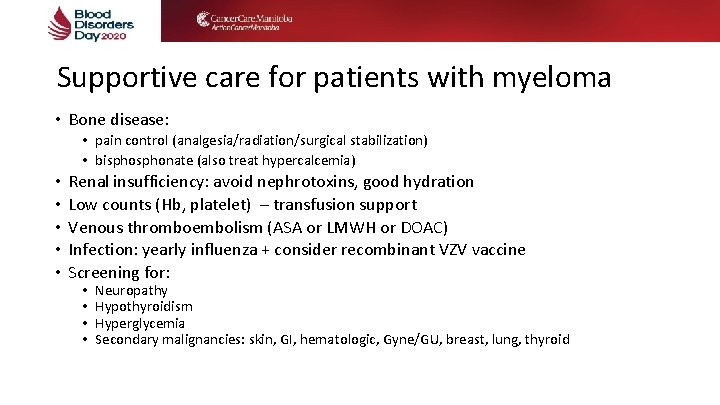
Supportive care for patients with myeloma • Bone disease: • pain control (analgesia/radiation/surgical stabilization) • bisphonate (also treat hypercalcemia) • • • Renal insufficiency: avoid nephrotoxins, good hydration Low counts (Hb, platelet) – transfusion support Venous thromboembolism (ASA or LMWH or DOAC) Infection: yearly influenza + consider recombinant VZV vaccine Screening for: • • Neuropathy Hypothyroidism Hyperglycemia Secondary malignancies: skin, GI, hematologic, Gyne/GU, breast, lung, thyroid
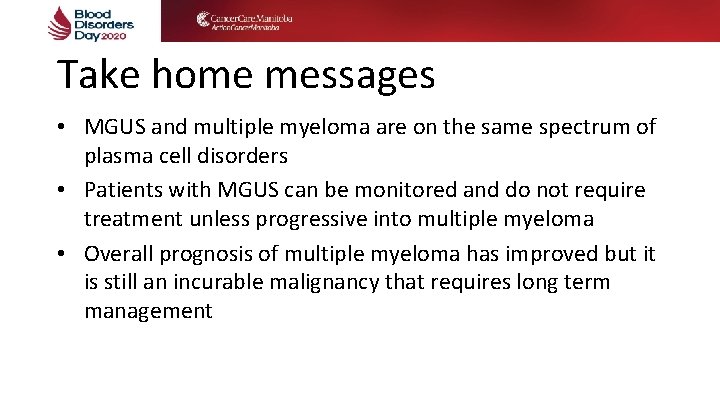
Take home messages • MGUS and multiple myeloma are on the same spectrum of plasma cell disorders • Patients with MGUS can be monitored and do not require treatment unless progressive into multiple myeloma • Overall prognosis of multiple myeloma has improved but it is still an incurable malignancy that requires long term management