
PLANTS What is a plant Humans depend on

- Slides: 18
PLANTS
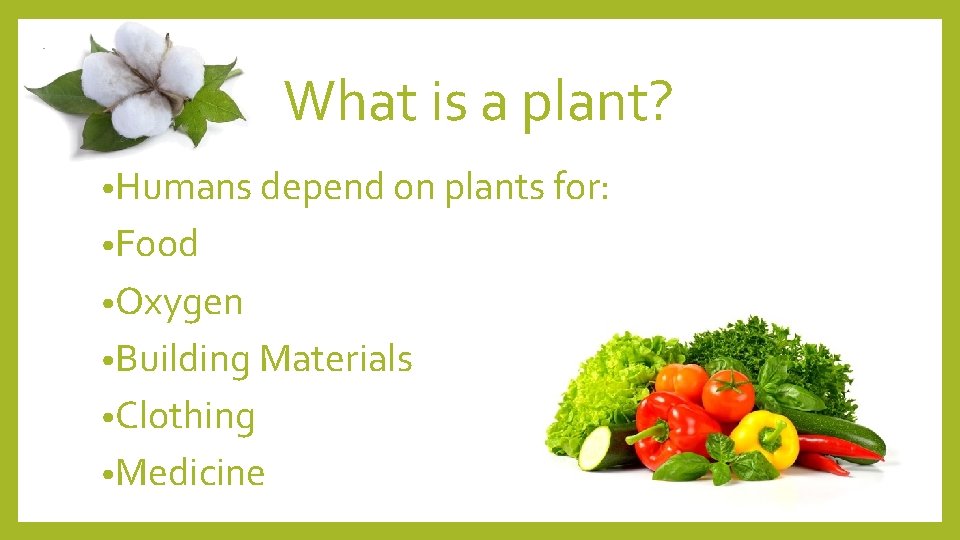
What is a plant? • Humans depend on plants for: • Food • Oxygen • Building Materials • Clothing • Medicine
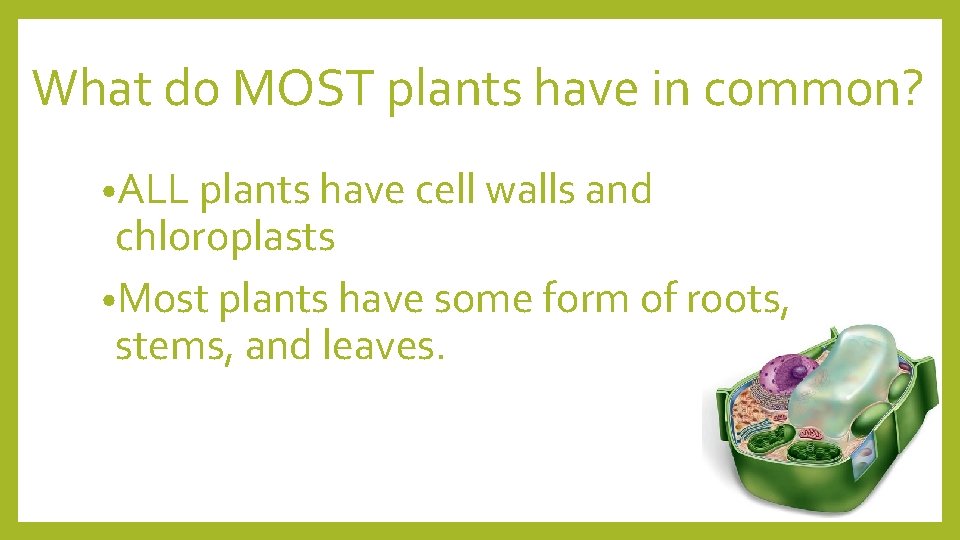
What do MOST plants have in common? • ALL plants have cell walls and chloroplasts • Most plants have some form of roots, stems, and leaves.
ROOTS • Structures designed to pull water and minerals from whatever material the plant sits on. • Provide support for plants in the form of an anchor in whatever the plant sits on.
RHIZOIDS • Some plants, like mosses and hornworts, have root-like structures called rhizoids. • Rhizoids – structures that anchor a plant without transport tissue to a surface.
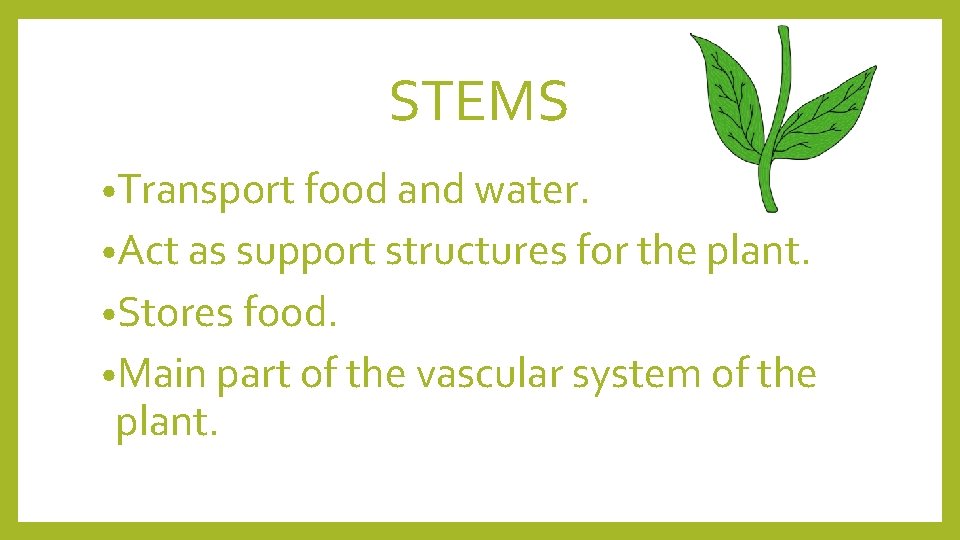
STEMS • Transport food and water. • Act as support structures for the plant. • Stores food. • Main part of the vascular system of the plant.
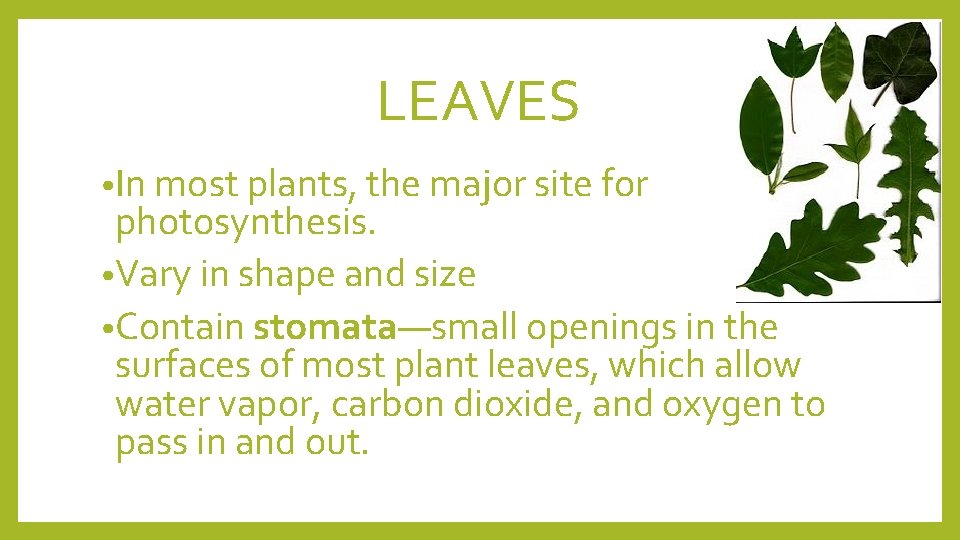
LEAVES • In most plants, the major site for photosynthesis. • Vary in shape and size • Contain stomata—small openings in the surfaces of most plant leaves, which allow water vapor, carbon dioxide, and oxygen to pass in and out.
NONVASCULAR PLANTS • These are plants that lack specialized tissues for transporting water and nutrients. • Includes mosses, hornworts, and liverworts.
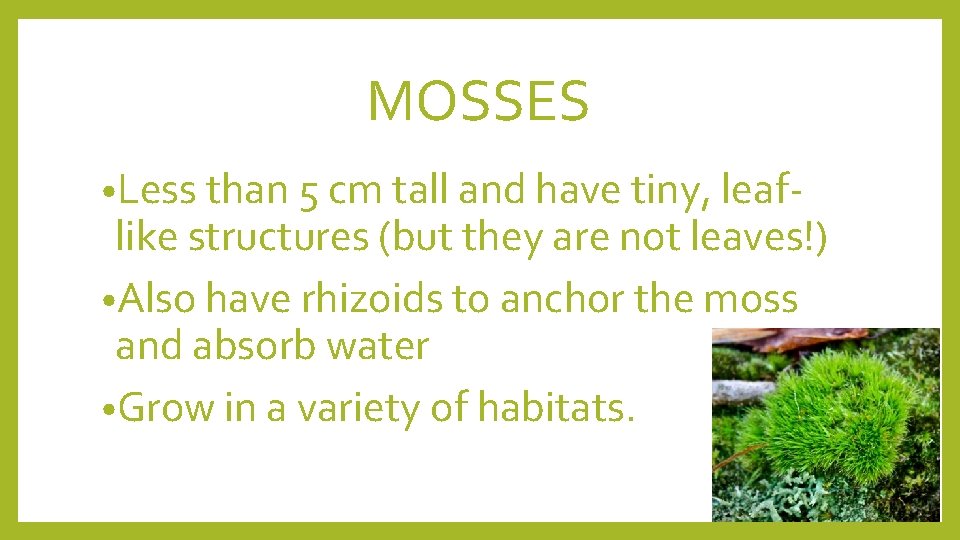
MOSSES • Less than 5 cm tall and have tiny, leaf- like structures (but they are not leaves!) • Also have rhizoids to anchor the moss and absorb water • Grow in a variety of habitats.
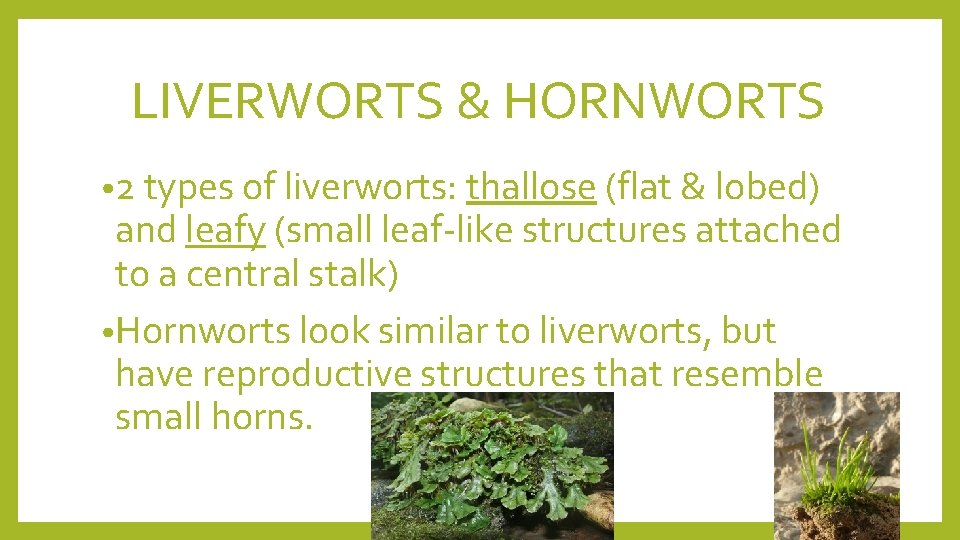
LIVERWORTS & HORNWORTS • 2 types of liverworts: thallose (flat & lobed) and leafy (small leaf-like structures attached to a central stalk) • Hornworts look similar to liverworts, but have reproductive structures that resemble small horns.
VASCULAR PLANTS • These plants have specialized tissues that transport water and nutrients throughout the plant. • Divided into 2 groups—those that produce seeds and those that do not.
VASCULAR SEEDLESS PLANTS Ferns, Horsetails, Club Mosses
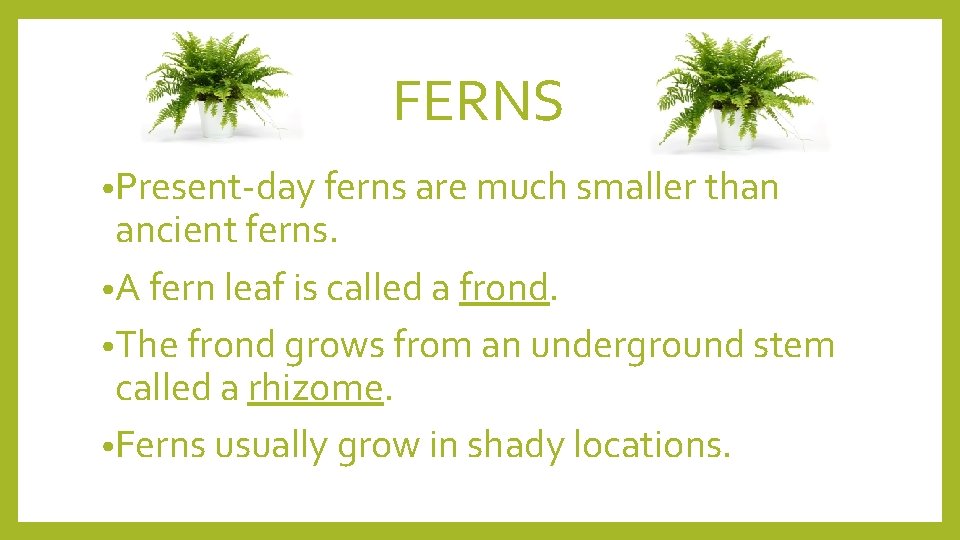
FERNS • Present-day ferns are much smaller than ancient ferns. • A fern leaf is called a frond. • The frond grows from an underground stem called a rhizome. • Ferns usually grow in shady locations.
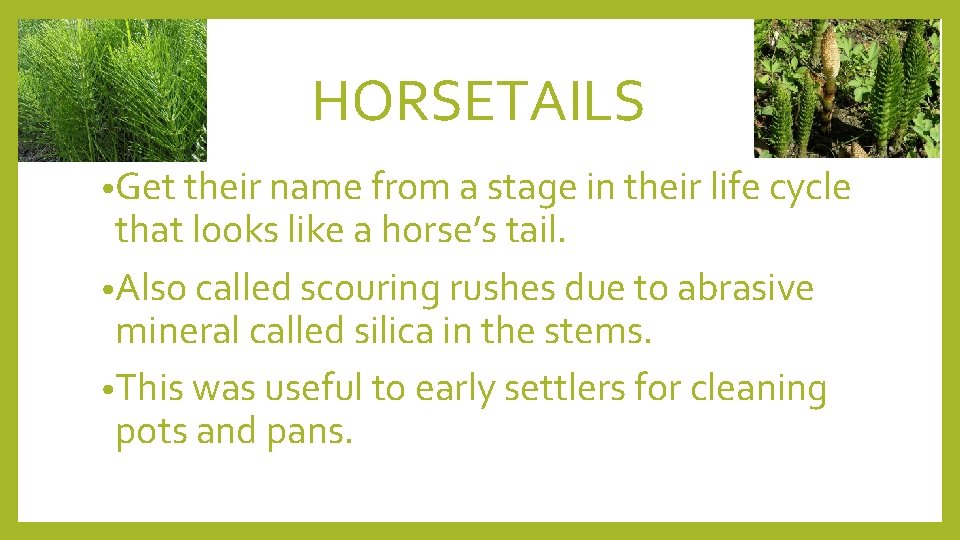
HORSETAILS • Get their name from a stage in their life cycle that looks like a horse’s tail. • Also called scouring rushes due to abrasive mineral called silica in the stems. • This was useful to early settlers for cleaning pots and pans.
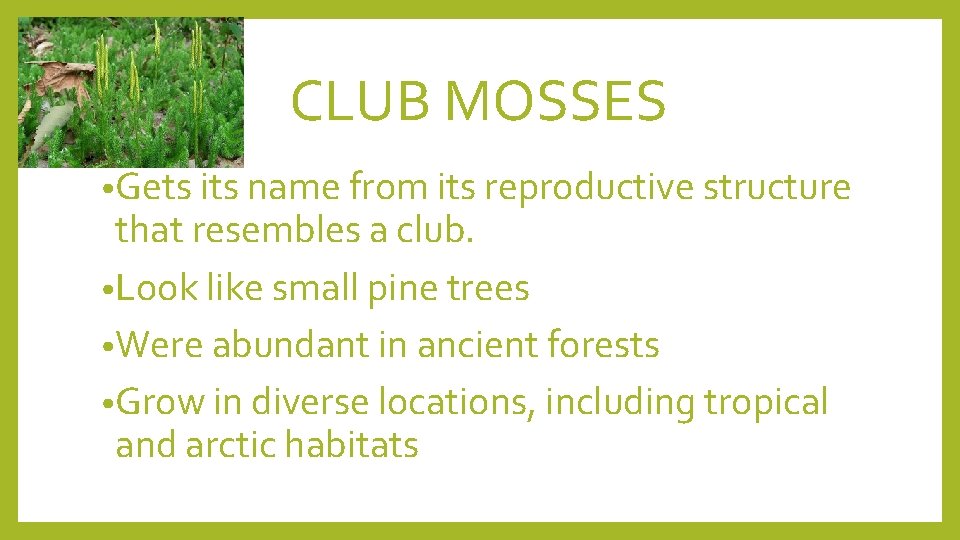
CLUB MOSSES • Gets its name from its reproductive structure that resembles a club. • Look like small pine trees • Were abundant in ancient forests • Grow in diverse locations, including tropical and arctic habitats
VASCULAR SEED PLANTS Nonflowering & Flowering
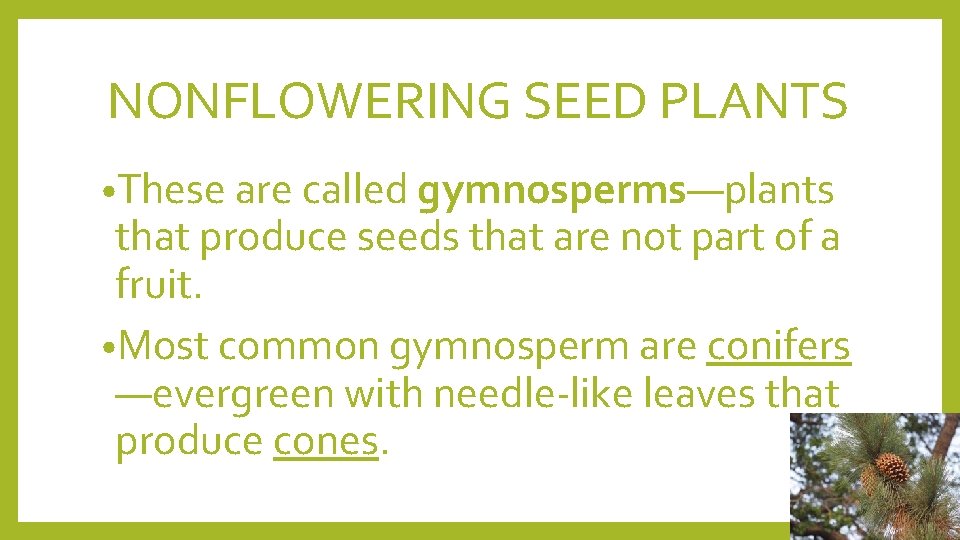
NONFLOWERING SEED PLANTS • These are called gymnosperms—plants that produce seeds that are not part of a fruit. • Most common gymnosperm are conifers —evergreen with needle-like leaves that produce cones.
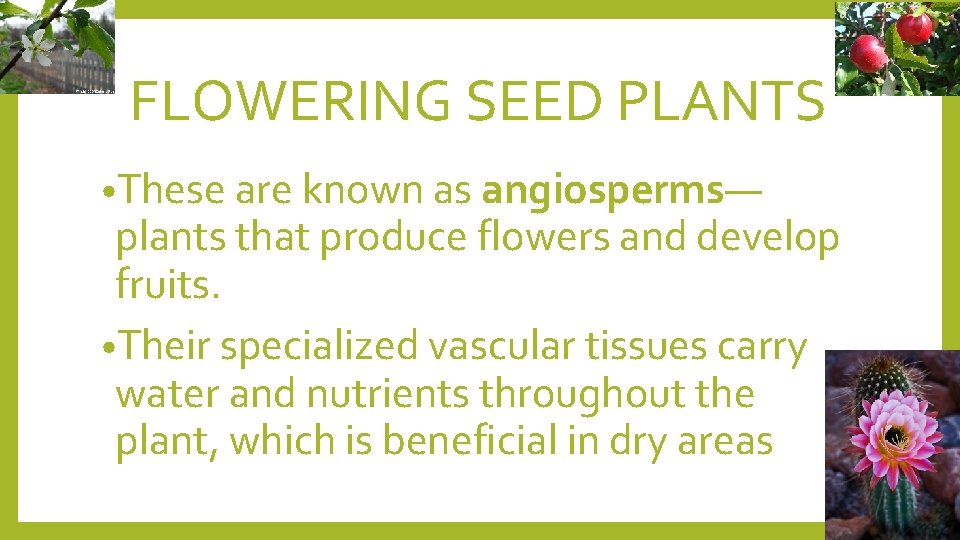
FLOWERING SEED PLANTS • These are known as angiosperms— plants that produce flowers and develop fruits. • Their specialized vascular tissues carry water and nutrients throughout the plant, which is beneficial in dry areas