
Plants WHAT ARE PLANTS Plants are multicellular and
- Slides: 37
Plants
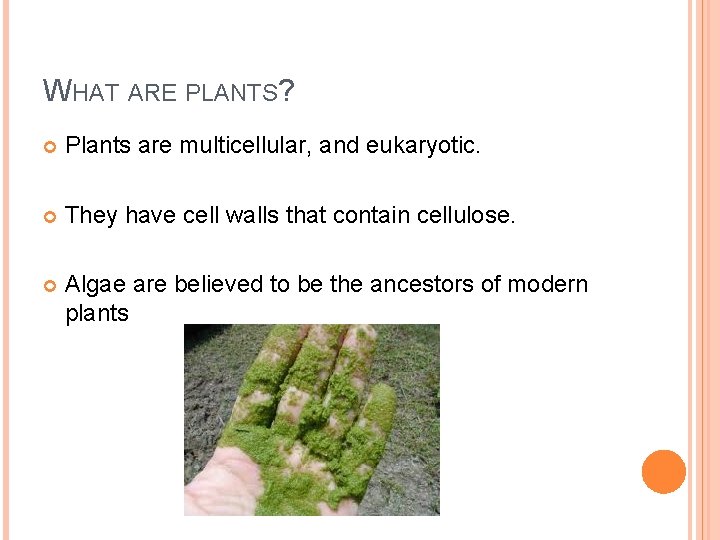
WHAT ARE PLANTS? Plants are multicellular, and eukaryotic. They have cell walls that contain cellulose. Algae are believed to be the ancestors of modern plants
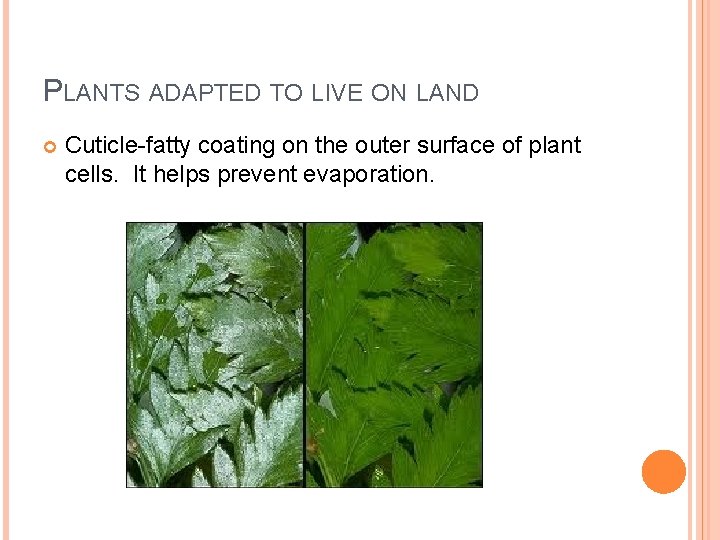
PLANTS ADAPTED TO LIVE ON LAND Cuticle-fatty coating on the outer surface of plant cells. It helps prevent evaporation.
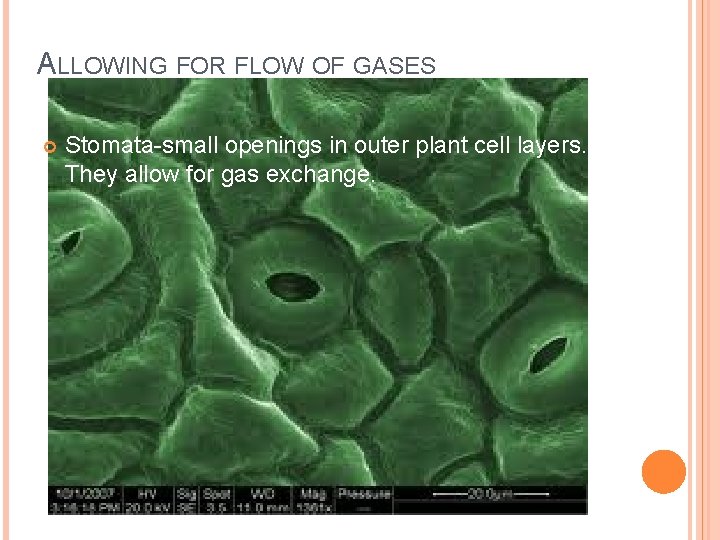
ALLOWING FOR FLOW OF GASES Stomata-small openings in outer plant cell layers. They allow for gas exchange.
VASCULAR PLANTS VS NON VASCULAR Some pants have vascular tissues to allow for quicker movement of nutrients, thus they are called VASCULAR PLANTS. NONVASCULAR PLANTS must rely of diffusion from cell to cell for nutrient movement. Vascular plants can grow larger because they can move nutrients farther faster, and they have more structural support
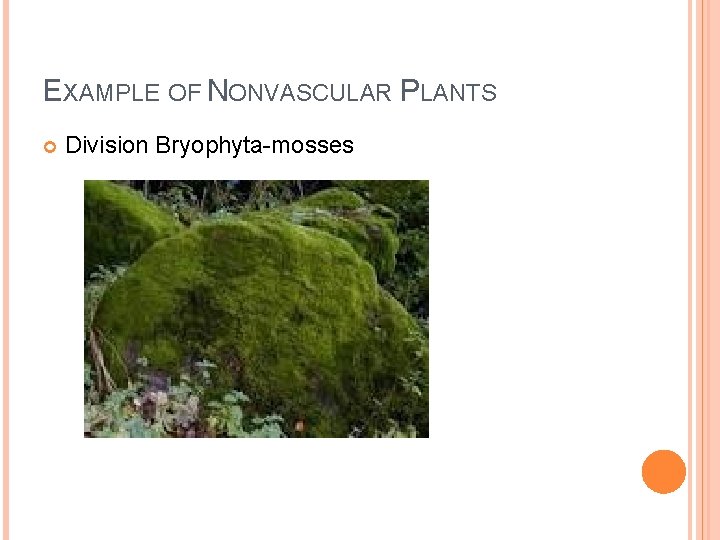
EXAMPLE OF NONVASCULAR PLANTS Division Bryophyta-mosses
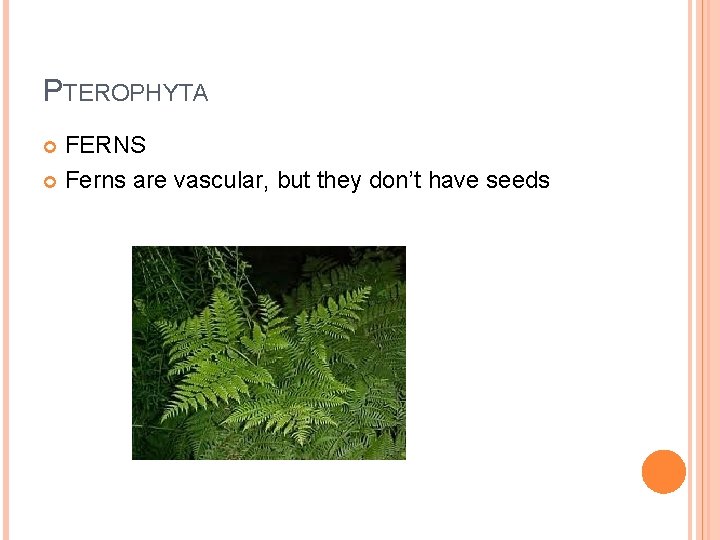
PTEROPHYTA FERNS Ferns are vascular, but they don’t have seeds
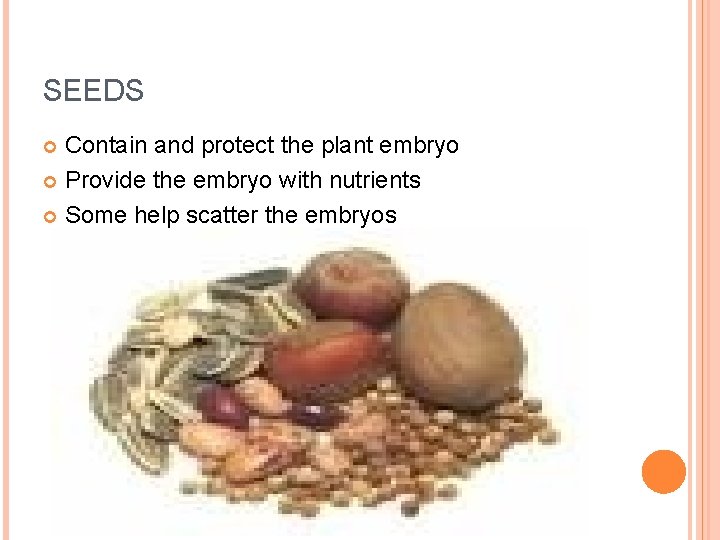
SEEDS Contain and protect the plant embryo Provide the embryo with nutrients Some help scatter the embryos
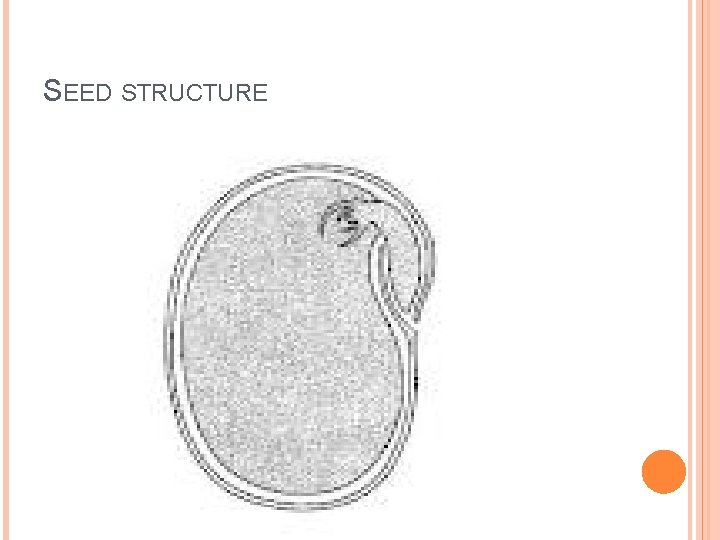
SEED STRUCTURE
SEED PARTS Embryo-developing sporophyte Seed coat- protects embryo Cotyledons-structures that store food for embryo
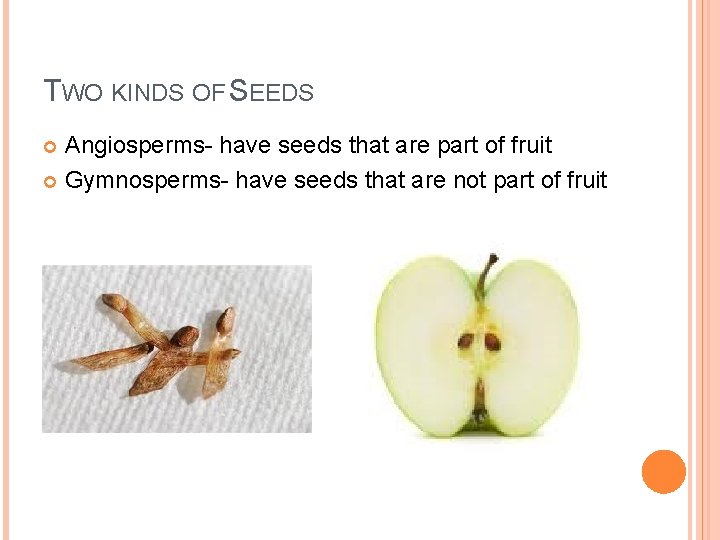
TWO KINDS OF SEEDS Angiosperms- have seeds that are part of fruit Gymnosperms- have seeds that are not part of fruit
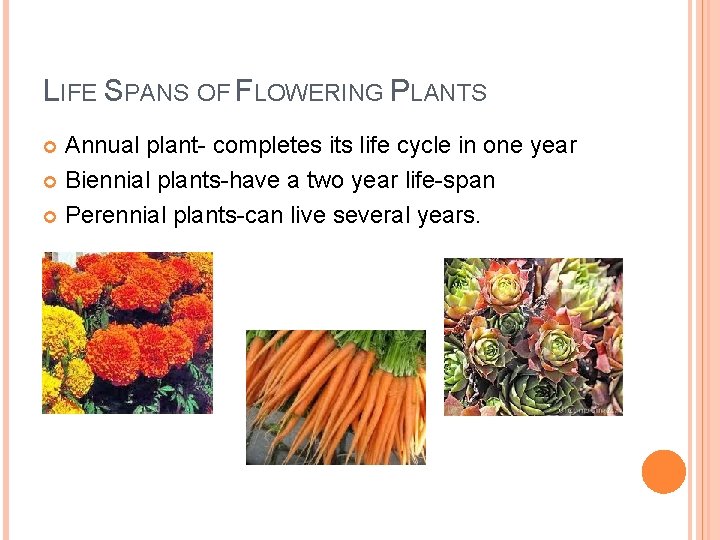
LIFE SPANS OF FLOWERING PLANTS Annual plant- completes its life cycle in one year Biennial plants-have a two year life-span Perennial plants-can live several years.
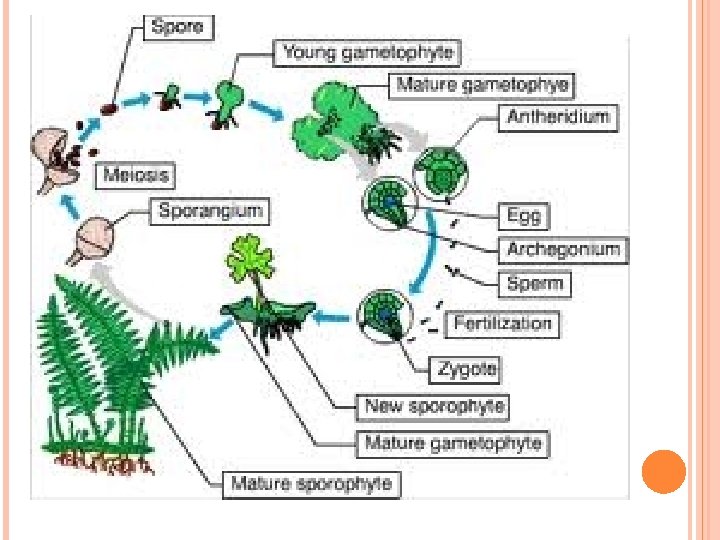
ALTERNATION OF GENERATIONS Some organisms have alternating life cycles. Many plants exist as both a sporophyte (diploid) generation, and a gametophyte (haploid) generation. The sporophyte generation usually develops into the large part of the plant that you see.
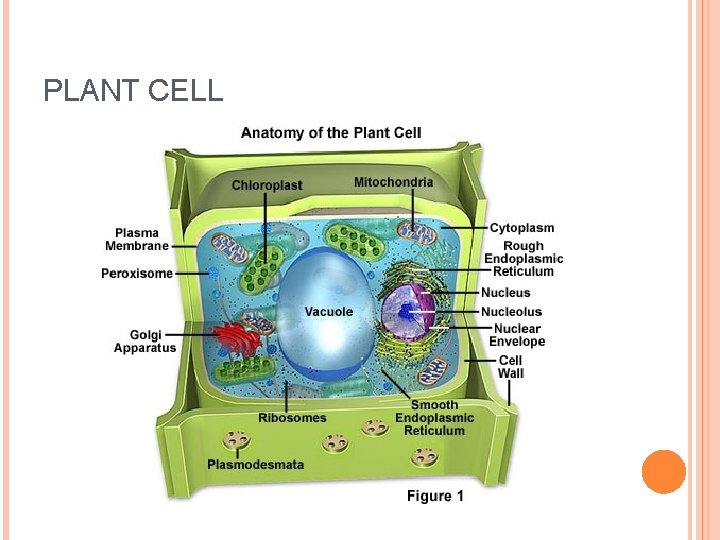
PLANT CELL
3 MAJOR TYPES OF PLANT CELLS Parenchyma-flexible, found throughout plant. Can carry out storage, photosynthesis, gas exchange. Collenchyma-provide support. Occur in long strands, or cylinders. Ex. Fibrous part of celery Sclerenchyma-lack cytoplasm, but have thick, rigid cell walls. Needed for support and some transport. Ex. Wood, hard part of seed coats.
PLANT TISSUES Meristematic tissue make up meristems, areas that are rapidly dividing cells. Apical meristem: Causes growth in length of stem and roots. Lateral meristem: causes stem growth in diameter Intercalary meristem: areas of cells that can divide rapidly at several points in the stem.
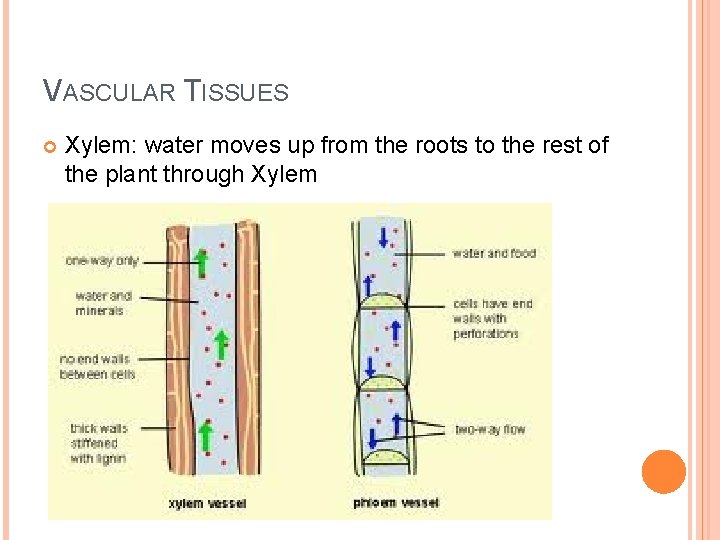
VASCULAR TISSUES Xylem: water moves up from the roots to the rest of the plant through Xylem
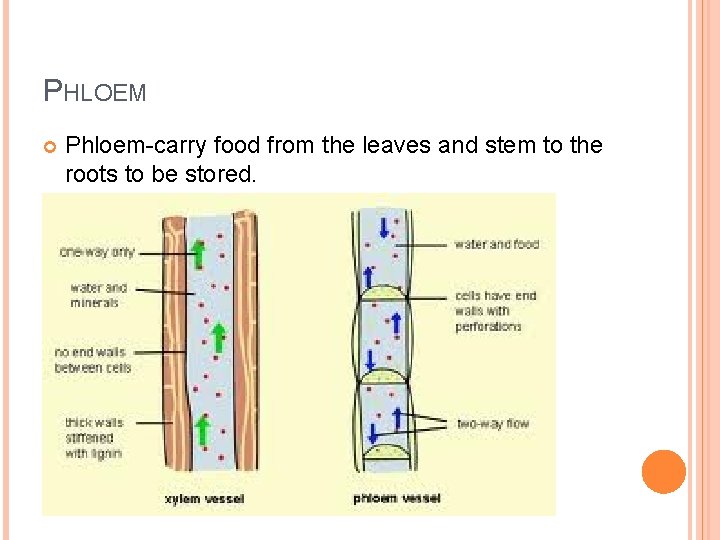
PHLOEM Phloem-carry food from the leaves and stem to the roots to be stored.
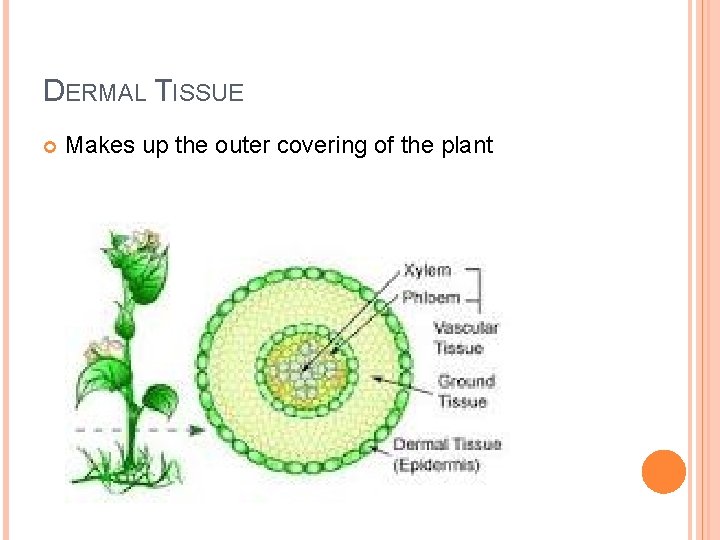
DERMAL TISSUE Makes up the outer covering of the plant
GROUND TISSUE Anything that is not meristematic tissue, vascular tissue, or dermal tissue. Storage, photosynthesis, structure. Makes up most of the plant
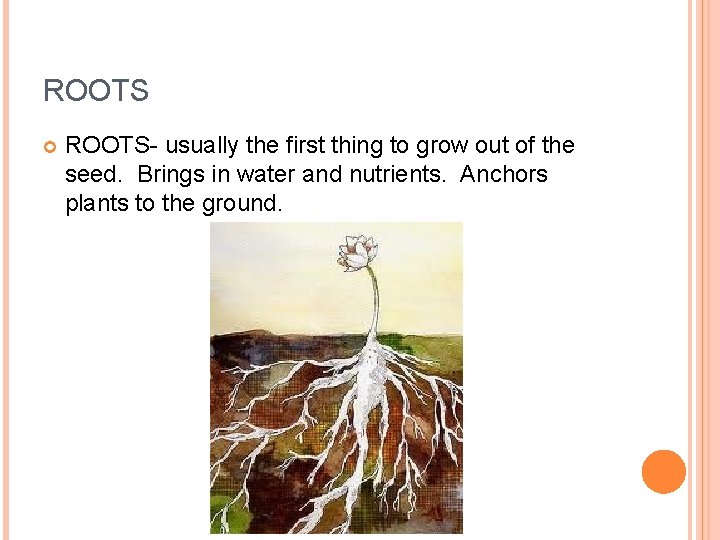
ROOTS ROOTS- usually the first thing to grow out of the seed. Brings in water and nutrients. Anchors plants to the ground.
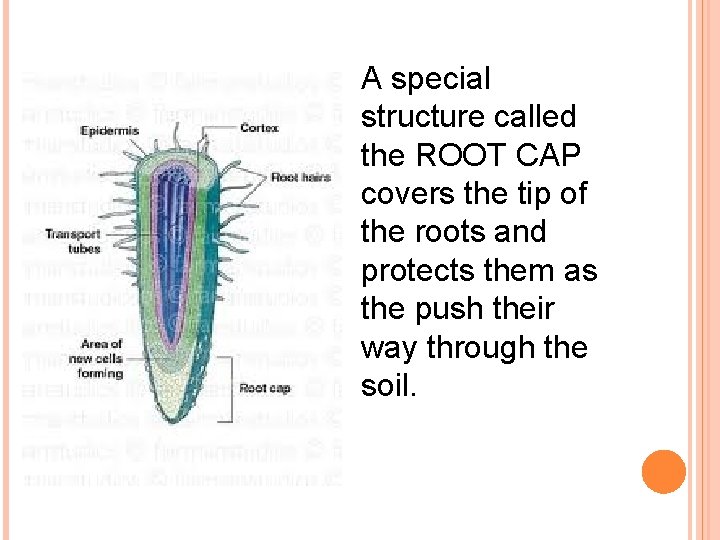
A special structure called the ROOT CAP covers the tip of the roots and protects them as the push their way through the soil.
STEMS Main function is to support the leaves and reproductive structures. There are many different types of stems.
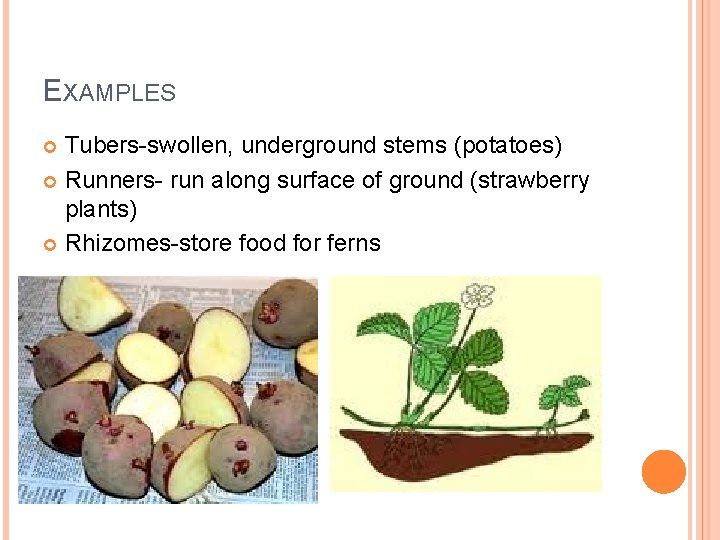
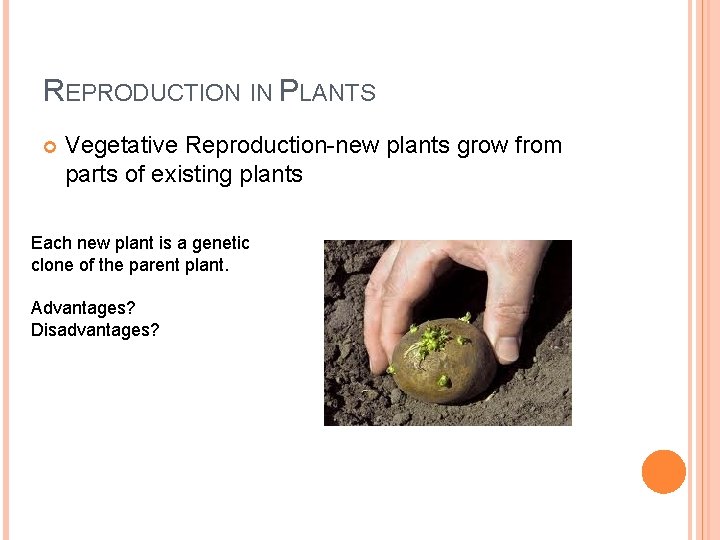
EXAMPLES Tubers-swollen, underground stems (potatoes) Runners- run along surface of ground (strawberry plants) Rhizomes-store food for ferns
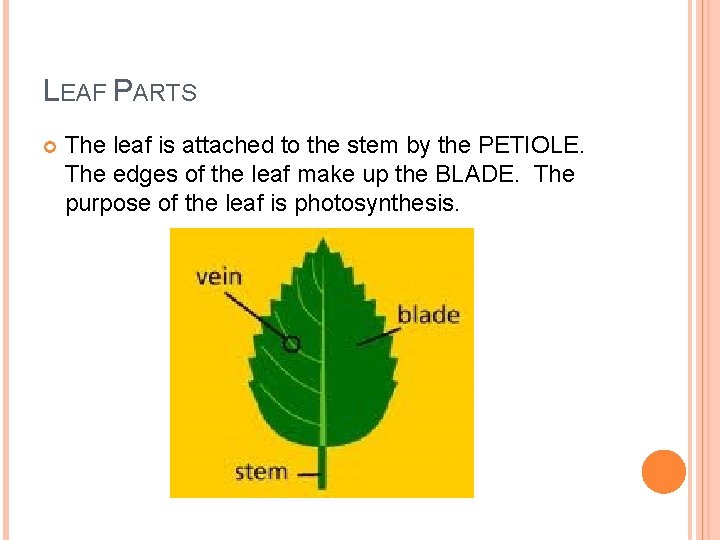
LEAF PARTS The leaf is attached to the stem by the PETIOLE. The edges of the leaf make up the BLADE. The purpose of the leaf is photosynthesis.
PLANT RESPONSES Plants respond to their environment in a variety of ways. Phototropism- plants grow towards the sun Gravitropism-roots grow toward gravity Thigmotropism-plants can grow towards pressure (like a vine that wraps around a tree).
REPRODUCTION IN PLANTS Vegetative Reproduction-new plants grow from parts of existing plants Each new plant is a genetic clone of the parent plant. Advantages? Disadvantages?
POLLINATION When a pollen grain from one species lands of the female reproductive structure of the same species. Pollination can happen in many ways.
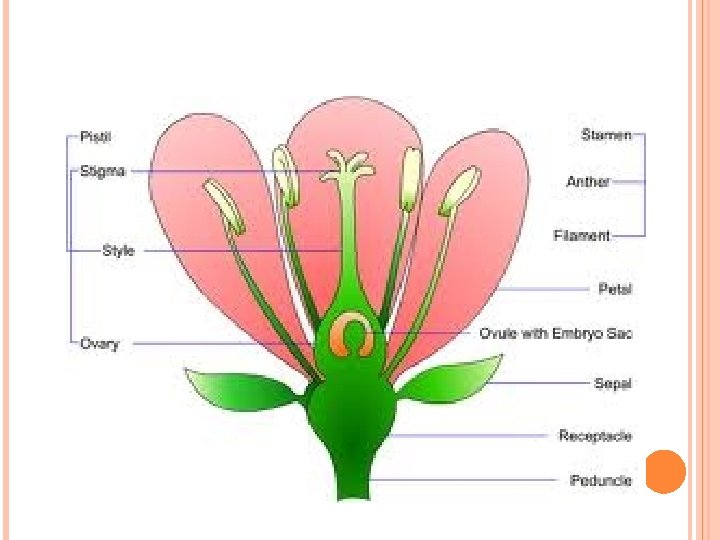
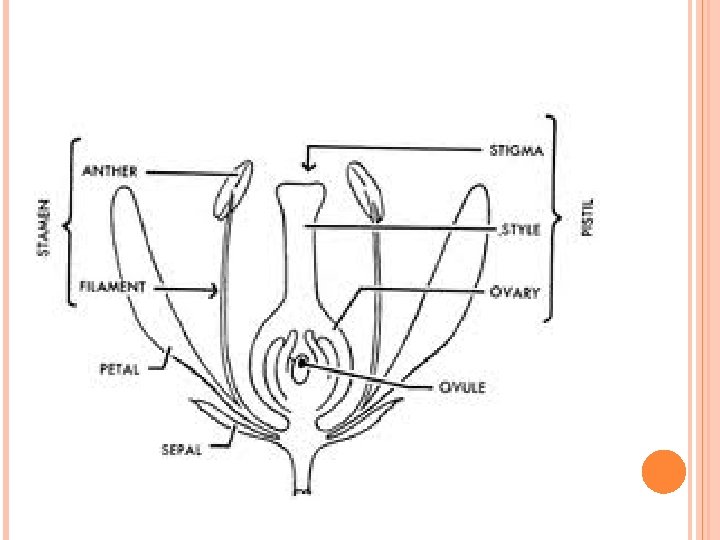
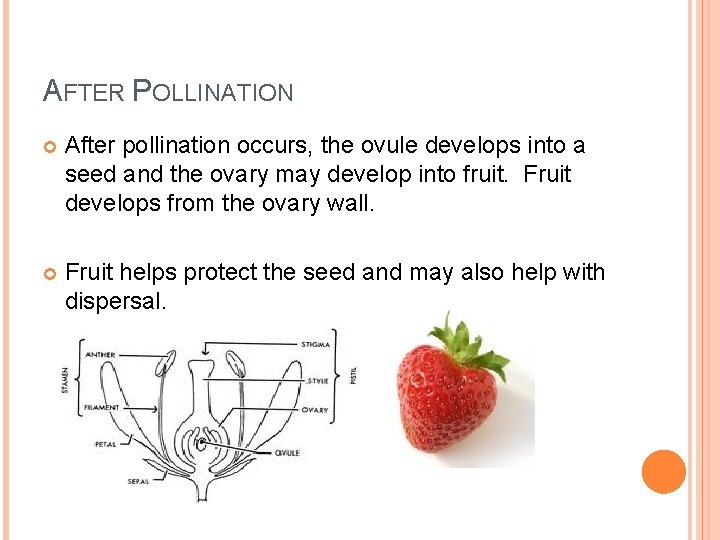
FLOWERS Flowers have four organs Sepals-protect the flower bud Petals-colorful structures that attract pollinators Stamens-male reproductive organs Pistil-female reproductive structure
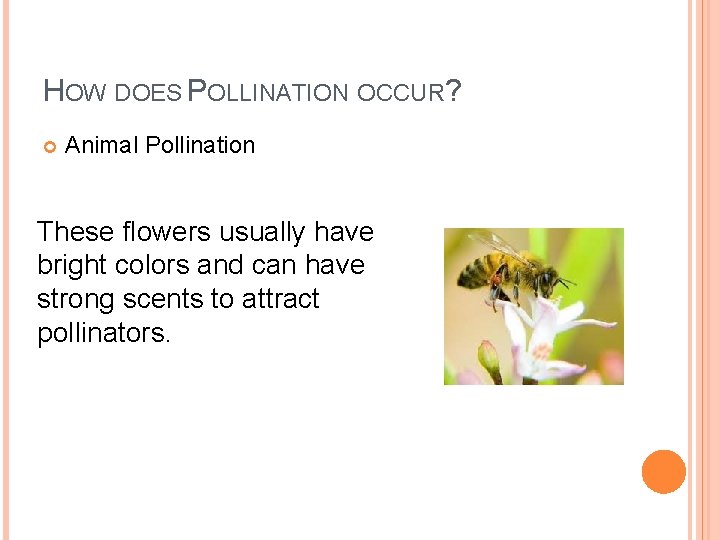
HOW DOES POLLINATION OCCUR? Animal Pollination These flowers usually have bright colors and can have strong scents to attract pollinators.
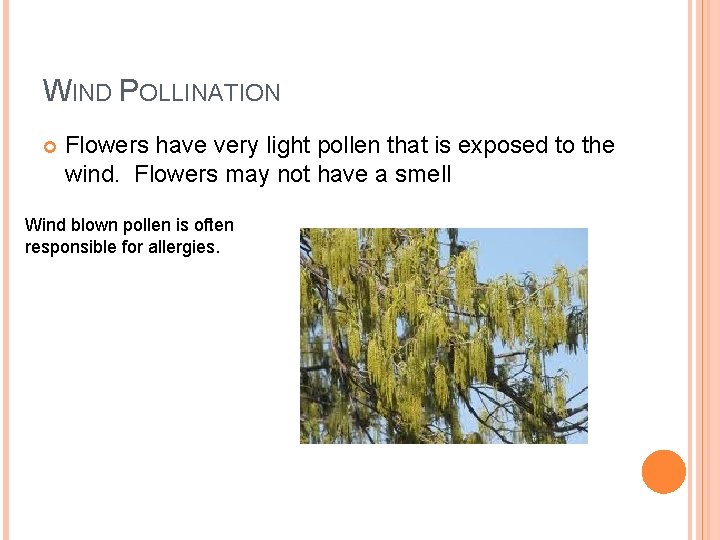
WIND POLLINATION Flowers have very light pollen that is exposed to the wind. Flowers may not have a smell Wind blown pollen is often responsible for allergies.
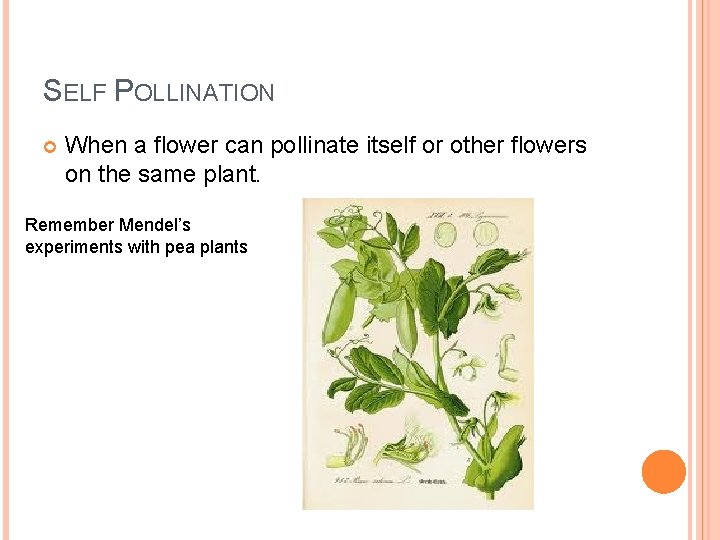
SELF POLLINATION When a flower can pollinate itself or other flowers on the same plant. Remember Mendel’s experiments with pea plants
AFTER POLLINATION After pollination occurs, the ovule develops into a seed and the ovary may develop into fruit. Fruit develops from the ovary wall. Fruit helps protect the seed and may also help with dispersal.