
Plants The Kingdom Plantae Common characteristics 1 Multicellular
- Slides: 37
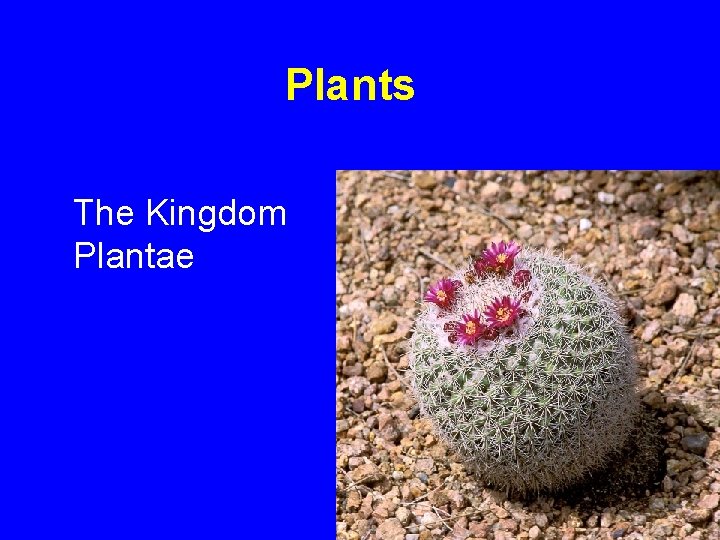
Plants The Kingdom Plantae
Common characteristics 1. Multicellular 2. Eukaryotic 3. Photoautotrophic
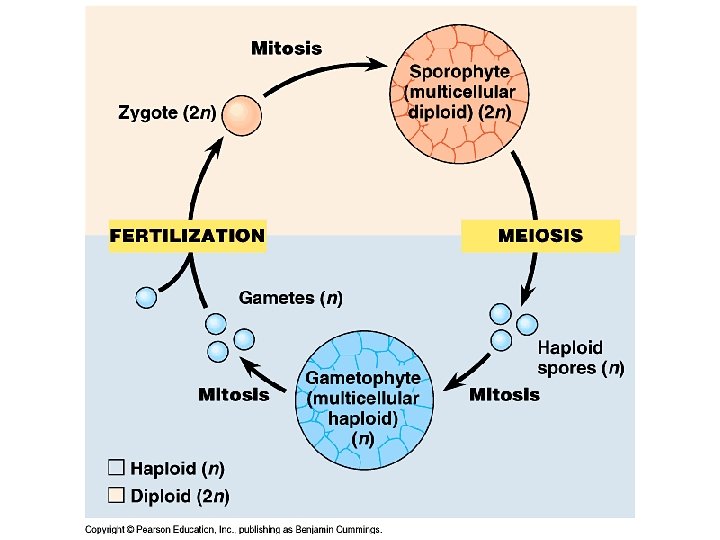
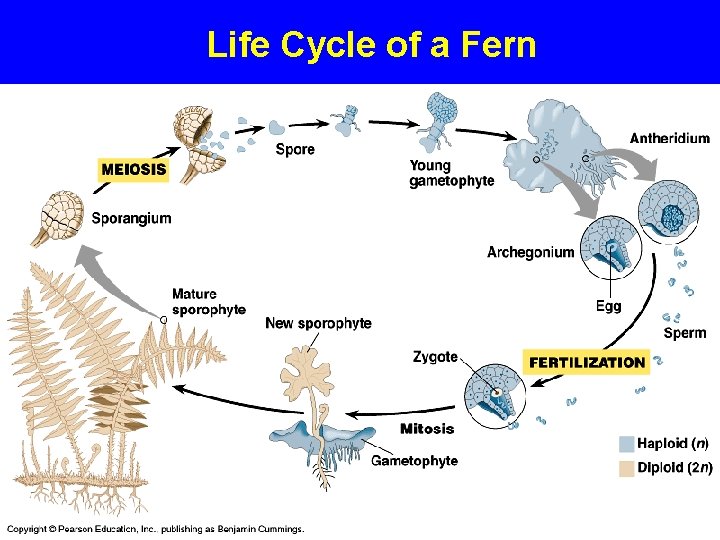
First: Some terms to know • Gametophyte: a multi-celled haploid body (stage) that produces haploid (n) gametes. • Zygote: a diploid body formed when gametes fuse at fertilization. • Sporophyte: a multi-celled diploid (2 n) body that grows by mitosis from a zygote, produces spore-bearing structures. • Spores: resting structures, able to survive harsh conditions, germinate to form gametophytes.
Adaptations to Land • • Root systems Shoot systems Vascular tissues Waxy cuticle for water conservation
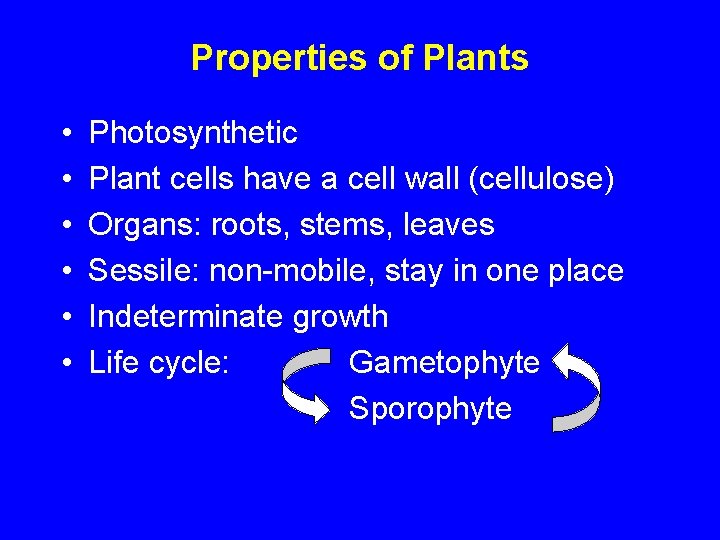
Properties of Plants • • • Photosynthetic Plant cells have a cell wall (cellulose) Organs: roots, stems, leaves Sessile: non-mobile, stay in one place Indeterminate growth Life cycle: Gametophyte Sporophyte
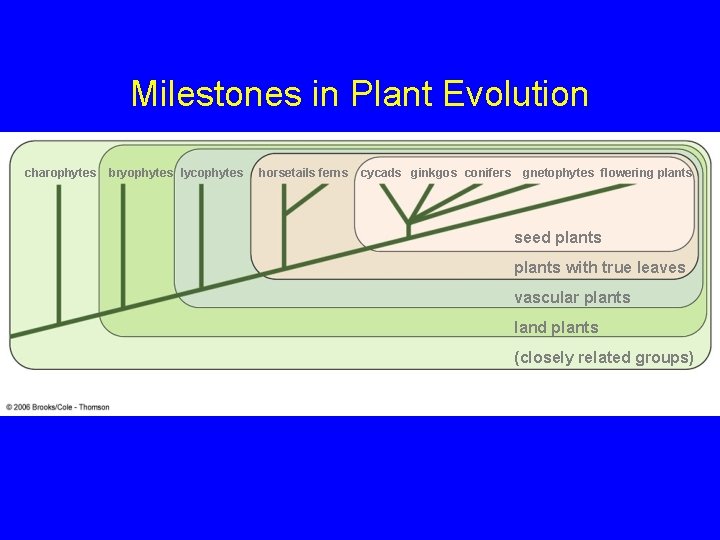
Milestones in Plant Evolution charophytes bryophytes lycophytes horsetails ferns cycads ginkgos conifers gnetophytes flowering plants seed plants with true leaves vascular plants land plants (closely related groups)
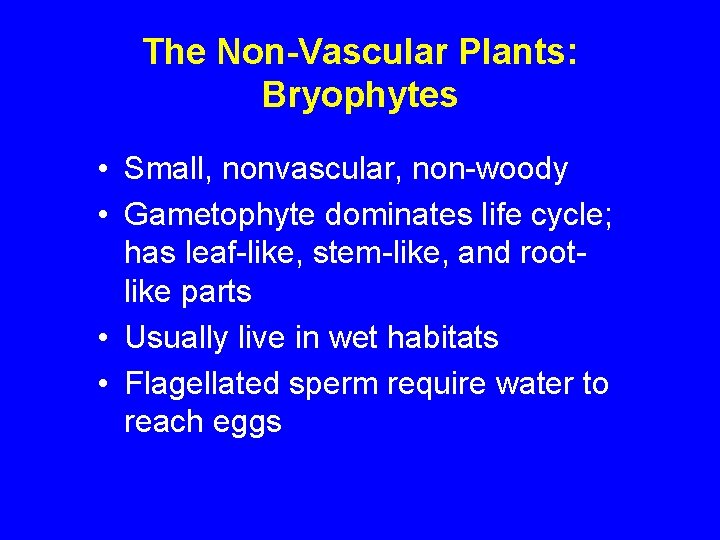
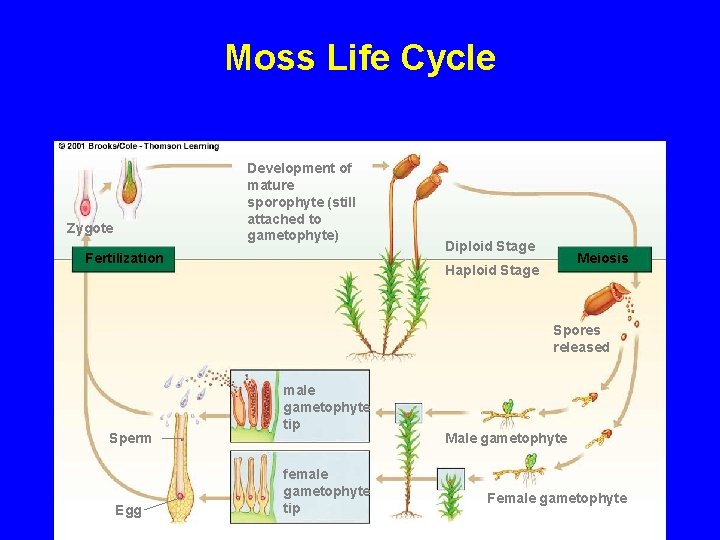
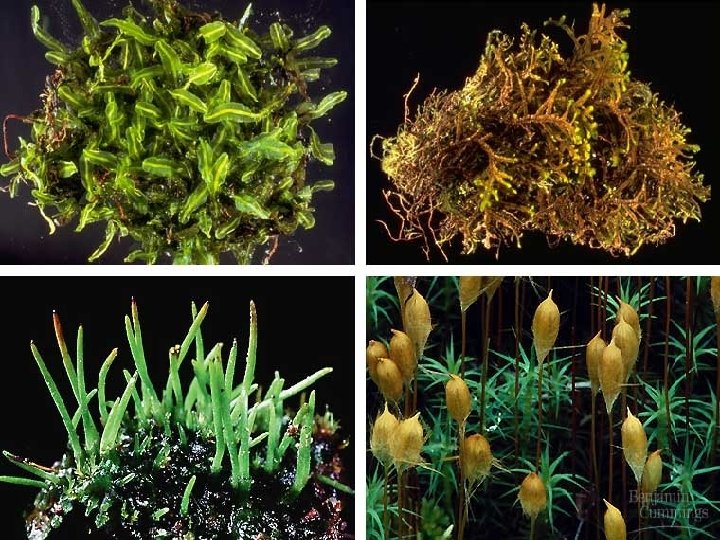
The Non-Vascular Plants: Bryophytes • Small, nonvascular, non-woody • Gametophyte dominates life cycle; has leaf-like, stem-like, and rootlike parts • Usually live in wet habitats • Flagellated sperm require water to reach eggs
Moss Life Cycle Development of mature sporophyte (still attached to gametophyte) Zygote Fertilization Diploid Stage Meiosis Haploid Stage Spores released Sperm Egg male gametophyte tip female gametophyte tip Male gametophyte Female gametophyte
Vascular Plants • Majority of plants • Have internal tissues that carry water and solutes (Xylem and Phloem) • Two groups – Seedless vascular plants – Seed-bearing vascular plants
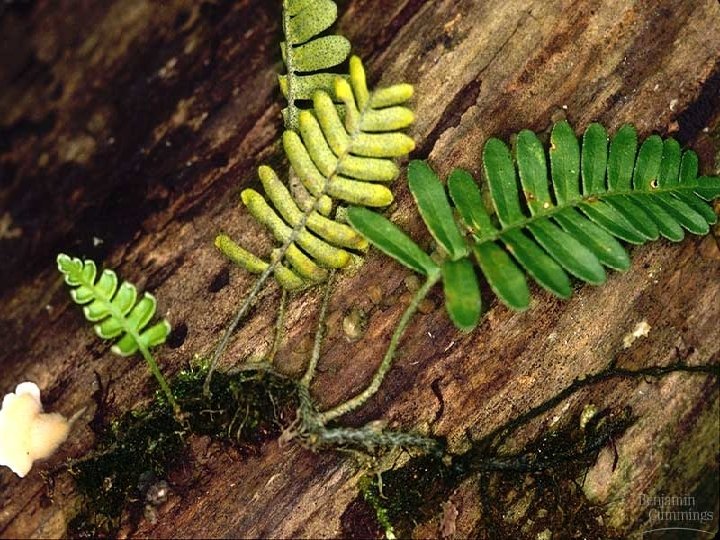
Seedless Vascular Plants • Produce spores but no seeds • Main groups: Lycophytes Horsetails Ferns
Life Cycle of a Fern
Seedless Vascular Plants • Like bryophytes: – Live in wet, humid places – Require water for fertilization • Unlike bryophytes: – Sporophyte is free-living and has vascular tissues
Rise of Seed-Bearing Plants • Seeds appeared about 360 million years ago • Seed ferns and gymnosperms were dominant at first • Angiosperms arose later
Pollen • Pollen grains are sperm-bearing male gametophytes that develop from microspores • Allows transfer of sperm to egg without water • Can drift on air currents, or be carried by pollinators
Seeds • Ovules are female reproductive structures that become seeds • Consist of: – Female gametophyte with egg cell – Nutrient-rich tissue (endosperm) – Jacket of cell layers that will form seed coat
Seed-Bearing Vascular Plants • Gymnosperms arose first – Conifers – Others… • Angiosperms arose later – Monocots – Dicots
Special Traits of Seed-Bearing Plants • Pollen grains – Arise from microspores – Develop into male gametophytes – Can be transported without water • Seeds – Megaspores inside ovules – Embryo sporophyte inside nutritive tissues and a protective coat – Can withstand hostile conditions
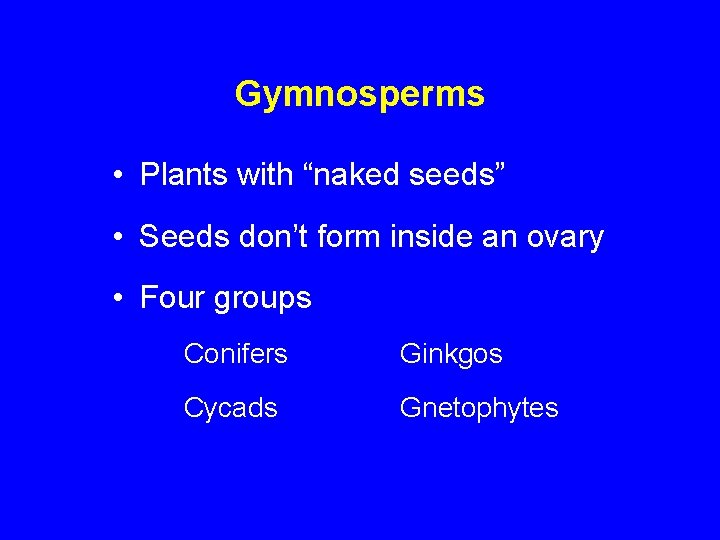
Gymnosperms • Plants with “naked seeds” • Seeds don’t form inside an ovary • Four groups Conifers Ginkgos Cycads Gnetophytes
Conifer Characteristics • Widest known, largest number of living species • Woody trees or shrubs • Most are evergreen • Bear seeds on exposed cone scales • Most produce woody cones
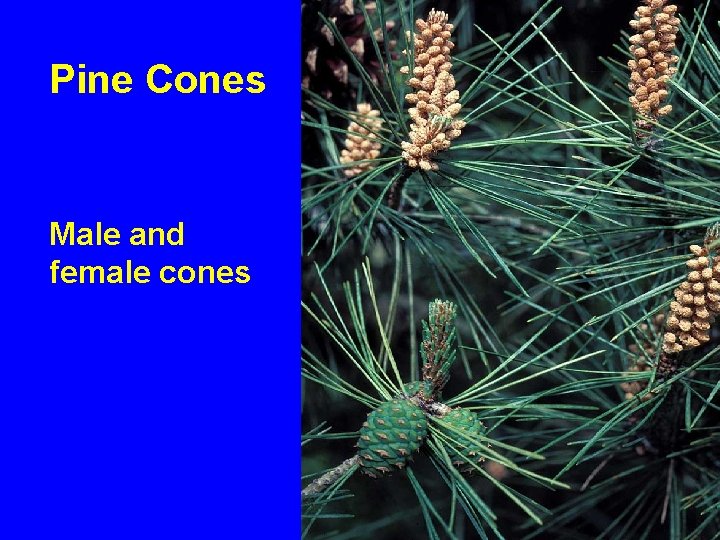
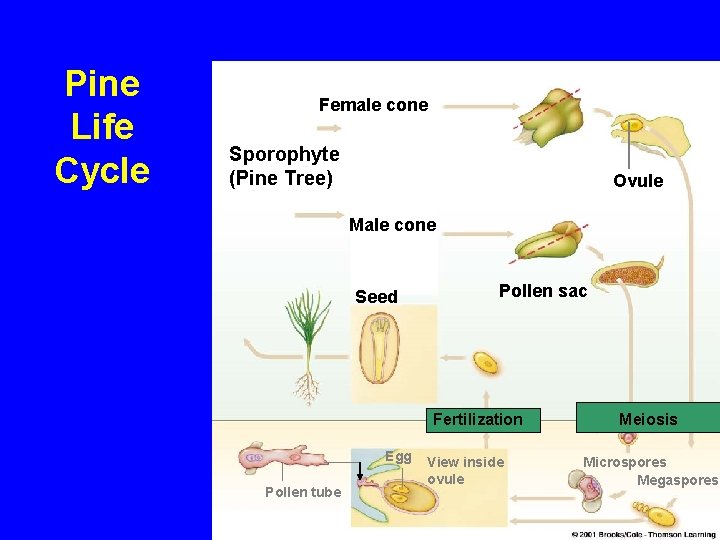
Pine Cones • Woody scales of a “pine cone” are the parts of where megaspores formed and developed into female gametophytes • Male cones, where microspores and pollen are produced, are not woody
Pine Cones Male and female cones
Pine Life Cycle Female cone Sporophyte (Pine Tree) Ovule Male cone Seed Pollen sac Fertilization Egg Pollen tube View inside ovule Meiosis Microspores Megaspores
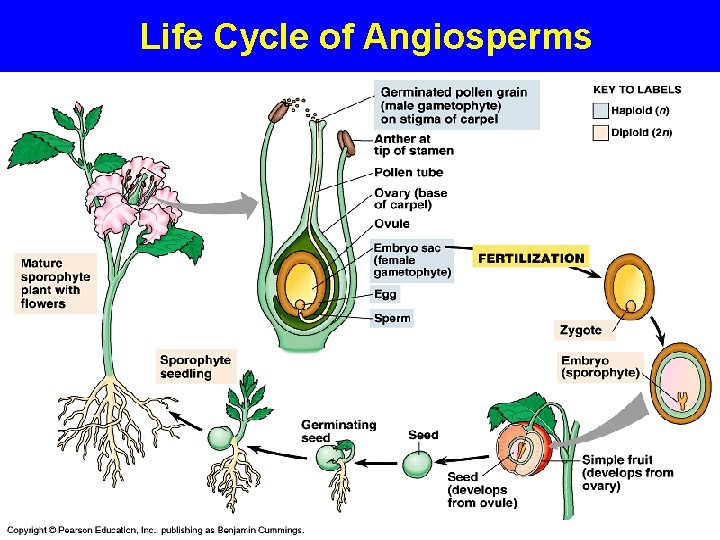
Angiosperms • Flowering plants • Defining feature: Ovules and (after fertilization) seeds are enclosed in an ovary • Two classes: Monocots and Dicots
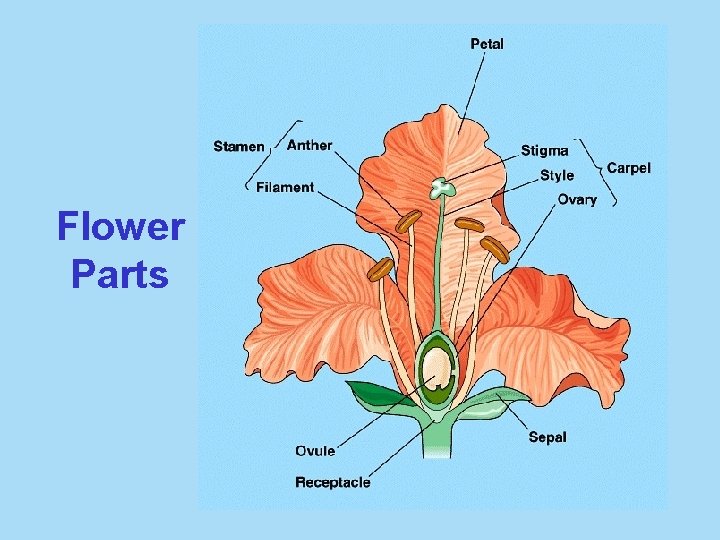
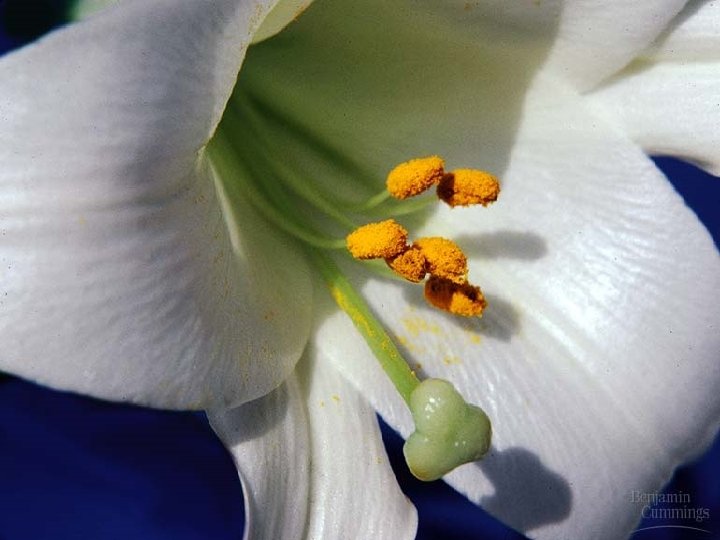
Flower Parts
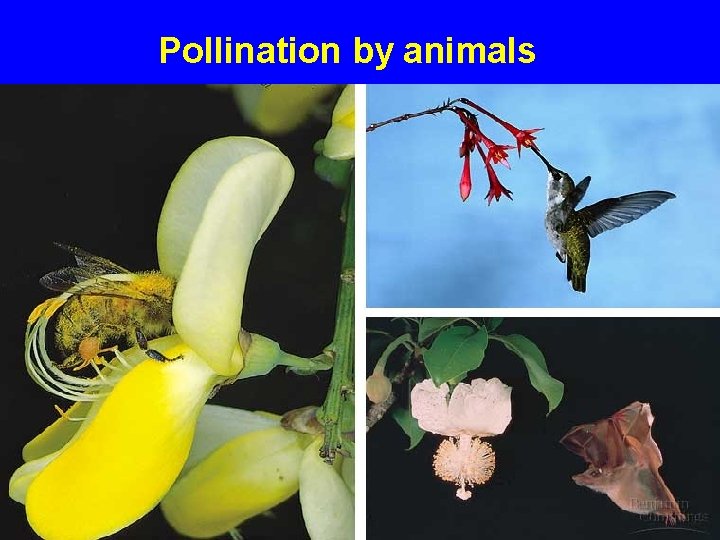
Pollination by animals
Life Cycle of Angiosperms
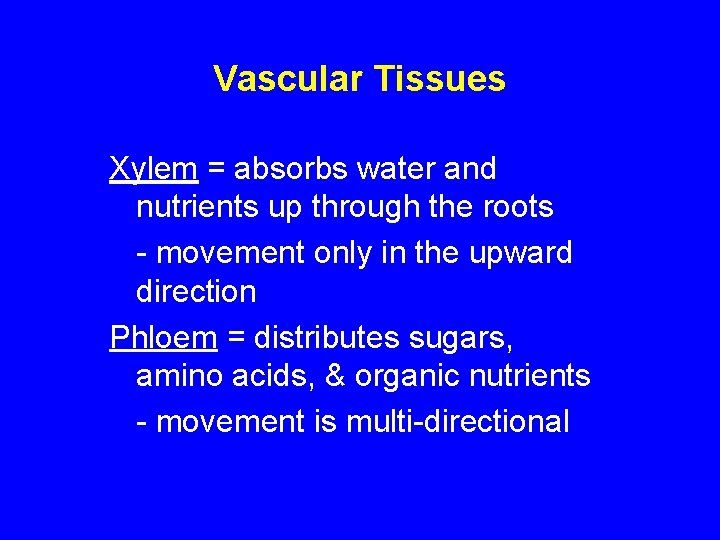
Vascular Tissues Xylem = absorbs water and nutrients up through the roots - movement only in the upward direction Phloem = distributes sugars, amino acids, & organic nutrients - movement is multi-directional
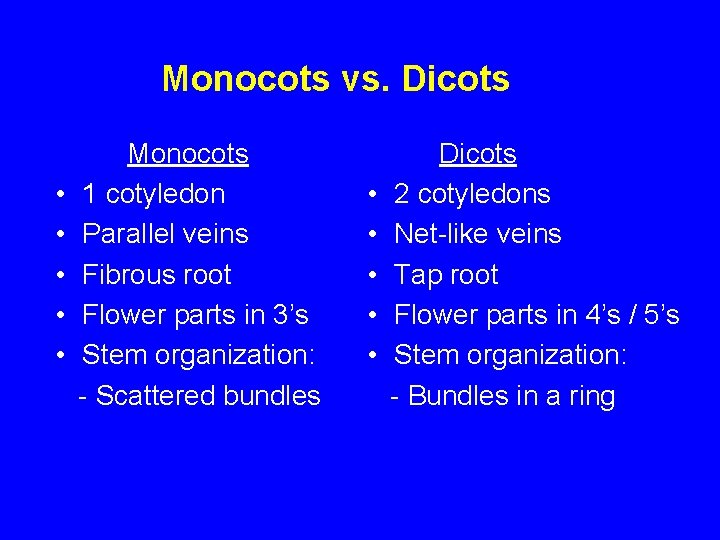
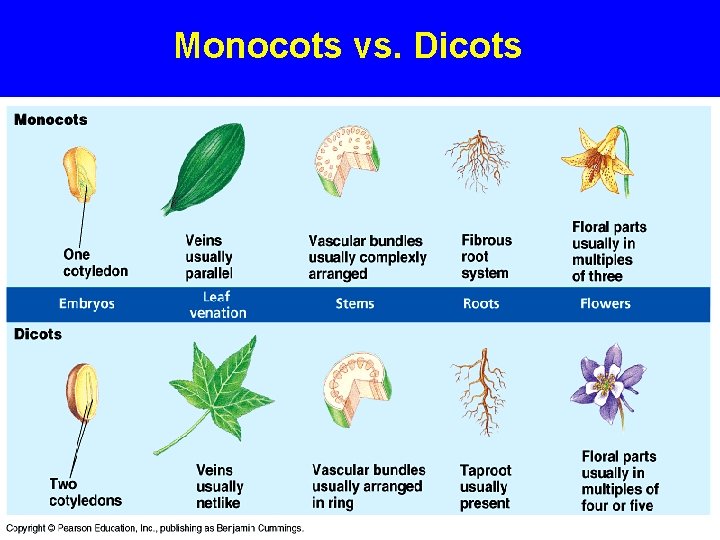
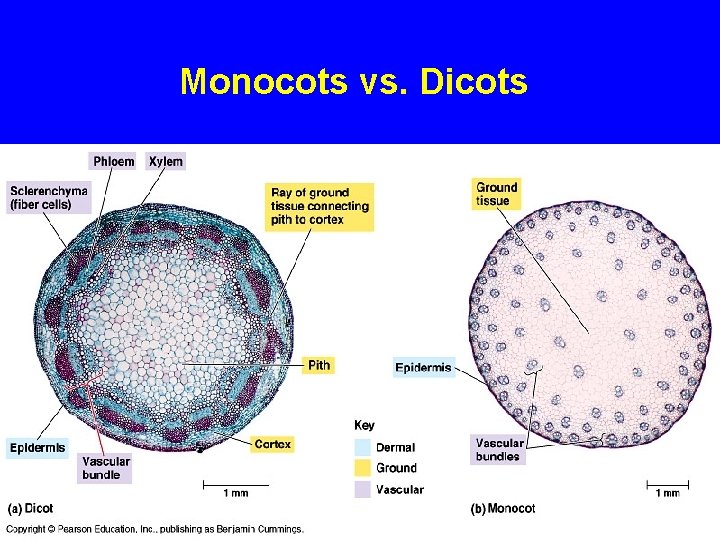
Monocots vs. Dicots • • • Monocots 1 cotyledon Parallel veins Fibrous root Flower parts in 3’s Stem organization: - Scattered bundles • • • Dicots 2 cotyledons Net-like veins Tap root Flower parts in 4’s / 5’s Stem organization: - Bundles in a ring
Monocots vs. Dicots
Monocots vs. Dicots
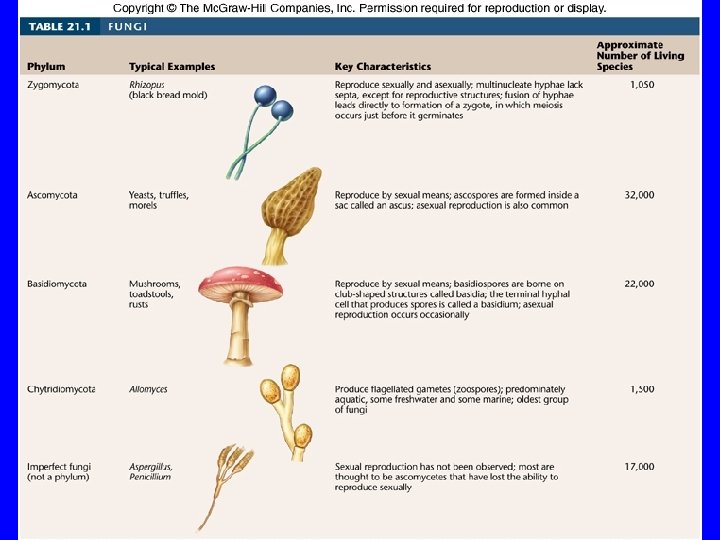
A Fungus is Not a Plant There are many significant differences between fungi and plants, including – fungi are hetertrophs – fungi have filamentous bodies (Hyphae, Mycelium) – fungi have nonmotile sperm – fungi have cell walls made of chitin – fungi have nuclear mitosis
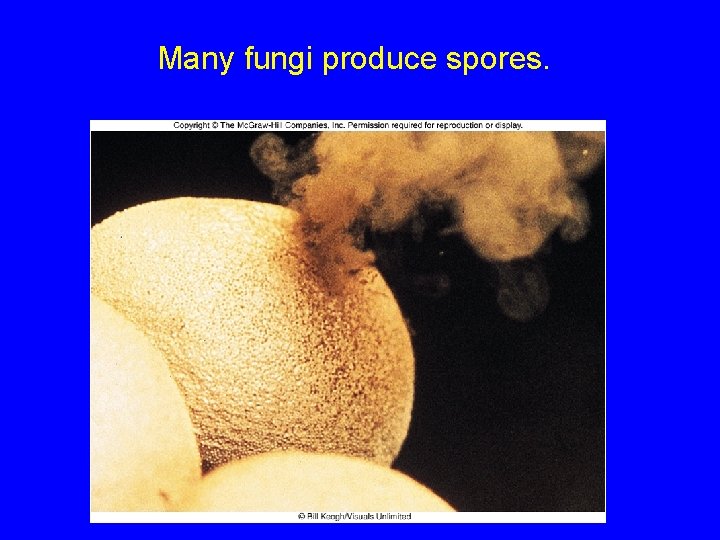
Many fungi produce spores.