
Plants Structure Growth Development Plant Structure Introduction https
- Slides: 49
Plants Structure, Growth, & Development
Plant Structure Introduction https: //www. youtube. com/watch? v=DGp. PHr. LF-5 M
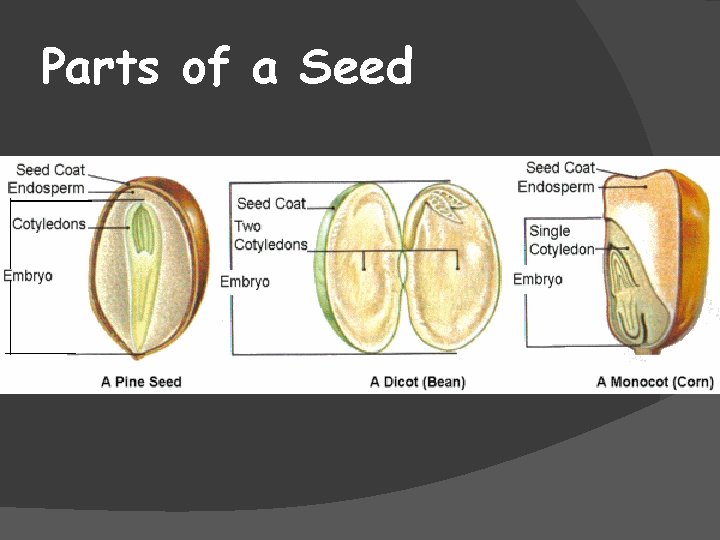
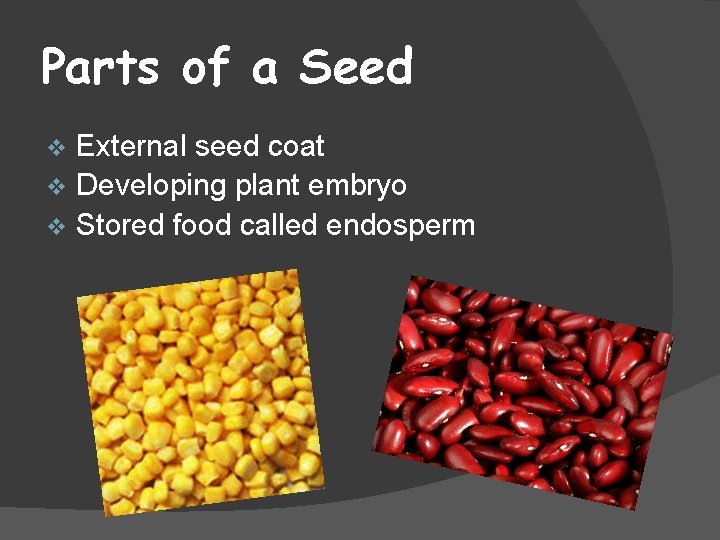
Parts of a Seed
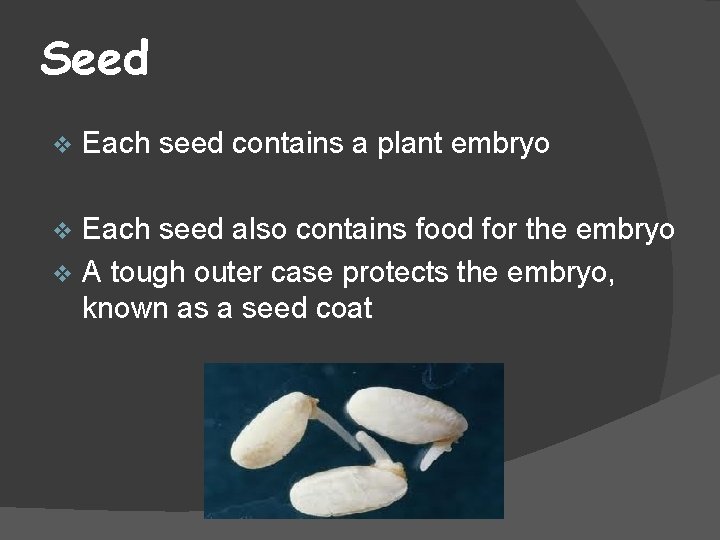
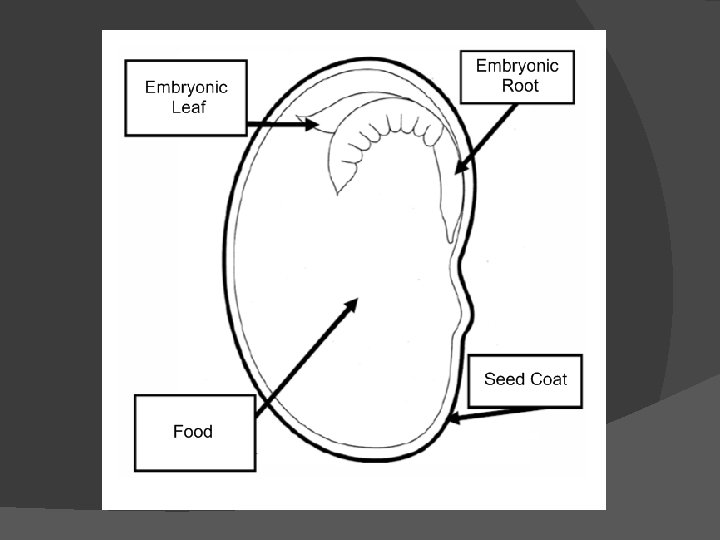
Seed v Each seed contains a plant embryo Each seed also contains food for the embryo v A tough outer case protects the embryo, known as a seed coat v
Parts of a Seed External seed coat v Developing plant embryo v Stored food called endosperm v
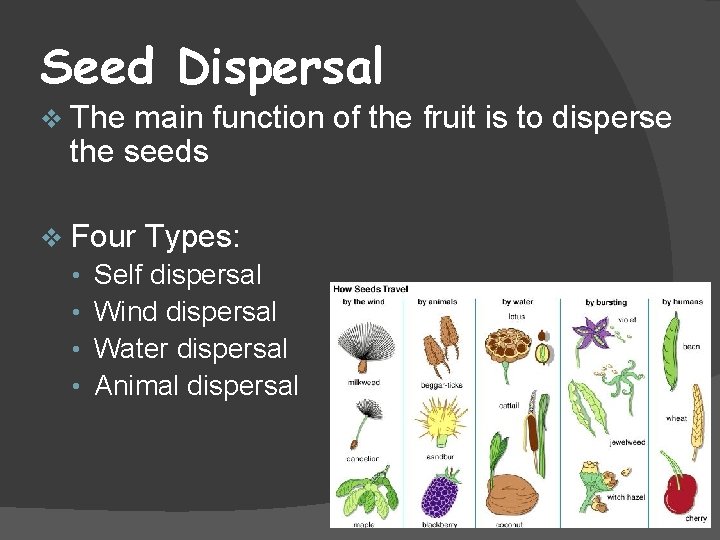
Seed Dispersal v The main function of the fruit is to disperse the seeds v Four Types: • Self dispersal • Wind dispersal • Water dispersal • Animal dispersal
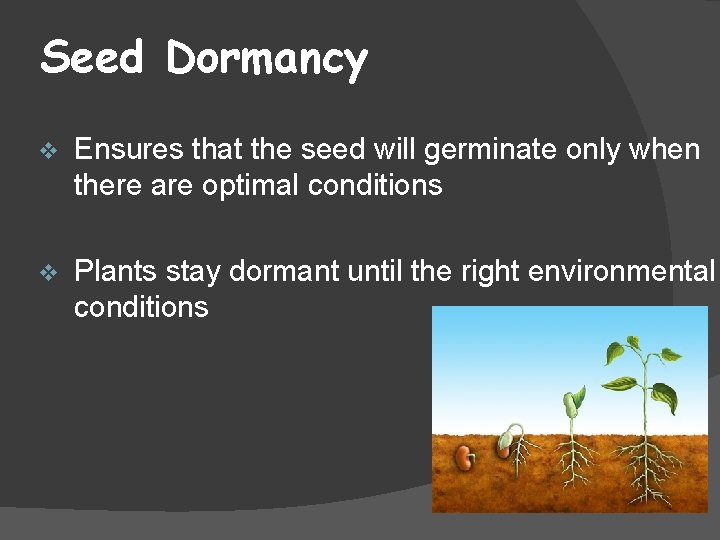
Seed Dormancy v Ensures that the seed will germinate only when there are optimal conditions v Plants stay dormant until the right environmental conditions
Seed Germination v Seeds do not always germinate right away; can wait for long periods of time to grow v Seed need water, nutrients and the right temperature to grow
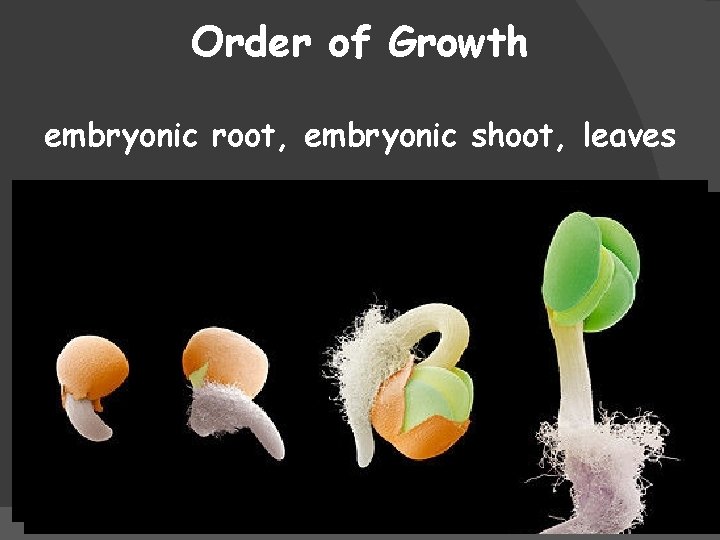
Order of Growth embryonic root, embryonic shoot, leaves
Seed Labeling v You have 5 minutes to complete the diagram
Lima Bean Dissection https: //www. youtube. com/watch? v=p. QYJ 2 PSDu 3 A
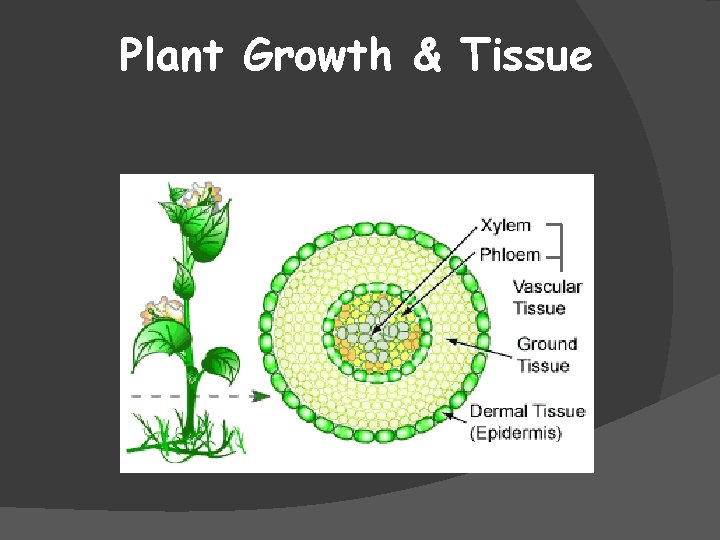
Plant Growth & Tissue
Meristems v Plant cells that contain stem cells v Apical meristems • Elongate shoots and roots through primary growth • Located at the tips of roots and in the buds of shoots v Lateral meristems • Add thickness of stems and roots through secondary growth
Tissue Systems v Dermal tissue system �Consists of the epidermis v Ground tissue �Various cells specialized for: § Storage § Photosynthesis § Support
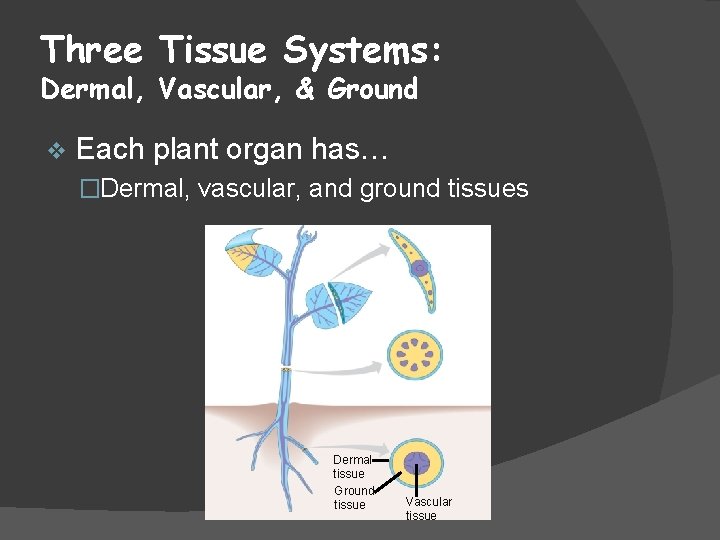
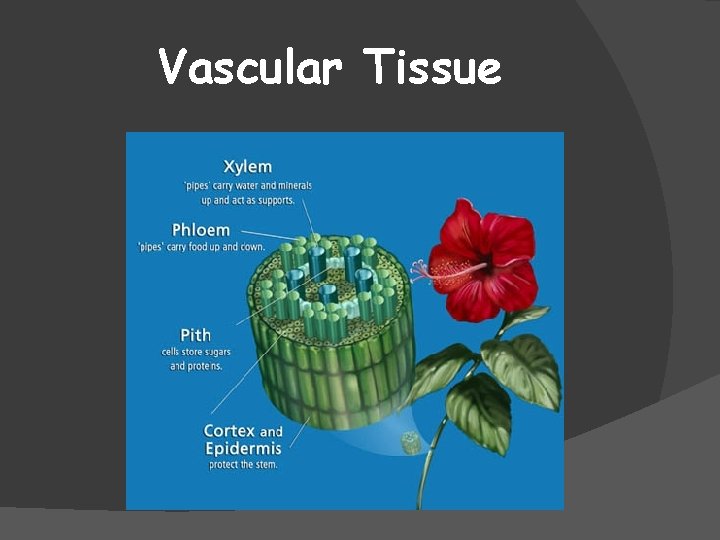
Three Tissue Systems: Dermal, Vascular, & Ground v Each plant organ has… �Dermal, vascular, and ground tissues Dermal tissue Ground tissue Vascular tissue
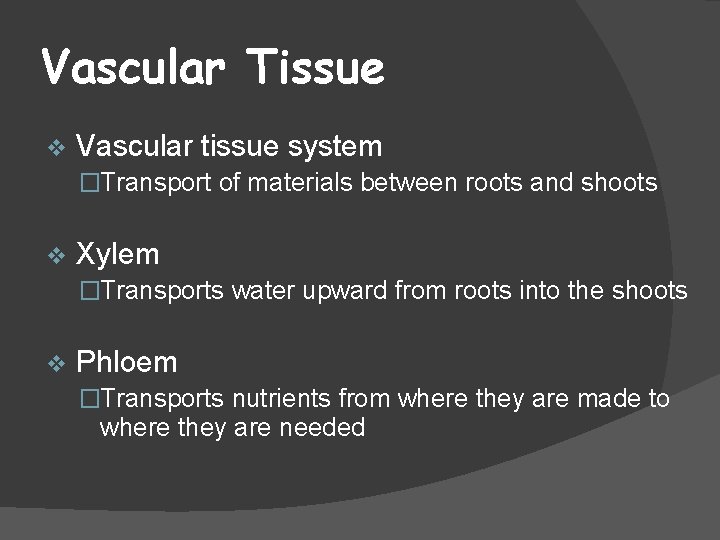
Vascular Tissue v Vascular tissue system �Transport of materials between roots and shoots v Xylem �Transports water upward from roots into the shoots v Phloem �Transports nutrients from where they are made to where they are needed
Vascular Tissue
Roots
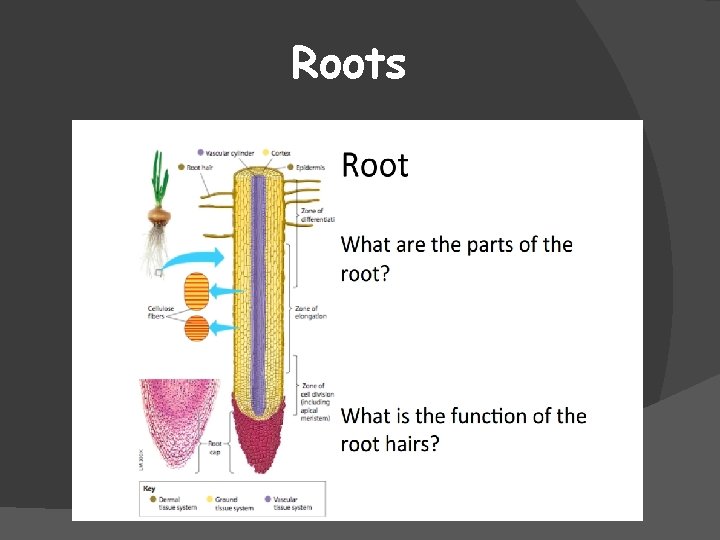
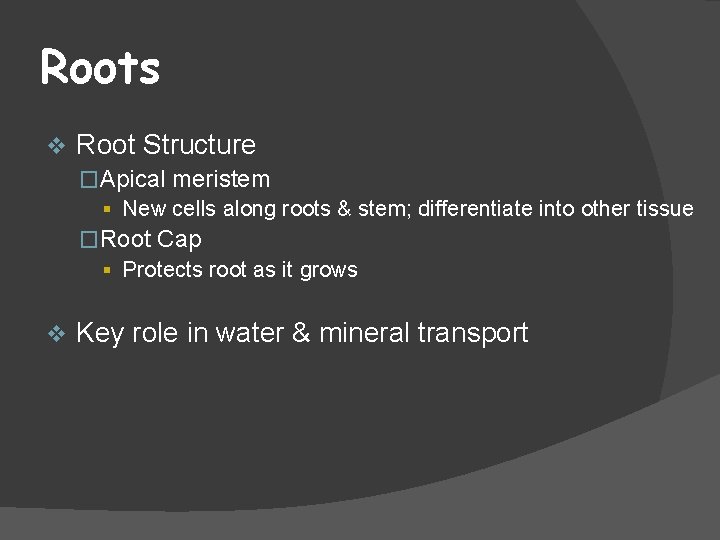
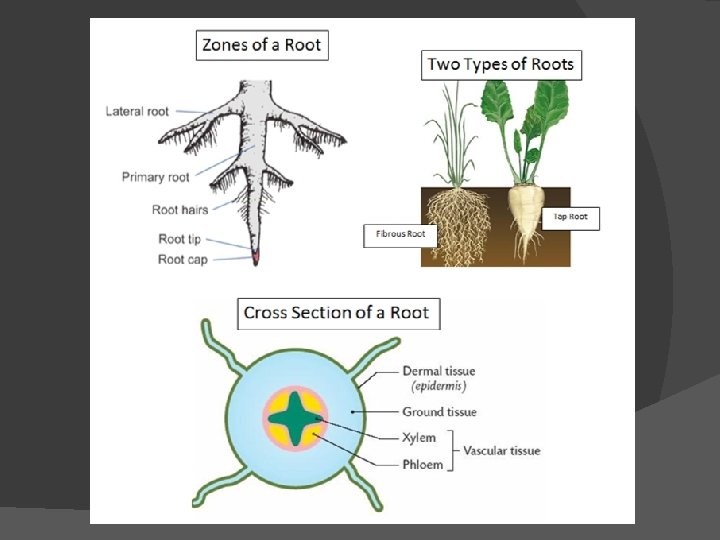
Roots v Root Structure �Apical meristem § New cells along roots & stem; differentiate into other tissue �Root Cap § Protects root as it grows v Key role in water & mineral transport
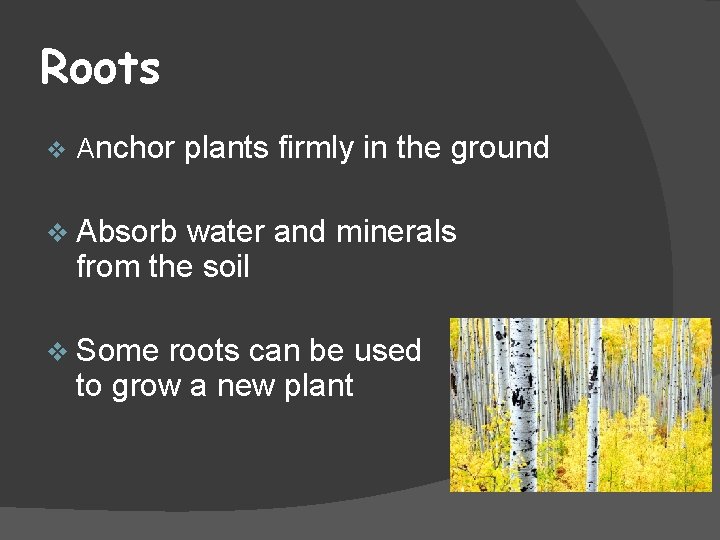
Roots v Anchor plants firmly in the ground v Absorb water and minerals from the soil v Some roots can be used to grow a new plant
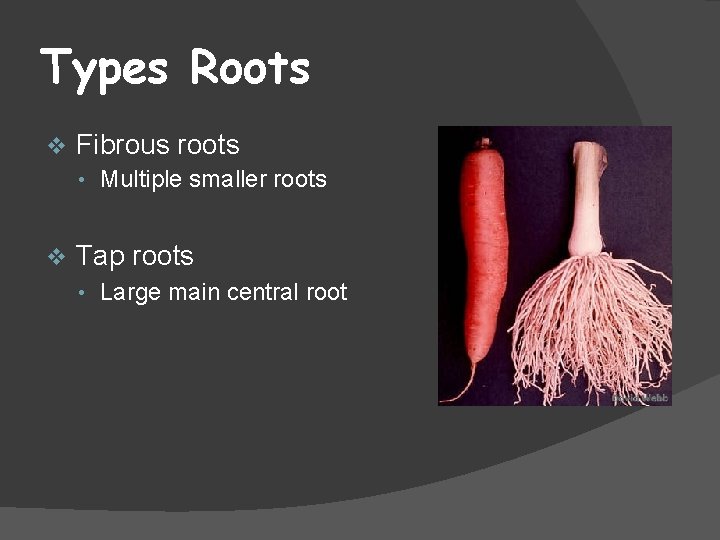
Types Roots v Fibrous roots • Multiple smaller roots v Tap roots • Large main central root
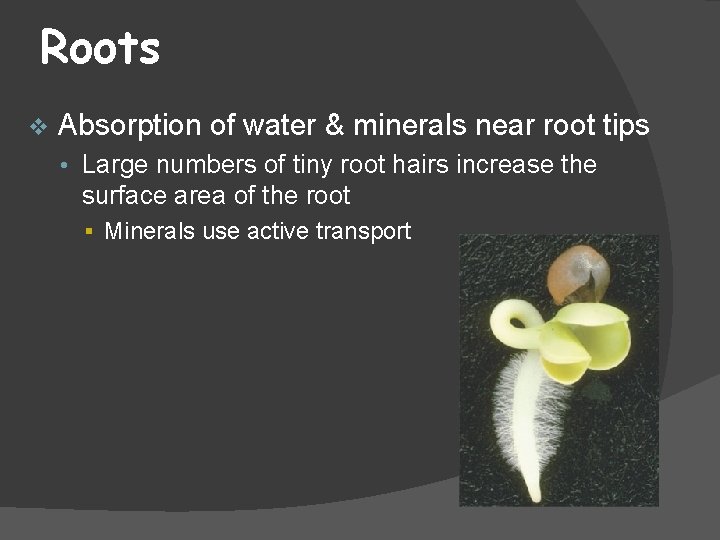
Roots v Absorption of water & minerals near root tips • Large numbers of tiny root hairs increase the surface area of the root § Minerals use active transport
Roots Labeling � You have 5 minutes to complete your roots diagram
Stems
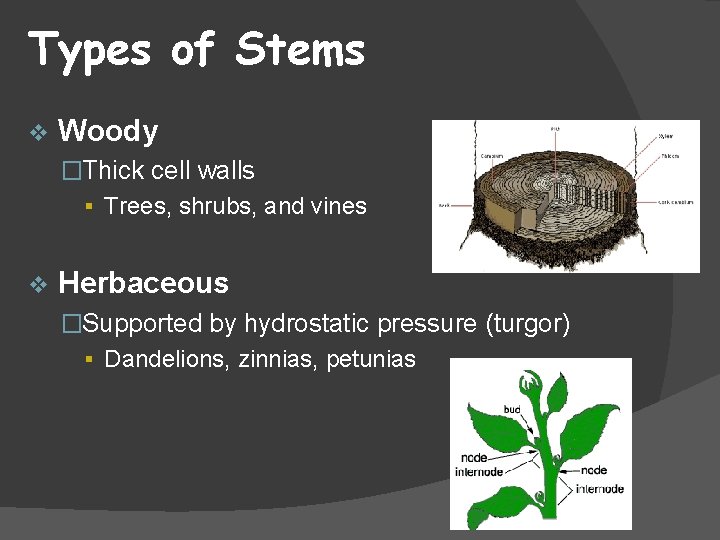
Stems v Structure �Produce leaves, branches, and flowers �Hold leaves up �Transport substance between roots and leaves v Transport system
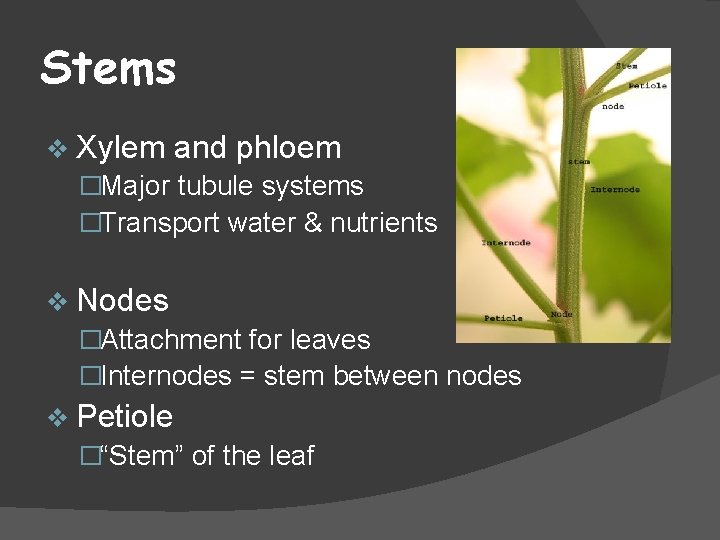
Stems v Xylem and phloem �Major tubule systems �Transport water & nutrients v Nodes �Attachment for leaves �Internodes = stem between nodes v Petiole �“Stem” of the leaf
Types of Stems v Woody �Thick cell walls § Trees, shrubs, and vines v Herbaceous �Supported by hydrostatic pressure (turgor) § Dandelions, zinnias, petunias
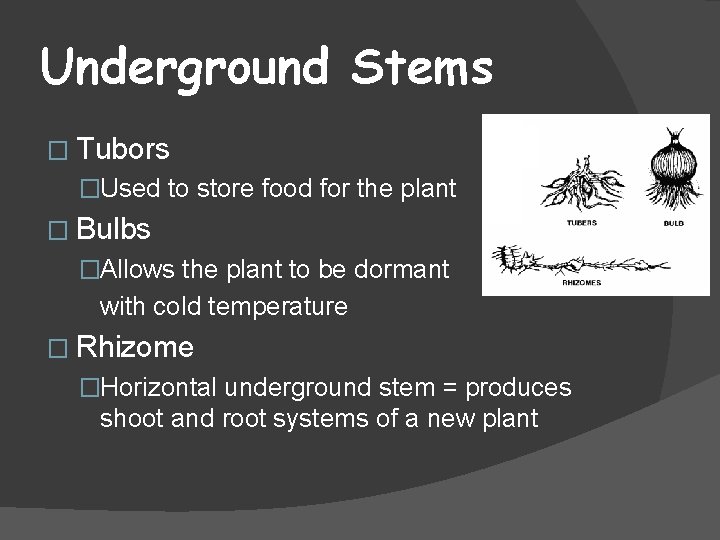
Underground Stems � Tubors �Used to store food for the plant � Bulbs �Allows the plant to be dormant with cold temperature � Rhizome �Horizontal underground stem = produces shoot and root systems of a new plant
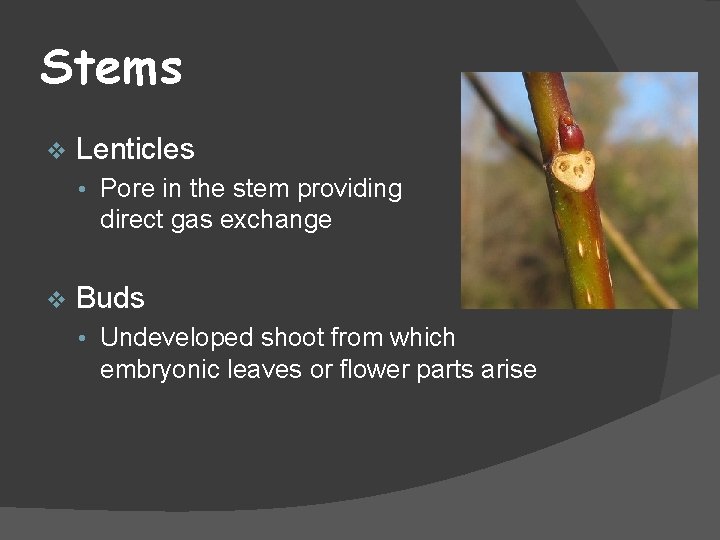
Stems v Lenticles • Pore in the stem providing direct gas exchange v Buds • Undeveloped shoot from which embryonic leaves or flower parts arise
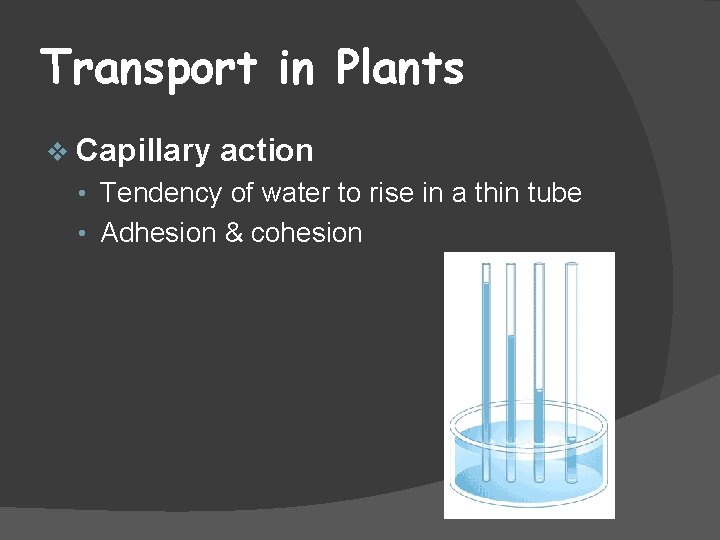
Transport in Plants v Capillary action • Tendency of water to rise in a thin tube • Adhesion & cohesion
Leaves
Leaves v Sight of photosynthesis v Anatomy �Cuticle – covers and protects leaf �Blade – thin flattened section �Petiole – stalk that attaches stem to blade v Covered by epidermis and cuticle �Create water proof barrier
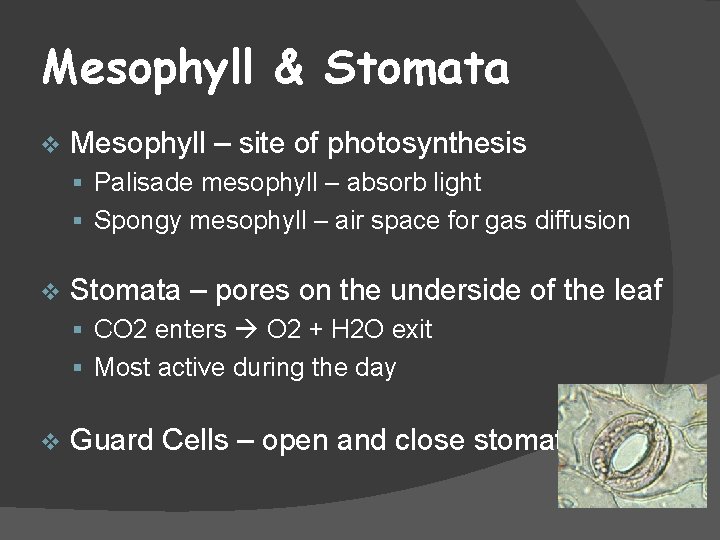
Mesophyll & Stomata v Mesophyll – site of photosynthesis § Palisade mesophyll – absorb light § Spongy mesophyll – air space for gas diffusion v Stomata – pores on the underside of the leaf § CO 2 enters O 2 + H 2 O exit § Most active during the day v Guard Cells – open and close stomata
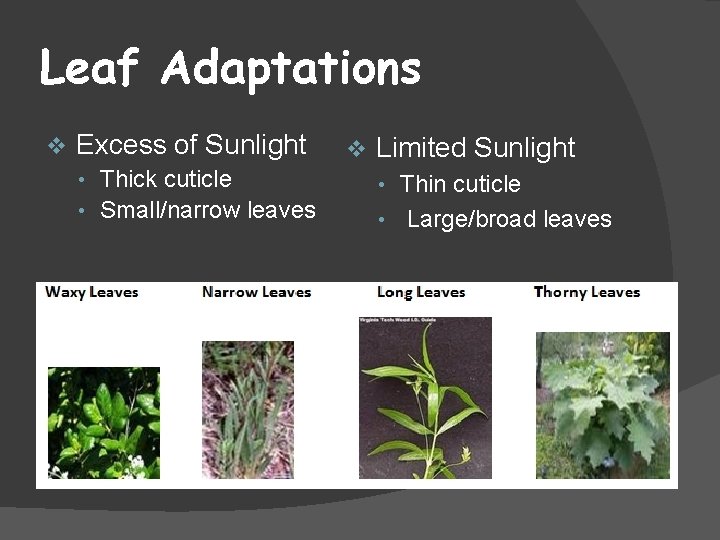
Leaf Adaptations v Excess of Sunlight • Thick cuticle • Small/narrow leaves v Limited Sunlight • Thin cuticle • Large/broad leaves
Transport & Tropisms
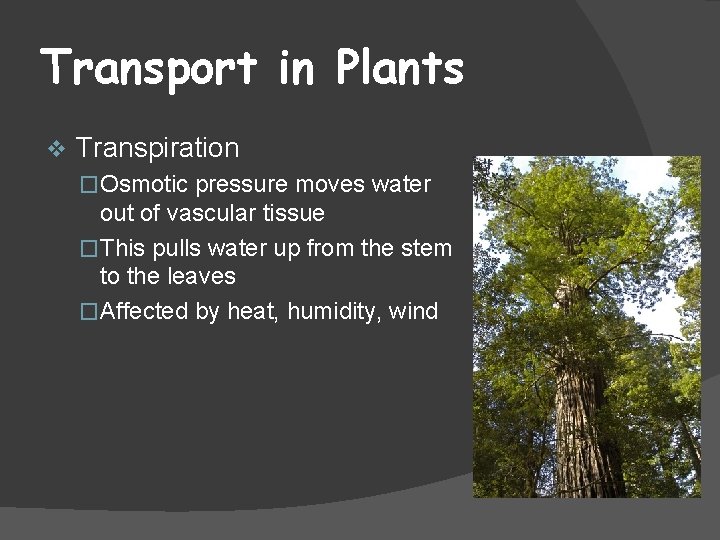
Transport in Plants v Transpiration �Osmotic pressure moves water out of vascular tissue �This pulls water up from the stem to the leaves �Affected by heat, humidity, wind
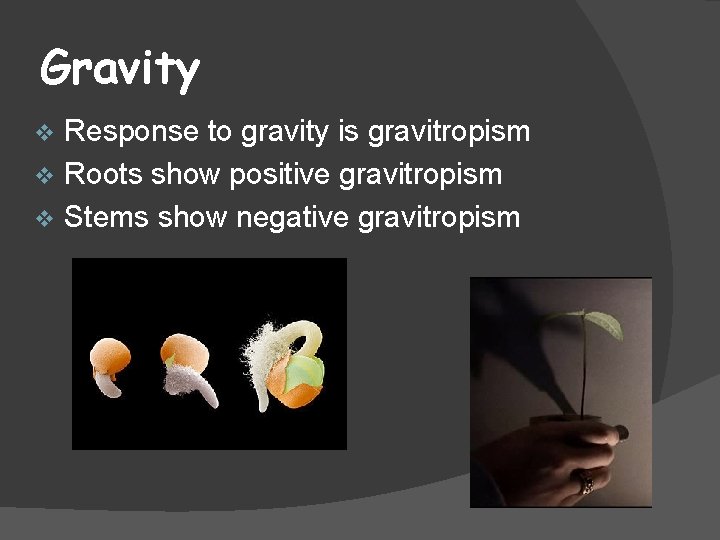
Gravity Response to gravity is gravitropism v Roots show positive gravitropism v Stems show negative gravitropism v
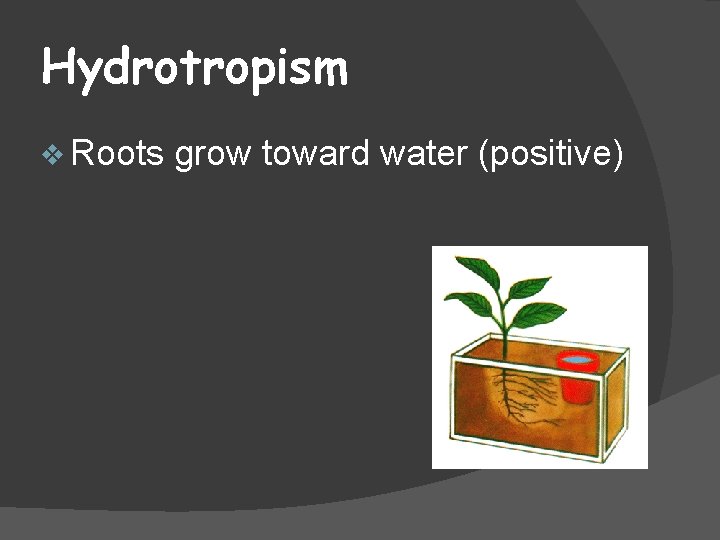
Hydrotropism v Roots grow toward water (positive)
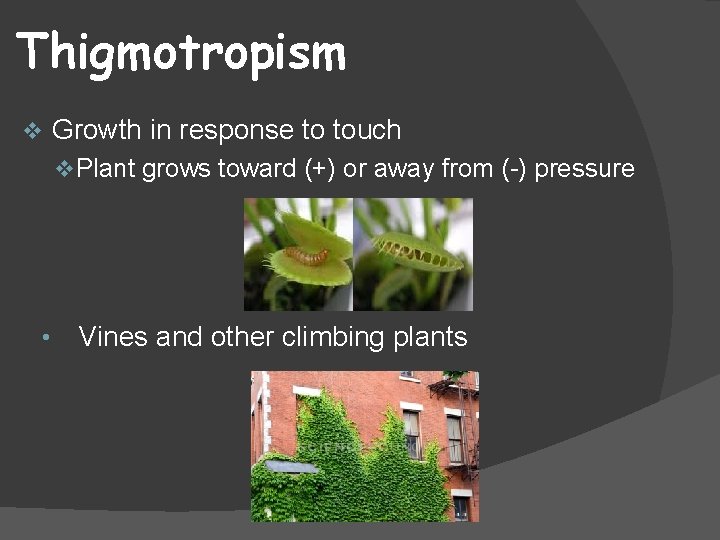
Thigmotropism Growth in response to touch v v. Plant grows toward (+) or away from (-) pressure • Vines and other climbing plants
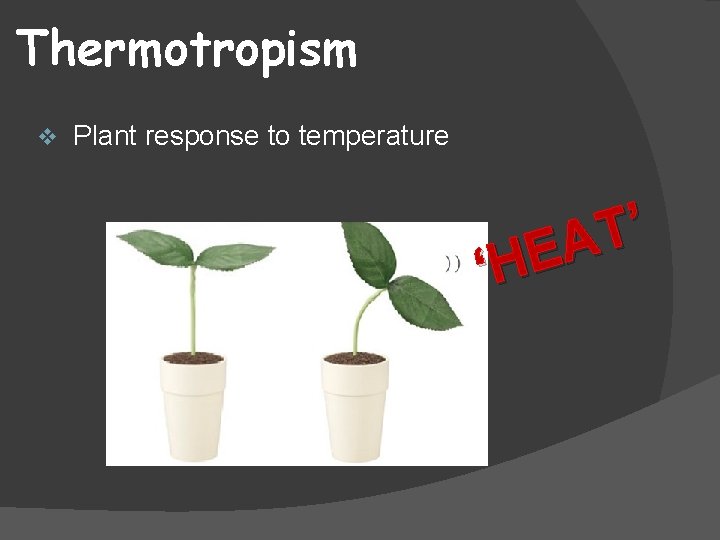
Thermotropism v Plant response to temperature ’ T A E ‘H
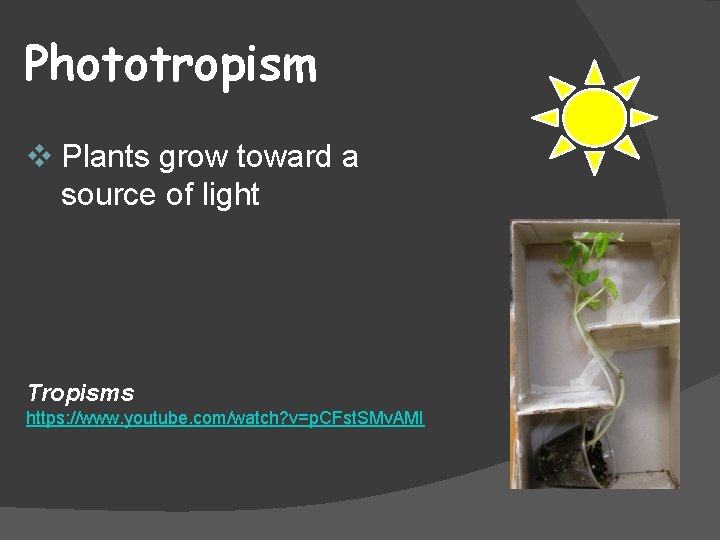
Phototropism v Plants grow toward a source of light Tropisms https: //www. youtube. com/watch? v=p. CFst. SMv. AMI
Plant Hormones
Plant Hormones & Tropisms v Hormones • Chemical signals that coordinate growth, development, and responses to stimuli • Tropisms are often caused by hormones
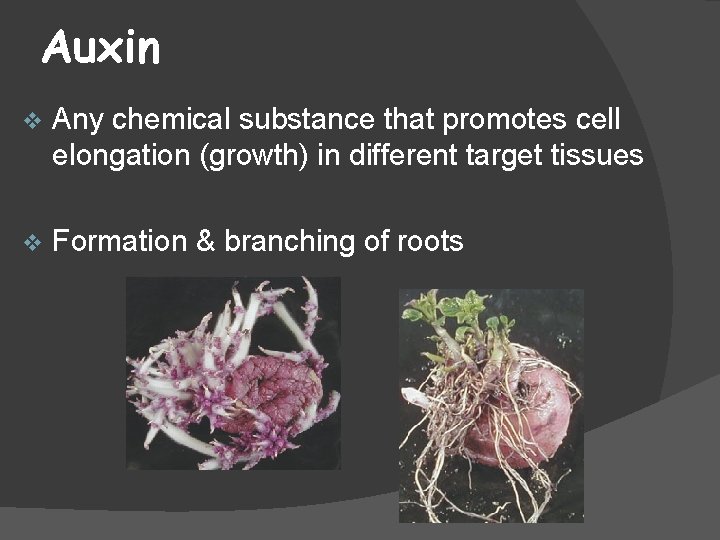
Auxin v Any chemical substance that promotes cell elongation (growth) in different target tissues v Formation & branching of roots
Gibberellins Stem elongation (growth) v Fruit growth v Seed germination v
Cytokinins Stimulate cell division v Found in actively growing tissues v
Ethylene “Aging” hormone v Causes fruits to ripen v