
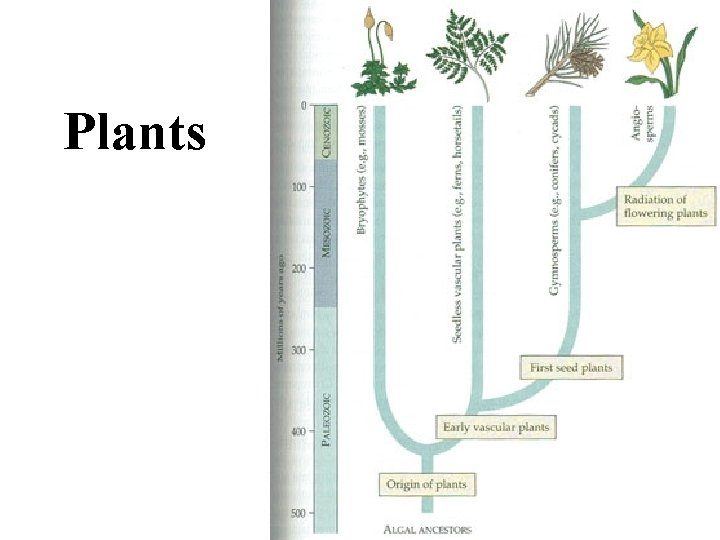
Plants Plant Evolution Evolved from green algae 450



- Slides: 66
Plants
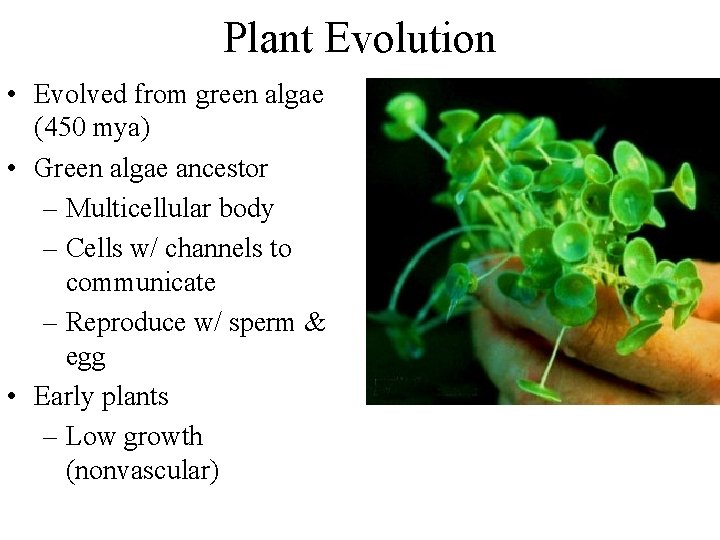
Plant Evolution • Evolved from green algae (450 mya) • Green algae ancestor – Multicellular body – Cells w/ channels to communicate – Reproduce w/ sperm & egg • Early plants – Low growth (nonvascular)
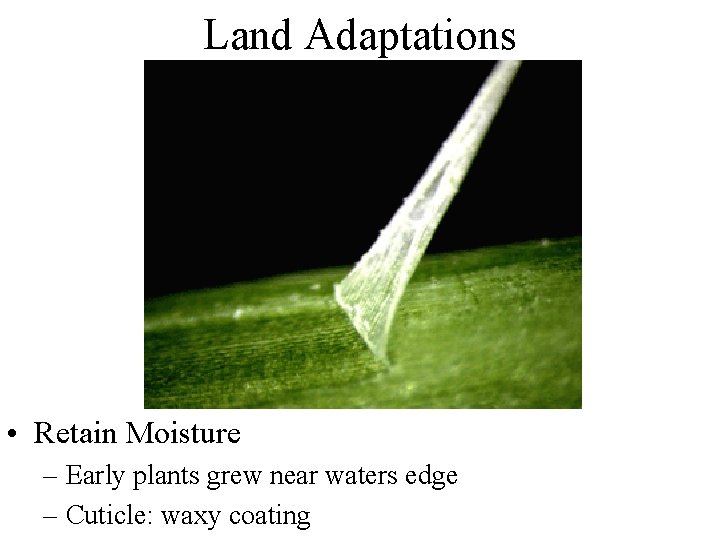
Land Adaptations • Retain Moisture – Early plants grew near waters edge – Cuticle: waxy coating
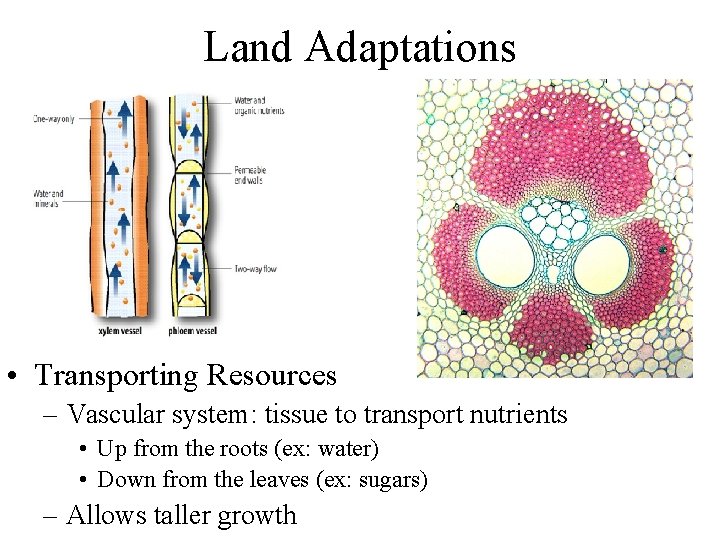
Land Adaptations • Transporting Resources – Vascular system: tissue to transport nutrients • Up from the roots (ex: water) • Down from the leaves (ex: sugars) – Allows taller growth
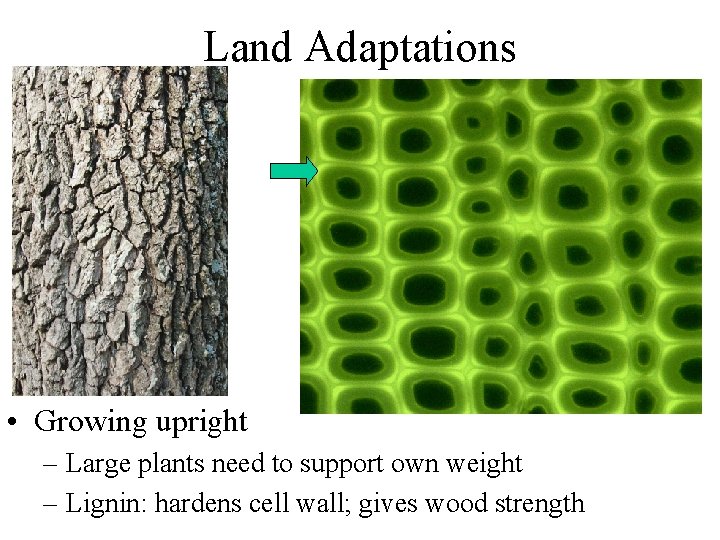
Land Adaptations • Growing upright – Large plants need to support own weight – Lignin: hardens cell wall; gives wood strength
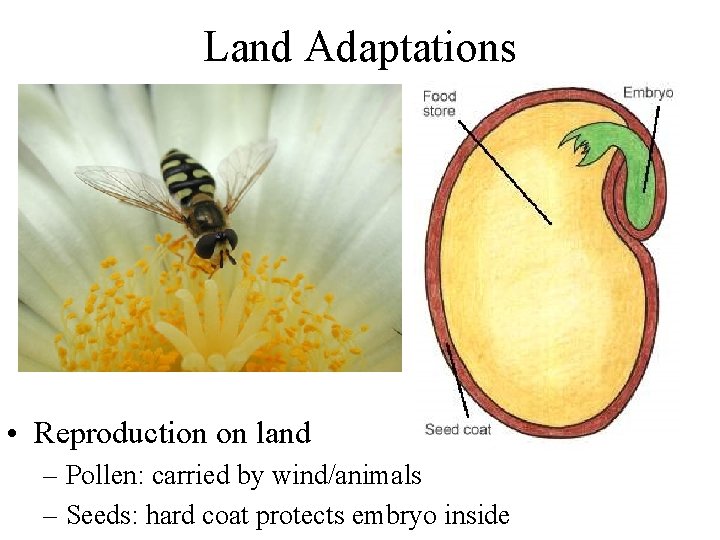
Land Adaptations • Reproduction on land – Pollen: carried by wind/animals – Seeds: hard coat protects embryo inside
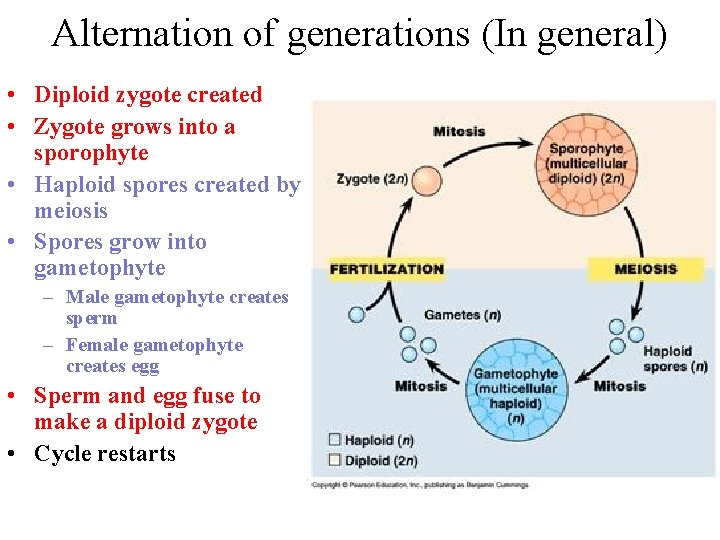
Alternation of generations (In general) • Diploid zygote created • Zygote grows into a sporophyte • Haploid spores created by meiosis • Spores grow into gametophyte – Male gametophyte creates sperm – Female gametophyte creates egg • Sperm and egg fuse to make a diploid zygote • Cycle restarts
Kobe Kuiz 1) What traits do plants and plant-like protista share? 2) Name 4 adaptations that plants have for life on land. 3) Which plant adaptation allows them to carry nutrients to great heights? 4) Which plant adaptation allows them to retain moisture? 5) What is the purpose of lignin? 6) What is the chromosome combination for the sporophyte stage? 7) What is the chromosome combination for the gametophyte stage? 8) What does the gametophyte stage create? 9) What does the sporophyte stage create?
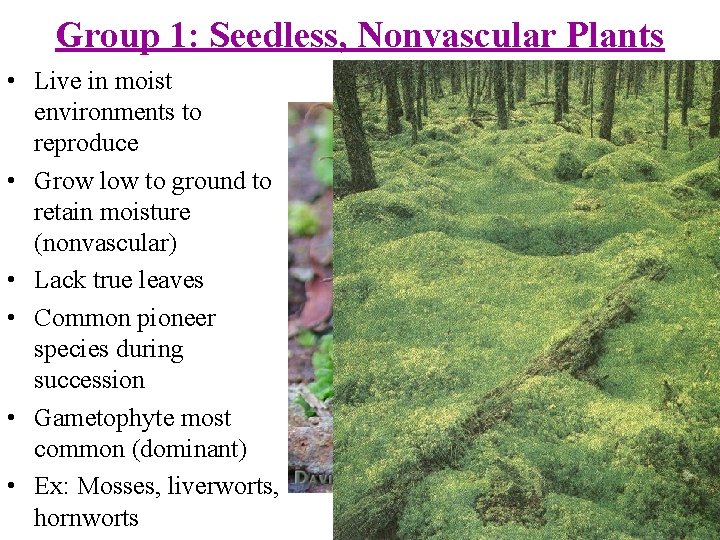
Group 1: Seedless, Nonvascular Plants • Live in moist environments to reproduce • Grow low to ground to retain moisture (nonvascular) • Lack true leaves • Common pioneer species during succession • Gametophyte most common (dominant) • Ex: Mosses, liverworts, hornworts
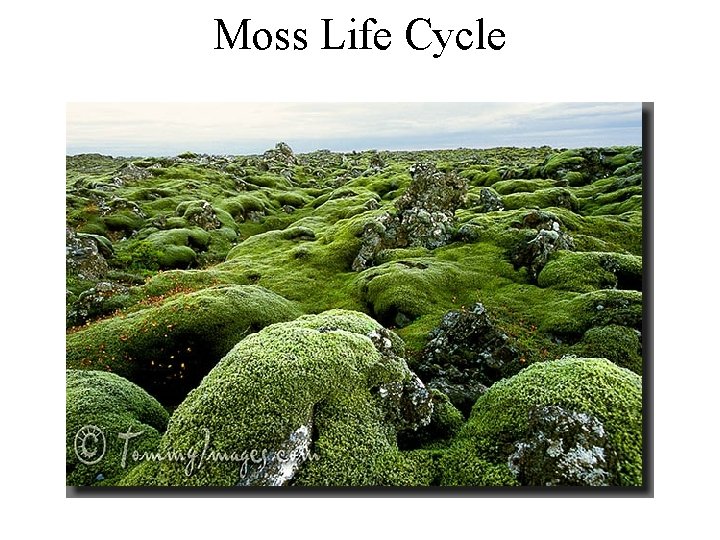
Moss Life Cycle
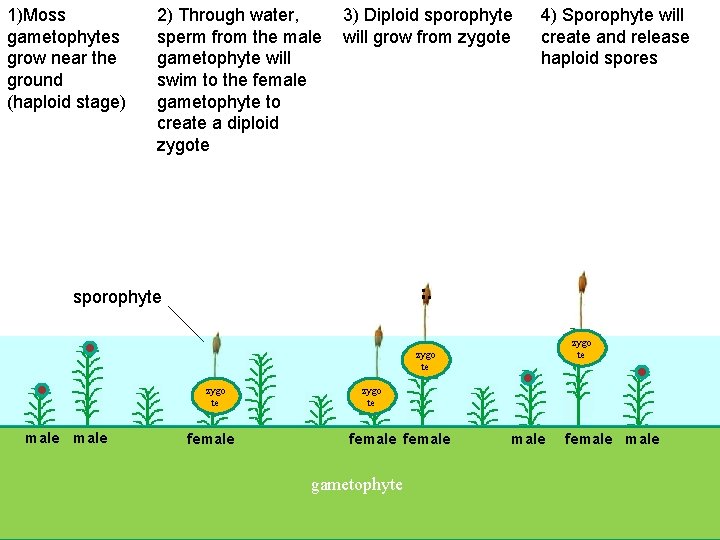
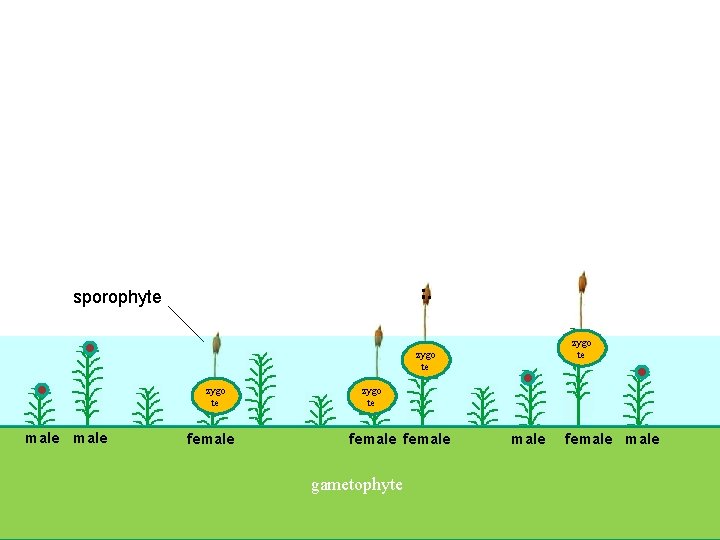
1)Moss gametophytes grow near the ground (haploid stage) 2) Through water, sperm from the male gametophyte will swim to the female gametophyte to create a diploid zygote 3) Diploid sporophyte will grow from zygote 4) Sporophyte will create and release haploid spores . . . sporophyte zygo egg te male female zygo egg te female gametophyte male female
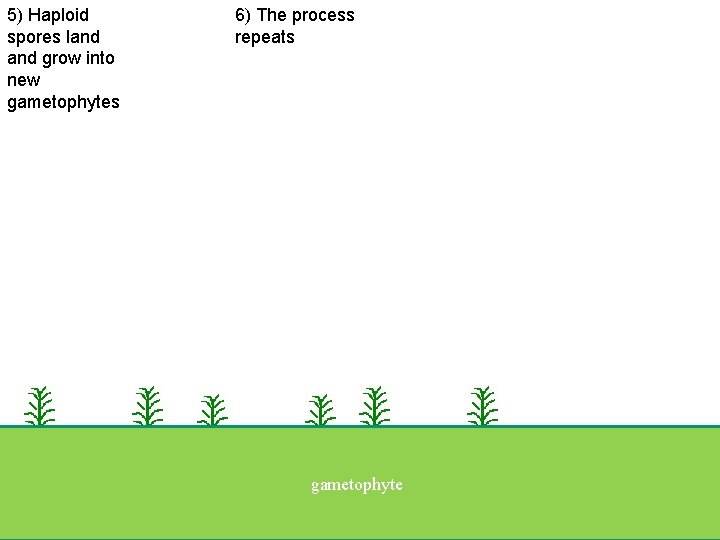
5) Haploid spores land grow into new gametophytes 6) The process repeats gametophyte ground
. . . sporophyte zygo egg te male female zygo egg te female gametophyte male female
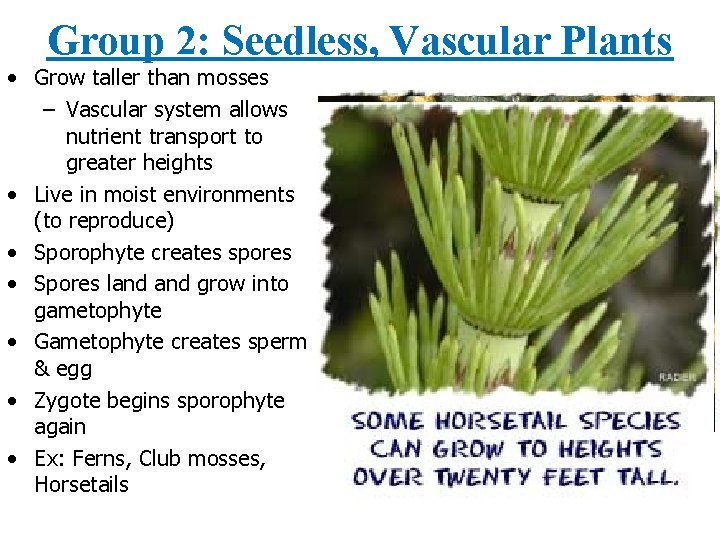
Group 2: Seedless, Vascular Plants • Grow taller than mosses – Vascular system allows nutrient transport to greater heights • Live in moist environments (to reproduce) • Sporophyte creates spores • Spores land grow into gametophyte • Gametophyte creates sperm & egg • Zygote begins sporophyte again • Ex: Ferns, Club mosses, Horsetails
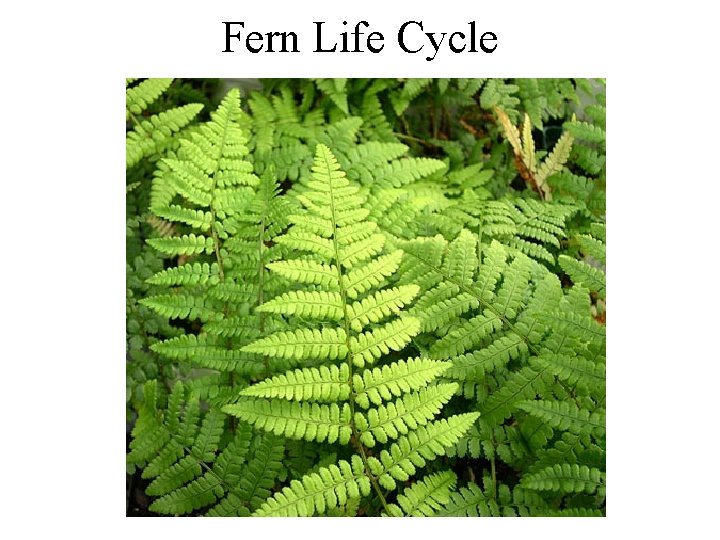
Fern Life Cycle
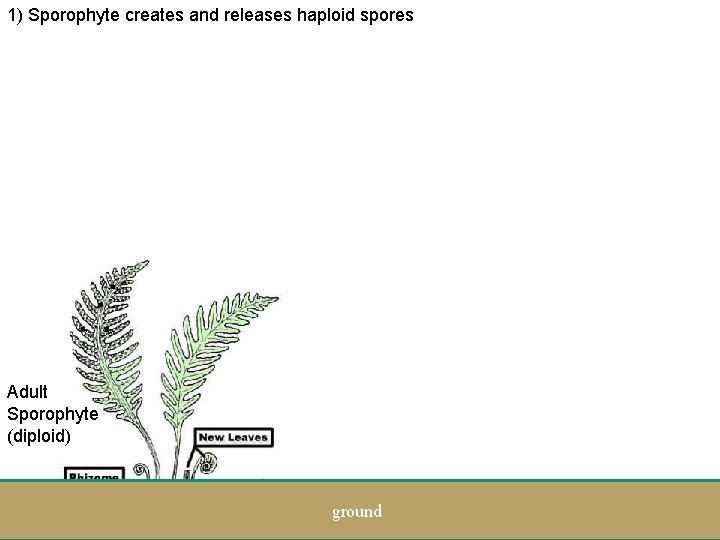
1) Sporophyte creates and releases haploid spores . . Adult Sporophyte (diploid) ground
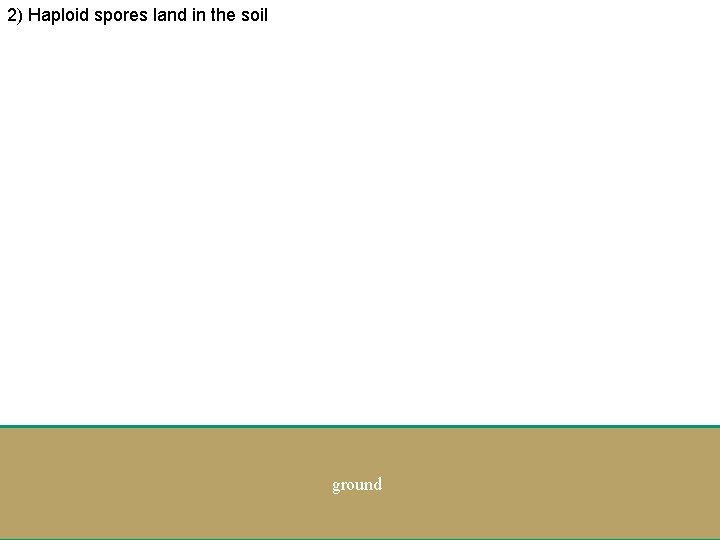
2) Haploid spores land in the soil ground
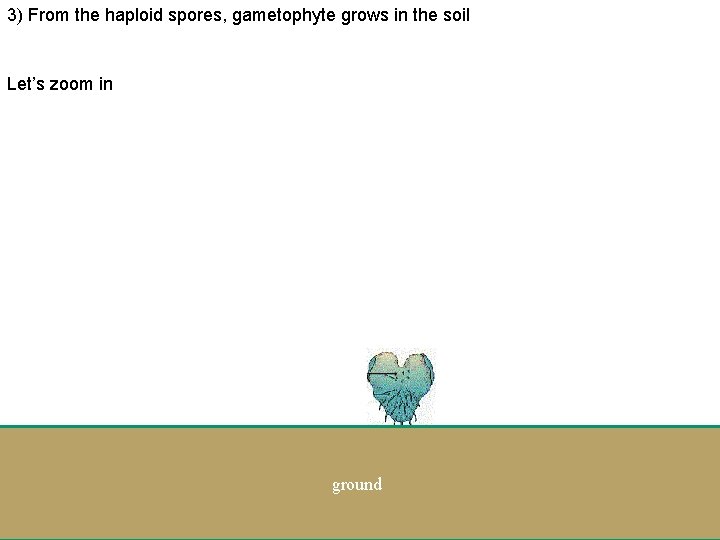
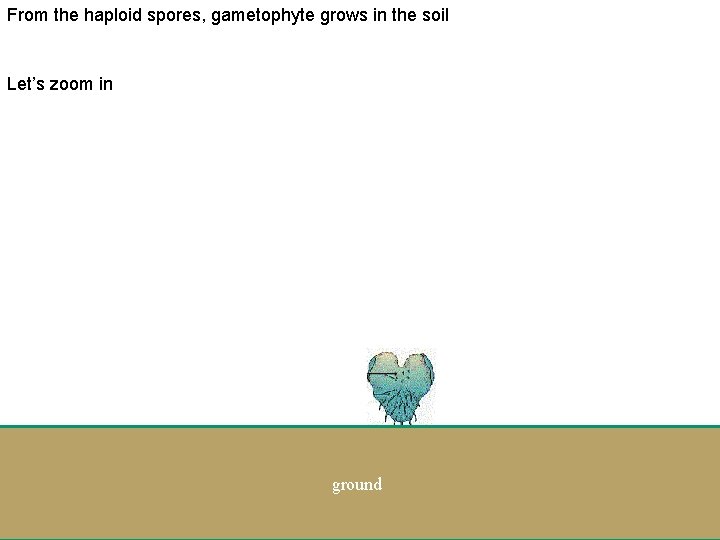
3) From the haploid spores, gametophyte grows in the soil Let’s zoom in ground
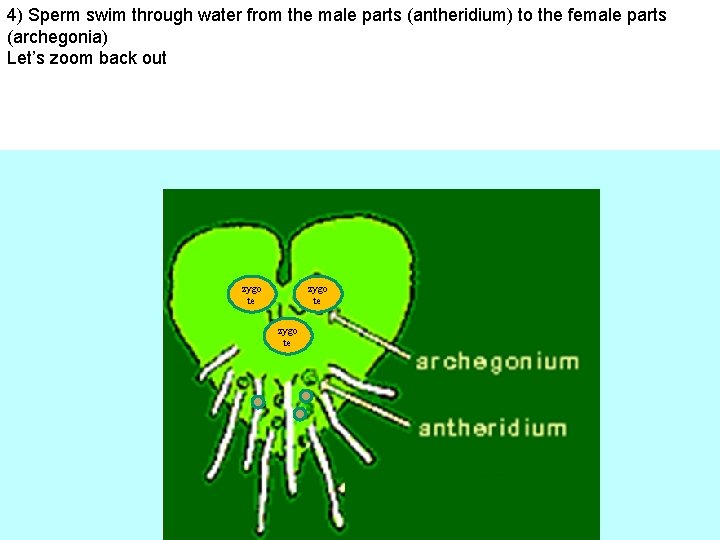
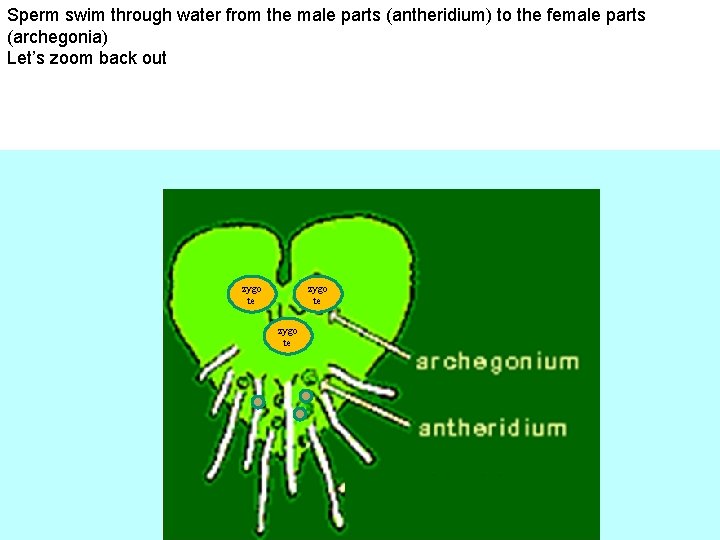
4) Sperm swim through water from the male parts (antheridium) to the female parts (archegonia) Let’s zoom back out zygo egg te
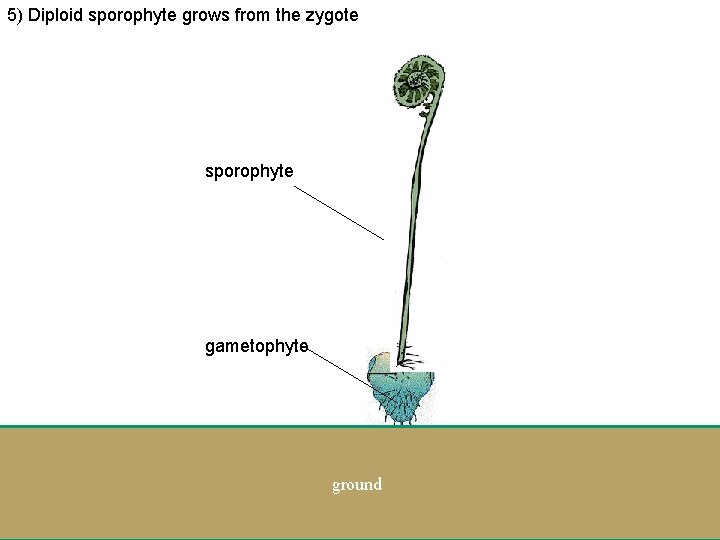
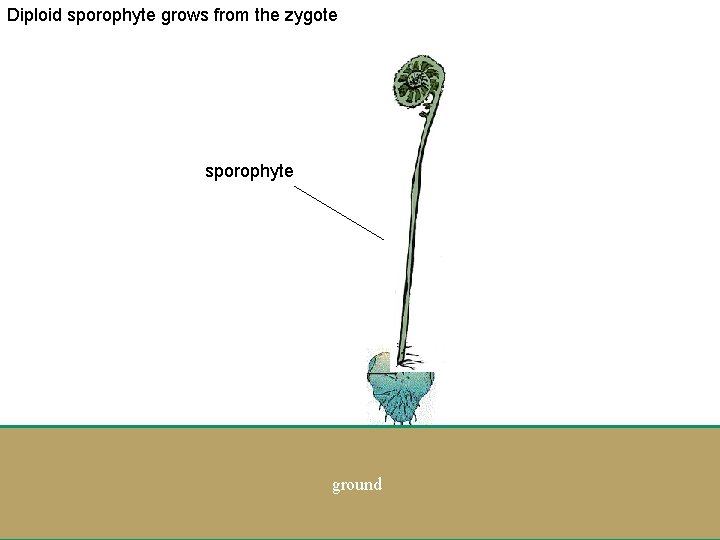
5) Diploid sporophyte grows from the zygote sporophyte gametophyte ground
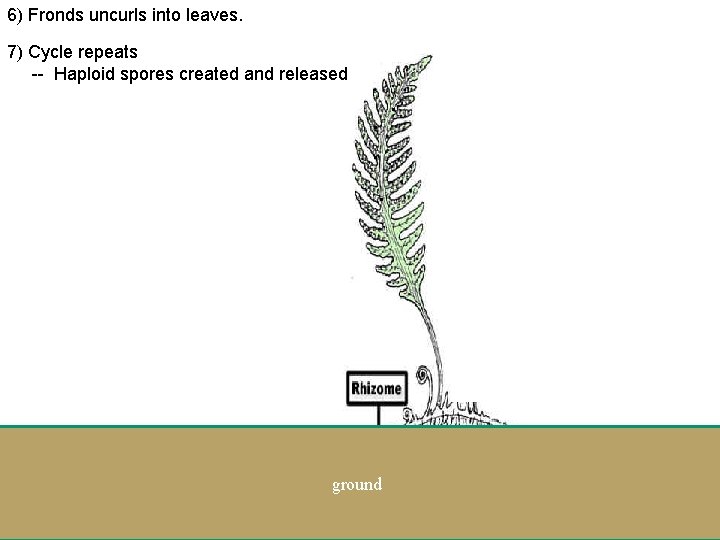
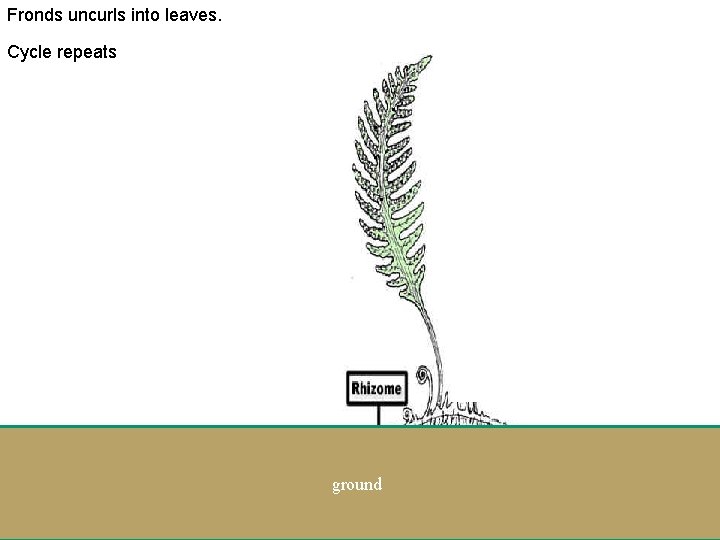
6) Fronds uncurls into leaves. 7) Cycle repeats -- Haploid spores created and released . . . ground .
Haploid spores land in the soil ground
From the haploid spores, gametophyte grows in the soil Let’s zoom in ground
Sperm swim through water from the male parts (antheridium) to the female parts (archegonia) Let’s zoom back out zygo egg te
Diploid sporophyte grows from the zygote sporophyte ground
Fronds uncurls into leaves. Cycle repeats . . . ground .
Kobe Kuiz 1) Why do moss grow so low to the ground? 2) Which stage is the main stage of moss: sporophyte or gametophyte? 3) How do moss reproduce? 4) What is the major difference between moss and ferns? 5) What are the leaves of ferns called? 6) What is needed for moss and ferns to reproduce? 7) What stage is created when sperm and egg fuse: sporophyte or gametophyte?
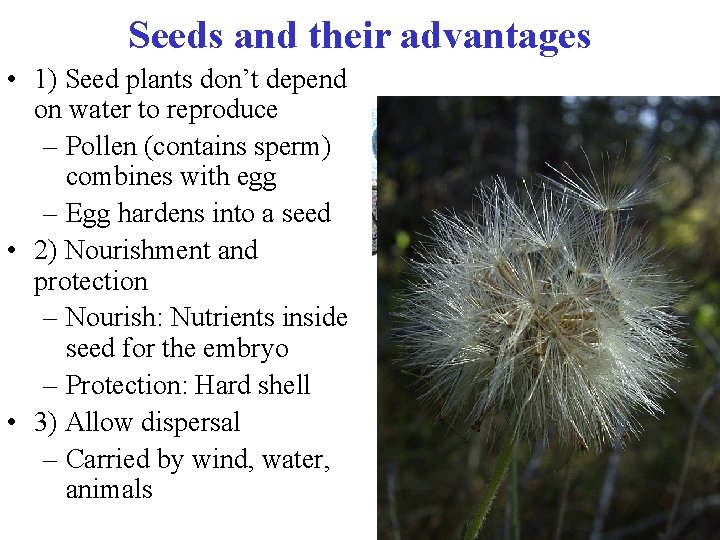
Seeds and their advantages • 1) Seed plants don’t depend on water to reproduce – Pollen (contains sperm) combines with egg – Egg hardens into a seed • 2) Nourishment and protection – Nourish: Nutrients inside seed for the embryo – Protection: Hard shell • 3) Allow dispersal – Carried by wind, water, animals
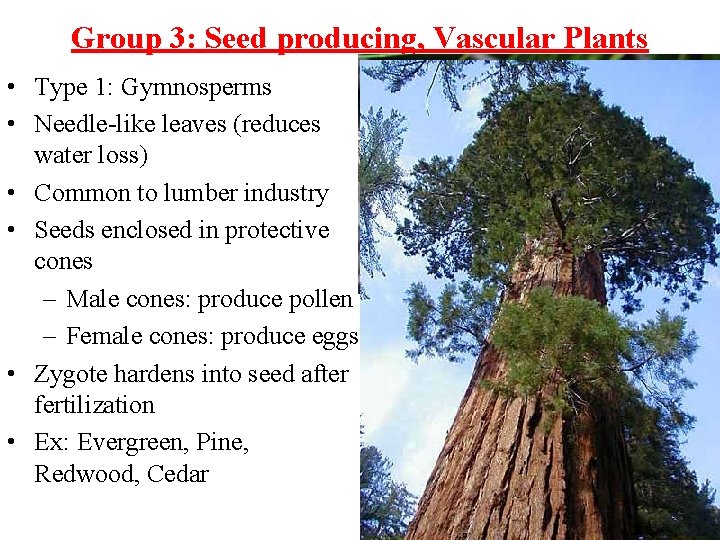
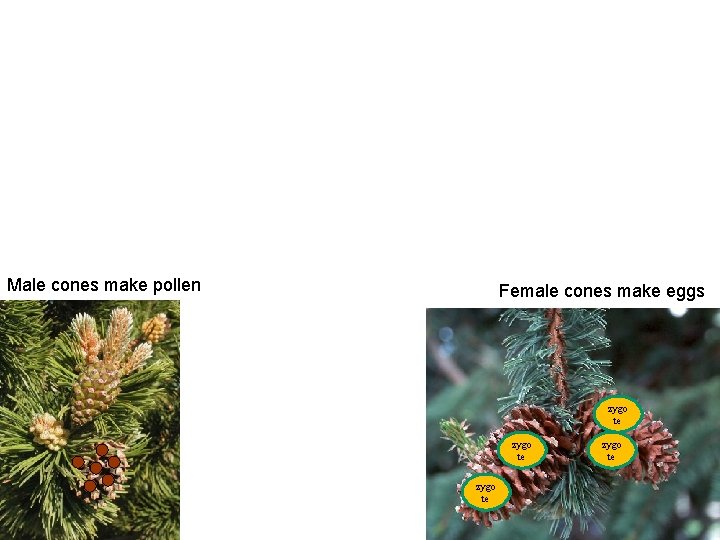
Group 3: Seed producing, Vascular Plants • Type 1: Gymnosperms • Needle-like leaves (reduces water loss) • Common to lumber industry • Seeds enclosed in protective cones – Male cones: produce pollen – Female cones: produce eggs • Zygote hardens into seed after fertilization • Ex: Evergreen, Pine, Redwood, Cedar
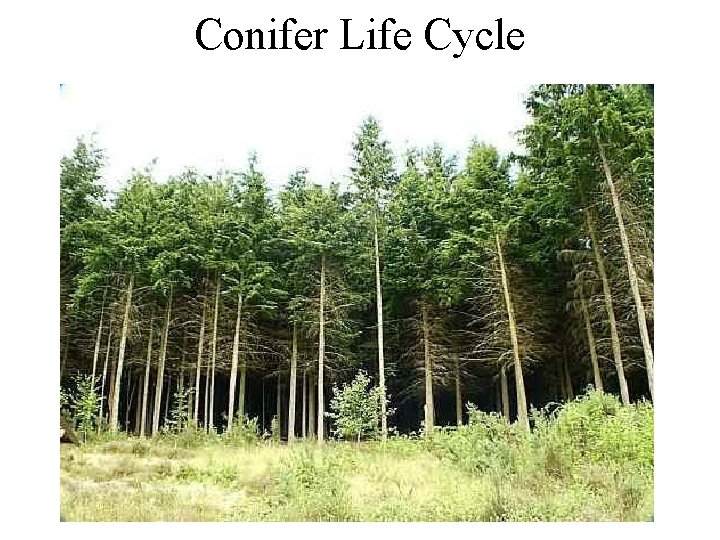
Conifer Life Cycle
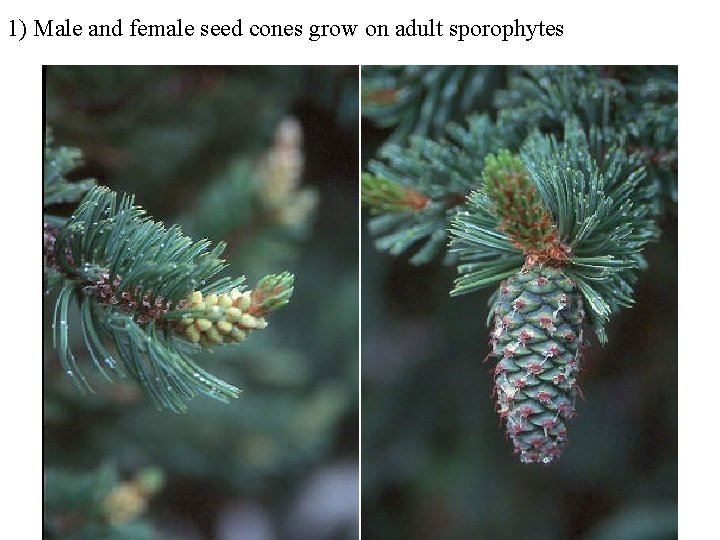
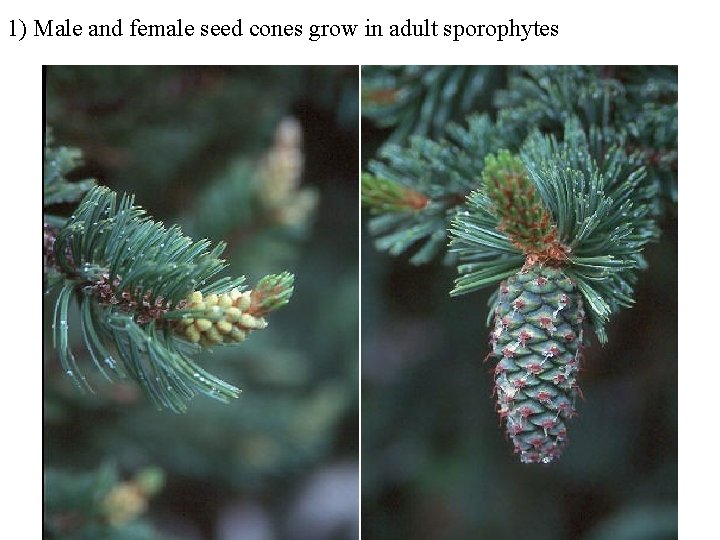
1) Male and female seed cones grow on adult sporophytes
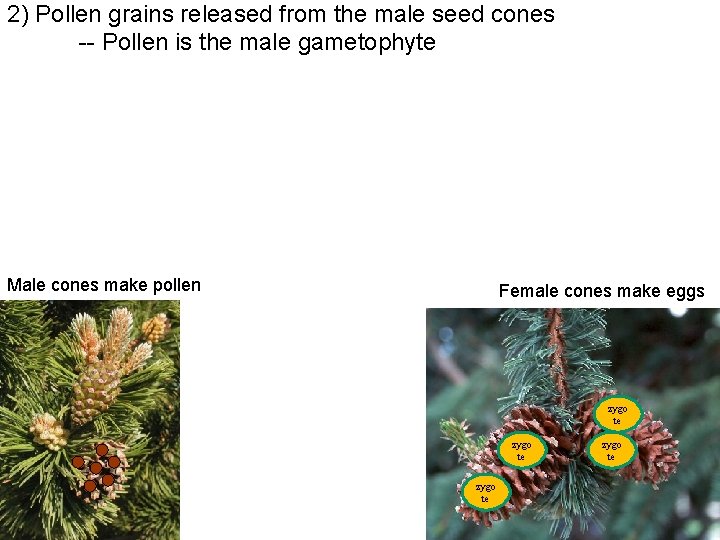
2) Pollen grains released from the male seed cones -- Pollen is the male gametophyte Male cones make pollen Female cones make eggs zygo egg te
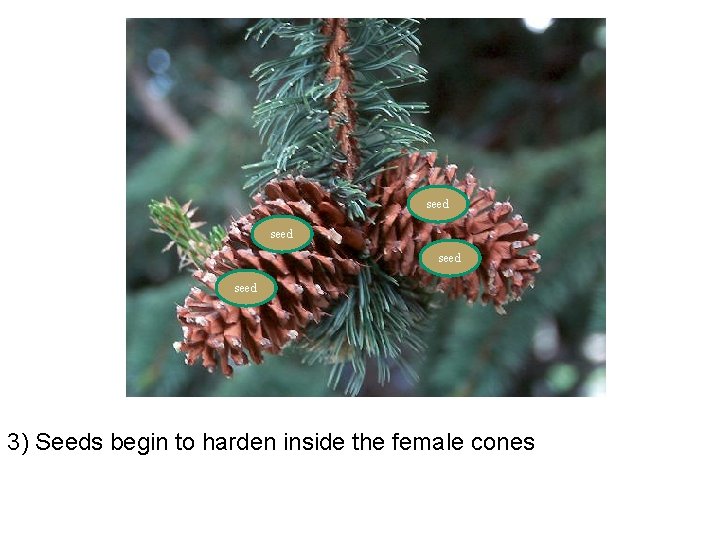
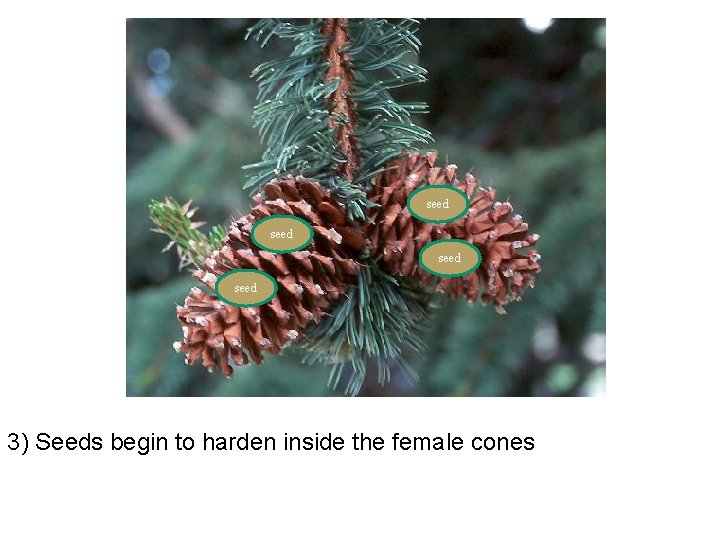
seed 3) Seeds begin to harden inside the female cones
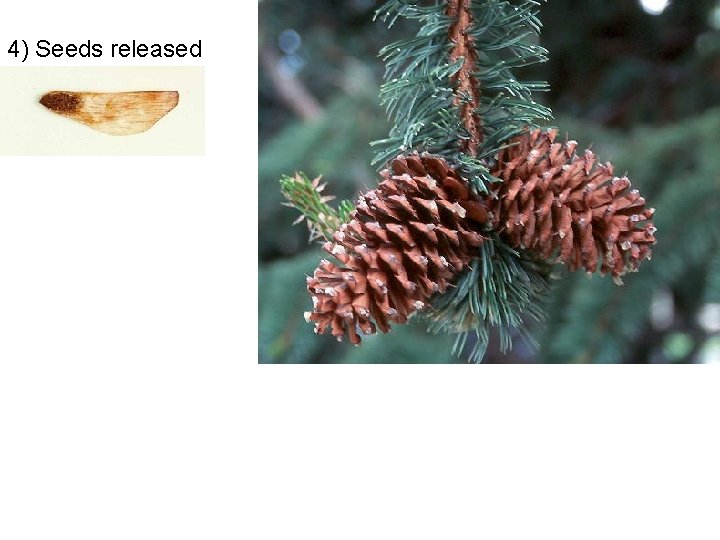
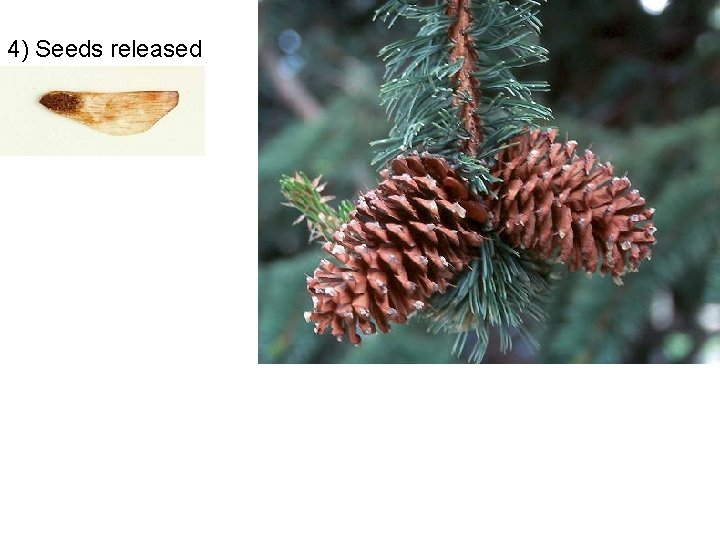
4) Seeds released
5) Seed will land ground
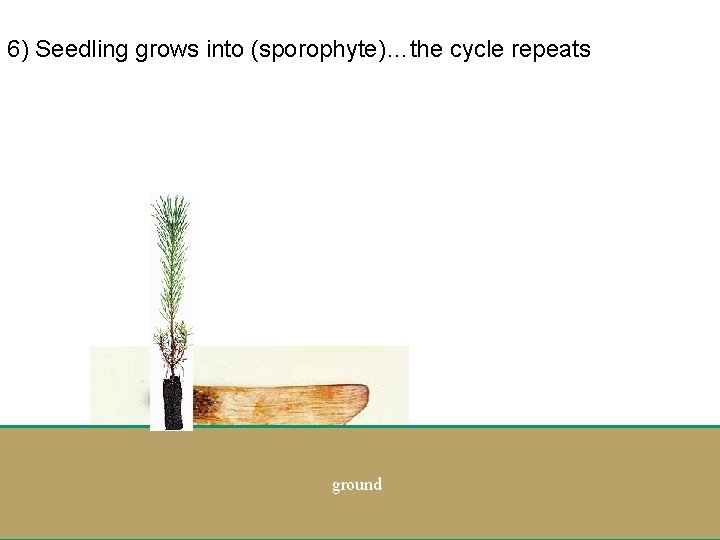
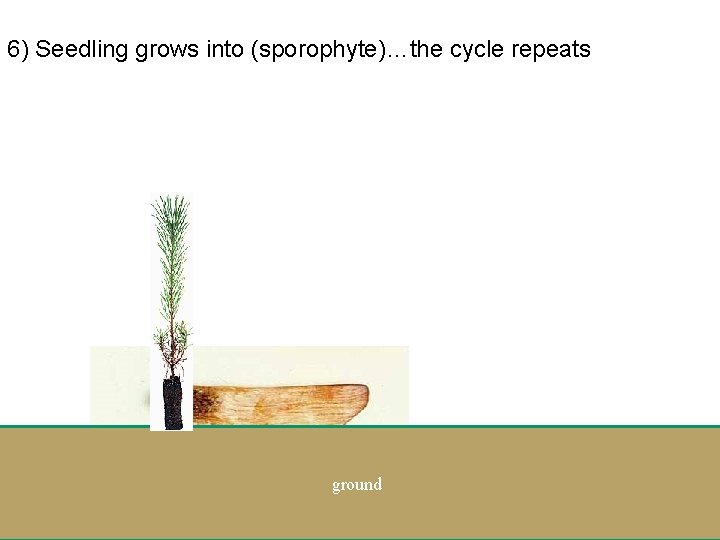
6) Seedling grows into (sporophyte)…the cycle repeats ground
1) Male and female seed cones grow in adult sporophytes
Male cones make pollen Female cones make eggs zygo egg te
seed 3) Seeds begin to harden inside the female cones
4) Seeds released
5) Seed will land ground
6) Seedling grows into (sporophyte)…the cycle repeats ground
Kobe Kuiz 1) 2) 3) 4) 5) Name three advantages of seeds. Which structure will protect gymnosperm seeds? What do male cones produce? What do female cones produce? What is created when the sperm and egg fuse: sporophyte or gametophyte?
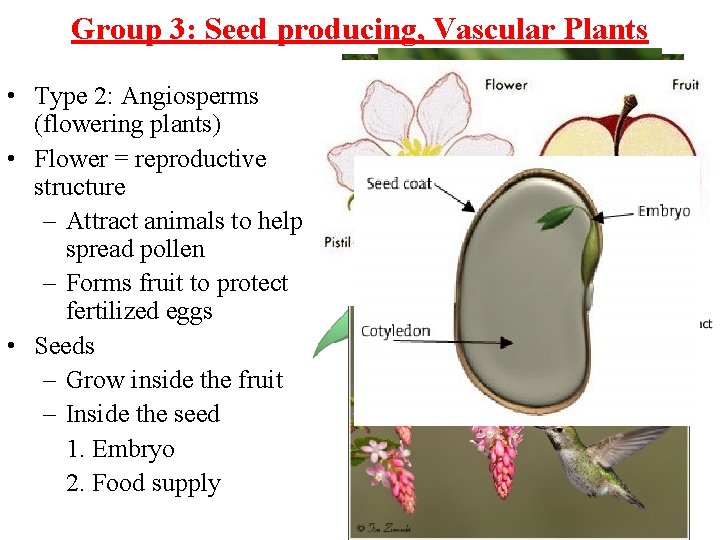
Group 3: Seed producing, Vascular Plants • Type 2: Angiosperms (flowering plants) • Flower = reproductive structure – Attract animals to help spread pollen – Forms fruit to protect fertilized eggs • Seeds – Grow inside the fruit – Inside the seed 1. Embryo 2. Food supply
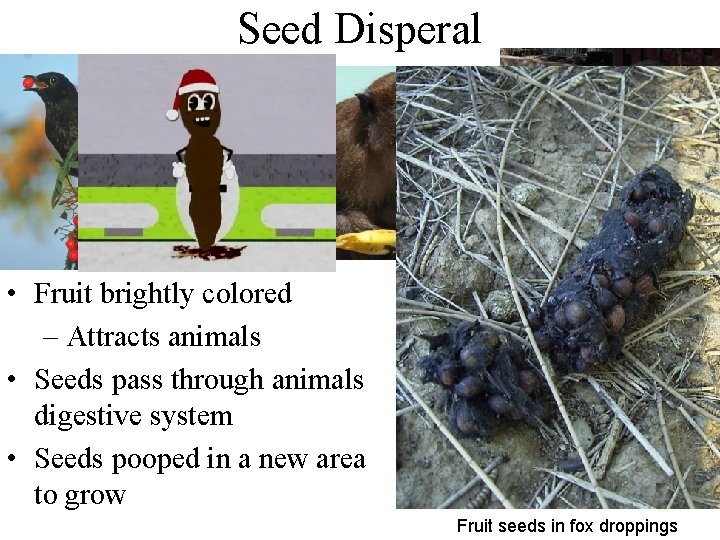
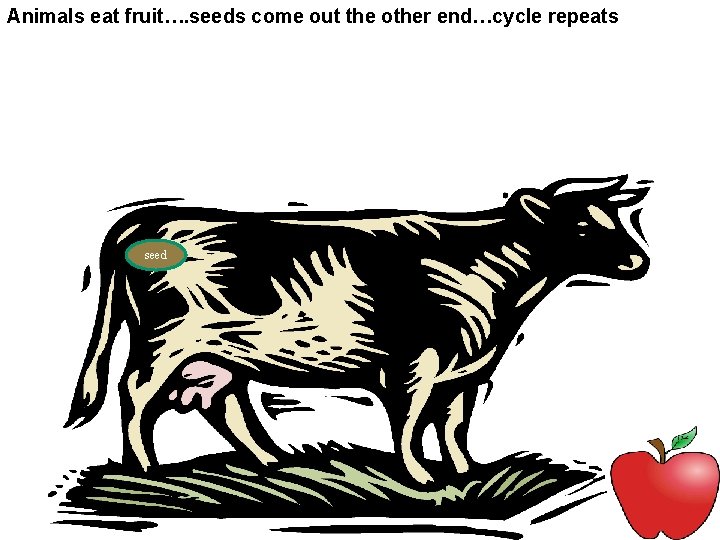
Seed Disperal • Fruit brightly colored – Attracts animals • Seeds pass through animals digestive system • Seeds pooped in a new area to grow Fruit seeds in fox droppings
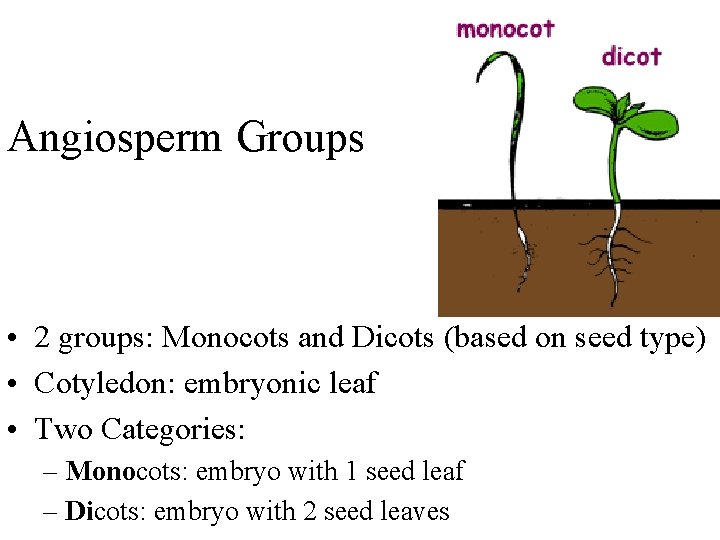
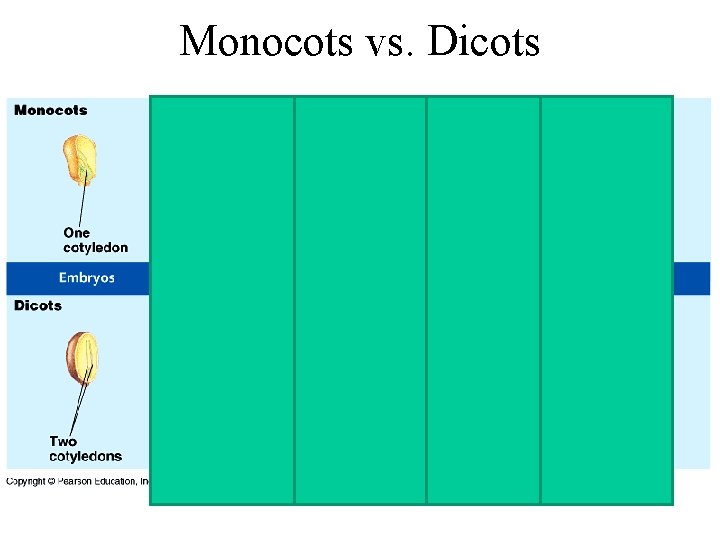
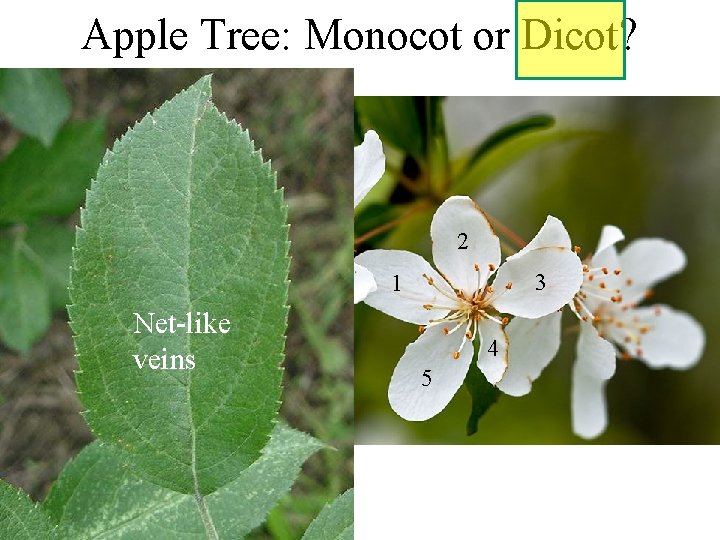
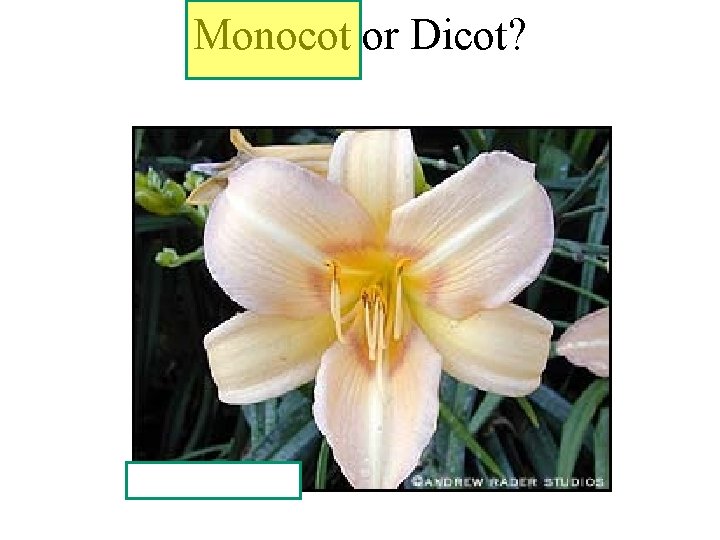
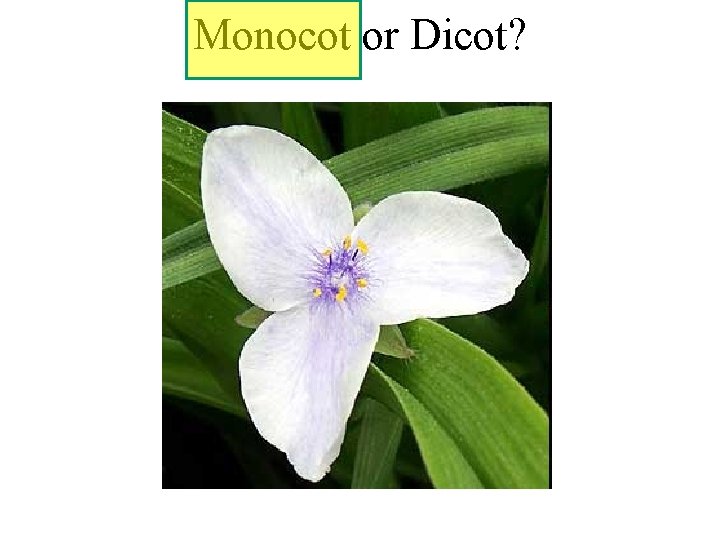
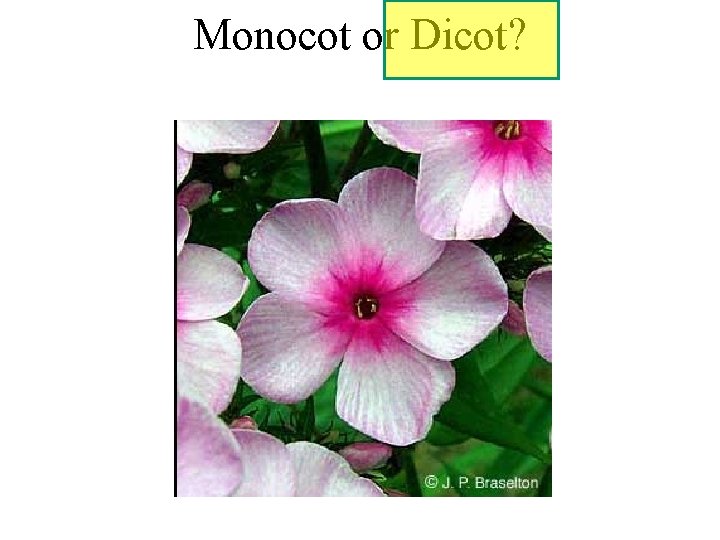
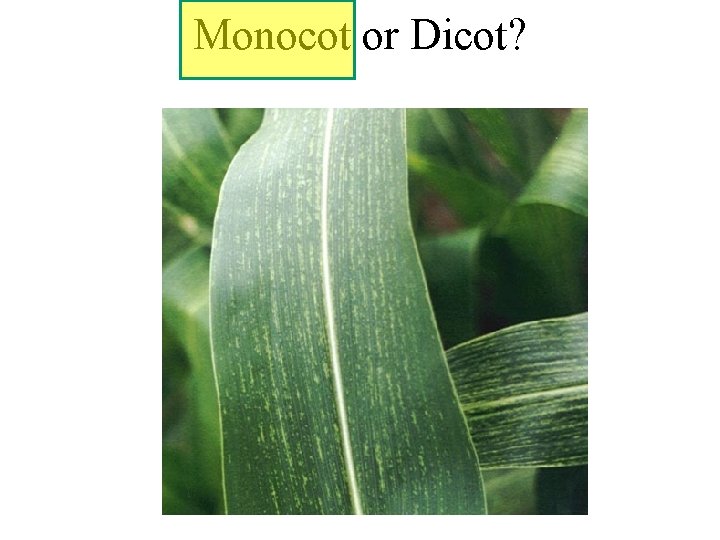
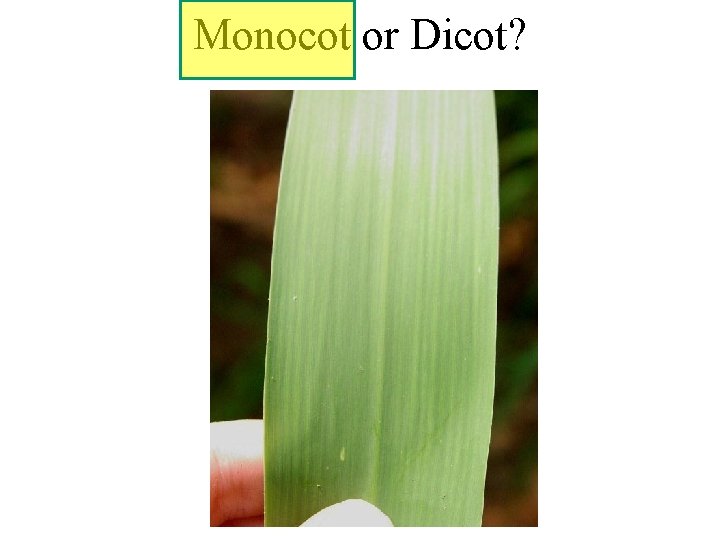
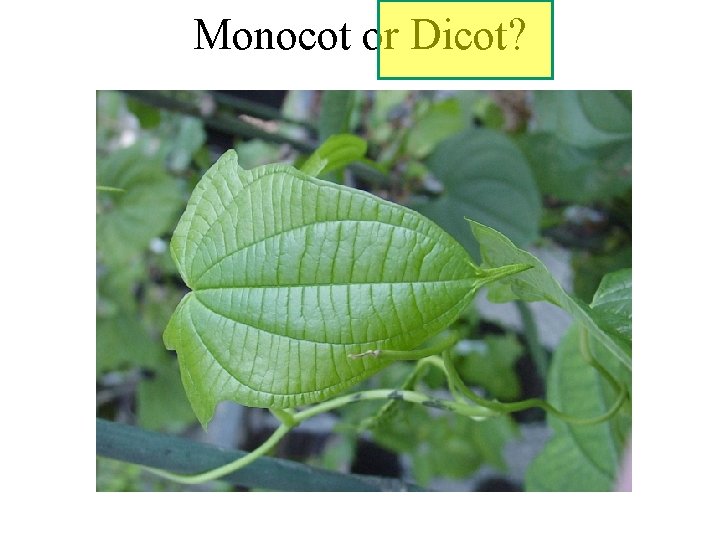
Angiosperm Groups • 2 groups: Monocots and Dicots (based on seed type) • Cotyledon: embryonic leaf • Two Categories: – Monocots: embryo with 1 seed leaf – Dicots: embryo with 2 seed leaves
Monocots vs. Dicots
Apple Tree: Monocot or Dicot? 2 3 1 Net-like veins 4 5
Monocot or Dicot?
Monocot or Dicot?
Monocot or Dicot?
Monocot or Dicot?
Monocot or Dicot?
Monocot or Dicot?
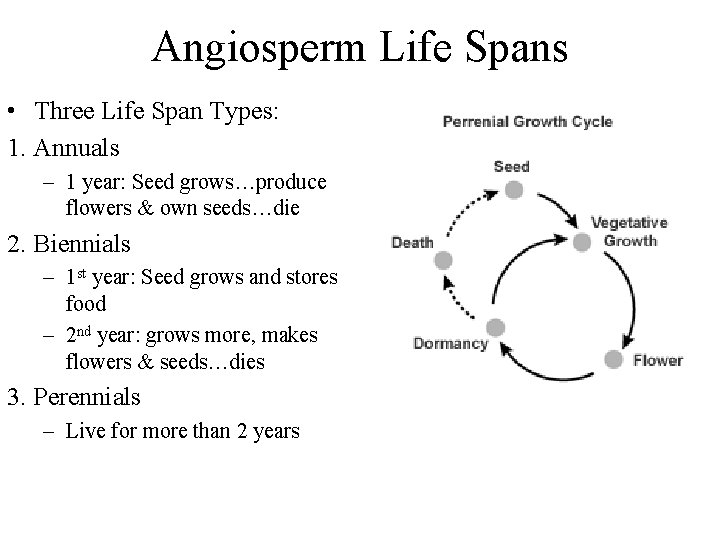
Angiosperm Life Spans • Three Life Span Types: 1. Annuals – 1 year: Seed grows…produce flowers & own seeds…die 2. Biennials – 1 st year: Seed grows and stores food – 2 nd year: grows more, makes flowers & seeds…dies 3. Perennials – Live for more than 2 years
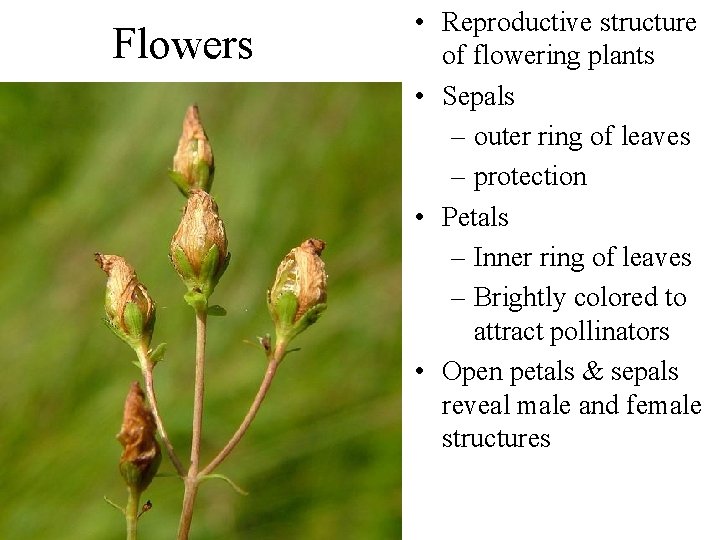
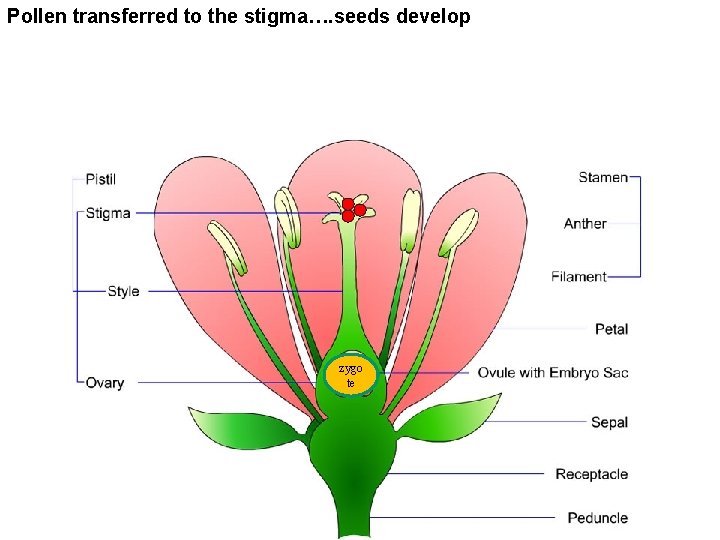
Flowers • Reproductive structure of flowering plants • Sepals – outer ring of leaves – protection • Petals – Inner ring of leaves – Brightly colored to attract pollinators • Open petals & sepals reveal male and female structures
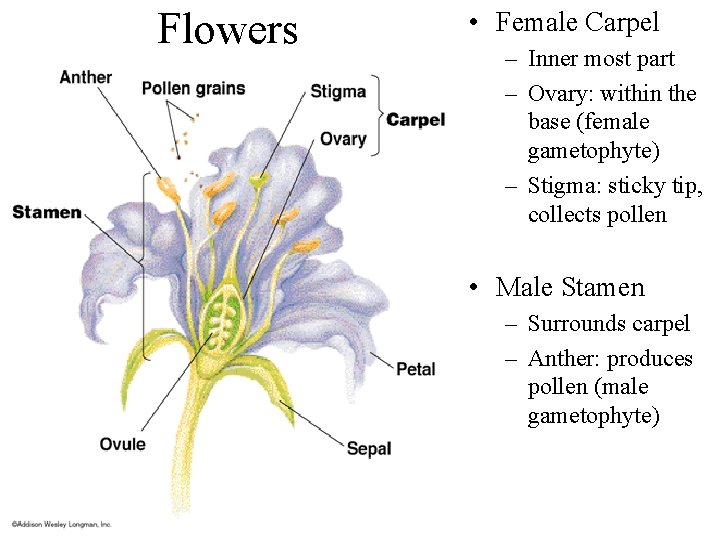
Flowers • Female Carpel – Inner most part – Ovary: within the base (female gametophyte) – Stigma: sticky tip, collects pollen • Male Stamen – Surrounds carpel – Anther: produces pollen (male gametophyte)
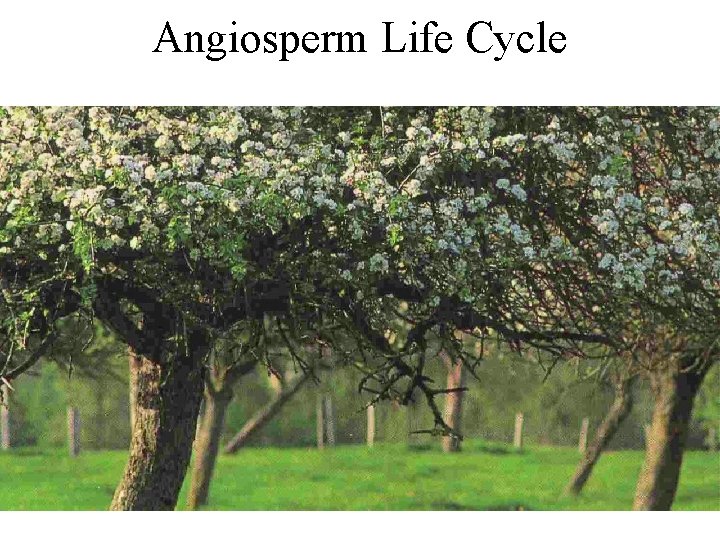
Angiosperm Life Cycle
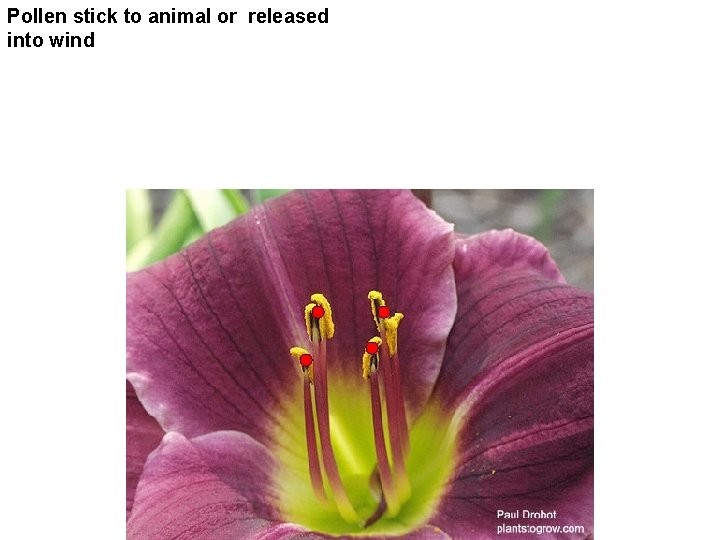
Pollen stick to animal or released into wind
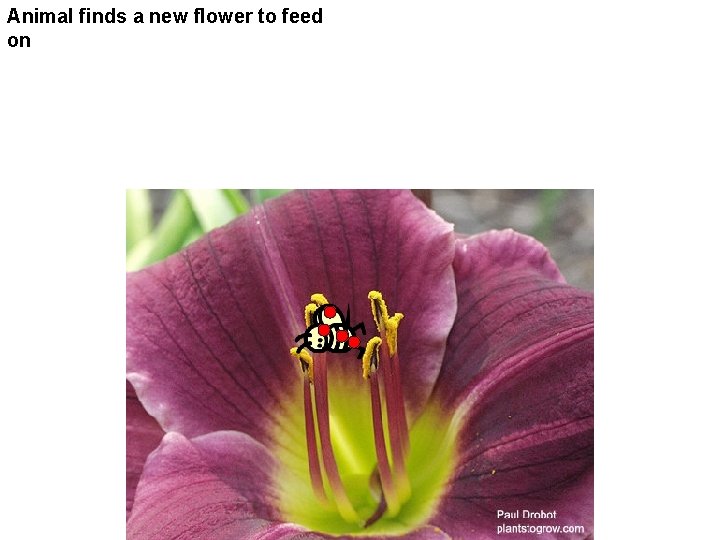
Animal finds a new flower to feed on
Pollen transferred to the stigma…. seeds develop zygo egg te
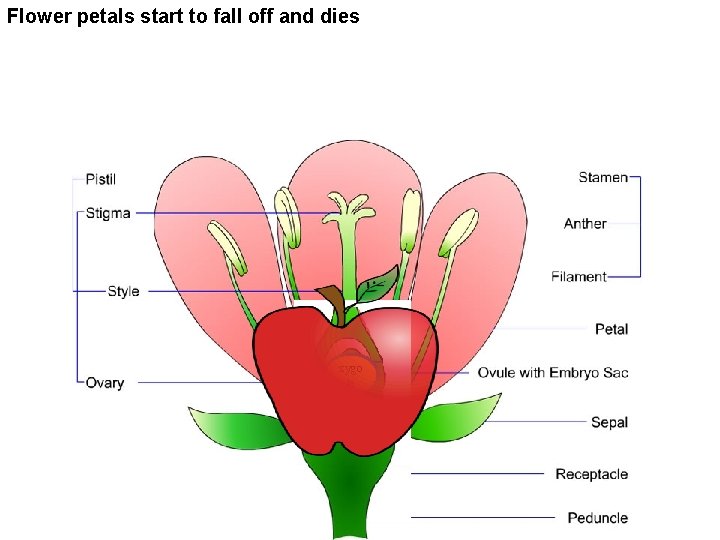
Flower petals start to fall off and dies zygo te
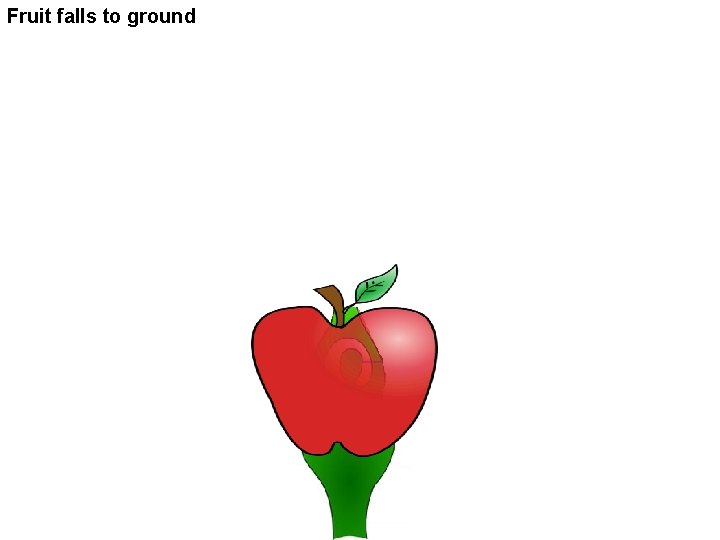
Fruit falls to ground
Animals eat fruit…. seeds come out the other end…cycle repeats seed
End of the Semester!
Kobe Kuiz 1) What is the reproductive structure of angiosperms called? 2) What structure protects the seeds of angiosperms? 3) Why are flowers and fruits often brightly colored? 4) Be able to identify the parts of a flower diagram. 5) Which flower part produces pollen? 6) Which flower part will pollen land upon? 7) Which flowers only live for 2 years and then die? 8) Practice the monocot/dicot sample questions.