
PLANTS Nitty Gritty Science LLC 2016 https padlet

- Slides: 30
PLANTS Nitty Gritty Science, LLC © 2016
• https: //padlet. com/bstacey/plantkingdom Nitty Gritty Science, LLC © 2016
The Plant Kingdom Nitty Gritty Science, LLC © 2016
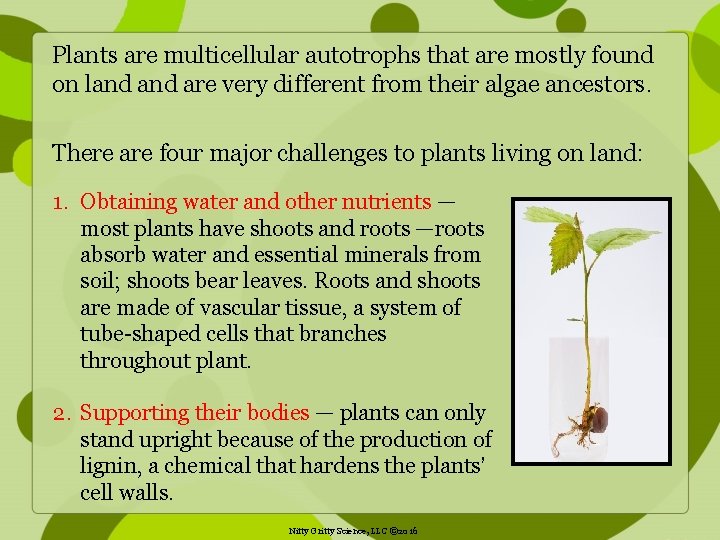
Plants are multicellular autotrophs that are mostly found on land are very different from their algae ancestors. There are four major challenges to plants living on land: 1. Obtaining water and other nutrients — most plants have shoots and roots —roots absorb water and essential minerals from soil; shoots bear leaves. Roots and shoots are made of vascular tissue, a system of tube-shaped cells that branches throughout plant. 2. Supporting their bodies — plants can only stand upright because of the production of lignin, a chemical that hardens the plants’ cell walls. Nitty Gritty Science, LLC © 2016
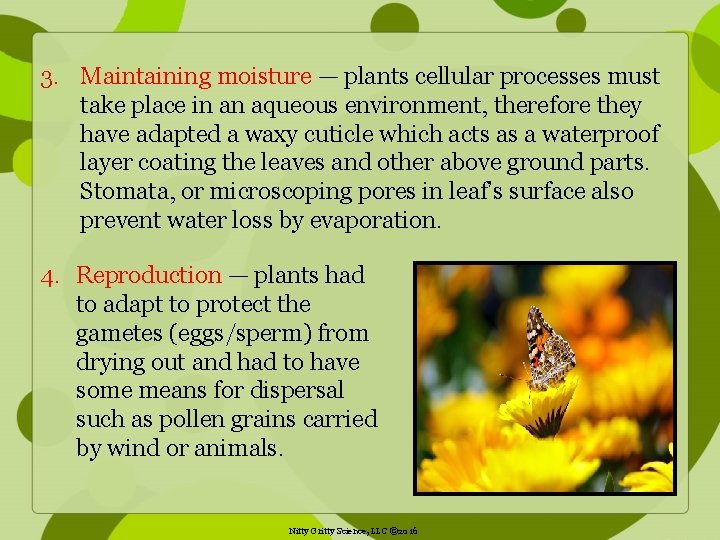
3. Maintaining moisture — plants cellular processes must take place in an aqueous environment, therefore they have adapted a waxy cuticle which acts as a waterproof layer coating the leaves and other above ground parts. Stomata, or microscoping pores in leaf’s surface also prevent water loss by evaporation. 4. Reproduction — plants had to adapt to protect the gametes (eggs/sperm) from drying out and had to have some means for dispersal such as pollen grains carried by wind or animals. Nitty Gritty Science, LLC © 2016
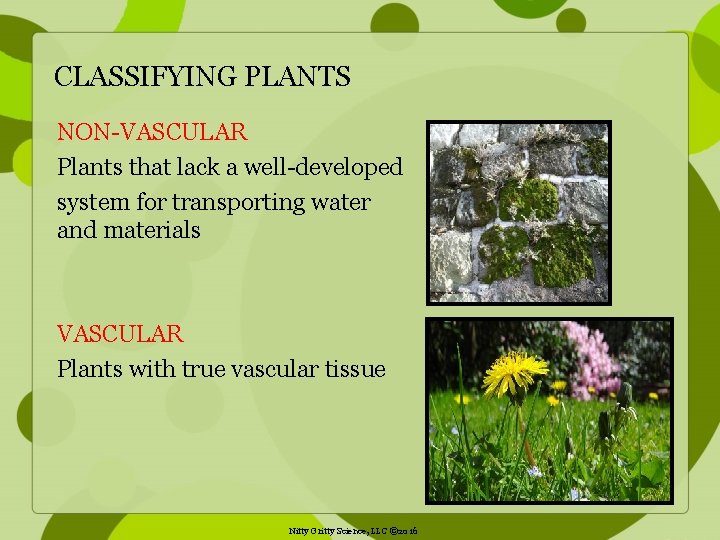
CLASSIFYING PLANTS NON-VASCULAR Plants that lack a well-developed system for transporting water and materials VASCULAR Plants with true vascular tissue Nitty Gritty Science, LLC © 2016
Plants have complex life cycles that include two different stages: Sporophyte stage — plant produces spores, tiny cells that can grow into new organisms; develops into plants other phase, called the gametophyte. Gametophyte stage — plant produces two kinds of sex cells: sperm cells and egg cells Nitty Gritty Science, LLC © 2016
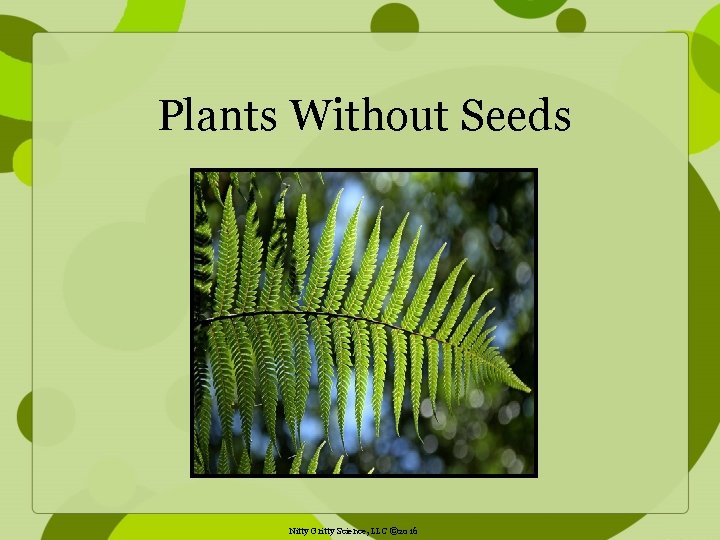
Plants Without Seeds Nitty Gritty Science, LLC © 2016
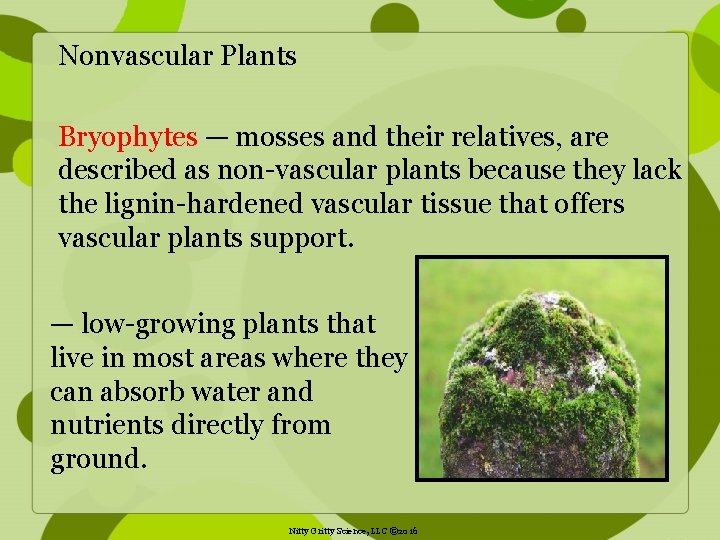
Nonvascular Plants Bryophytes — mosses and their relatives, are described as non-vascular plants because they lack the lignin-hardened vascular tissue that offers vascular plants support. — low-growing plants that live in most areas where they can absorb water and nutrients directly from ground. Nitty Gritty Science, LLC © 2016
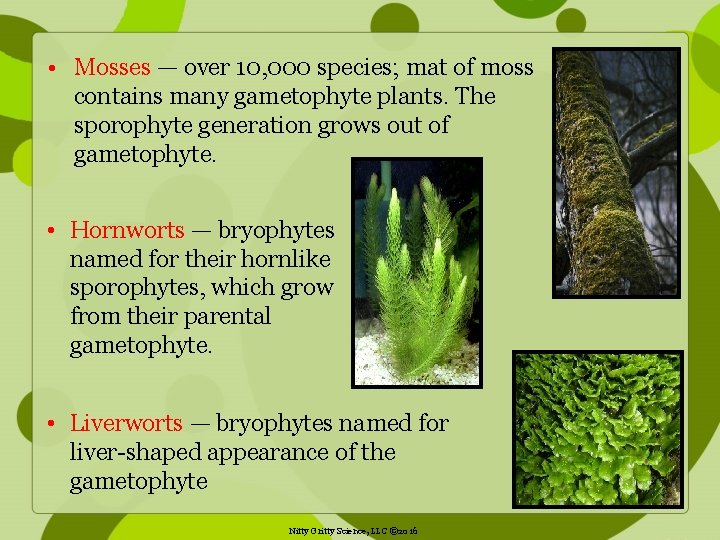
• Mosses — over 10, 000 species; mat of moss contains many gametophyte plants. The sporophyte generation grows out of gametophyte. • Hornworts — bryophytes named for their hornlike sporophytes, which grow from their parental gametophyte. • Liverworts — bryophytes named for liver-shaped appearance of the gametophyte Nitty Gritty Science, LLC © 2016
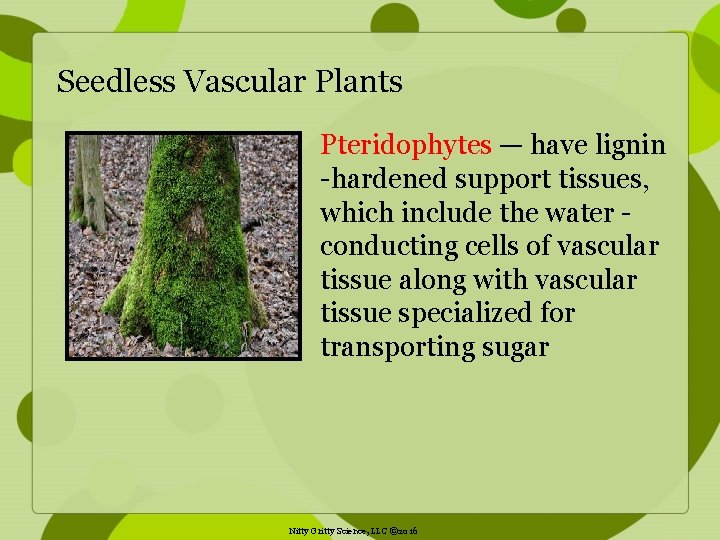
Seedless Vascular Plants Pteridophytes — have lignin -hardened support tissues, which include the water - conducting cells of vascular tissue along with vascular tissue specialized for transporting sugar Nitty Gritty Science, LLC © 2016
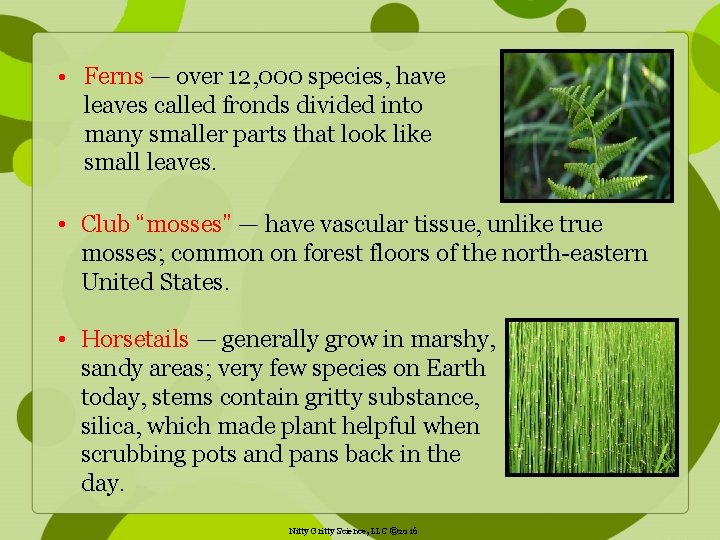
• Ferns — over 12, 000 species, have leaves called fronds divided into many smaller parts that look like small leaves. • Club “mosses” — have vascular tissue, unlike true mosses; common on forest floors of the north-eastern United States. • Horsetails — generally grow in marshy, sandy areas; very few species on Earth today, stems contain gritty substance, silica, which made plant helpful when scrubbing pots and pans back in the day. Nitty Gritty Science, LLC © 2016
Seed Plants Nitty Gritty Science, LLC © 2016
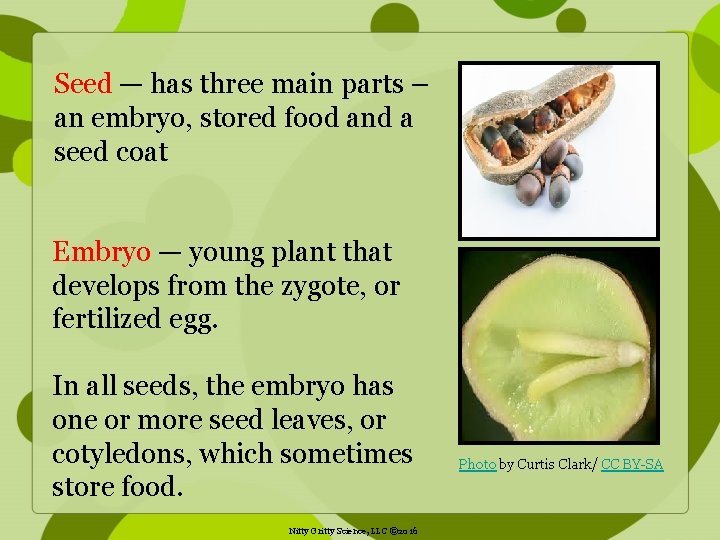
Seed — has three main parts – an embryo, stored food and a seed coat Embryo — young plant that develops from the zygote, or fertilized egg. In all seeds, the embryo has one or more seed leaves, or cotyledons, which sometimes store food. Nitty Gritty Science, LLC © 2016 Photo by Curtis Clark/ CC BY-SA
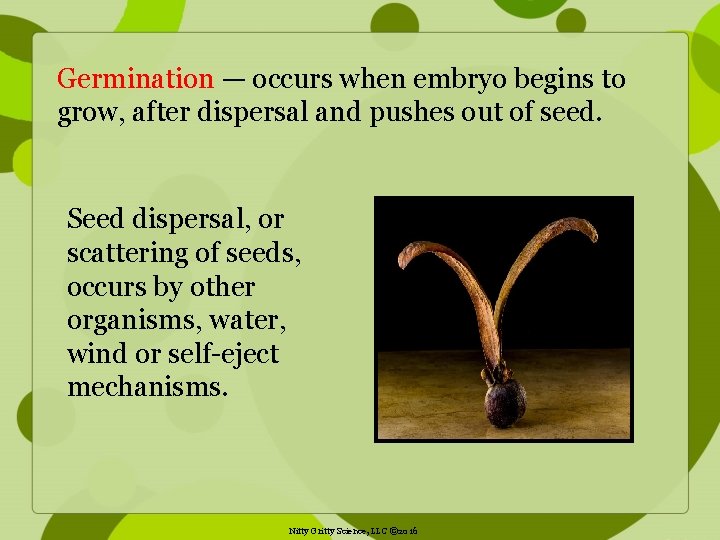
Germination — occurs when embryo begins to grow, after dispersal and pushes out of seed. Seed dispersal, or scattering of seeds, occurs by other organisms, water, wind or self-eject mechanisms. Nitty Gritty Science, LLC © 2016
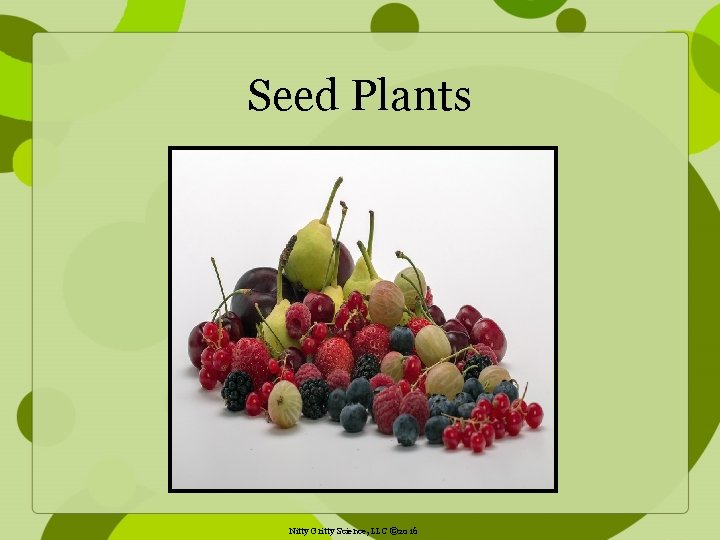
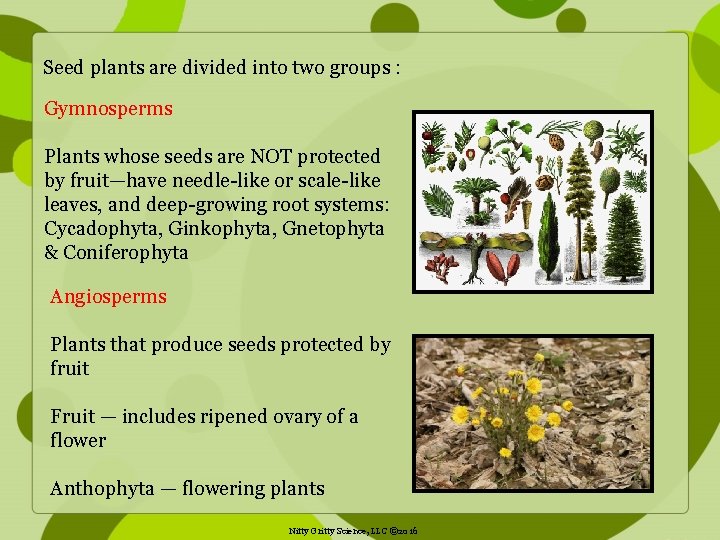
Seed plants are divided into two groups : Gymnosperms Plants whose seeds are NOT protected by fruit—have needle-like or scale-like leaves, and deep-growing root systems: Cycadophyta, Ginkophyta, Gnetophyta & Coniferophyta Angiosperms Plants that produce seeds protected by fruit Fruit — includes ripened ovary of a flower Anthophyta — flowering plants Nitty Gritty Science, LLC © 2016
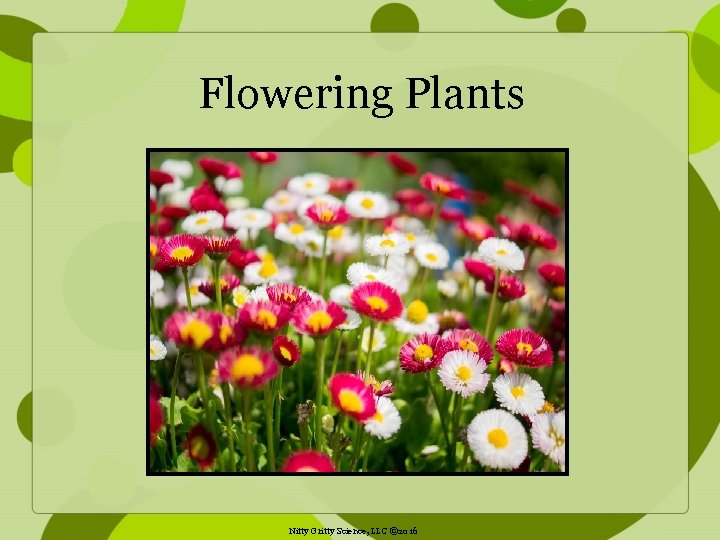
Flowering Plants Nitty Gritty Science, LLC © 2016
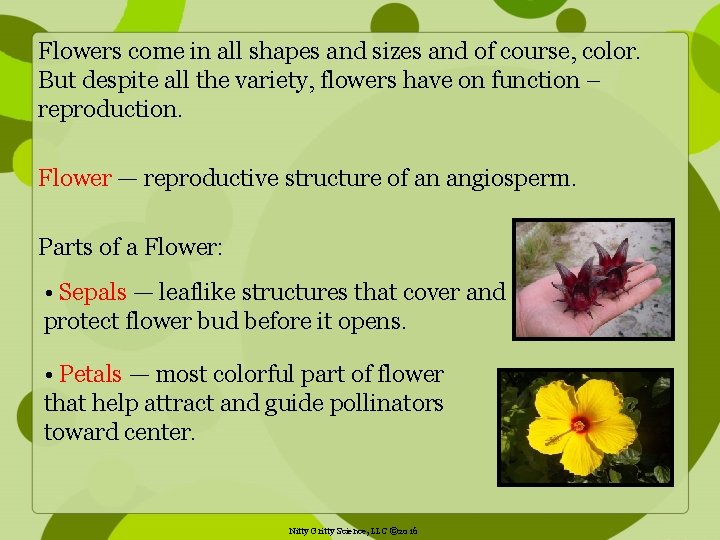
Flowers come in all shapes and sizes and of course, color. But despite all the variety, flowers have on function – reproduction. Flower — reproductive structure of an angiosperm. Parts of a Flower: • Sepals — leaflike structures that cover and protect flower bud before it opens. • Petals — most colorful part of flower that help attract and guide pollinators toward center. Nitty Gritty Science, LLC © 2016
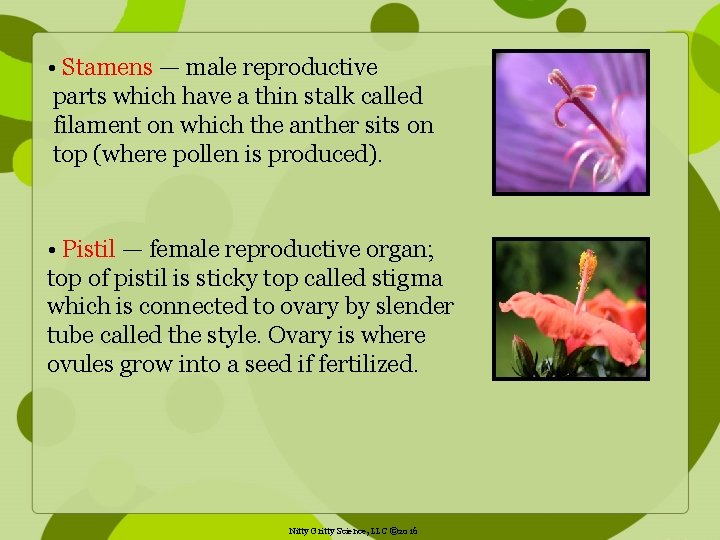
• Stamens — male reproductive parts which have a thin stalk called filament on which the anther sits on top (where pollen is produced). • Pistil — female reproductive organ; top of pistil is sticky top called stigma which is connected to ovary by slender tube called the style. Ovary is where ovules grow into a seed if fertilized. Nitty Gritty Science, LLC © 2016
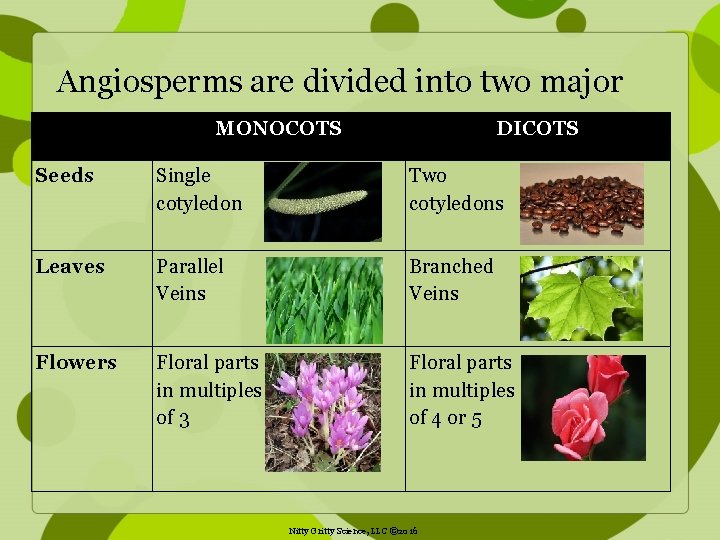
Angiosperms are divided into two major groups: MONOCOTS DICOTS Seeds Single cotyledon Two cotyledons Leaves Parallel Veins Branched Veins Flowers Floral parts in multiples of 3 Floral parts in multiples of 4 or 5 Nitty Gritty Science, LLC © 2016
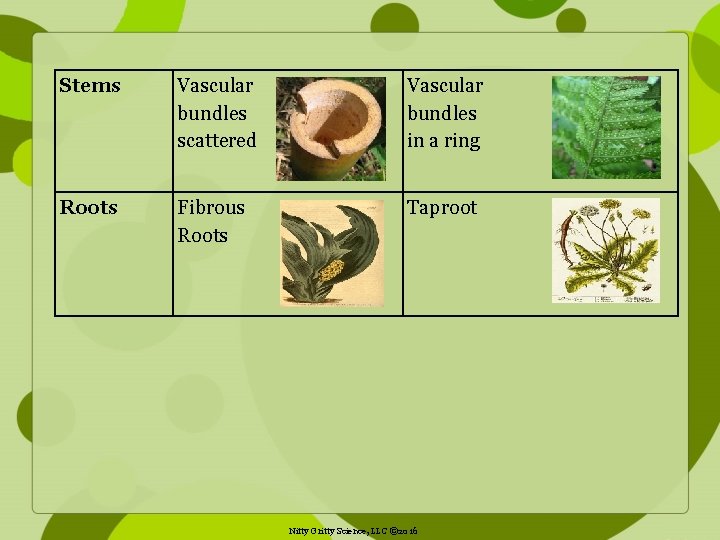
Stems Vascular bundles scattered Vascular bundles in a ring Roots Fibrous Roots Taproot Nitty Gritty Science, LLC © 2016
Roots, Stems And Leaves Nitty Gritty Science, LLC © 2016
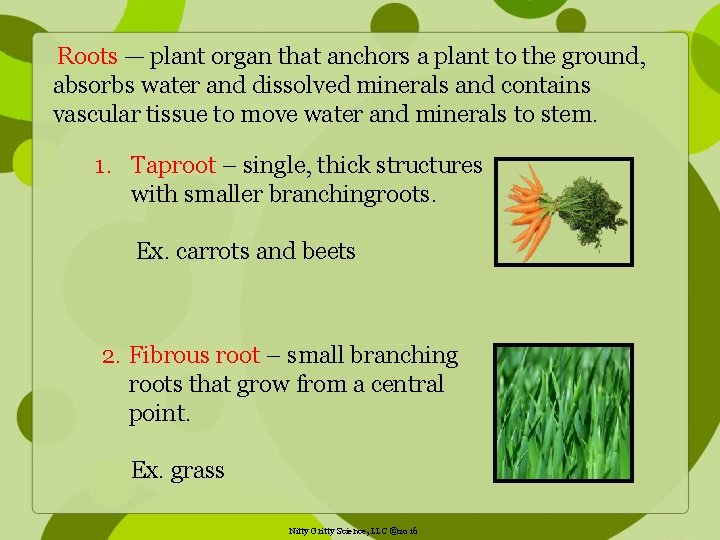
Roots — plant organ that anchors a plant to the ground, absorbs water and dissolved minerals and contains vascular tissue to move water and minerals to stem. 1. Taproot – single, thick structures with smaller branchingroots. Ex. carrots and beets 2. Fibrous root – small branching roots that grow from a central point. Ex. grass Nitty Gritty Science, LLC © 2016
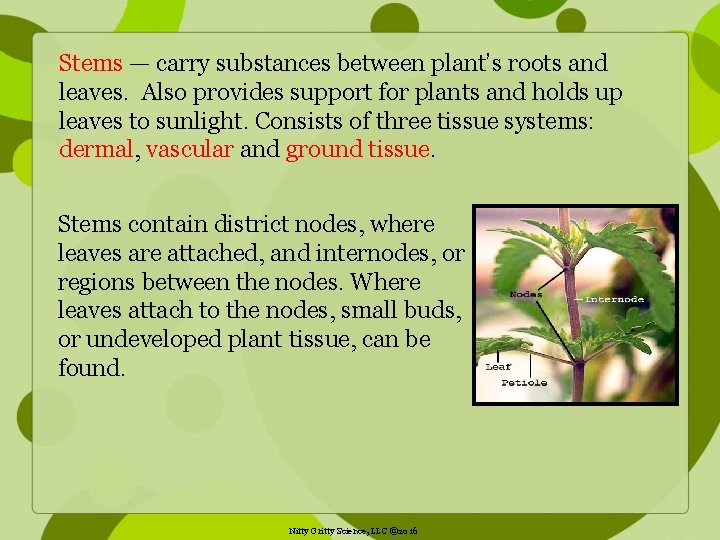
Stems — carry substances between plant’s roots and leaves. Also provides support for plants and holds up leaves to sunlight. Consists of three tissue systems: dermal, vascular and ground tissue. Stems contain district nodes, where leaves are attached, and internodes, or regions between the nodes. Where leaves attach to the nodes, small buds, or undeveloped plant tissue, can be found. Nitty Gritty Science, LLC © 2016
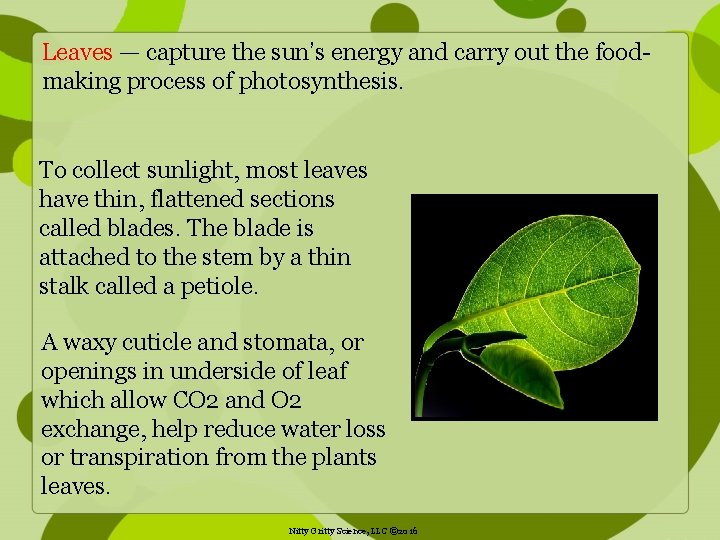
Leaves — capture the sun’s energy and carry out the foodmaking process of photosynthesis. To collect sunlight, most leaves have thin, flattened sections called blades. The blade is attached to the stem by a thin stalk called a petiole. A waxy cuticle and stomata, or openings in underside of leaf which allow CO 2 and O 2 exchange, help reduce water loss or transpiration from the plants leaves. Nitty Gritty Science, LLC © 2016
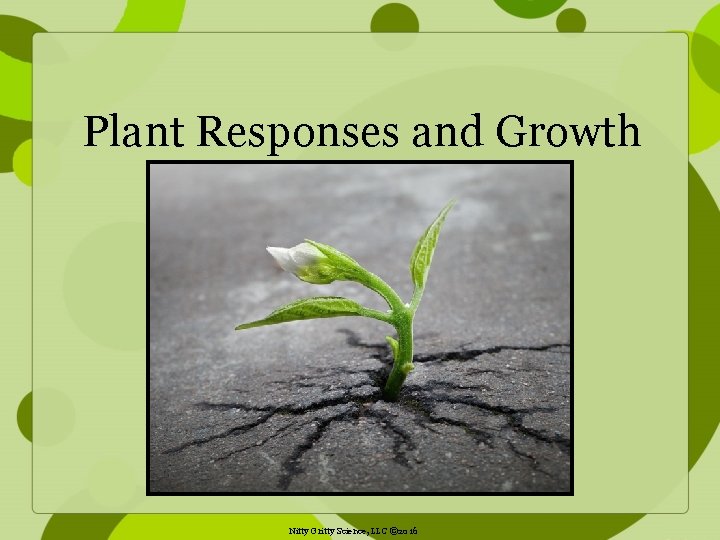
Plant Responses and Growth Nitty Gritty Science, LLC © 2016
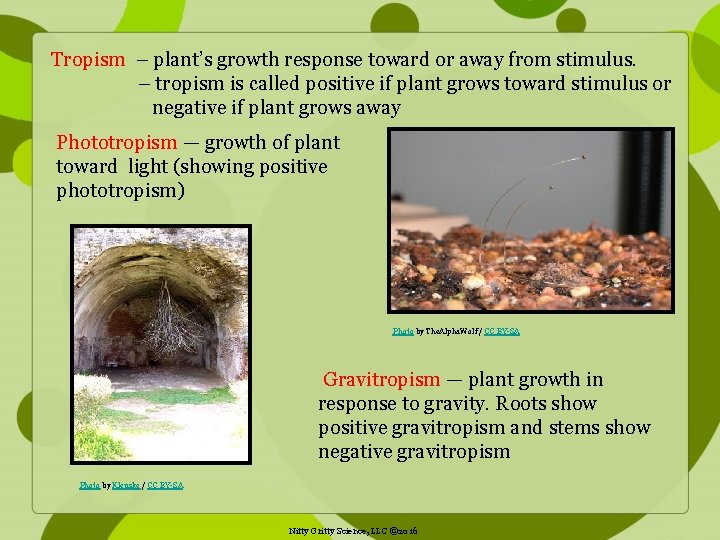
Tropism – plant’s growth response toward or away from stimulus. – tropism is called positive if plant grows toward stimulus or negative if plant grows away Phototropism — growth of plant toward light (showing positive phototropism) Photo by The. Alpha. Wolf / CC BY-SA Photo by Kleuske / CC BY-SA Gravitropism — plant growth in response to gravity. Roots show positive gravitropism and stems show negative gravitropism Nitty Gritty Science, LLC © 2016
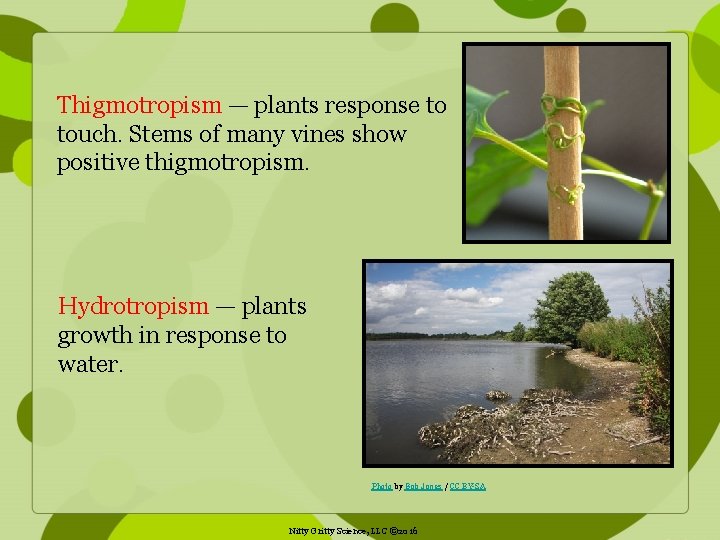
Thigmotropism — plants response to touch. Stems of many vines show positive thigmotropism. Hydrotropism — plants growth in response to water. Photo by Bob Jones / CC BY-SA Nitty Gritty Science, LLC © 2016
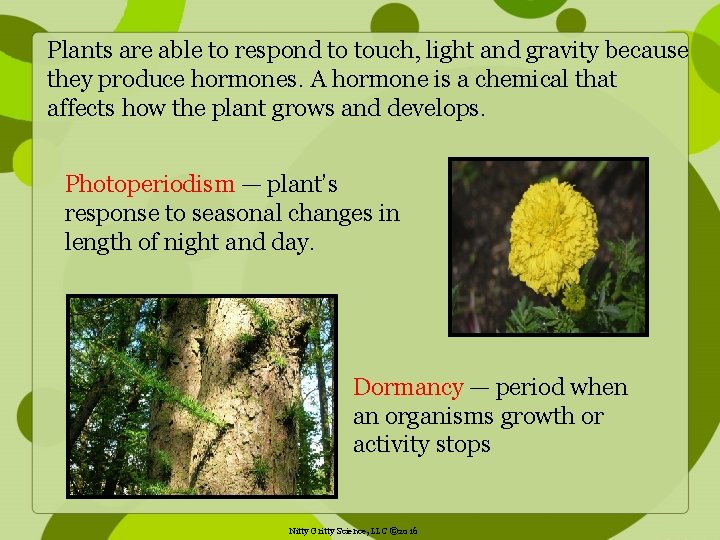
Plants are able to respond to touch, light and gravity because they produce hormones. A hormone is a chemical that affects how the plant grows and develops. Photoperiodism — plant’s response to seasonal changes in length of night and day. Dormancy — period when an organisms growth or activity stops Nitty Gritty Science, LLC © 2016
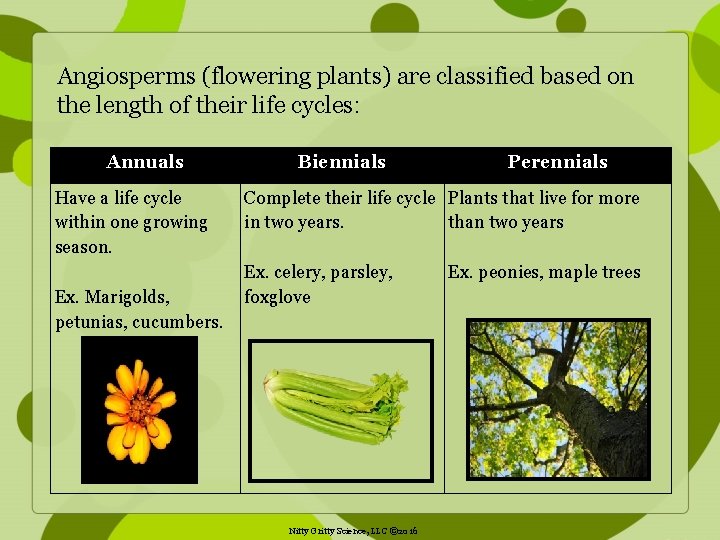
Angiosperms (flowering plants) are classified based on the length of their life cycles: Annuals Have a life cycle within one growing season. Ex. Marigolds, petunias, cucumbers. Biennials Complete their life cycle in two years. Ex. celery, parsley, foxglove Nitty Gritty Science, LLC © 2016 Perennials Plants that live for more than two years Ex. peonies, maple trees