
Plants Major types of Plants Nonvascular no tubes
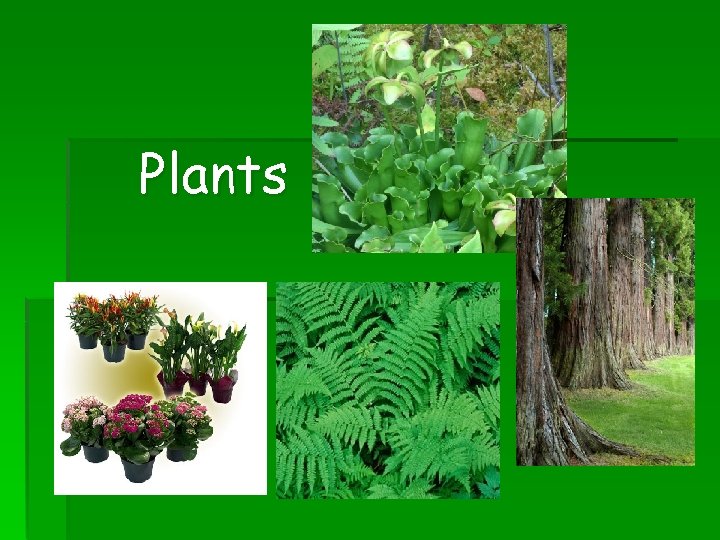
Plants
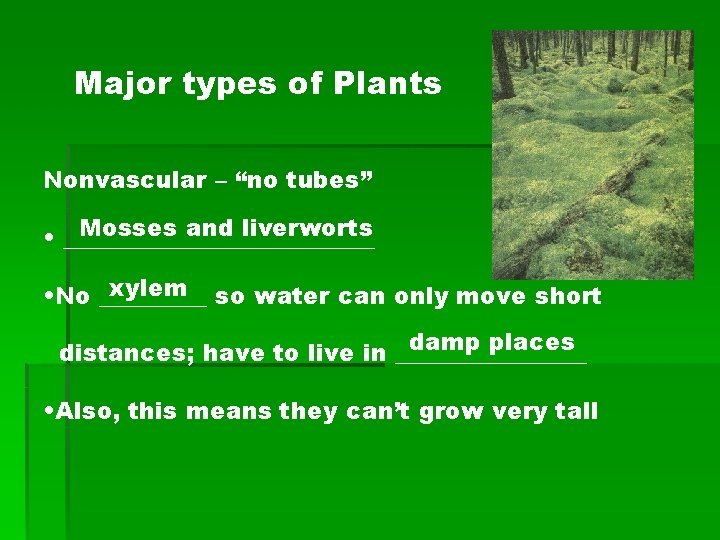
Major types of Plants Nonvascular – “no tubes” Mosses and liverworts • _____________ xylem so water can only move short • No _____ damp places distances; have to live in ________ • Also, this means they can’t grow very tall
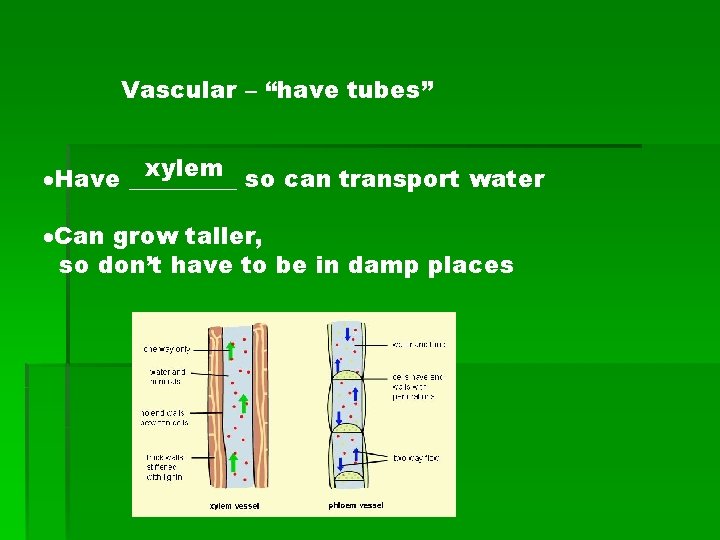
Vascular – “have tubes” xylem so can transport water Have _____ Can grow taller, so don’t have to be in damp places
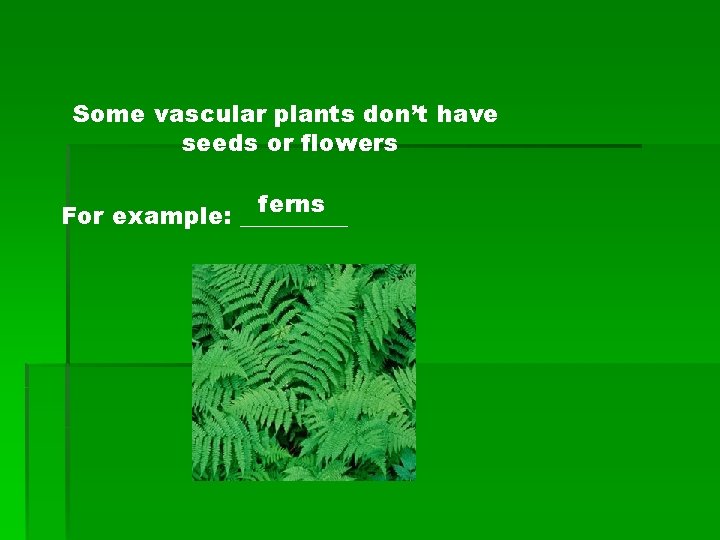
Some vascular plants don’t have seeds or flowers ferns For example: _____
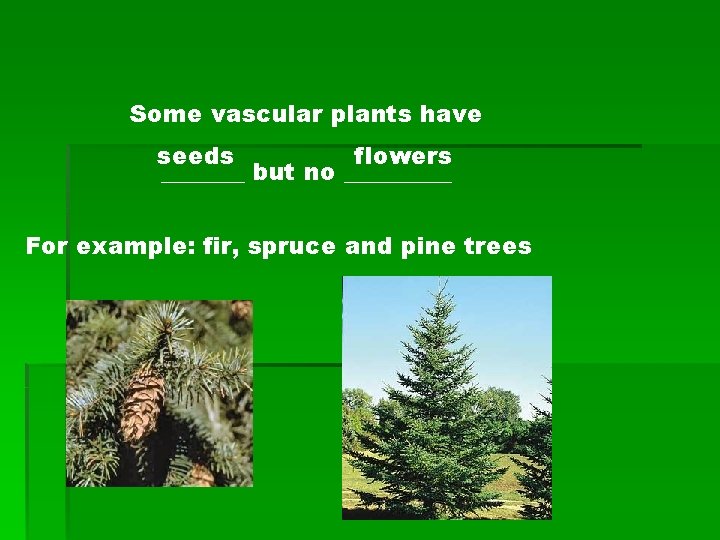
Some vascular plants have seeds flowers _______ but no _____ For example: fir, spruce and pine trees
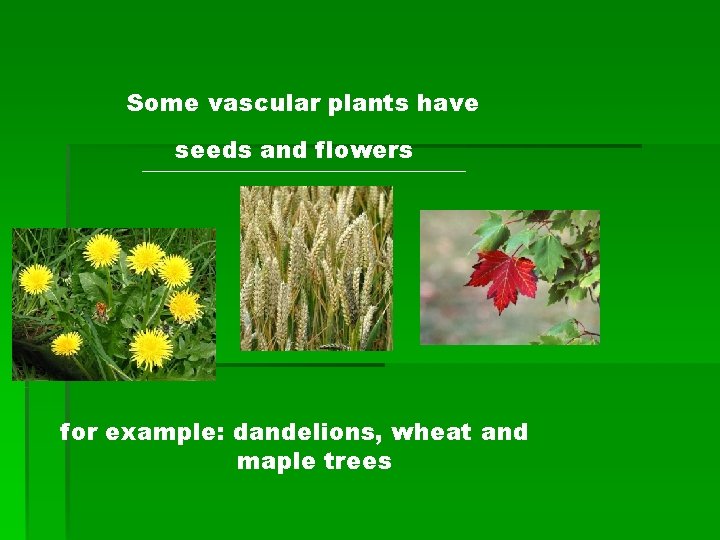
Some vascular plants have seeds and flowers ______________ for example: dandelions, wheat and maple trees
What is true about ALL plants? § Plants make their own food by photosynthesis § Plants have a cuticle – a waxy layer that covers the stems, leaves, and other parts that are exposed to air; keeps plants from drying out § Plant cells have cell walls to protect and support
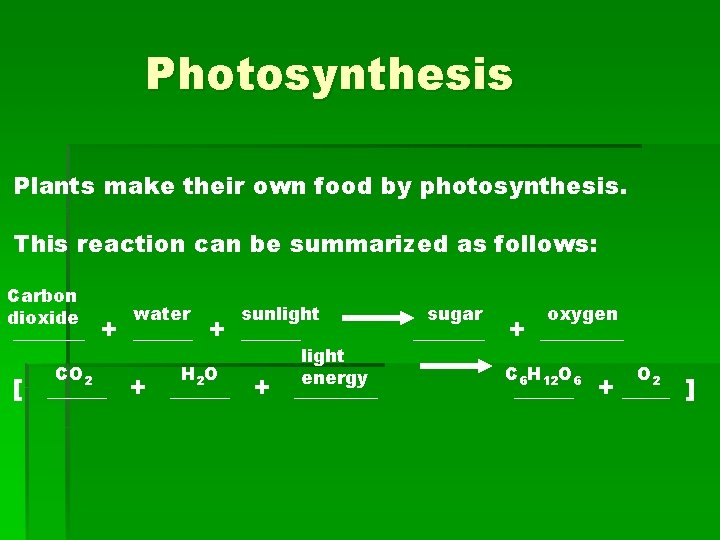
Photosynthesis Plants make their own food by photosynthesis. This reaction can be summarized as follows: Carbon dioxide water sunlight ______ + _____ CO H O light energy 2 2 [ _____ + _______ sugar oxygen ______ + _______ C 6 H 12 O 6 O 2 _____ + ____ ]
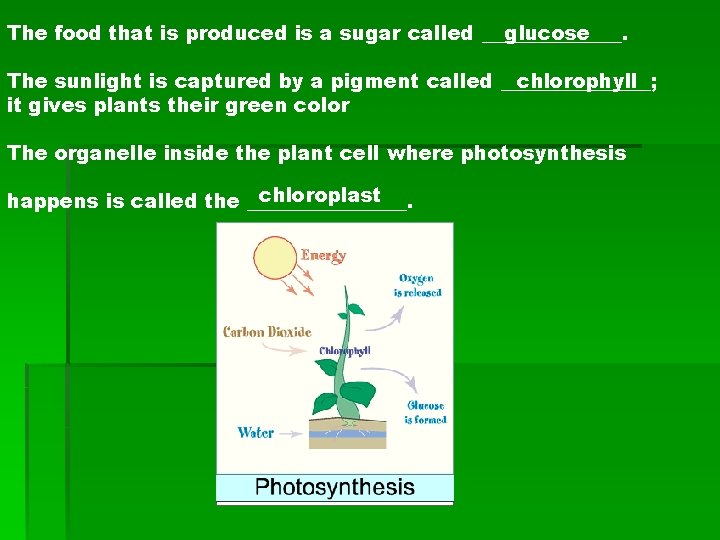
glucose The food that is produced is a sugar called _______. chlorophyll The sunlight is captured by a pigment called ________; it gives plants their green color The organelle inside the plant cell where photosynthesis chloroplast happens is called the ________.
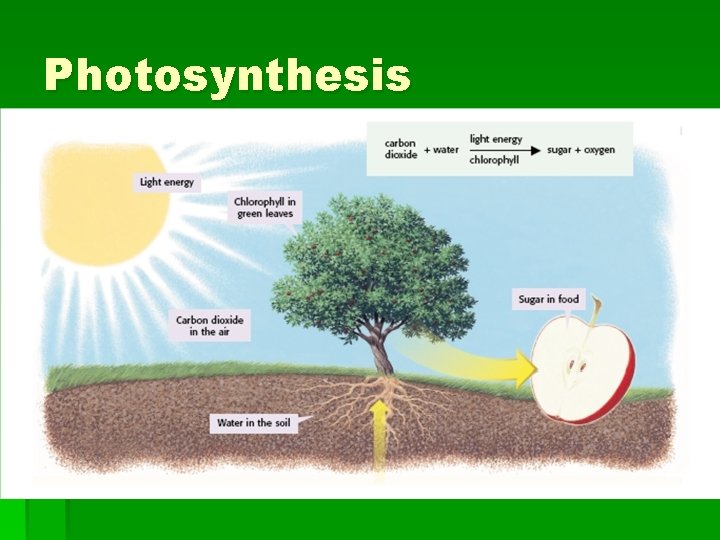
Photosynthesis
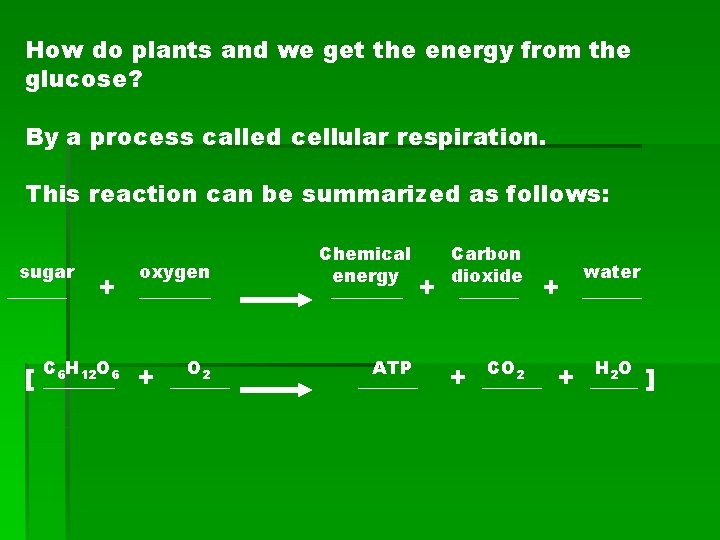
How do plants and we get the energy from the glucose? By a process called cellular respiration. This reaction can be summarized as follows: sugar _____ oxygen + ______ C 6 H 12 O 6 O 2 [ ______ + _____ Chemical energy Carbon dioxide water ______ + _____ ATP _____ CO 2 H 2 O + _____ + ____ ]
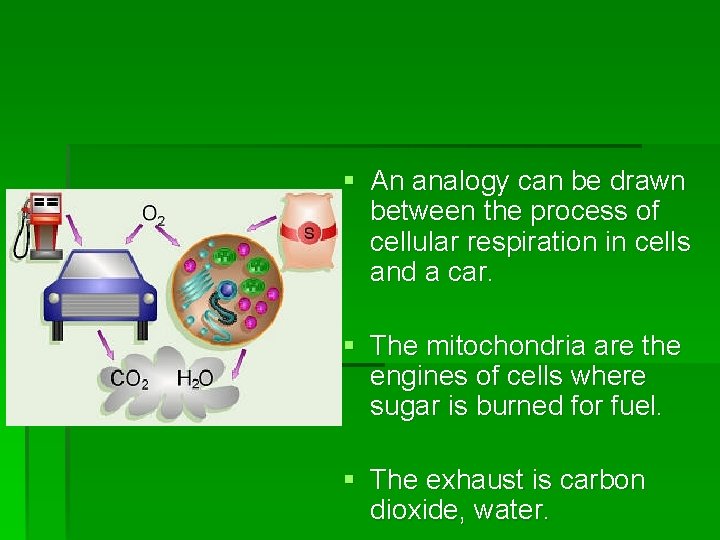
§ An analogy can be drawn between the process of cellular respiration in cells and a car. § The mitochondria are the engines of cells where sugar is burned for fuel. § The exhaust is carbon dioxide, water.
How are photosynthesis and cellular respiration related? They are the opposite reaction
- Slides: 13