
Plants in Community Colleges Wilson Crone Biology Department
Plants in Community Colleges Wilson Crone Biology Department Hudson Valley Community College Troy, NY 12180
Overview • Community college student profiles and learning styles • Approaches to course format delivery used (and to be used) at HVCC • Examples of labs currently in use at HVCC (hands-on) • Ethnobotanical lab example (hands-on)
Community College Students • Wide variety of backgrounds, e. g. , age, life experience, academic • Wide variety of educational objectives, e. g. , transfer, immediate employment, career change • Time constraints, e. g. , work, family, commuting
Student Learning Styles • The vast majority of community college students are not like you--they will not be future biology/botany grad students • Textual learning • Visual learning • Auditory learning • Tactile learning • Mechanical/flowchart learning
Comm. Coll. Student Course Concerns • Issues derived from W. N. Grubb, L. Badway, UC-Berkeley, http: //ncrve. berkeley. edu/nccte. html • Regardless whether for work or transfer goals, it’s desirable to: • Demonstrate relevancy of course material • Explicitly link courses for differing perspectives on same content
HVCC Course Formats • On-campus classes come in a variety of formats: • day • night • summer • weekend • Most labs are two hours long and held in undedicated biology lab spaces
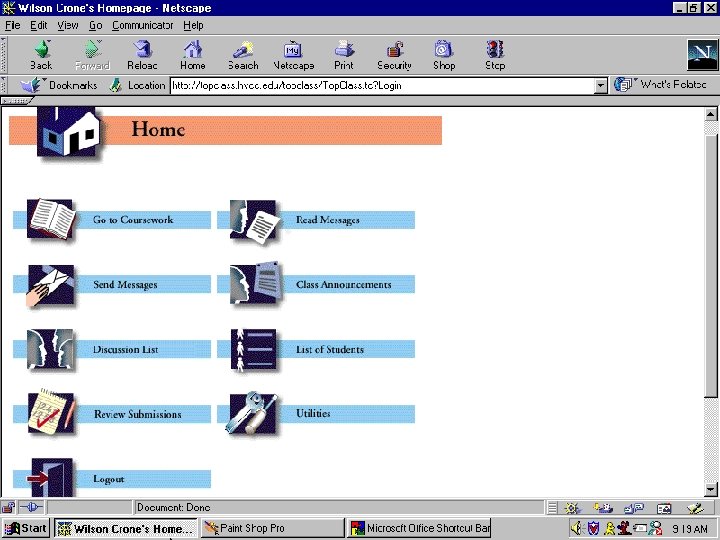
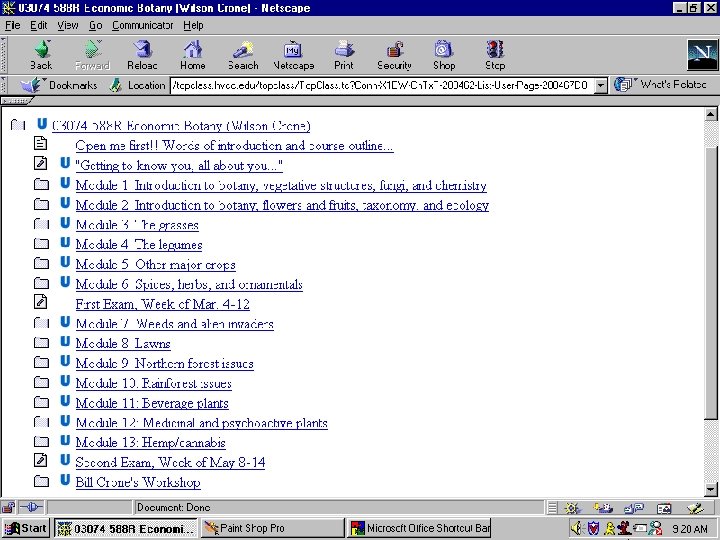
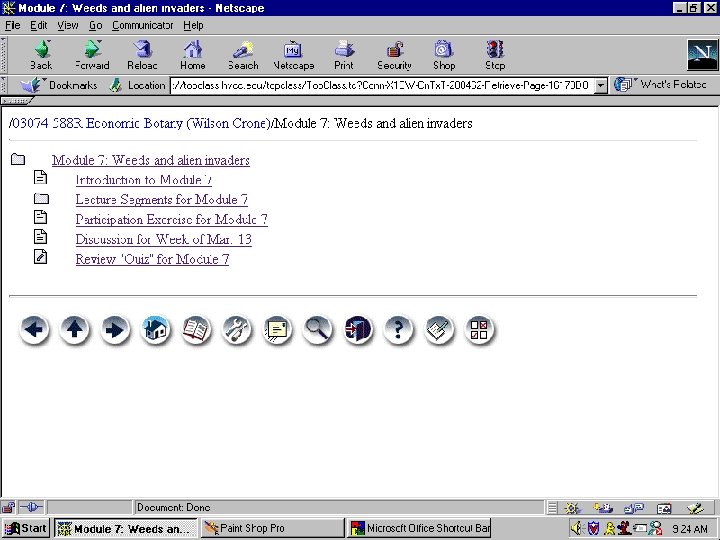
HVCC Biology Distance Learning I • Currently: Economic Botany 03074, a “plants and people” course with an environmental perspective; course overview at: http: //www. hvcc. edu/academ/faculty/crone/ 3074 page. html
HVCC Biology Distance Learning II • For next spring (2001): Global Seminar Model from Cornell University: http: //www. cals. cornell. edu/global/ • An interactive learning community of linked national and international schools, with synchronous and asynchronous components
Samples of Current HVCC labs • in general, there are constraints of time and resources, but the lab examples that follow involve: • familiar objects or situations • data collection, presentation, and interpretation • hypothesis testing • varying levels of question sophistication/interpretation
Summary • Community college students come from a wide variety of backgrounds, perspectives, and educational objectives • “Low-tech” labs that use familiar plants and/or plant objects can be a springboard for engagement and interdisciplinary learning regardless of student academic level
- Slides: 13