
Plants Eukaryotic Multicellular Autotrophs Nonmobile Cells and tissues
Plants • Eukaryotic • Multicellular • Autotrophs • Non-mobile
Cells and tissues Tissues: • Dermal: covers the plant • Vascular: transports water, food, etc. • Ground: photosynthesis, storage, and secretion • Meristematic: produces new plant cells
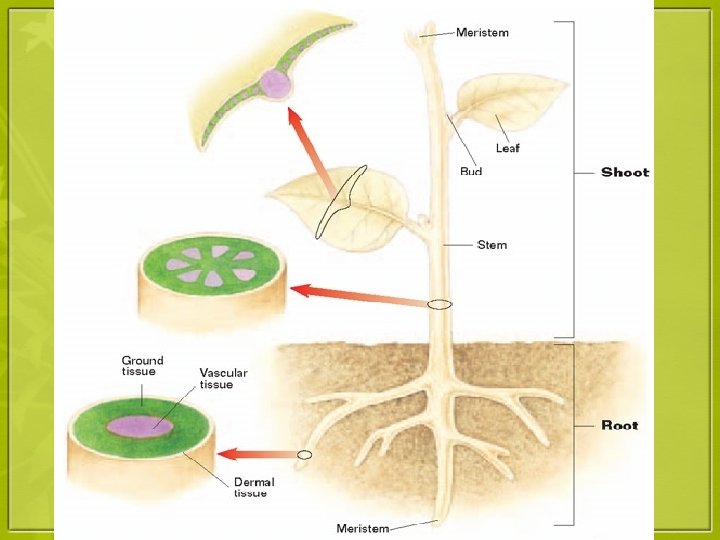
![• Organs: • Stems [B] • Leaves [E] • Roots [L] • Other](http://slidetodoc.com/presentation_image_h2/19a921f8403ad6a21cbca81d93892236/image-4.jpg "• Organs: • Stems [B] • Leaves [E] • Roots [L] • Other")
• Organs: • Stems [B] • Leaves [E] • Roots [L] • Other labels • Flower [H] • Root Hairs [N]
Roots
![Root hairs Xylem Phloem Pericycle Endodermis Apical meristem Root cap • Root Hairs [F]:](http://slidetodoc.com/presentation_image_h2/19a921f8403ad6a21cbca81d93892236/image-6.jpg "Root hairs Xylem Phloem Pericycle Endodermis Apical meristem Root cap • Root Hairs [F]:")
Root hairs Xylem Phloem Pericycle Endodermis Apical meristem Root cap • Root Hairs [F]: extra surface area for absorption • Xylem [N]: up, water and minerals • Phloem [O]: down, food • Root Cap [A]: protection • Apical Meristem [D]: growth
About Roots • Root cap • tip of a root covering • apical meristem—site of growth • produces a slimy substance (lubricating oil), allowing the root to move more easily through the soil as it grows • Root hairs • extensions of epidermal cells • increase the surface area of the root • thus increases the plant’s ability to absorb water and minerals from the soil
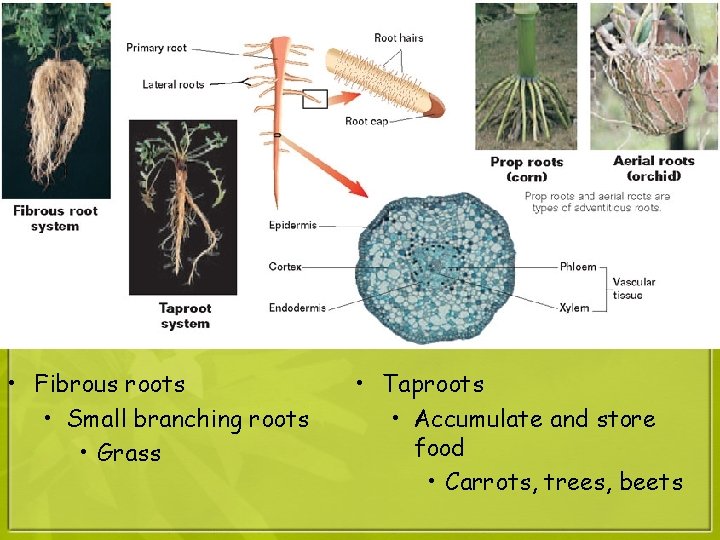
• Fibrous roots • Small branching roots • Grass • Taproots • Accumulate and store food • Carrots, trees, beets
Functions of the Root • Anchor • Growth at the meristem (tip) • Absorption • water • minerals • Nutrients • Macronutrients—N and K • Micronutrients • Storage • Some roots also store carbohydrates or water. • Carbohydrates—converted to starch and stored • store large amounts of water (help plants survive during dry periods)
Stems
![• Apical Meristem [F] • Lateral Buds (meristems) [B]: Lateral growth • Node](http://slidetodoc.com/presentation_image_h2/19a921f8403ad6a21cbca81d93892236/image-11.jpg "• Apical Meristem [F] • Lateral Buds (meristems) [B]: Lateral growth • Node")
• Apical Meristem [F] • Lateral Buds (meristems) [B]: Lateral growth • Node [C]: give rise to leaves and branches • Vascular tissue [M] • Xylem [N] • Phloem [O]
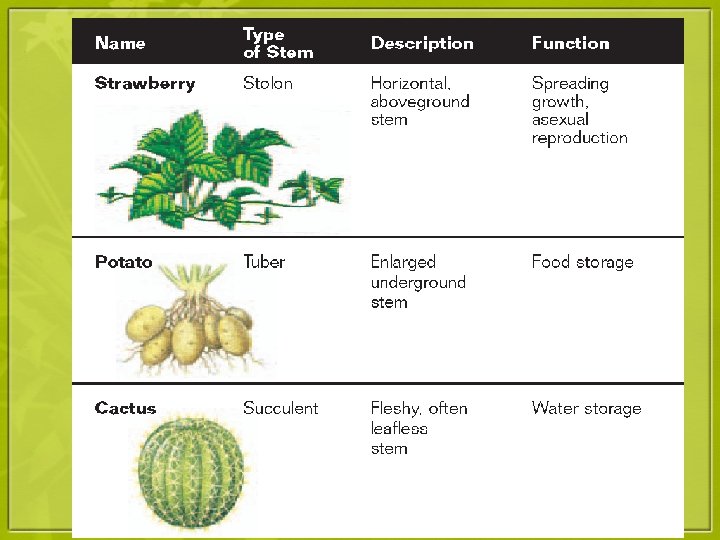
Support • Above ground • Woody stems (trees) • Secondary growth increase the diameter • Bark: Phloem and cork, protection
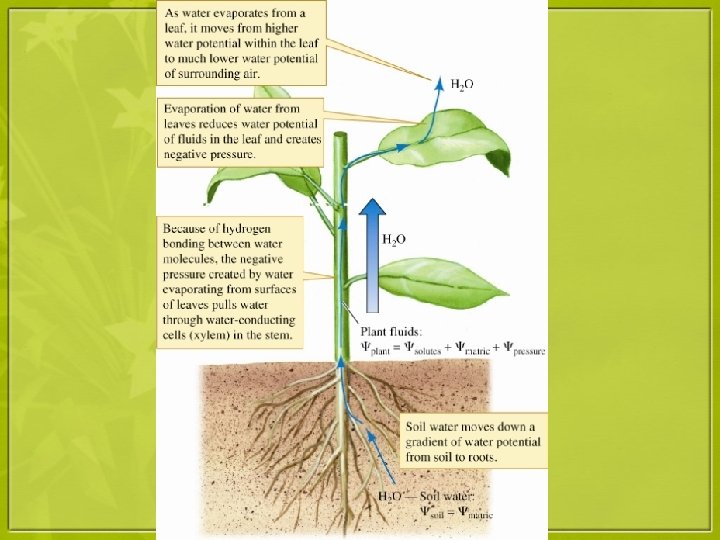
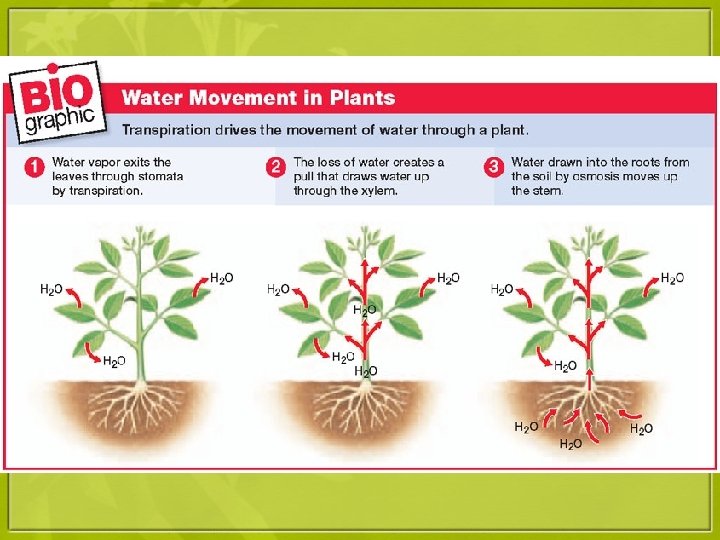
Transport • XYLEM: transport nutrients and water • PHLOEM: transports carbohydrates, some plant hormones, and other organic compounds • Reminder: • Transpiration • Capillarity
Leaves
Leaf functions • primary site of photosynthesis • use light energy, carbon dioxide, and water to make carbohydrates • also is used to synthesize amino acids/other organic molecules • limitation to photosynthesis is insufficient water due to transpiration • transpiration may benefit the plant by cooling it and by speeding the transport of mineral nutrients through the xylem
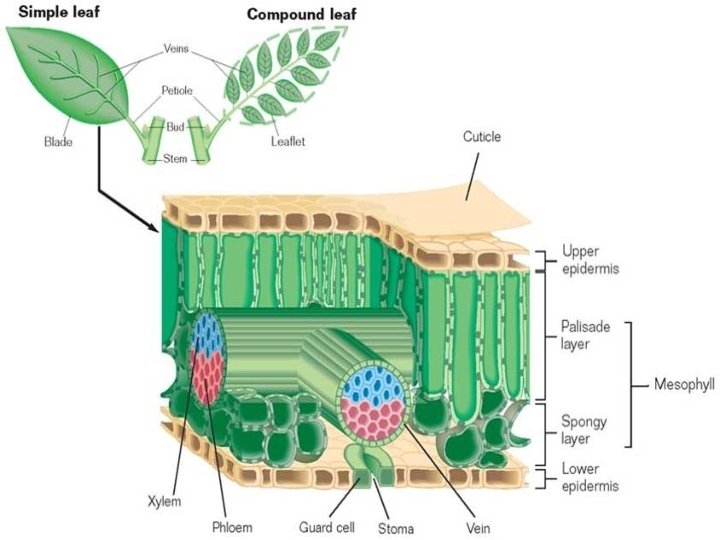
![• • Cuticle [C]: waxy protective layer Upper [D] & lower [E] epidermis](http://slidetodoc.com/presentation_image_h2/19a921f8403ad6a21cbca81d93892236/image-21.jpg "• • Cuticle [C]: waxy protective layer Upper [D] & lower [E] epidermis")
• • Cuticle [C]: waxy protective layer Upper [D] & lower [E] epidermis Stomata [F]: transpiration Guard Cells [G]: control the size of the stoma Chloroplast [K]: photosynthesis Xylem [N] Phloem [O]
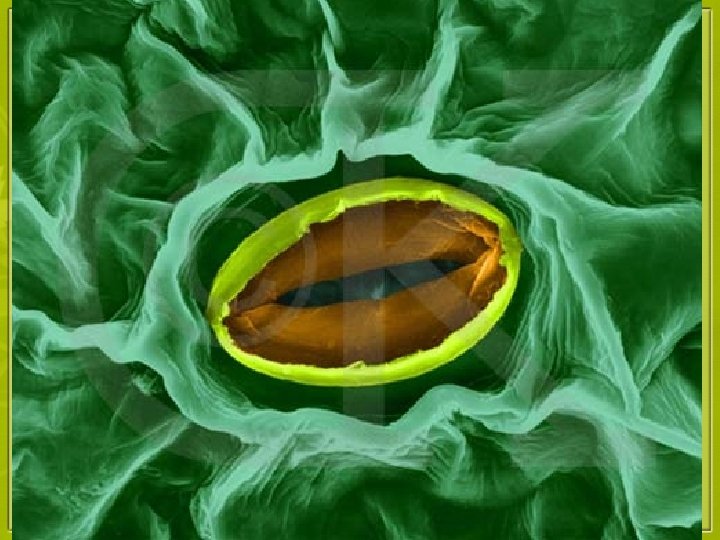
Gas Exchange • must balance • need to open their stomata to receive carbon dioxide and release oxygen • need to close their stomata to prevent water loss through transpiration • A stoma is bordered by two kidney-shaped guard cells • modified cells on the leaf epidermis that regulate gas and water exchange
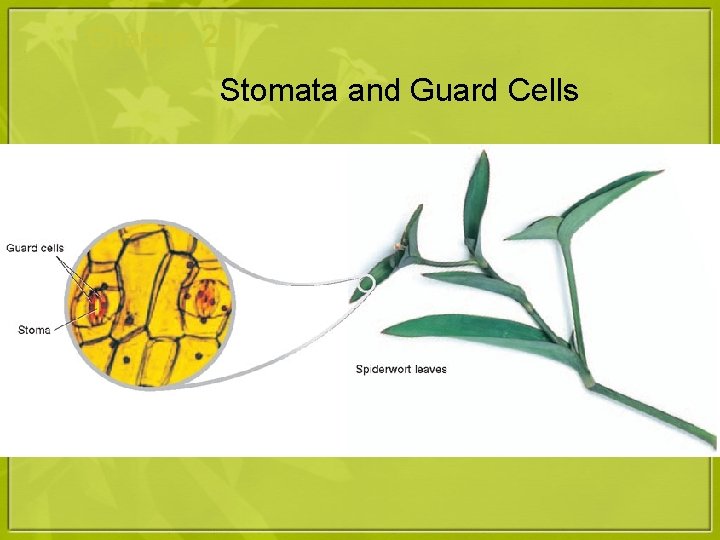
Chapter 29 Stomata and Guard Cells
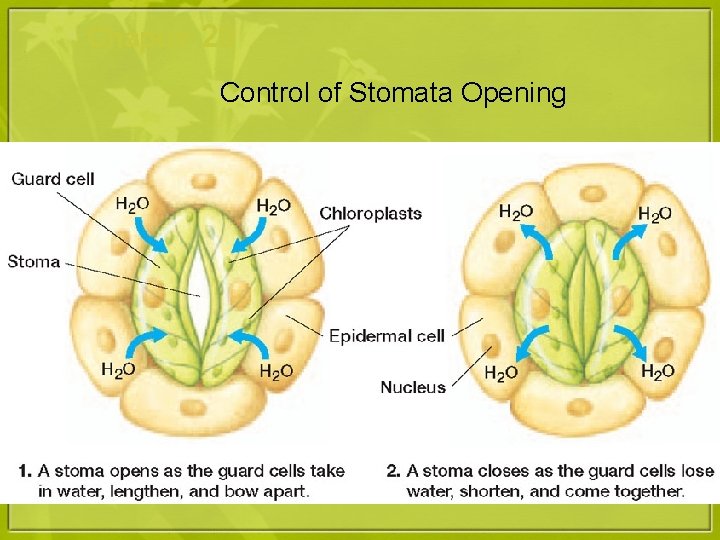
Chapter 29 Control of Stomata Opening
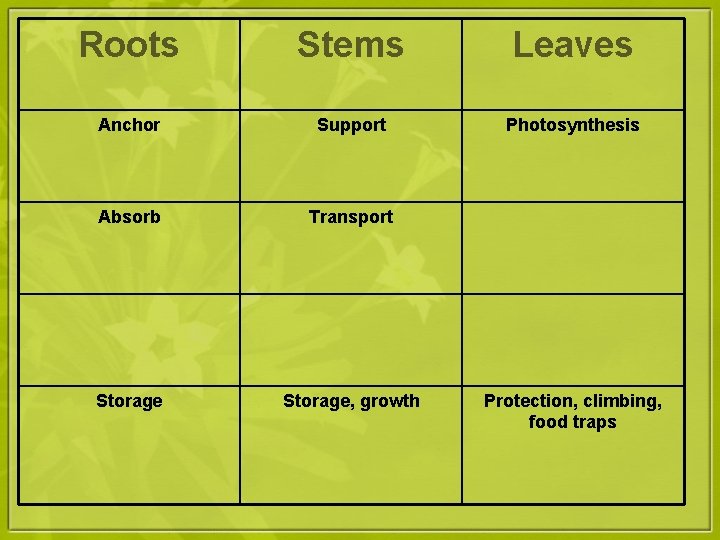
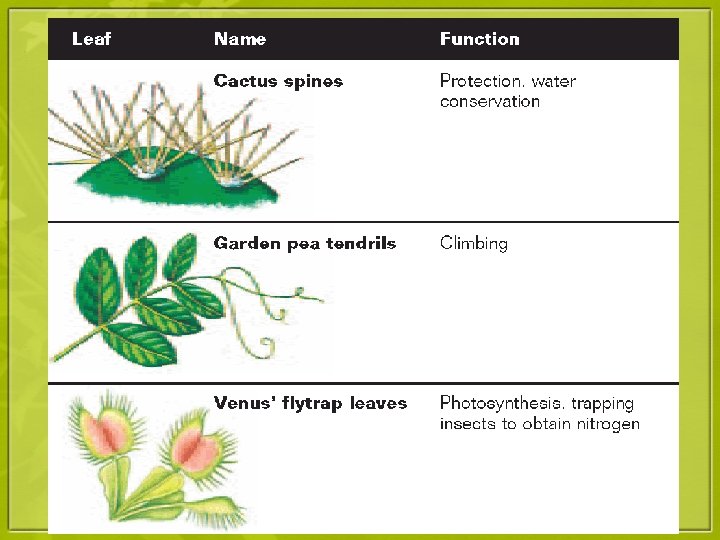
Roots Stems Leaves Anchor Support Photosynthesis Absorb Transport Storage, growth Protection, climbing, food traps
- Slides: 26