
Plants Bryophytes Nonvascular Plants Nonvascular Plants are called
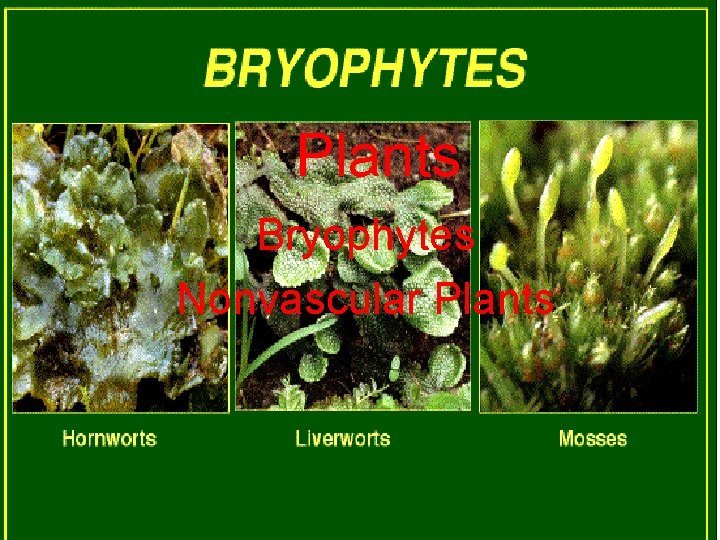
Plants Bryophytes Nonvascular Plants
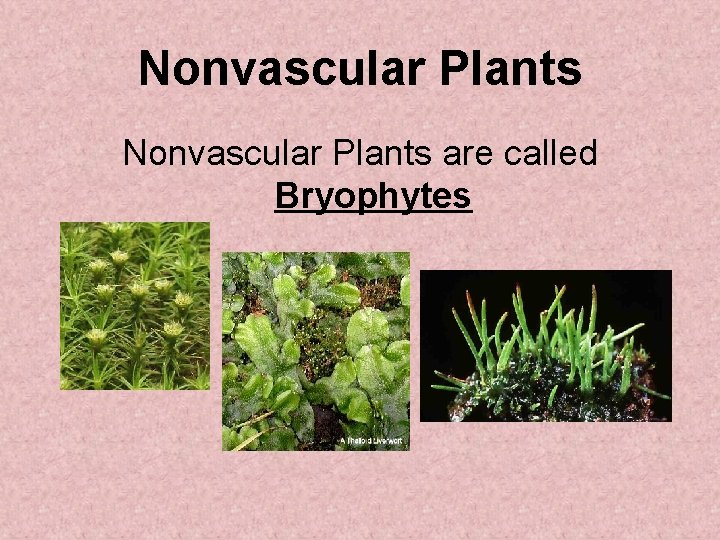
Nonvascular Plants are called Bryophytes
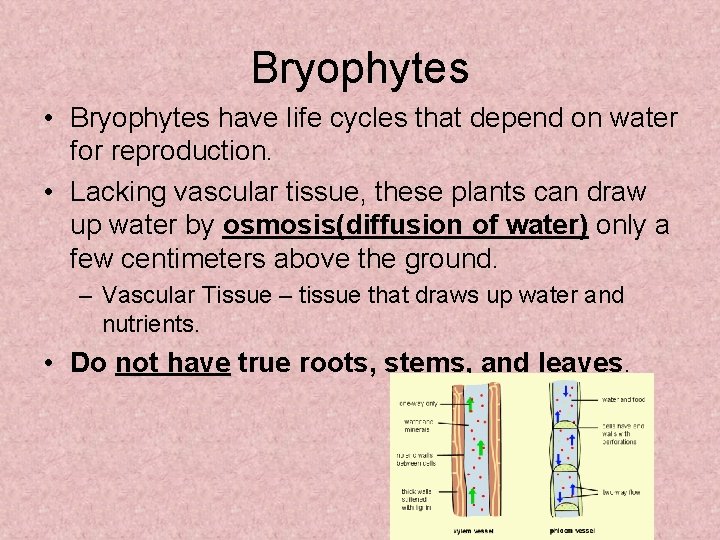
Bryophytes • Bryophytes have life cycles that depend on water for reproduction. • Lacking vascular tissue, these plants can draw up water by osmosis(diffusion of water) only a few centimeters above the ground. – Vascular Tissue – tissue that draws up water and nutrients. • Do not have true roots, stems, and leaves.
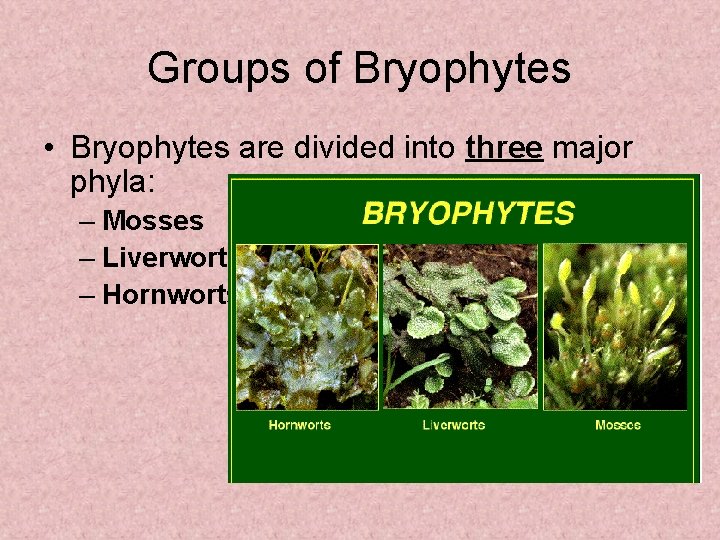
Groups of Bryophytes • Bryophytes are divided into three major phyla: – Mosses – Liverworts – Hornworts
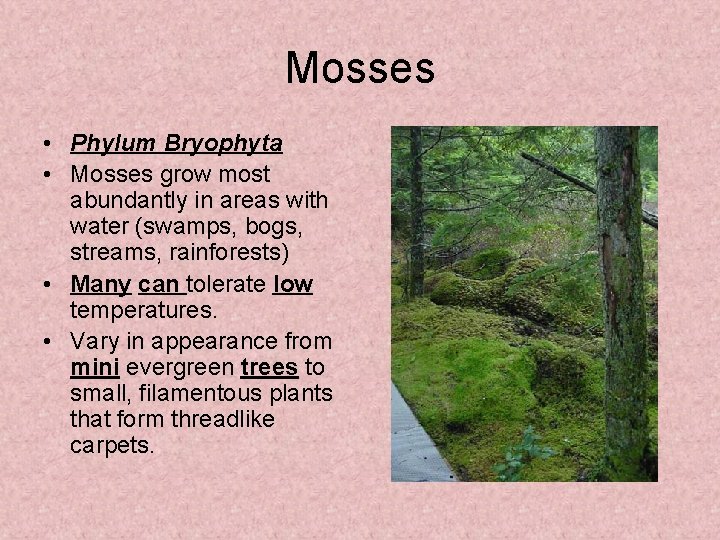
Mosses • Phylum Bryophyta • Mosses grow most abundantly in areas with water (swamps, bogs, streams, rainforests) • Many can tolerate low temperatures. • Vary in appearance from mini evergreen trees to small, filamentous plants that form threadlike carpets.
Moss Reproduction • Produce thin stalks, each containing a capsule. – This is the sporophyte stage. • Each moss plant has a thin, upright shoot that looks like a stem with tiny leaves. • Each leaf is one cell thick. • Have Rhizoids: long thin cells that anchor them in the ground absorb water and minerals from the surrounding soil.
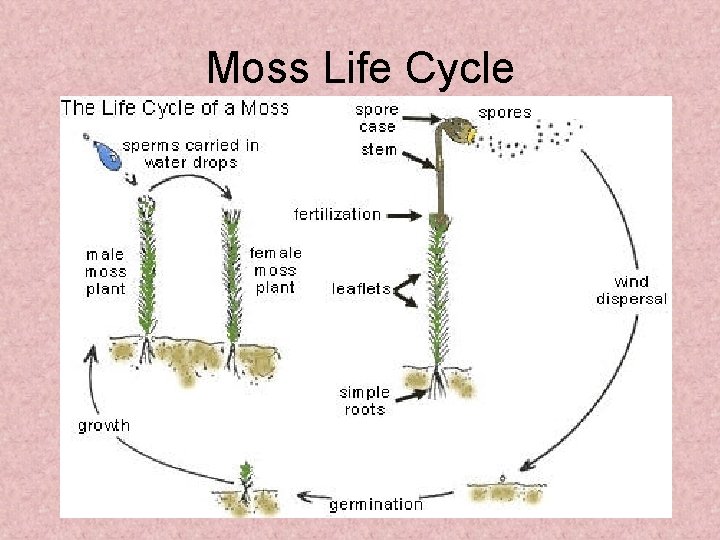
Moss Life Cycle
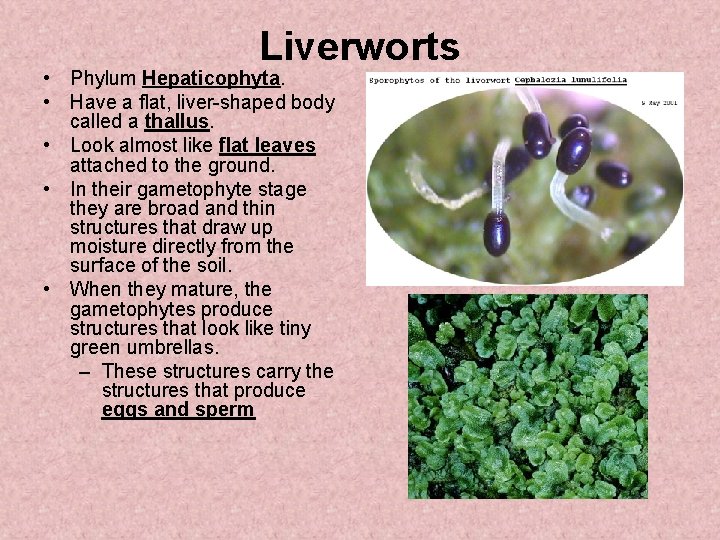
Liverworts • Phylum Hepaticophyta. • Have a flat, liver-shaped body called a thallus. • Look almost like flat leaves attached to the ground. • In their gametophyte stage they are broad and thin structures that draw up moisture directly from the surface of the soil. • When they mature, the gametophytes produce structures that look like tiny green umbrellas. – These structures carry the structures that produce eggs and sperm
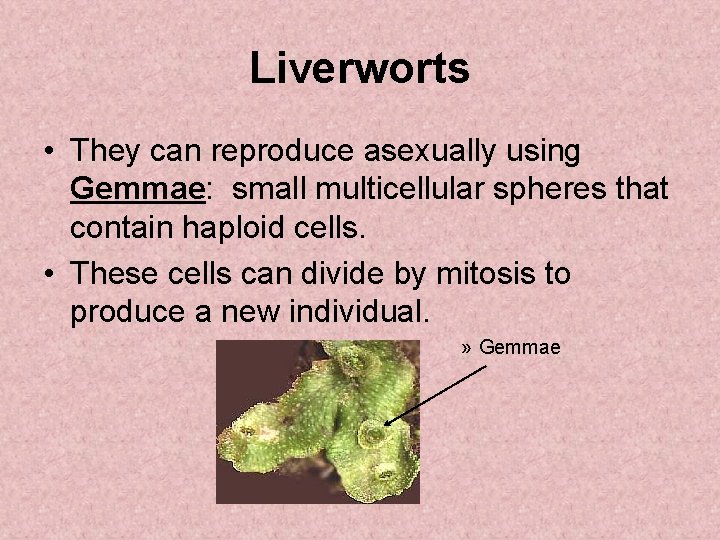
Liverworts • They can reproduce asexually using Gemmae: small multicellular spheres that contain haploid cells. • These cells can divide by mitosis to produce a new individual. » Gemmae
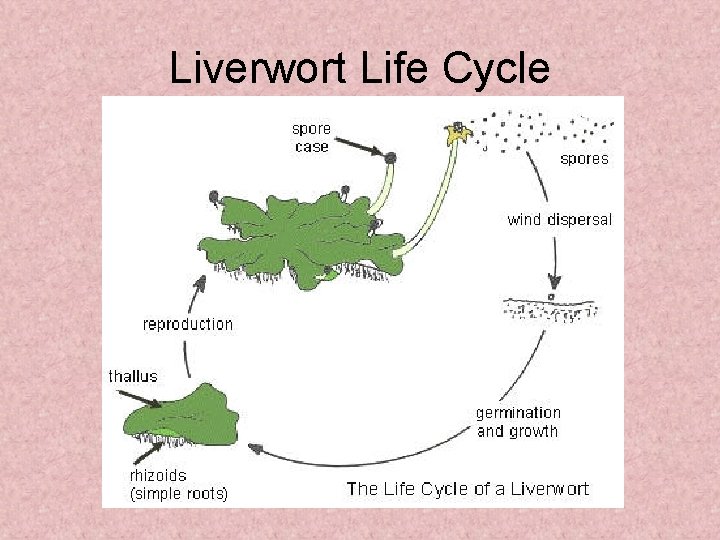
Liverwort Life Cycle
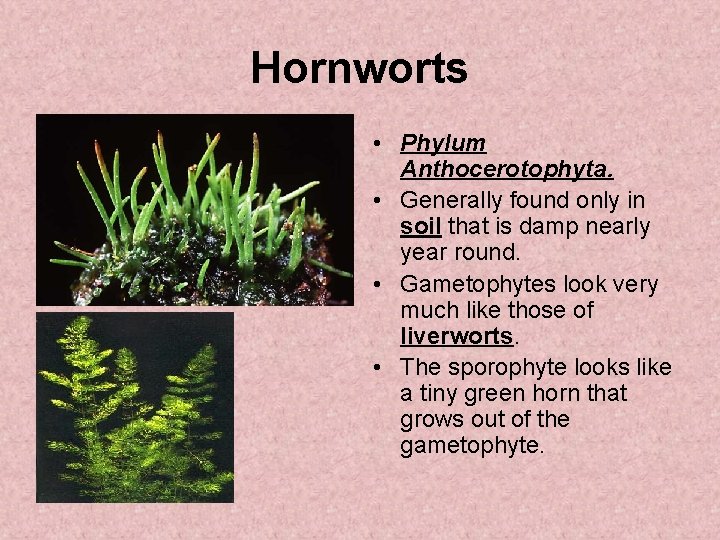
Hornworts • Phylum Anthocerotophyta. • Generally found only in soil that is damp nearly year round. • Gametophytes look very much like those of liverworts. • The sporophyte looks like a tiny green horn that grows out of the gametophyte.
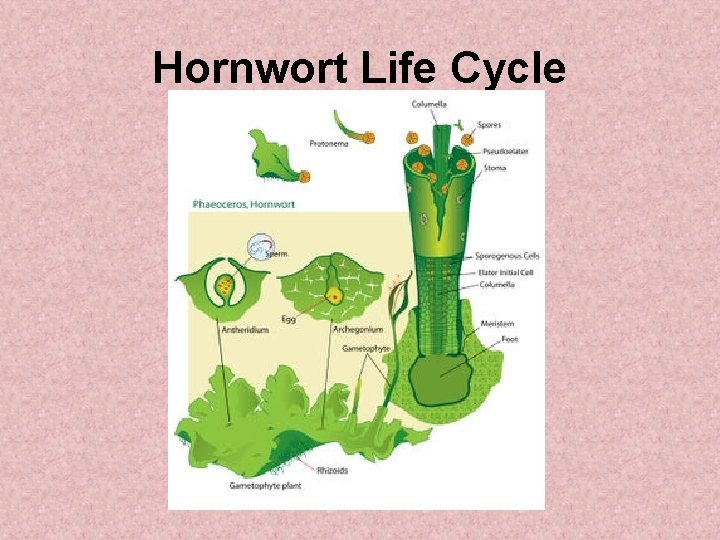
Hornwort Life Cycle
Life Cycle of Bryophytes • Reproduce using alternation of generation. • The gametophyte is the dominant, recognizable stage of the life cycle and is the stage the carries out most of the plant’s photosynthesis. • Must have water so the bryophyte can swim to the egg.
Life Cycle Cont. • Spore lands in a moist place. • Germinates and grows into a tangle of green filaments called a Protonema. • Protonema grows and forms Rhizoids that grow into the ground and shoots that grow into the air. – This is the gametophyte stage. • Gametes are formed in structures at the tips of gametophytes. – Antheridia produce sperm. – Archegonia produce eggs. • Fertilization produces a diploid zygote. – This the beginning of the Sporophyte stage. • Mature sporophytes produce new haploid spores through meiosis. • Capsule ripens and release spores to the wind to start the cycle again.
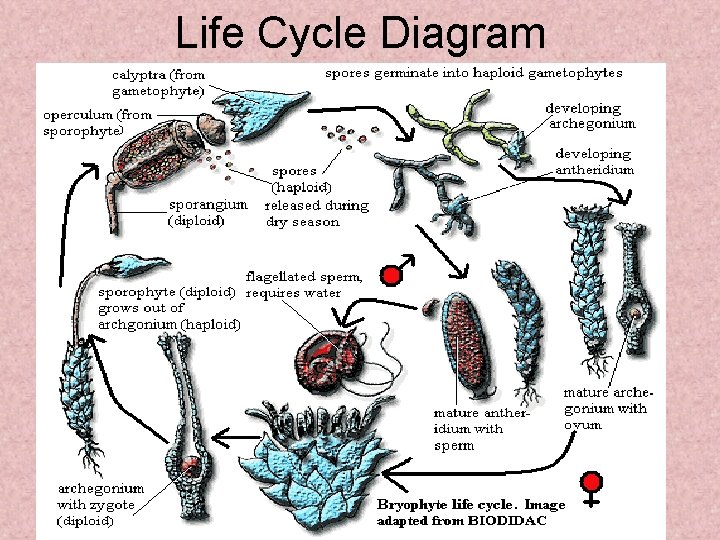
Life Cycle Diagram
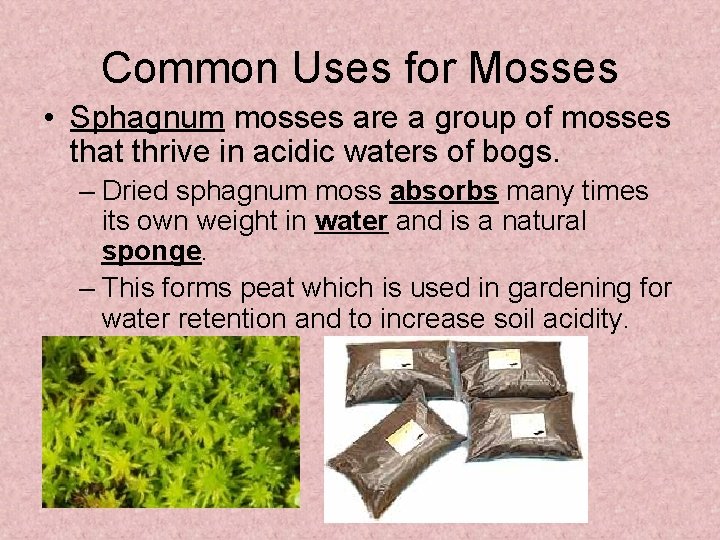
Common Uses for Mosses • Sphagnum mosses are a group of mosses that thrive in acidic waters of bogs. – Dried sphagnum moss absorbs many times its own weight in water and is a natural sponge. – This forms peat which is used in gardening for water retention and to increase soil acidity.
Review Questions • How is water essential in the life cycle of a bryophyte? • List the three groups of bryophytes. • In what type of habitat do they live? • What is the relationship between the gametophyte and the sporophyte in mosses and other bryophytes? • What is an archegonium? • What is an anthridium? • How are those structures important in the life cycle of a moss?
- Slides: 17