
Plants at work 1 Plants are producers Plants
- Slides: 16
Plants at work 1
Plants are producers Plants get their energy from light Plants make food by photosynthesis Light energy is trapped by chlorophyll Most of the food is stored as starch 2
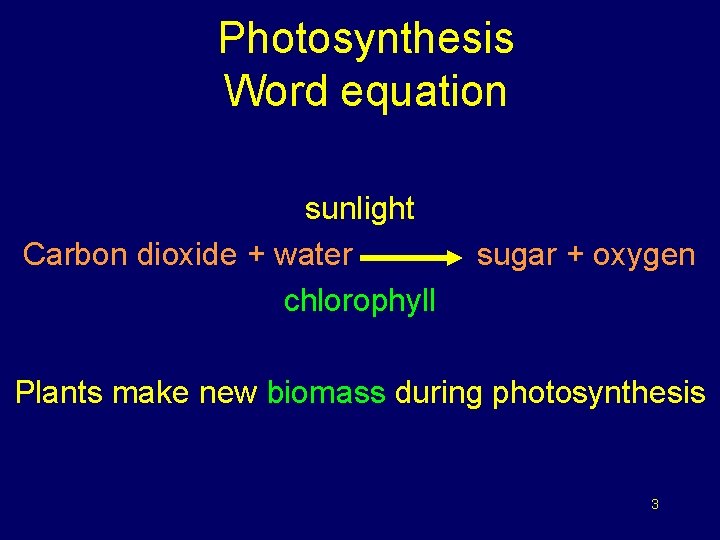
Photosynthesis Word equation sunlight Carbon dioxide + water chlorophyll sugar + oxygen Plants make new biomass during photosynthesis 3
Leaves are green because they contain chlorophyll Leaves have a large surface area to absorb as much light as possible 4
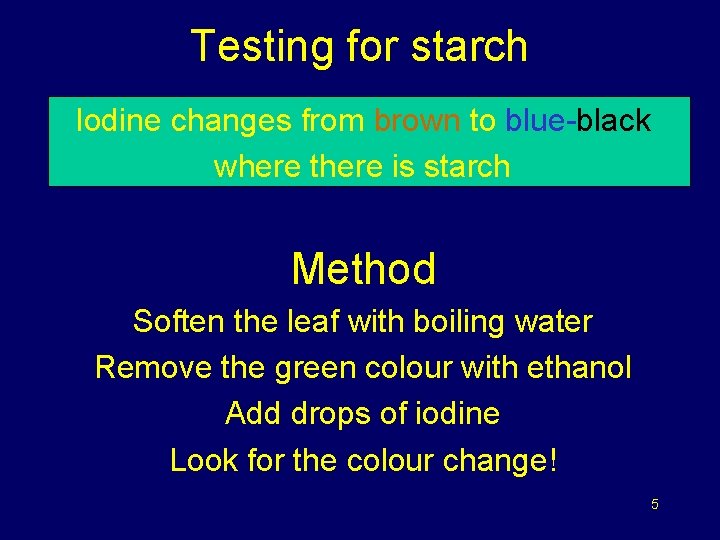
Testing for starch Iodine changes from brown to blue-black where there is starch Method Soften the leaf with boiling water Remove the green colour with ethanol Add drops of iodine Look for the colour change! 5
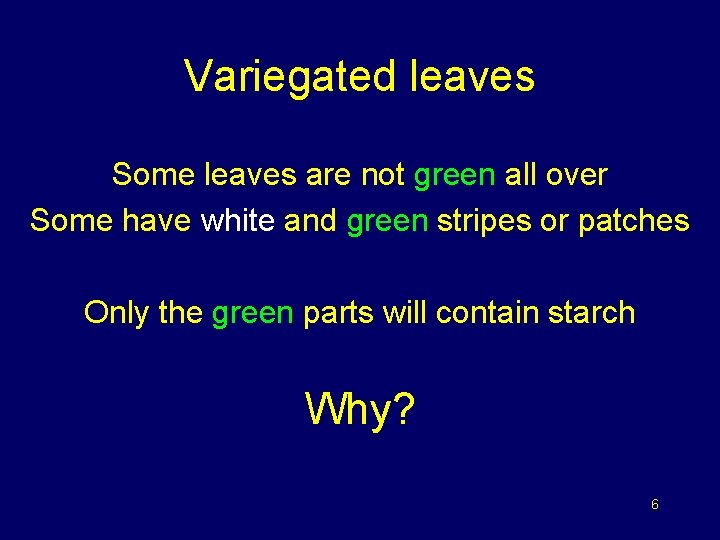
Variegated leaves Some leaves are not green all over Some have white and green stripes or patches Only the green parts will contain starch Why? 6
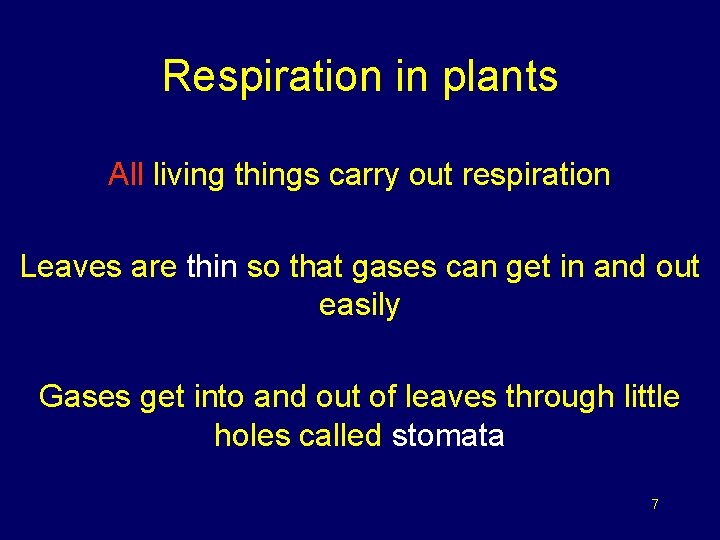
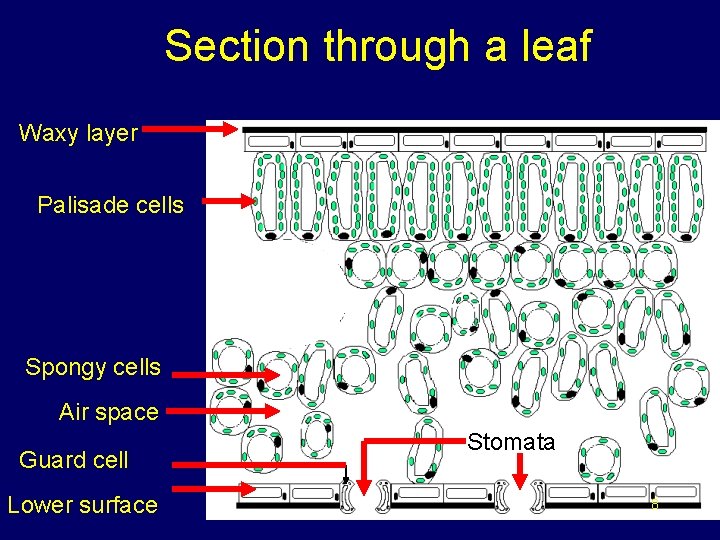
Respiration in plants All living things carry out respiration Leaves are thin so that gases can get in and out easily Gases get into and out of leaves through little holes called stomata 7
Section through a leaf Waxy layer Palisade cells Spongy cells Air space Guard cell Lower surface Stomata 8
Plant growth • Plants need carbon dioxide from the air • Plants need water • Plants need light • Plants need nutrients from the soil including nitrogen, phosphorus and potassium • If the soil does not contain enough nutrients then we add fertilisers 9
Fertilisers Nitrogen is needed for general growth Phosphorus is needed for healthy roots Potassium is needed for healthy leaves 10
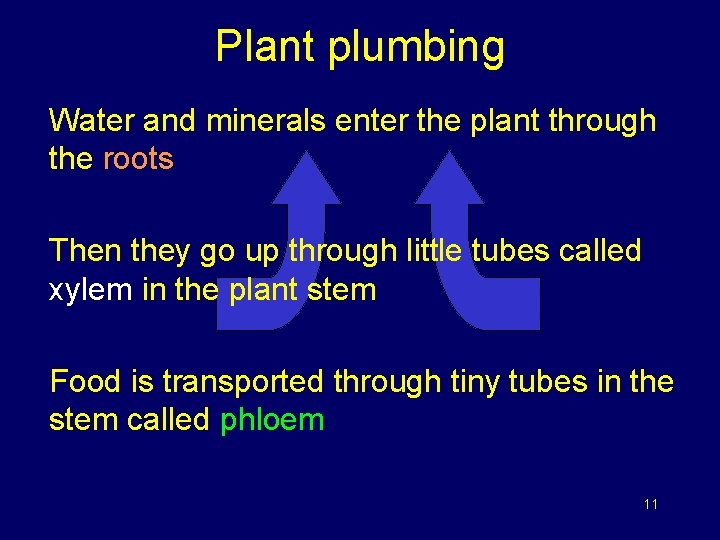
Plant plumbing Water and minerals enter the plant through the roots Then they go up through little tubes called xylem in the plant stem Food is transported through tiny tubes in the stem called phloem 11
Roots keep the plant anchored in the soil Roots are covered in lots of tiny hairs Root hairs take up water from the soil All the root hairs together have a large surface area 12
Flowers are a plant’s reproductive system Flowers have male and female reproductive organs Male part (stamen): anther and filament Female part (carpel): stigma, style, ovary 13
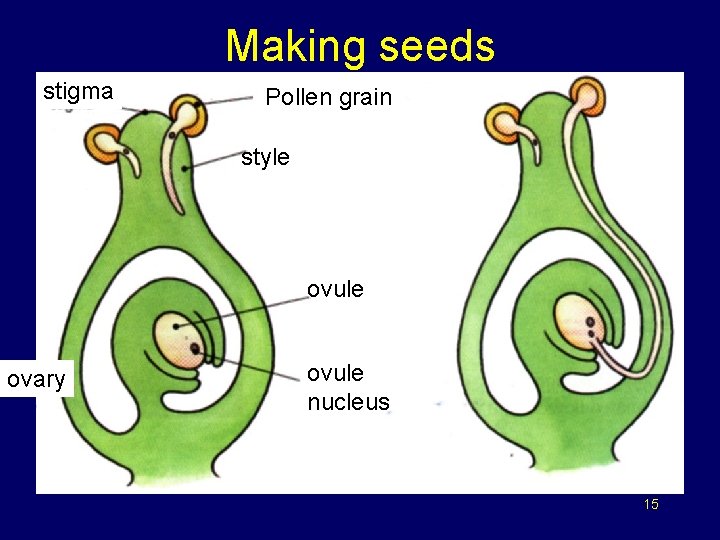
Pollination is the transfer of pollen (male) to the stigma (female) Pollen grains can be carried by insects Pollen grains can be carried by the wind When the ovule is fertilised it turns into a seed 14
Making seeds stigma Pollen grain style ovule ovary ovule nucleus 15
Key words plant seed root stem leaf root hair starch chlorophyll photosynthesis carbon dioxide oxygen phosphorus nitrogen potassium pollen anther filament stigma style ovule xylem phloem 16