
Plants as organisms Unit 3 Lesson 1 Plant

- Slides: 10
Plants as organisms Unit 3 Lesson 1
Plant Kingdom – Four major groups of plants – Mosses – Ferns – Gymnosperms – Naked seed – Seeds in cones (no fruit for “clothing”) – Pine, spruce, fir, ginko, and redwood – Angiosperms – Flowering plants – Seed enclosed in a vessel – Corn, apples, wheat, petunia, and oak
Classes of Flowering Plants – Monocots – Mono = 1, Cot = cotyledon (seed leaf) – Plants with narrow leaves with parallel veins – Grasses, iris, lillies – Dicots – Di = two, seed leaves – Broadleafs with netted veins – Oaks, roses, maples
Monocot / Dicot Table Use page 42 of your text to fill in the table in your noteguide.
Life cycles – Time from germination until the death of a plant – Annual – 1 year life cycle – Corn, beans, marigolds – Biennial – 2 year life cycle – Sugar beet, hollyhock, carrots – Perennial – 3 or more year life cycle (many thousands of years for some – Herbaceous – soft shoots killed by frost (green plants) – Daylillies, asparagus, tulips – Woody – bark on stem to protect the shoots from frost – Trees, shrubs
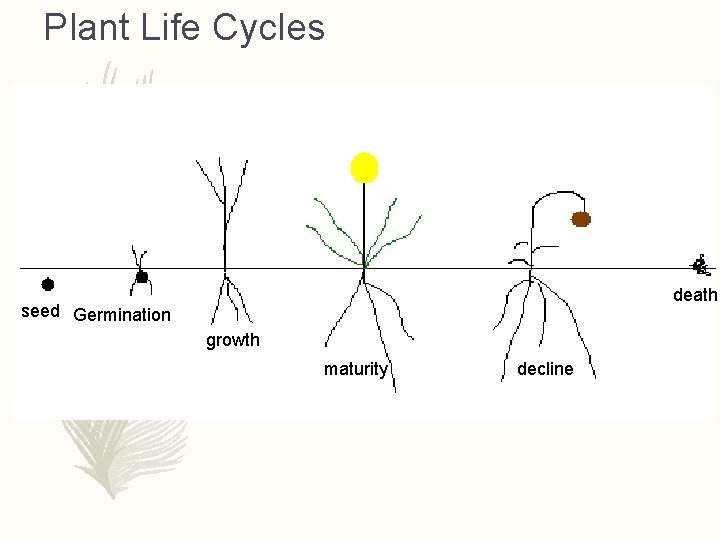
Plant Life Cycles Annual – Completes a life cycle from seed to death in one year – You must replant each year – Corn, beans, tomatoes death seed Germination growth maturity decline
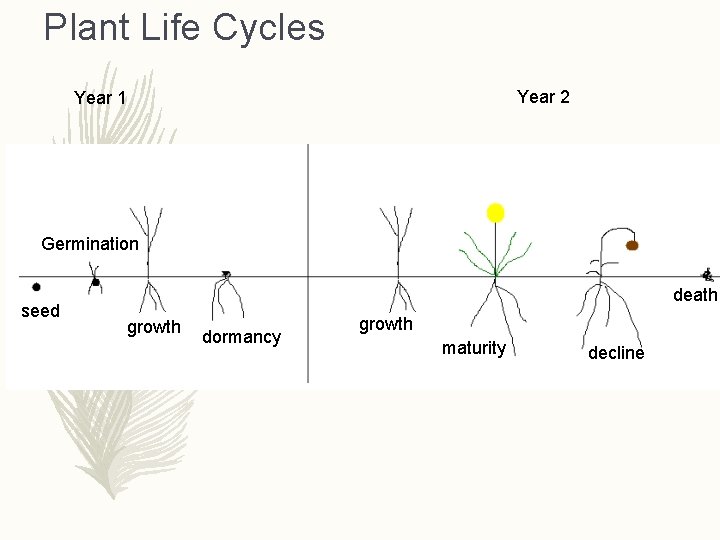
Plant Life Cycles Year 2 Year 1 Biennial – Takes two years to complete its life cycle Germination– Must replant every other year – Year one = seed, germinate, grow, dormant seed – Year growth decline, death two = grow, reproduce, dormancy – Sugar beat, onion, carrot maturity death decline
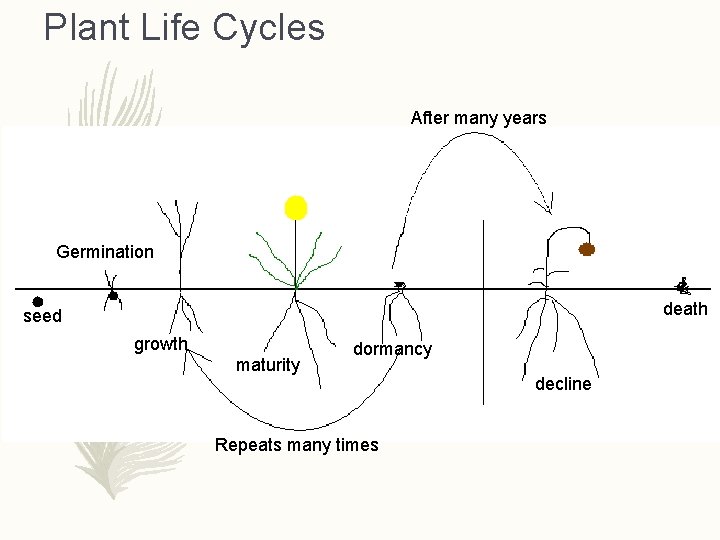
Plant Life Cycles After many years Perennial – Completes a reproductive cycle each year for many years, then dies Germination – Tulip, rose, iris, alfalfa death seed growth maturity dormancy Repeats many times decline
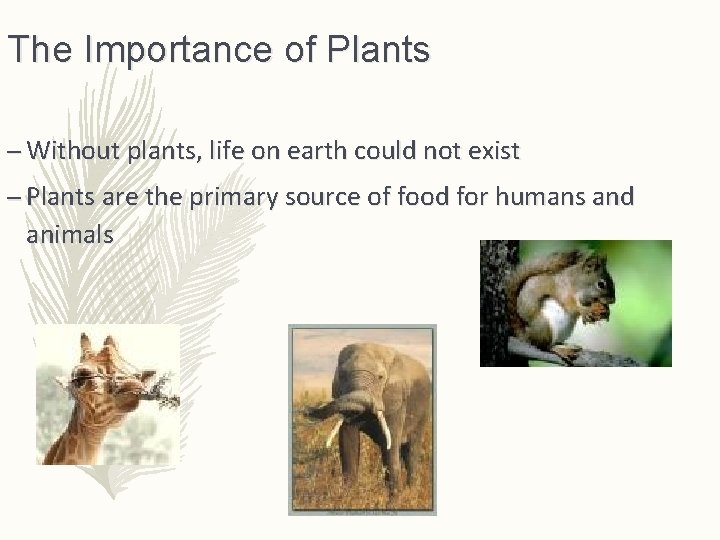
The Importance of Plants – Without plants, life on earth could not exist – Plants are the primary source of food for humans and animals
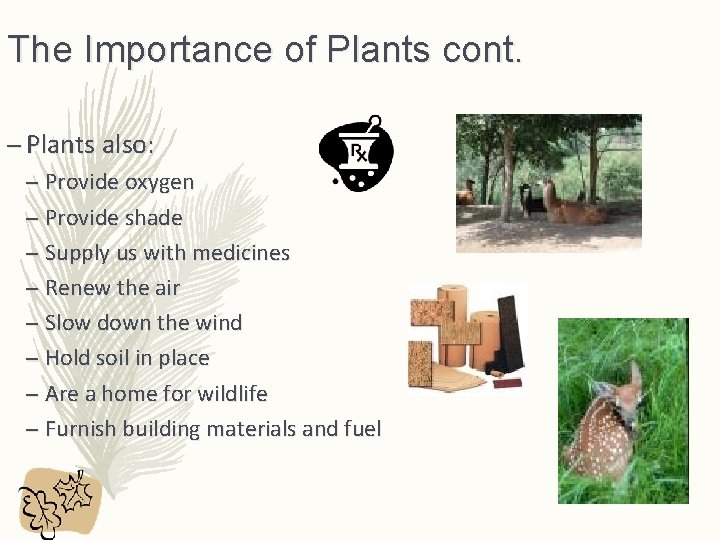
The Importance of Plants cont. – Plants also: – Provide oxygen – Provide shade – Supply us with medicines – Renew the air – Slow down the wind – Hold soil in place – Are a home for wildlife – Furnish building materials and fuel