
Plants and Animals Plant Parts The Roots Common
- Slides: 50
Plants and Animals Plant Parts – The Roots
Common Parts �Almost all plants have three main parts: �Roots �Stems �Leaves
Roots �Most roots act as anchors. �They also take in water from the soil through tiny parts called root hairs. �Roots can store excess food for plants.
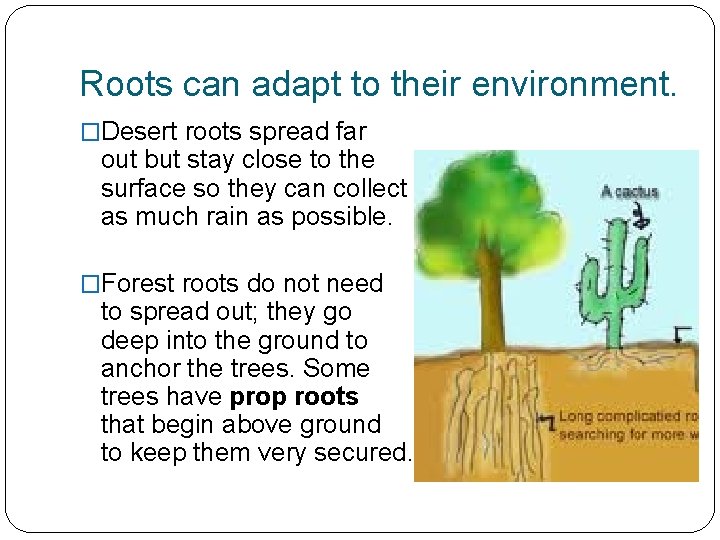
Roots can adapt to their environment. �Desert roots spread far out but stay close to the surface so they can collect as much rain as possible. �Forest roots do not need to spread out; they go deep into the ground to anchor the trees. Some trees have prop roots that begin above ground to keep them very secured.
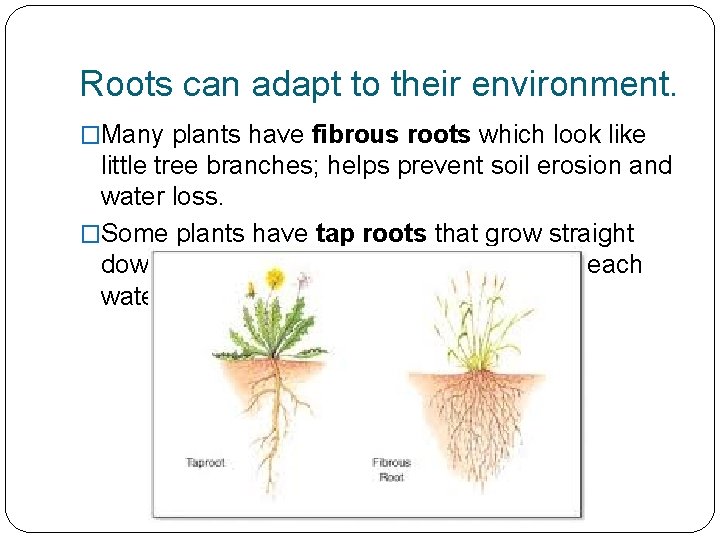
Roots can adapt to their environment. �Many plants have fibrous roots which look like little tree branches; helps prevent soil erosion and water loss. �Some plants have tap roots that grow straight down into the ground, so they are able to reach water deep in the ground.
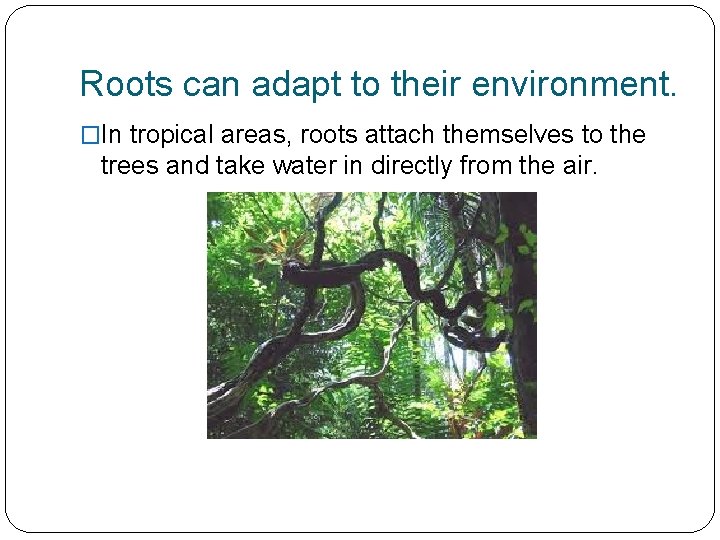
Roots can adapt to their environment. �In tropical areas, roots attach themselves to the trees and take water in directly from the air.
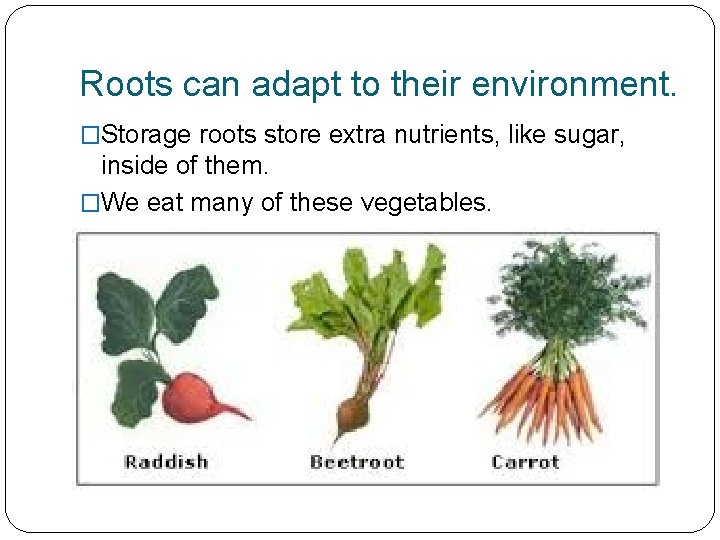
Roots can adapt to their environment. �Storage roots store extra nutrients, like sugar, inside of them. �We eat many of these vegetables.
Plants and Animals Plant Parts – The Stem
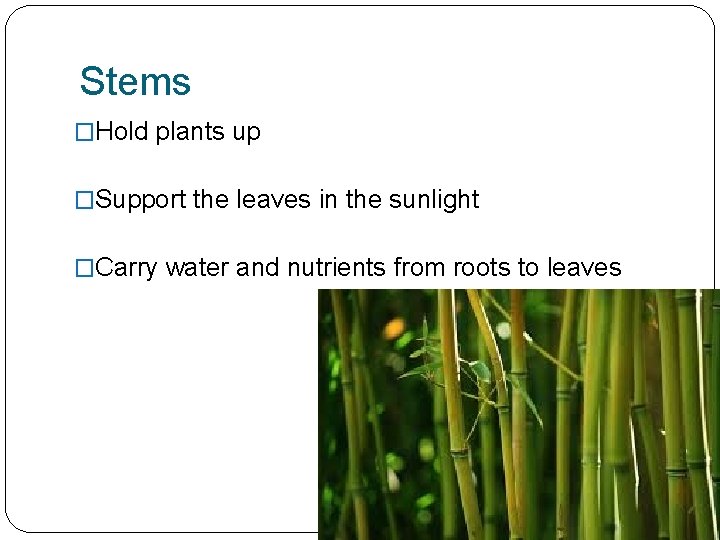
Stems �Hold plants up �Support the leaves in the sunlight �Carry water and nutrients from roots to leaves
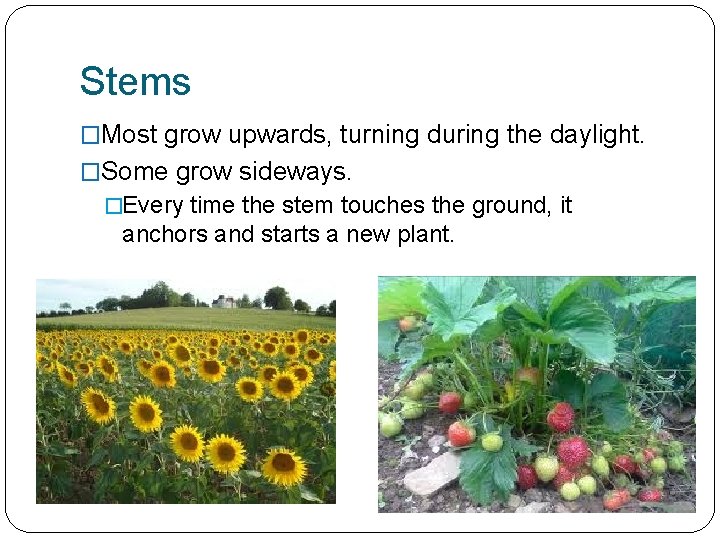
Stems �Most grow upwards, turning during the daylight. �Some grow sideways. �Every time the stem touches the ground, it anchors and starts a new plant.
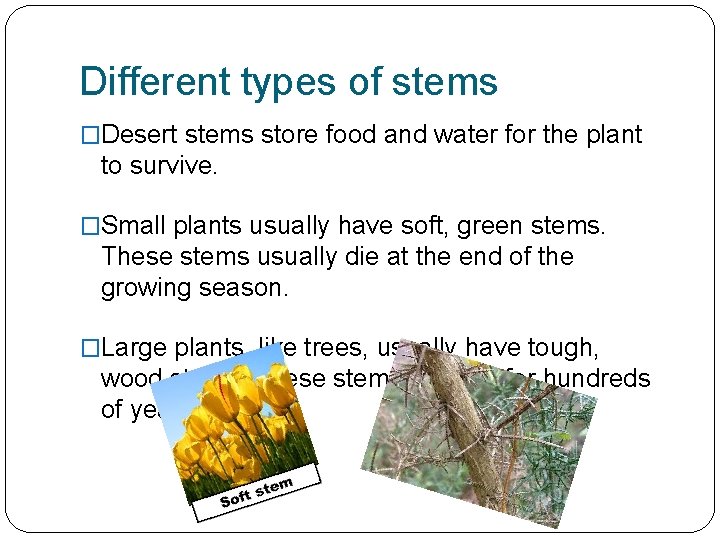
Different types of stems �Desert stems store food and water for the plant to survive. �Small plants usually have soft, green stems. These stems usually die at the end of the growing season. �Large plants, like trees, usually have tough, wood stems. These stems can live for hundreds of years.
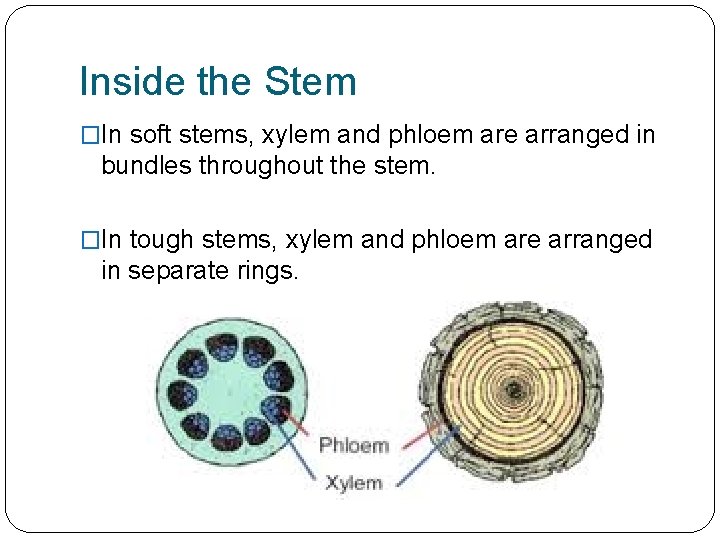
Inside the Stem �Most plants contain narrow tubes that carry water, minerals, and foot to different parts of the plant. �Xylem: carries water and minerals up from the root to the leaves. �Phloem: carries nutrients down from the leaves to the roots.
Inside the Stem �In soft stems, xylem and phloem are arranged in bundles throughout the stem. �In tough stems, xylem and phloem are arranged in separate rings.
Plants and Animals Plant Parts – Leaves & Photosynthesis
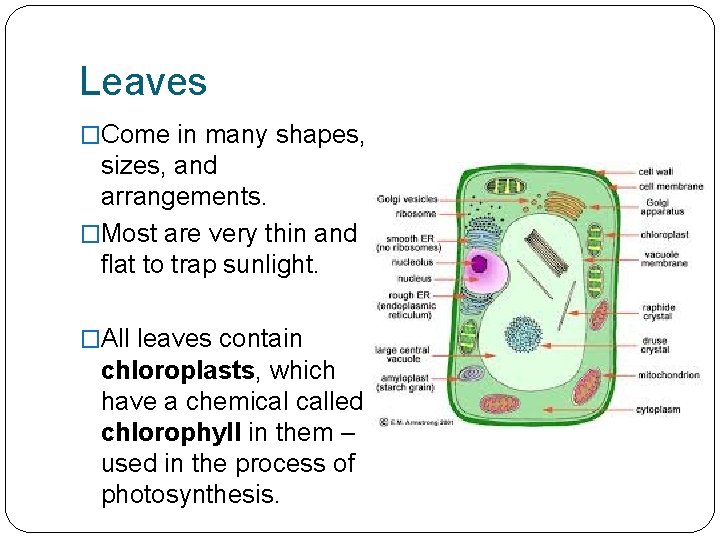
Leaves �Come in many shapes, sizes, and arrangements. �Most are very thin and flat to trap sunlight. �All leaves contain chloroplasts, which have a chemical called chlorophyll in them – used in the process of photosynthesis.
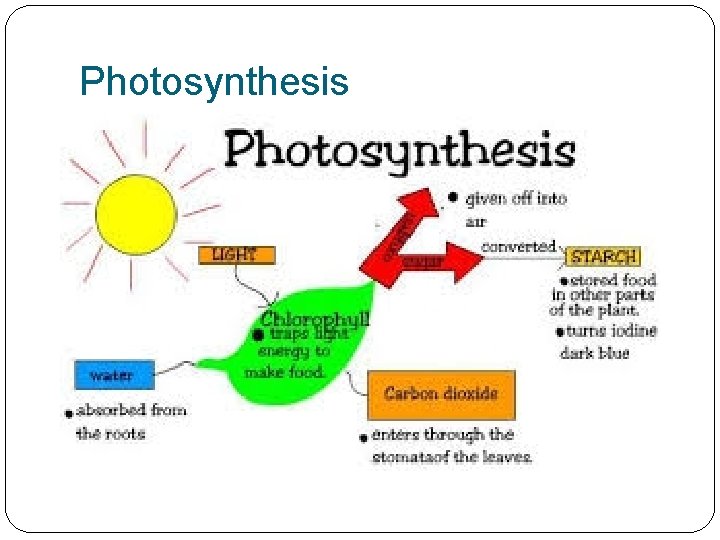
Photosynthesis �The process in which plants make food from the sunlight. �Photo = light; synthesis = putting together �Plants use water, carbon dioxide, and sunlight to make food (sugar/glucose) and oxygen. �Plants use some of the glucose that is made as food, and stores the rest as starch.
Photosynthesis
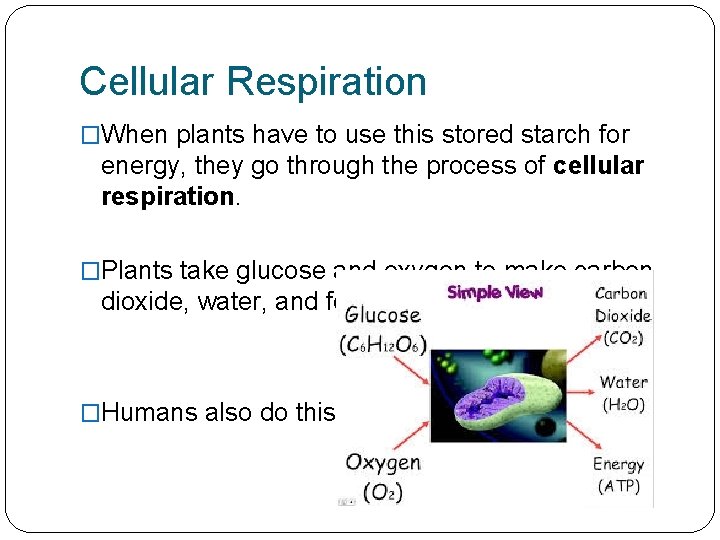
Cellular Respiration �When plants have to use this stored starch for energy, they go through the process of cellular respiration. �Plants take glucose and oxygen to make carbon dioxide, water, and food energy. �Humans also do this.
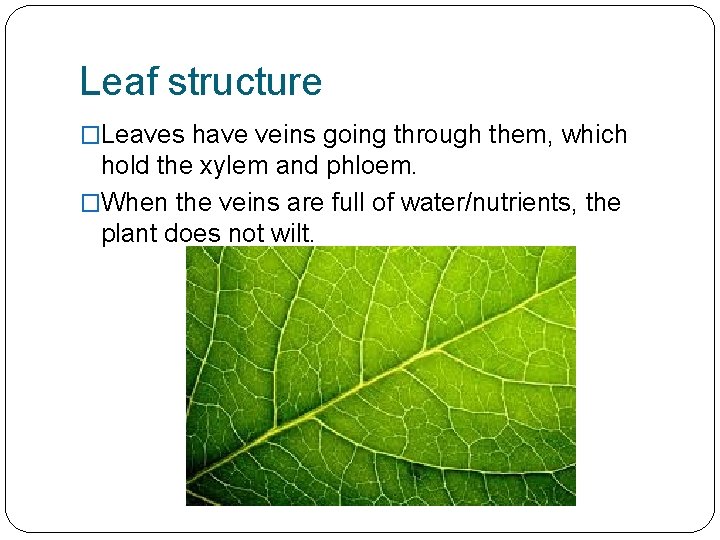
Leaf structure �Leaves have veins going through them, which hold the xylem and phloem. �When the veins are full of water/nutrients, the plant does not wilt.
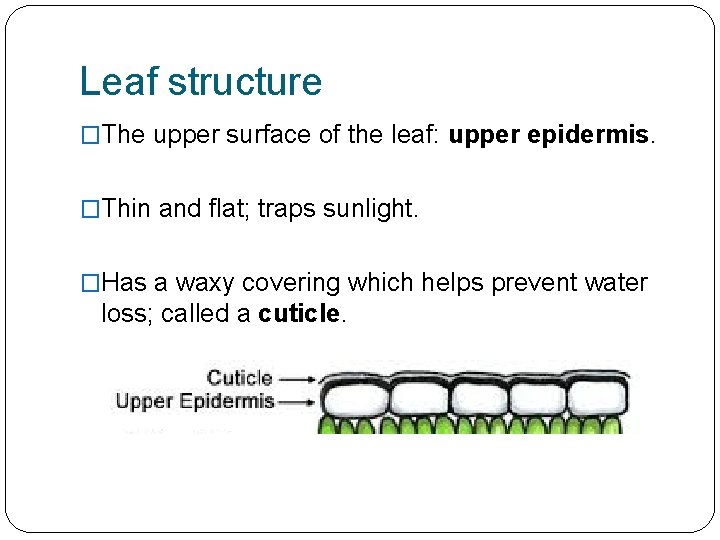
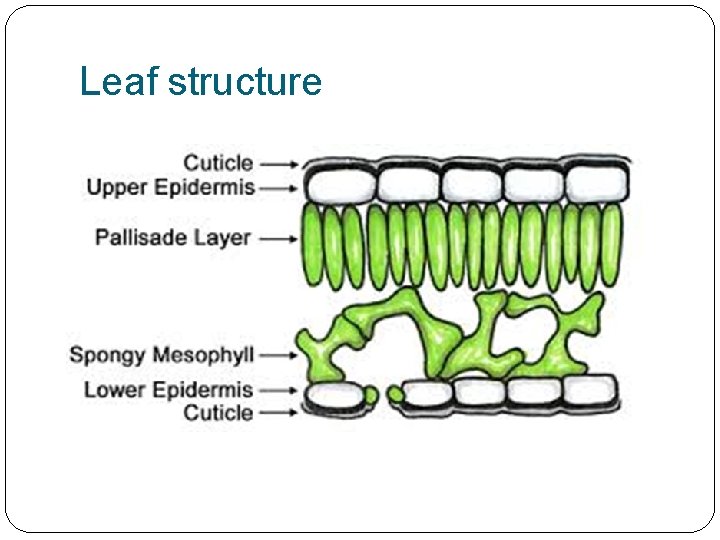
Leaf structure �The upper surface of the leaf: upper epidermis. �Thin and flat; traps sunlight. �Has a waxy covering which helps prevent water loss; called a cuticle.
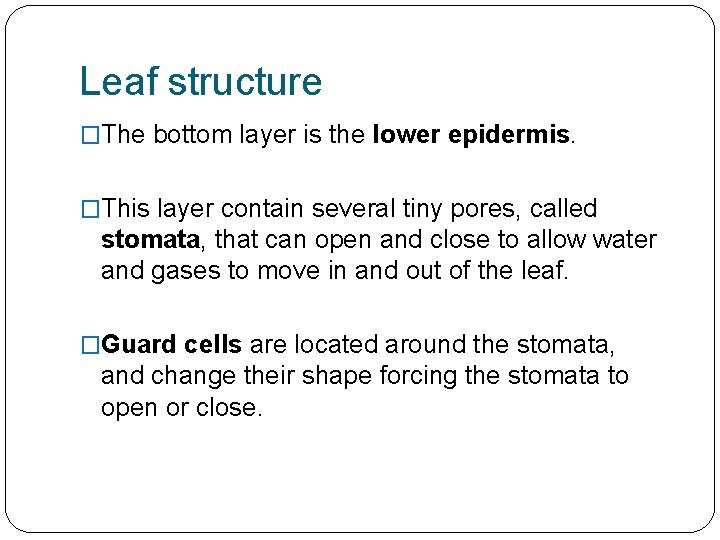
Leaf structure �The bottom layer is the lower epidermis. �This layer contain several tiny pores, called stomata, that can open and close to allow water and gases to move in and out of the leaf. �Guard cells are located around the stomata, and change their shape forcing the stomata to open or close.
Leaf structure
Plants and Animals Non-vascular vs. Vascular plants
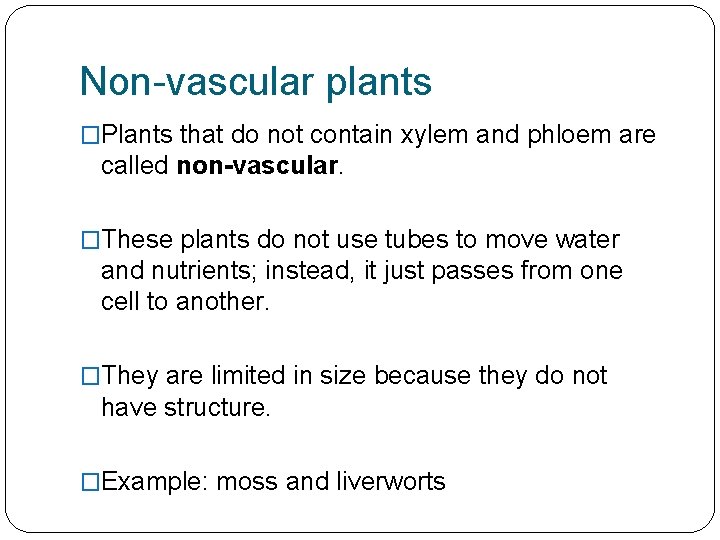
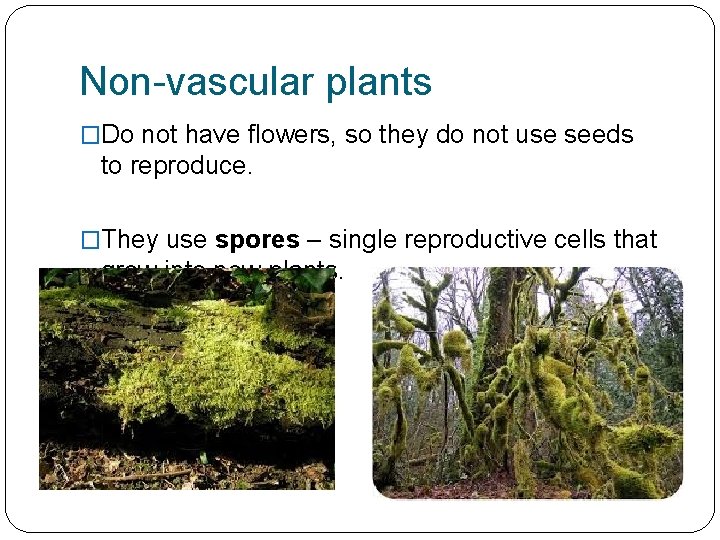
Non-vascular plants �Plants that do not contain xylem and phloem are called non-vascular. �These plants do not use tubes to move water and nutrients; instead, it just passes from one cell to another. �They are limited in size because they do not have structure. �Example: moss and liverworts
Non-vascular plants �Do not have flowers, so they do not use seeds to reproduce. �They use spores – single reproductive cells that grow into new plants.
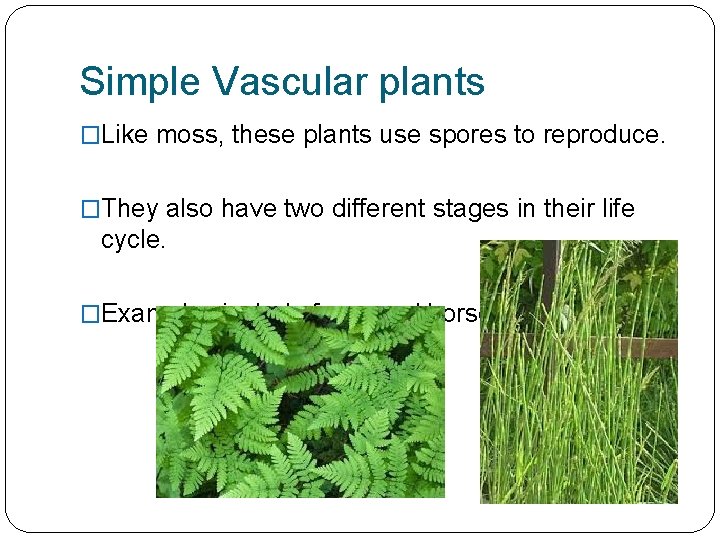
Simple Vascular plants �Like moss, these plants use spores to reproduce. �They also have two different stages in their life cycle. �Examples include ferns and horsetails.
Seeded Plants �Spores are not as successful as growing into new plants, so the majority of plants fall into two groups: gymnosperms and angiosperms. �Both of these types of plants use seeds to reproduce and form new plants.
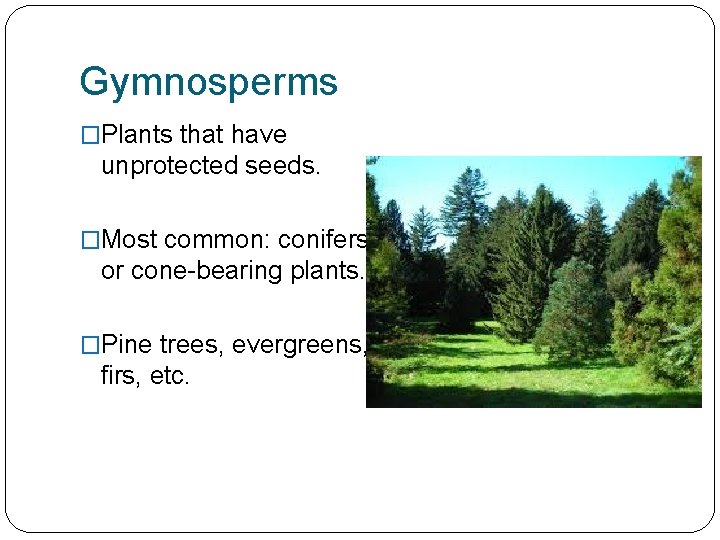
Gymnosperms �Plants that have unprotected seeds. �Most common: conifers, or cone-bearing plants. �Pine trees, evergreens, firs, etc.
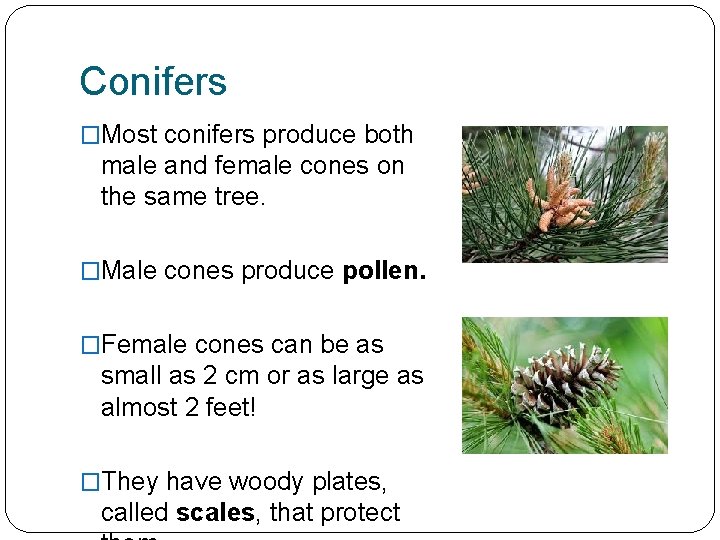
Conifers �Most conifers produce both male and female cones on the same tree. �Male cones produce pollen. �Female cones can be as small as 2 cm or as large as almost 2 feet! �They have woody plates, called scales, that protect
Plants and Animals Angiosperms
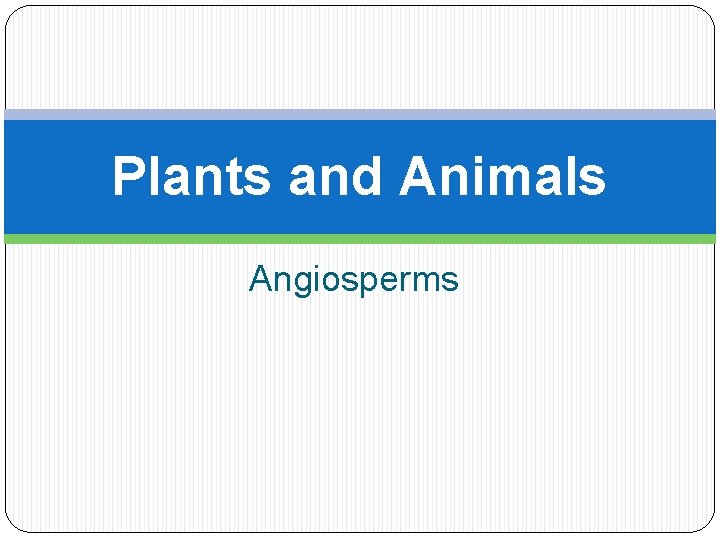
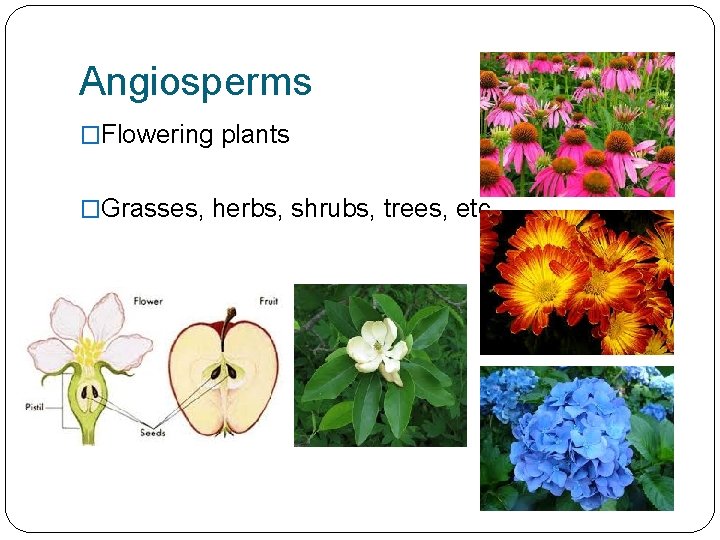
Angiosperms �Flowering plants �Grasses, herbs, shrubs, trees, etc.
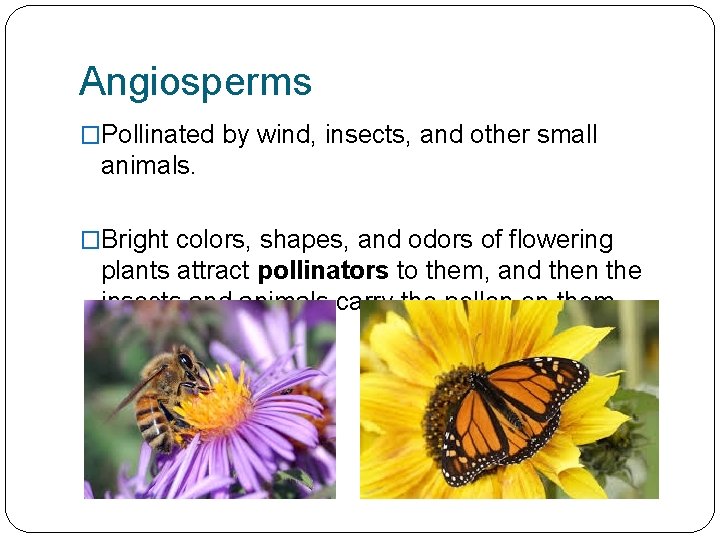
Angiosperms �Pollinated by wind, insects, and other small animals. �Bright colors, shapes, and odors of flowering plants attract pollinators to them, and then the insects and animals carry the pollen on them.
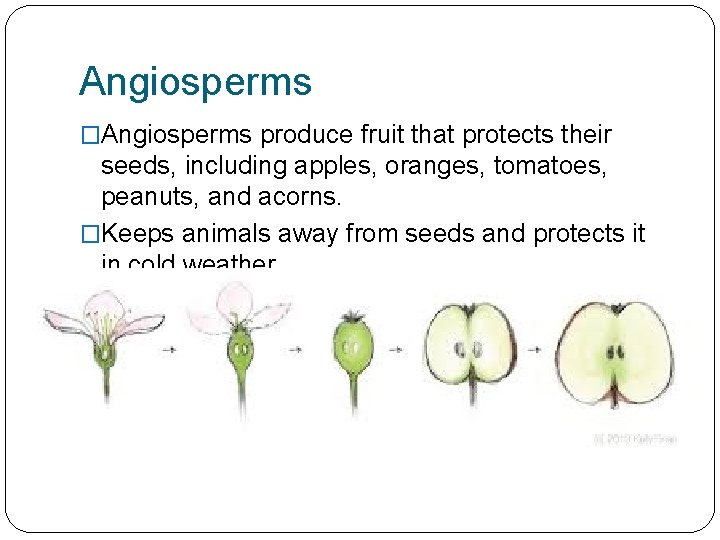
Angiosperms �Angiosperms produce fruit that protects their seeds, including apples, oranges, tomatoes, peanuts, and acorns. �Keeps animals away from seeds and protects it in cold weather.
Plants and Animals Plant Reproduction – Gymnosperms & Angiosperms
Gymnosperms �Remember: the same tree can contain both male and female cones that produce male and female cells. �When these seeds join, they are able to produce new plants.
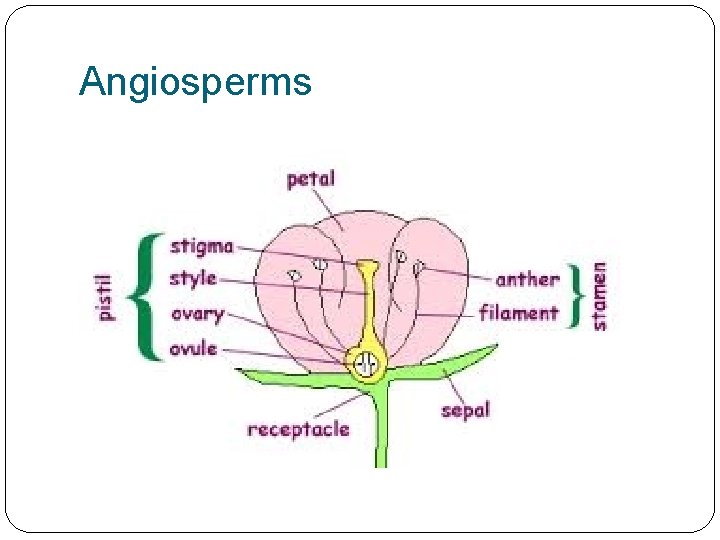
Angiosperms �In angiosperms, male and female reproductive parts can be found on the same flower. �The male parts make up the stamen and produce pollen. �The female parts make up the pistil and produce eggs. �We already learned that pollen can be carried by wind or pollinators to places where the eggs may be.
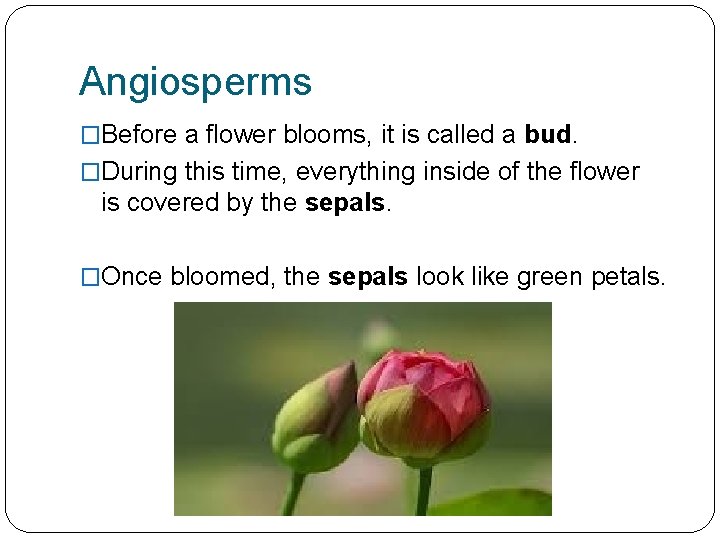
Angiosperms �Before a flower blooms, it is called a bud. �During this time, everything inside of the flower is covered by the sepals. �Once bloomed, the sepals look like green petals.
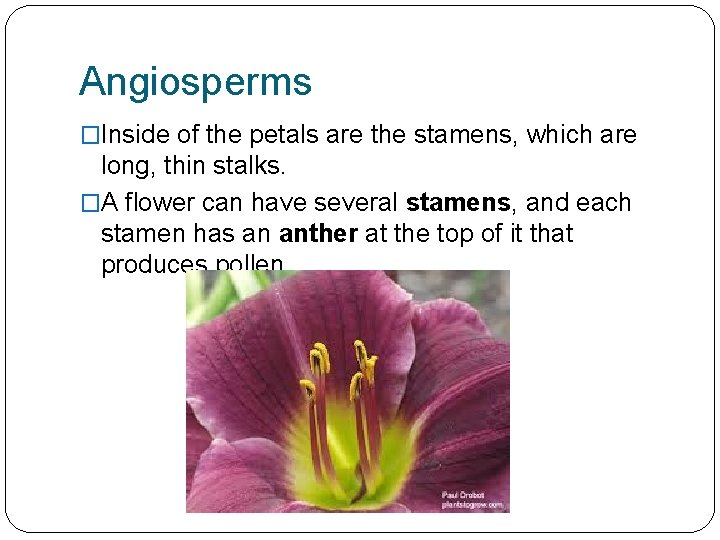
Angiosperms �Inside of the petals are the stamens, which are long, thin stalks. �A flower can have several stamens, and each stamen has an anther at the top of it that produces pollen.
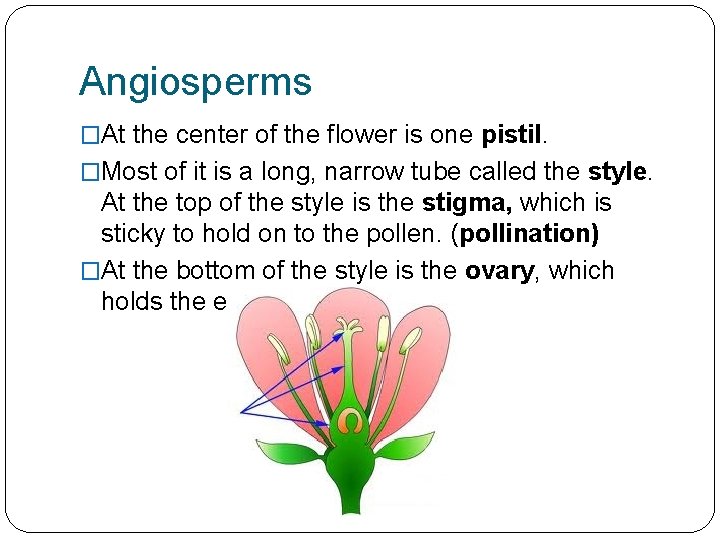
Angiosperms �At the center of the flower is one pistil. �Most of it is a long, narrow tube called the style. At the top of the style is the stigma, which is sticky to hold on to the pollen. (pollination) �At the bottom of the style is the ovary, which holds the eggs.
Angiosperms
Methods of Pollination �Self-pollination: the pollen of one flower joins a stigma on the same flower, normally due to wind. �Cross-pollination: the pollen of one flower joins a stigma on a different flower; more common. �Cross-pollination allows for more genetic diversity among plants; Gregor Mendel used this process with his pea plants.
Plants and Animals Seeds
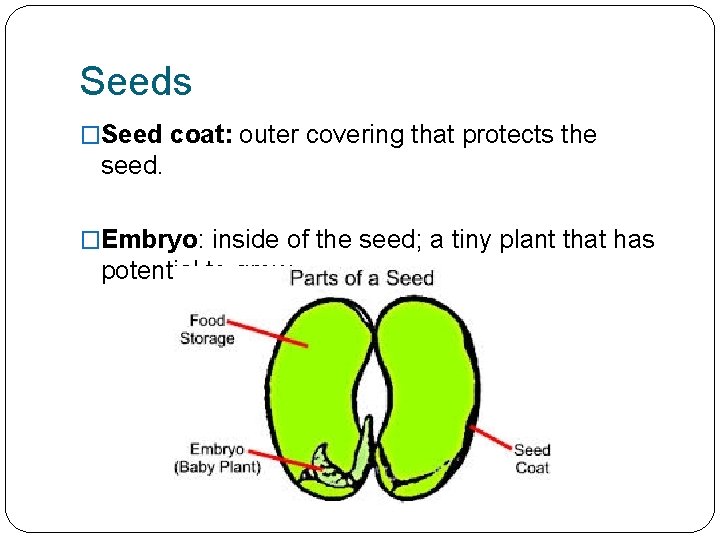
Seeds �Seed coat: outer covering that protects the seed. �Embryo: inside of the seed; a tiny plant that has potential to grow.
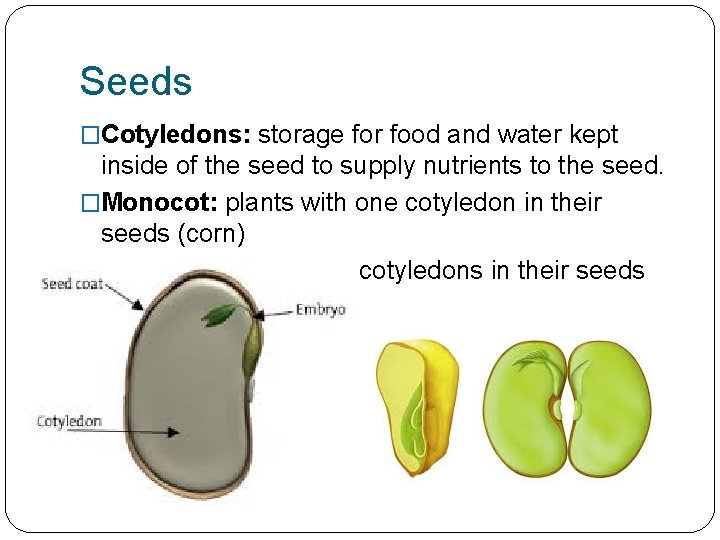
Seeds �Cotyledons: storage for food and water kept inside of the seed to supply nutrients to the seed. �Monocot: plants with one cotyledon in their seeds (corn) �Dicot: plants with two cotyledons in their seeds (beans)
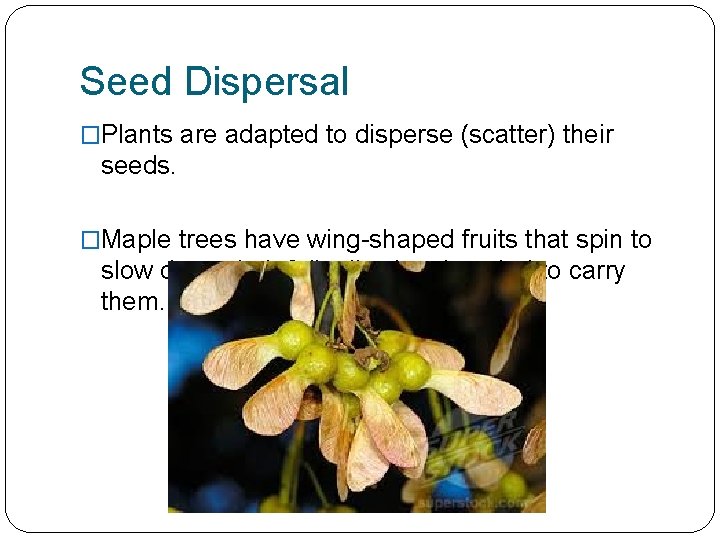
Seed Dispersal �Plants are adapted to disperse (scatter) their seeds. �Maple trees have wing-shaped fruits that spin to slow down their fall, allowing the wind to carry them.
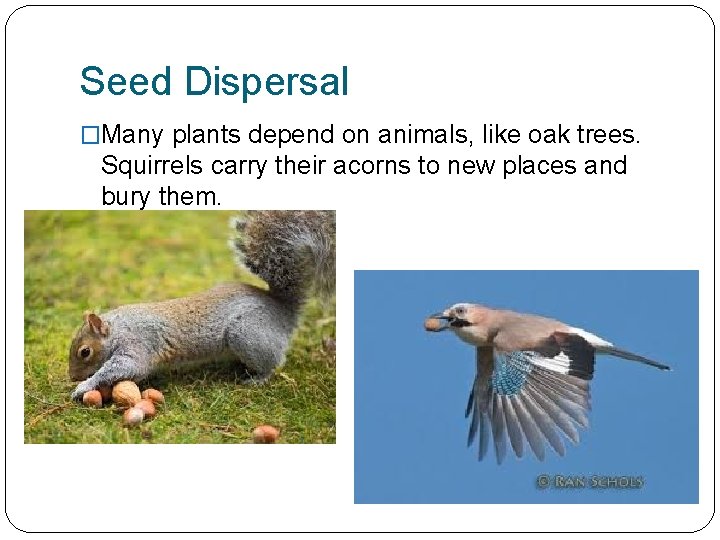
Seed Dispersal �Many plants depend on animals, like oak trees. Squirrels carry their acorns to new places and bury them.
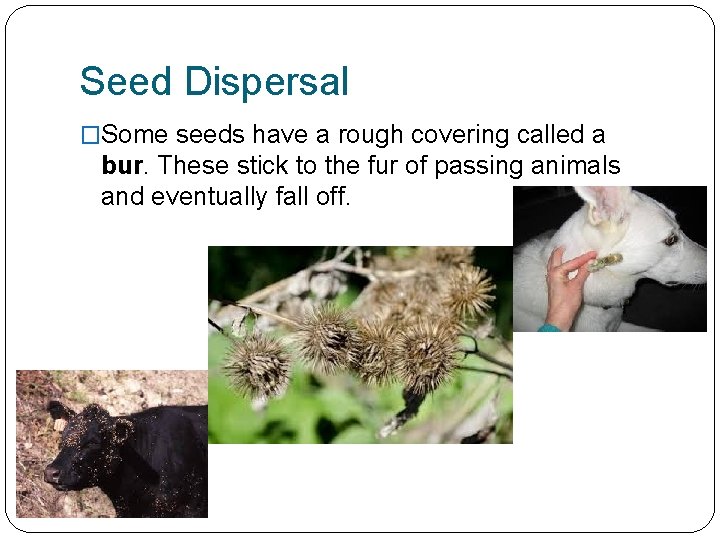
Seed Dispersal �Some seeds have a rough covering called a bur. These stick to the fur of passing animals and eventually fall off.
Seed Germination �Seeds need soil, warm temperatures, and enough water to grow. �When the conditions are right, a seed will sprout, or germinate, and begin the next stage of its life.
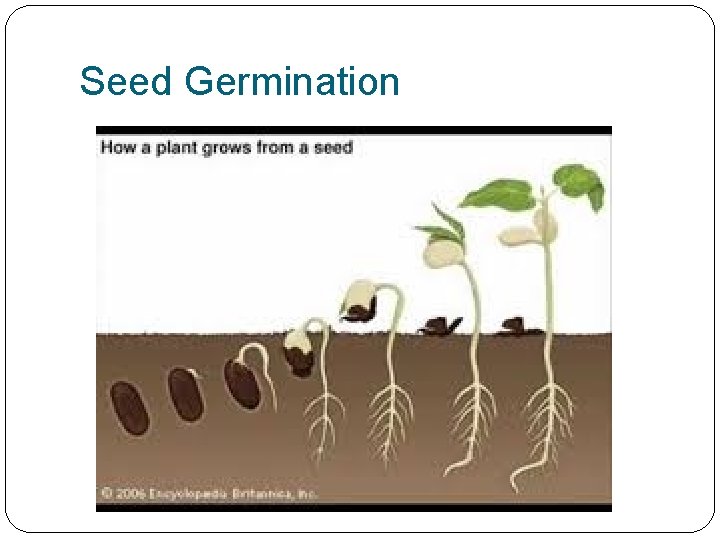
Seed Germination �Step 1: take in water. �Step 2: the seed coat splits due to swelling. �Step 3: the root begins to develop. �Step 4: stem emerges and grows toward light. �Step 5: growing plant, called seedling, uses food storage to grow. �Step 6: leaves grow and use photosynthesis to make food. �Step 7: once the plant is growing strong enough, the cotyledons drop off.
Seed Germination