
PLANTS 9 Biology Plant Anatomy Leaves photosynthesis and
PLANTS 9 Biology
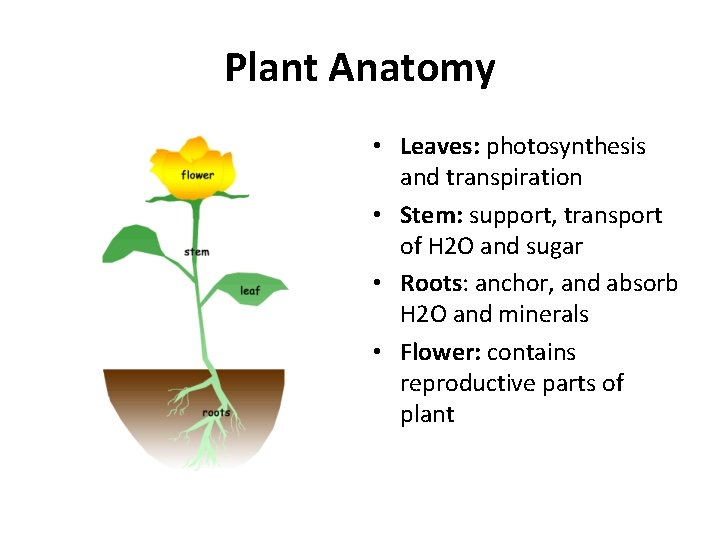
Plant Anatomy • Leaves: photosynthesis and transpiration • Stem: support, transport of H 2 O and sugar • Roots: anchor, and absorb H 2 O and minerals • Flower: contains reproductive parts of plant
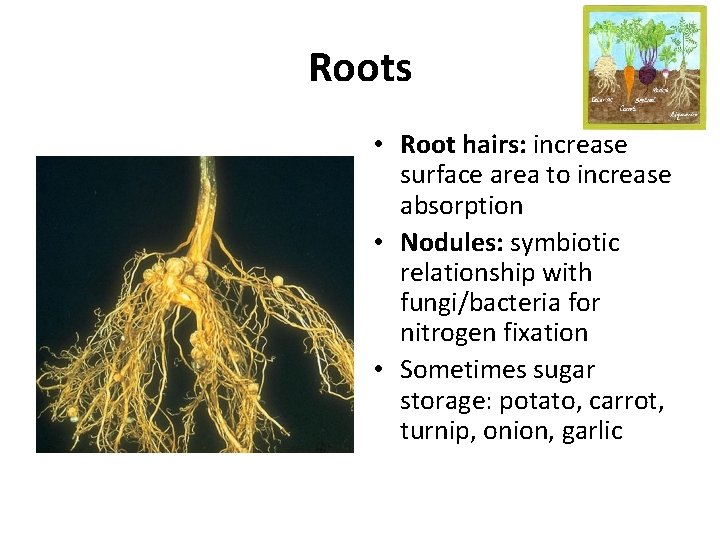
Roots • Root hairs: increase surface area to increase absorption • Nodules: symbiotic relationship with fungi/bacteria for nitrogen fixation • Sometimes sugar storage: potato, carrot, turnip, onion, garlic
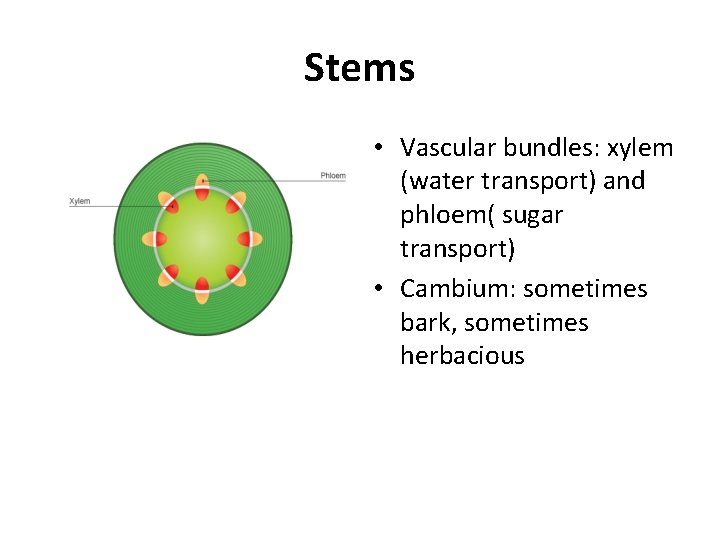
Stems • Vascular bundles: xylem (water transport) and phloem( sugar transport) • Cambium: sometimes bark, sometimes herbacious
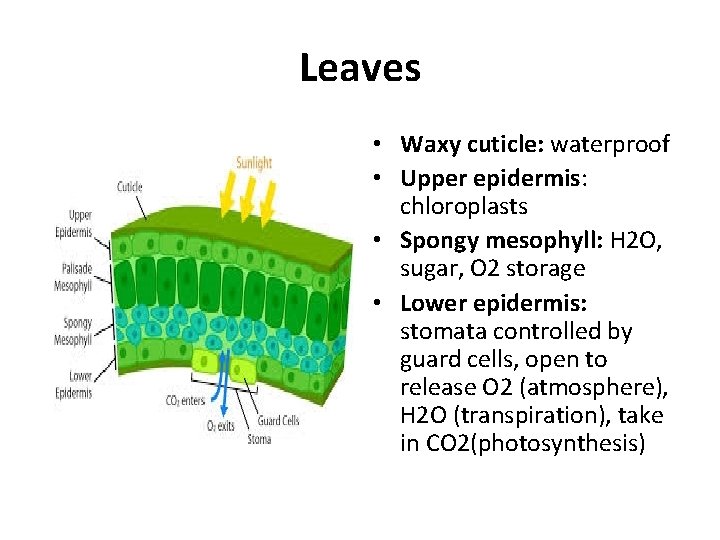
Leaves • Waxy cuticle: waterproof • Upper epidermis: chloroplasts • Spongy mesophyll: H 2 O, sugar, O 2 storage • Lower epidermis: stomata controlled by guard cells, open to release O 2 (atmosphere), H 2 O (transpiration), take in CO 2(photosynthesis)
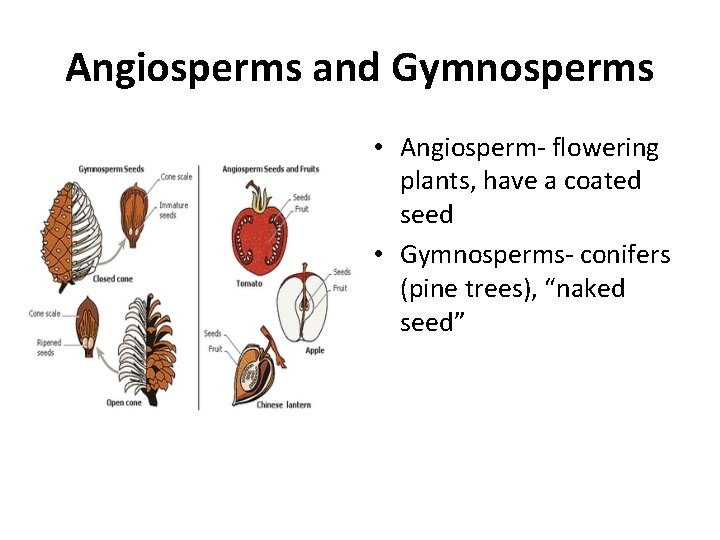
Angiosperms and Gymnosperms • Angiosperm- flowering plants, have a coated seed • Gymnosperms- conifers (pine trees), “naked seed”
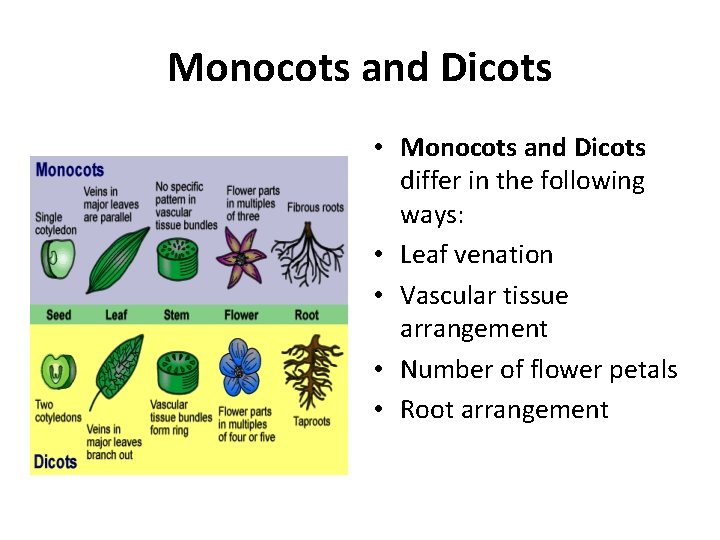
Monocots and Dicots • Monocots and Dicots differ in the following ways: • Leaf venation • Vascular tissue arrangement • Number of flower petals • Root arrangement
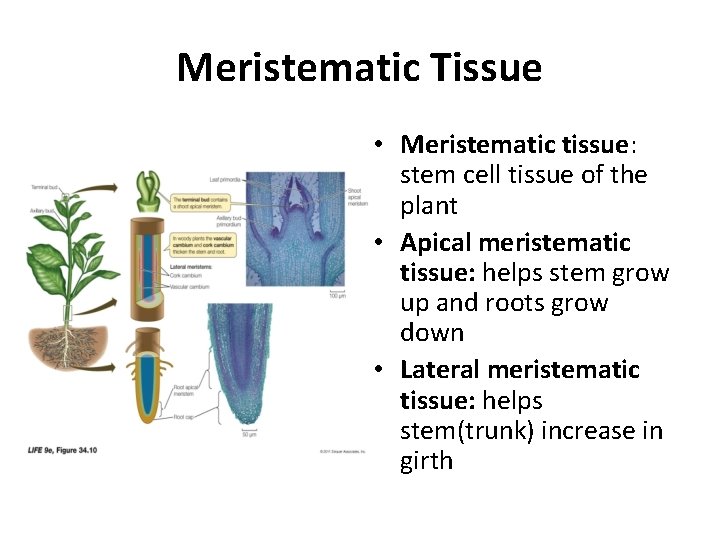
Meristematic Tissue • Meristematic tissue: stem cell tissue of the plant • Apical meristematic tissue: helps stem grow up and roots grow down • Lateral meristematic tissue: helps stem(trunk) increase in girth
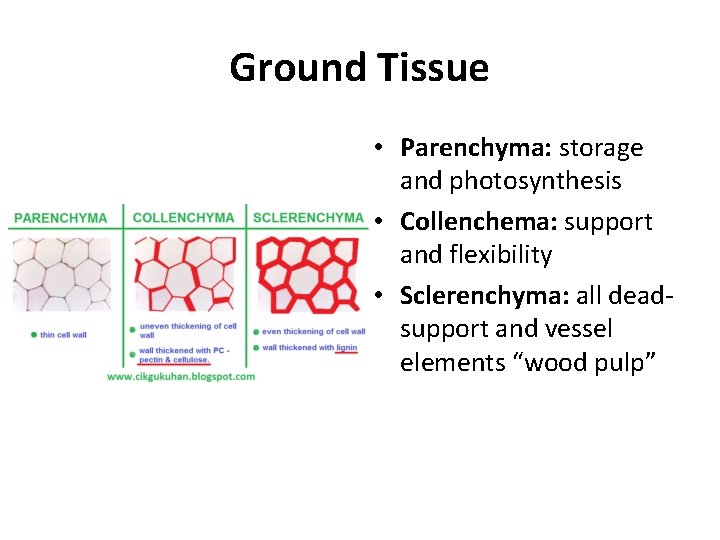
Ground Tissue • Parenchyma: storage and photosynthesis • Collenchema: support and flexibility • Sclerenchyma: all deadsupport and vessel elements “wood pulp”
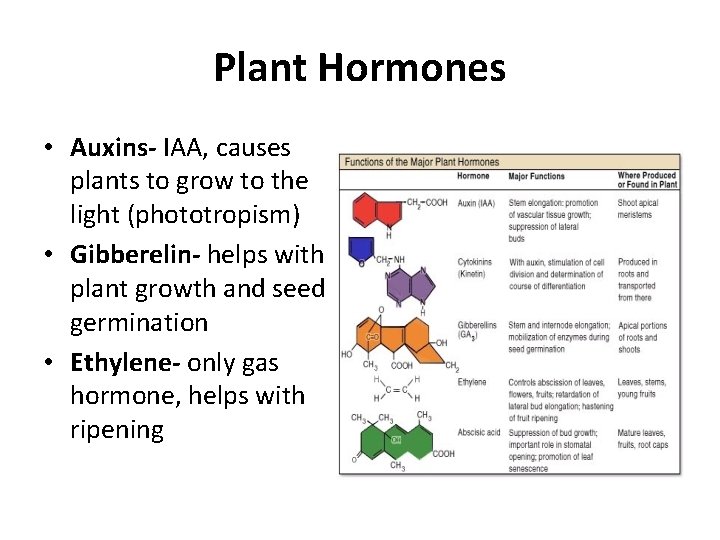
Plant Hormones • Auxins- IAA, causes plants to grow to the light (phototropism) • Gibberelin- helps with plant growth and seed germination • Ethylene- only gas hormone, helps with ripening
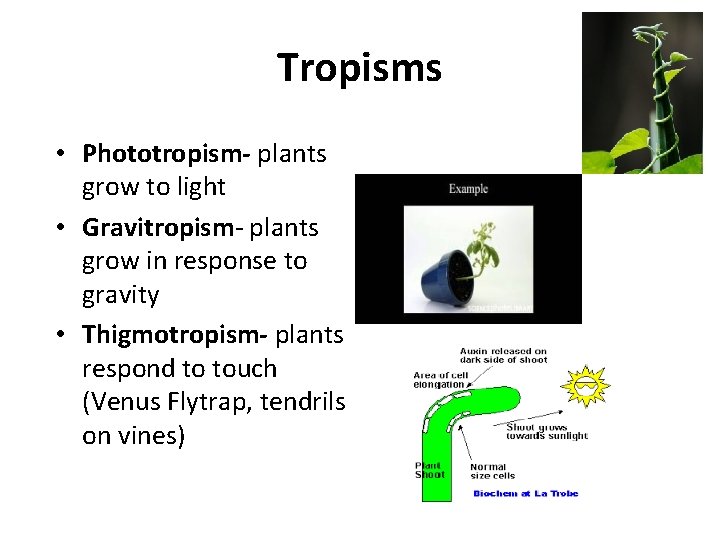
Tropisms • Phototropism- plants grow to light • Gravitropism- plants grow in response to gravity • Thigmotropism- plants respond to touch (Venus Flytrap, tendrils on vines)
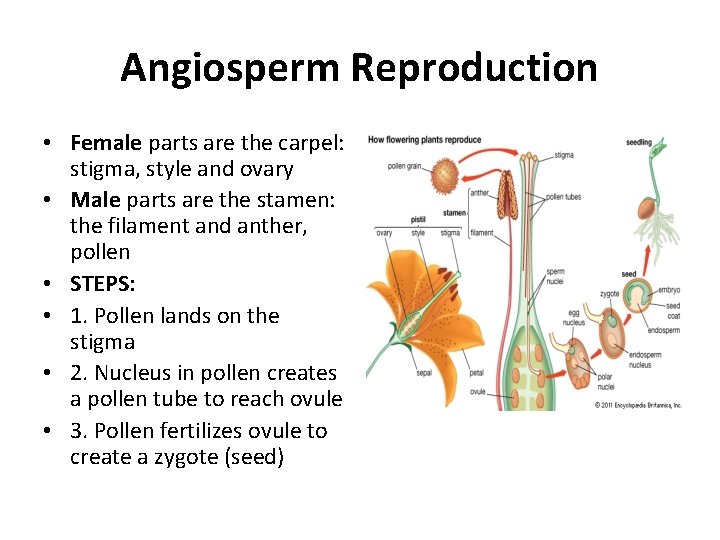
Angiosperm Reproduction • Female parts are the carpel: stigma, style and ovary • Male parts are the stamen: the filament and anther, pollen • STEPS: • 1. Pollen lands on the stigma • 2. Nucleus in pollen creates a pollen tube to reach ovule • 3. Pollen fertilizes ovule to create a zygote (seed)
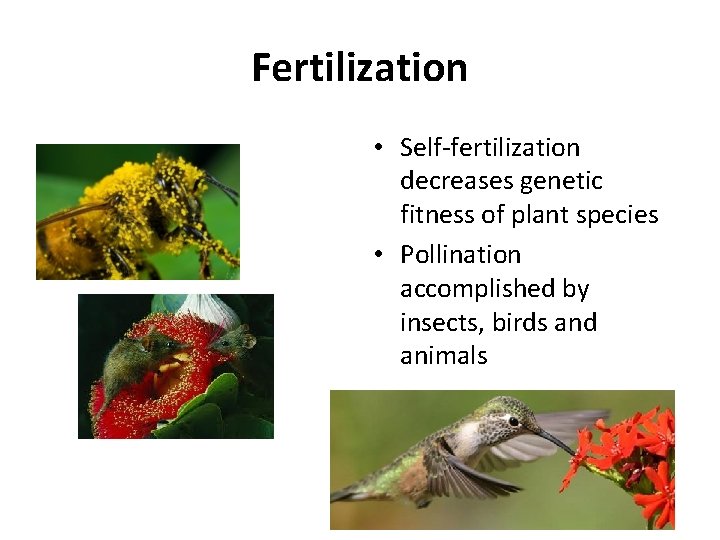
Fertilization • Self-fertilization decreases genetic fitness of plant species • Pollination accomplished by insects, birds and animals
- Slides: 13