
Plantlike Protists n First plants n General Characteristics

- Slides: 12
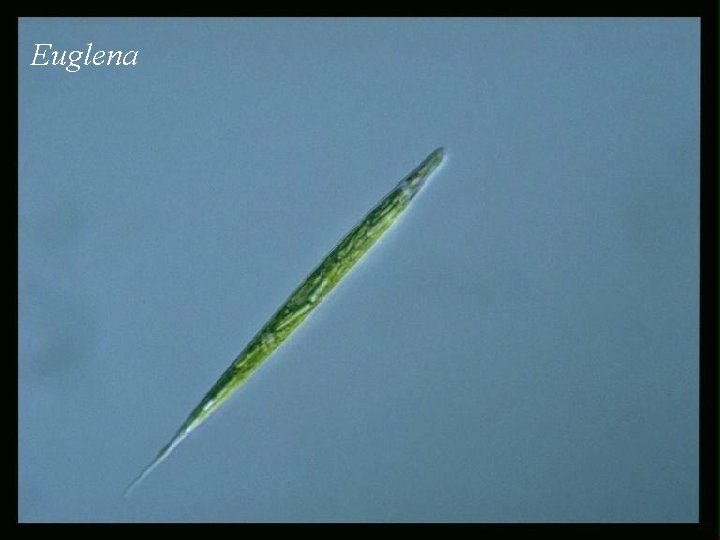
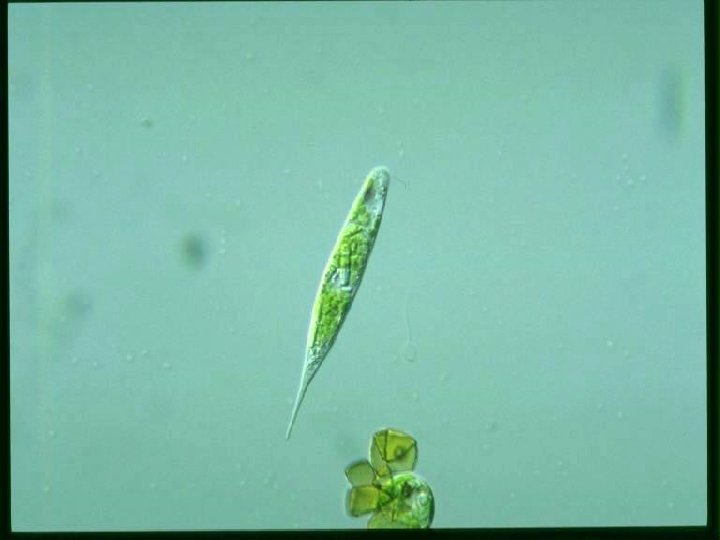
Plant-like Protists n *First ‘plants’ n General Characteristics: • • • eukaryotic, unicellular to multicellular , diverse live primarily by photosynthesizing and at times heterotrophically ingesting thrives in all types of aquatic environment Euglena spp.
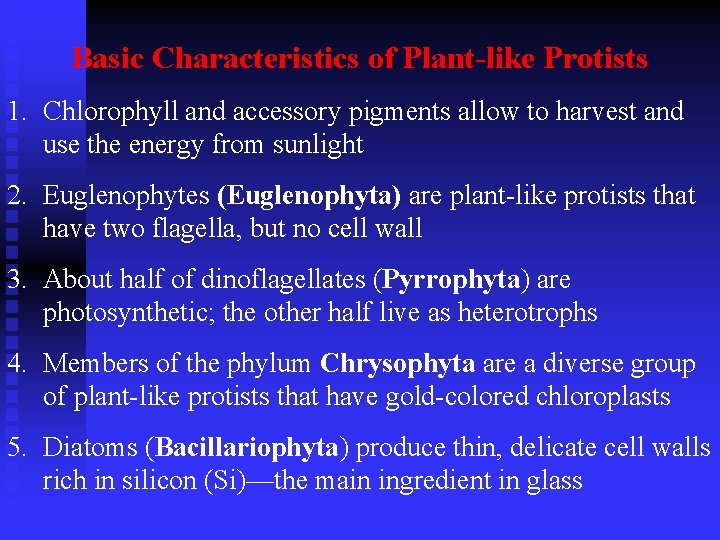
Basic Characteristics of Plant-like Protists 1. Chlorophyll and accessory pigments allow to harvest and use the energy from sunlight 2. Euglenophytes (Euglenophyta) are plant-like protists that have two flagella, but no cell wall 3. About half of dinoflagellates (Pyrrophyta) are photosynthetic; the other half live as heterotrophs 4. Members of the phylum Chrysophyta are a diverse group of plant-like protists that have gold-colored chloroplasts 5. Diatoms (Bacillariophyta) produce thin, delicate cell walls rich in silicon (Si)—the main ingredient in glass
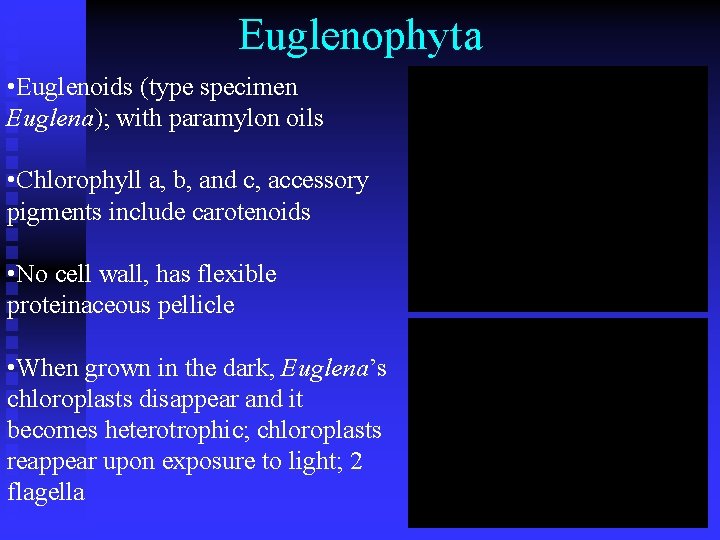
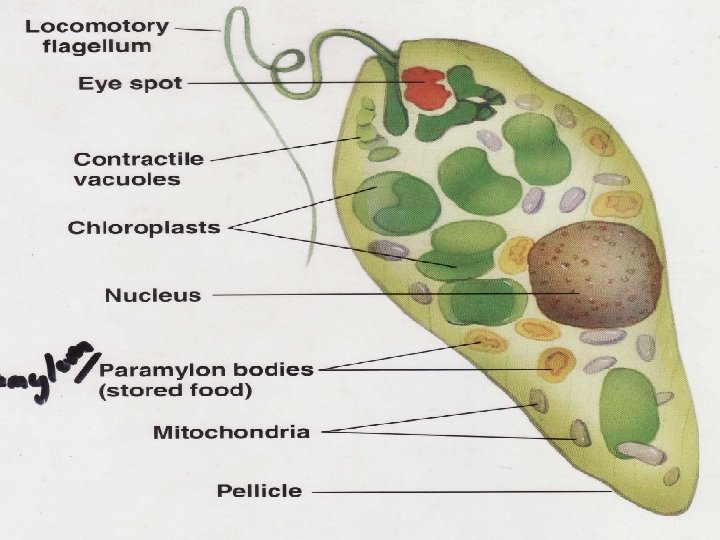
Euglenophyta • Euglenoids (type specimen Euglena); with paramylon oils • Chlorophyll a, b, and c, accessory pigments include carotenoids • No cell wall, has flexible proteinaceous pellicle • When grown in the dark, Euglena’s chloroplasts disappear and it becomes heterotrophic; chloroplasts reappear upon exposure to light; 2 flagella
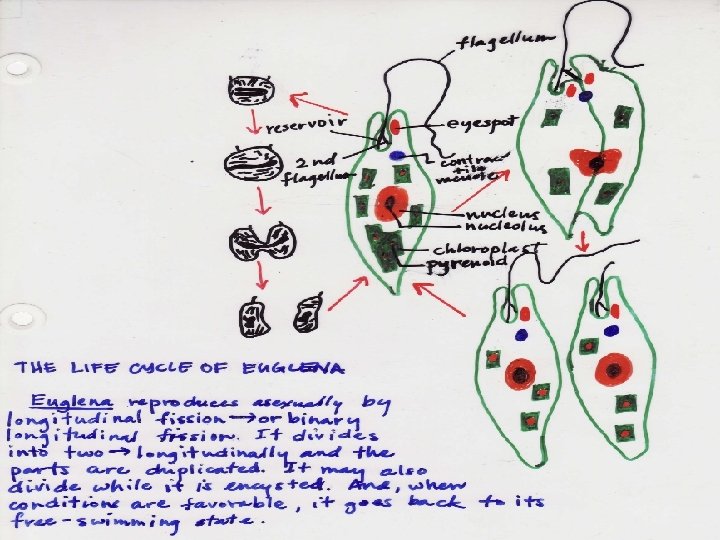
Model Reproduction for Protists
Euglena
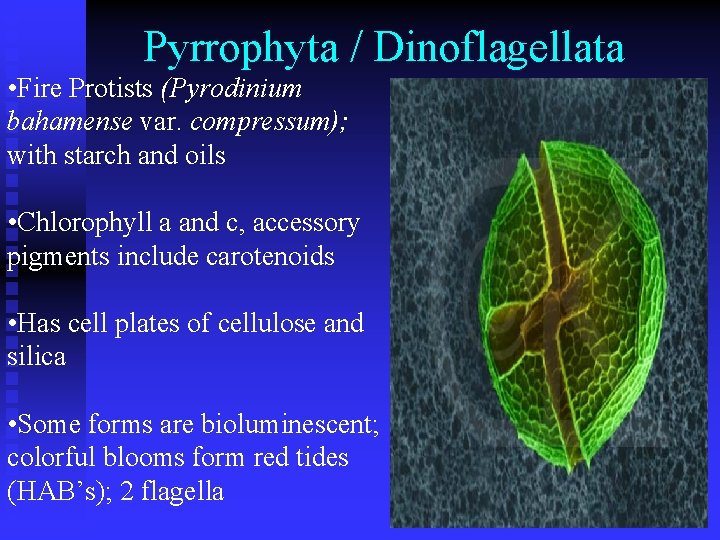
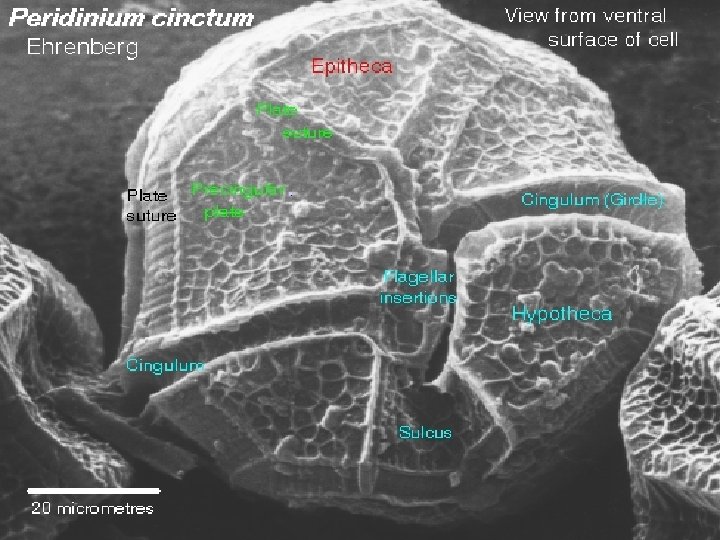
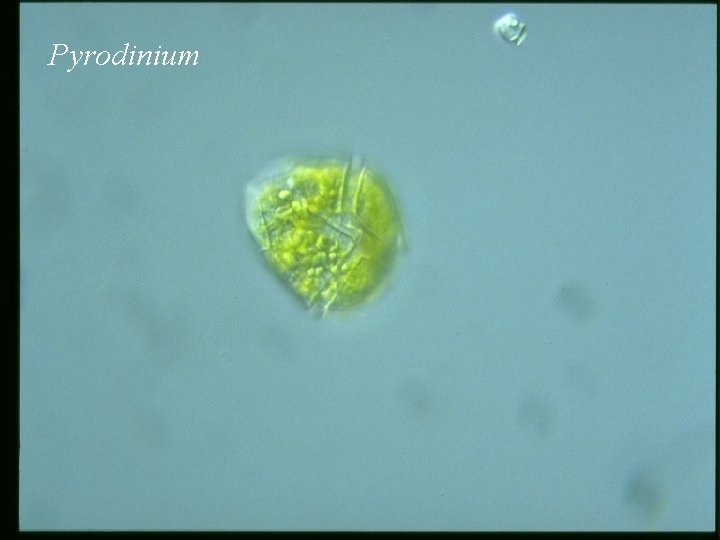
Pyrrophyta / Dinoflagellata • Fire Protists (Pyrodinium bahamense var. compressum); with starch and oils • Chlorophyll a and c, accessory pigments include carotenoids • Has cell plates of cellulose and silica • Some forms are bioluminescent; colorful blooms form red tides (HAB’s); 2 flagella
Structure
Pyrodinium
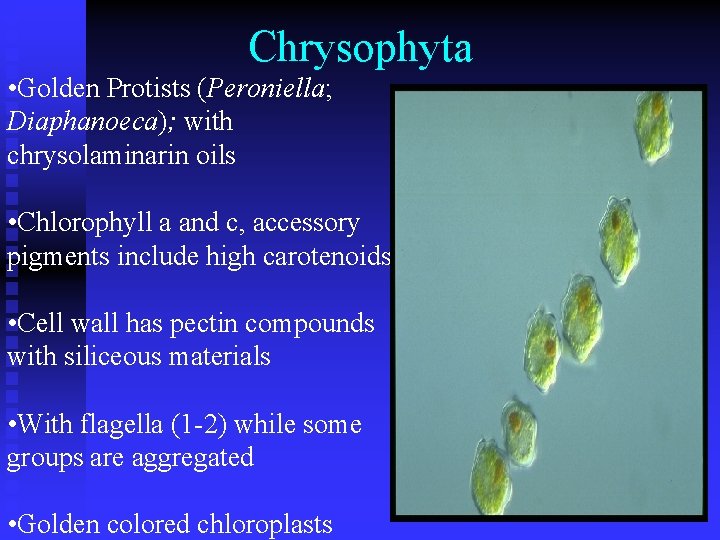
Chrysophyta • Golden Protists (Peroniella; Diaphanoeca); with chrysolaminarin oils • Chlorophyll a and c, accessory pigments include high carotenoids • Cell wall has pectin compounds with siliceous materials • With flagella (1 -2) while some groups are aggregated • Golden colored chloroplasts
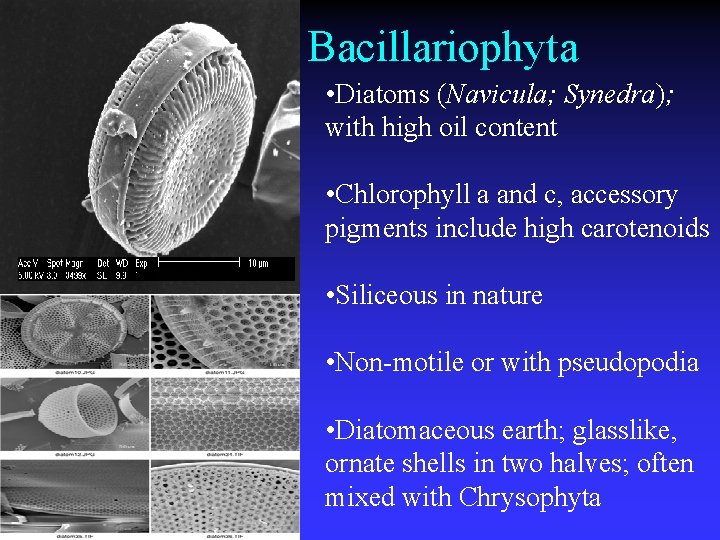
Structure Bacillariophyta • Diatoms (Navicula; Synedra); with high oil content • Chlorophyll a and c, accessory pigments include high carotenoids • Siliceous in nature • Non-motile or with pseudopodia • Diatomaceous earth; glasslike, ornate shells in two halves; often mixed with Chrysophyta