
Plantae Seed Plants Vascular Plants Formation of vascular
- Slides: 31
Plantae Seed Plants
Vascular Plants • Formation of vascular tissue – Xylem (water) – Phloem (food) – True leaves, roots, and stems • Lignin Sporophyte • ______ generation dominate
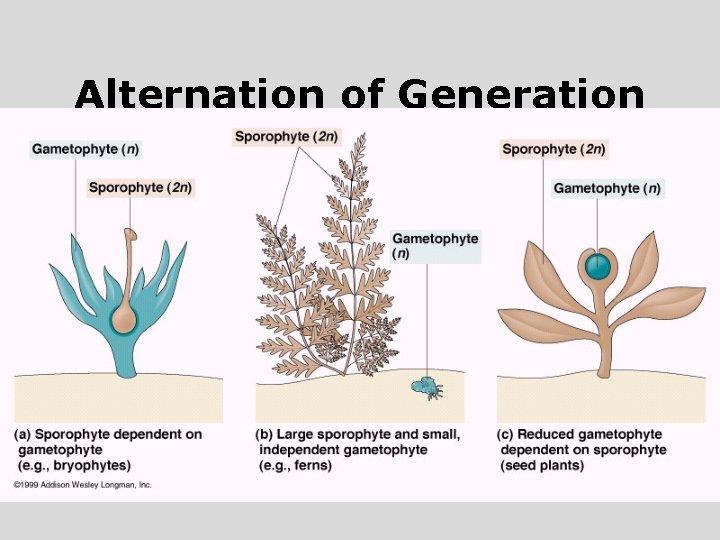
Alternation of Generation
Alternation of Generation • Sporophyte dependent on gametophyte – mosses • Large sporophyte and small independent gametophyte – ferns • Gametophyte dependent on sporophyte – seed plants
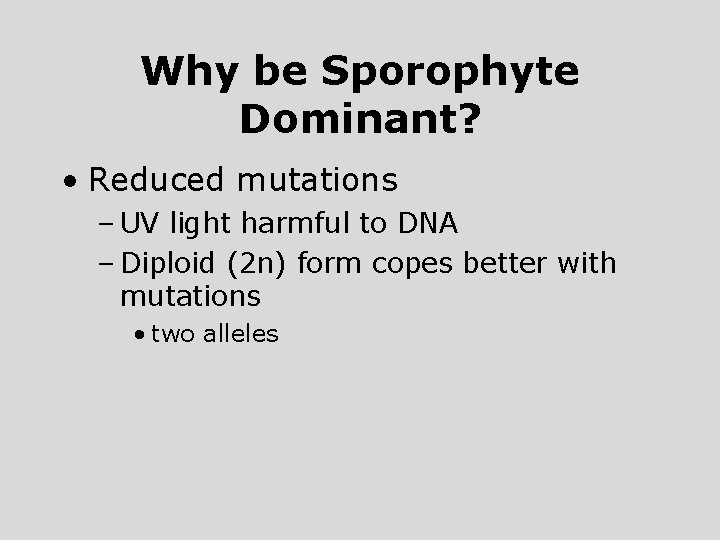
Why be Sporophyte Dominant? • Reduced mutations – UV light harmful to DNA – Diploid (2 n) form copes better with mutations • two alleles
Why Retain Gametophyte Generation? • Ability to screen alleles – doesn’t require a large amount of energy • Sporophyte embryos rely on some gametophyte tissue
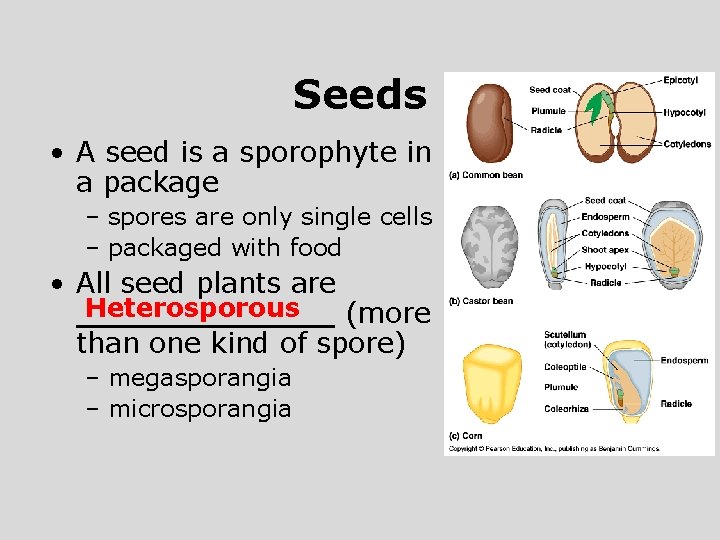
Seeds • A seed is a sporophyte in a package – spores are only single cells – packaged with food • All seed plants are Heterosporous _______ (more than one kind of spore) – megasporangia – microsporangia
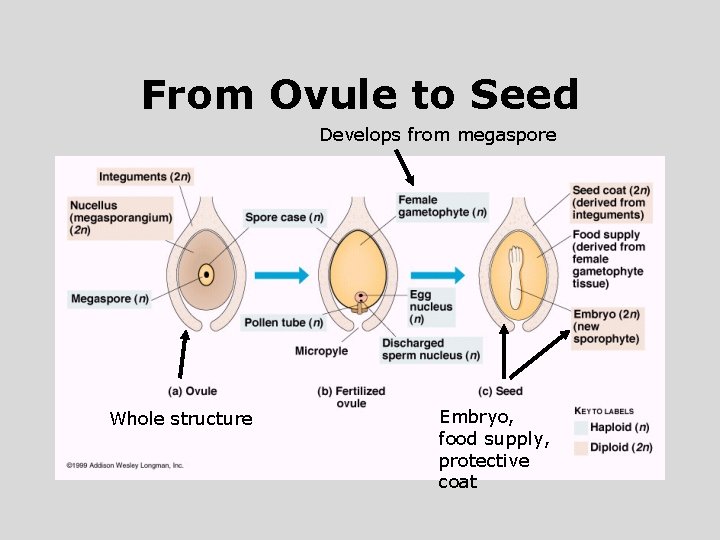
From Ovule to Seed Develops from megaspore Whole structure Embryo, food supply, protective coat
Overview of Seed Plants • Produce Seeds – Can remain dormant for years – Pollination replaces swimming sperm • Gametophyte generation reduced – Gymnosperms lack antheridium – Angiosperms lack both archegonium and antheridium
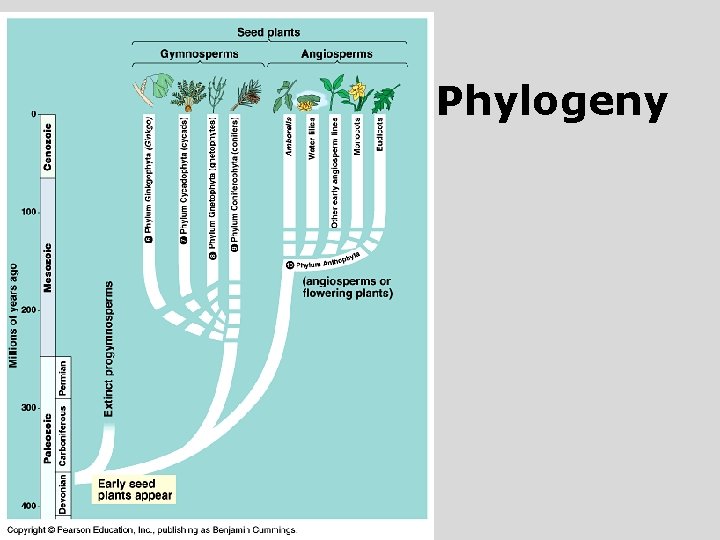
Phylogeny
Gymnosperms (Naked Seed) • Division: Cycadophyta Ginkgophyta Gnetophyta Coniferophyta
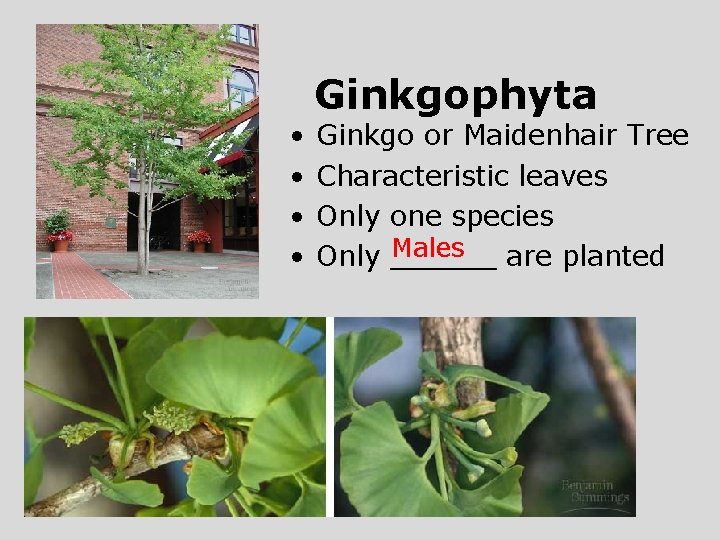
• • Ginkgophyta Ginkgo or Maidenhair Tree Characteristic leaves Only one species Males Only ______ are planted
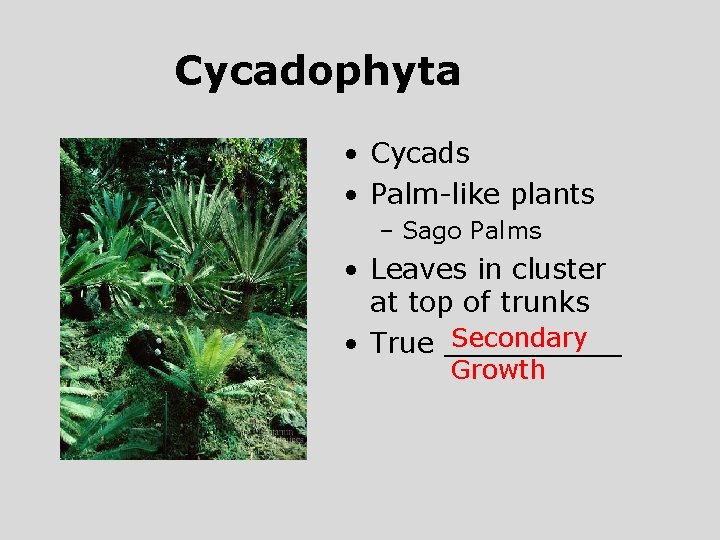
Cycadophyta • Cycads • Palm-like plants – Sago Palms • Leaves in cluster at top of trunks Secondary • True _____ Growth
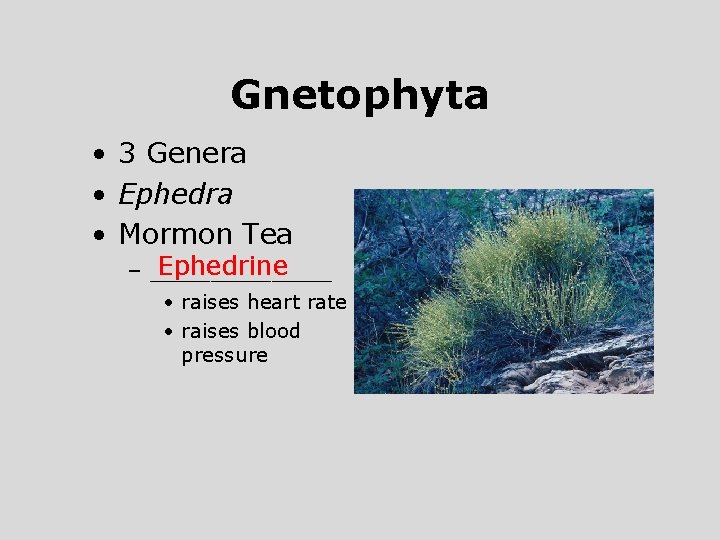
Gnetophyta • 3 Genera • Ephedra • Mormon Tea Ephedrine – ______ • raises heart rate • raises blood pressure
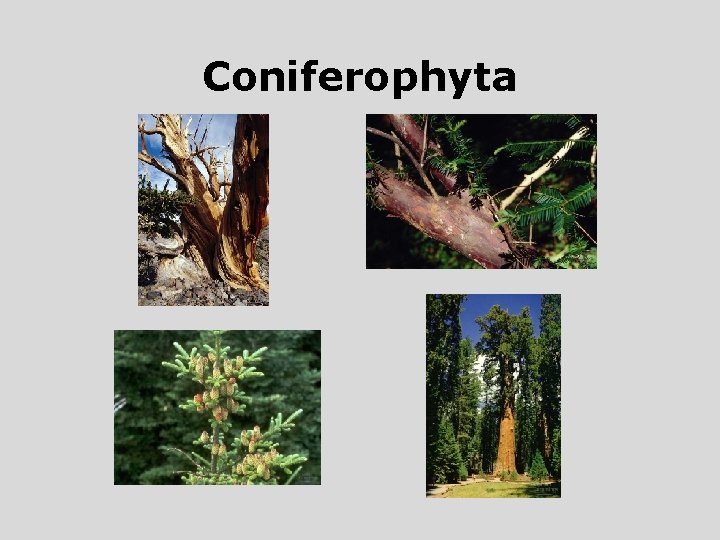
Coniferophyta
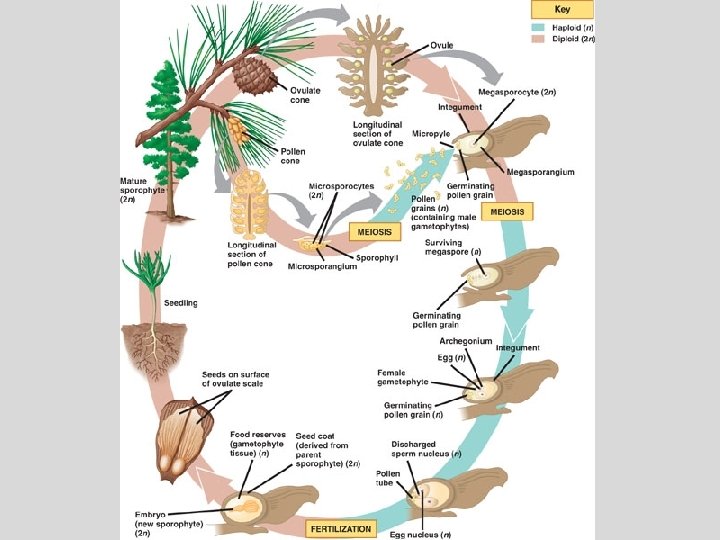
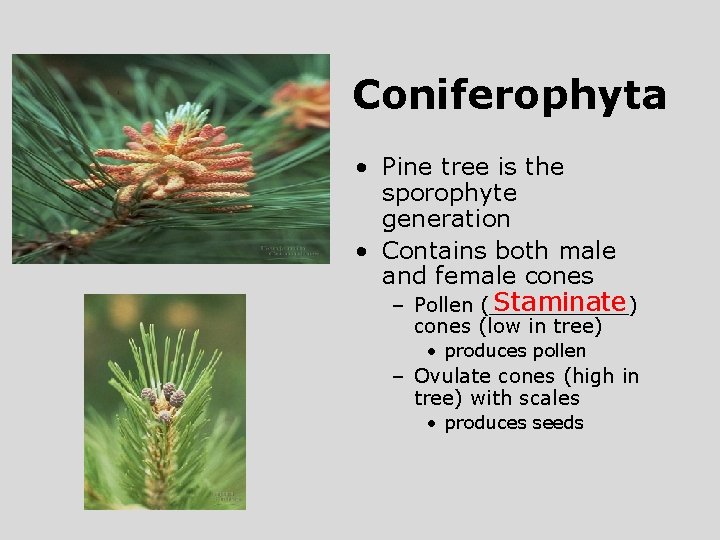
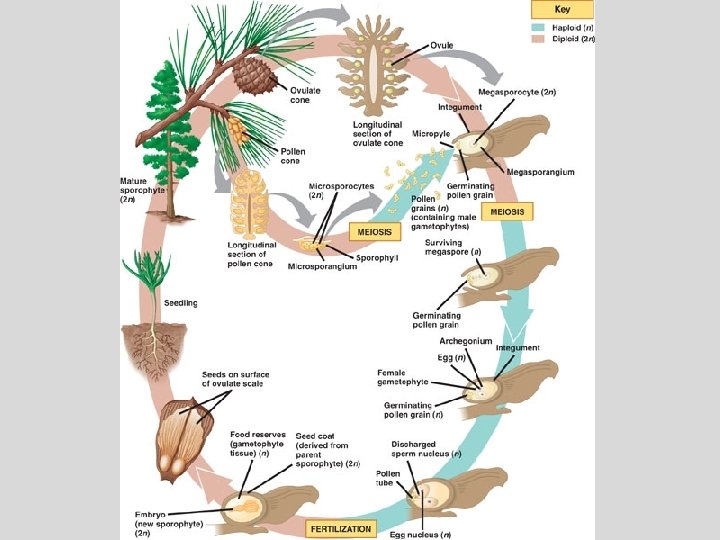
Coniferophyta • Pine tree is the sporophyte generation • Contains both male and female cones Staminate – Pollen (______) cones (low in tree) • produces pollen – Ovulate cones (high in tree) with scales • produces seeds
Pine Life Cycle • No Antheridium (microsporangia) produce pollen grain (4 cells) – 2 prothallial cells – 1 generative cell » produces 2 sperm – 1 tube cell Wings – _____ for dispersal
Pine Life Cycle • Ovule in a ovulate cone – integument (seed coat) (2 n) – megasporangia or nucellus (nutrition) (2 n) Megaspores – 4 ________ from female gametophyte (3 die) • develops into female gametophyte – archegonium with eggs (n)
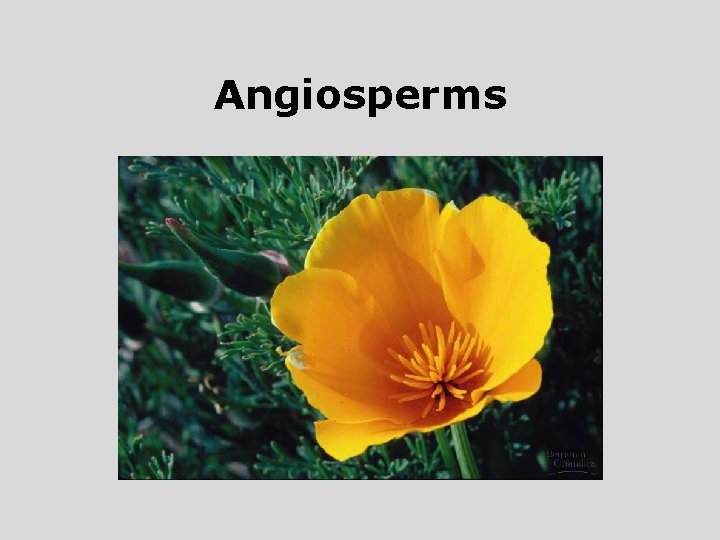
Angiosperms
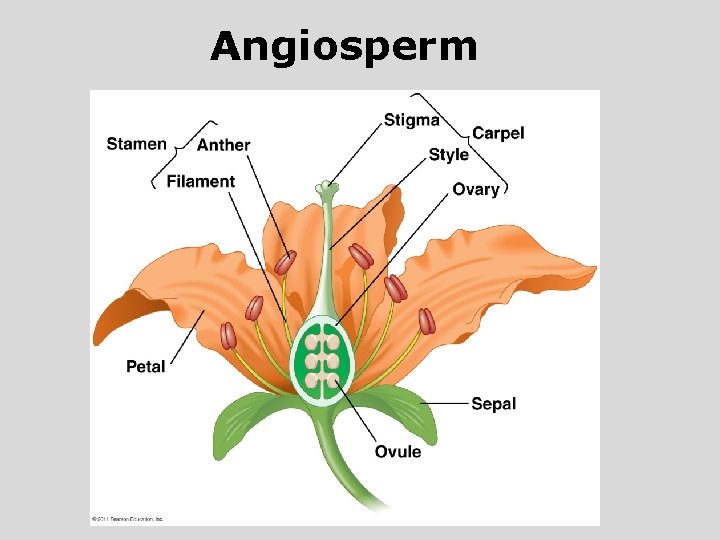
Angiosperm
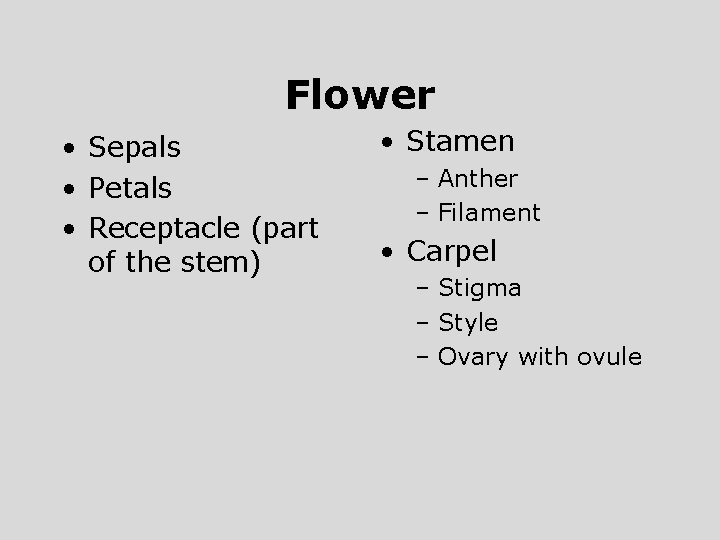
Flower • Sepals • Petals • Receptacle (part of the stem) • Stamen – Anther – Filament • Carpel – Stigma – Style – Ovary with ovule
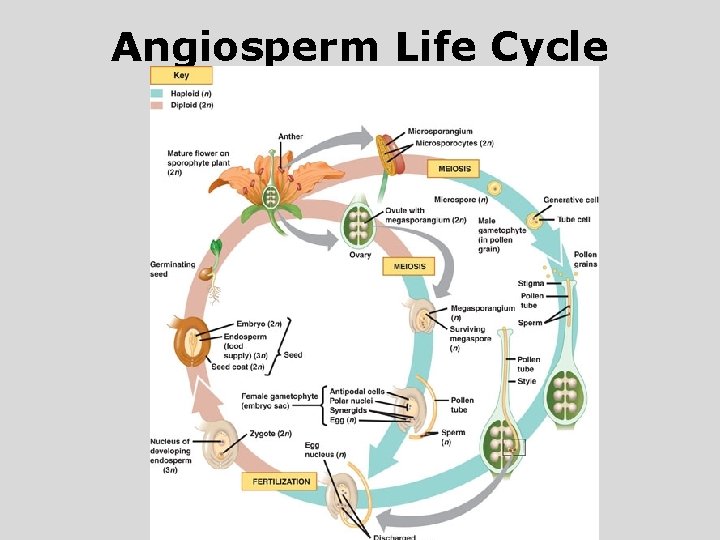
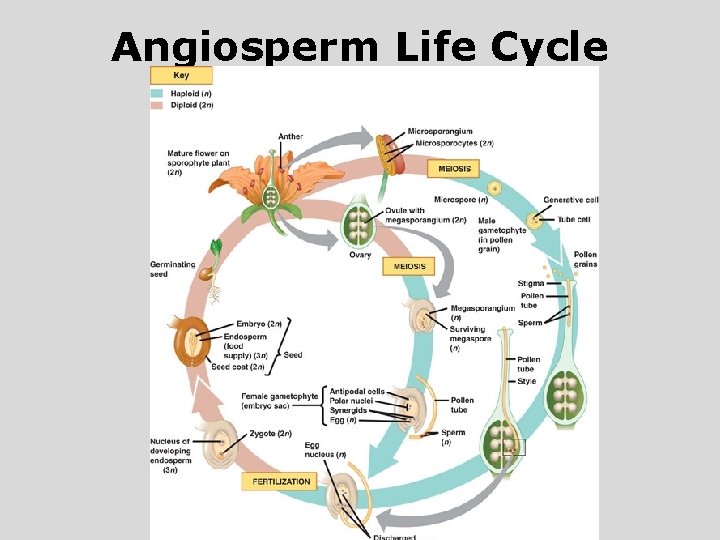
Angiosperm Life Cycle
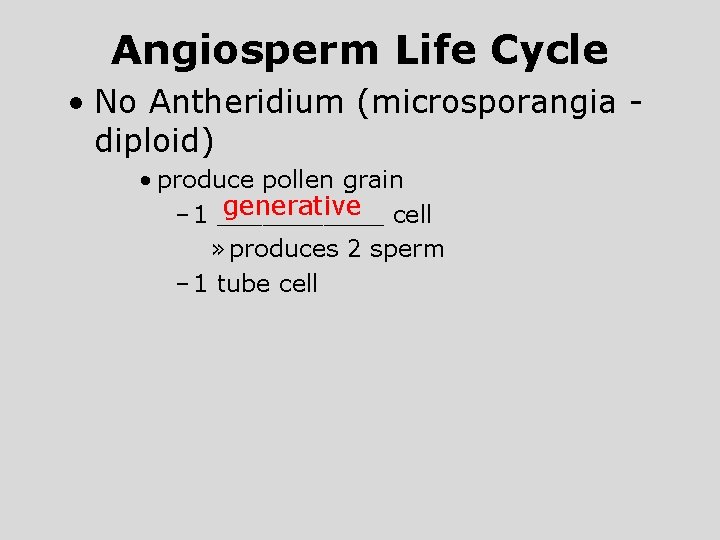
Angiosperm Life Cycle • No Antheridium (microsporangia diploid) • produce pollen grain generative cell – 1 ______ » produces 2 sperm – 1 tube cell
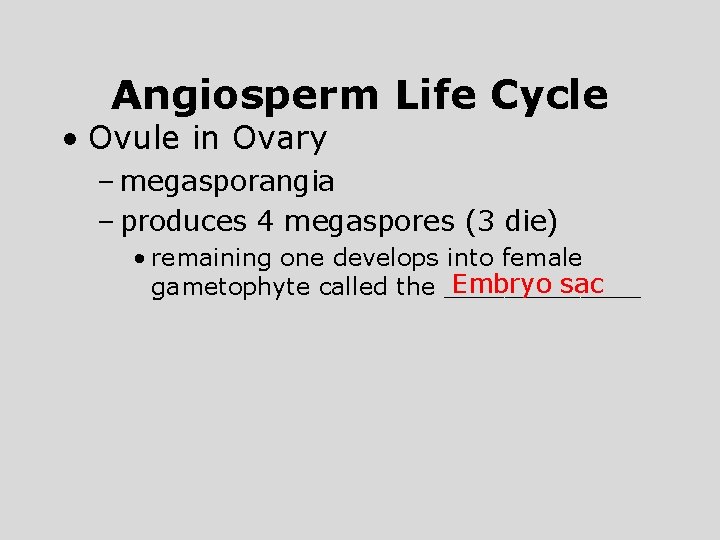
Angiosperm Life Cycle • Ovule in Ovary – megasporangia – produces 4 megaspores (3 die) • remaining one develops into female Embryo sac gametophyte called the _______
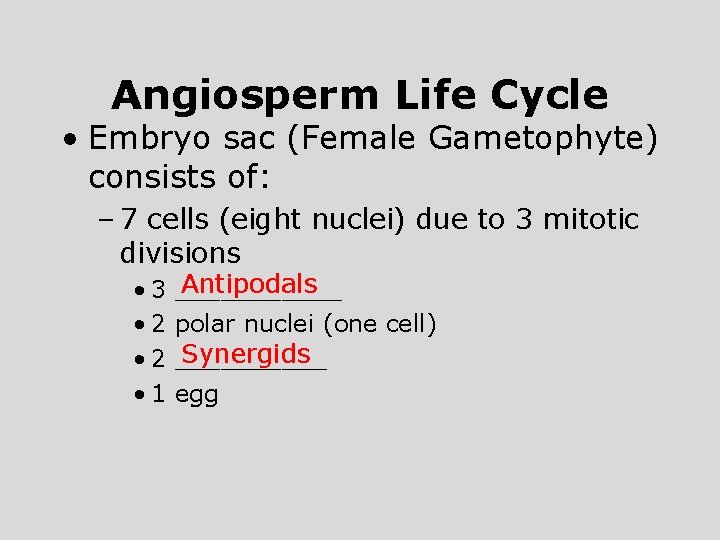
Angiosperm Life Cycle • Embryo sac (Female Gametophyte) consists of: – 7 cells (eight nuclei) due to 3 mitotic divisions • 3 • 2 • 1 Antipodals ______ polar nuclei (one cell) Synergids _____ egg
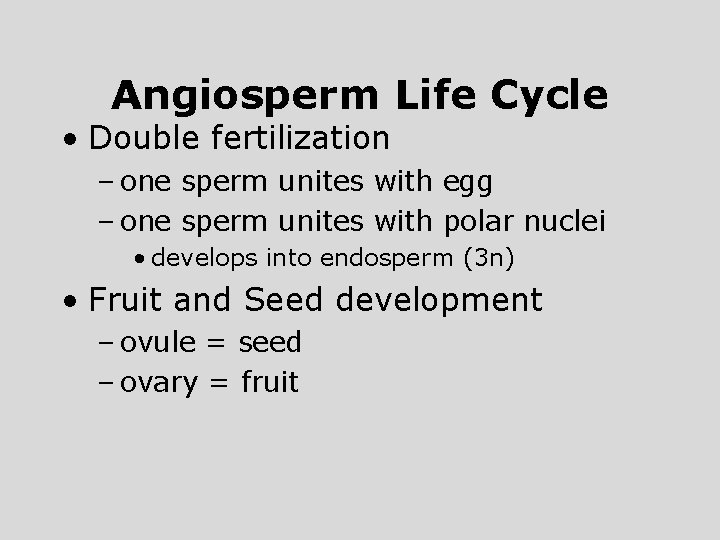
Angiosperm Life Cycle • Double fertilization – one sperm unites with egg – one sperm unites with polar nuclei • develops into endosperm (3 n) • Fruit and Seed development – ovule = seed – ovary = fruit
Angiosperm Life Cycle
Cross Pollination • Most flowers do not self-pollinate – stamen and carpal may develop at different times – stamen and carpal may be arranged in flower to avoid contact
Angiosperm Radiation • Begins the Cenozoic era (65 mya) • Most closely related to the Gnetophyta Coevolution • _____ – the mutual influence of two species on each other – plants and animals (insects, birds, bats)