
Plant transport Chapter 36 Plant transport Evolutionary changes
- Slides: 27
Plant transport Chapter 36
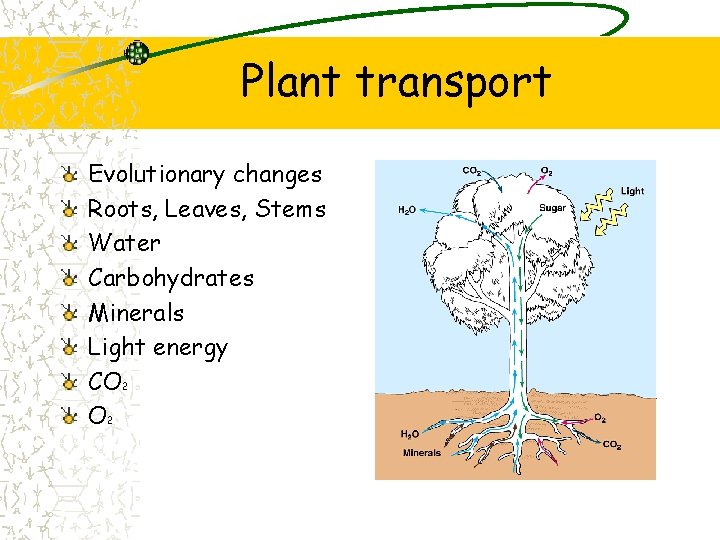
Plant transport Evolutionary changes Roots, Leaves, Stems Water Carbohydrates Minerals Light energy CO 2
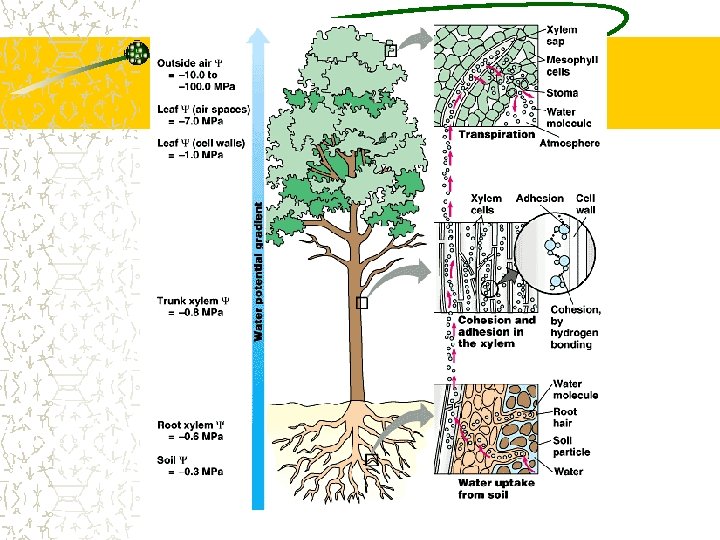
Water transport Roots Xylem Stomata Transpiration Cohesion & adhesion
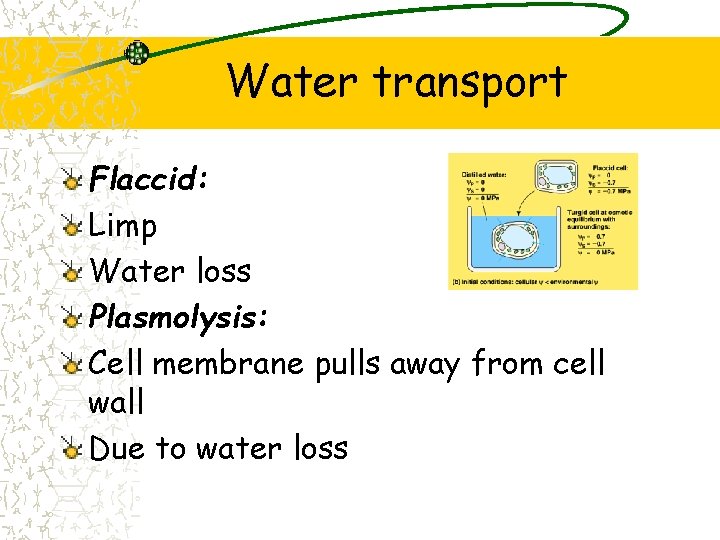
Water transport Flaccid: Limp Water loss Plasmolysis: Cell membrane pulls away from cell wall Due to water loss
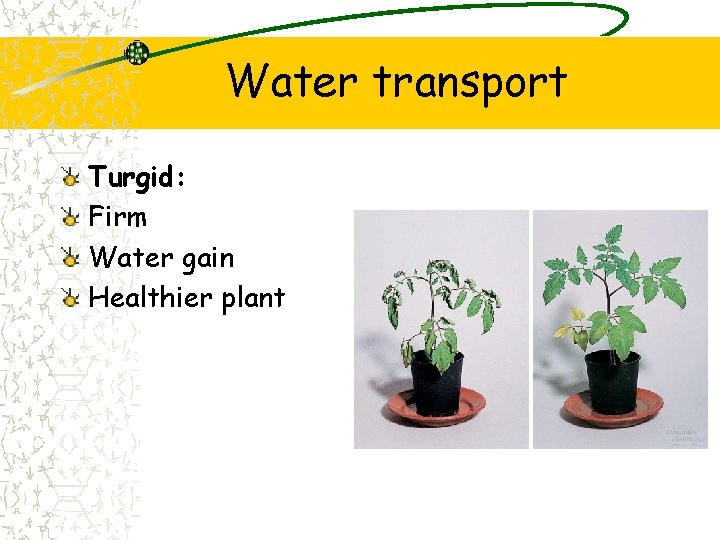
Water transport Turgid: Firm Water gain Healthier plant
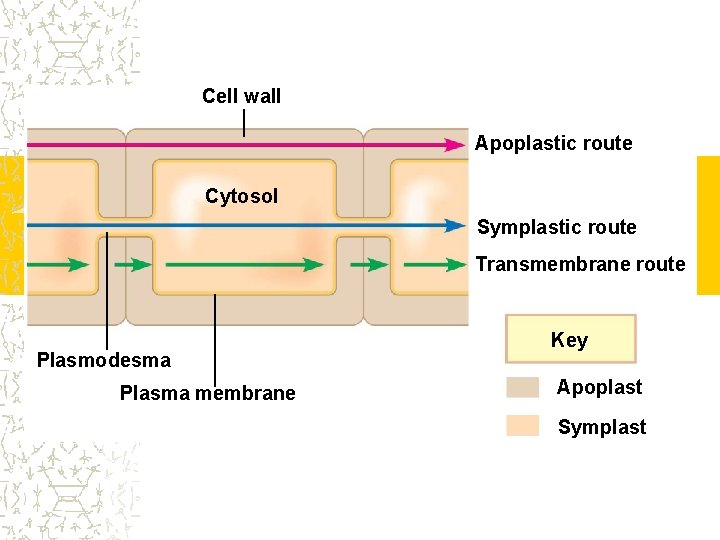
Water transport Cell to cell (short distance) Diffusion Apolplast: Continuum formed by cell walls Symplast: Continuum formed by cytoplasm of cells Plasmodesmata: Connection between cytoplasm
Cell wall Apoplastic route Cytosol Symplastic route Transmembrane route Plasmodesma Plasma membrane Key Apoplast Symplast
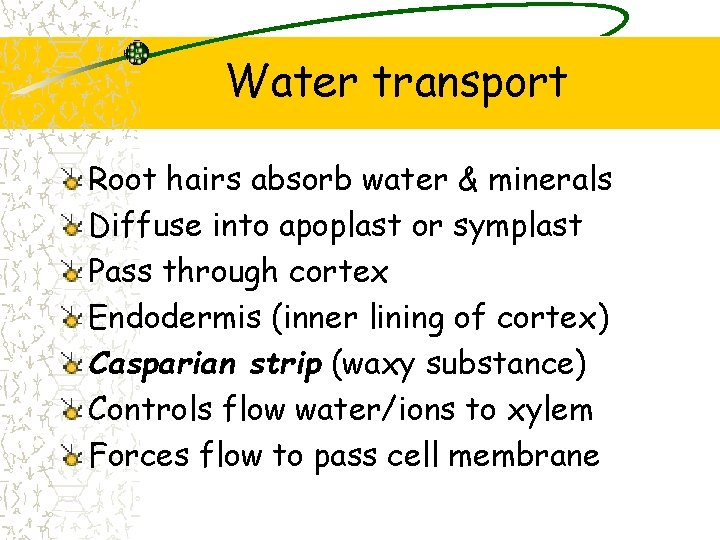
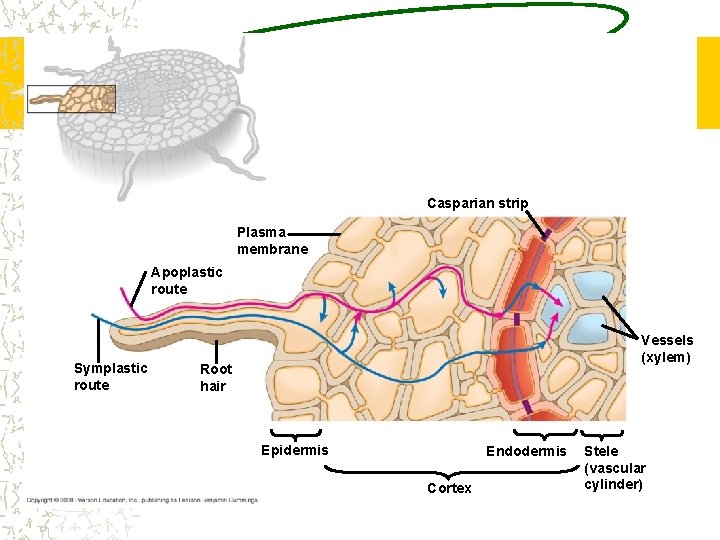
Water transport Root hairs absorb water & minerals Diffuse into apoplast or symplast Pass through cortex Endodermis (inner lining of cortex) Casparian strip (waxy substance) Controls flow water/ions to xylem Forces flow to pass cell membrane
Casparian strip Plasma membrane Apoplastic route Symplastic route Vessels (xylem) Root hair Epidermis Endodermis Cortex Stele (vascular cylinder)
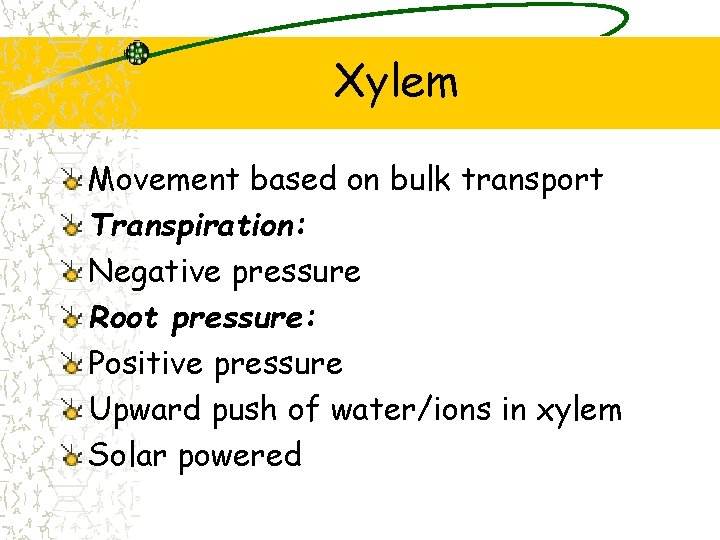
Xylem Movement based on bulk transport Transpiration: Negative pressure Root pressure: Positive pressure Upward push of water/ions in xylem Solar powered
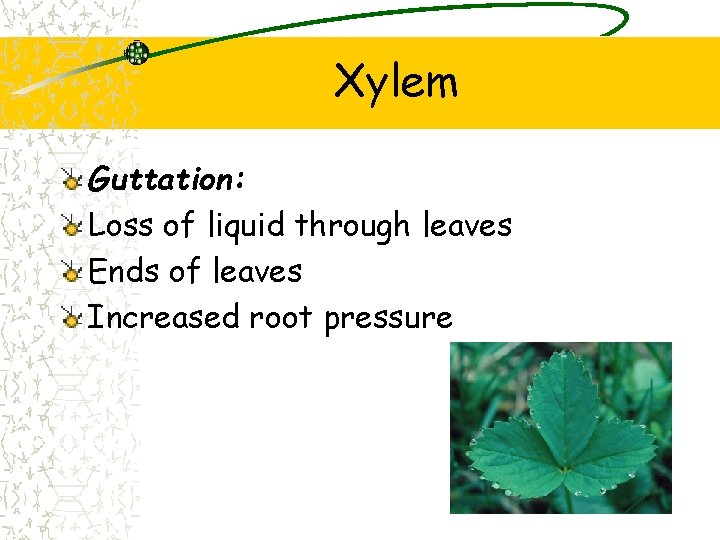
Xylem Guttation: Loss of liquid through leaves Ends of leaves Increased root pressure
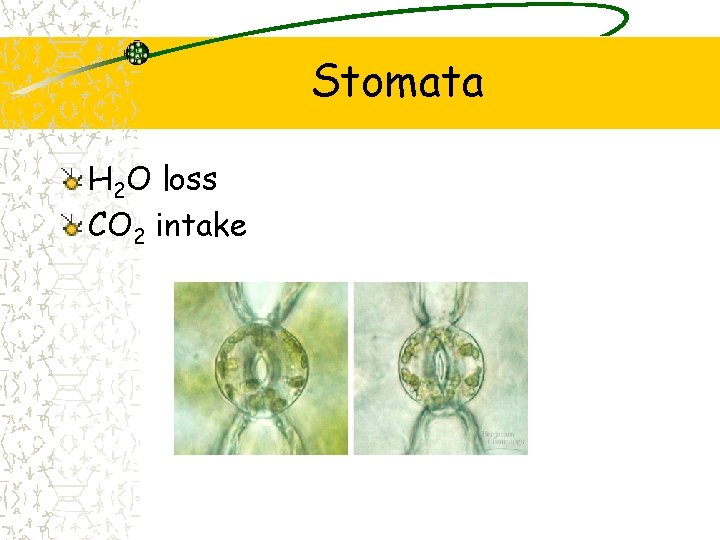
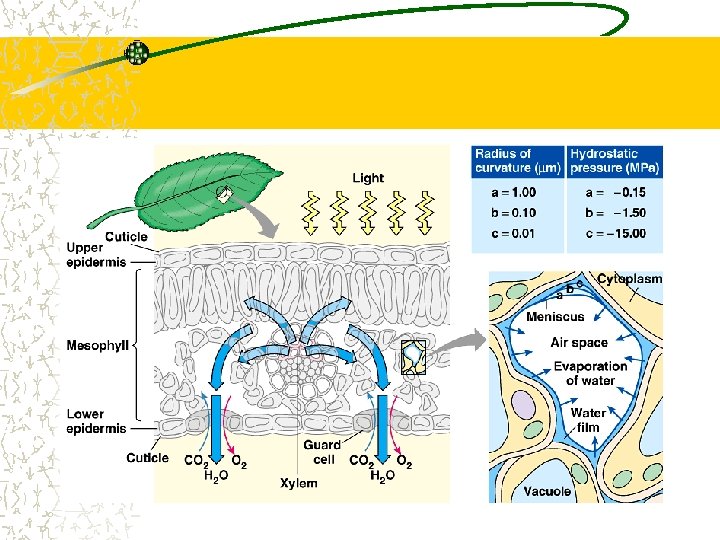
Stomata H 2 O loss CO 2 intake
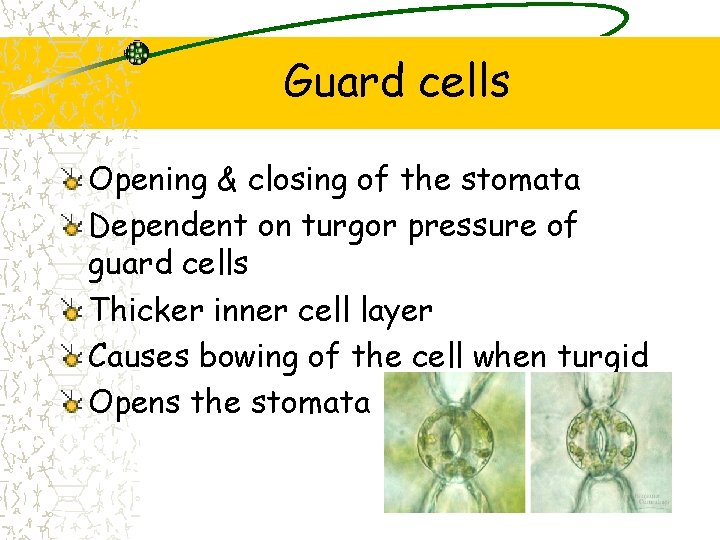
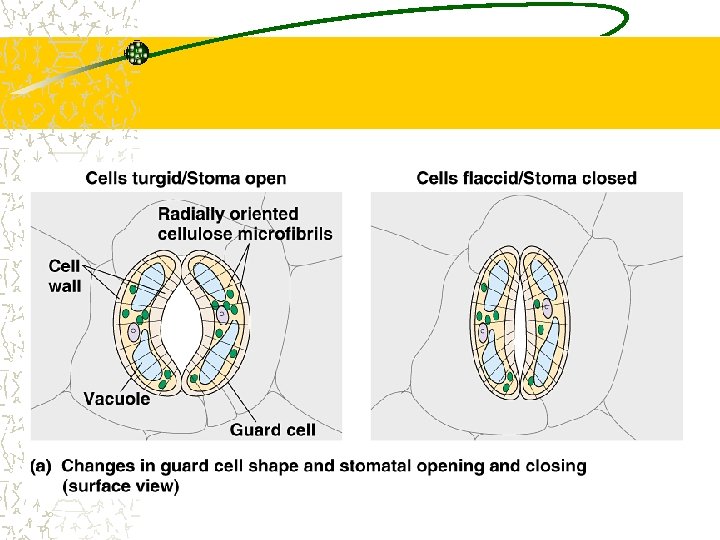
Guard cells Opening & closing of the stomata Dependent on turgor pressure of guard cells Thicker inner cell layer Causes bowing of the cell when turgid Opens the stomata
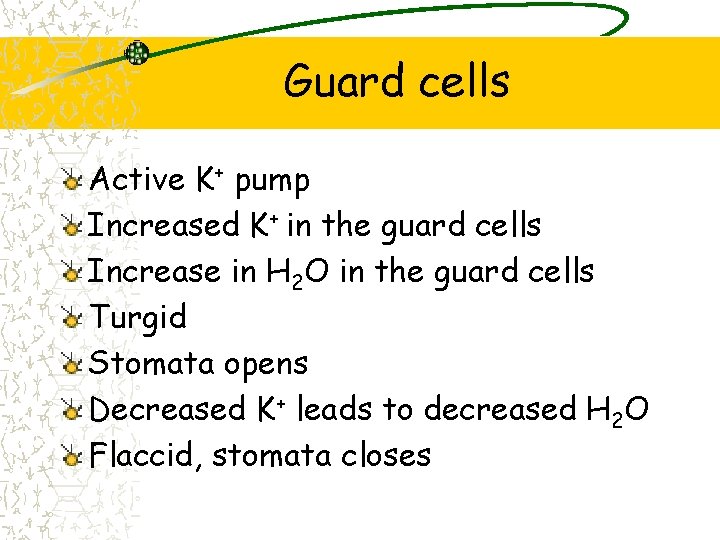
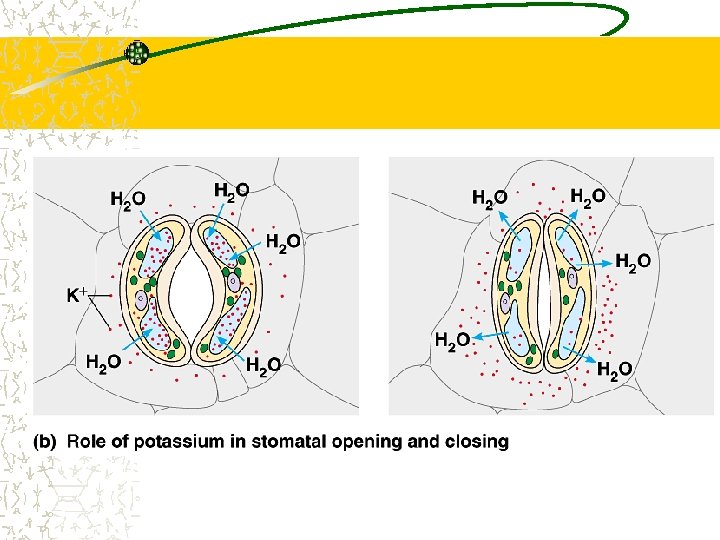
Guard cells Active K+ pump Increased K+ in the guard cells Increase in H 2 O in the guard cells Turgid Stomata opens Decreased K+ leads to decreased H 2 O Flaccid, stomata closes
Translocation of Phloem Sap in Spring
Translocation of Phloem Sap in Summer
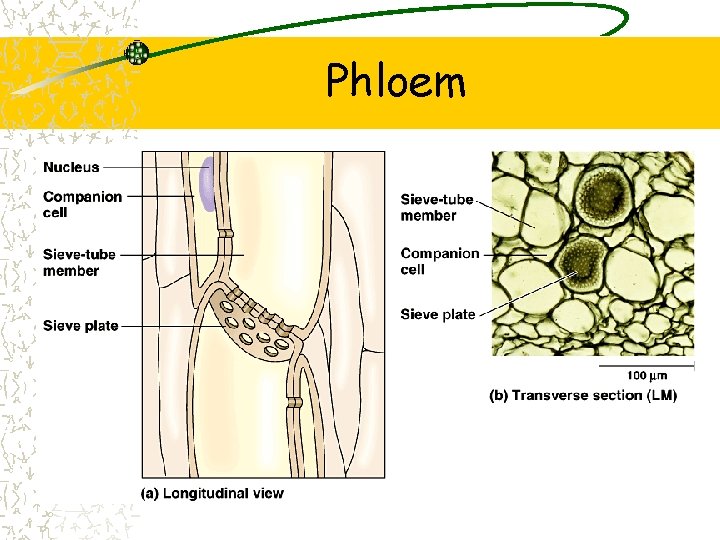
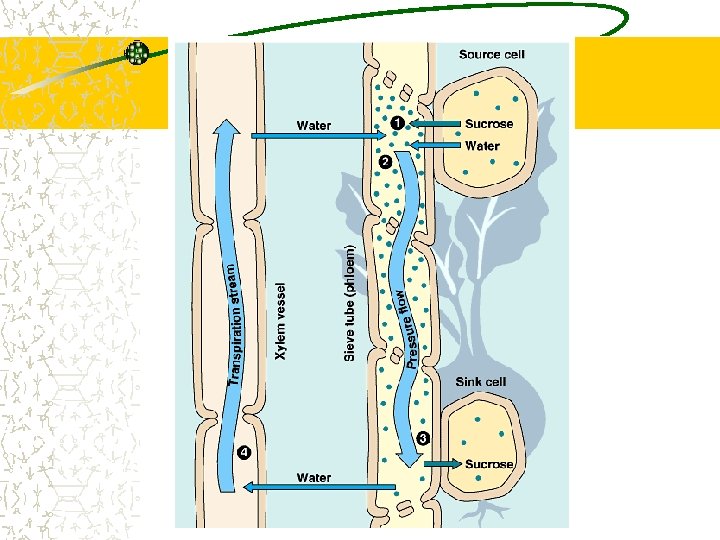
Carbohydrate movement Phloem (sieve-tube) Moves from source to nearest sink Carbohydrates enter sieve-tube cells Active transport Companion cells & parenchyma cells provide the ATP
Phloem
Carbohydrate movement Water potential differences-created Water moves into the sieve-tube cells (osmosis) Increased turgor Moves carbohydrates to sink
Carbohydrate movement Carbohydrates removed Active transport Water moves out (osmosis) Water diffuses back to xylem Or lost in transpiration