
Plant Tissues Structure and Function Plant Tissues Plants
- Slides: 16
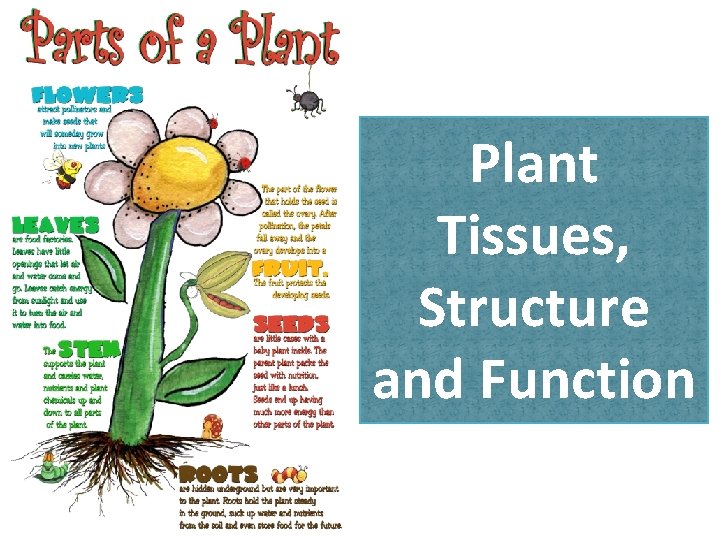
Plant Tissues, Structure and Function
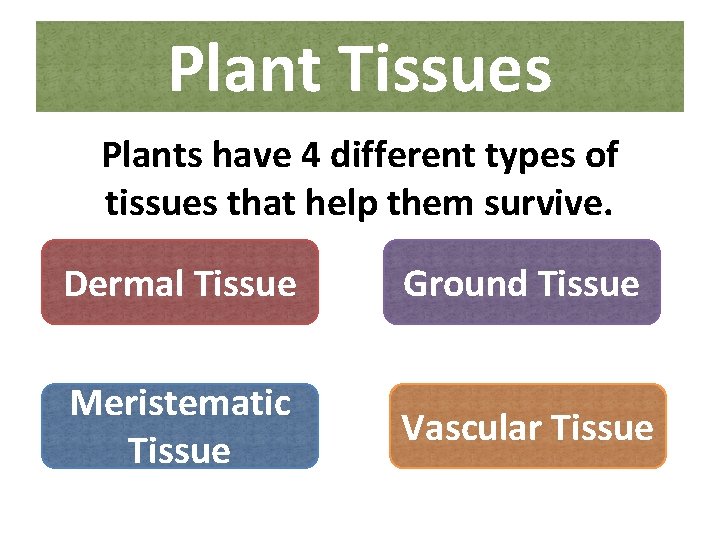
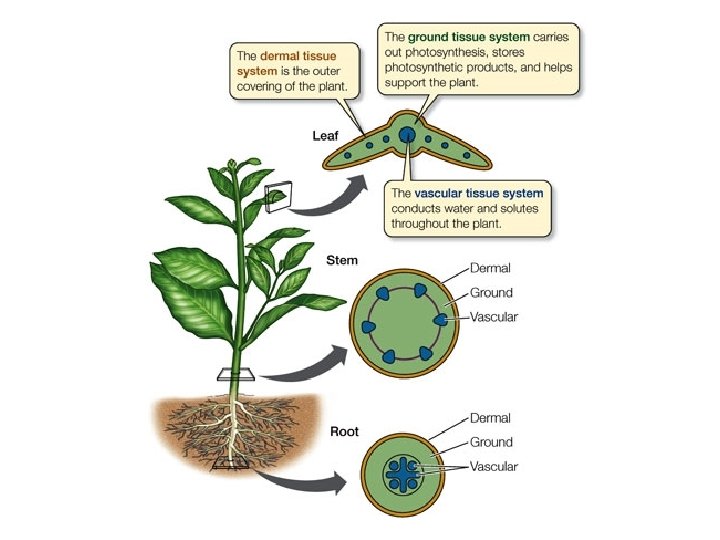
Plant Tissues Plants have 4 different types of tissues that help them survive. Dermal Tissue Ground Tissue Meristematic Tissue Vascular Tissue
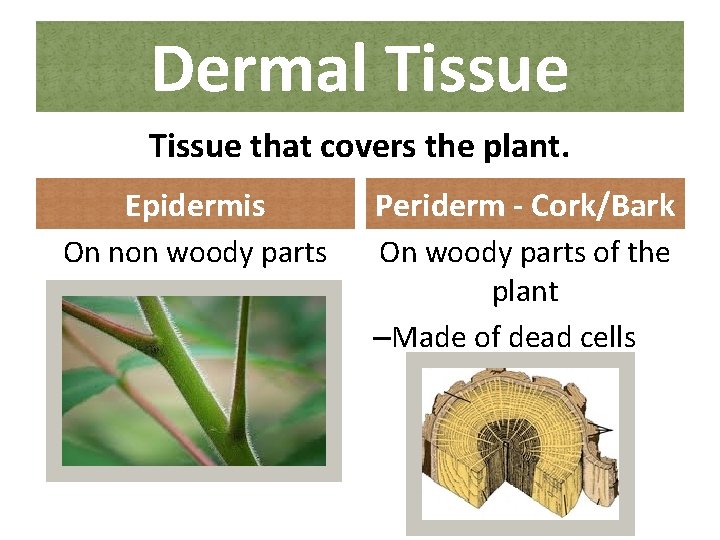
Dermal Tissue that covers the plant. Epidermis Periderm - Cork/Bark On non woody parts On woody parts of the plant –Made of dead cells
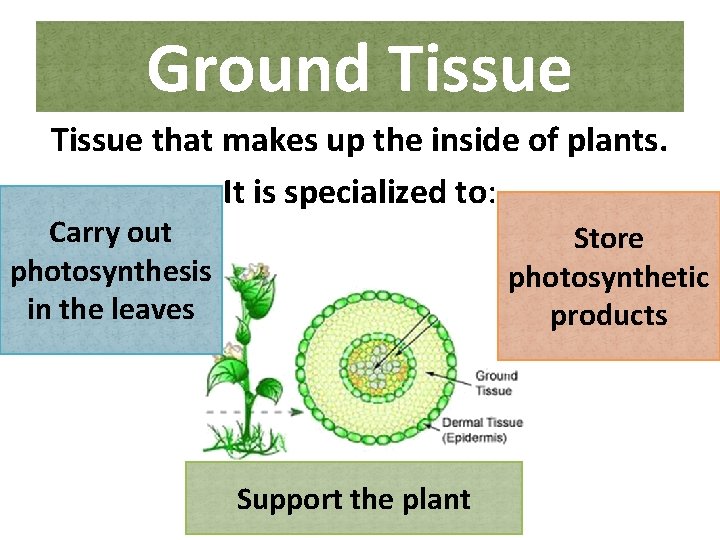
Ground Tissue that makes up the inside of plants. It is specialized to: Carry out photosynthesis in the leaves Store photosynthetic products Support the plant
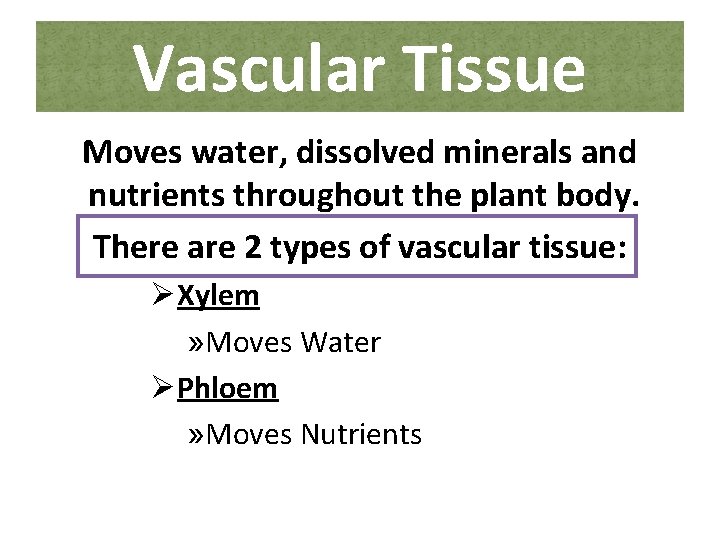
Vascular Tissue Moves water, dissolved minerals and nutrients throughout the plant body. There are 2 types of vascular tissue: ØXylem » Moves Water ØPhloem » Moves Nutrients
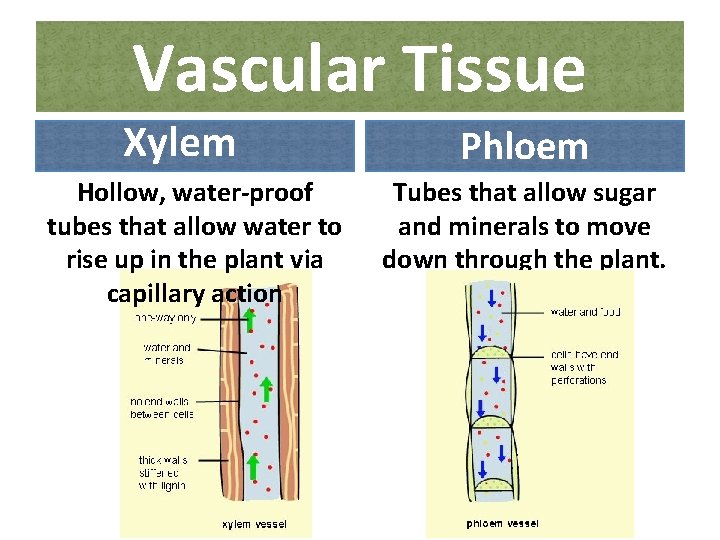
Vascular Tissue Xylem Hollow, water-proof tubes that allow water to rise up in the plant via capillary action Phloem Tubes that allow sugar and minerals to move down through the plant.
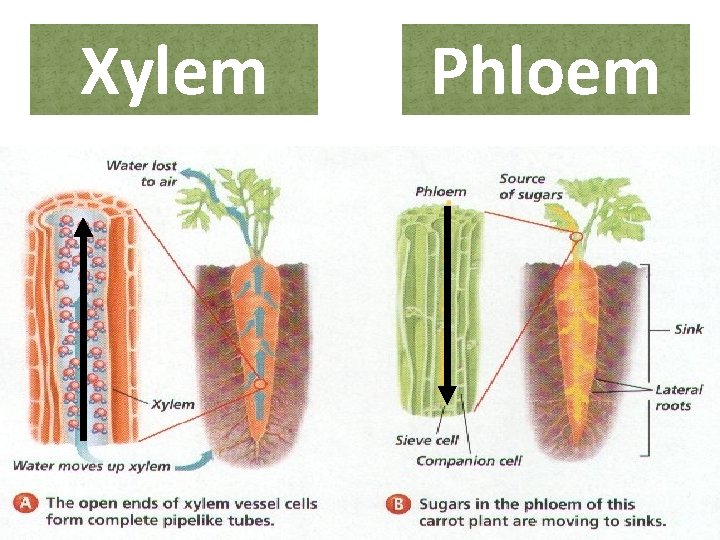
Xylem Phloem
Mertistematic Tissue that allows the plant to grow up, down and/or out. Where mitosis occurs! Plants have 2 types of meristematic tissue ØApical Meristem – Allows growth at the tips of roots and branches…. up and down ØVascular Cambium – In the outer layer of the stem/trunk that allows outward growth (thickness)
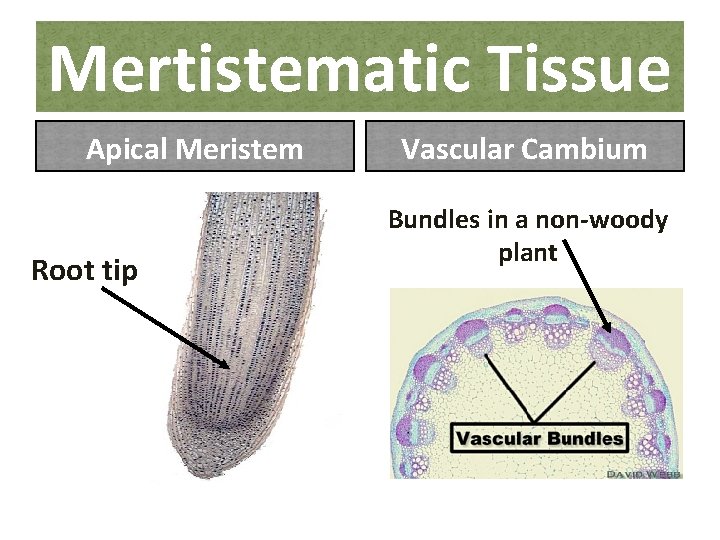
Mertistematic Tissue Apical Meristem Root tip Vascular Cambium Bundles in a non-woody plant
Structures Overview Plants have 3 main structures 1. Roots v A system for absorbing dissolved minerals and nutrients as well as water 2. Stems v A structure used to support the body of the plant 3. Leaves v. The main photosynthetic regions of the plant.
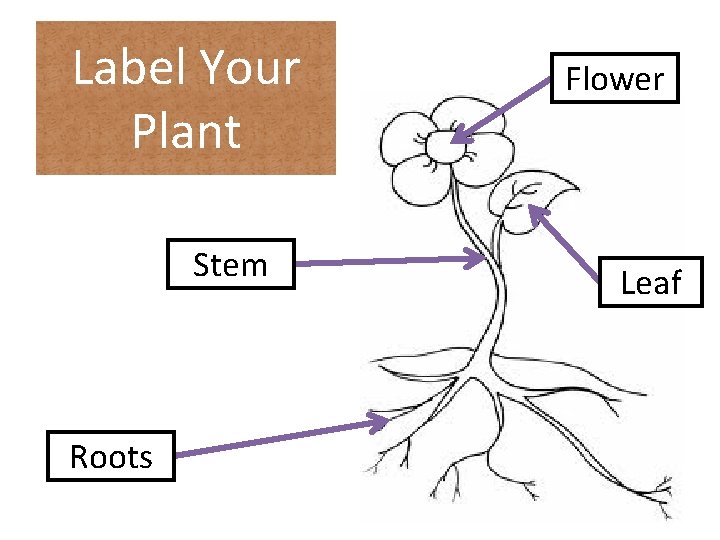
Label Your Plant Stem Roots Flower Leaf
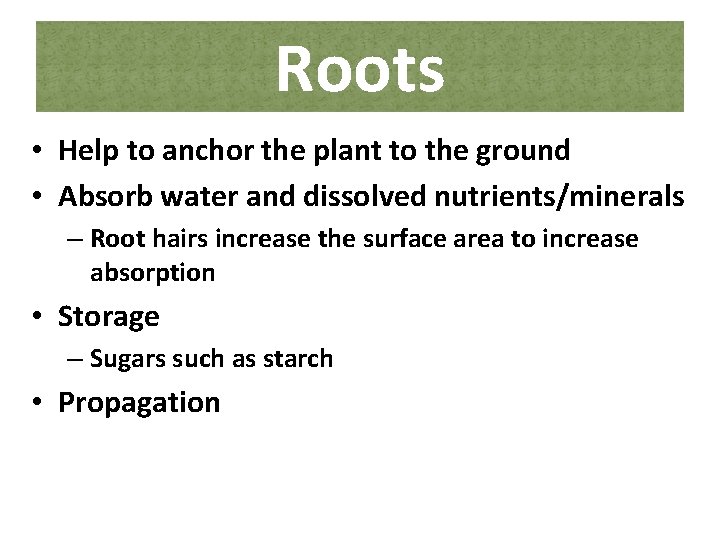
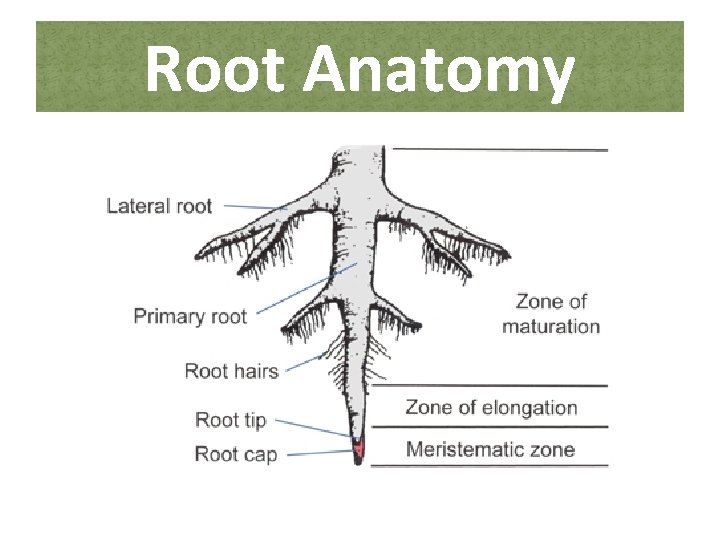
Roots • Help to anchor the plant to the ground • Absorb water and dissolved nutrients/minerals – Root hairs increase the surface area to increase absorption • Storage – Sugars such as starch • Propagation
Root Anatomy
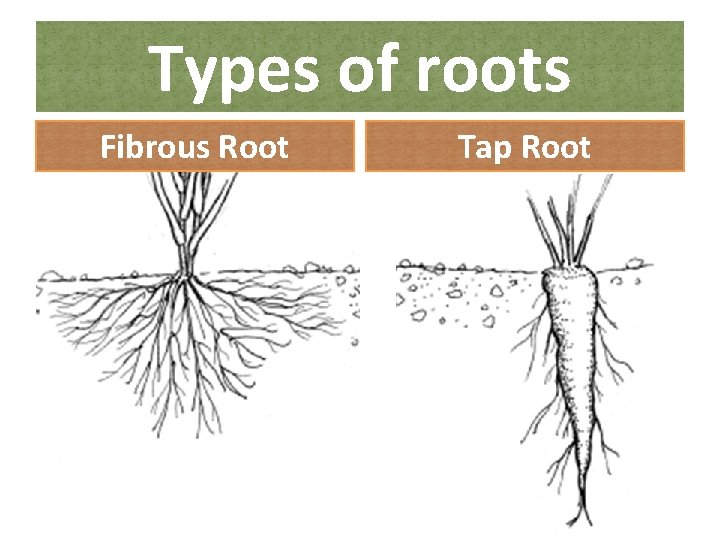
Types of roots Fibrous Root Tap Root
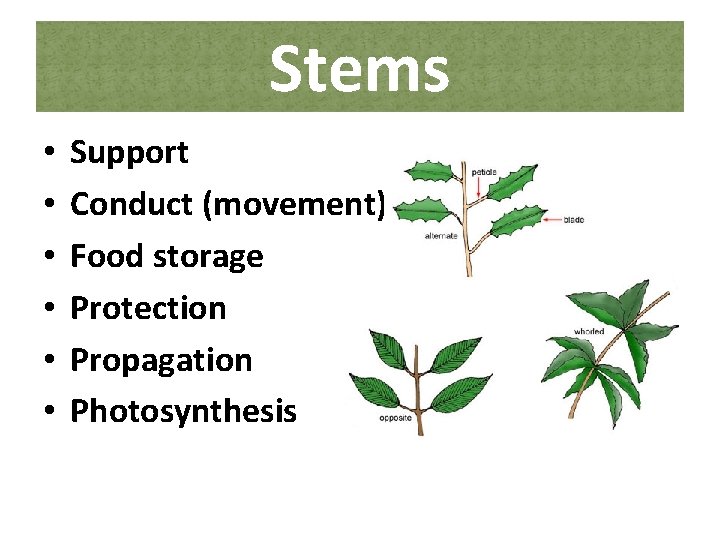
Stems • • • Support Conduct (movement) Food storage Protection Propagation Photosynthesis