
Plant Tissues Angiosperms flowering plants The angiosperms are

- Slides: 53
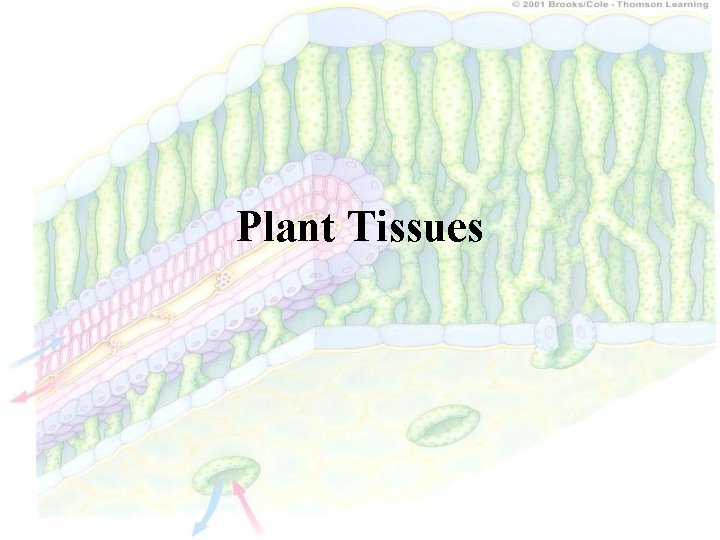
Plant Tissues
Angiosperms – flowering plants • The angiosperms are seed-bearing vascular plants • In terms of distribution and diversity, they are the most successful plants on Earth • The structure and function of this plant group help explain its success
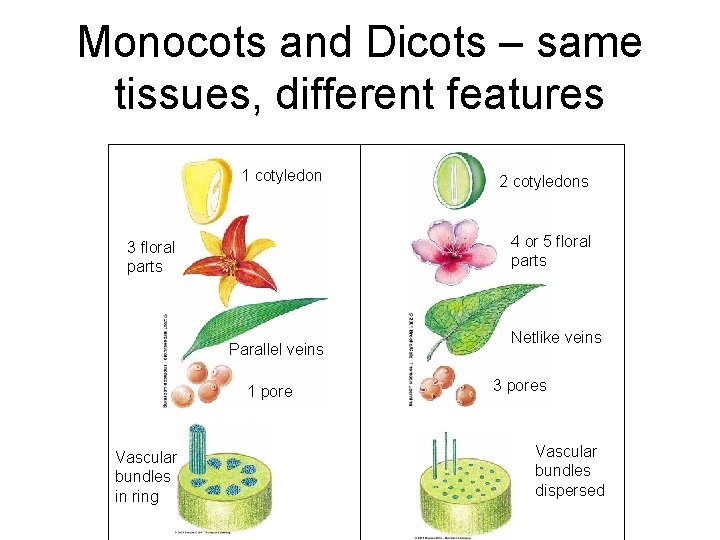
Monocots and Dicots – same tissues, different features 1 cotyledon 4 or 5 floral parts 3 floral parts Parallel veins 1 pore Vascular bundles in ring 2 cotyledons Netlike veins 3 pores Vascular bundles dispersed
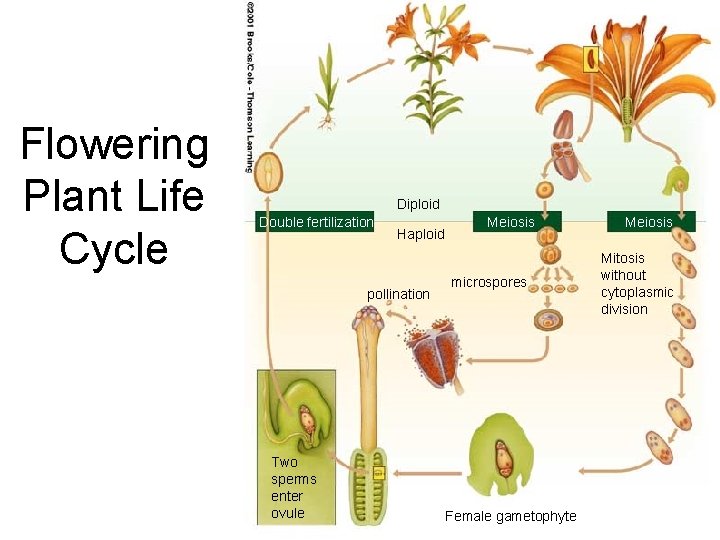
Flowering Plant Life Cycle Diploid Double fertilization Haploid pollination Two sperms enter ovule Meiosis microspores Female gametophyte Meiosis Mitosis without cytoplasmic division
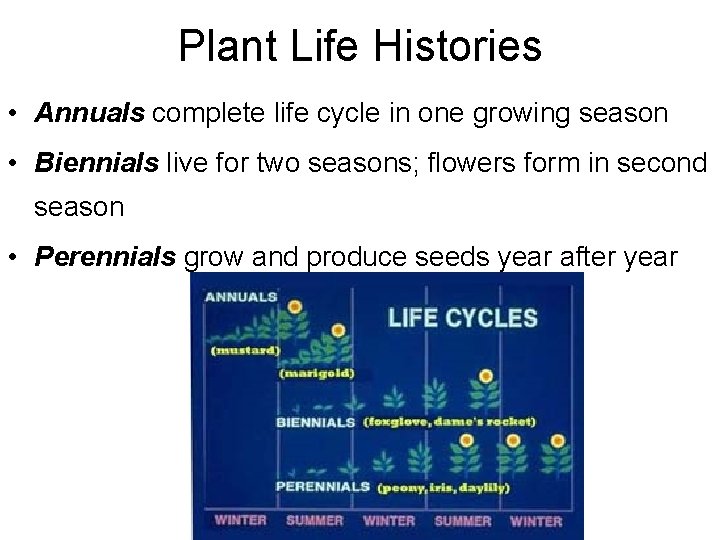
Plant Life Histories • Annuals complete life cycle in one growing season • Biennials live for two seasons; flowers form in second season • Perennials grow and produce seeds year after year
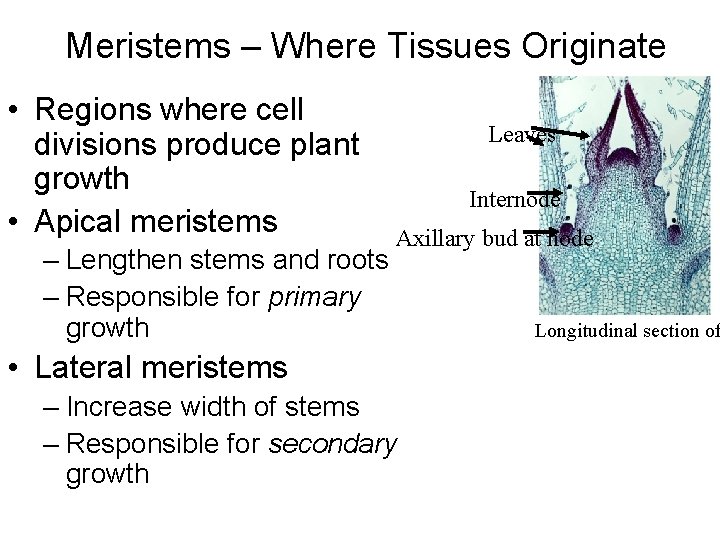
Meristems – Where Tissues Originate • Regions where cell divisions produce plant growth • Apical meristems – Lengthen stems and roots – Responsible for primary growth Leaves Internode Axillary bud at node • Lateral meristems – Increase width of stems – Responsible for secondary growth Longitudinal section of
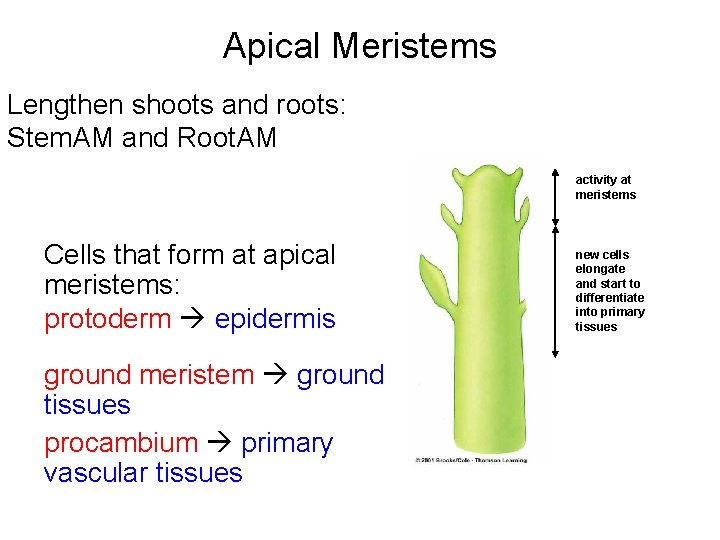
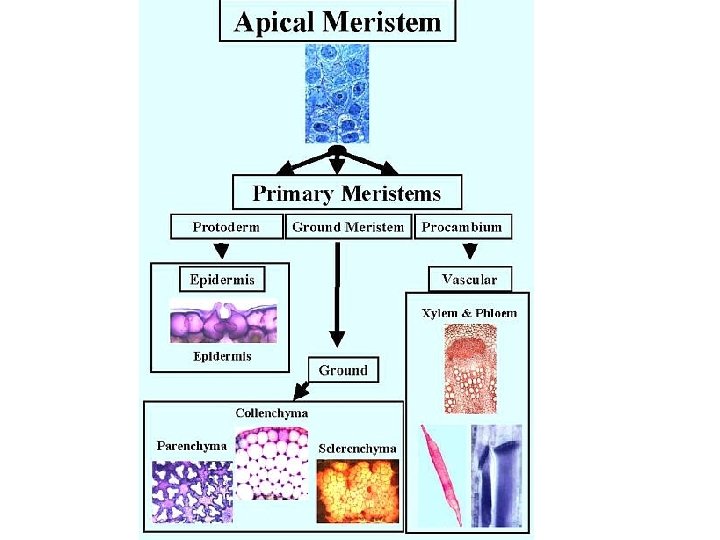
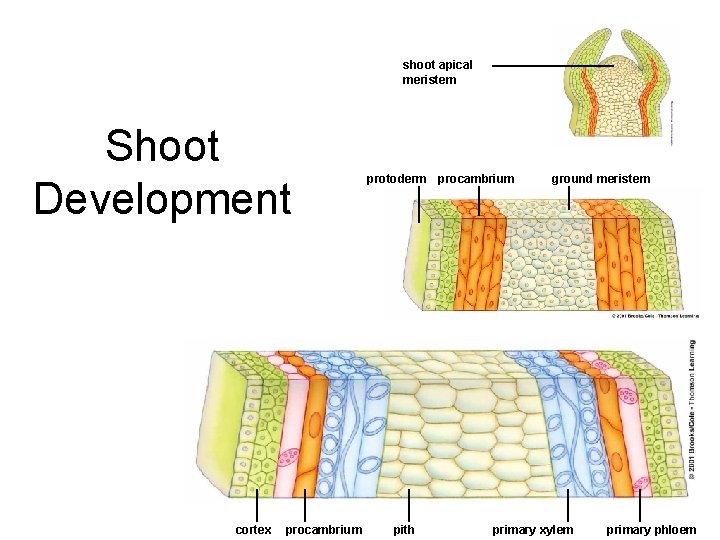
Apical Meristems Lengthen shoots and roots: Stem. AM and Root. AM activity at meristems Cells that form at apical meristems: protoderm epidermis ground meristem ground tissues procambium primary vascular tissues new cells elongate and start to differentiate into primary tissues
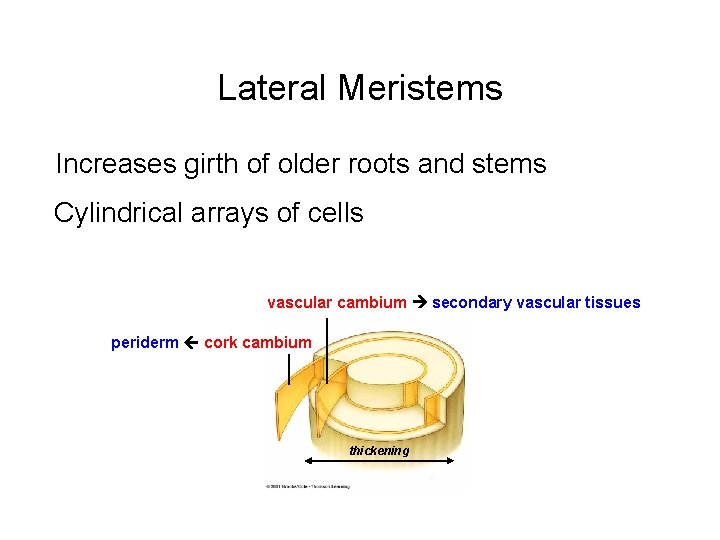
Lateral Meristems Increases girth of older roots and stems Cylindrical arrays of cells vascular cambium secondary vascular tissues periderm cork cambium thickening
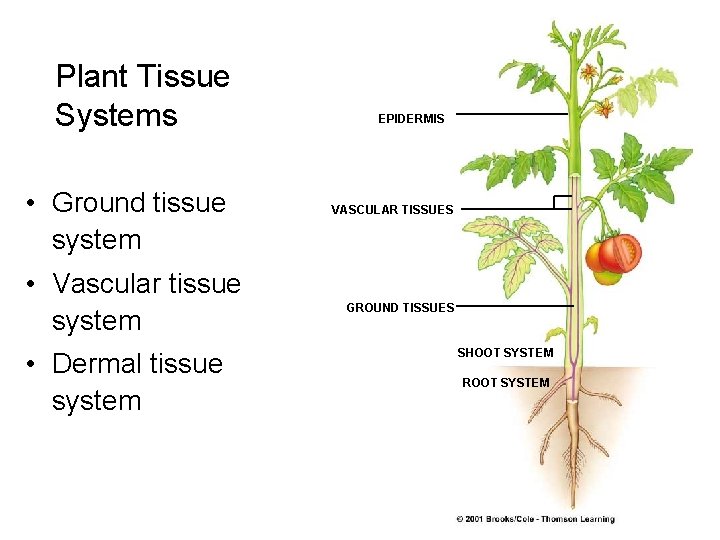
Plant Tissue Systems • Ground tissue system • Vascular tissue system • Dermal tissue system EPIDERMIS VASCULAR TISSUES GROUND TISSUES SHOOT SYSTEM ROOT SYSTEM
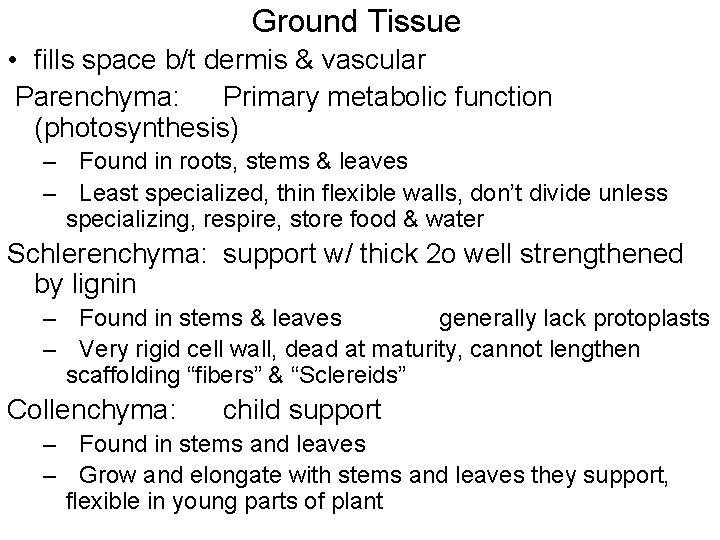
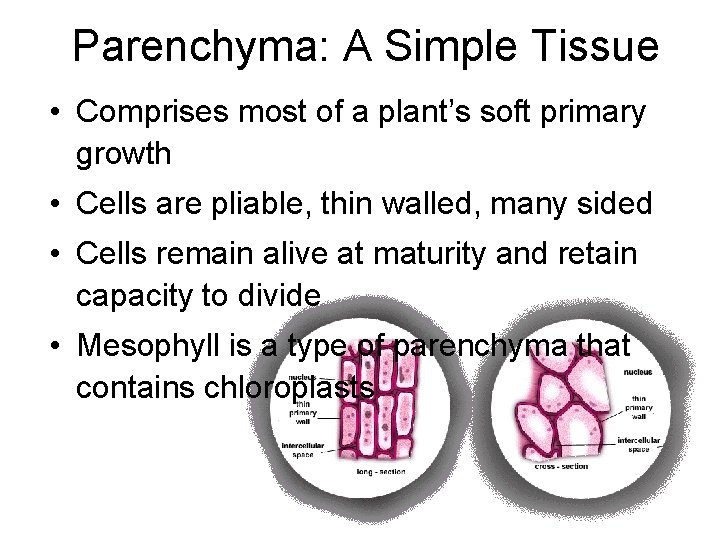
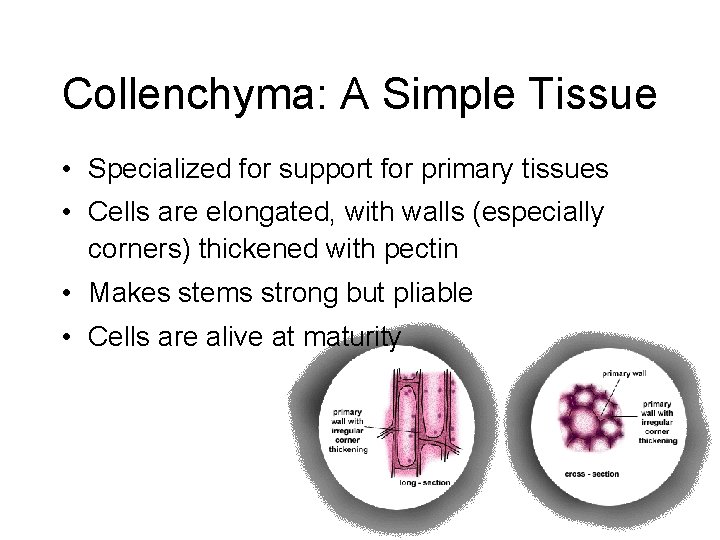
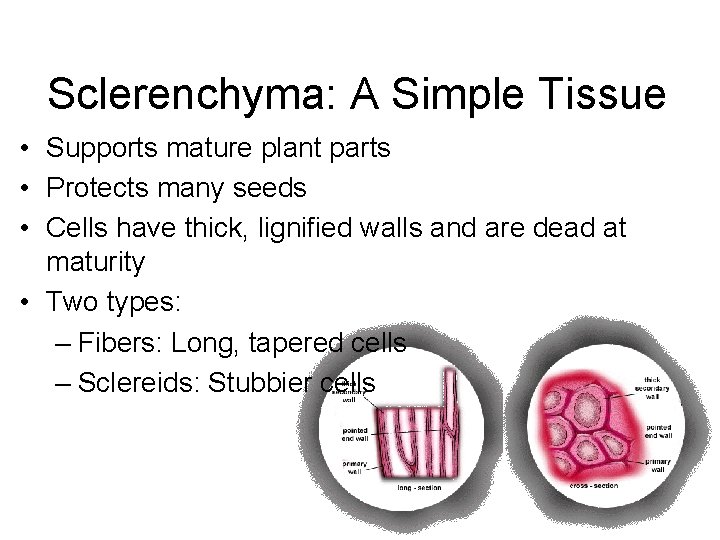
Ground Tissue • fills space b/t dermis & vascular Parenchyma: Primary metabolic function (photosynthesis) – Found in roots, stems & leaves – Least specialized, thin flexible walls, don’t divide unless specializing, respire, store food & water Schlerenchyma: support w/ thick 2 o well strengthened by lignin – Found in stems & leaves generally lack protoplasts – Very rigid cell wall, dead at maturity, cannot lengthen scaffolding “fibers” & “Sclereids” Collenchyma: child support – Found in stems and leaves – Grow and elongate with stems and leaves they support, flexible in young parts of plant
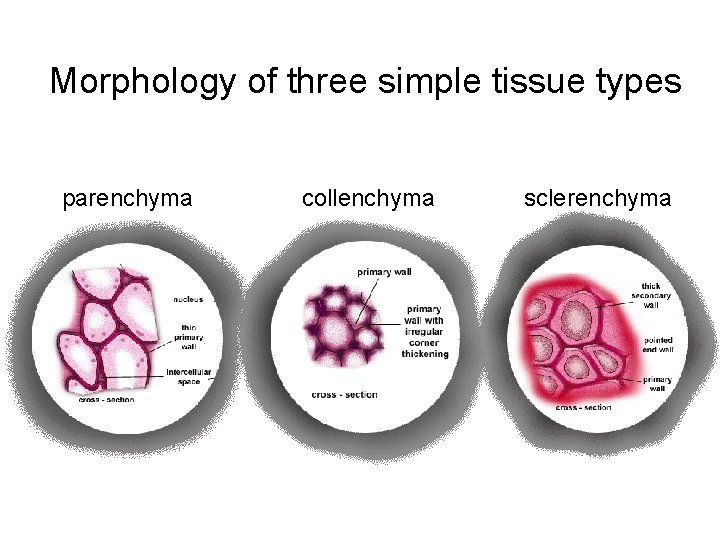
Morphology of three simple tissue types parenchyma collenchyma sclerenchyma
Parenchyma: A Simple Tissue • Comprises most of a plant’s soft primary growth • Cells are pliable, thin walled, many sided • Cells remain alive at maturity and retain capacity to divide • Mesophyll is a type of parenchyma that contains chloroplasts
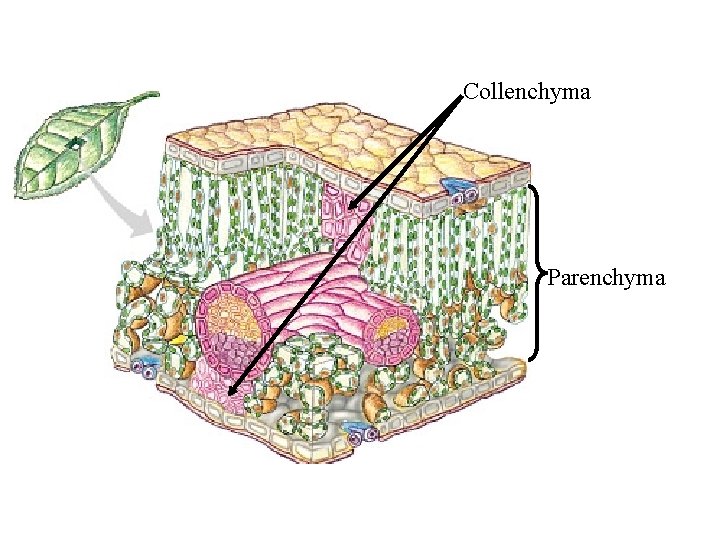
Collenchyma: A Simple Tissue • Specialized for support for primary tissues • Cells are elongated, with walls (especially corners) thickened with pectin • Makes stems strong but pliable • Cells are alive at maturity
Sclerenchyma: A Simple Tissue • Supports mature plant parts • Protects many seeds • Cells have thick, lignified walls and are dead at maturity • Two types: – Fibers: Long, tapered cells – Sclereids: Stubbier cells
Simple Tissues Made up of only one type of cell Parenchyma Collenchyma Sclerenchyma
Complex Tissues Composed of a mix of cell types Xylem Phloem Epidermis
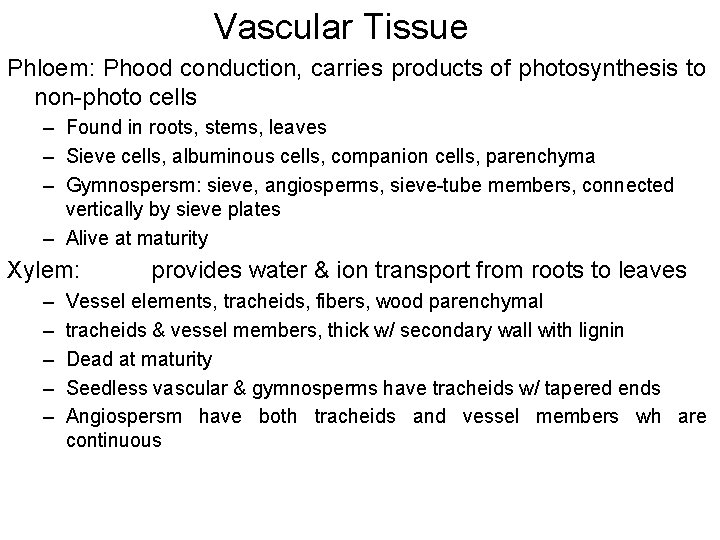
Vascular Tissue Phloem: Phood conduction, carries products of photosynthesis to non-photo cells – Found in roots, stems, leaves – Sieve cells, albuminous cells, companion cells, parenchyma – Gymnospersm: sieve, angiosperms, sieve-tube members, connected vertically by sieve plates – Alive at maturity Xylem: – – – provides water & ion transport from roots to leaves Vessel elements, tracheids, fibers, wood parenchymal tracheids & vessel members, thick w/ secondary wall with lignin Dead at maturity Seedless vascular & gymnosperms have tracheids w/ tapered ends Angiospersm have both tracheids and vessel members wh are continuous
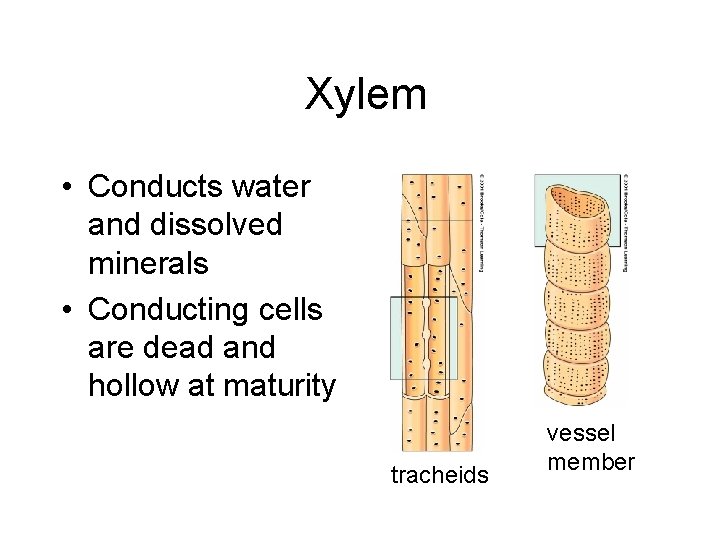
Xylem • Conducts water and dissolved minerals • Conducting cells are dead and hollow at maturity tracheids vessel member
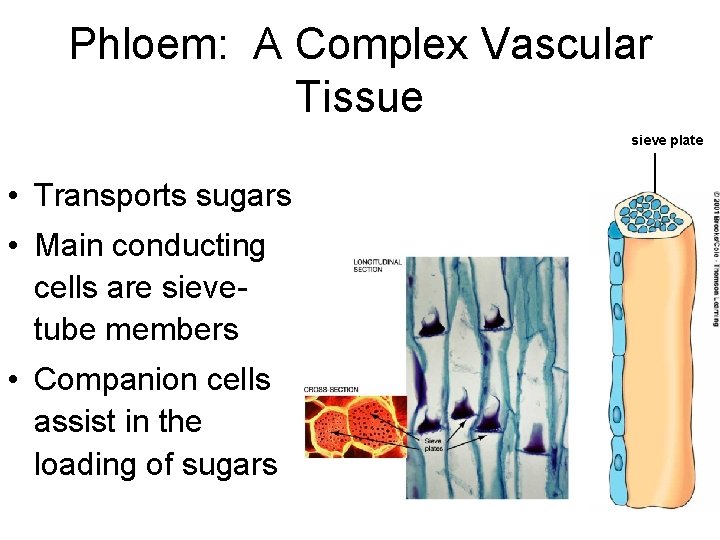
Phloem: A Complex Vascular Tissue sieve plate • Transports sugars • Main conducting cells are sievetube members • Companion cells assist in the loading of sugars sieve-tube member companion cell
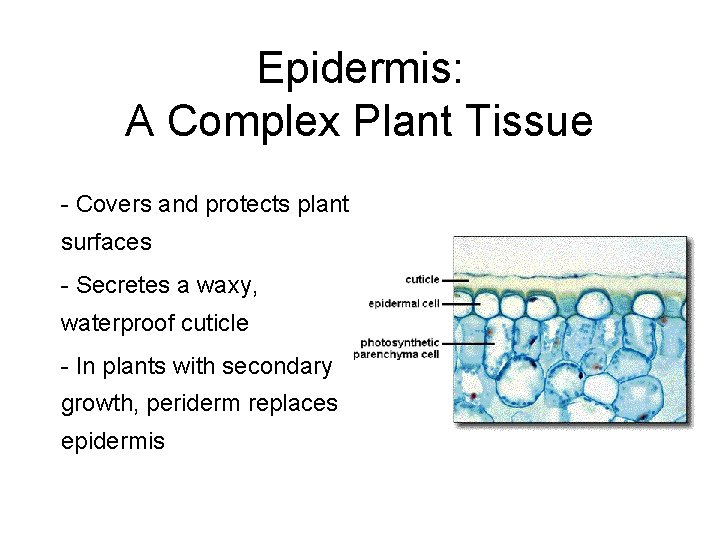
Epidermis: A Complex Plant Tissue - Covers and protects plant surfaces - Secretes a waxy, waterproof cuticle - In plants with secondary growth, periderm replaces epidermis
Epiderm • protection, increase absorption area in roots, reduces H 2 O loss in stem & leaves, • Regulates gas exchange in leaves Signaling between Plants and Pathogens
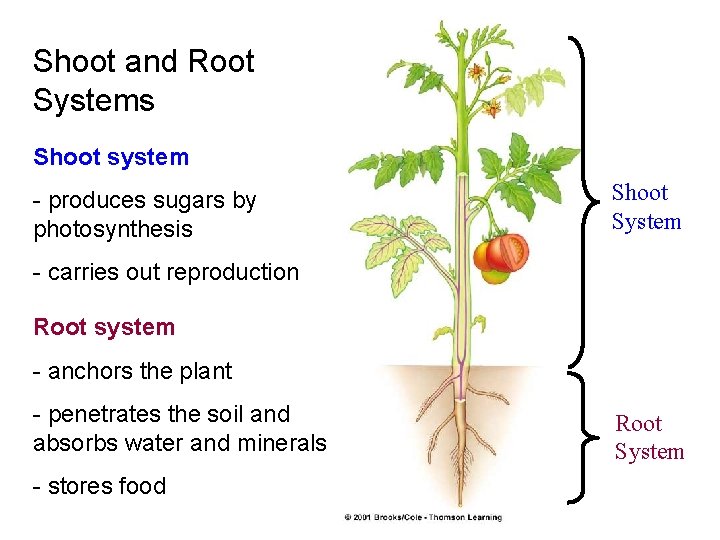
Shoot and Root Systems Shoot system - produces sugars by photosynthesis Shoot System - carries out reproduction Root system - anchors the plant - penetrates the soil and absorbs water and minerals - stores food Root System
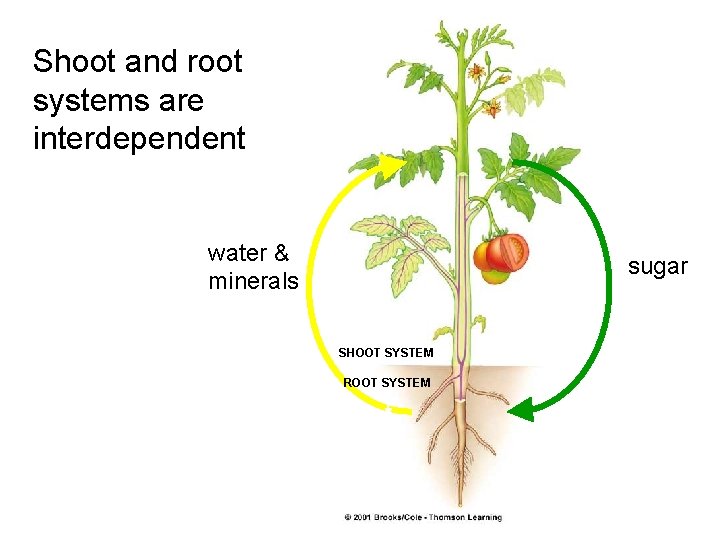
Shoot and root systems are interdependent water & minerals sugar SHOOT SYSTEM ROOT SYSTEM
shoot apical meristem Shoot Development cortex procambrium protoderm procambrium pith ground meristem primary xylem primary phloem
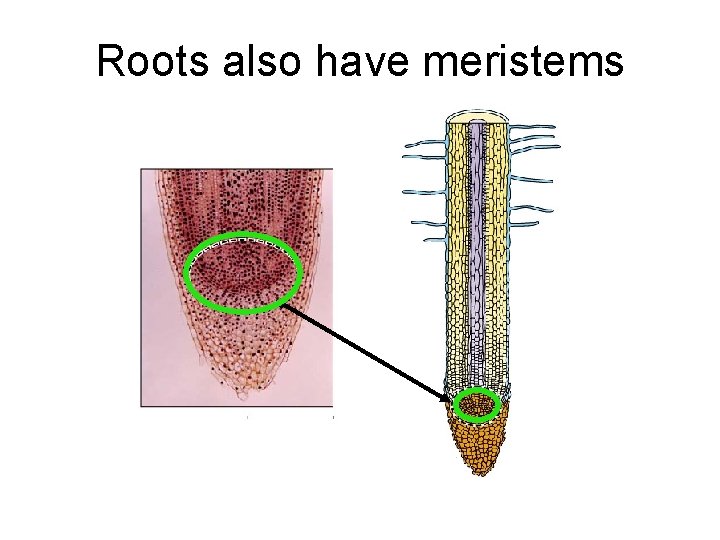
Roots also have meristems
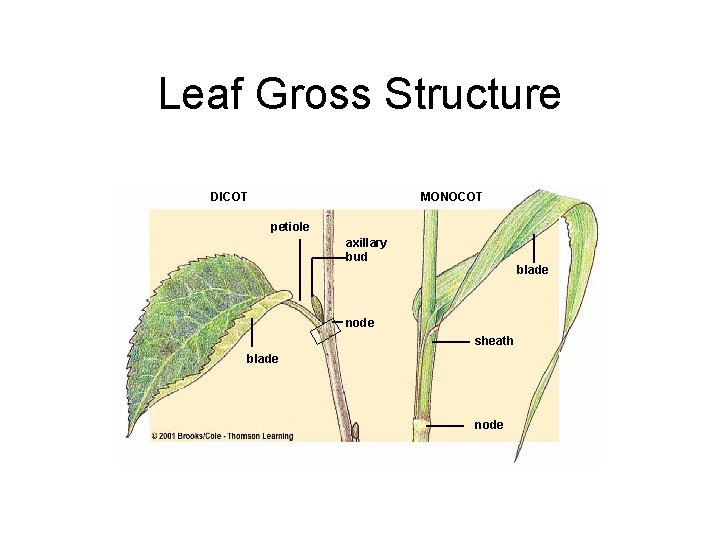
Leaf Gross Structure DICOT MONOCOT petiole axillary bud blade node sheath blade node
Adapted for Photosynthesis • Leaves are usually thin – High surface area-to-volume ratio – Promotes diffusion of carbon dioxide in, oxygen out • Leaves are arranged to capture sunlight – Are held perpendicular to rays of sun – Arrange so they don’t shade one another
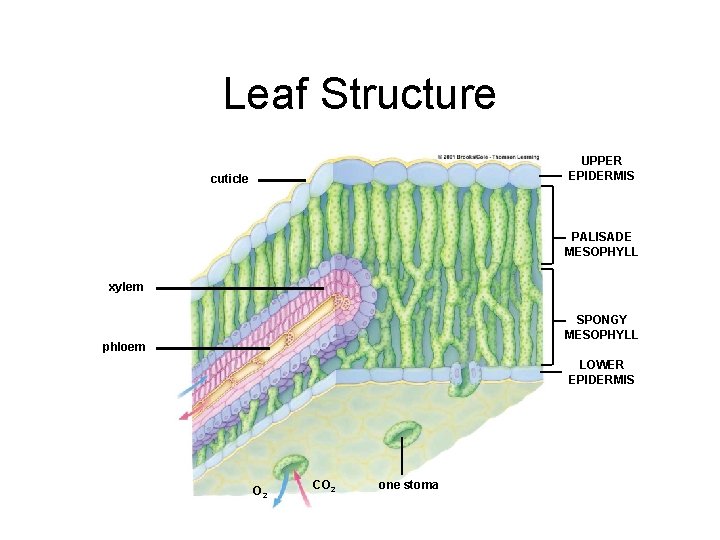
Leaf Structure UPPER EPIDERMIS cuticle PALISADE MESOPHYLL xylem SPONGY MESOPHYLL phloem LOWER EPIDERMIS O 2 CO 2 one stoma
Mesophyll: Photosynthetic Tissue • A type of parenchyma tissue • Cells have chloroplasts • Two layers in dicots – Palisade mesophyll – Spongy mesophyll
Collenchyma Parenchyma
Leaf Veins: Vascular Bundles • Xylem and phloem – often strengthened with fibers • In dicots, veins are netlike • In monocots, they are parallel
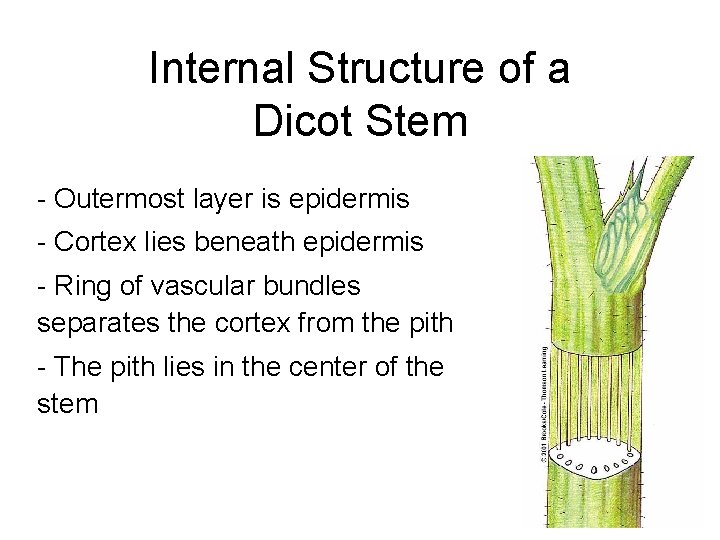
Internal Structure of a Dicot Stem - Outermost layer is epidermis - Cortex lies beneath epidermis - Ring of vascular bundles separates the cortex from the pith - The pith lies in the center of the stem
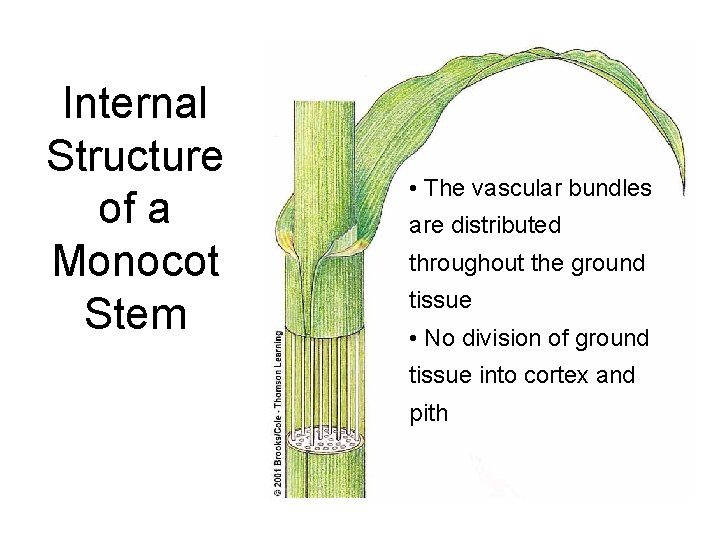
Internal Structure of a Monocot Stem • The vascular bundles are distributed throughout the ground tissue • No division of ground tissue into cortex and pith
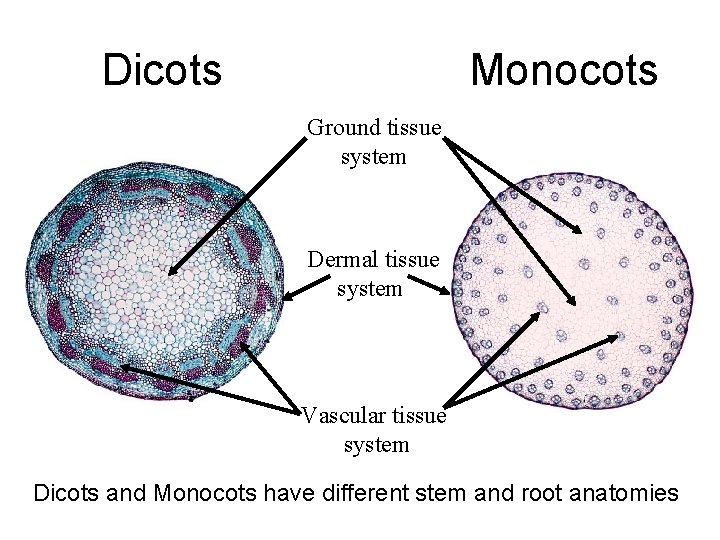
Dicots Monocots Ground tissue system Dermal tissue system Vascular tissue system Dicots and Monocots have different stem and root anatomies
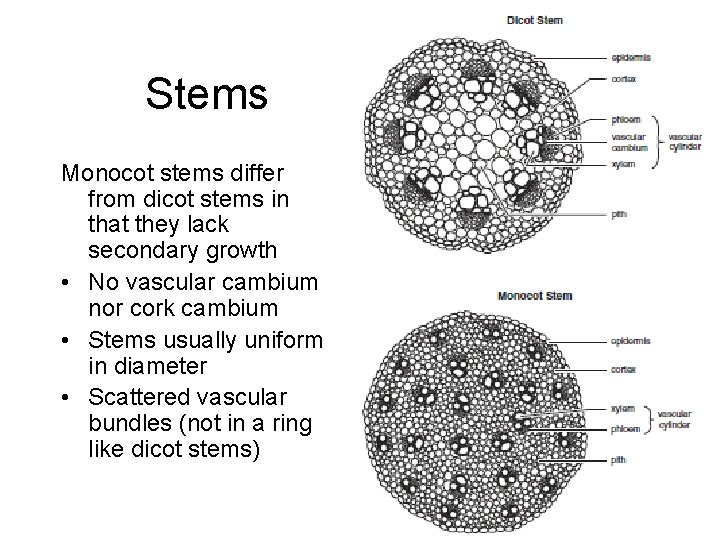
Stems Monocot stems differ from dicot stems in that they lack secondary growth • No vascular cambium nor cork cambium • Stems usually uniform in diameter • Scattered vascular bundles (not in a ring like dicot stems)
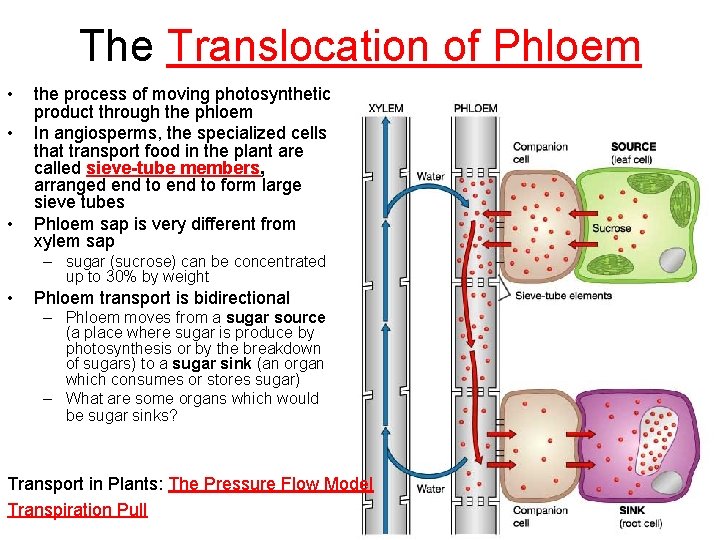
The Translocation of Phloem • • • the process of moving photosynthetic product through the phloem In angiosperms, the specialized cells that transport food in the plant are called sieve-tube members, arranged end to form large sieve tubes Phloem sap is very different from xylem sap – sugar (sucrose) can be concentrated up to 30% by weight • Phloem transport is bidirectional – Phloem moves from a sugar source (a place where sugar is produce by photosynthesis or by the breakdown of sugars) to a sugar sink (an organ which consumes or stores sugar) – What are some organs which would be sugar sinks? Transport in Plants: The Pressure Flow Model Transpiration Pull
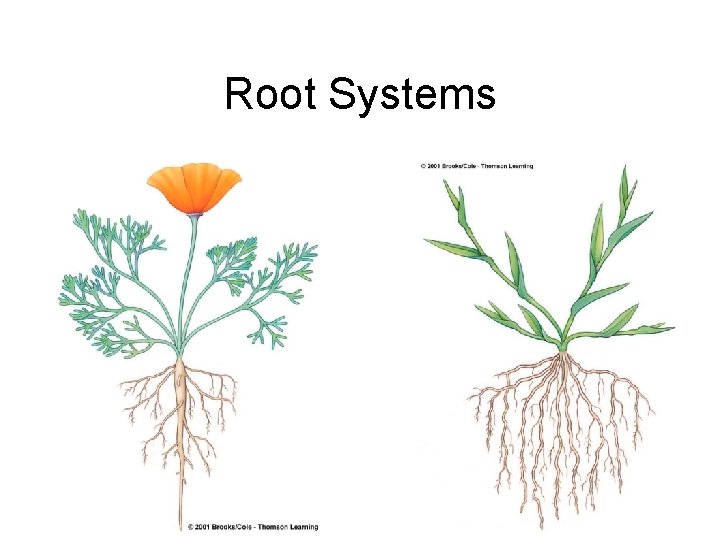
Root Systems
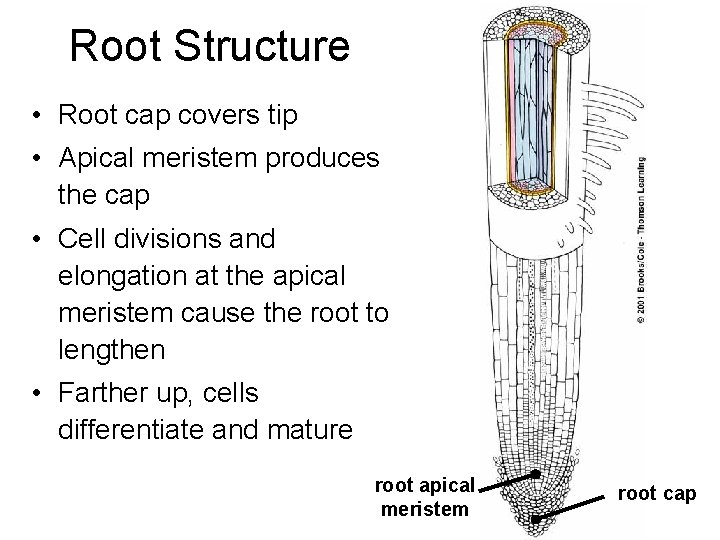
Root Structure • Root cap covers tip • Apical meristem produces the cap • Cell divisions and elongation at the apical meristem cause the root to lengthen • Farther up, cells differentiate and mature root apical meristem root cap
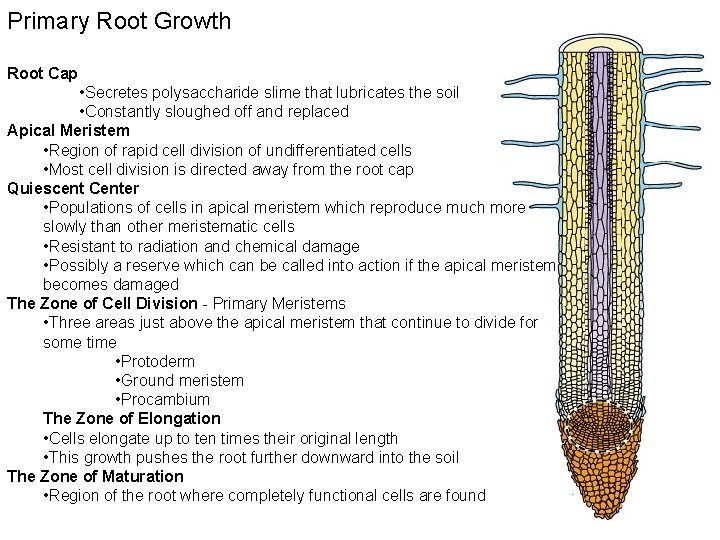
Primary Root Growth Root Cap • Secretes polysaccharide slime that lubricates the soil • Constantly sloughed off and replaced Apical Meristem • Region of rapid cell division of undifferentiated cells • Most cell division is directed away from the root cap Quiescent Center • Populations of cells in apical meristem which reproduce much more slowly than other meristematic cells • Resistant to radiation and chemical damage • Possibly a reserve which can be called into action if the apical meristem becomes damaged The Zone of Cell Division - Primary Meristems • Three areas just above the apical meristem that continue to divide for some time • Protoderm • Ground meristem • Procambium The Zone of Elongation • Cells elongate up to ten times their original length • This growth pushes the root further downward into the soil The Zone of Maturation • Region of the root where completely functional cells are found
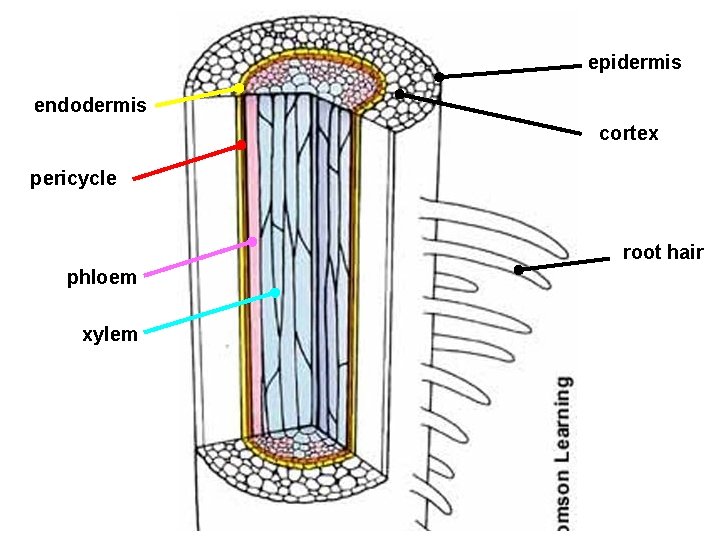
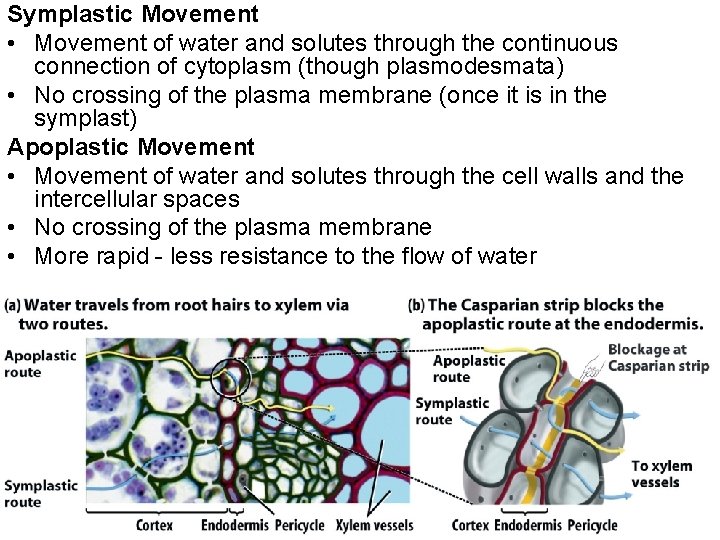
Internal Structure of a Root • Outermost layer is epidermis • Root cortex is beneath the epidermis • Endodermis, then pericycle surround the vascular cylinder • In some plants, there is a central pith
epidermis endodermis cortex pericycle root hair phloem xylem
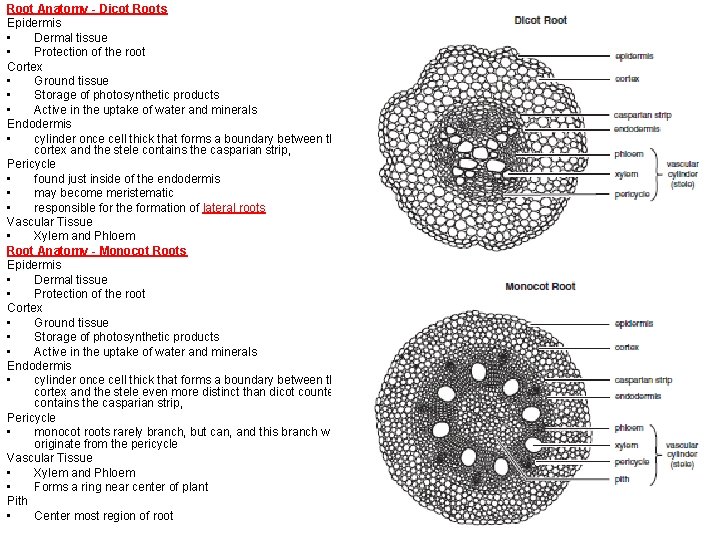
Root Anatomy - Dicot Roots Epidermis • Dermal tissue • Protection of the root Cortex • Ground tissue • Storage of photosynthetic products • Active in the uptake of water and minerals Endodermis • cylinder once cell thick that forms a boundary between the cortex and the stele contains the casparian strip, Pericycle • found just inside of the endodermis • may become meristematic • responsible for the formation of lateral roots Vascular Tissue • Xylem and Phloem Root Anatomy - Monocot Roots Epidermis • Dermal tissue • Protection of the root Cortex • Ground tissue • Storage of photosynthetic products • Active in the uptake of water and minerals Endodermis • cylinder once cell thick that forms a boundary between the cortex and the stele even more distinct than dicot counterpart contains the casparian strip, Pericycle • monocot roots rarely branch, but can, and this branch will originate from the pericycle Vascular Tissue • Xylem and Phloem • Forms a ring near center of plant Pith • Center most region of root
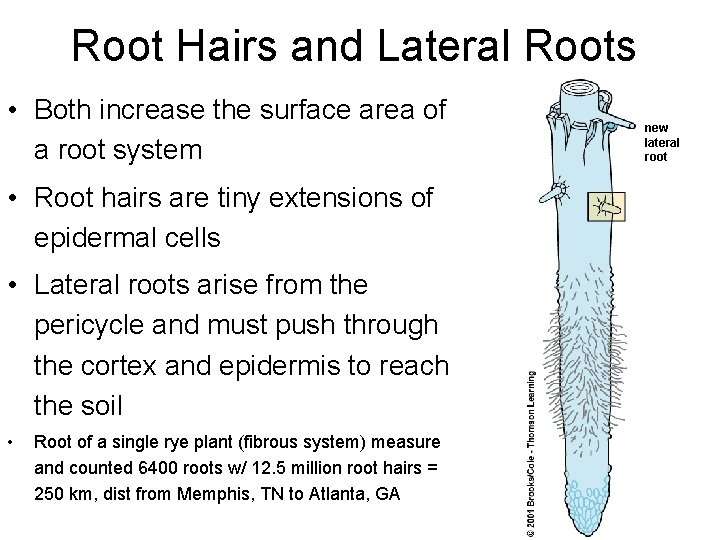
Root Hairs and Lateral Roots • Both increase the surface area of a root system • Root hairs are tiny extensions of epidermal cells • Lateral roots arise from the pericycle and must push through the cortex and epidermis to reach the soil • Root of a single rye plant (fibrous system) measure and counted 6400 roots w/ 12. 5 million root hairs = 250 km, dist from Memphis, TN to Atlanta, GA new lateral root
Symplastic Movement • Movement of water and solutes through the continuous connection of cytoplasm (though plasmodesmata) • No crossing of the plasma membrane (once it is in the symplast) Apoplastic Movement • Movement of water and solutes through the cell walls and the intercellular spaces • No crossing of the plasma membrane • More rapid - less resistance to the flow of water
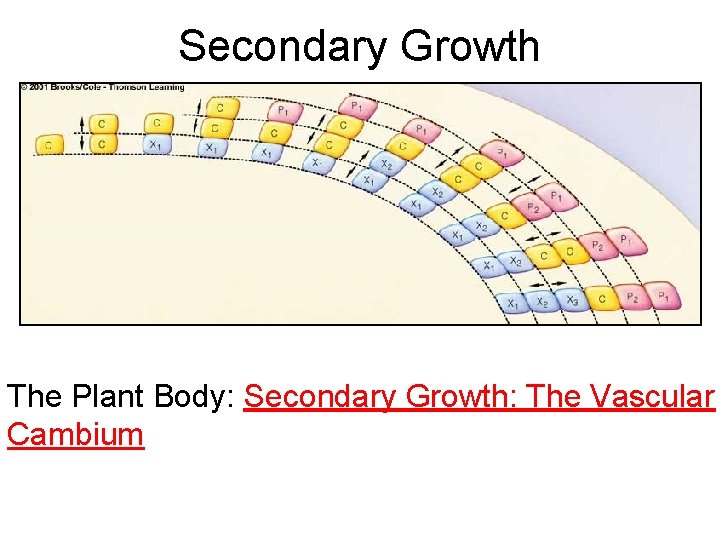
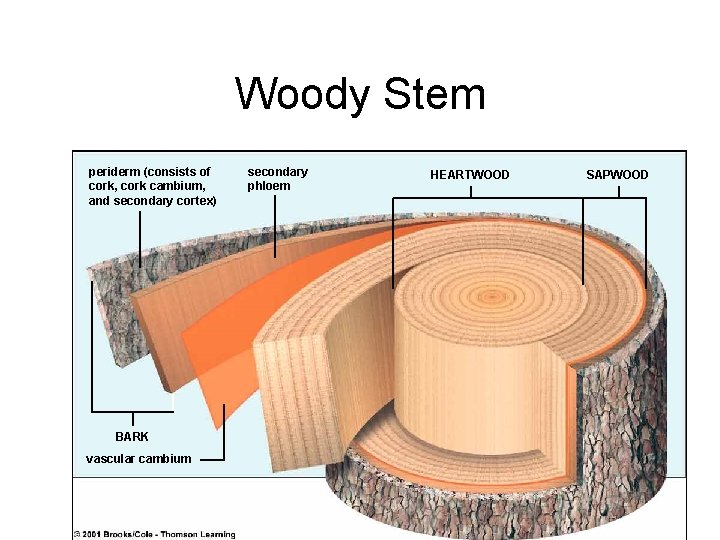
Secondary Growth • Occurs in perennials • A ring of vascular cambium produces secondary xylem and phloem • Wood is the accumulation of these secondary tissues, especially xylem
Secondary Growth The Plant Body: Secondary Growth: The Vascular Cambium
Woody Stem periderm (consists of cork, cork cambium, and secondary cortex) BARK vascular cambium secondary phloem HEARTWOOD SAPWOOD
Annual Rings • Concentric rings of secondary xylem • Alternating bands of early and late wood • Early wood – Xylem cells with large diameter, thin walls • Late wood – Xylem cells with smaller diameter, thicker walls
Types of Wood • Hardwood (oak, hickory) – Dicot wood – Xylem composed of vessels, tracheids, and fibers • Softwood (pine, redwood) – Gymnosperm wood – Xylem composed mostly of tracheids – Grows more quickly
• Plant Nutrition: Nitrogen and Iron Deficiencies
Resources • http: //www. botany. uwc. ac. za/ecotree/ce lltissues/tissues. htm#top • Plants in Motion: http: //plantsinmotion. bio. indiana. edu/pla ntmotion/starthere. html