
PLANT STRUCTURES Roots Stems Leaves Flowers Fruit and
- Slides: 50
PLANT STRUCTURES Roots Stems Leaves Flowers Fruit and seeds
Plant Structures n n n What is a root? What is a stem? What is a leaf? What is a flower? What is a seed? What is a fruit?
Root - Types n Tap roots n Carrots, beets n Fibrous roots n Grains
Roots – Functions and uses n n n Absorb water and minerals Anchor plant to soil Reduce soil erosion (fibrous roots) Food source (carrots, beets, radishes) Medicines (ginseng) Dyes (madder)
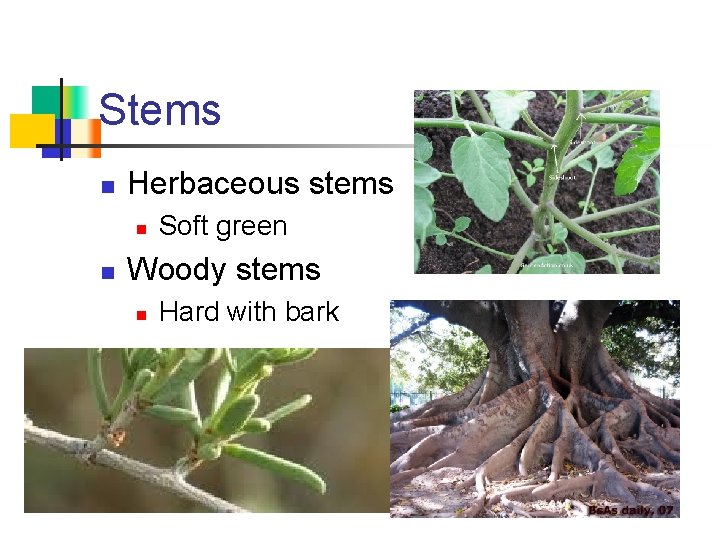
Stems n Herbaceous stems n n Soft green Woody stems n Hard with bark
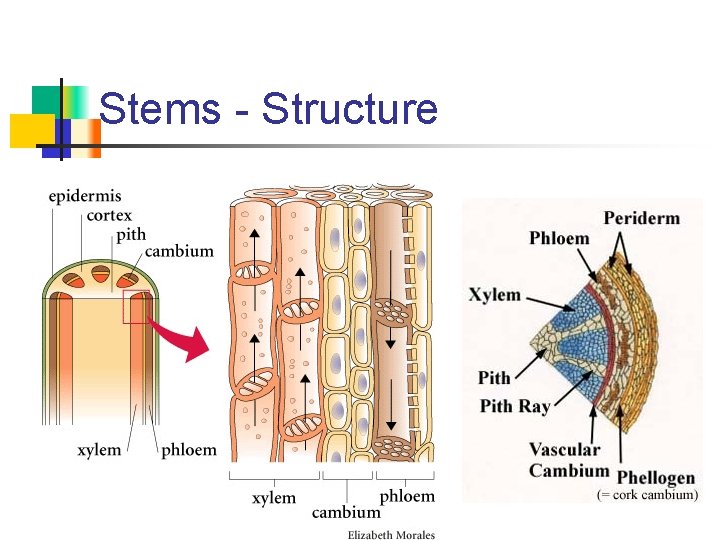
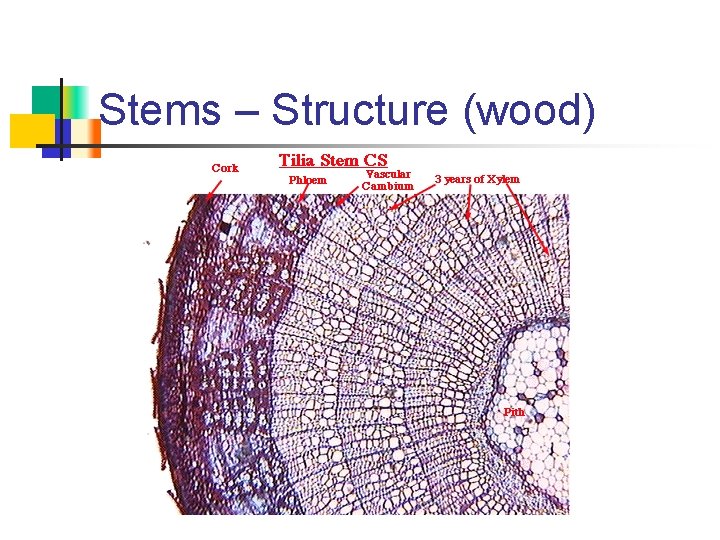
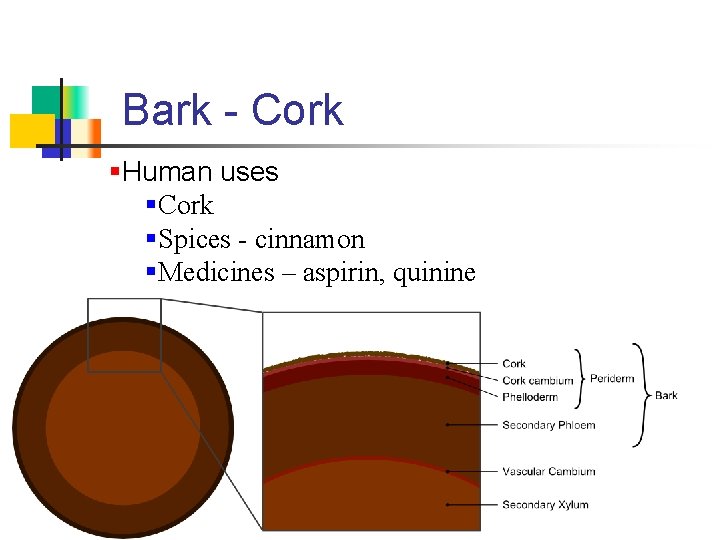
Stem Tissues n n n Xylem Phloem Vascular cambium n n n Produces xylem inward Produces phloem outward Bark n n Woody plants Cork cambium
Stems - Structure
Stems – Structure (wood)
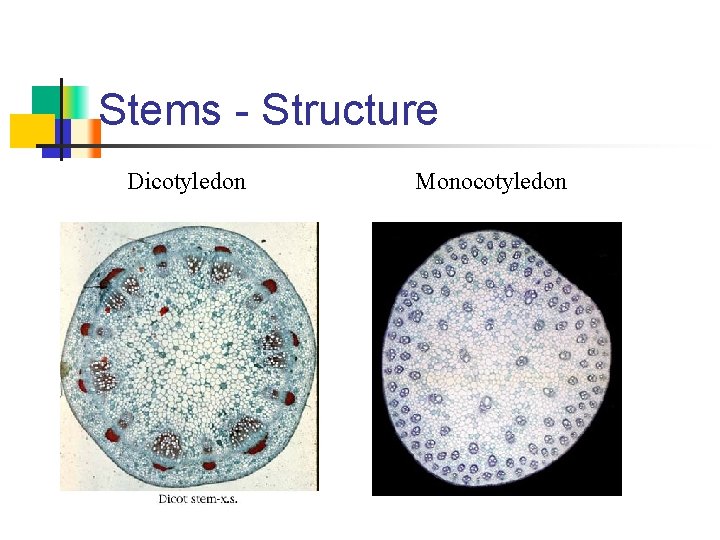
Stems - Structure Dicotyledon Monocotyledon
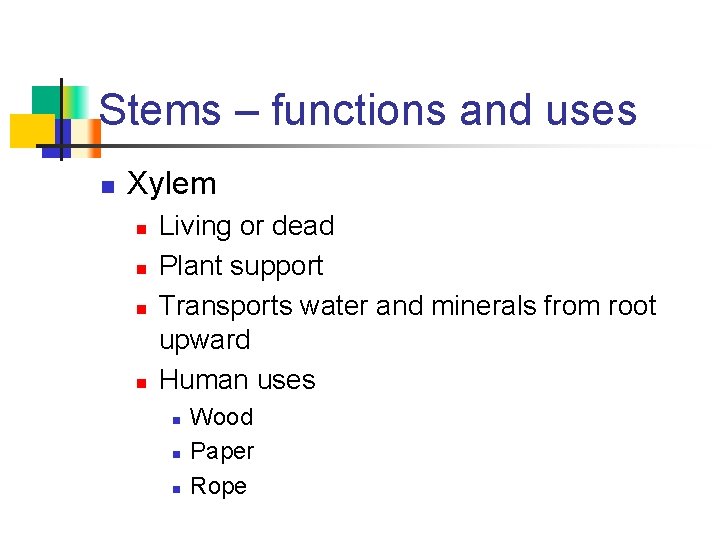
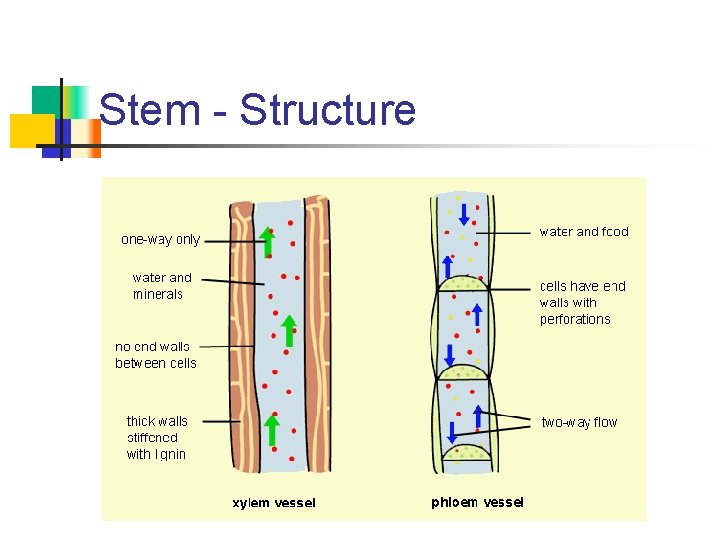
Stems – functions and uses n Xylem n n Living or dead Plant support Transports water and minerals from root upward Human uses n n n Wood Paper Rope
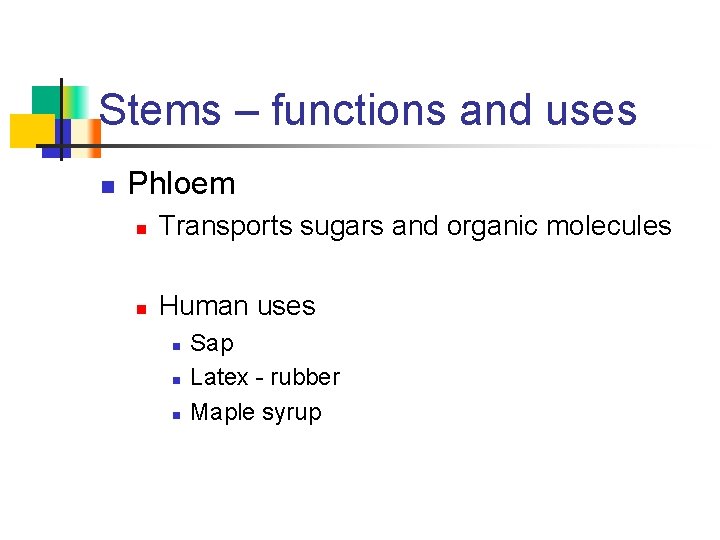
Stems – functions and uses n Phloem n Transports sugars and organic molecules n Human uses n n n Sap Latex - rubber Maple syrup
Stem - Structure
Bark - Cork §Human uses §Cork §Spices - cinnamon §Medicines – aspirin, quinine
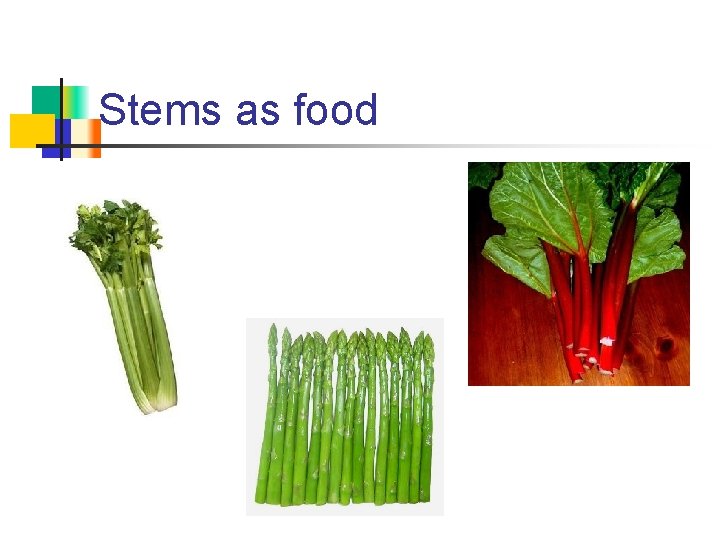
Stems as food
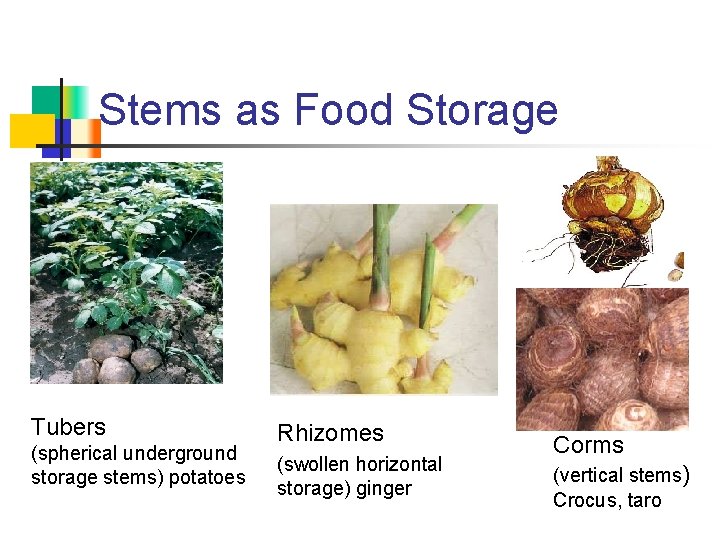
Stems as Food Storage Tubers (spherical underground storage stems) potatoes Rhizomes (swollen horizontal storage) ginger Corms (vertical stems) Crocus, taro
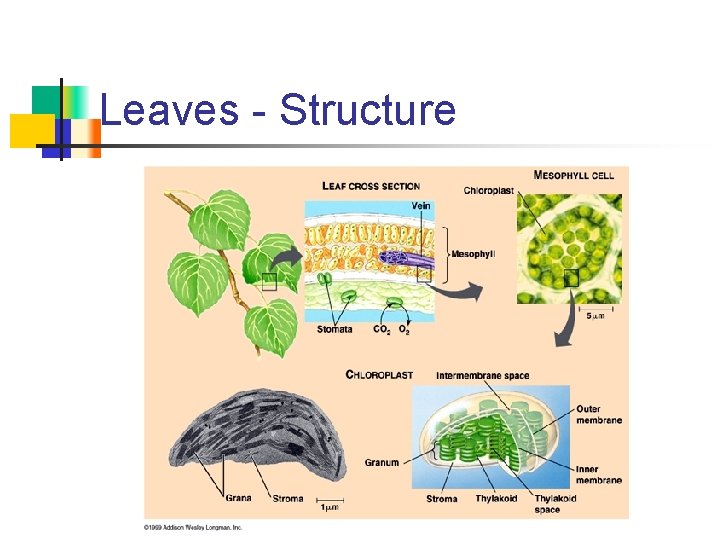
Leaves - Structure
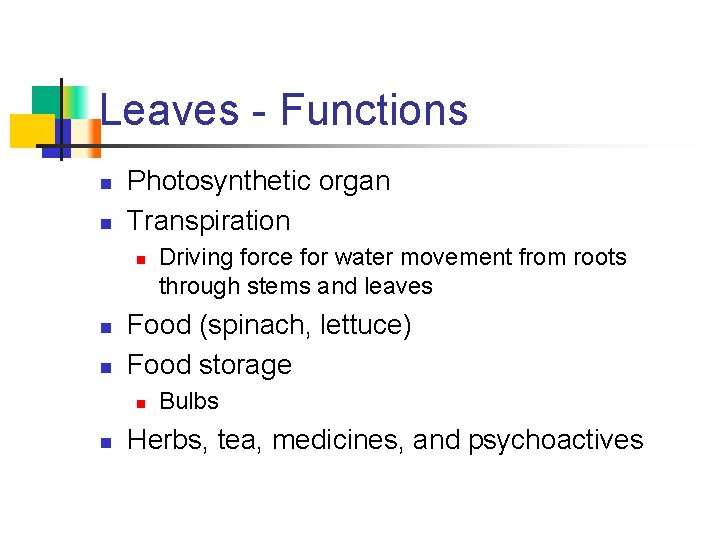
Leaves - Functions n n Photosynthetic organ Transpiration n Food (spinach, lettuce) Food storage n n Driving force for water movement from roots through stems and leaves Bulbs Herbs, tea, medicines, and psychoactives
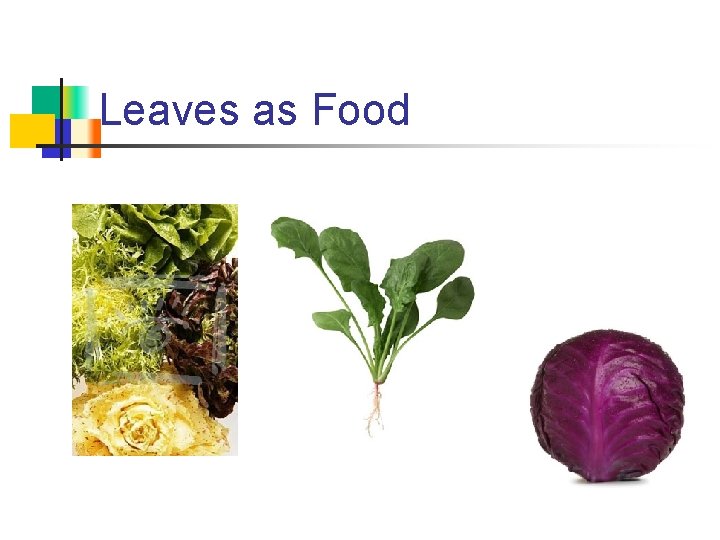
Leaves as Food
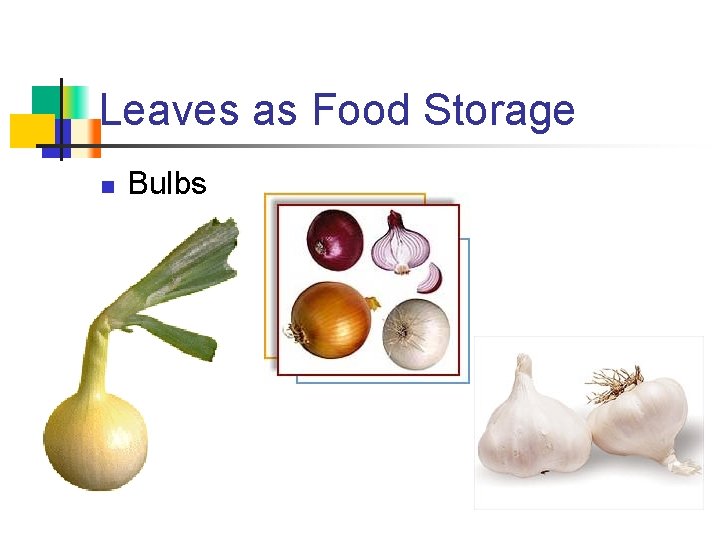
Leaves as Food Storage n Bulbs
PLANT REPRODUCTION How did the Hass Avocado develop? The navel orange?
Plant Reproduction Asexual reproduction (clones) n Vegetative propagation n Leaves, stems, rhizomes, tubers Crop uniformity More efficient than seeds
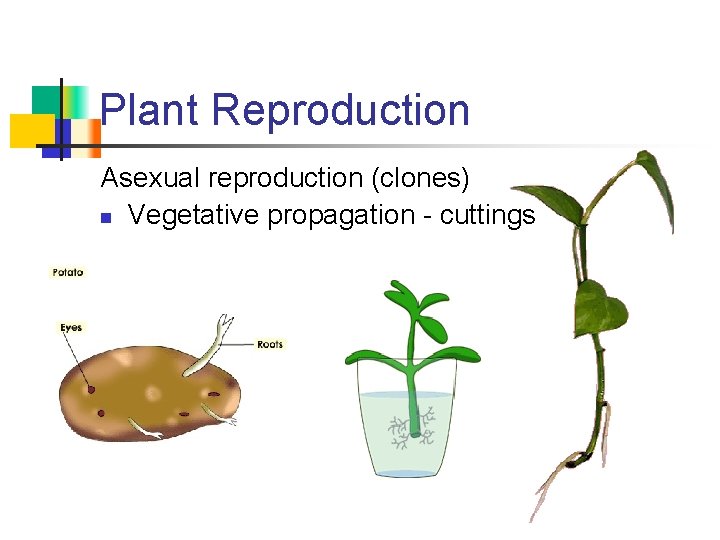
Plant Reproduction Asexual reproduction (clones) n Vegetative propagation - cuttings
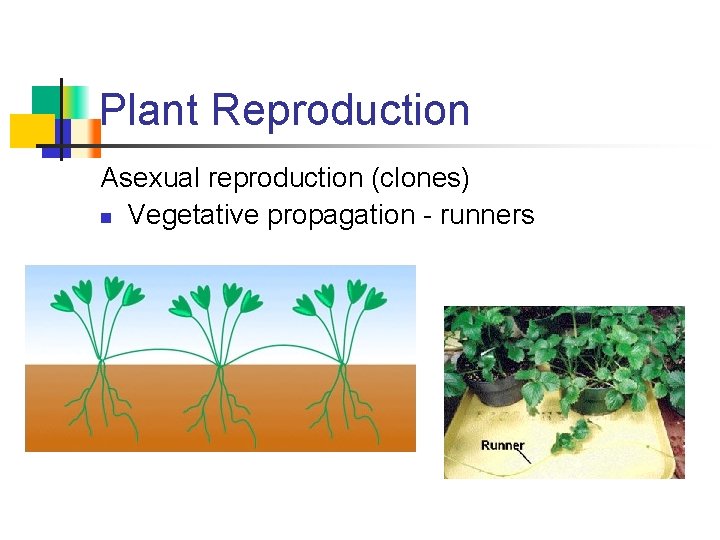
Plant Reproduction Asexual reproduction (clones) n Vegetative propagation - runners
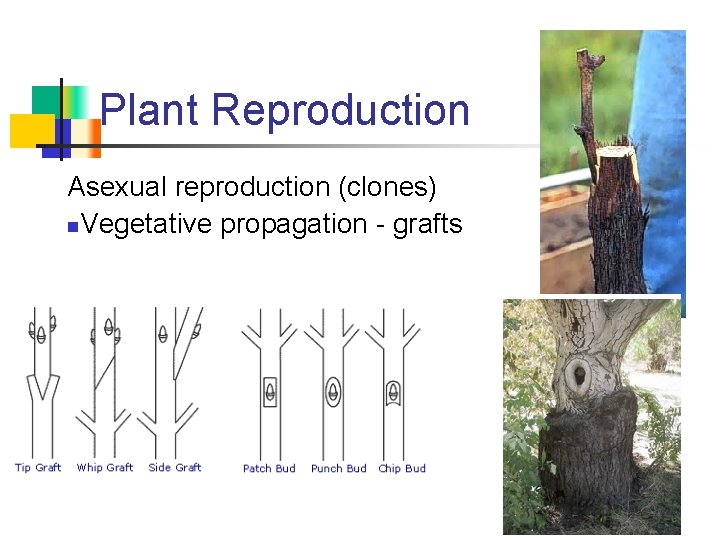
Plant Reproduction Asexual reproduction (clones) n. Vegetative propagation - grafts
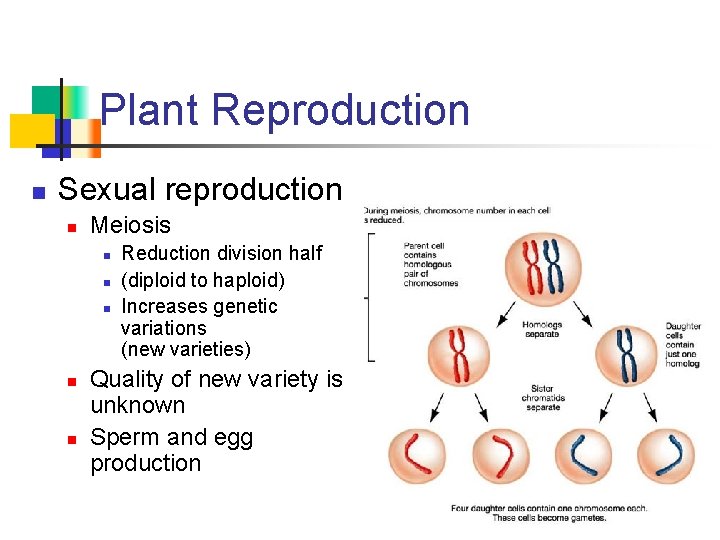
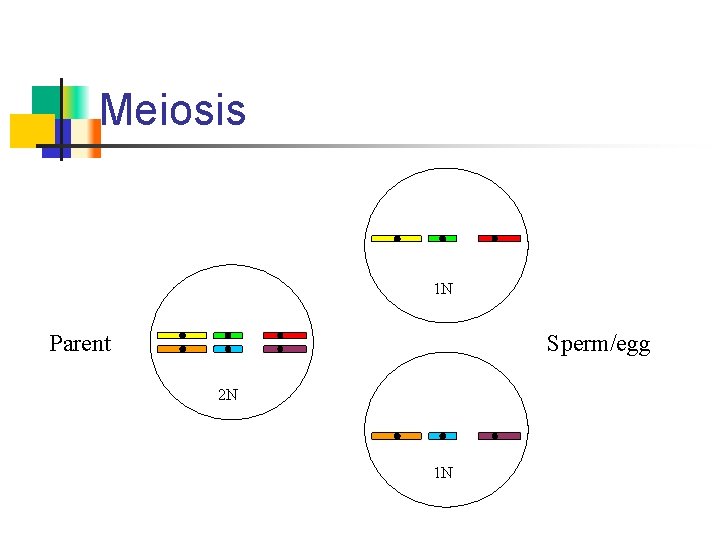
Plant Reproduction n Sexual reproduction n Meiosis n n n Reduction division half (diploid to haploid) Increases genetic variations (new varieties) Quality of new variety is unknown Sperm and egg production
Meiosis 1 N Parent Sperm/egg 2 N 1 N
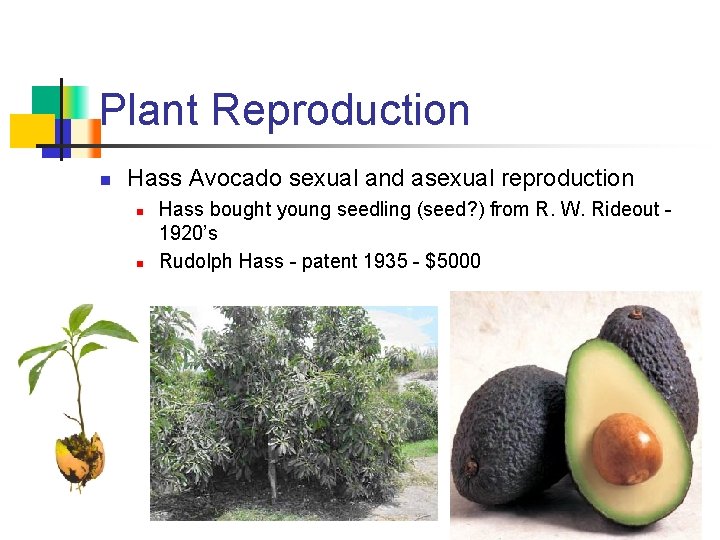
Plant Reproduction n Hass Avocado sexual and asexual reproduction n n Hass bought young seedling (seed? ) from R. W. Rideout 1920’s Rudolph Hass - patent 1935 - $5000
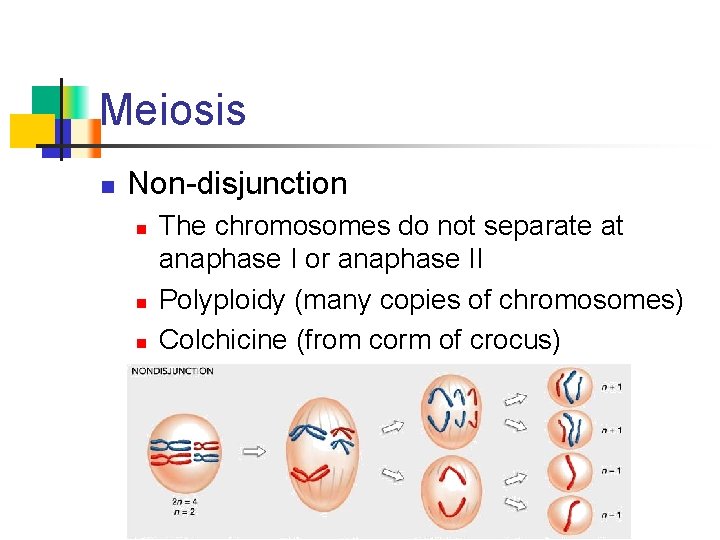
Meiosis n Non-disjunction n The chromosomes do not separate at anaphase I or anaphase II Polyploidy (many copies of chromosomes) Colchicine (from corm of crocus)
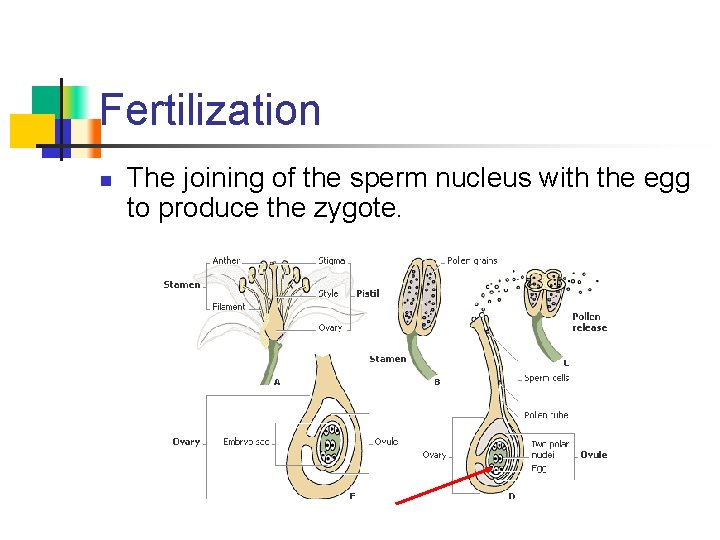
Flowers - Reproductive Organs Flower Functions n Gametophyte production (meiosis) n n Gamete (sperm and egg) formation Pollination Fertilization Fruit and seed production
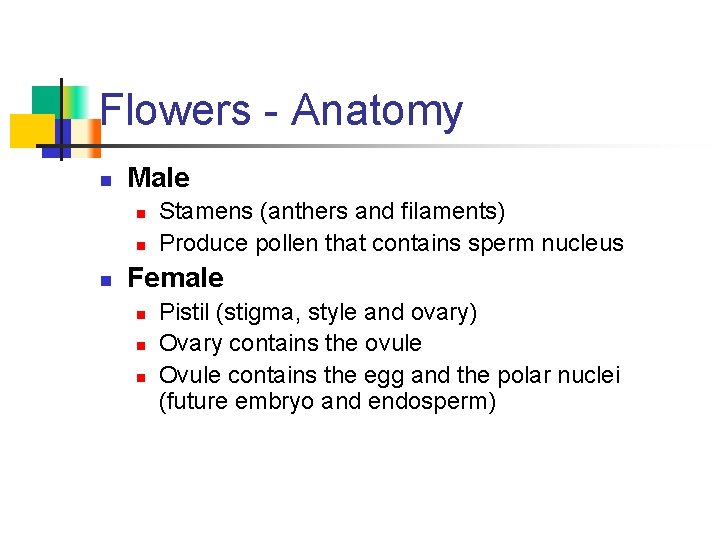
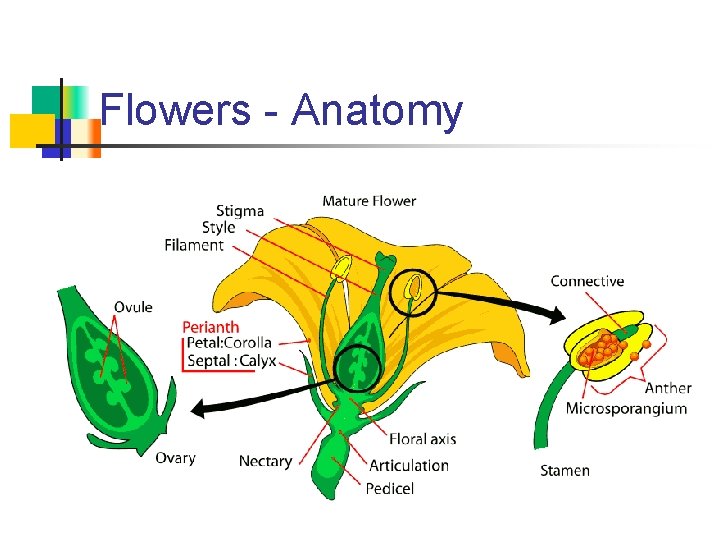
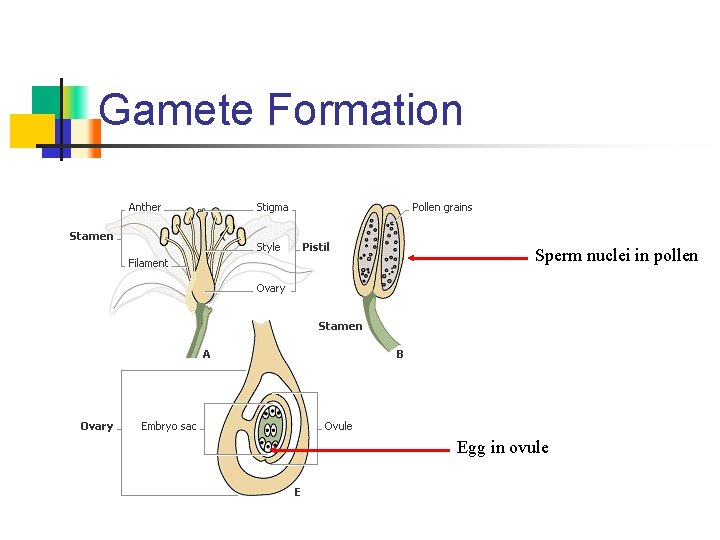
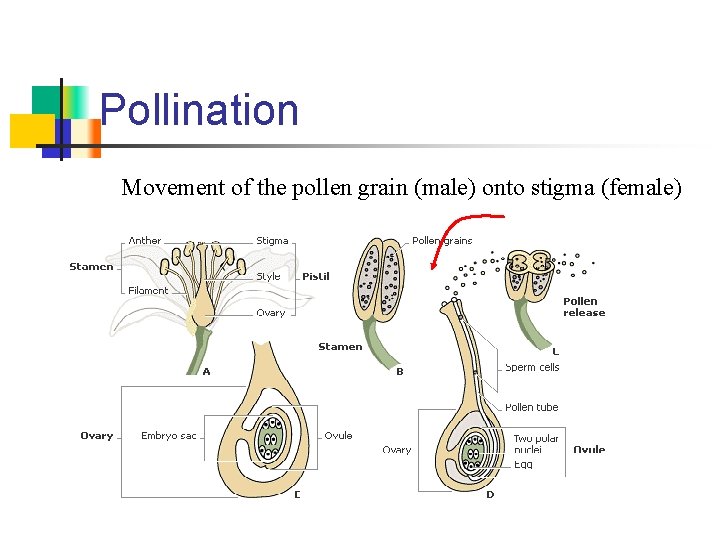
Flowers - Anatomy n Male n n n Stamens (anthers and filaments) Produce pollen that contains sperm nucleus Female n n n Pistil (stigma, style and ovary) Ovary contains the ovule Ovule contains the egg and the polar nuclei (future embryo and endosperm)
Flowers - Anatomy
Gamete Formation Sperm nuclei in pollen Egg in ovule
Pollination Movement of the pollen grain (male) onto stigma (female)
Pollination n Self-pollination n n Flower pollinates itself Cross-pollination Wind pollination n Animal pollinators n n n Attracted by color, scent, and nectar Bees, flies, moths and other insects, birds, and bats
Flower Types n Perfect flowers n n Both male and female components Self or cross pollination Mature at different times (cross) Imperfect flowers n n Have either male or female parts (staminate and pistilate flowers) Cross pollination
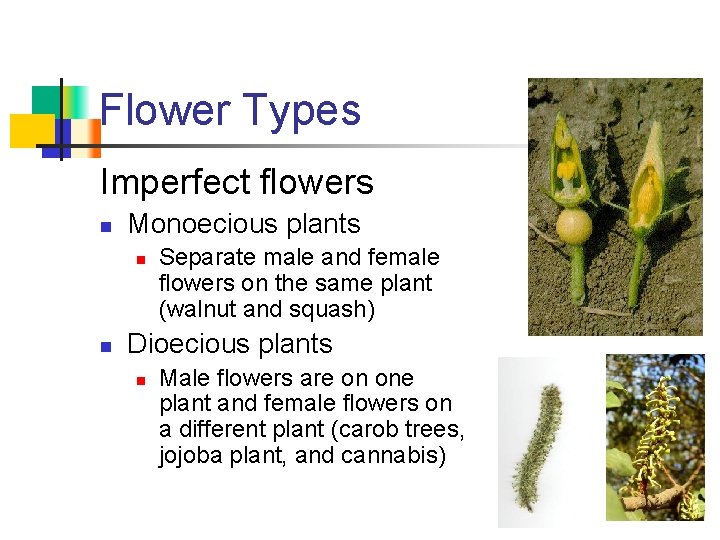
Flower Types Imperfect flowers n Monoecious plants n n Separate male and female flowers on the same plant (walnut and squash) Dioecious plants n Male flowers are on one plant and female flowers on a different plant (carob trees, jojoba plant, and cannabis)
Fertilization n The joining of the sperm nucleus with the egg to produce the zygote.
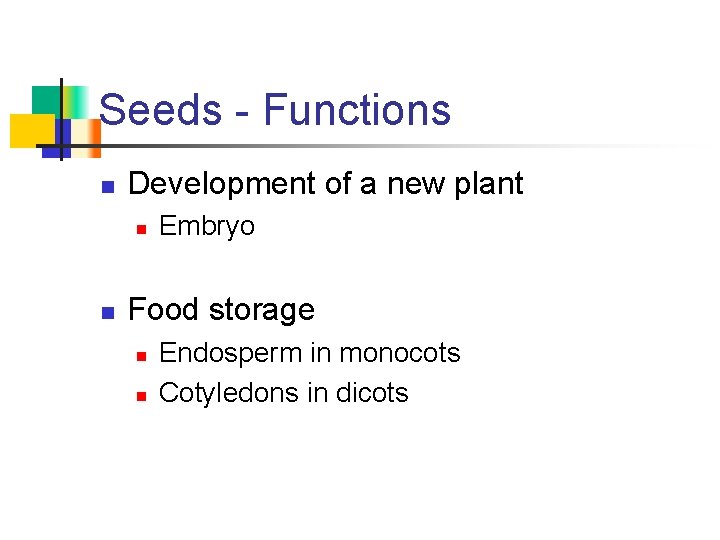
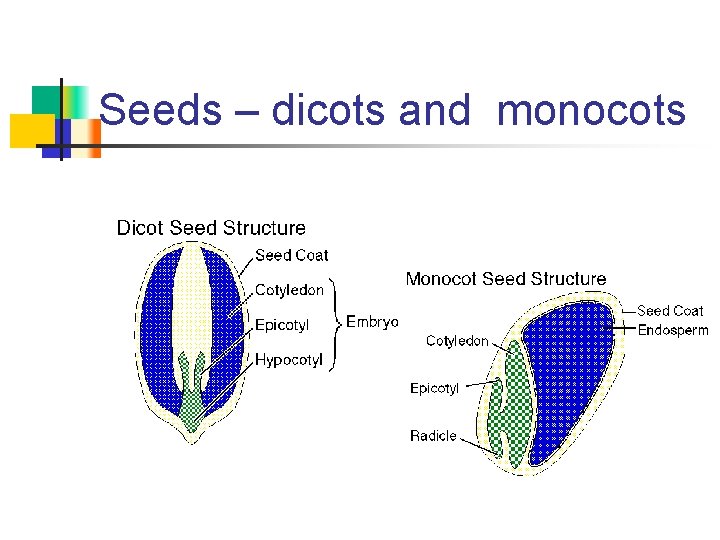
Seeds - Functions n Development of a new plant n n Embryo Food storage n n Endosperm in monocots Cotyledons in dicots
Seeds – dicots and monocots
Seed Germination n n Growth of the embryo using food storage Activated by n n n Water Scarification Smoke Sunlight etc.
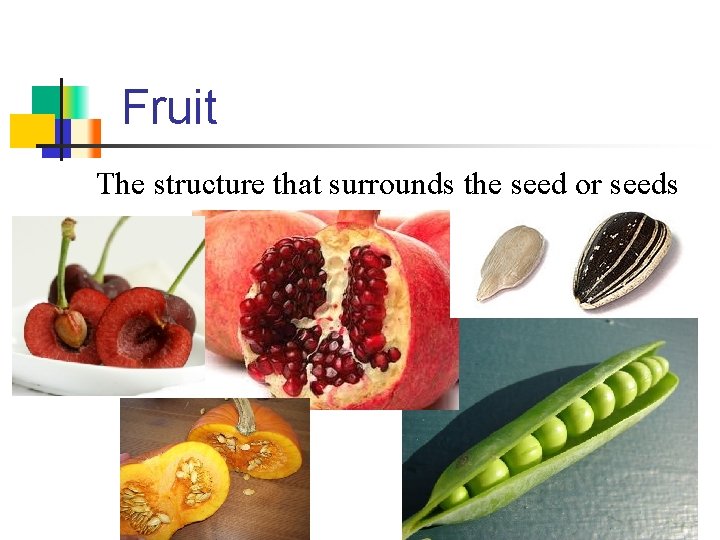
Fruit The structure that surrounds the seed or seeds
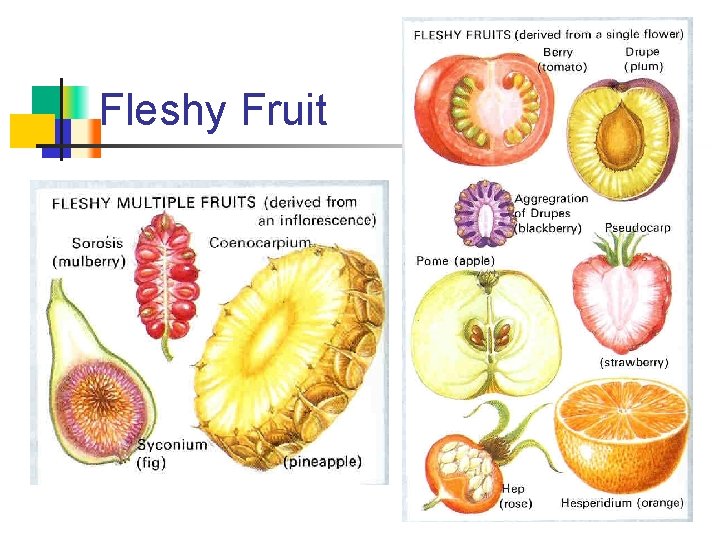
Fleshy Fruit
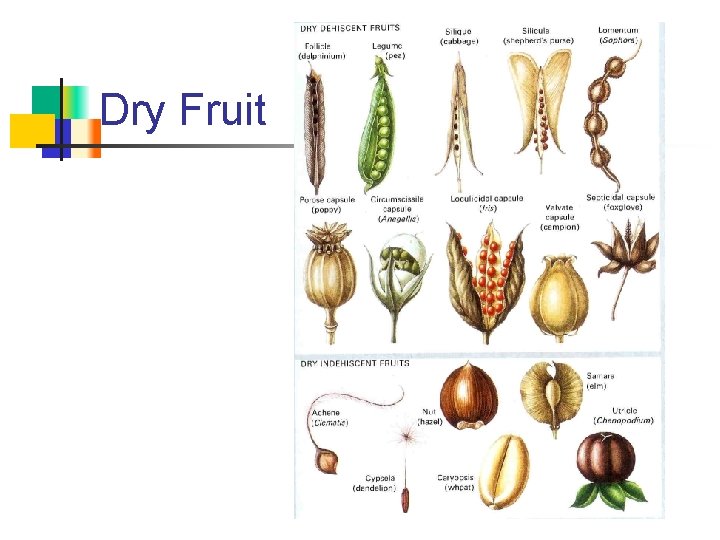
Dry Fruit
Fruit - Functions Surrounds the seed n Seed protection n Seed dispersion n Water n Wind n Animals n
Types of Fruit n Fleshy fruits n n Invite consumption. Seeds travel in or on the animal. Dry fruits n Appendages that catch wind, animals, or water for dispersal
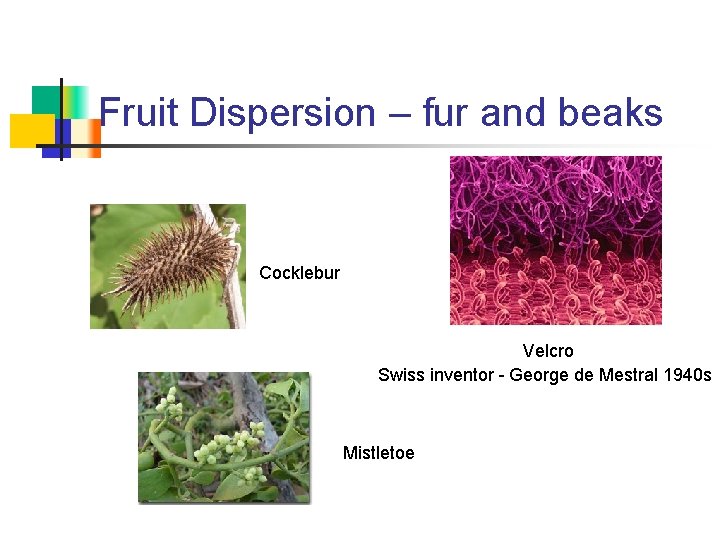
Fruit Dispersion – fur and beaks Cocklebur Velcro Swiss inventor - George de Mestral 1940 s Mistletoe
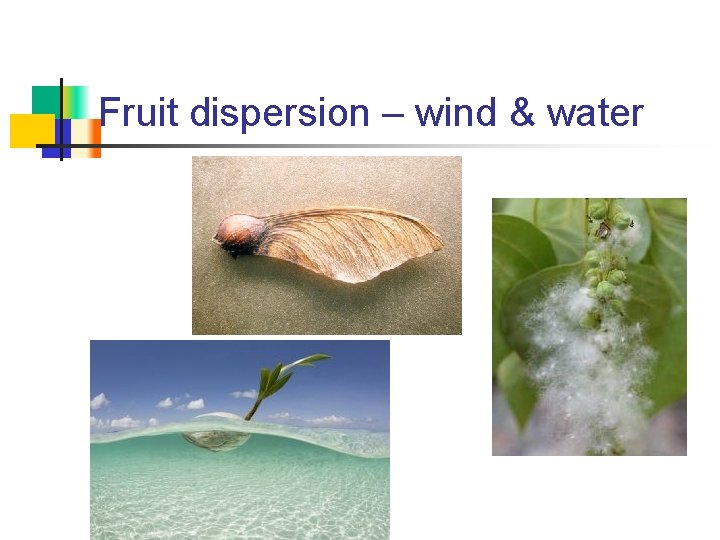
Fruit dispersion – wind & water
Fruit Ripening (hormones) n Auxins n n Gibberellins. n n Produce fruit without seeds (tomato and cucumber) Low doses prevent fruit drop High concentration activate fruit drop (apples, oranges) Increase the size of seedless grapes and stimulate barley seed germination Cytokinins n Slows down death used to prolong length of cut flowers.
Fruit Ripening (hormones) n Ethylene gas n n Promotes flowering in pineapple Stimulates fruit ripening (starch to sugar) apples, oranges, tomatoes, bananas, avocados. Pick green, store, apply ethylene to ripen.
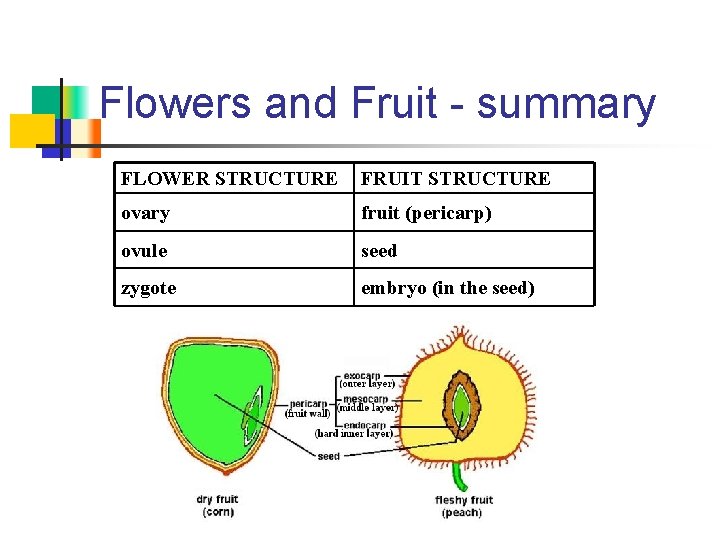
Flowers and Fruit - summary FLOWER STRUCTURE FRUIT STRUCTURE ovary fruit (pericarp) ovule seed zygote embryo (in the seed)