
PLANT STRUCTURE The Typical Plant Body The Root
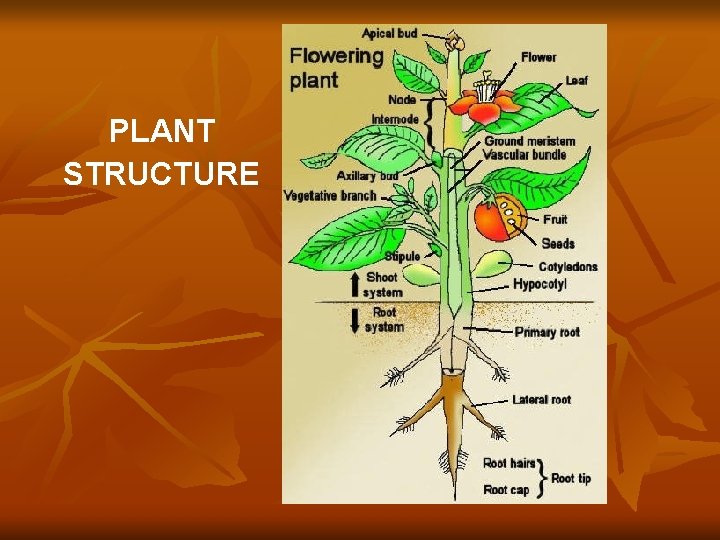
PLANT STRUCTURE
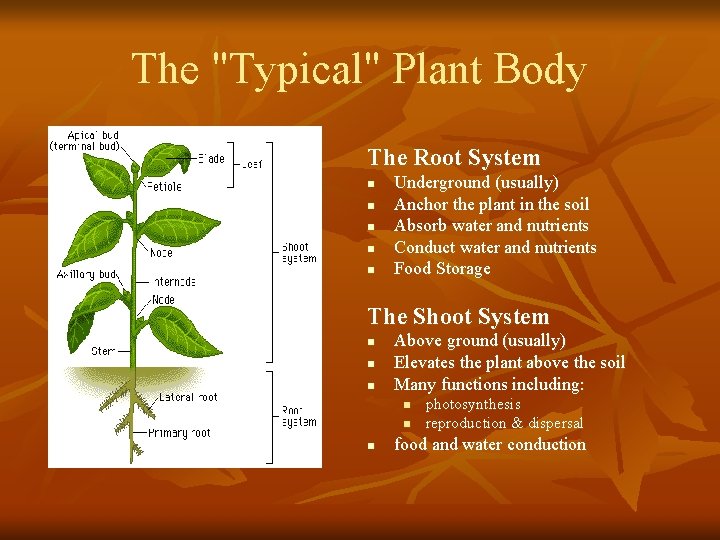
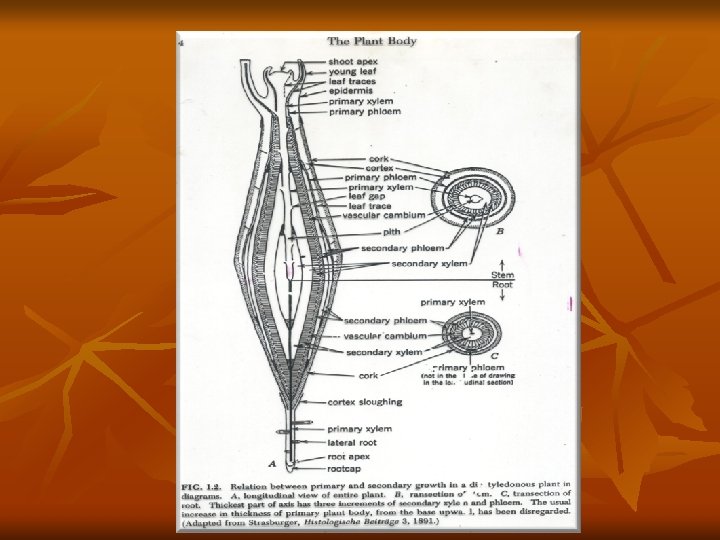
The "Typical" Plant Body The Root System n n n Underground (usually) Anchor the plant in the soil Absorb water and nutrients Conduct water and nutrients Food Storage The Shoot System n n n Above ground (usually) Elevates the plant above the soil Many functions including: n n n photosynthesis reproduction & dispersal food and water conduction
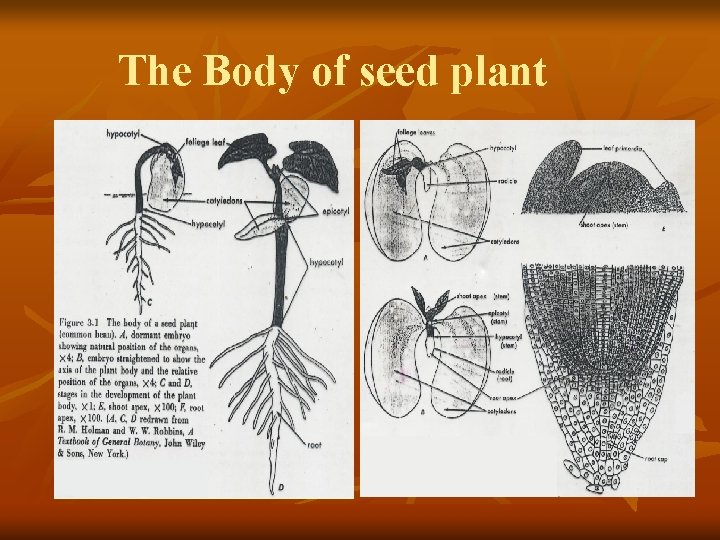
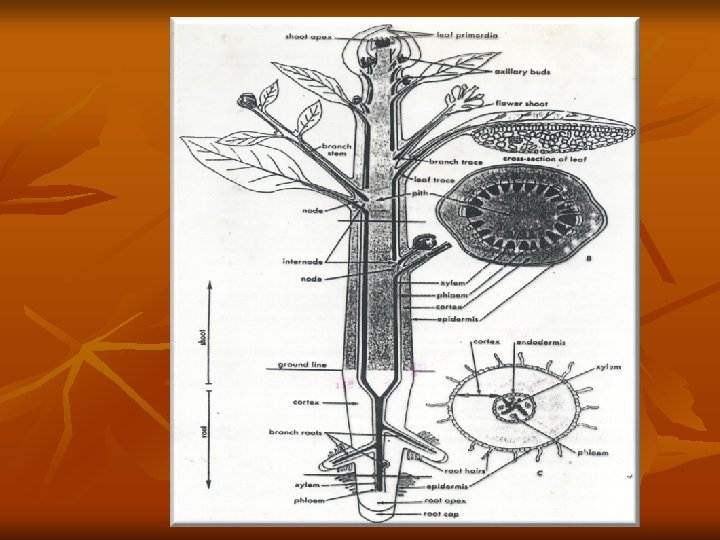
The Body of seed plant
Plant Structure A. Classification of Plants 1. Some plants are non-vascular (=bryophytes) 2. Some plants are seedless, vascular plants (e. g. , ferns) 3. Most plants are seed-bearing, vascular plants - gymnosperms (no flowers, e. g. , conifers) - angiosperms (all produce flowers: dicots and monocots) n B. Structure of Flowering Plants (= angiosperms)

Angiosperms, flowering plants, are divided into two groups: monocots and dicots
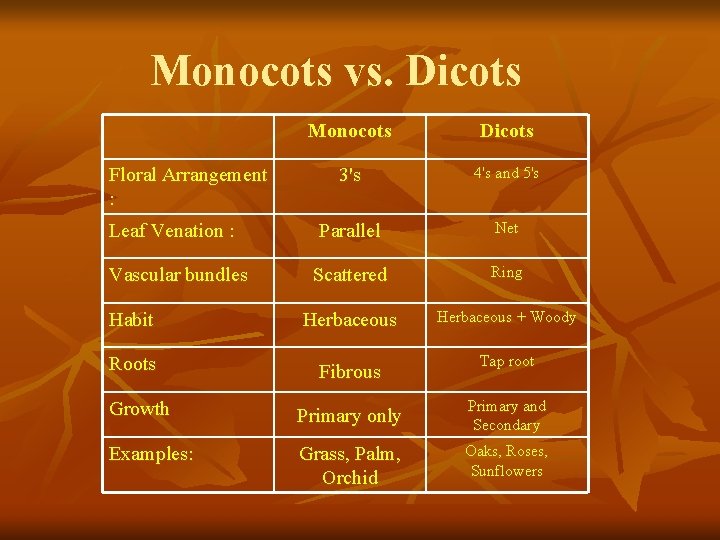
Monocots vs. Dicots Monocots Dicots 3's 4's and 5's Parallel Net Scattered Ring Habit Herbaceous + Woody Roots Fibrous Floral Arrangement : Leaf Venation : Vascular bundles Tap root Growth Primary only Primary and Secondary Examples: Grass, Palm, Orchid Oaks, Roses, Sunflowers
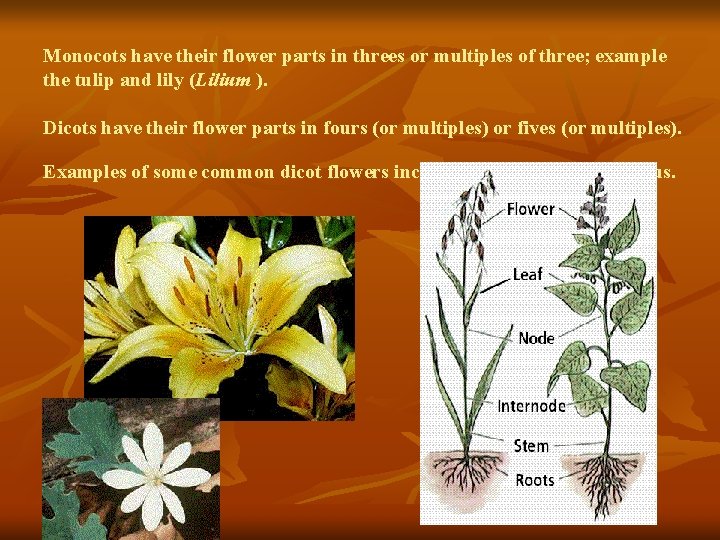
Monocots have their flower parts in threes or multiples of three; example the tulip and lily (Lilium ). Dicots have their flower parts in fours (or multiples) or fives (or multiples). Examples of some common dicot flowers include the geranium, and citrus.
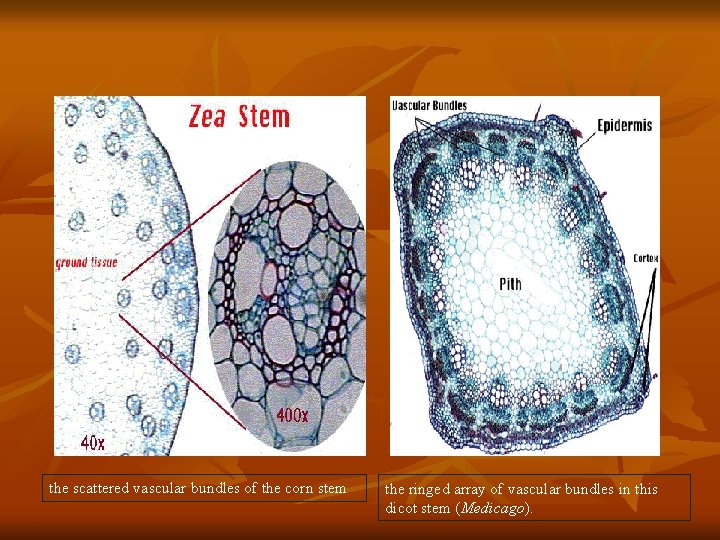
the scattered vascular bundles of the corn stem the ringed array of vascular bundles in this dicot stem (Medicago).
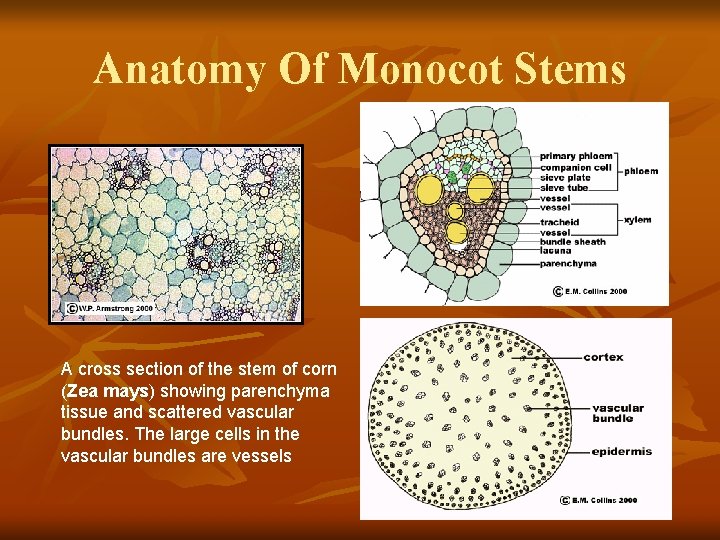
Anatomy Of Monocot Stems A cross section of the stem of corn (Zea mays) showing parenchyma tissue and scattered vascular bundles. The large cells in the vascular bundles are vessels
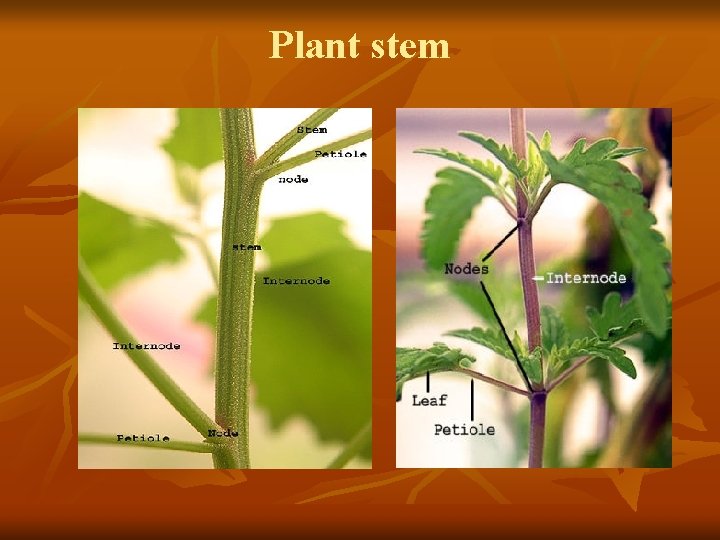
Plant stem

Spermatophytes n n Includes flowering or seed-bearing plants. The two subdivisions are…. n n Gymnosperms Angiosperms

Plant Characteristics
Identifying Plants n Physical characteristics are used to identify plants which include…. n n n Life Cycle Form Foliage Retention Plant Parts Use & Location
Life Cycle n Annuals n n one Biennials n n Plants that complete their life cycle in year. Plants that complete their life cycle two years. Perennials n Plants that live more than two years. in
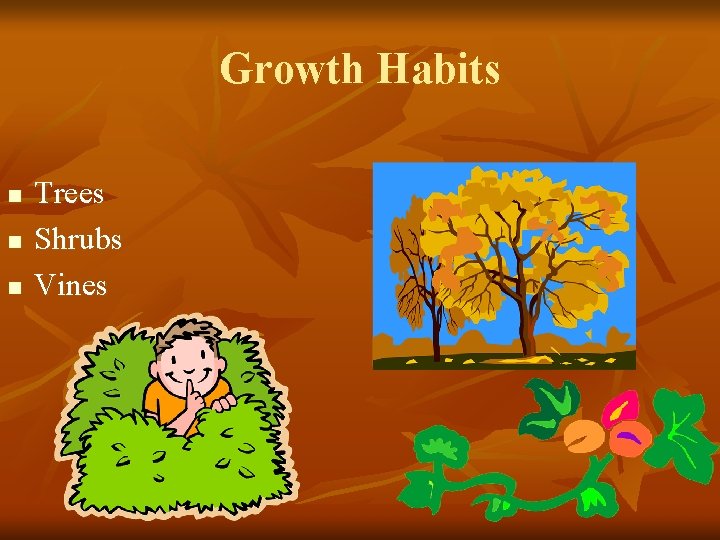
Growth Habits n n n Trees Shrubs Vines
Growth Forms n n n Columnar Spreading Weeping n n n Round Oval Pyramidal
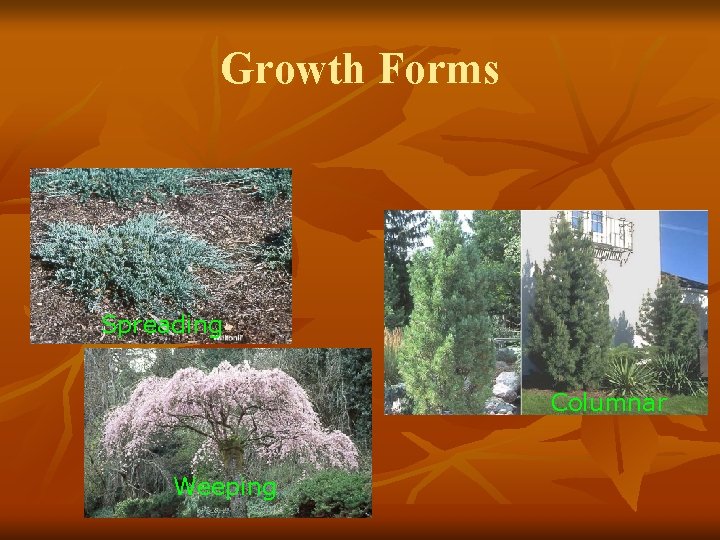
Growth Forms Spreading Columnar Weeping
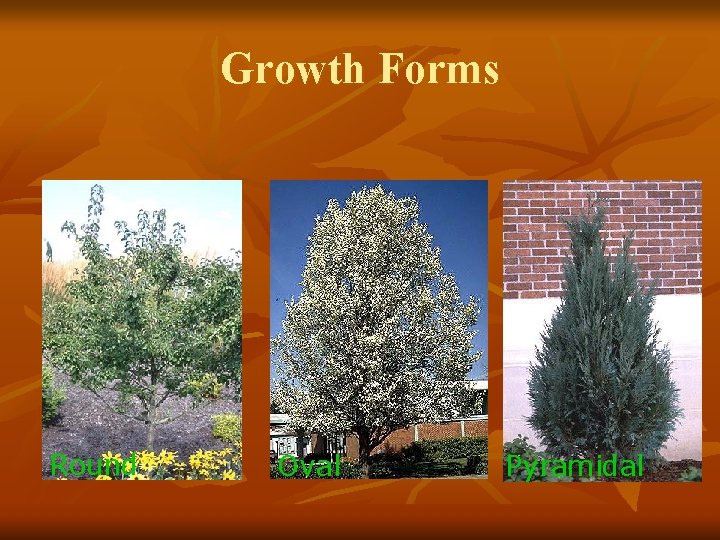
Growth Forms Round Oval Pyramidal
Foliage Retention n Deciduous n n Loses leaves during the dormant season. Evergreen n Keeps leaves and remains green year-round.
- Slides: 21