
Plant Structure and Function Stem Support leaves Transport







- Slides: 22
Plant Structure and Function Stem
• Support leaves • Transport materials • Provide storage
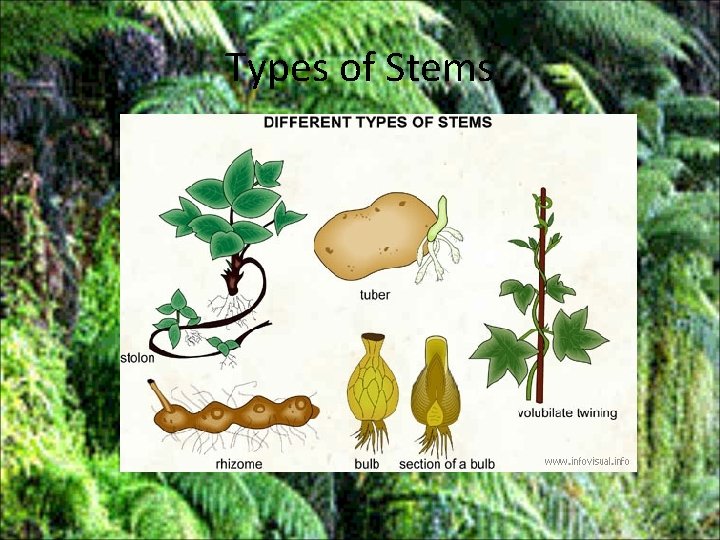
Types of Stems
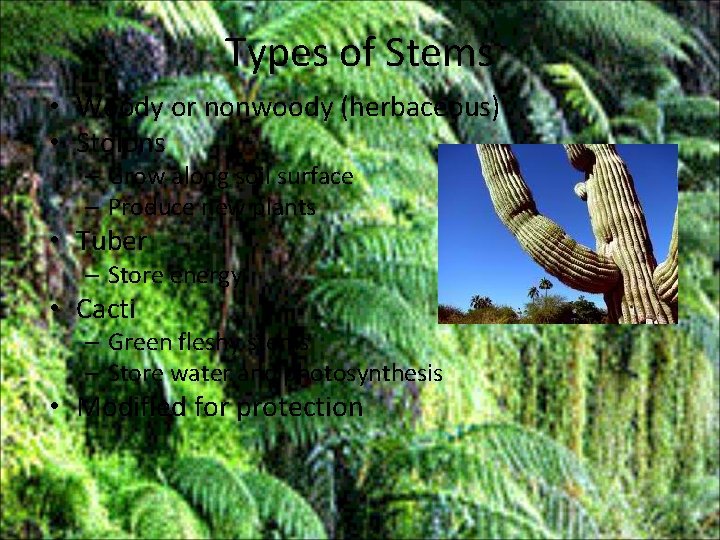
Types of Stems • Woody or nonwoody (herbaceous) • Stolons – Grow along soil surface – Produce new plants • Tuber – Store energy • Cacti – Green fleshy stems – Store water and photosynthesis • Modified for protection
Stem Structures • Did you know that a sign nailed 2 m (7 ft) high on a tree will remain at that height, even though the tree may grow much taller?
Stem Structure • Grow in length only at tip • Apical meristems – Primary tissues • Lateral meristems – Secondary growth (diameter)
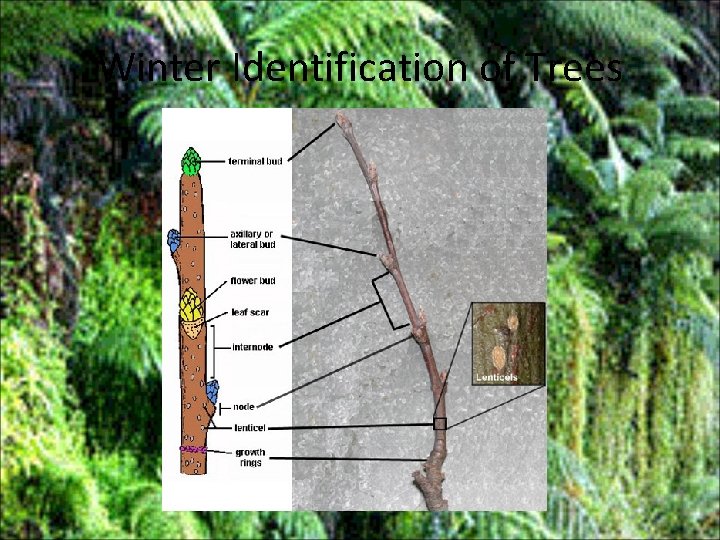
Stem Features • Node – Leaf attaches to stem • Internode – Space between nodes – Lateral bud • Bud – Stem or leaf – Apical meristem enclosed by bud scales
Winter Identification of Trees
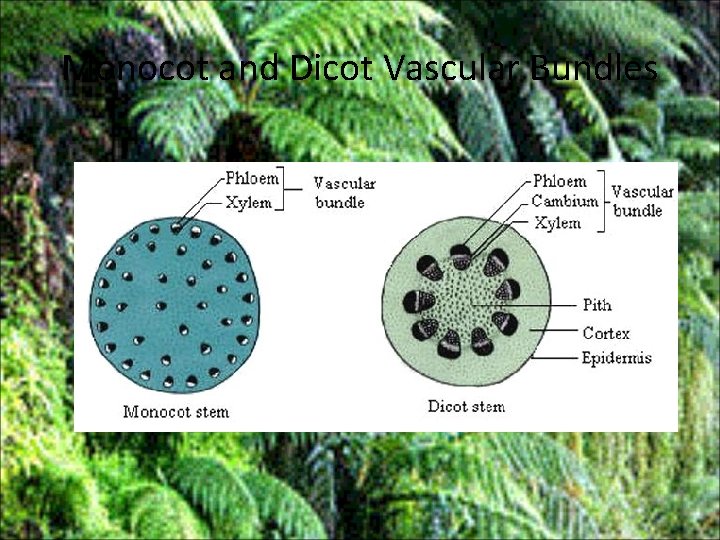
Primary Growth in Stems • Apical meristem – Dermal, protect plant – Ground, cortex and pith • Pith located at center of stem – Vascular tissue, occurs in bundles • Xylem (inside) and phloem (outside) – Monocots v. b. scattered – Dicots v. b. rings
Monocot and Dicot Vascular Bundles
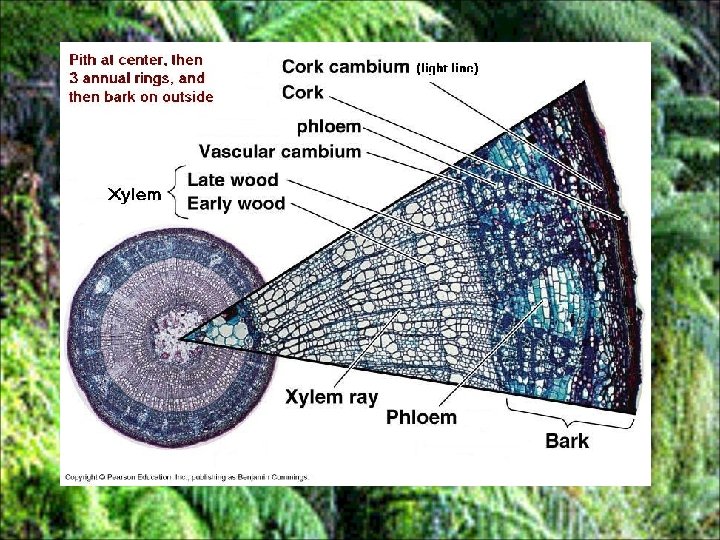
Secondary Growth in Stems • Stems increase in thickness – Cell division in vascular cambium – Dicot and gymnosperms • Stem forms b/w xylem and phloem in vascular bundle – Vascular cambium • produces 20 xylem (inside) and phloem (outside) – 20 xylem represents the wood of the plant • New cambium cells increases stems diameter
Stem Growth pg 581 • http: //academic. kellogg. edu/herbrandsonc/bio 111/stems. htm
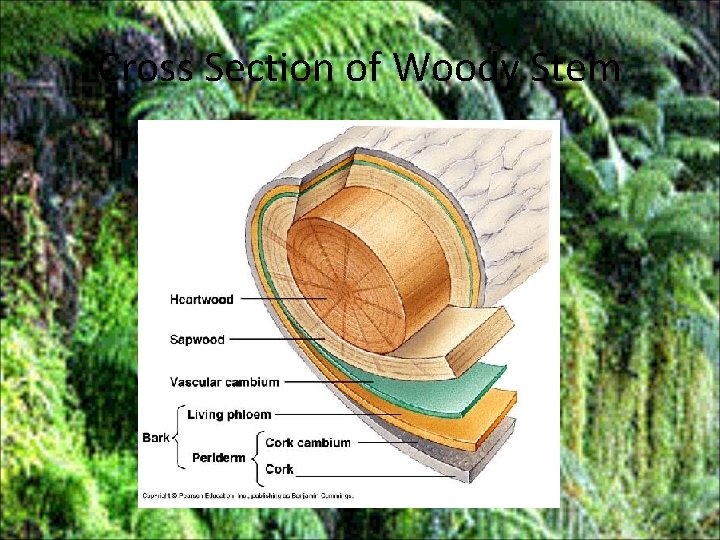
• Older xylem stop producing water – Darken wood called heartwood • Will increase in diameter – Lighter – colored wood called sapwood • Stays about the same • Phloem near outside of stem – Bark • Cork, cork cambium, and phloem – Protective layer – Cork cells die at maturaty • Cannot elongate and will rupture as stem increases in diameter • Bark pattern (maples and oaks)
Cross Section of Woody Stem
Annual Rings • Springwood – Water plentiful – Vas. Cambium form new xylem cells – Wide and thin cell walls • Summerwood – Water scarce – Vas. Cambium forms smaller thicker cells • Difference causes a change in appearance • One ring each year used to determine age
Stem Functions • Transport nutrients and water • Store these nutrients • Support leaves
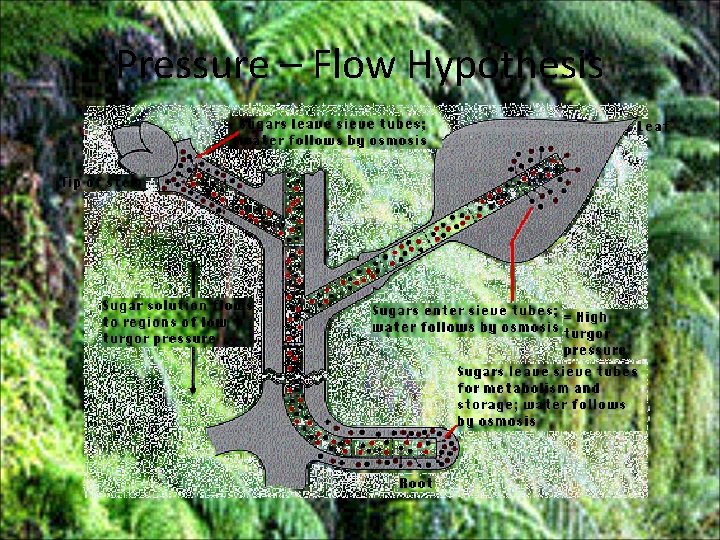
Translocation • Movement of carbohydrates through a plant • Source to sink – Source (storage) – Sink (usage) • Pressure – flow hypothesis – Actively transported into sieve tubes – Water transported by osmosis
Pressure – Flow Hypothesis
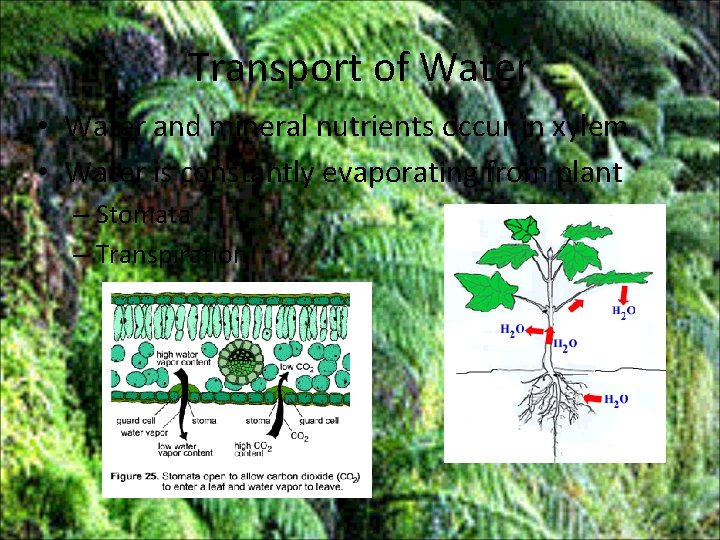
Transport of Water • Water and mineral nutrients occur in xylem • Water is constantly evaporating from plant – Stomata – Transpiration
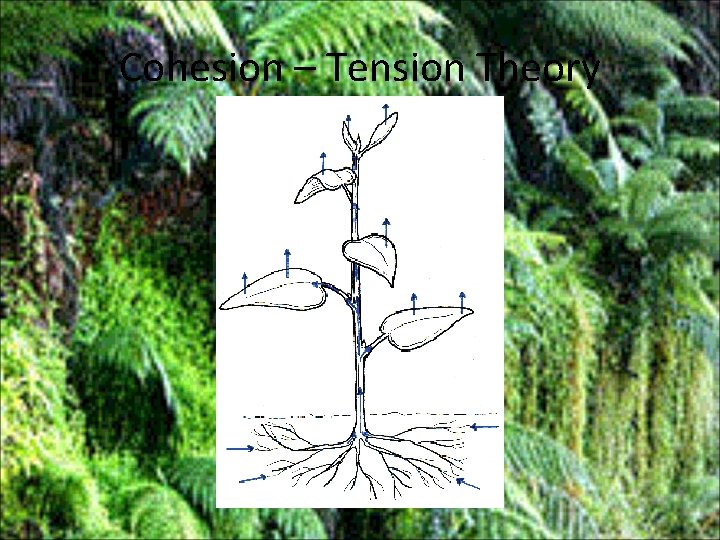
• Cohesion – tension theory – Water is pulled up the stem xylem by the strong attraction of water molecules to each other and the wall of the xylem – Cohesion and adhesion properties – Tug – n – pull, from roots up the xylem
Cohesion – Tension Theory