
Plant Structure and Function Is It a Stem
- Slides: 33
Plant Structure and Function
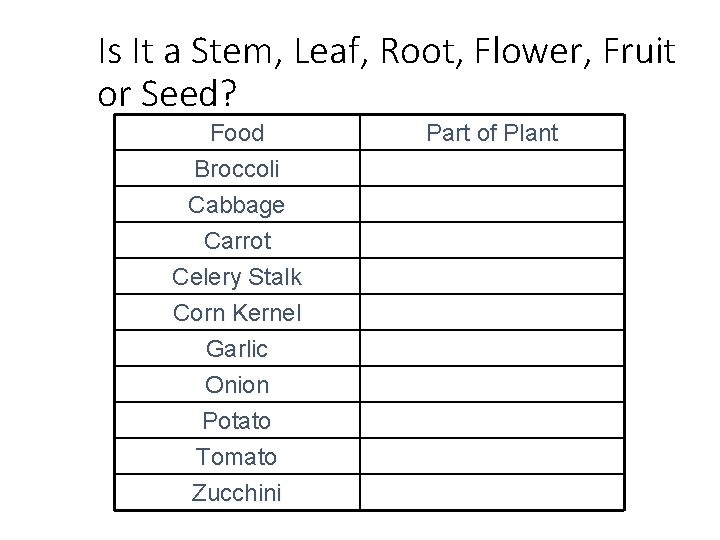
Is It a Stem, Leaf, Root, Flower, Fruit or Seed? Food Broccoli Cabbage Carrot Celery Stalk Corn Kernel Garlic Onion Potato Tomato Zucchini Part of Plant
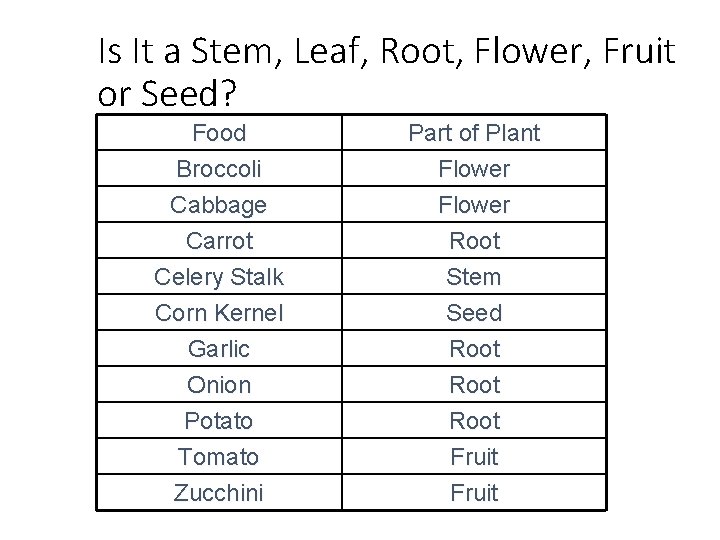
Is It a Stem, Leaf, Root, Flower, Fruit or Seed? Food Broccoli Cabbage Carrot Part of Plant Flower Root Celery Stalk Corn Kernel Garlic Onion Potato Tomato Zucchini Stem Seed Root Fruit
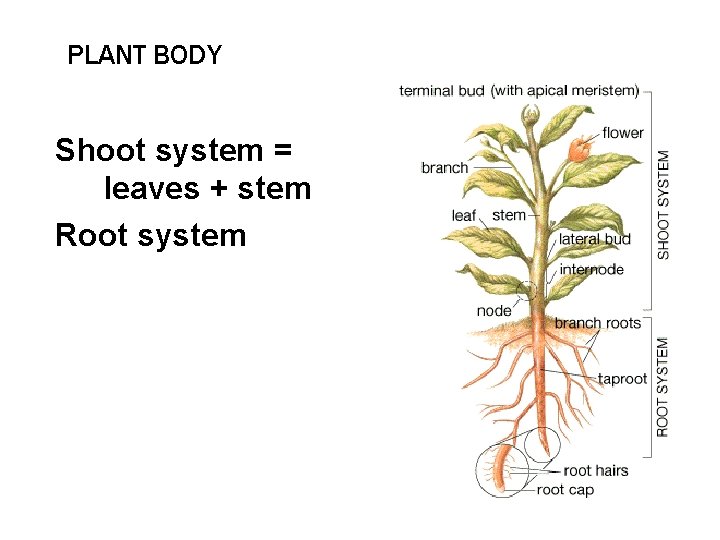
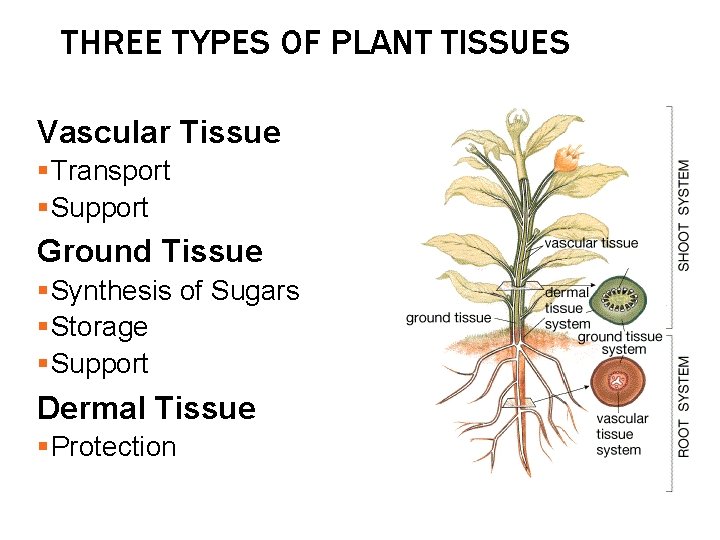
PLANT BODY Shoot system = leaves + stem Root system
THREE TYPES OF PLANT TISSUES Vascular Tissue §Transport §Support Ground Tissue §Synthesis of Sugars §Storage §Support Dermal Tissue §Protection
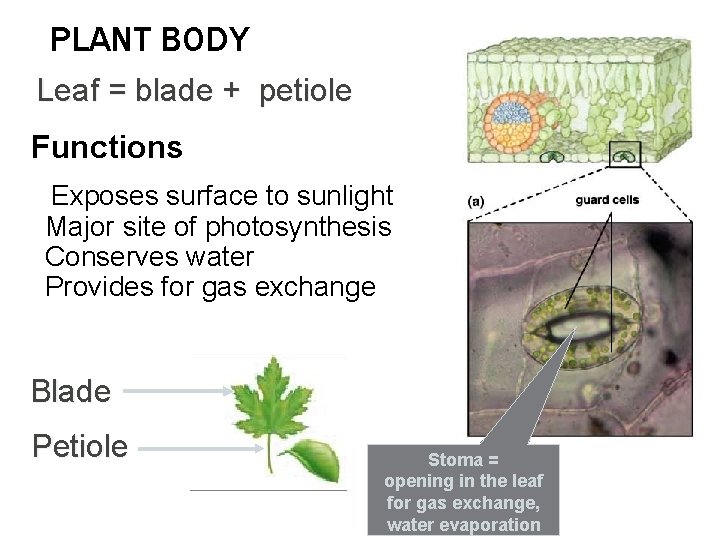
PLANT BODY Leaf = blade + petiole Functions Exposes surface to sunlight Major site of photosynthesis Conserves water Provides for gas exchange Blade Petiole Stoma = opening in the leaf for gas exchange, water evaporation
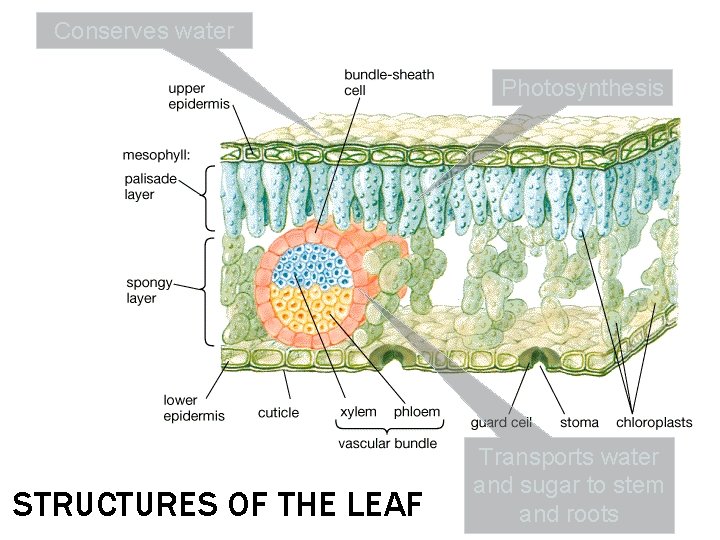
Conserves water Photosynthesis STRUCTURES OF THE LEAF Transports water and sugar to stem and roots
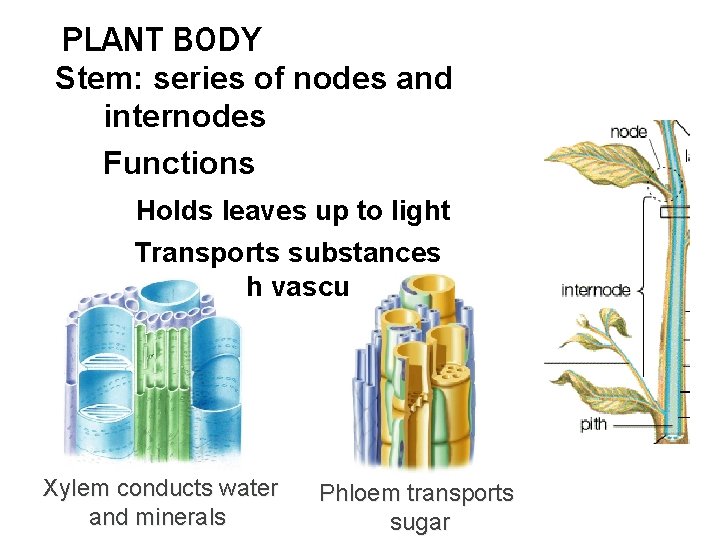
PLANT BODY Stem: series of nodes and internodes Functions Holds leaves up to light Transports substances through vascular tissue Xylem conducts water and minerals Phloem transports sugar
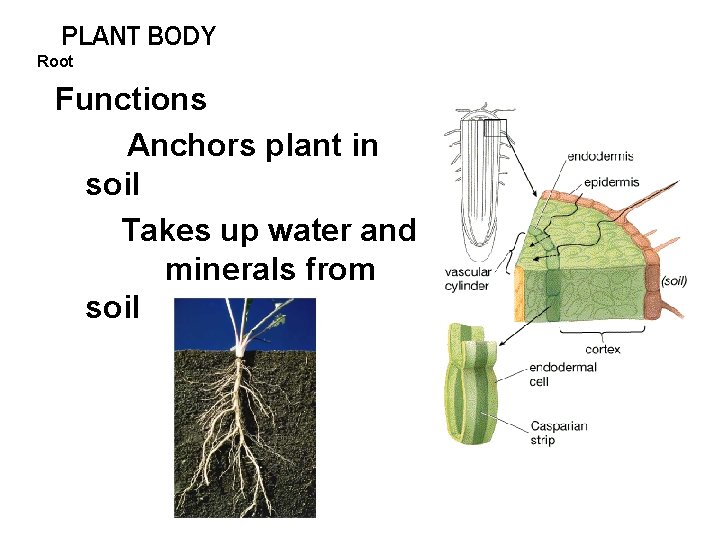
PLANT BODY Root Functions Anchors plant in soil Takes up water and minerals from soil
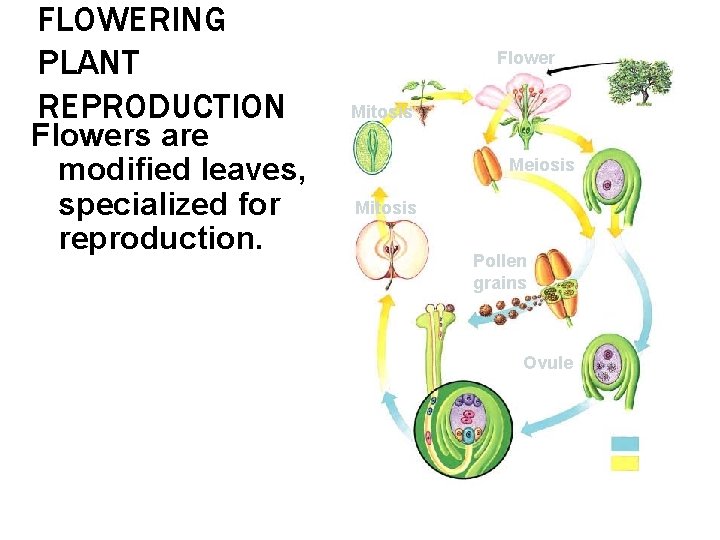
FLOWERING PLANT REPRODUCTION Flowers are modified leaves, specialized for reproduction. Flower Mitosis Meiosis Mitosis Pollen grains Ovule
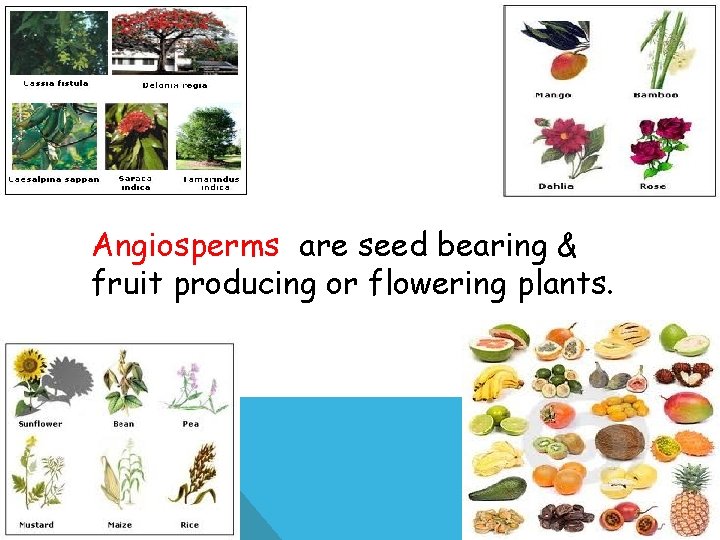
Angiosperms are seed bearing & fruit producing or flowering plants.
Flowers Come in many different shapes, sizes and colors, but they all have the same functions: Ø help plants reproduce. Ø where seeds are made.
ØFlowers are the sexual reproductive organs of plants. ØAll flowers, regardless of variety, have the function of seed formation and the production of more plants. ØFlowers contain both non-reproductive and reproductive structures.
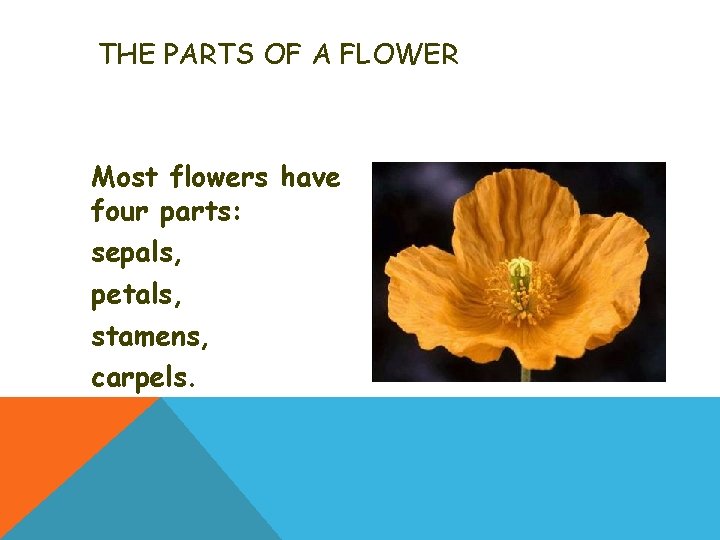
THE PARTS OF A FLOWER Most flowers have four parts: sepals, petals, stamens, carpels.
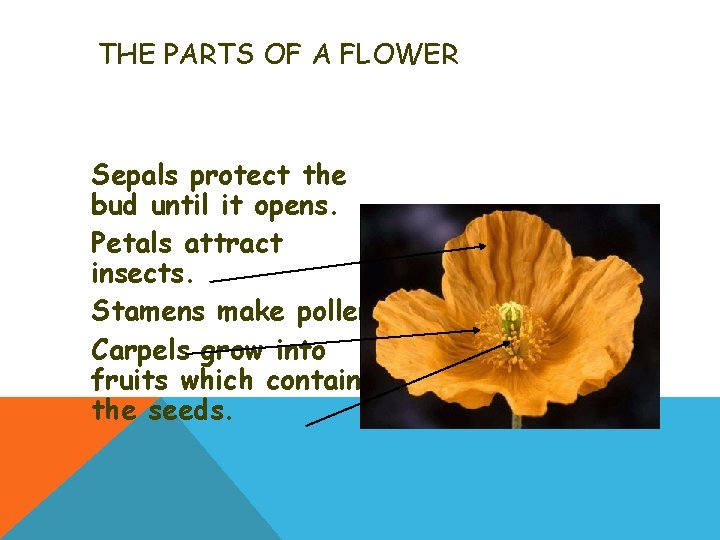
THE PARTS OF A FLOWER Sepals protect the bud until it opens. Petals attract insects. Stamens make pollen. Carpels grow into fruits which contain the seeds.
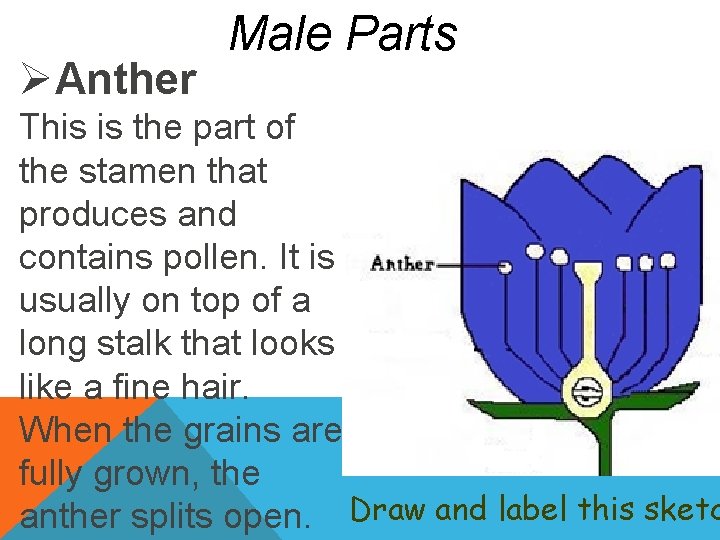
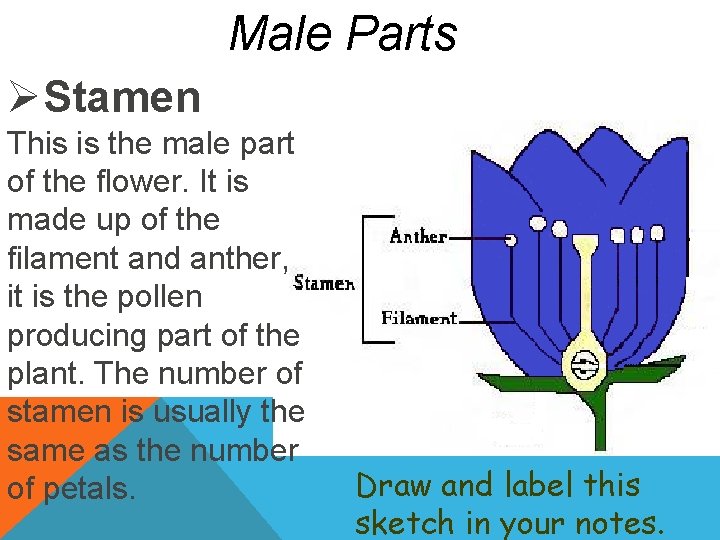
ØAnther Male Parts This is the part of the stamen that produces and contains pollen. It is usually on top of a long stalk that looks like a fine hair. When the grains are fully grown, the anther splits open. Draw and label this sketc
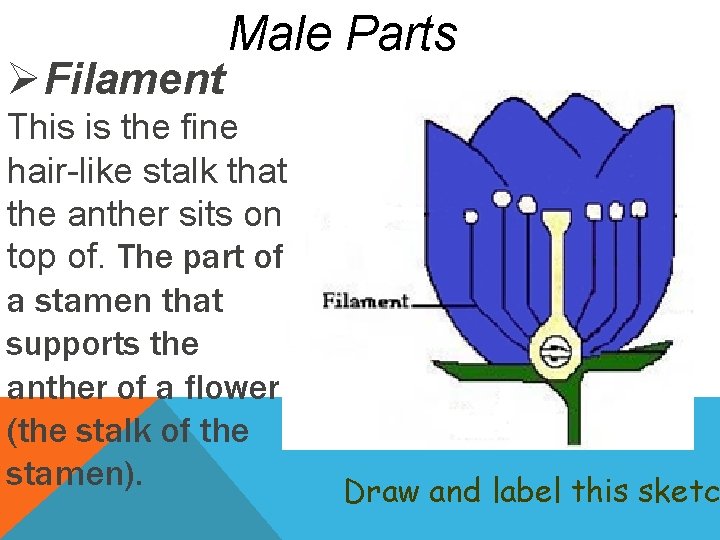
ØFilament Male Parts This is the fine hair-like stalk that the anther sits on top of. The part of a stamen that supports the anther of a flower (the stalk of the stamen). Draw and label this sketc
Male Parts ØStamen This is the male part of the flower. It is made up of the filament and anther, it is the pollen producing part of the plant. The number of stamen is usually the same as the number of petals. Draw and label this sketch in your notes.
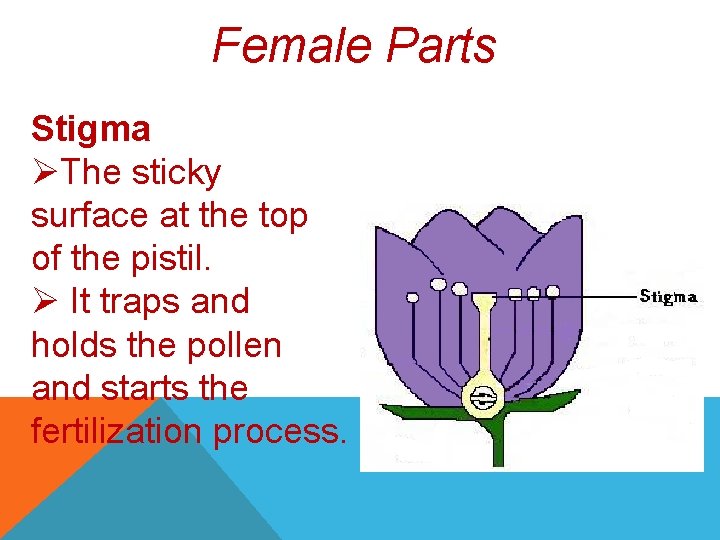
Female Parts Stigma ØThe sticky surface at the top of the pistil. Ø It traps and holds the pollen and starts the fertilization process.
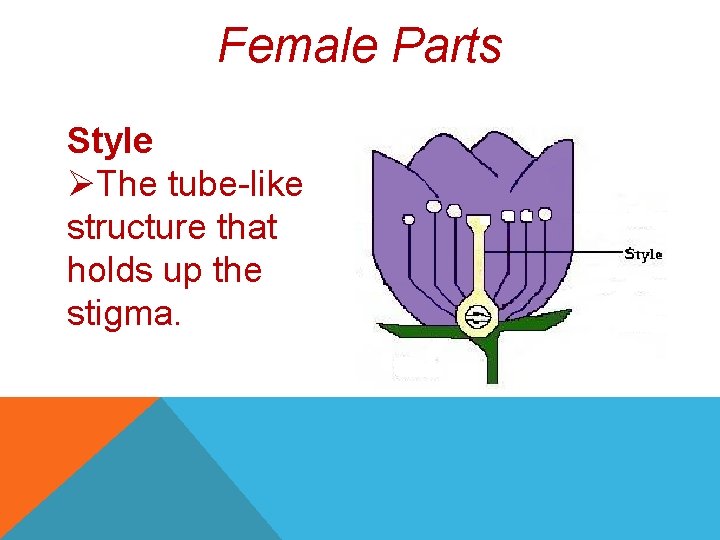
Female Parts Style ØThe tube-like structure that holds up the stigma.
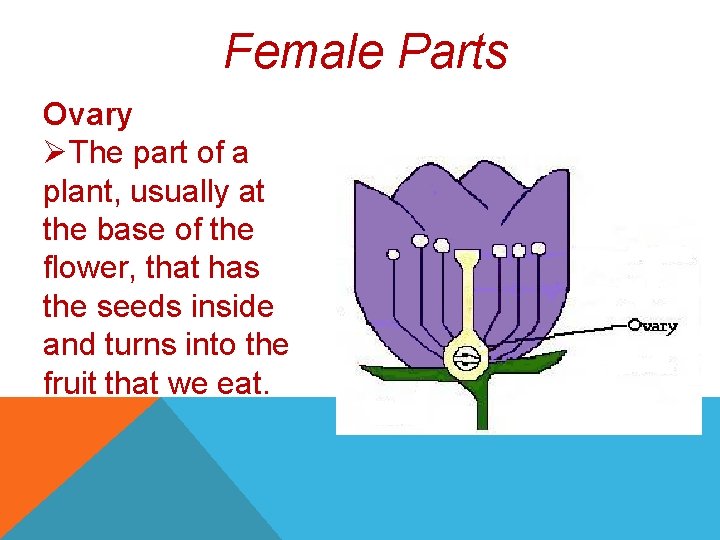
Female Parts Ovary ØThe part of a plant, usually at the base of the flower, that has the seeds inside and turns into the fruit that we eat.
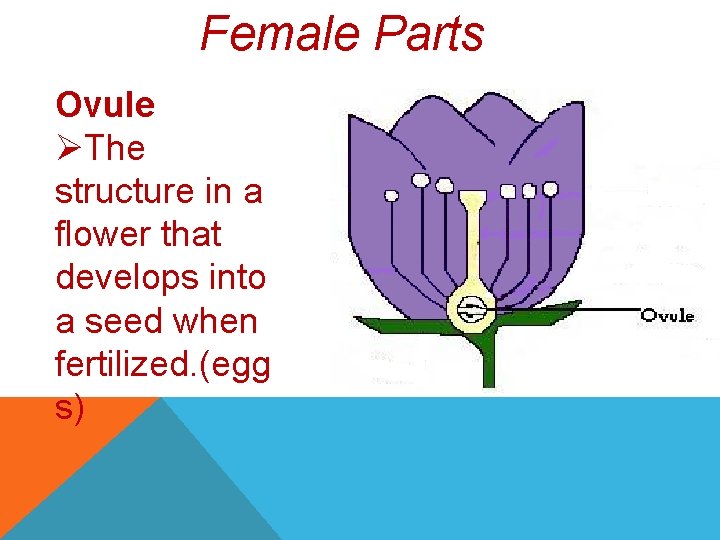
Female Parts Ovule ØThe structure in a flower that develops into a seed when fertilized. (egg s)
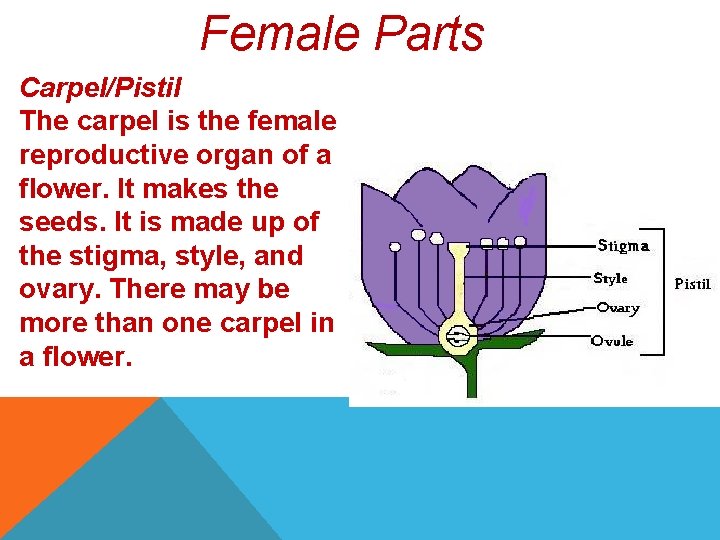
Female Parts Carpel/Pistil The carpel is the female reproductive organ of a flower. It makes the seeds. It is made up of the stigma, style, and ovary. There may be more than one carpel in a flower.
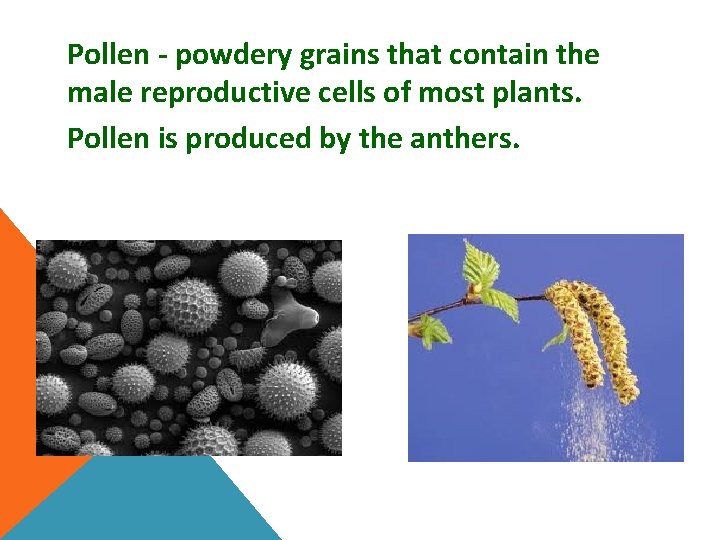
Pollen - powdery grains that contain the male reproductive cells of most plants. Pollen is produced by the anthers.
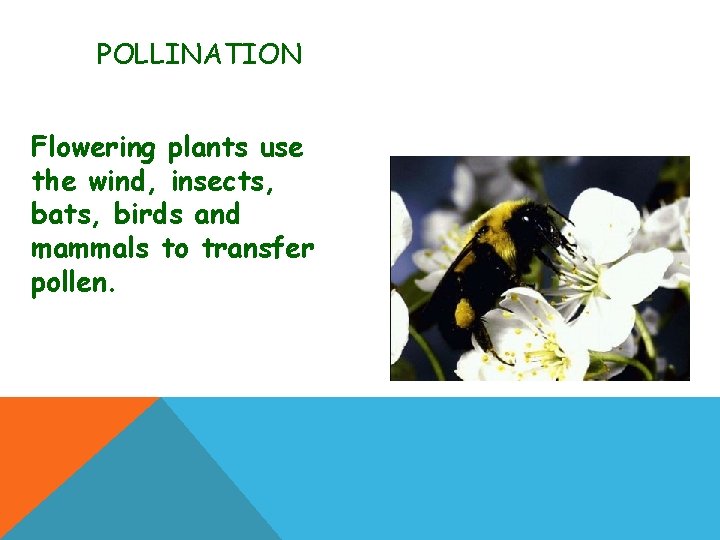
POLLINATION Flowering plants use the wind, insects, bats, birds and mammals to transfer pollen.
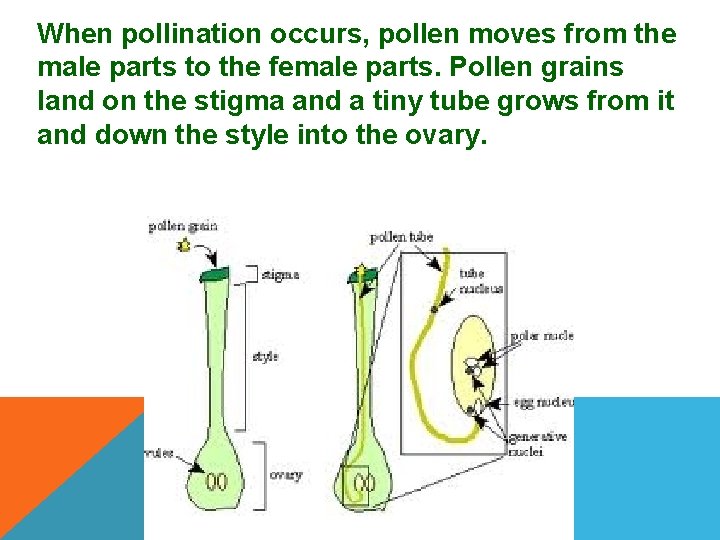
When pollination occurs, pollen moves from the male parts to the female parts. Pollen grains land on the stigma and a tiny tube grows from it and down the style into the ovary.
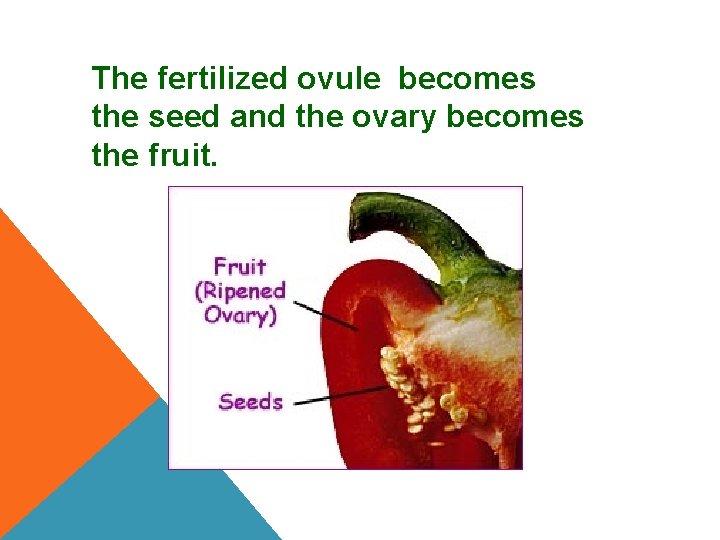
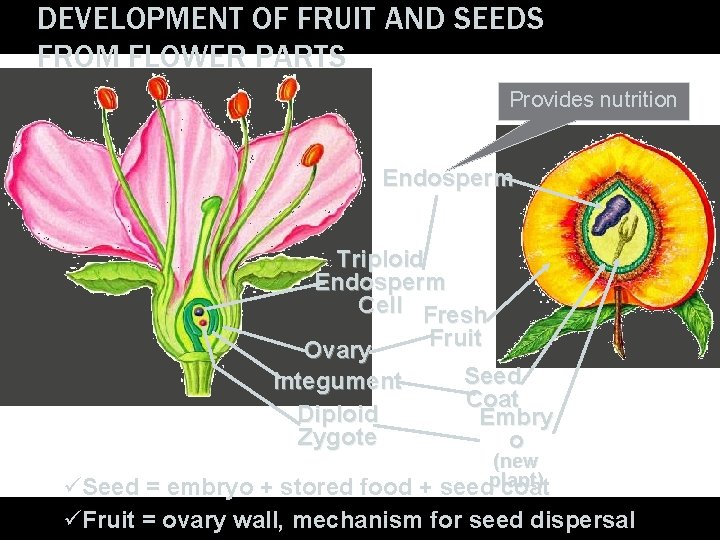
The fertilized ovule becomes the seed and the ovary becomes the fruit.
Pollen is the powdery grains that contain male reproductive cells of most plants produced by anther. Flowering plants use the wind , insects bats, birds and mammals to transfer pollen, When pollination occurs, pollen moves from the male parts to the female parts
. Pollen grains land on the stigma and a tiny tube grows from it and down the style into the ovary. The fertilized ovule becomes the seed and the ovary become the fruit.
Pollen grains land on the stigma and a tiny tube grows from it and down the style into the ovary. The fertilized ovule becomes the seed and the ovary become the fruit.
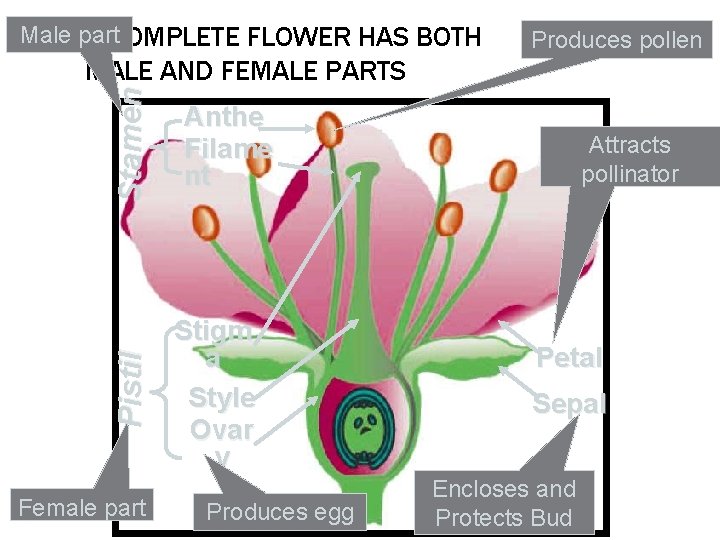
Male part A COMPLETE FLOWER HAS BOTH Produces pollen Pistil Stamen MALE AND FEMALE PARTS Female part Anthe r. Filame nt Stigm a Style Ovar y Produces egg Attracts pollinator Petal Sepal Encloses and Protects Bud
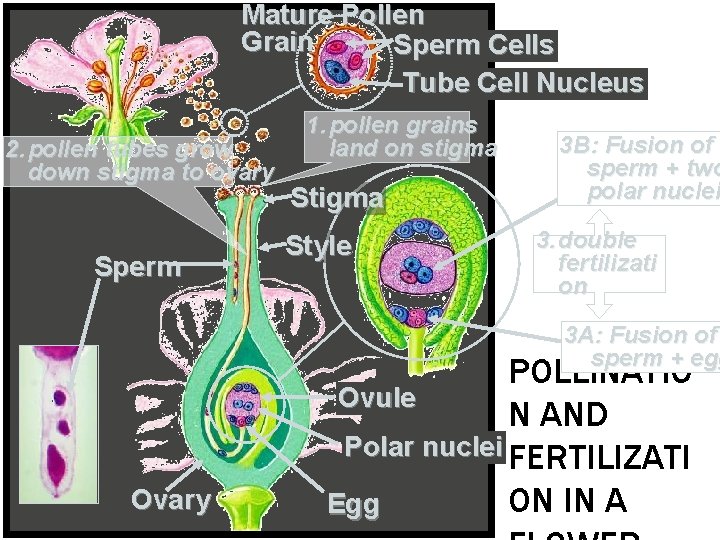
Mature Pollen Grain Sperm Cells Tube Cell Nucleus 2. pollen tubes grow down stigma to ovary Sperm 1. pollen grains land on stigma Style 3 B: Fusion of 2 sperm + two polar nuclei 3. double fertilizati on 3 A: Fusion of sperm + egg Ovary POLLINATIO Ovule N AND Polar nuclei FERTILIZATI ON IN A Egg
DEVELOPMENT OF FRUIT AND SEEDS FROM FLOWER PARTS Provides nutrition Endosperm Triploid Endosperm Cell Fresh Fruit Ovary Seed Integument Coat Diploid Embry Zygote o (new seedplant) coat üSeed = embryo + stored food + üFruit = ovary wall, mechanism for seed dispersal