
Plant Secondary Compounds Stimulating Beverages PBIO 006 Summer
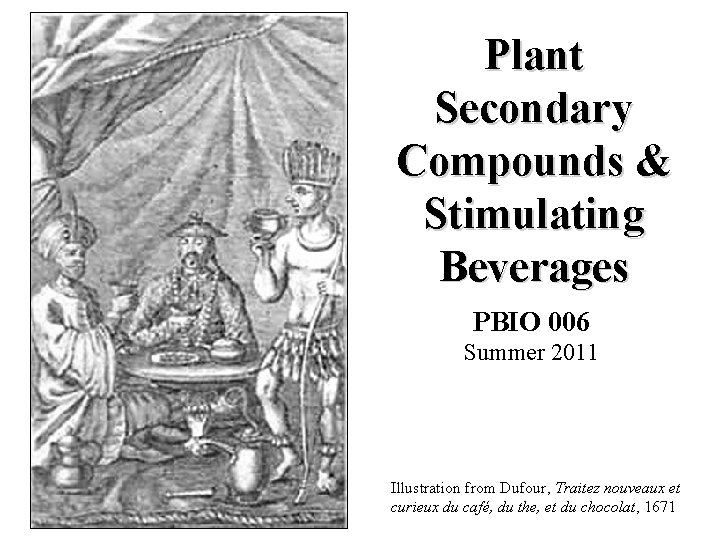
Plant Secondary Compounds & Stimulating Beverages PBIO 006 Summer 2011 Illustration from Dufour, Traitez nouveaux et curieux du café, du the, et du chocolat, 1671

Secondary Compounds Q. What are plant secondary compounds, a. k. a. secondary metabolites? Q. What are primary metabolites? A. Primary metabolites are major products of plant metabolism. They are necessary to the life of the cell and play a critical role in plant growth and function. Examples include carbohydrates, proteins, and fats and oils.
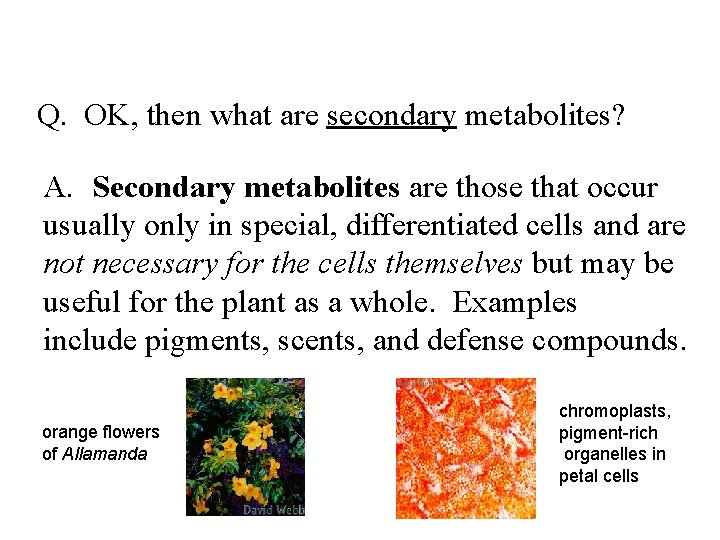
Q. OK, then what are secondary metabolites? A. Secondary metabolites are those that occur usually only in special, differentiated cells and are not necessary for the cells themselves but may be useful for the plant as a whole. Examples include pigments, scents, and defense compounds. orange flowers of Allamanda chromoplasts, pigment-rich organelles in petal cells
Q. What do secondary compounds do in the life of the plant? A. Their role appears to be ecological: they serve as herbivore deterrents, pollinator attractants, etc.
These are the compounds that provide: • • • Stimulants Medicines Poisons Hallucinogens Herbs, spices, and perfumes and a host of others
Classes of Plant Secondary Compounds: • • • Terpenoids/Essential Oils Phenolics Glycosides Alkaloids and others
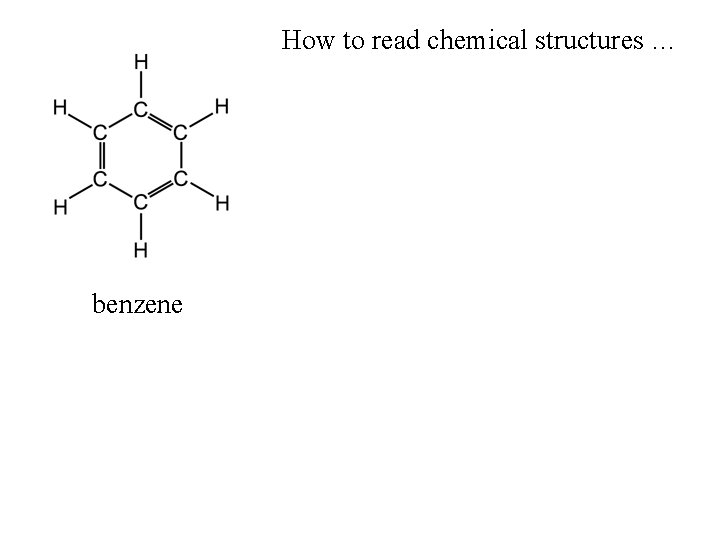
How to read chemical structures … phenol benzene also benzene
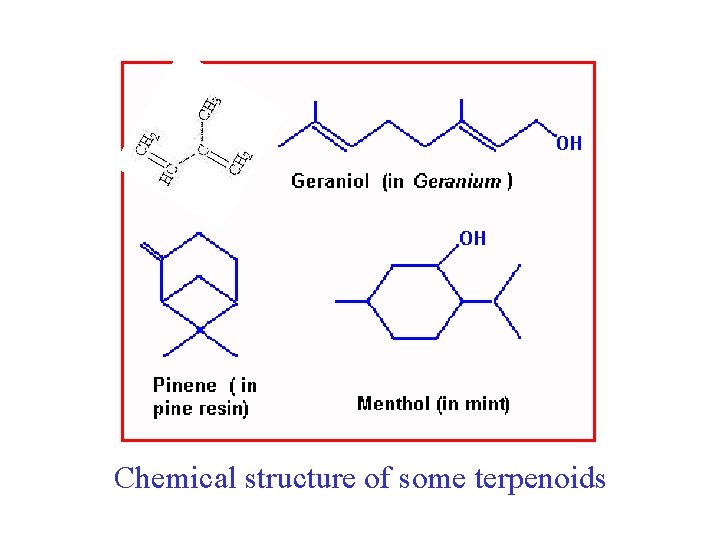
Chemical structure of some terpenoids
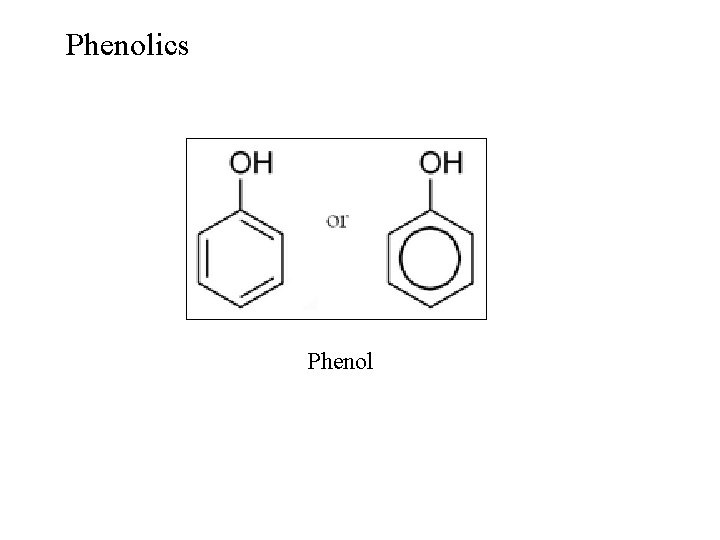
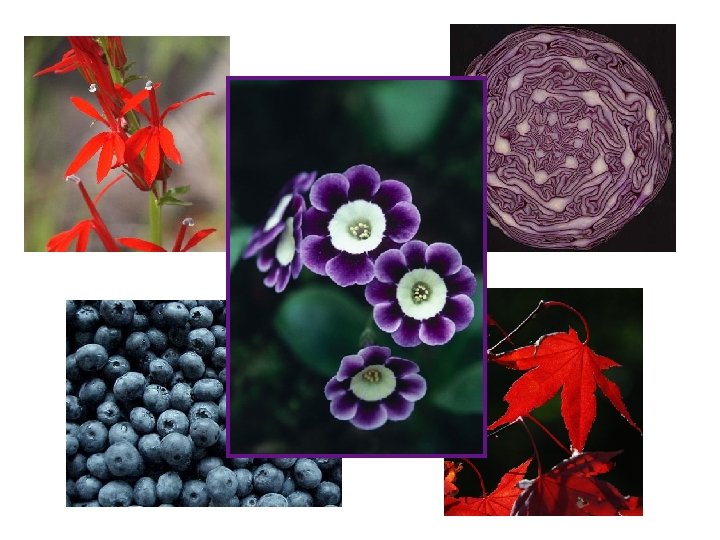
Phenolics Phenol
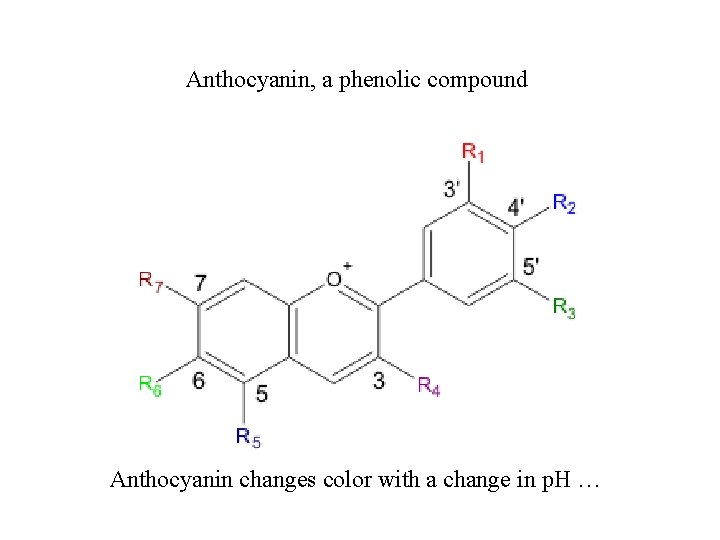
Anthocyanin, a phenolic compound Anthocyanin changes color with a change in p. H …
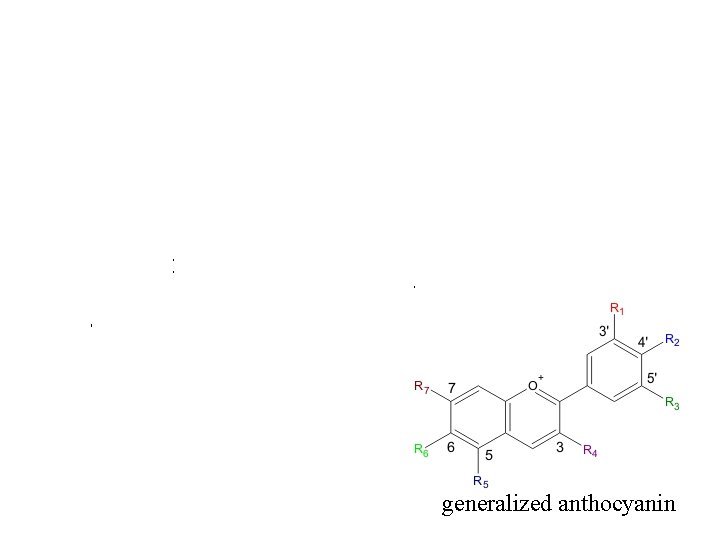
cyanidin (reddish blue) pelargonin (red) delphinidin (blue) generalized anthocyanin
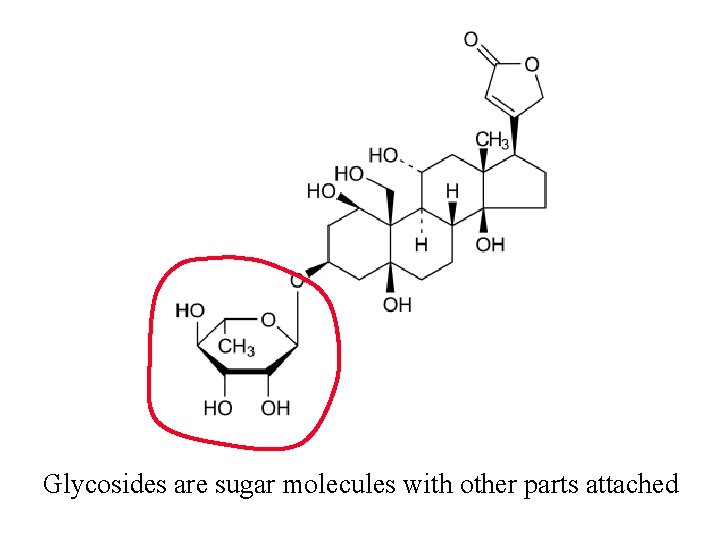
Glycosides are sugar molecules with other parts attached
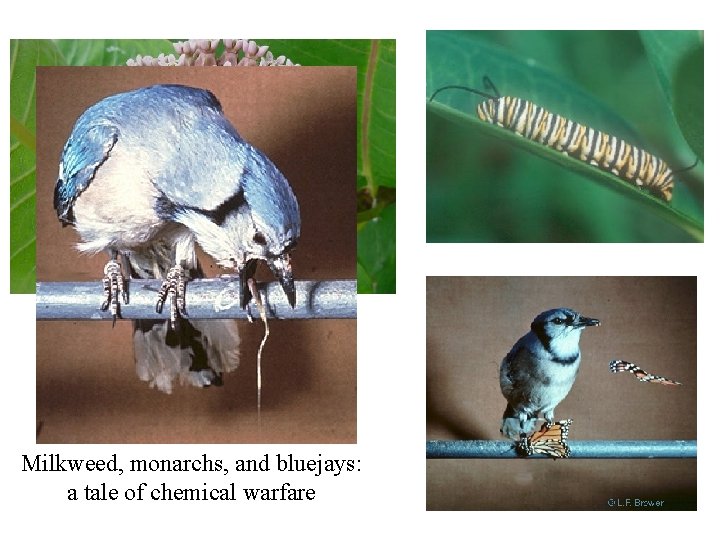
Milkweed, monarchs, and bluejays: a tale of chemical warfare
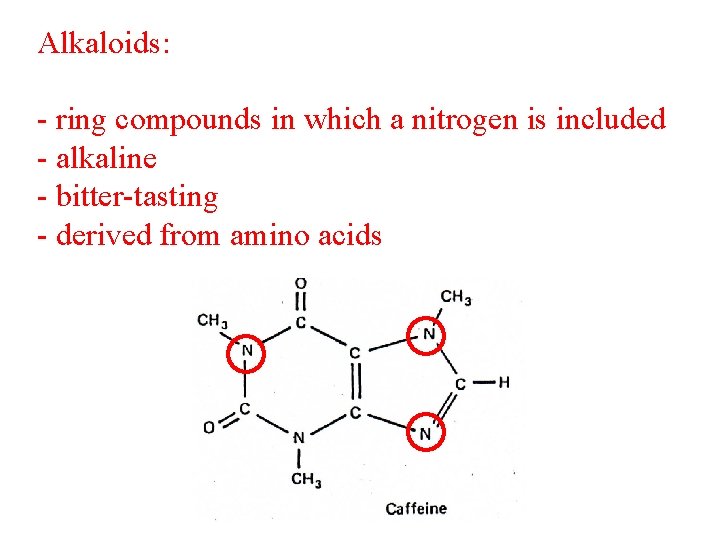
Alkaloids: - ring compounds in which a nitrogen is included - alkaline - bitter-tasting - derived from amino acids
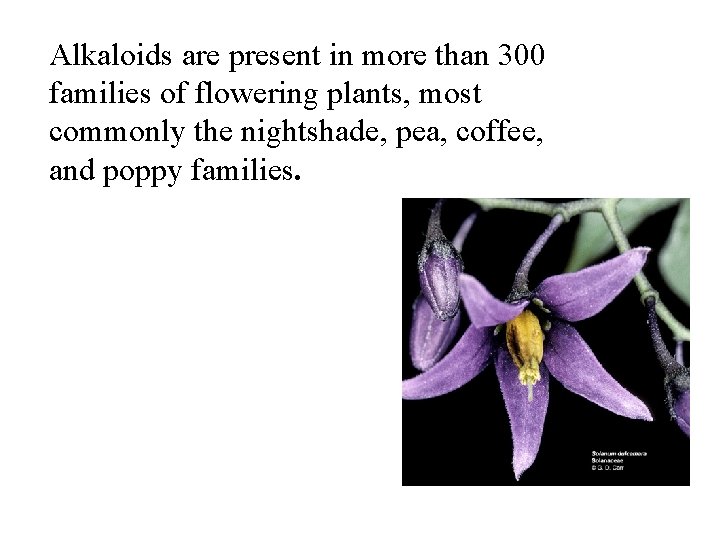
Alkaloids are present in more than 300 families of flowering plants, most commonly the nightshade, pea, coffee, and poppy families.
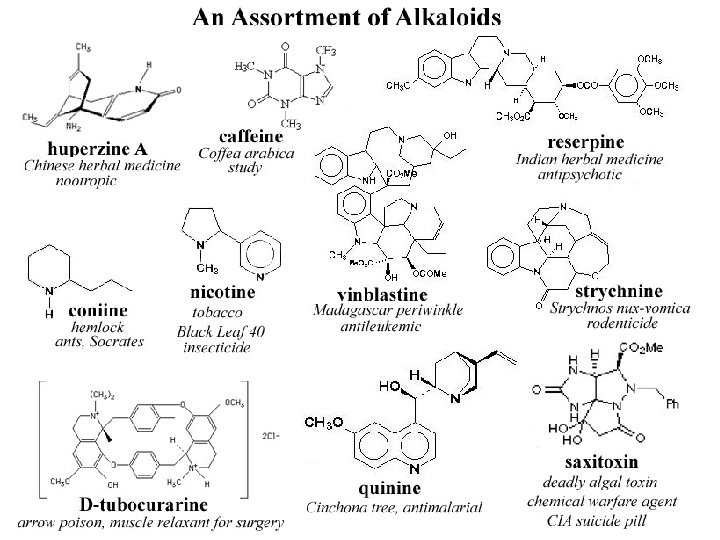
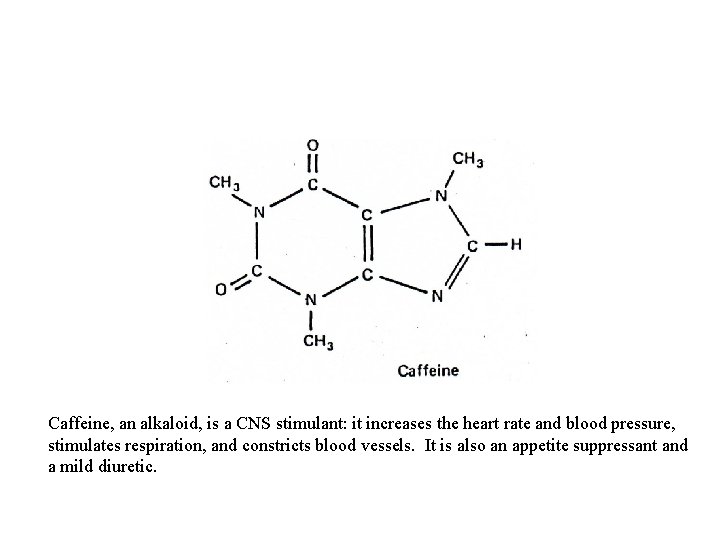
Caffeine, an alkaloid, is a CNS stimulant: it increases the heart rate and blood pressure, stimulates respiration, and constricts blood vessels. It is also an appetite suppressant and a mild diuretic.

So what is it doing in the plant? According to Michael Pollan (Botany of Desire), caffeine “unhinges an insect’s nervous system and kills its appetite. ”
Stimulating Beverages: Coffee, Tea, and Chocolate
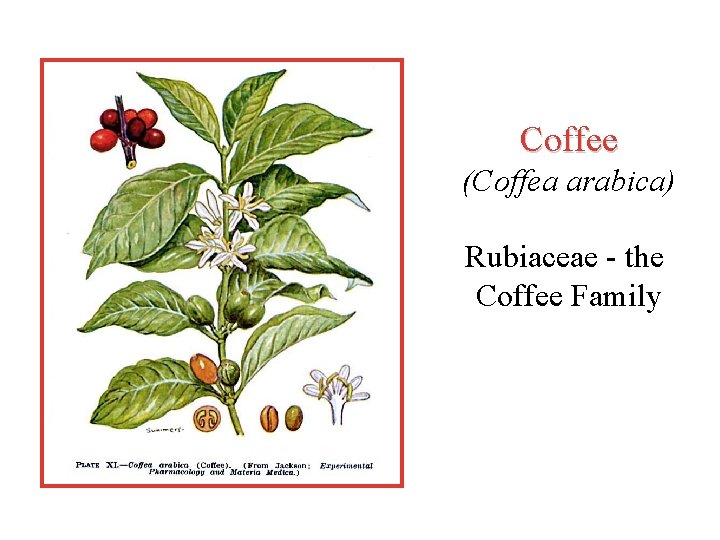
Coffee (Coffea arabica) Rubiaceae - the Coffee Family
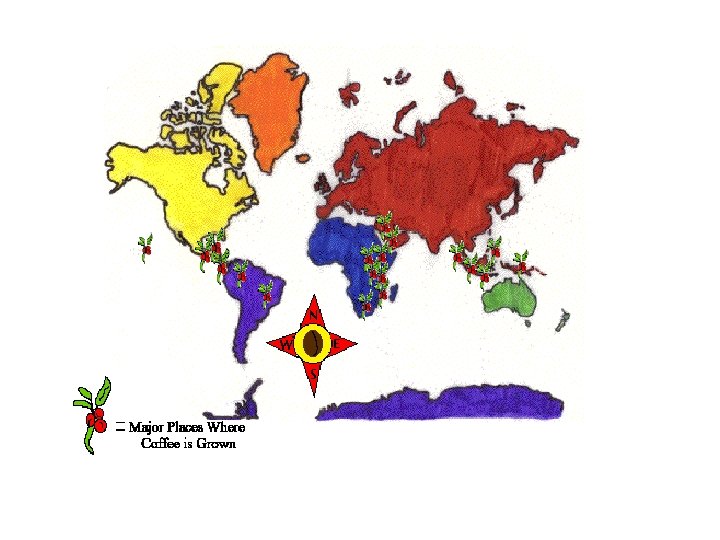
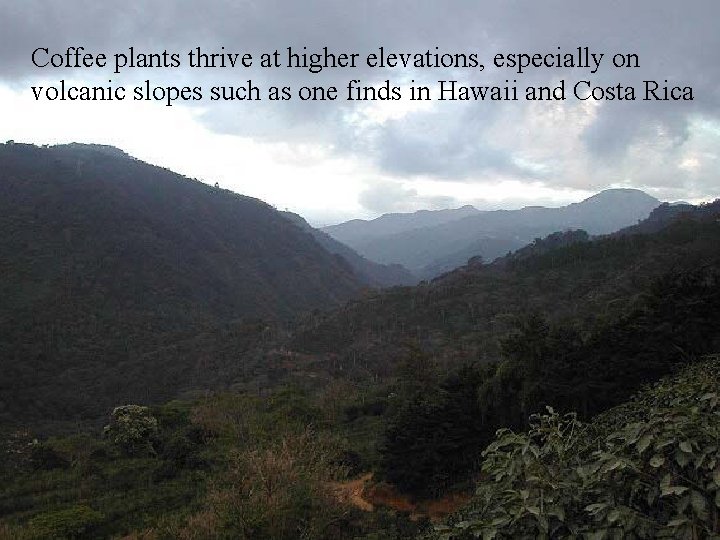
Coffee plants thrive at higher elevations, especially on volcanic slopes such as one finds in Hawaii and Costa Rica
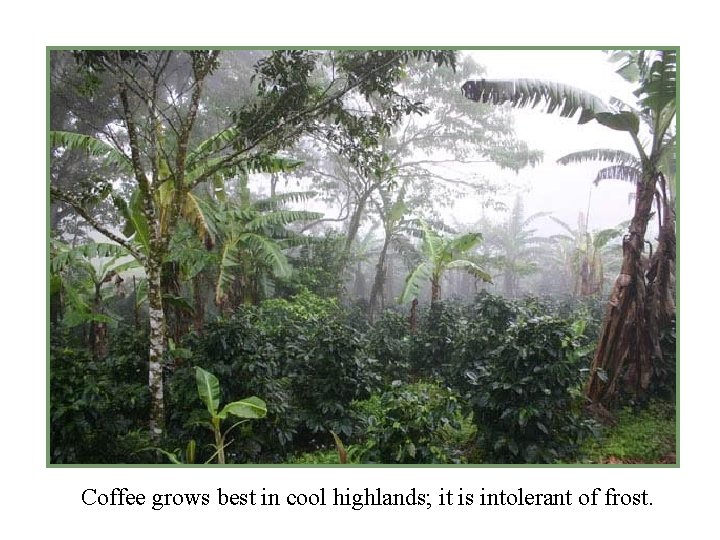
Coffee grows best in cool highlands; it is intolerant of frost.
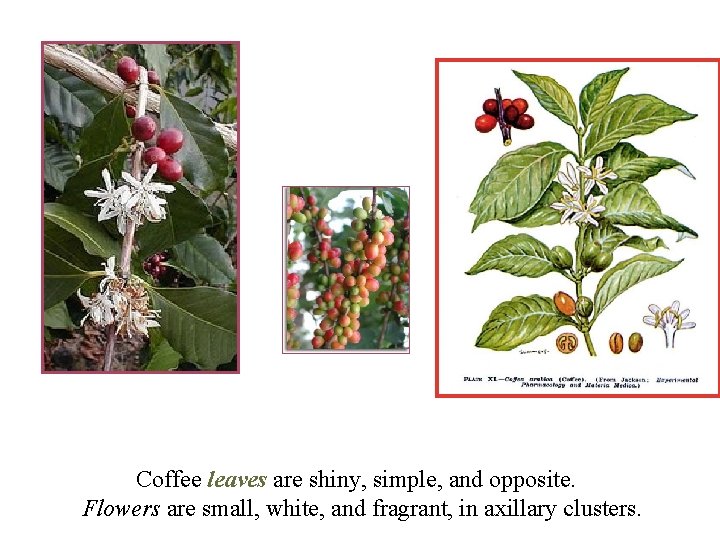
Coffee leaves are shiny, simple, and opposite. Flowers are small, white, and fragrant, in axillary clusters.
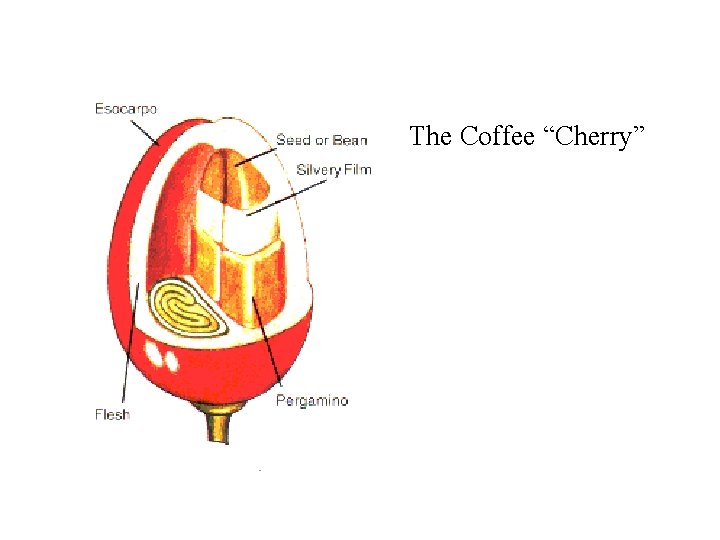
The Coffee “Cherry”
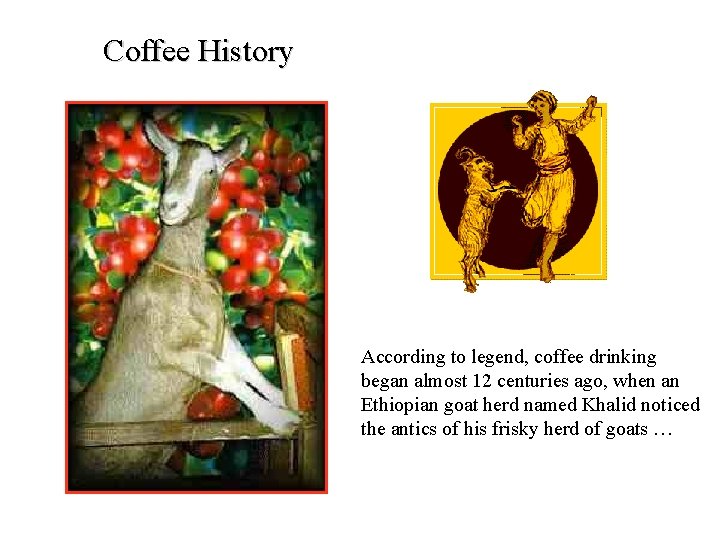
Coffee History According to legend, coffee drinking began almost 12 centuries ago, when an Ethiopian goat herd named Khalid noticed the antics of his frisky herd of goats …
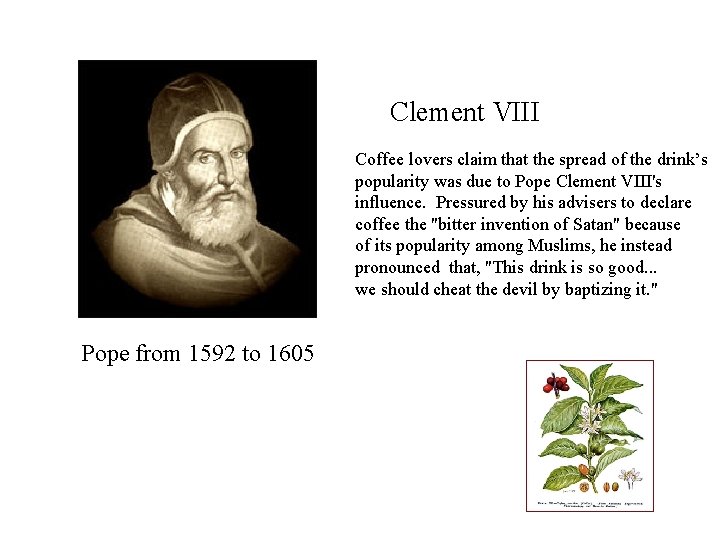
Clement VIII Coffee lovers claim that the spread of the drink’s popularity was due to Pope Clement VIII's influence. Pressured by his advisers to declare coffee the "bitter invention of Satan" because of its popularity among Muslims, he instead pronounced that, "This drink is so good. . . we should cheat the devil by baptizing it. " Pope from 1592 to 1605
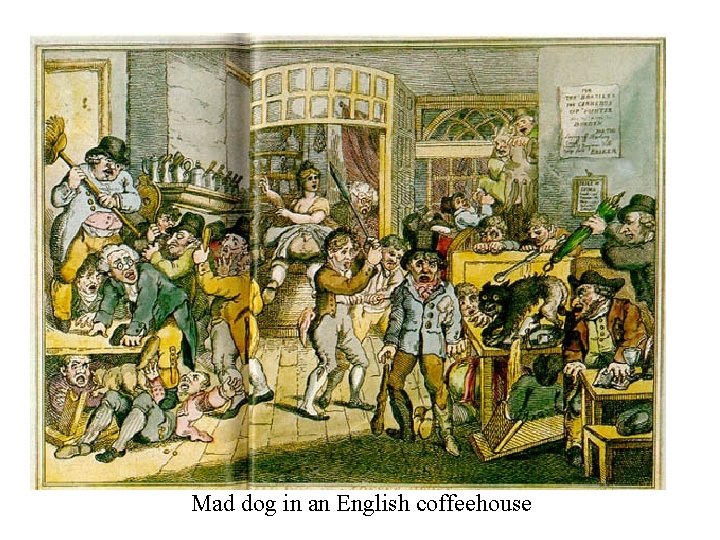
Mad dog in an English coffeehouse
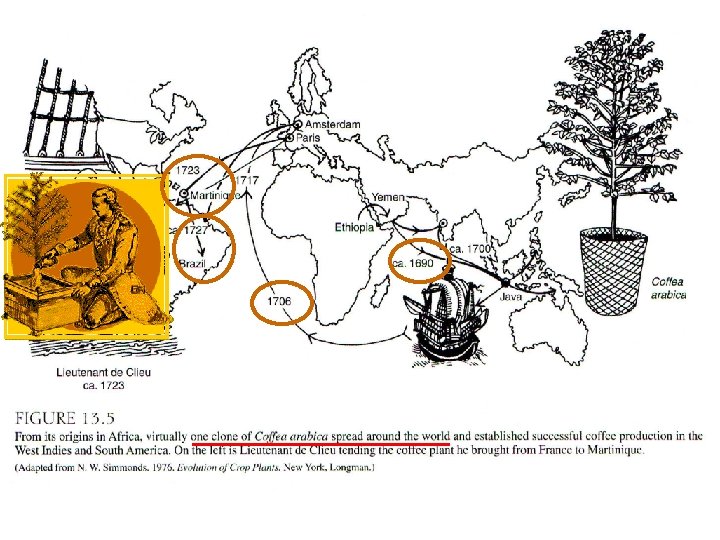
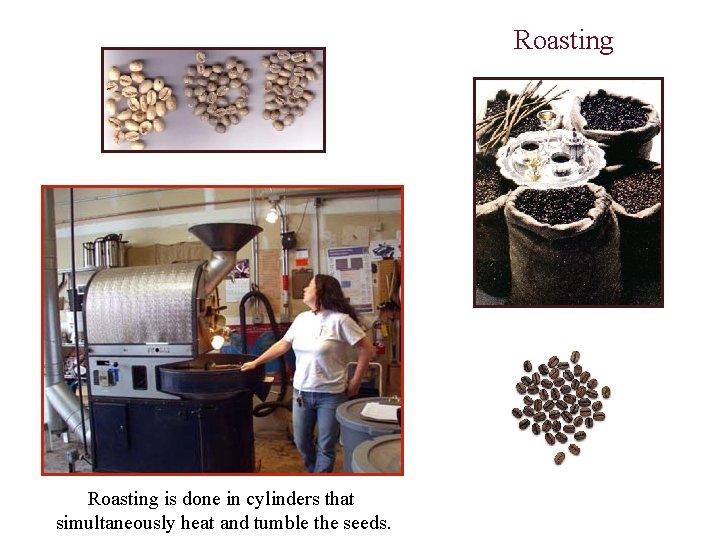
Roasting is done in cylinders that simultaneously heat and tumble the seeds.
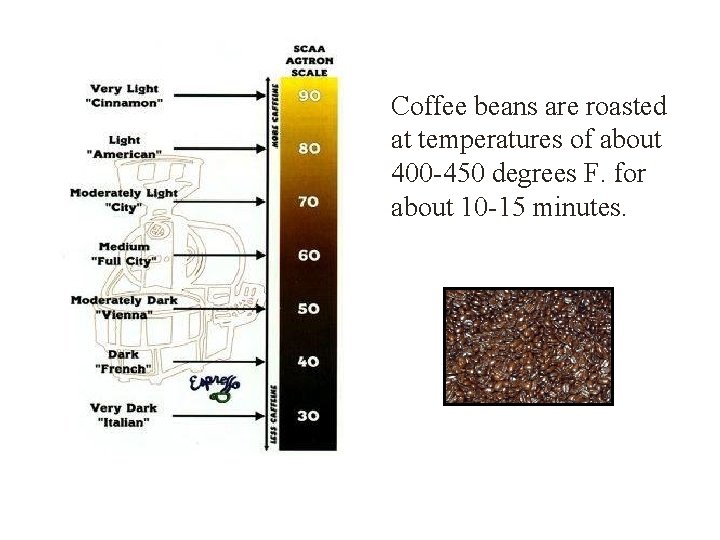
Coffee beans are roasted at temperatures of about 400 -450 degrees F. for about 10 -15 minutes.
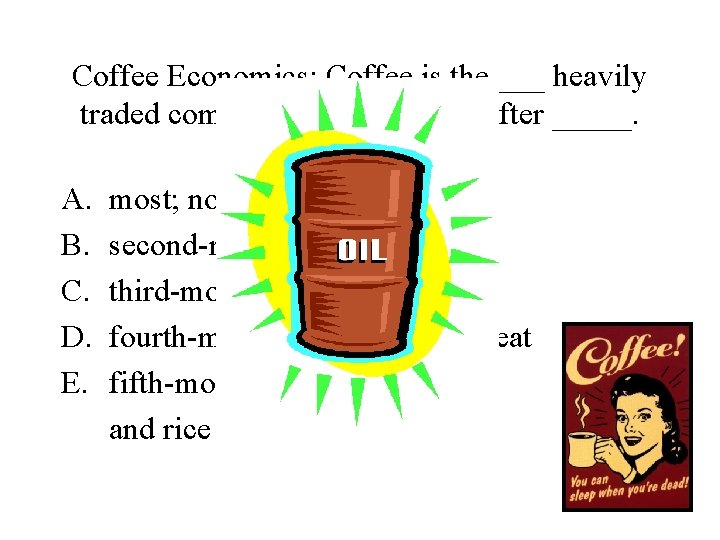
Coffee Economics: Coffee is the ___ heavily traded commodity world-wide, after _____. A. B. C. D. E. most; none second-most; oil third-most; oil and steel fourth-most; oil, steel, and wheat fifth-most; oil, steel, wheat, and rice
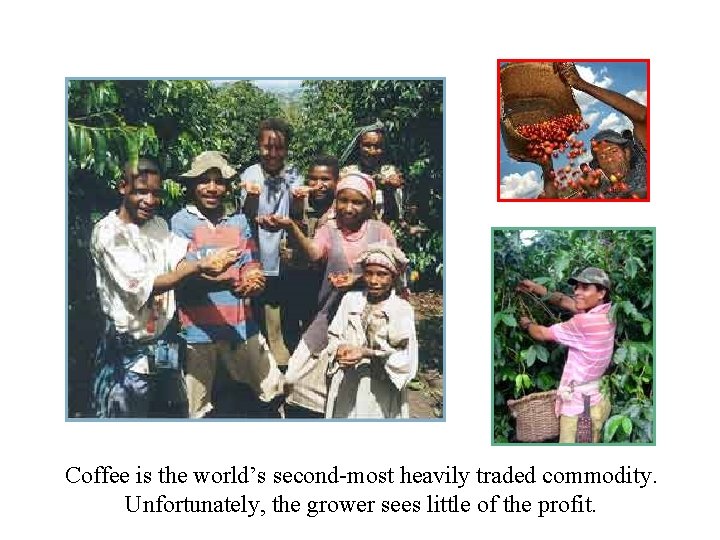
Coffee is the world’s second-most heavily traded commodity. Unfortunately, the grower sees little of the profit.
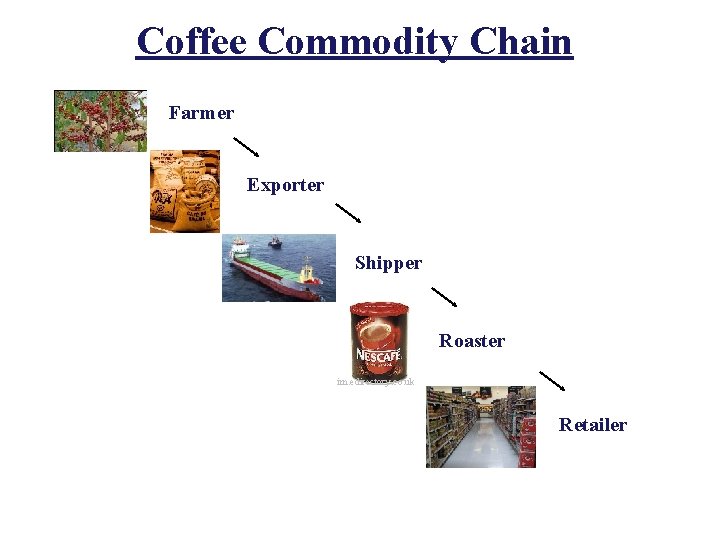
Coffee Commodity Chain Farmer Exporter Shipper Roaster im. edirectory. co. uk Retailer
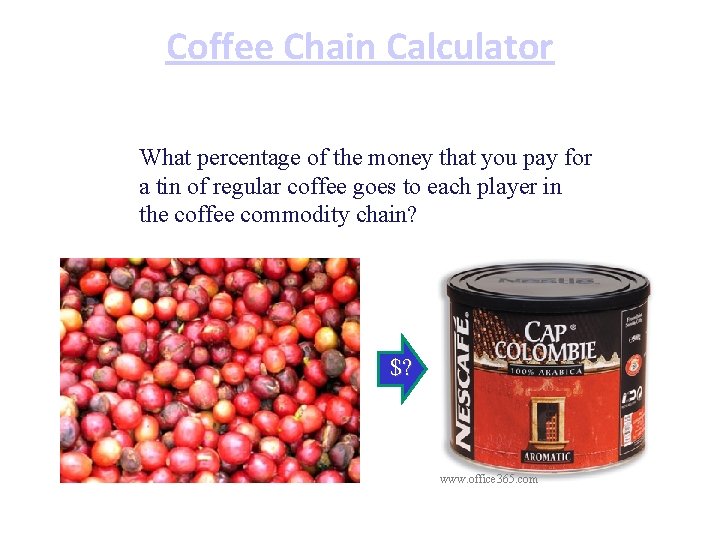
Coffee Chain Calculator What percentage of the money that you pay for a tin of regular coffee goes to each player in the coffee commodity chain? $? www. office 365. com
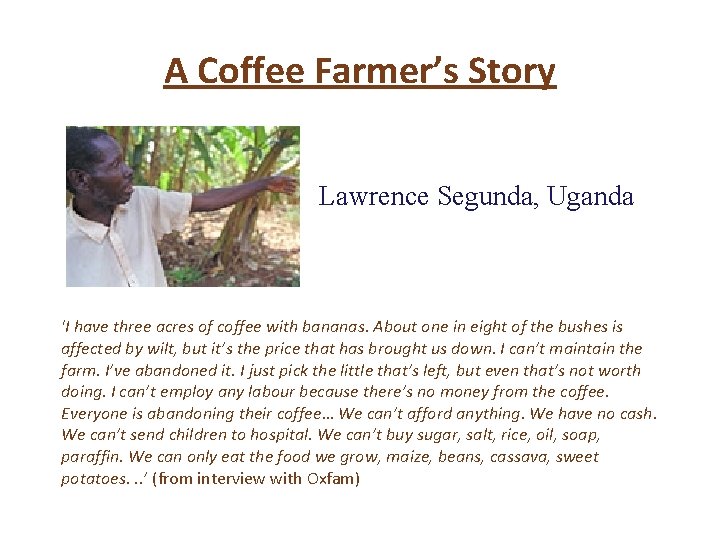
A Coffee Farmer’s Story Lawrence Segunda, Uganda 'I have three acres of coffee with bananas. About one in eight of the bushes is affected by wilt, but it’s the price that has brought us down. I can’t maintain the farm. I’ve abandoned it. I just pick the little that’s left, but even that’s not worth doing. I can’t employ any labour because there’s no money from the coffee. Everyone is abandoning their coffee… We can’t afford anything. We have no cash. We can’t send children to hospital. We can’t buy sugar, salt, rice, oil, soap, paraffin. We can only eat the food we grow, maize, beans, cassava, sweet potatoes. . . ’ (from interview with Oxfam)

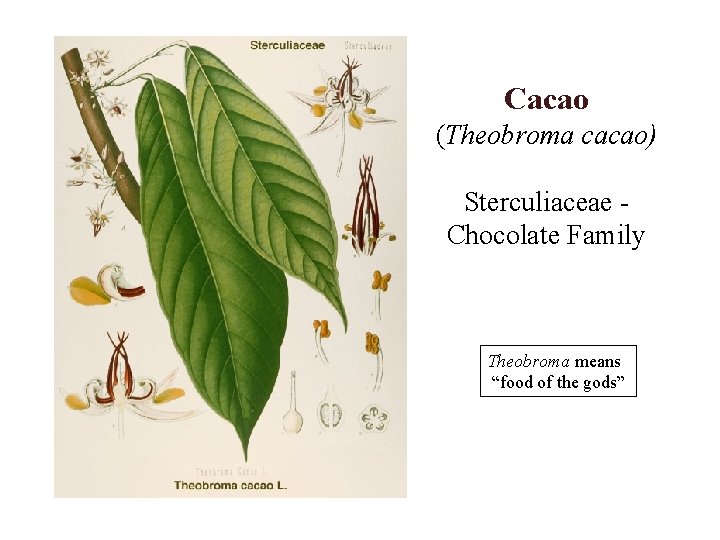
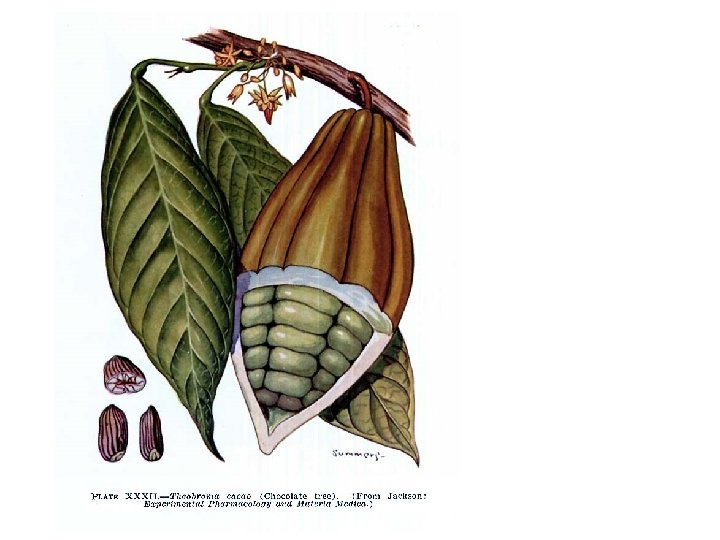
Cacao (Theobroma cacao) Sterculiaceae Chocolate Family Theobroma means “food of the gods”
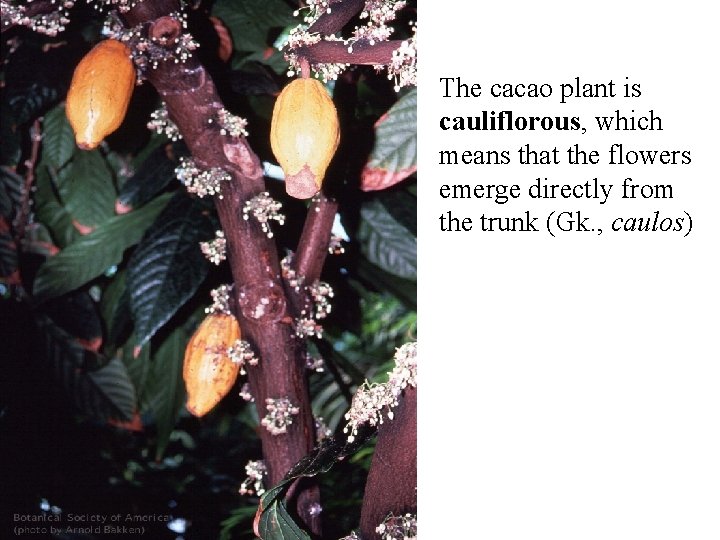
The cacao plant is cauliflorous, which means that the flowers emerge directly from the trunk (Gk. , caulos)
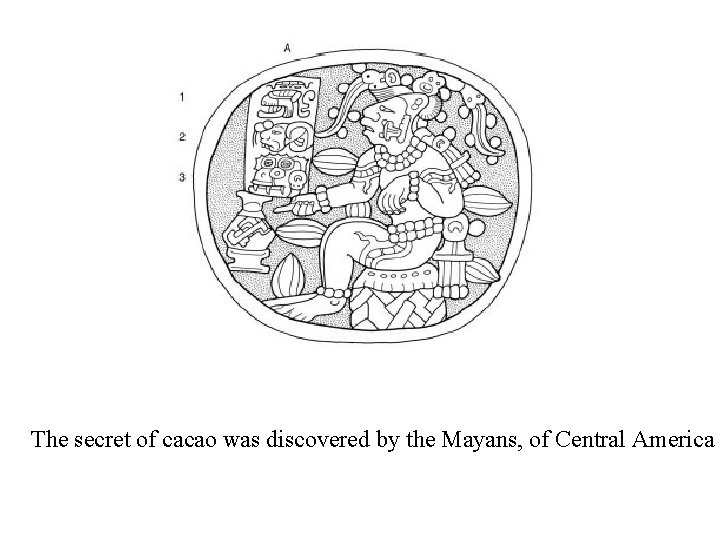
The secret of cacao was discovered by the Mayans, of Central America
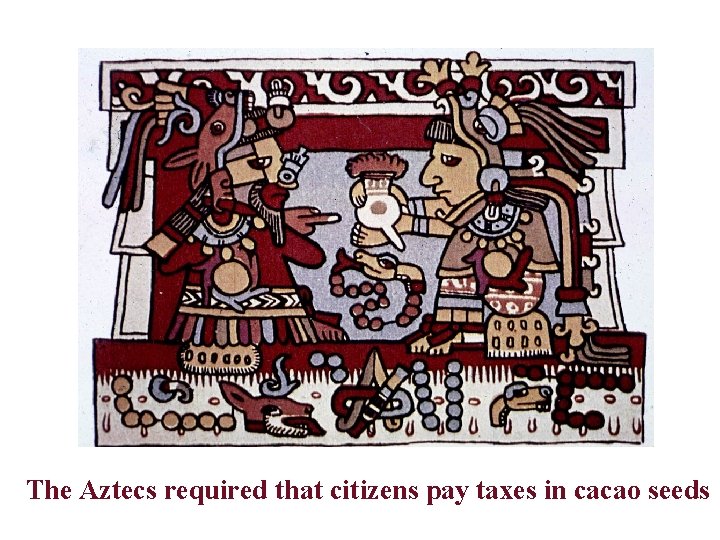
The Aztecs required that citizens pay taxes in cacao seeds
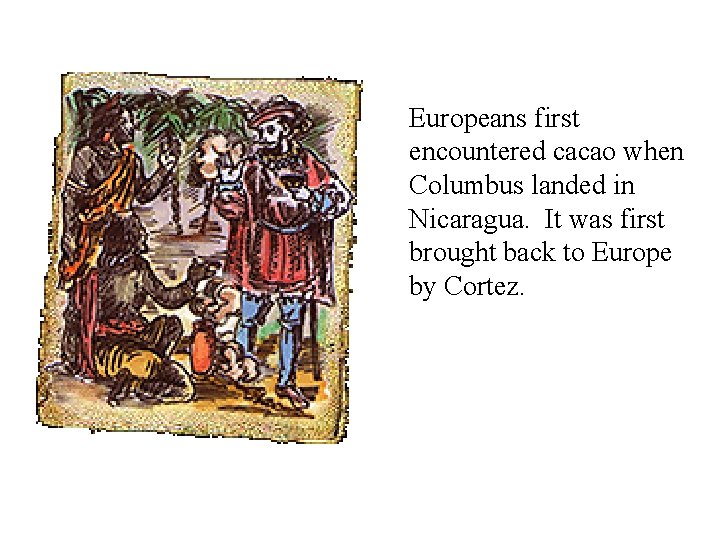
Europeans first encountered cacao when Columbus landed in Nicaragua. It was first brought back to Europe by Cortez.
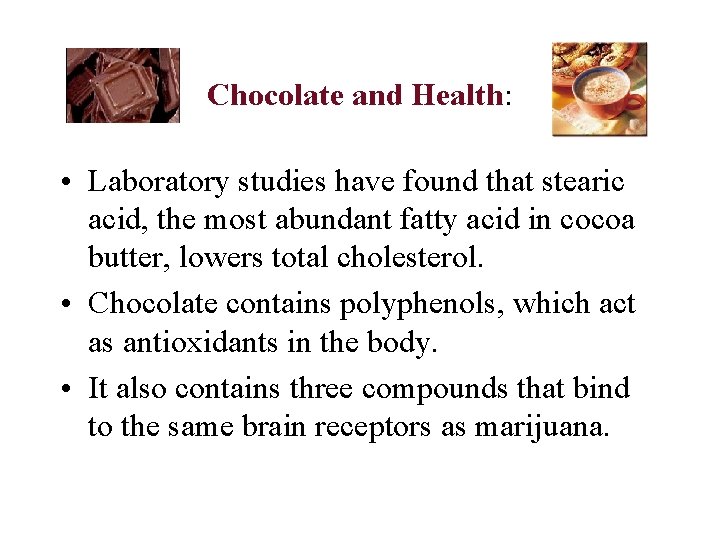
Chocolate and Health: • Laboratory studies have found that stearic acid, the most abundant fatty acid in cocoa butter, lowers total cholesterol. • Chocolate contains polyphenols, which act as antioxidants in the body. • It also contains three compounds that bind to the same brain receptors as marijuana.
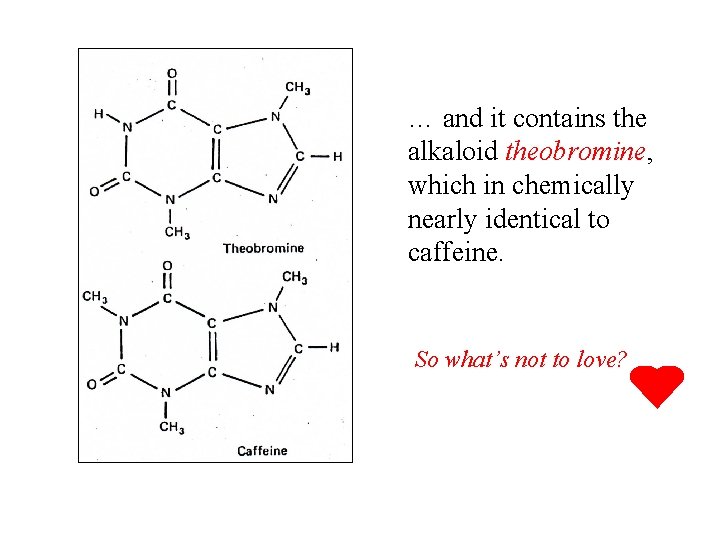
… and it contains the alkaloid theobromine, which in chemically nearly identical to caffeine. So what’s not to love?
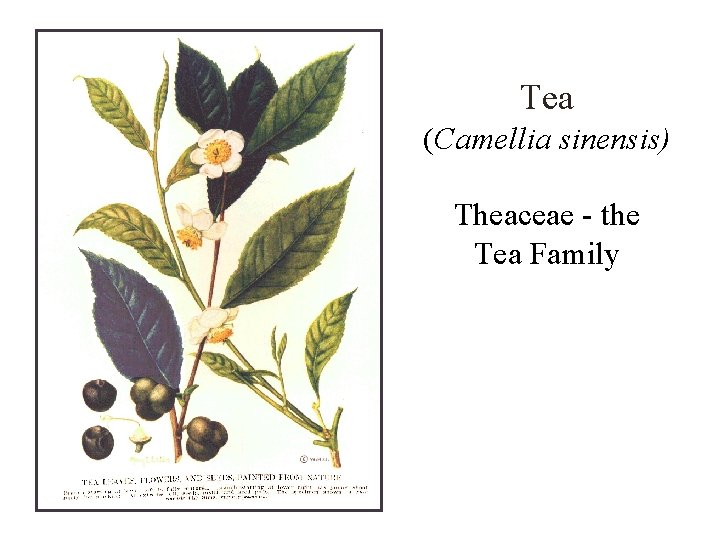
Tea (Camellia sinensis) Theaceae - the Tea Family
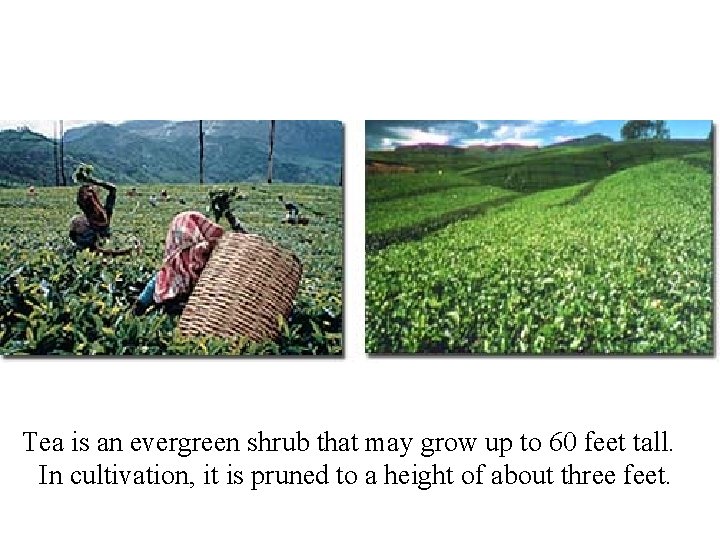
Tea is an evergreen shrub that may grow up to 60 feet tall. In cultivation, it is pruned to a height of about three feet.
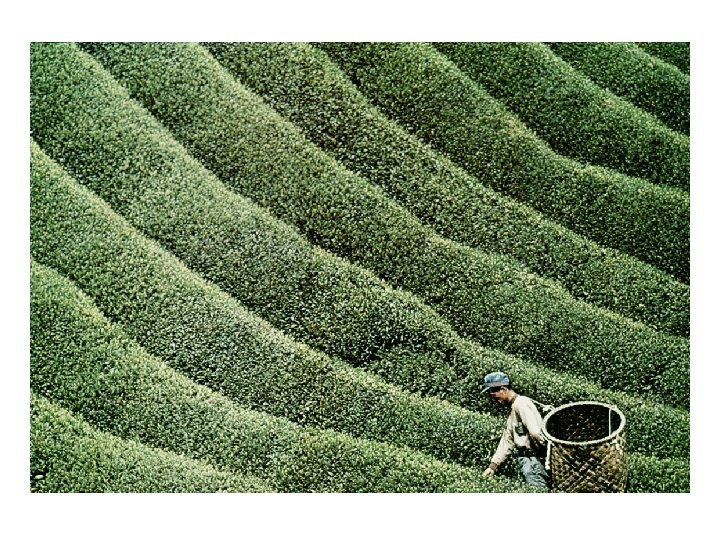
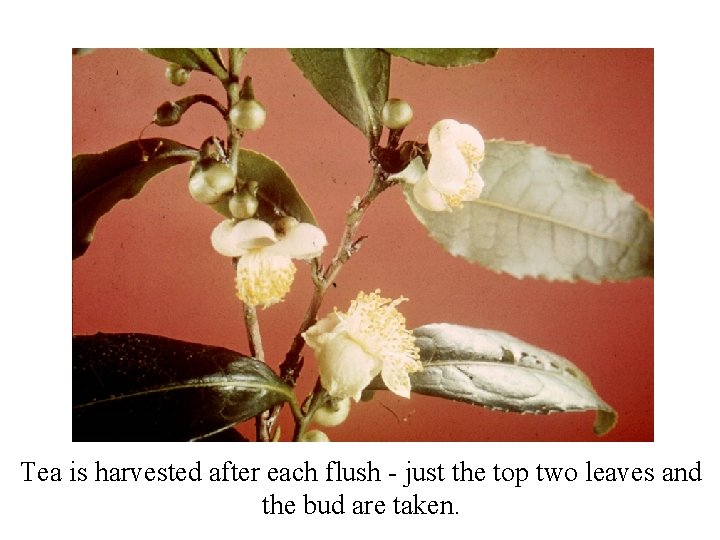
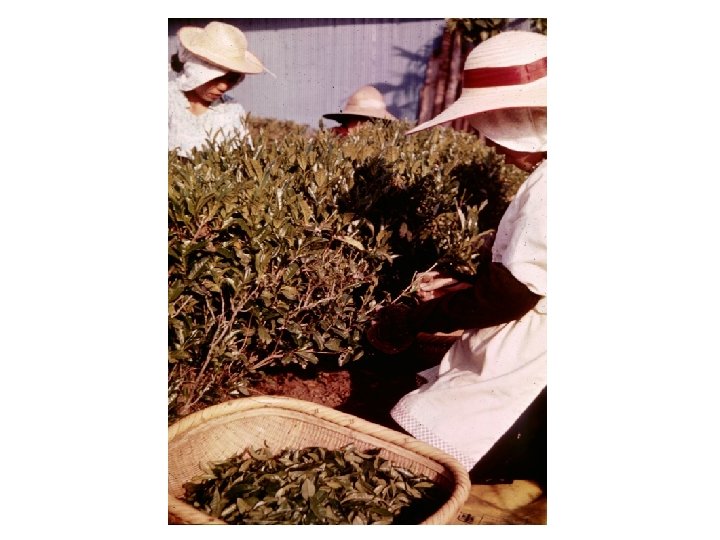
Tea is harvested after each flush - just the top two leaves and the bud are taken.
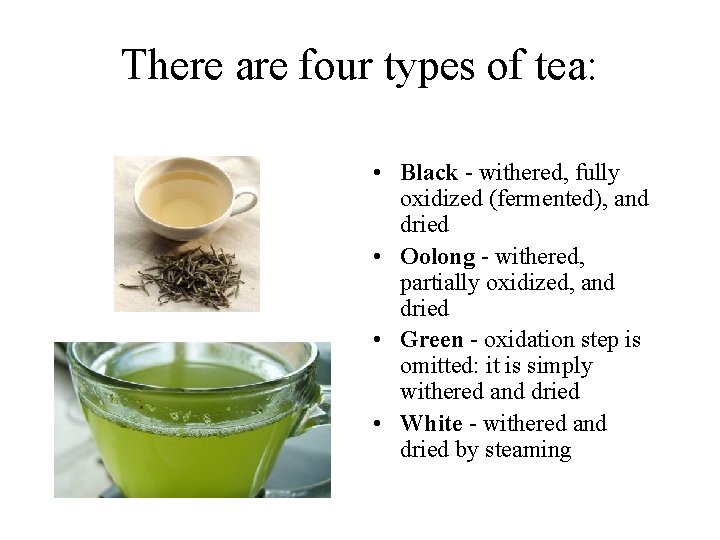
There are four types of tea: • Black - withered, fully oxidized (fermented), and dried • Oolong - withered, partially oxidized, and dried • Green - oxidation step is omitted: it is simply withered and dried • White - withered and dried by steaming
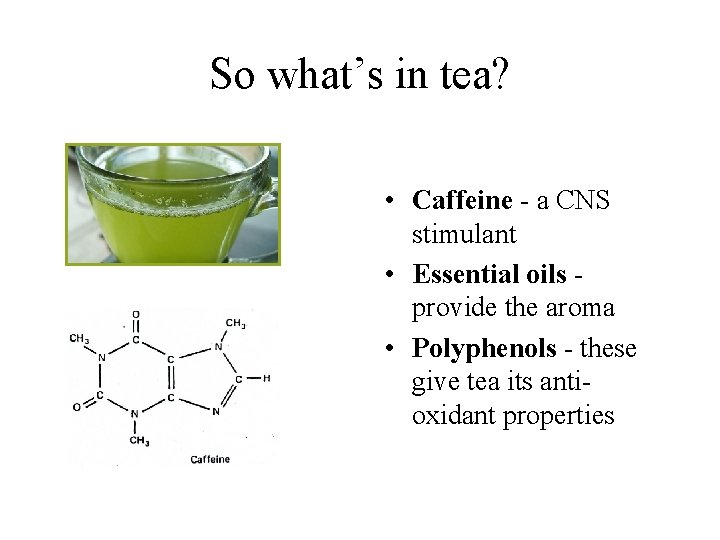
So what’s in tea? • Caffeine - a CNS stimulant • Essential oils provide the aroma • Polyphenols - these give tea its antioxidant properties
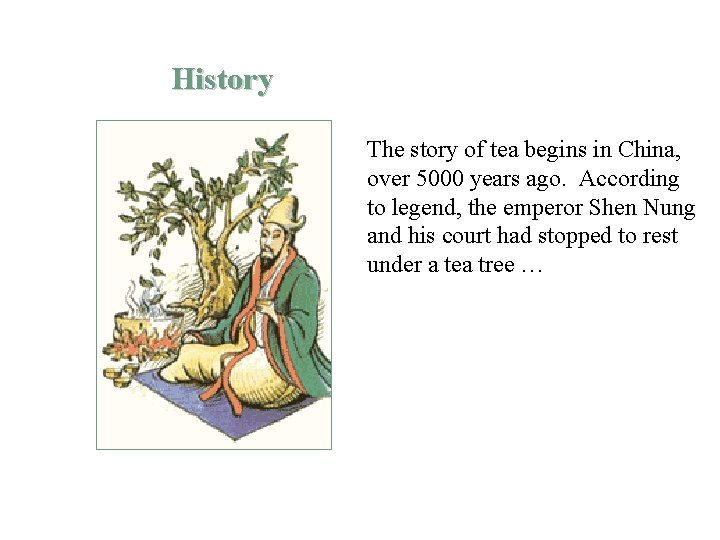
History The story of tea begins in China, over 5000 years ago. According to legend, the emperor Shen Nung and his court had stopped to rest under a tea tree …
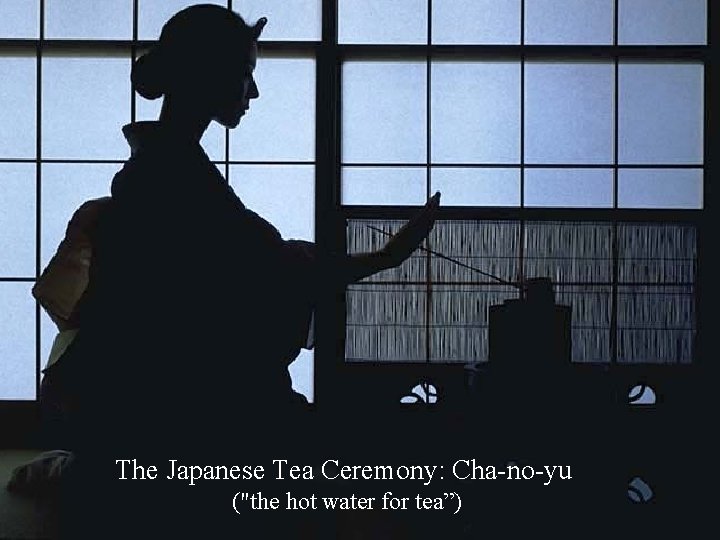
The Japanese Tea Ceremony: Cha-no-yu ("the hot water for tea”)
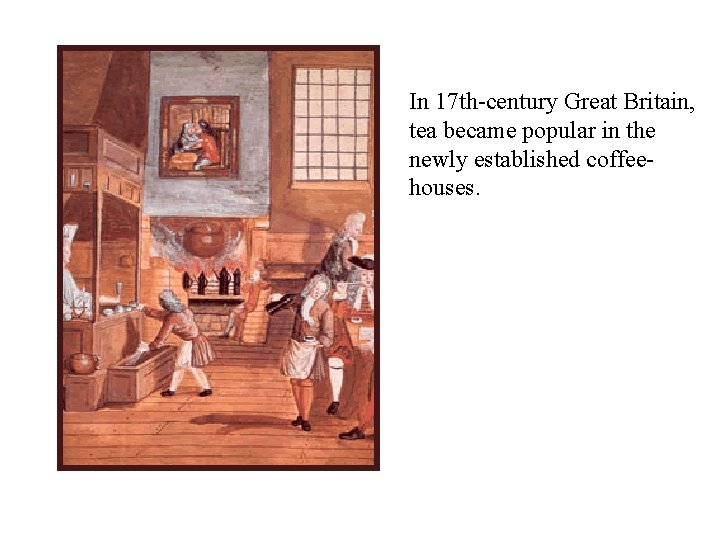
In 17 th-century Great Britain, tea became popular in the newly established coffeehouses.
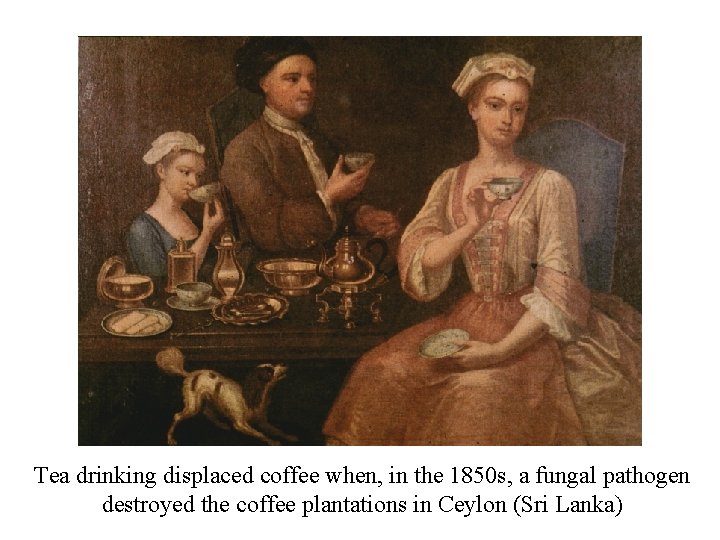
Tea drinking displaced coffee when, in the 1850 s, a fungal pathogen destroyed the coffee plantations in Ceylon (Sri Lanka)
- Slides: 61