
Plant Responses to Signals Plant Reactions Stimuli and
- Slides: 22
Plant Responses to Signals
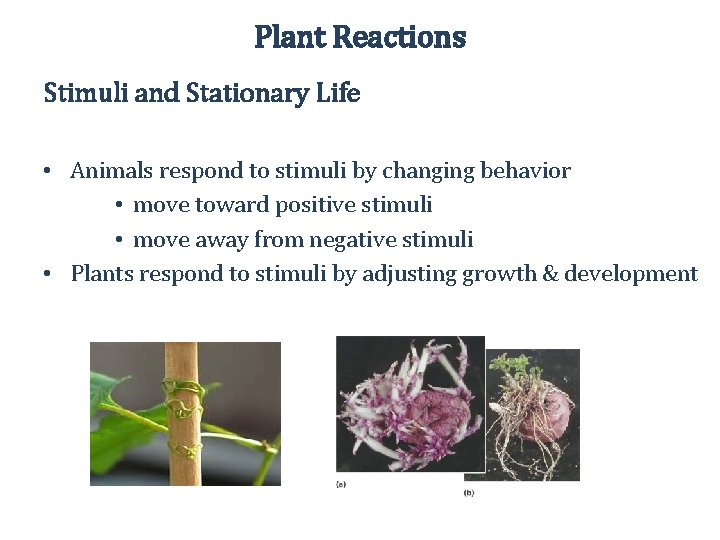
Plant Reactions Stimuli and Stationary Life • Animals respond to stimuli by changing behavior • move toward positive stimuli • move away from negative stimuli • Plants respond to stimuli by adjusting growth & development
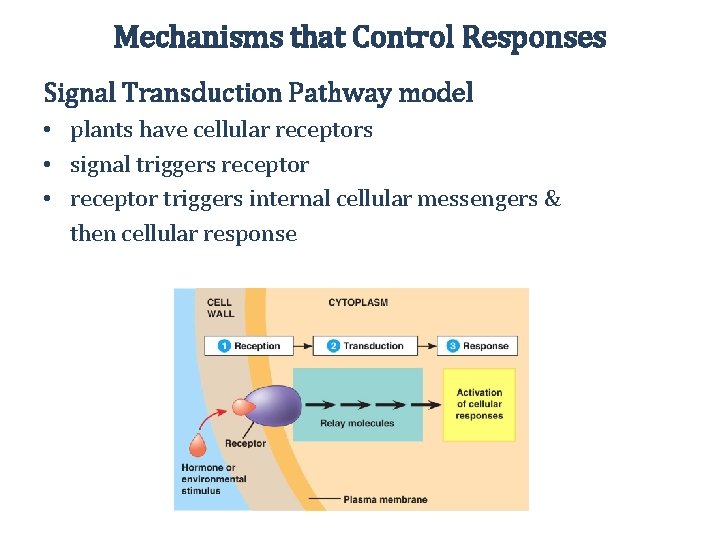
Mechanisms that Control Responses Signal Transduction Pathway model • plants have cellular receptors • signal triggers receptor • receptor triggers internal cellular messengers & then cellular response
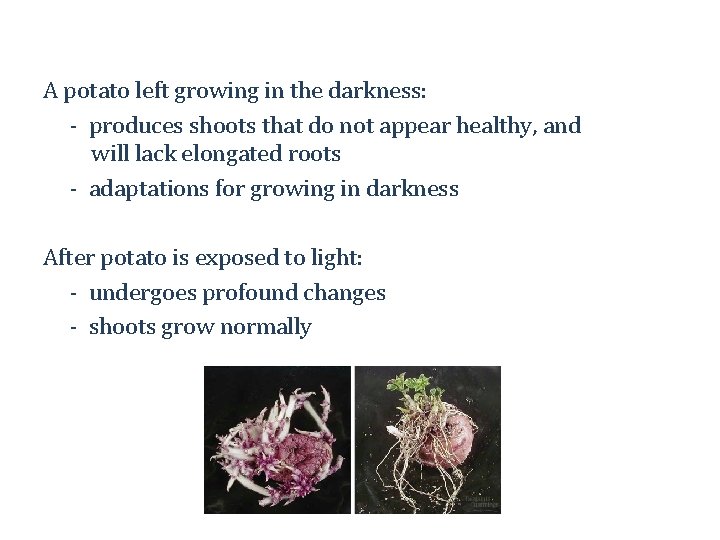
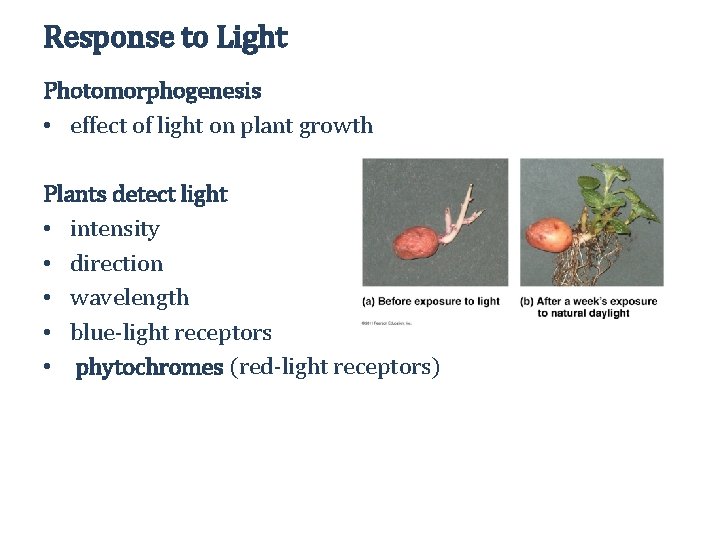
A potato left growing in the darkness: - produces shoots that do not appear healthy, and will lack elongated roots - adaptations for growing in darkness After potato is exposed to light: - undergoes profound changes - shoots grow normally
Plant Hormones Chemical signals that coordinate different parts of an multicellular organism • only minute amounts are required • produced by one part of plant and transported to another part • binds to specific receptor • triggers response in target cells & tissues
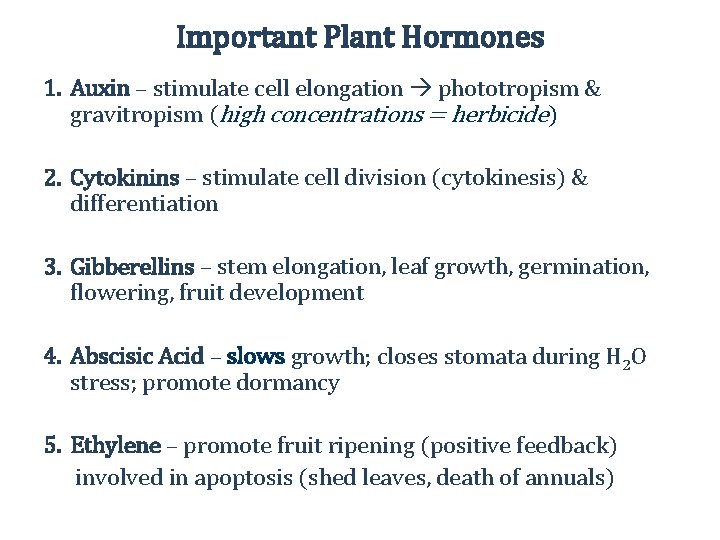
Important Plant Hormones 1. Auxin – stimulate cell elongation phototropism & gravitropism (high concentrations = herbicide) 2. Cytokinins – stimulate cell division (cytokinesis) & differentiation 3. Gibberellins – stem elongation, leaf growth, germination, flowering, fruit development 4. Abscisic Acid – slows growth; closes stomata during H 2 O stress; promote dormancy 5. Ethylene – promote fruit ripening (positive feedback) involved in apoptosis (shed leaves, death of annuals)
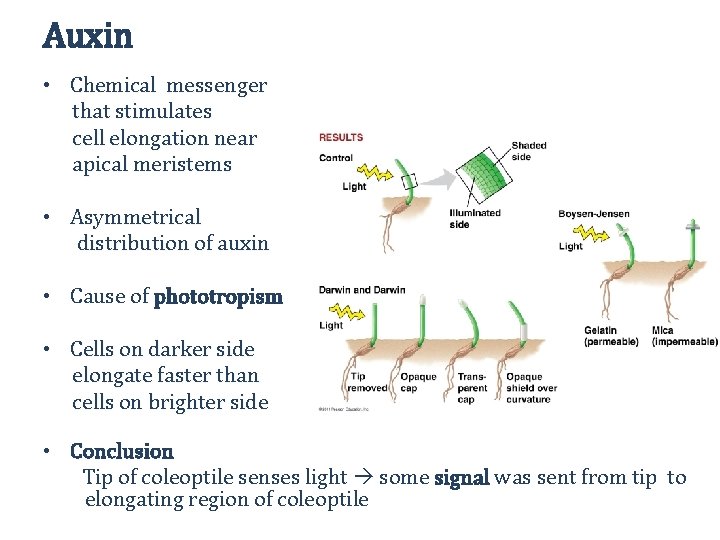
Auxin • Chemical messenger that stimulates cell elongation near apical meristems • Asymmetrical distribution of auxin • Cause of phototropism • Cells on darker side elongate faster than cells on brighter side • Conclusion Tip of coleoptile senses light some signal was sent from tip to elongating region of coleoptile
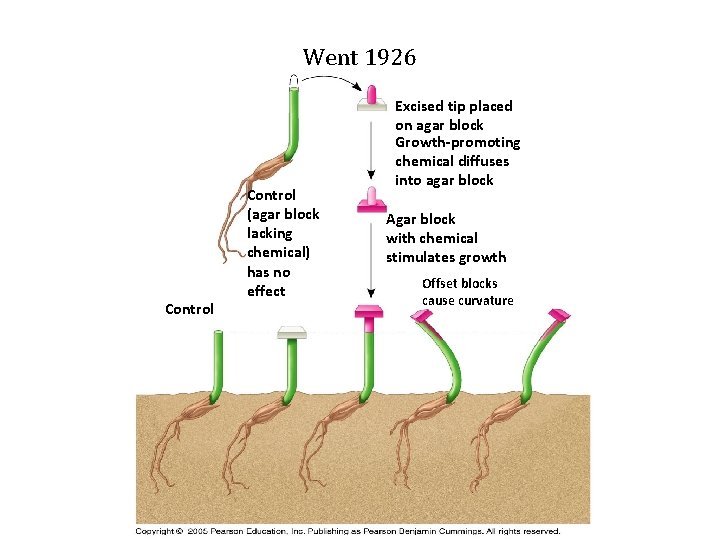
Went 1926 Control (agar block lacking chemical) has no effect Excised tip placed on agar block Growth-promoting chemical diffuses into agar block Agar block with chemical stimulates growth Offset blocks cause curvature
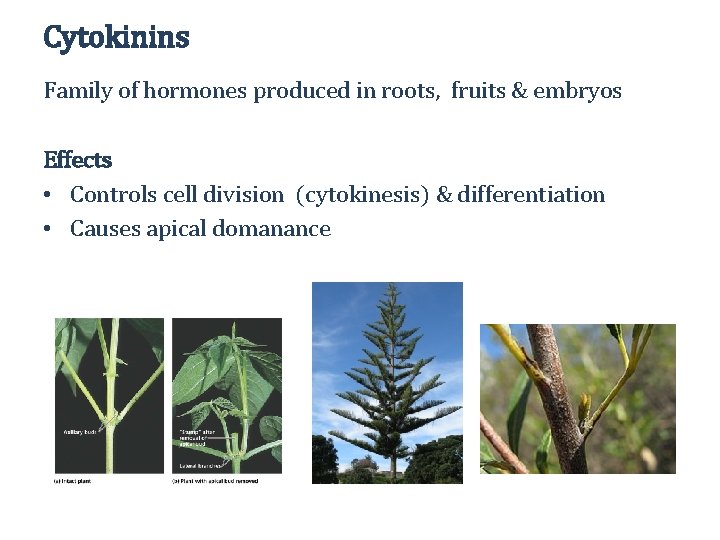
Cytokinins Family of hormones produced in roots, fruits & embryos Effects • Controls cell division (cytokinesis) & differentiation • Causes apical domanance
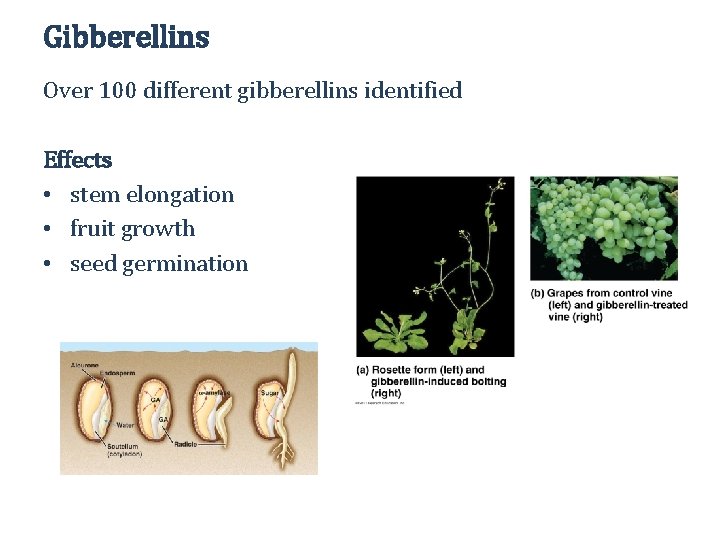
Gibberellins Over 100 different gibberellins identified Effects • stem elongation • fruit growth • seed germination
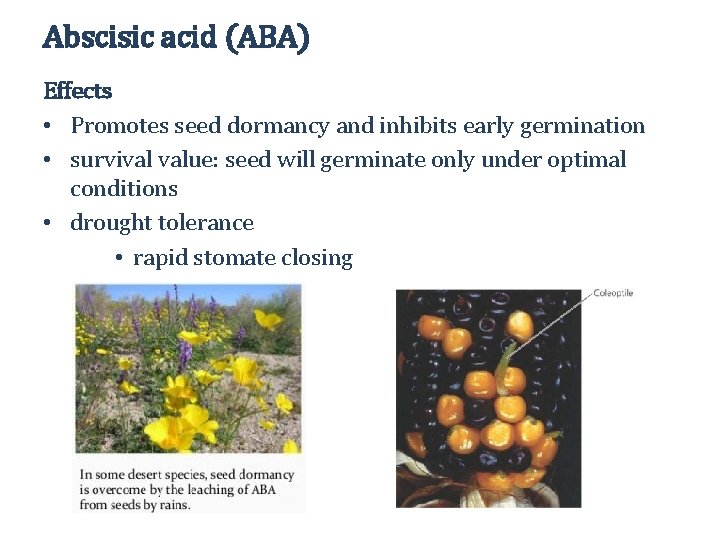
Abscisic acid (ABA) Effects • Promotes seed dormancy and inhibits early germination • survival value: seed will germinate only under optimal conditions • drought tolerance • rapid stomate closing
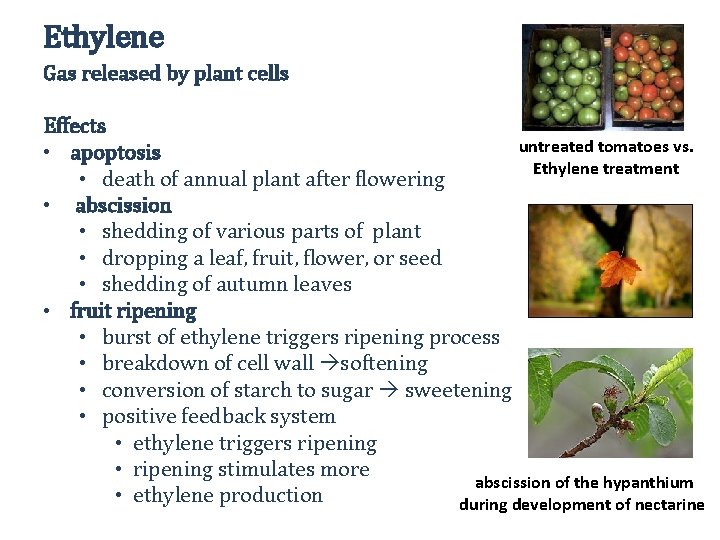
Ethylene Gas released by plant cells Effects untreated tomatoes vs. • apoptosis Ethylene treatment • death of annual plant after flowering • abscission • shedding of various parts of plant • dropping a leaf, fruit, flower, or seed • shedding of autumn leaves • fruit ripening • burst of ethylene triggers ripening process • breakdown of cell wall softening • conversion of starch to sugar sweetening • positive feedback system • ethylene triggers ripening • ripening stimulates more abscission of the hypanthium • ethylene production during development of nectarine
Plant Movement Tropisms: growth responses SLOW Gravitropism – gravity (auxin) Thigmotropism – touch Phototropism – light (auxin) Turgor movement: allows plant to make relatively rapid & reversible responses Venus fly trap, mimosa leaves, “sleep” movement
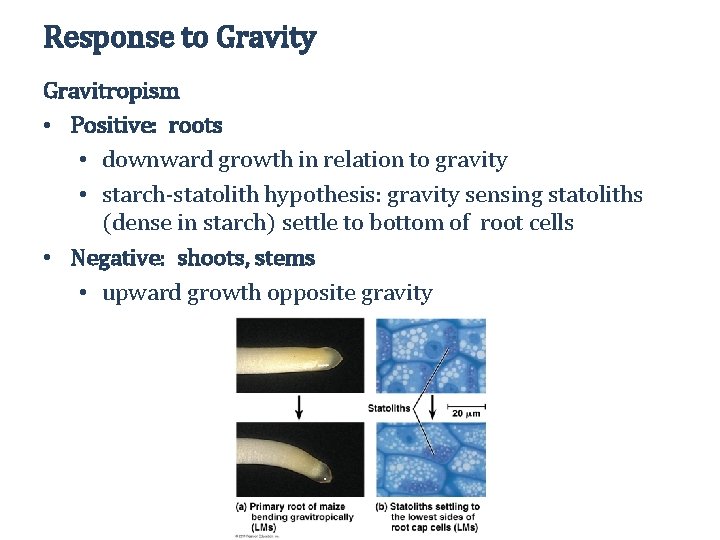
Response to Gravity Gravitropism • Positive: roots • downward growth in relation to gravity • starch-statolith hypothesis: gravity sensing statoliths (dense in starch) settle to bottom of root cells • Negative: shoots, stems • upward growth opposite gravity
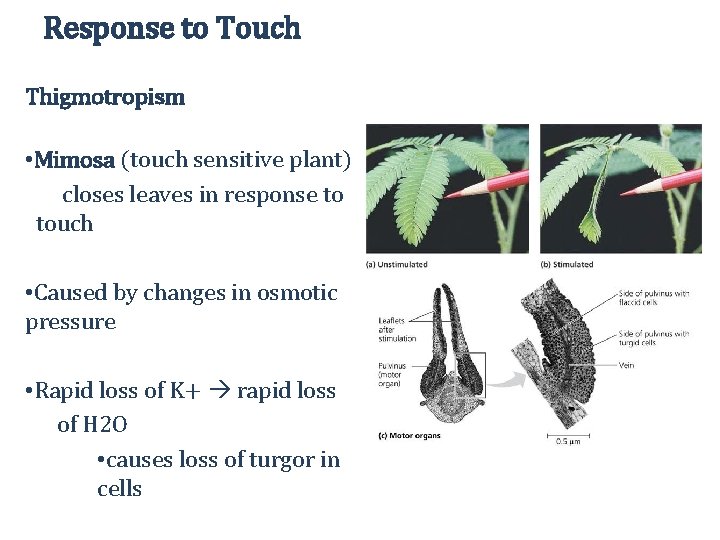
Response to Touch Thigmotropism • Mimosa (touch sensitive plant) closes leaves in response to touch • Caused by changes in osmotic pressure • Rapid loss of K+ rapid loss of H 2 O • causes loss of turgor in cells
Response to Light Photomorphogenesis • effect of light on plant growth Plants detect light • intensity • direction • wavelength • blue-light receptors • phytochromes (red-light receptors)
Biological Clocks Circadian rhythm: • Internal biological clocks • Persist w/o environmental cues • 24 hour cycles Phytochrome system + Biological clock plant can determine time of year based on amount of light/darkness
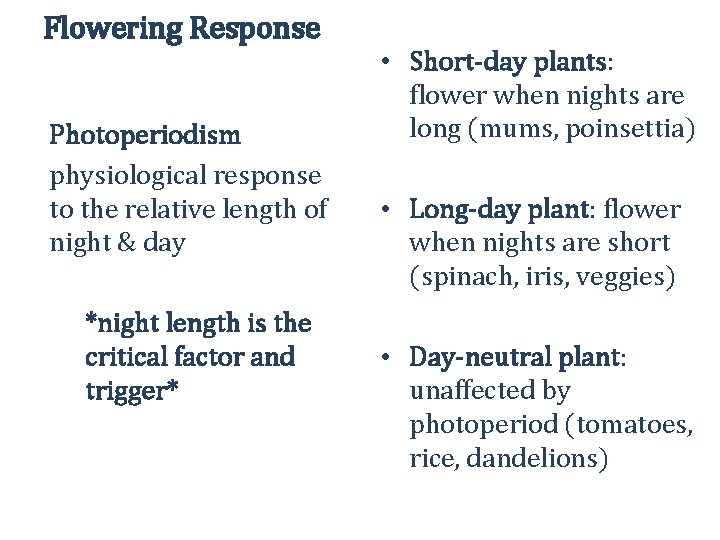
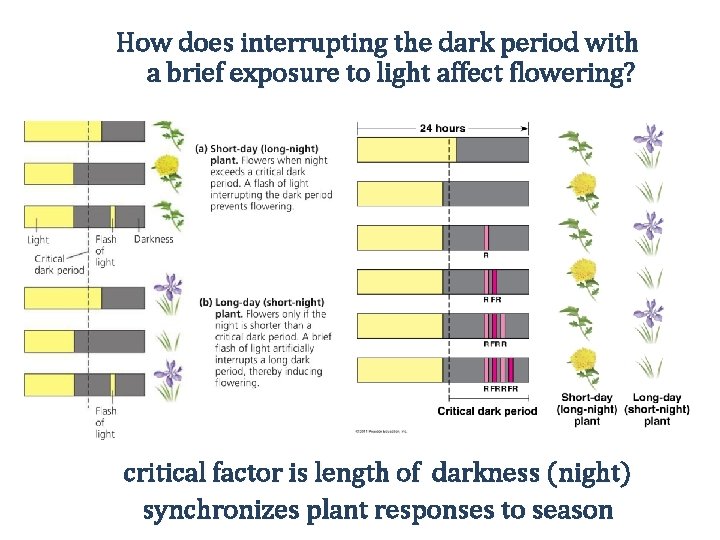
Flowering Response Photoperiodism physiological response to the relative length of night & day *night length is the critical factor and trigger* • Short-day plants: flower when nights are long (mums, poinsettia) • Long-day plant: flower when nights are short (spinach, iris, veggies) • Day-neutral plant: unaffected by photoperiod (tomatoes, rice, dandelions)
How does interrupting the dark period with a brief exposure to light affect flowering? critical factor is length of darkness (night) synchronizes plant responses to season
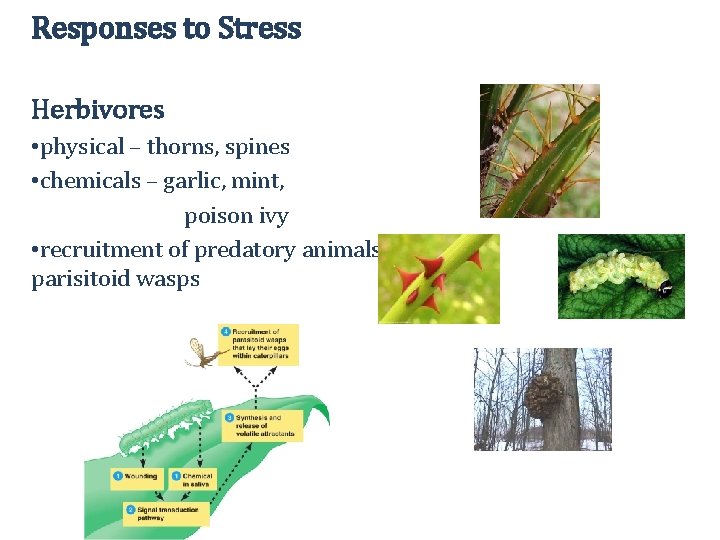
Responses to Stress Herbivores • physical – thorns, spines • chemicals – garlic, mint, poison ivy • recruitment of predatory animalsparisitoid wasps
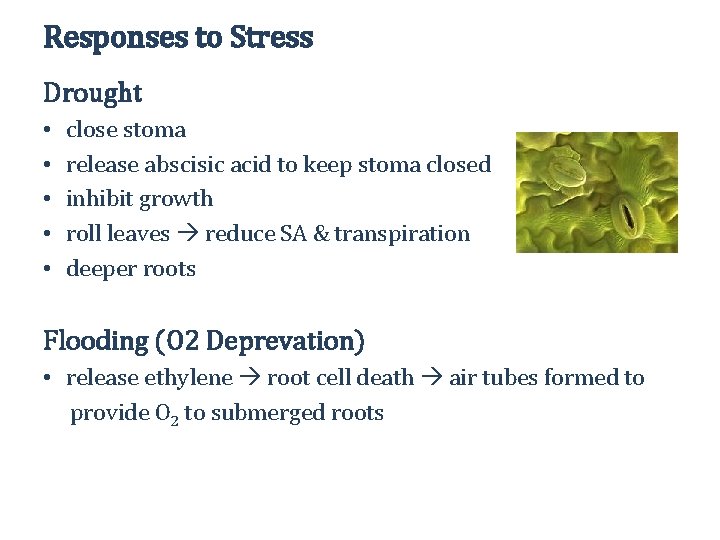
Responses to Stress Drought • • • close stoma release abscisic acid to keep stoma closed inhibit growth roll leaves reduce SA & transpiration deeper roots Flooding (O 2 Deprevation) • release ethylene root cell death air tubes formed to provide O 2 to submerged roots
Responses to Stress Excess Salt § § cell membrane – impede salt uptake produce solutes to ↓ψ - retain H 2 O Heat § § evap. cooling via transpiration heat shock proteins – prevent denaturation Cold § § § alter lipid composition of membrane (↑unsat. fatty acids, ↑fluidity) increase cytoplasmic solutes antifreeze proteins