
PLANT RESPONSES How plants move and communicate Plant
- Slides: 9
PLANT RESPONSES How plants move and communicate
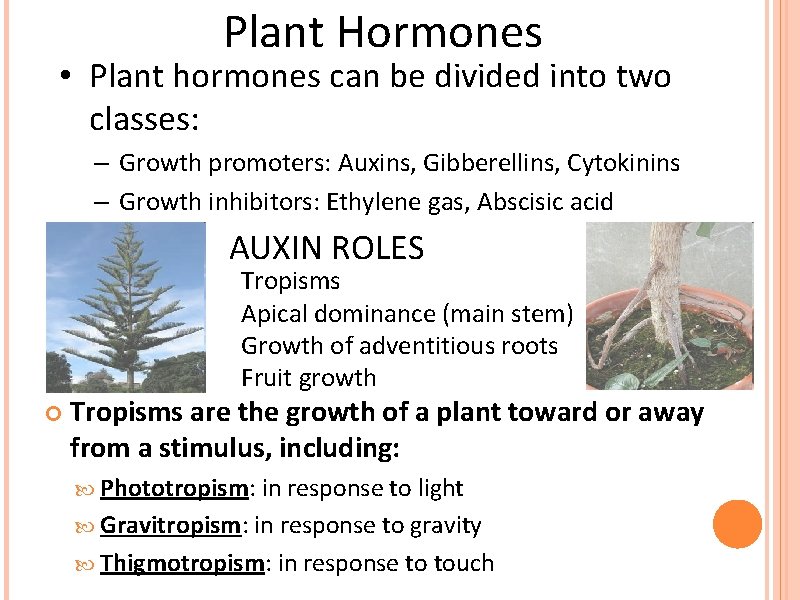
Plant Hormones • Plant hormones can be divided into two classes: – Growth promoters: Auxins, Gibberellins, Cytokinins – Growth inhibitors: Ethylene gas, Abscisic acid AUXIN ROLES Tropisms Apical dominance (main stem) Growth of adventitious roots Fruit growth Tropisms are the growth of a plant toward or away from a stimulus, including: Phototropism: in response to light Gravitropism: in response to gravity Thigmotropism: in response to touch
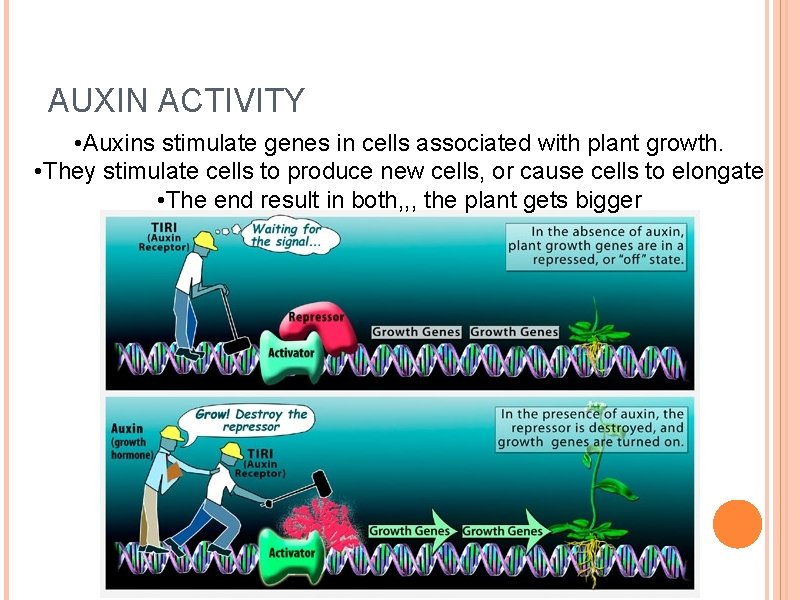
AUXIN ACTIVITY • Auxins stimulate genes in cells associated with plant growth. • They stimulate cells to produce new cells, or cause cells to elongate • The end result in both, , , the plant gets bigger
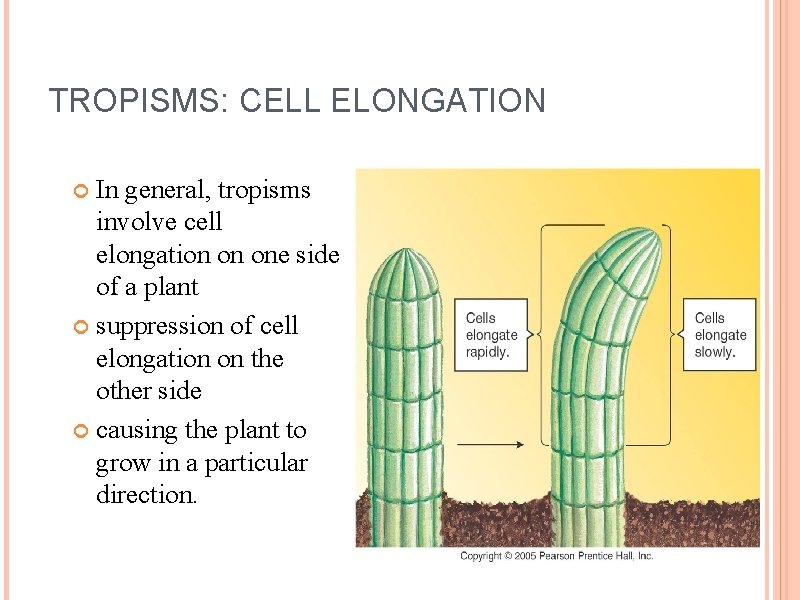
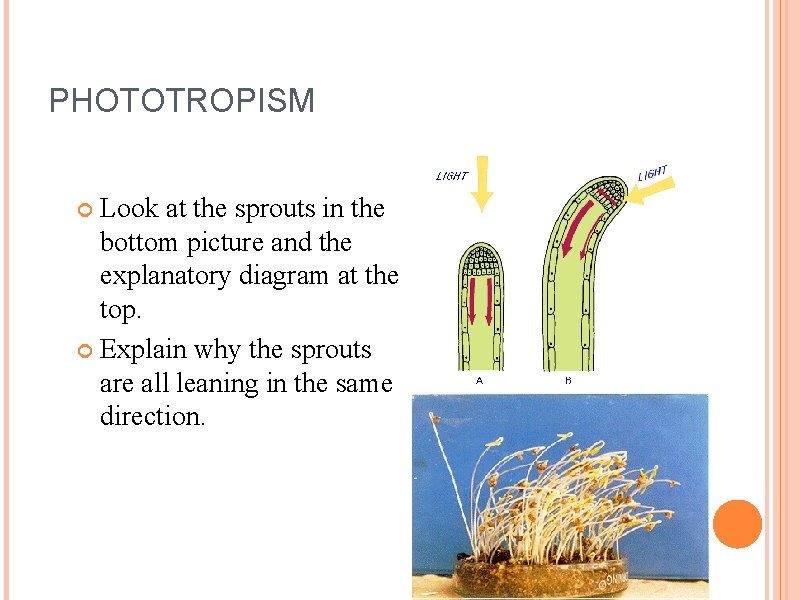
TROPISMS: CELL ELONGATION In general, tropisms involve cell elongation on one side of a plant suppression of cell elongation on the other side causing the plant to grow in a particular direction.
PHOTOTROPISM Look at the sprouts in the bottom picture and the explanatory diagram at the top. Explain why the sprouts are all leaning in the same direction.
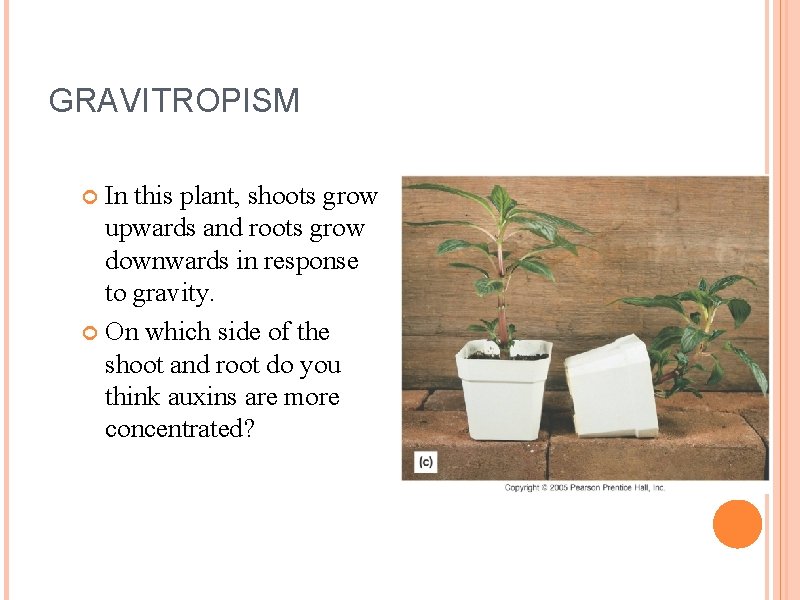
GRAVITROPISM In this plant, shoots grow upwards and roots grow downwards in response to gravity. On which side of the shoot and root do you think auxins are more concentrated?
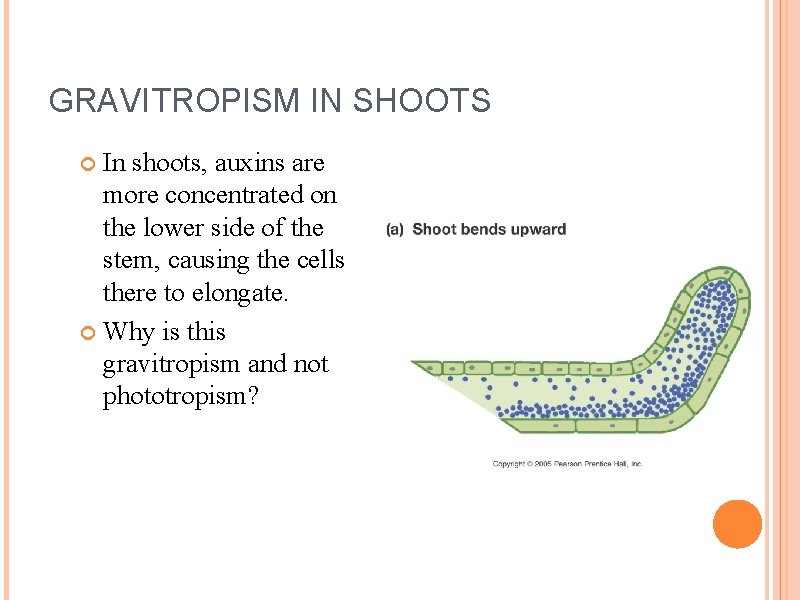
GRAVITROPISM IN SHOOTS In shoots, auxins are more concentrated on the lower side of the stem, causing the cells there to elongate. Why is this gravitropism and not phototropism?
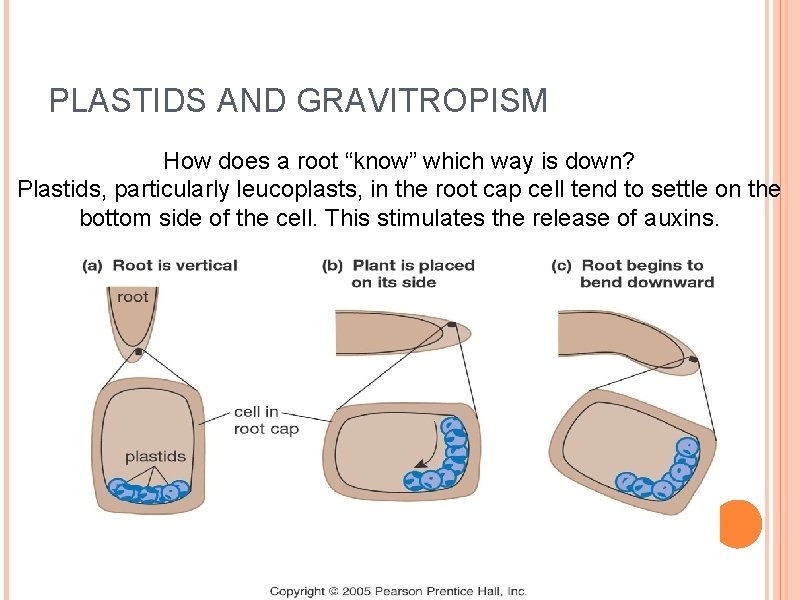
PLASTIDS AND GRAVITROPISM How does a root “know” which way is down? Plastids, particularly leucoplasts, in the root cap cell tend to settle on the bottom side of the cell. This stimulates the release of auxins.
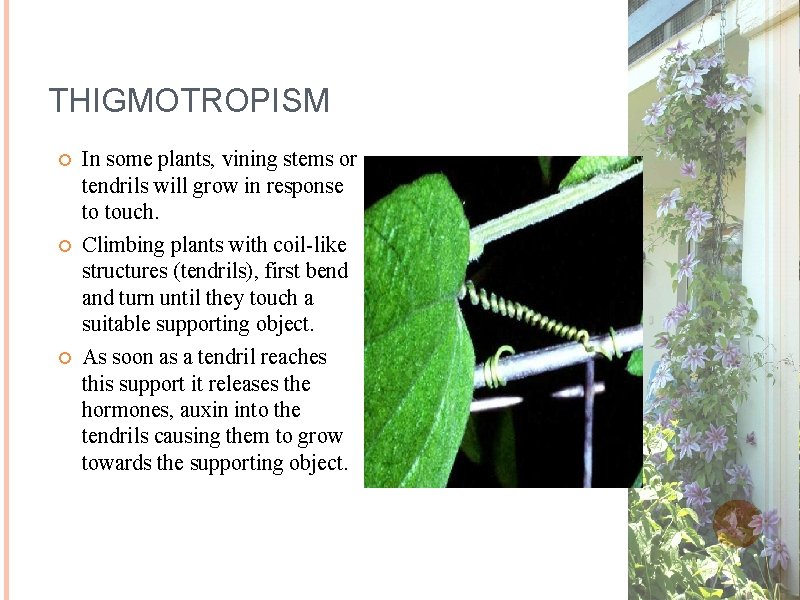
THIGMOTROPISM In some plants, vining stems or tendrils will grow in response to touch. Climbing plants with coil-like structures (tendrils), first bend and turn until they touch a suitable supporting object. As soon as a tendril reaches this support it releases the hormones, auxin into the tendrils causing them to grow towards the supporting object.