
Plant Reproduction Part 2 Pollination Fertilisation Pollination Pollination

- Slides: 10
Plant Reproduction Part 2: Pollination & Fertilisation
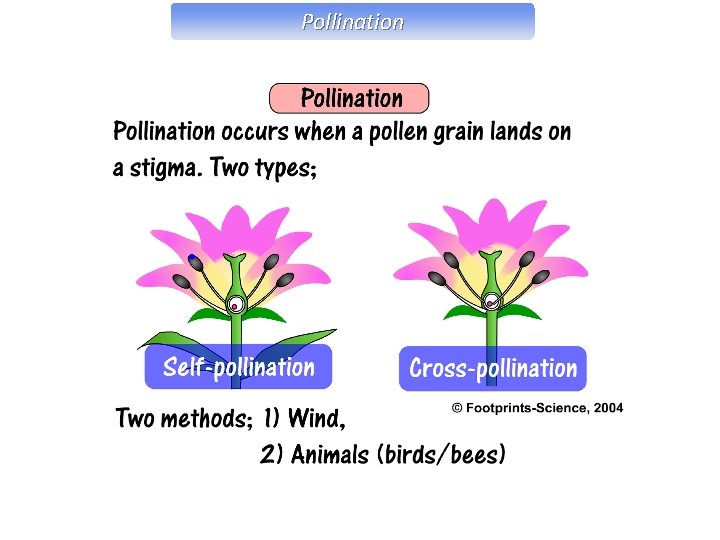
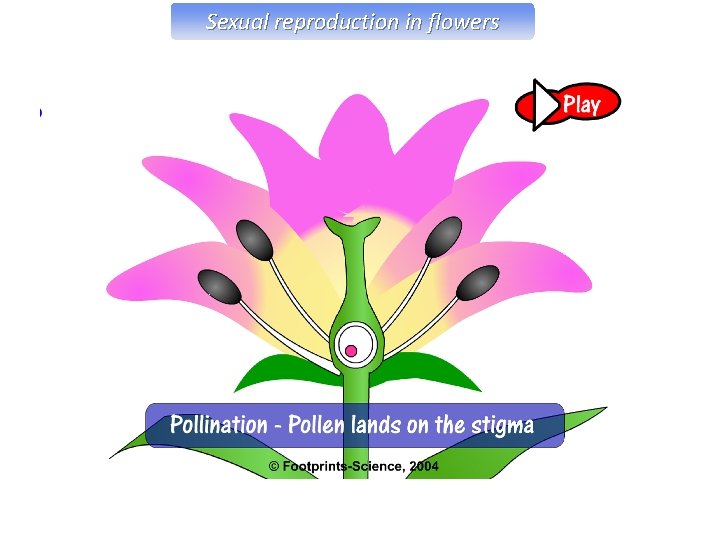
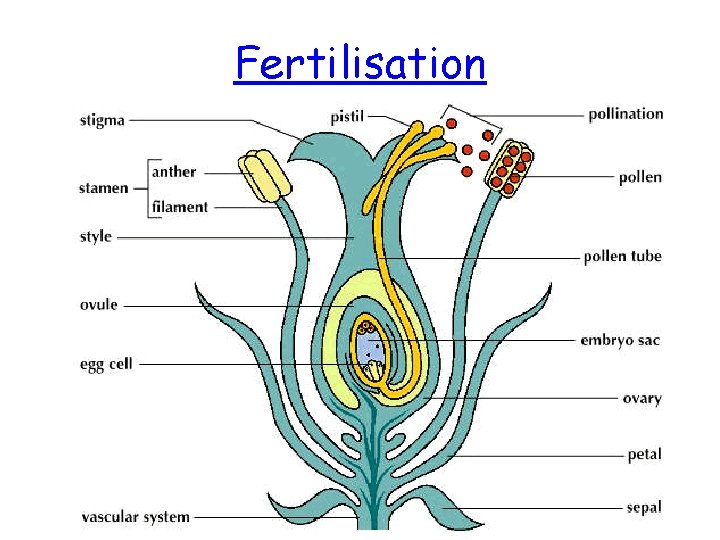
Pollination • Pollination involves the transfer of pollen (male gamete) from the anther to the stigma (outermost female part) • If it is in the same flower it is called self-pollination. • If between different flowers it is called cross-pollination • Plants are pollinated by insects or the wind.
Pollination
Sexual reproduction in flowers
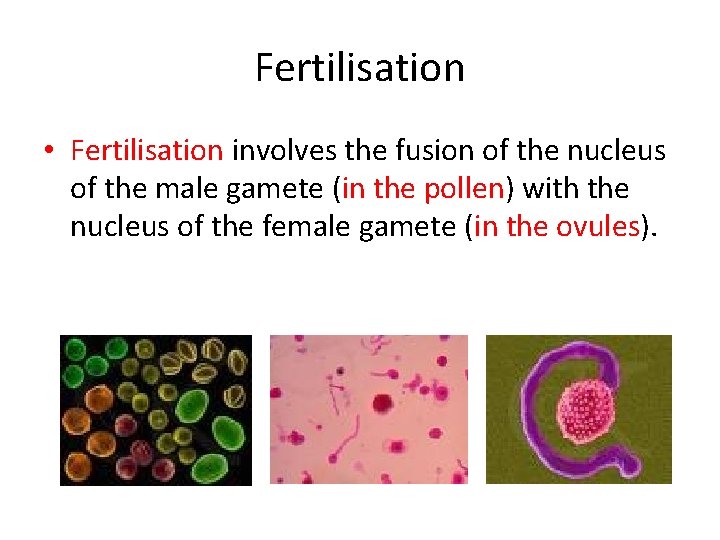
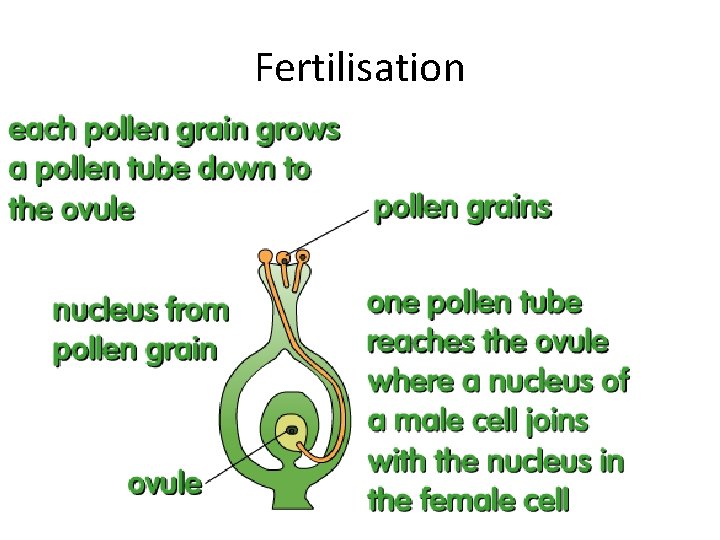
Fertilisation • Fertilisation involves the fusion of the nucleus of the male gamete (in the pollen) with the nucleus of the female gamete (in the ovules).
Fertilisation
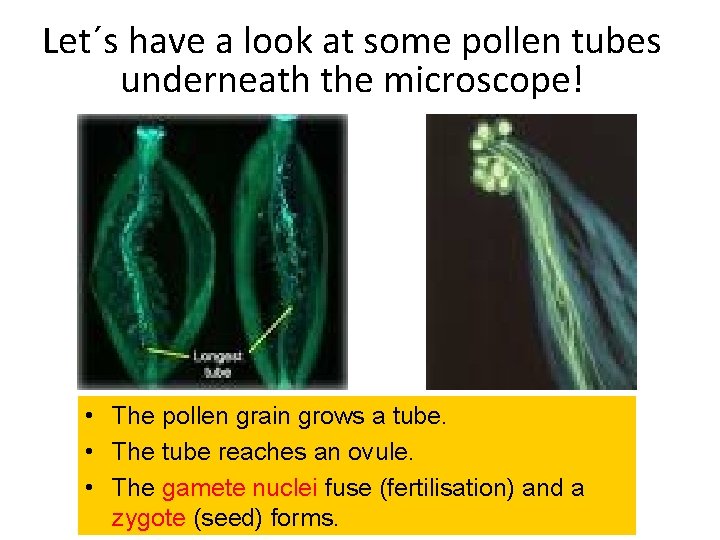
Let´s have a look at some pollen tubes underneath the microscope! • The pollen grain grows a tube. • The tube reaches an ovule. • The gamete nuclei fuse (fertilisation) and a zygote (seed) forms.
Fertilisation
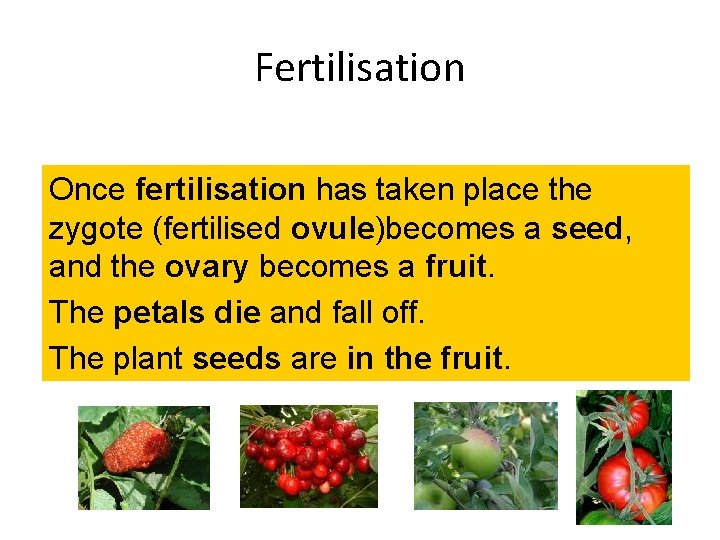
Fertilisation Once fertilisation has taken place the zygote (fertilised ovule)becomes a seed, and the ovary becomes a fruit. The petals die and fall off. The plant seeds are in the fruit.
What are fruits like? The fruits can be: - soft & fleshy - hard & dry • Write the names of as many fruit as you can think of as a group and write them on a card • Stick them on the correct side of the class • Everyone pick a fruit card and your job is to bring that piece of fruit in for next lesson!