
Plant Reproduction Ferns Fern Reproduction The reproduction process
- Slides: 36
Plant Reproduction
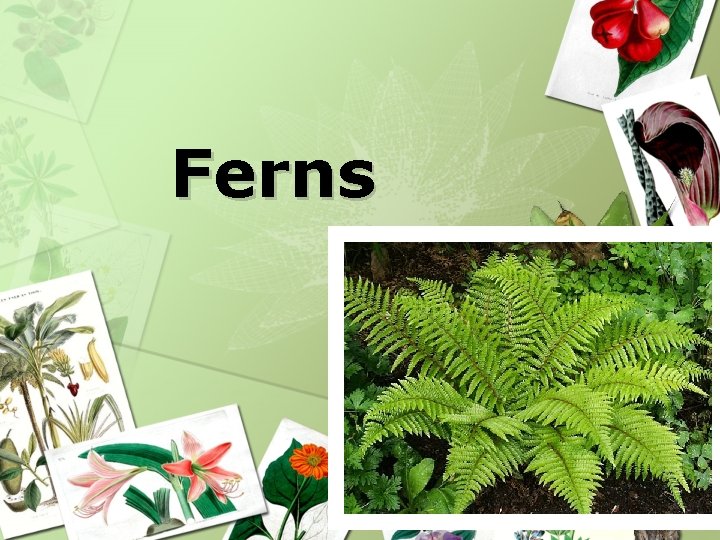
Ferns
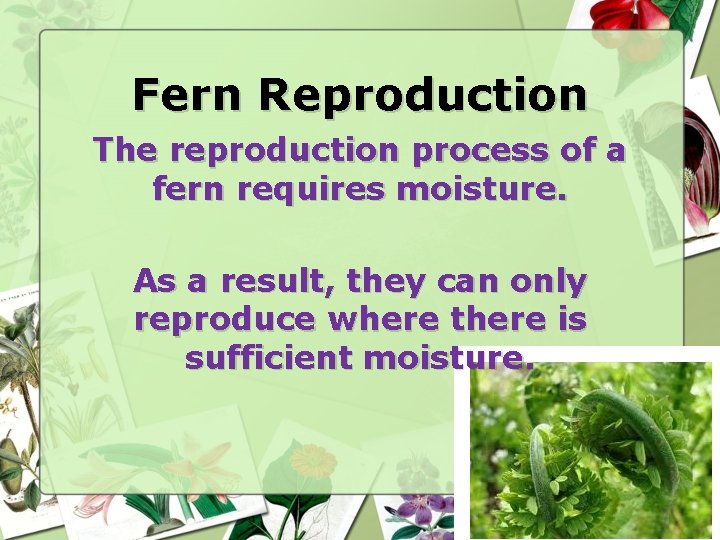
Fern Reproduction The reproduction process of a fern requires moisture. As a result, they can only reproduce where there is sufficient moisture.
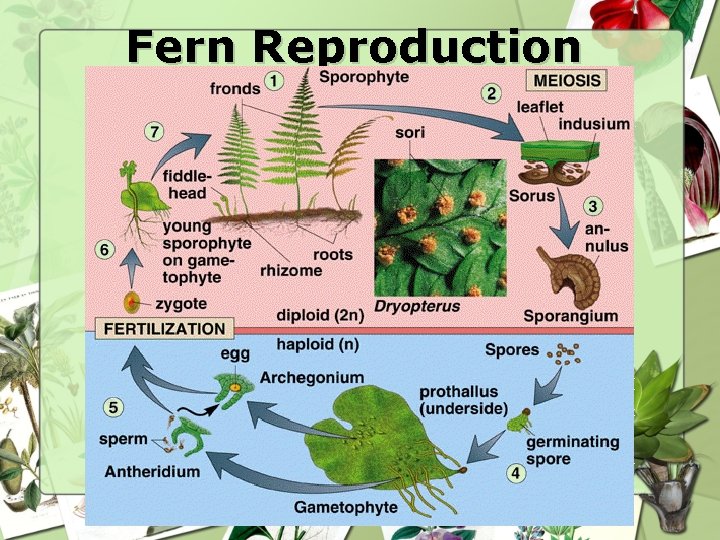
Fern Reproduction
Seed Plants
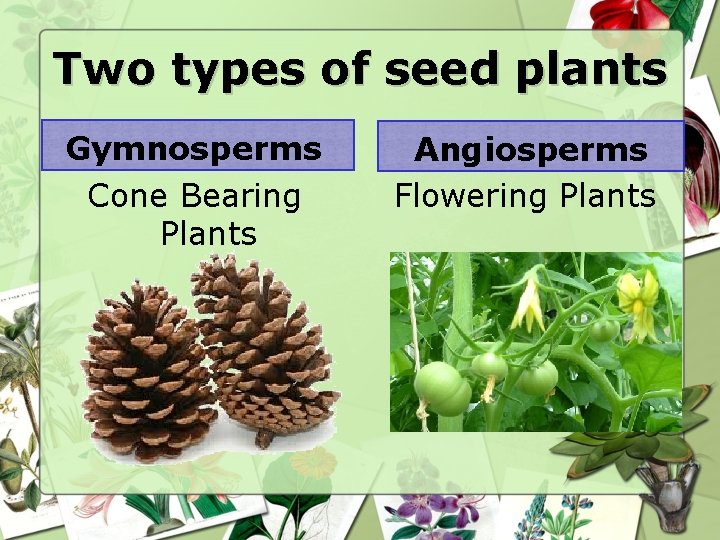
Two types of seed plants Gymnosperms Cone Bearing Plants Angiosperms Flowering Plants
Gymnosperms “ Naked Seeds” Seeds produced in a cone They do not produce fruit.
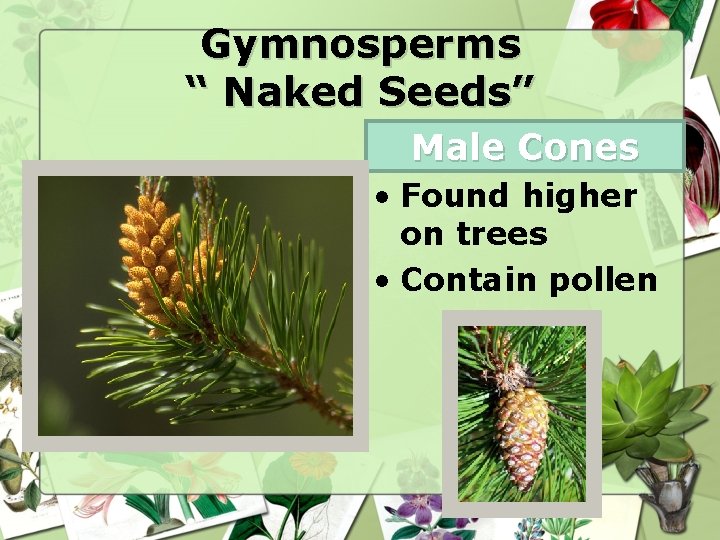
Gymnosperms “ Naked Seeds” Male Cones • Found higher on trees • Contain pollen
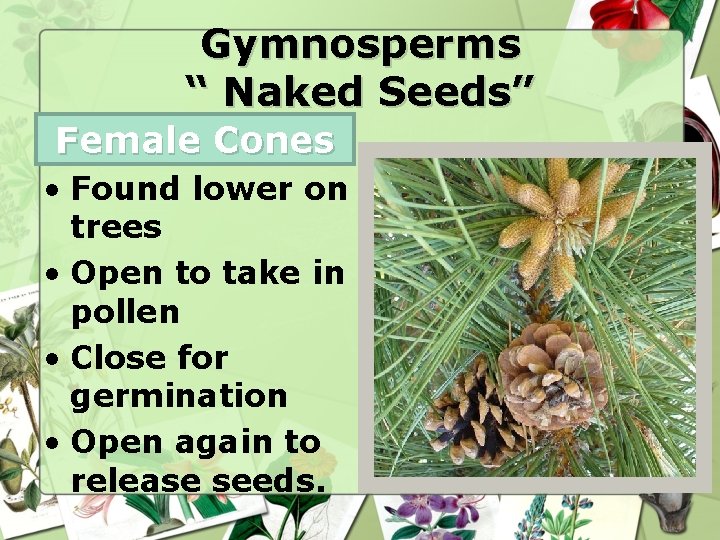
Gymnosperms “ Naked Seeds” Female Cones • Found lower on trees • Open to take in pollen • Close for germination • Open again to release seeds.
Angiosperms Flowering plants that produce seeds in fruit. Seeds are covered with a seed coat.
Angiosperms There are 2 key features of angiosperms. 1. Flowers 2. Fruits
Flower Structure and Function
What are flowers for? Flowers are the reproductive organs of angiosperms.
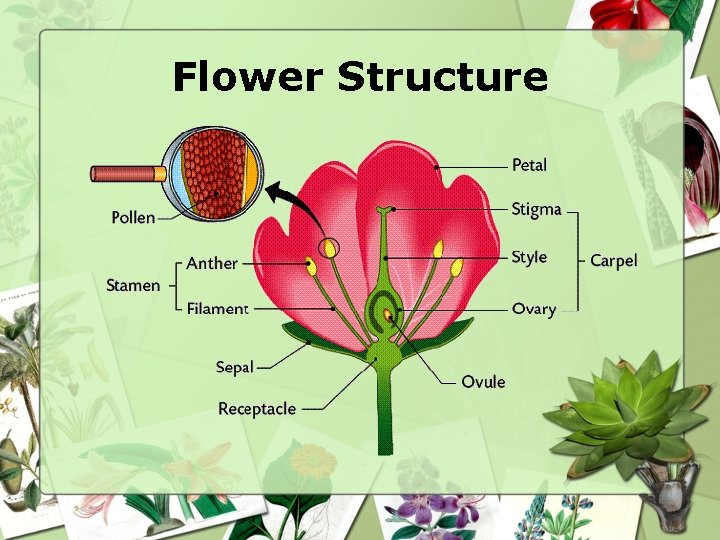
Flower Structure
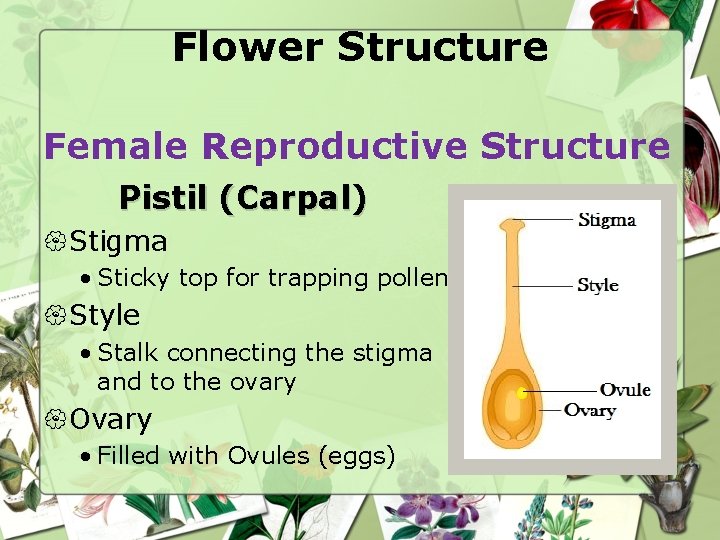
Flower Structure Female Reproductive Structure Pistil (Carpal) Stigma • Sticky top for trapping pollen. Style • Stalk connecting the stigma and to the ovary Ovary • Filled with Ovules (eggs)
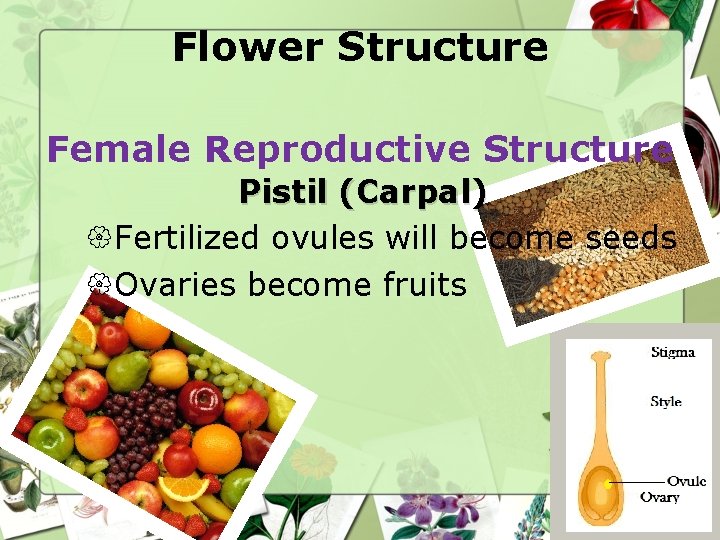
Flower Structure Female Reproductive Structure Pistil (Carpal) Fertilized ovules will become seeds Ovaries become fruits
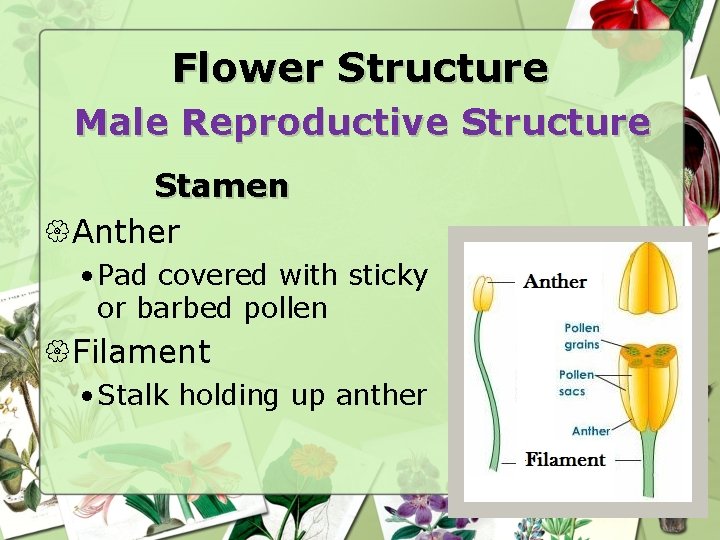
Flower Structure Male Reproductive Structure Stamen Anther • Pad covered with sticky or barbed pollen Filament • Stalk holding up anther
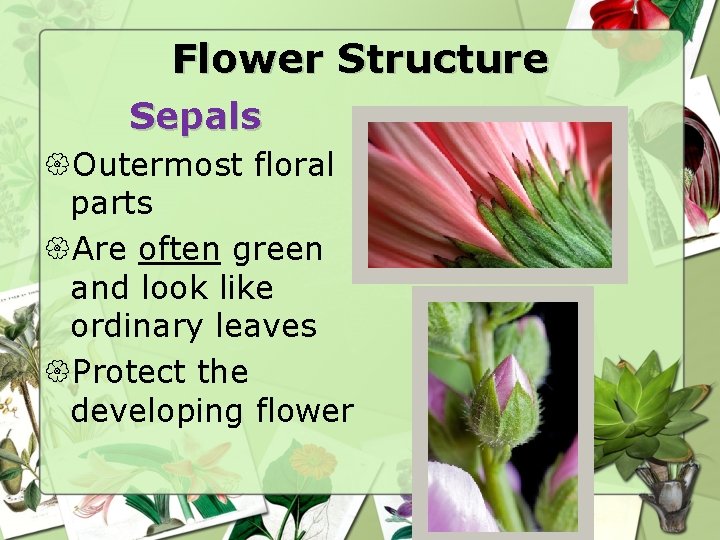
Flower Structure Sepals Outermost floral parts Are often green and look like ordinary leaves Protect the developing flower
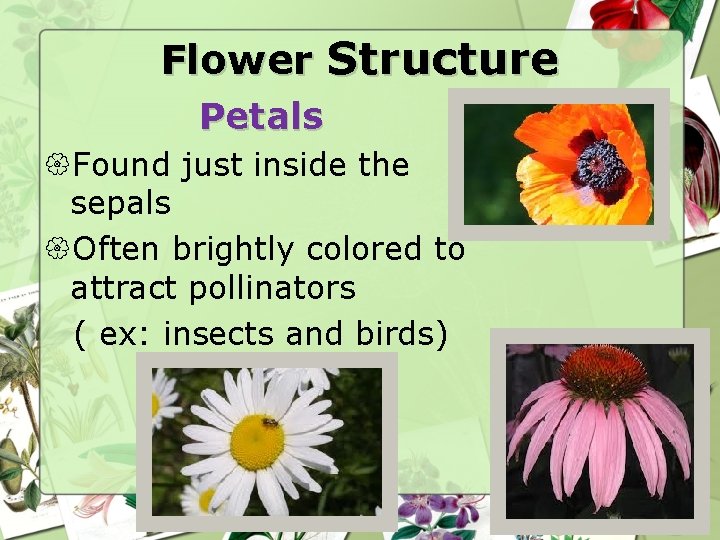
Flower Structure Petals Found just inside the sepals Often brightly colored to attract pollinators ( ex: insects and birds)
Types of Flower Some flowers can be missing some parts.
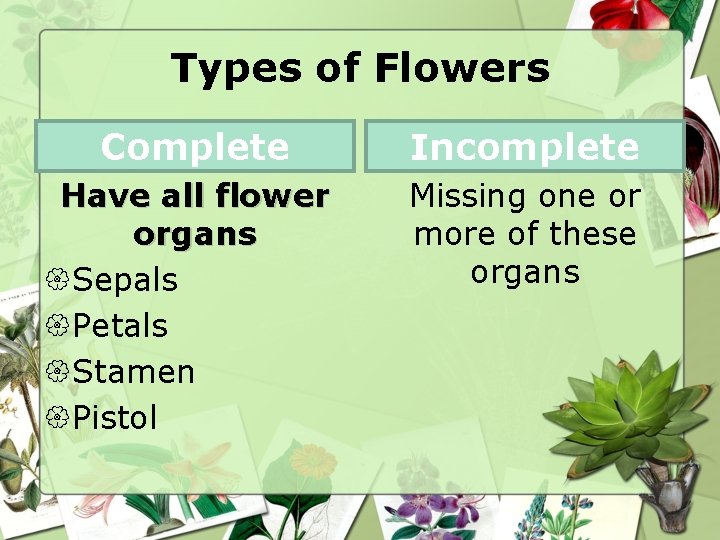
Types of Flowers Complete Incomplete Have all flower organs Sepals Petals Stamen Pistol Missing one or more of these organs
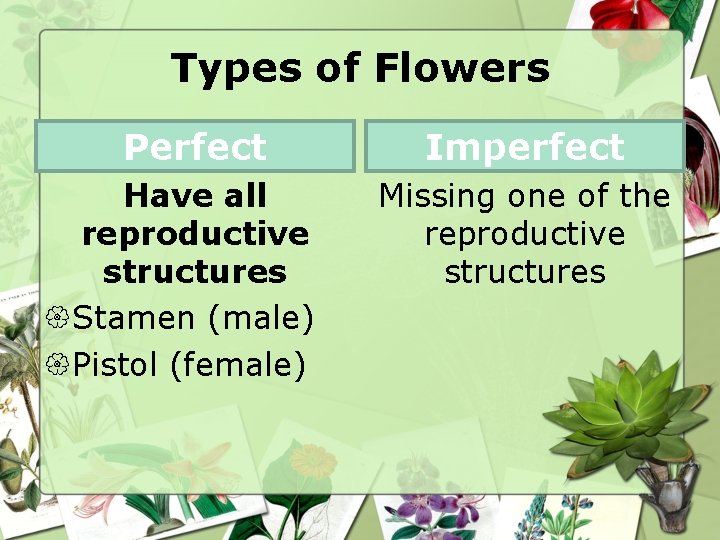
Types of Flowers Perfect Have all reproductive structures Stamen (male) Pistol (female) Imperfect Missing one of the reproductive structures
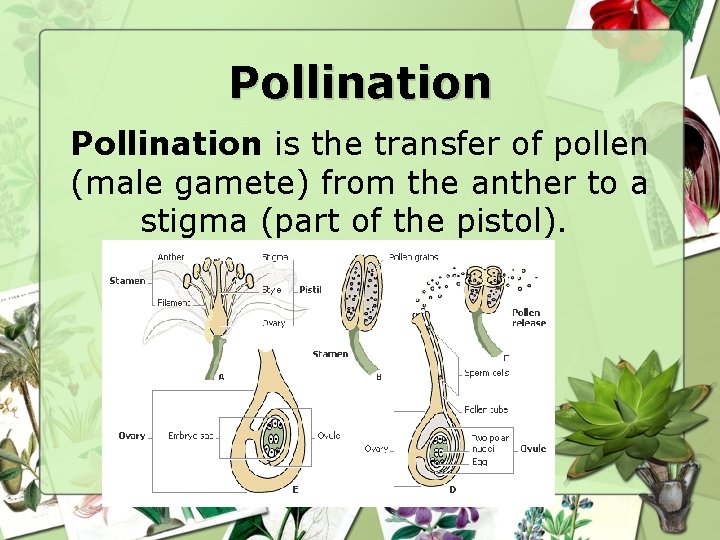
Pollination is the transfer of pollen (male gamete) from the anther to a stigma (part of the pistol).
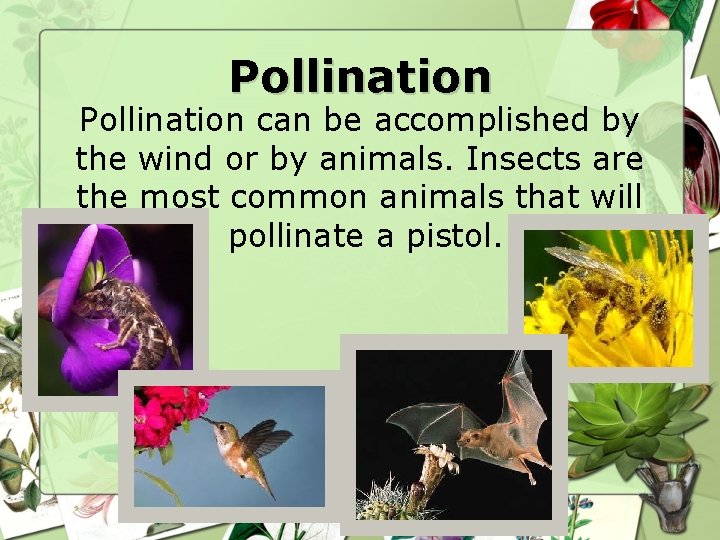
Pollination can be accomplished by the wind or by animals. Insects are the most common animals that will pollinate a pistol.
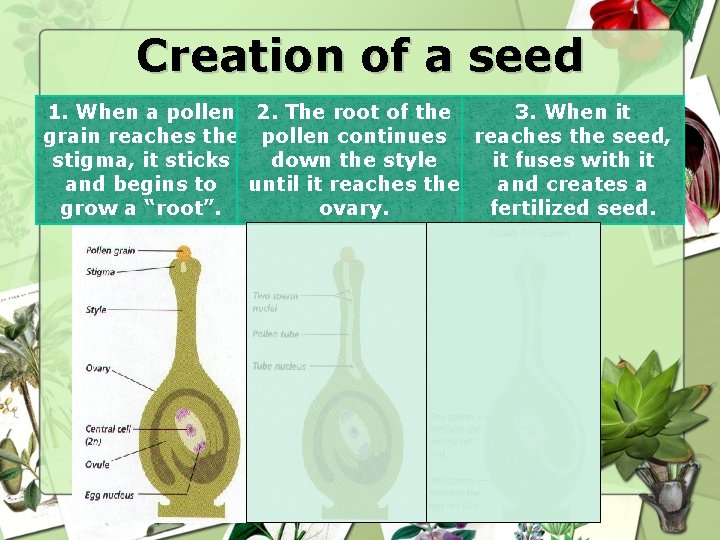
Creation of a seed 1. When a pollen 2. The root of the 3. When it grain reaches the pollen continues reaches the seed, stigma, it sticks down the style it fuses with it and begins to until it reaches the and creates a grow a “root”. ovary. fertilized seed.
Fruits Mature, ripened ovary For protection and dispersal of seeds
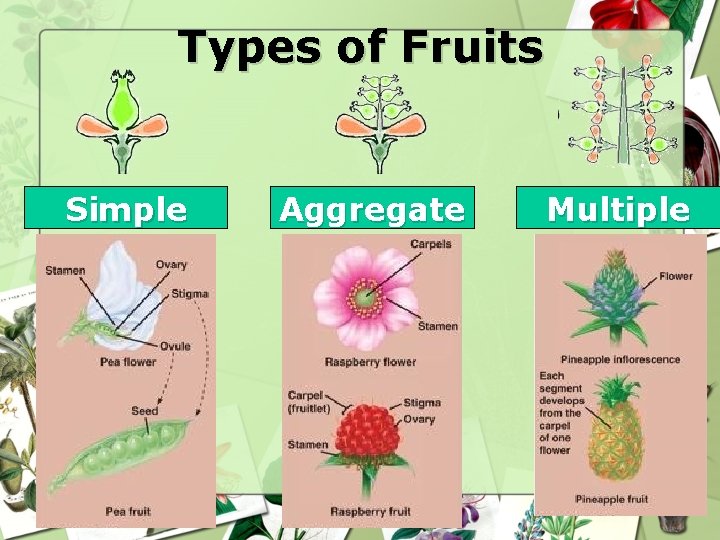
Types of Fruits Simple Aggregate Multiple
Types of Angiosperms There are two types of angiosperms 1. Monocots & 2. Dicots
What do monocot and dicot mean? Mono = One Di = Two Cot refers to the term cotyledon This is the first leaf or leaves produced by a sprouting plant
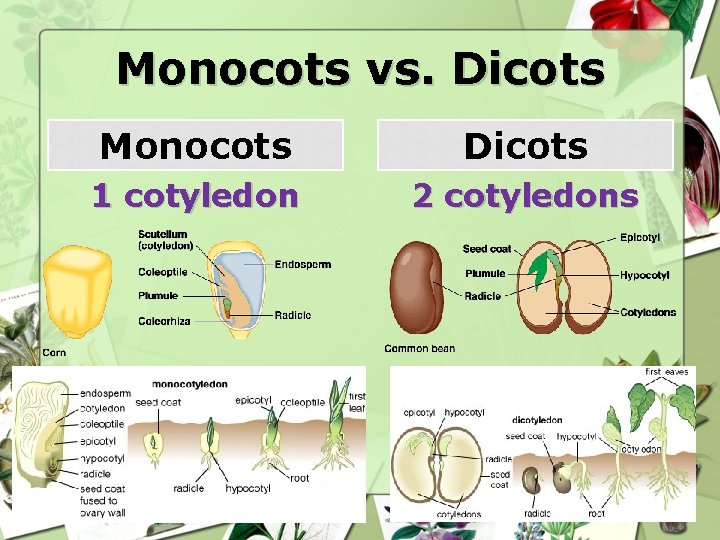
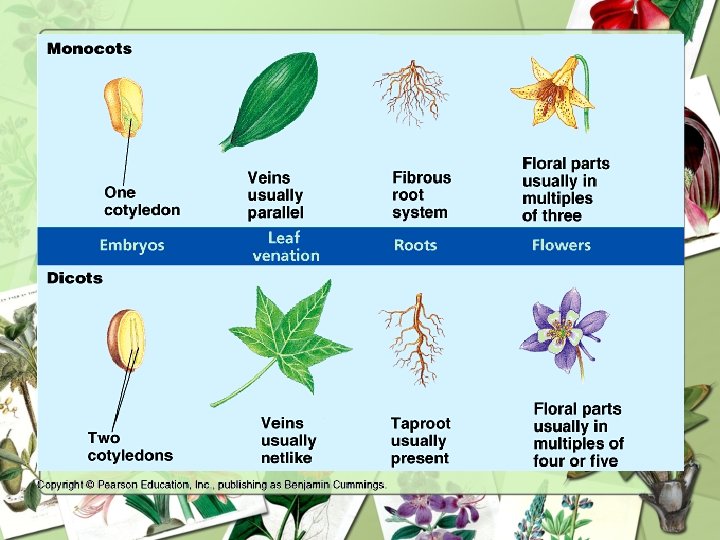
Monocots vs. Dicots Monocots Dicots 1 cotyledon 2 cotyledons
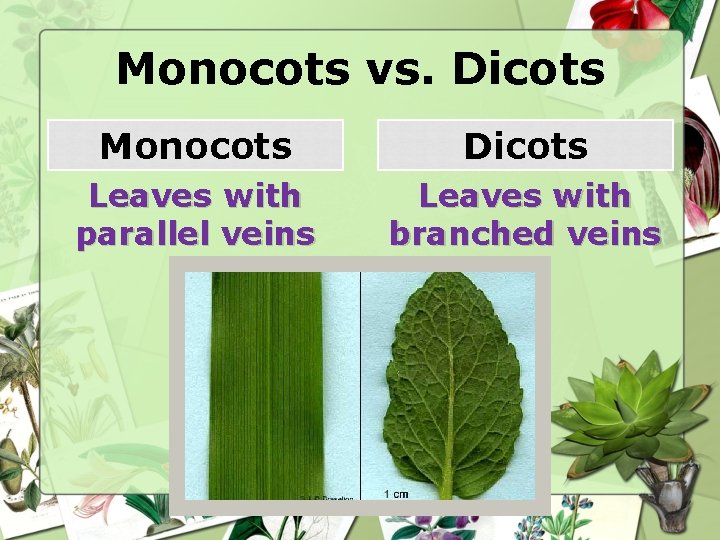
Monocots vs. Dicots Monocots Dicots Leaves with parallel veins Leaves with branched veins
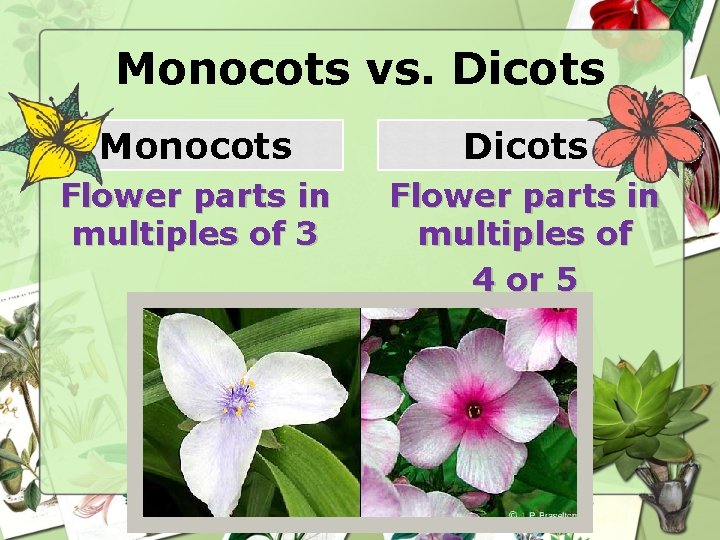
Monocots vs. Dicots Monocots Dicots Flower parts in multiples of 3 Flower parts in multiples of 4 or 5
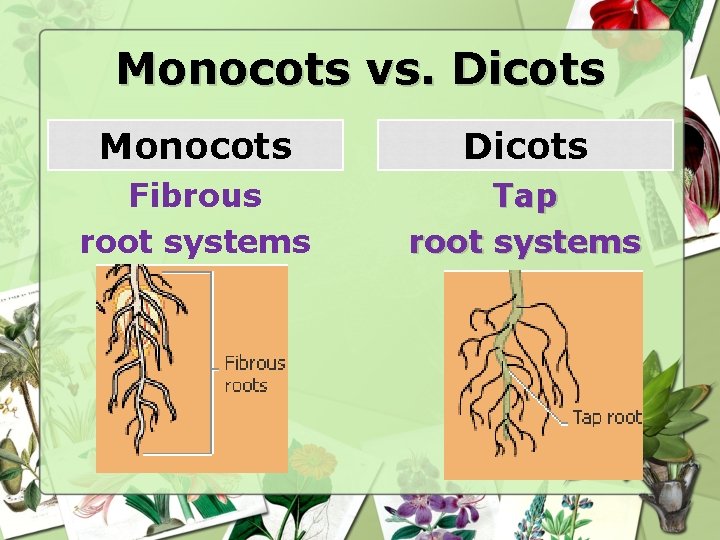
Monocots vs. Dicots Monocots Dicots Fibrous root systems Tap root systems
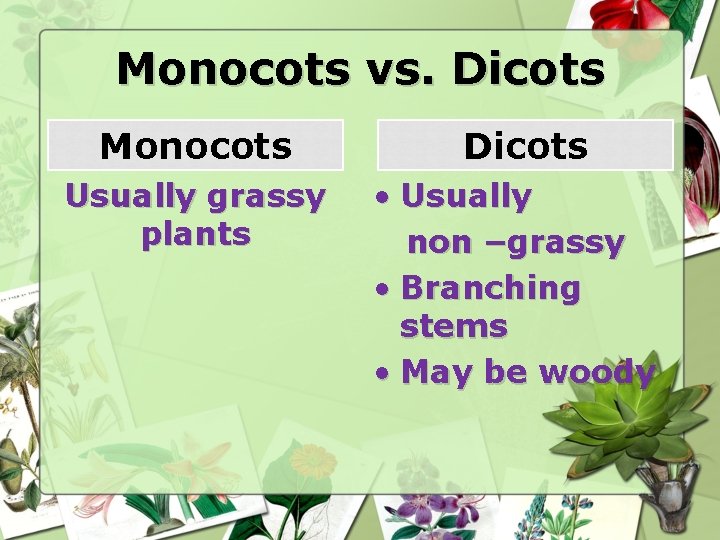
Monocots vs. Dicots Monocots Usually grassy plants Dicots • Usually non –grassy • Branching stems • May be woody
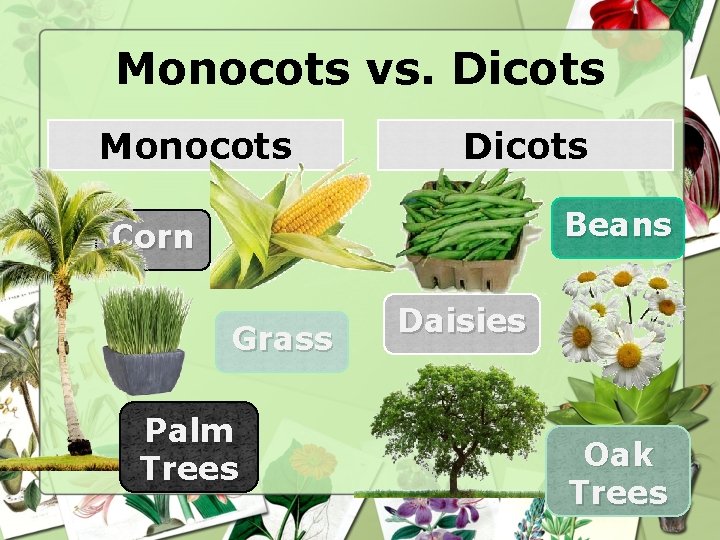
Monocots vs. Dicots Monocots Dicots Beans Corn Grass Palm Trees Daisies Oak Trees