
Plant Propagation Greenhouse Mrs Michaud Seeds Cuttings SeparationDivision

- Slides: 27
Plant Propagation Greenhouse Mrs. Michaud
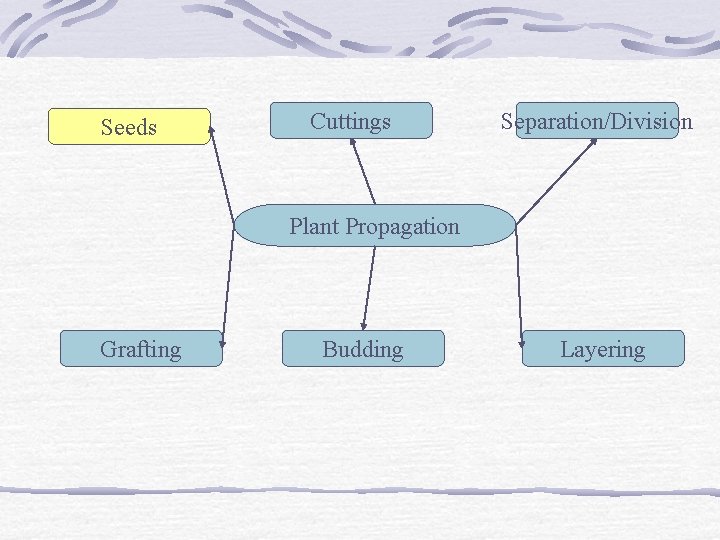
Seeds Cuttings Separation/Division Plant Propagation Grafting Budding Layering
What is Propagation Reproducing Plants Most common way to propagate is through seeds A sexual process through the union of pollen (male sex cell) with the egg (female sex cell) Can be through self-pollination and cross-pollination
What is Propagation Propagating by seed will not always produce exact duplicate of parent Hybrids are the offspring of two different cultivars To get exact duplicates asexual reproduction must be used Sexual reproduction involves the seed, fruit, and flower Asexual reproduction involves the roots, stems, and leaves
What is Propagation Asexual Reproduction Cuttings Separation and division Grafting Layering Budding Each single plant contains the exact set of DNA as the parent plant Tissue culture is also asexual reproduction
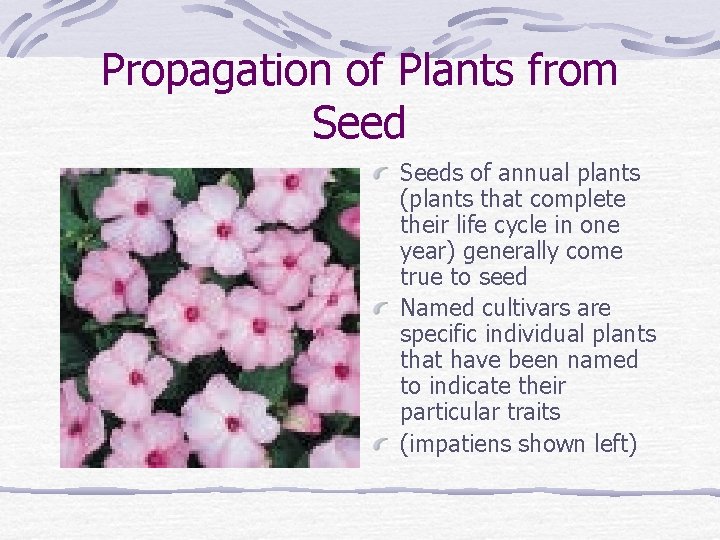
Propagation of Plants from Seeds of annual plants (plants that complete their life cycle in one year) generally come true to seed Named cultivars are specific individual plants that have been named to indicate their particular traits (impatiens shown left)
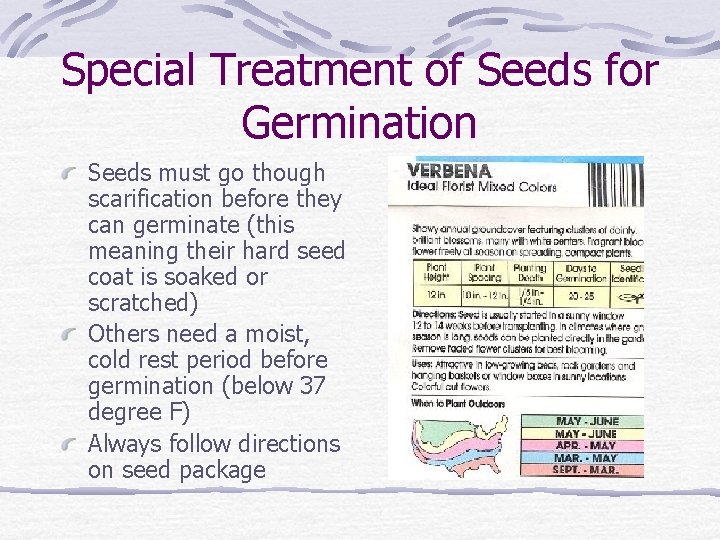
Special Treatment of Seeds for Germination Seeds must go though scarification before they can germinate (this meaning their hard seed coat is soaked or scratched) Others need a moist, cold rest period before germination (below 37 degree F) Always follow directions on seed package
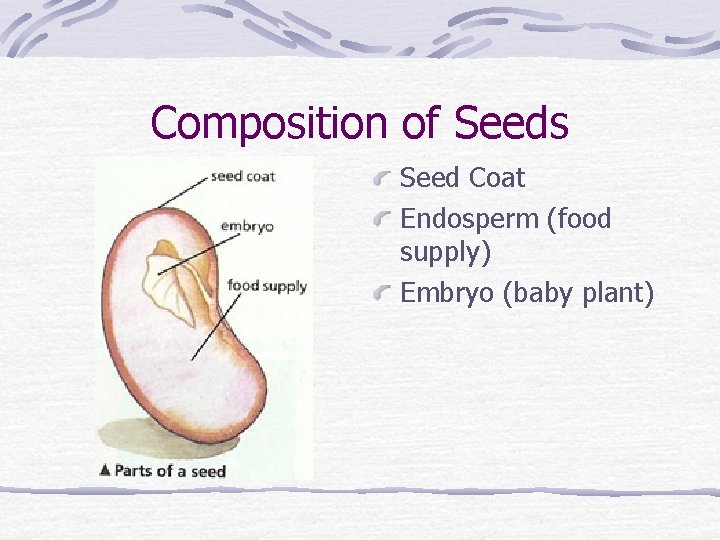
Composition of Seeds Seed Coat Endosperm (food supply) Embryo (baby plant)
Identification and Selection of Seed Identify seeds grown locally Select seeds tested for germination ability/purity Purchase seeds from a reliable dealer Chose hybrid varieties for greater vigor Select uniform heavyweight or primed seeds
Improvement of Seeds Seed quality has been improved and seeds sorted by weight Seeds are primed or enhanced (soaked in KCl to make enzymes active) This allows for a more uniform and successful crop
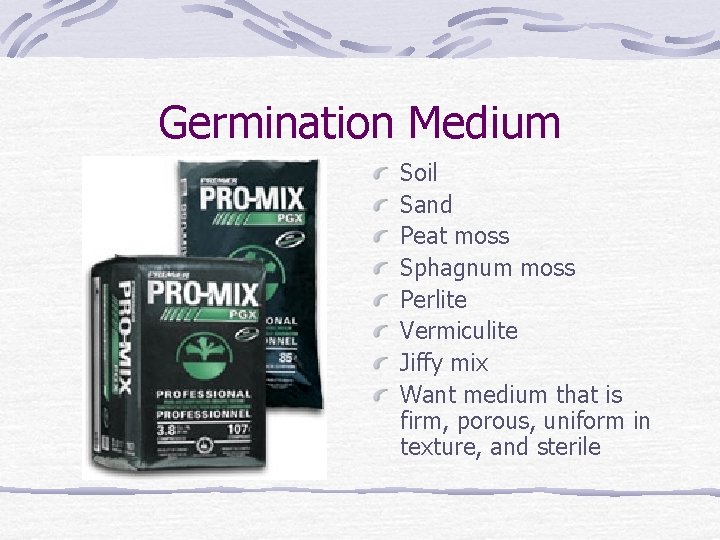
Germination Medium Soil Sand Peat moss Sphagnum moss Perlite Vermiculite Jiffy mix Want medium that is firm, porous, uniform in texture, and sterile
Review from Friday What is propagation? What is the difference between asexual and sexual reproduction in plants? What are three parts of a seed? What parts of the plant are used in sexual reproduction?
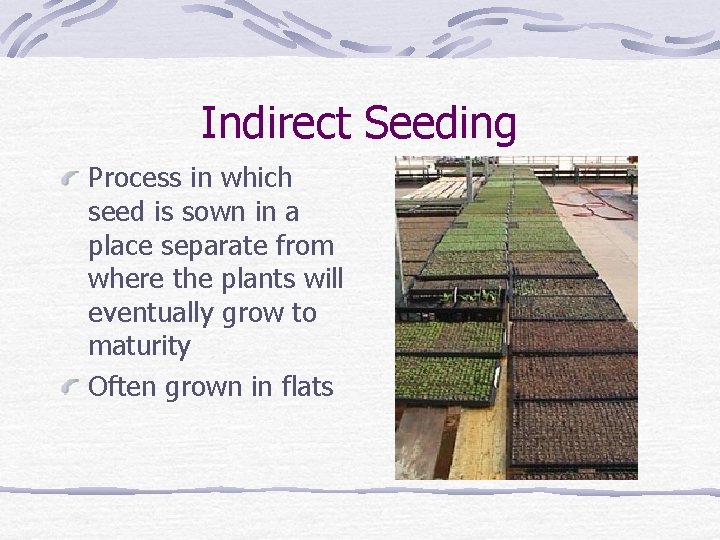
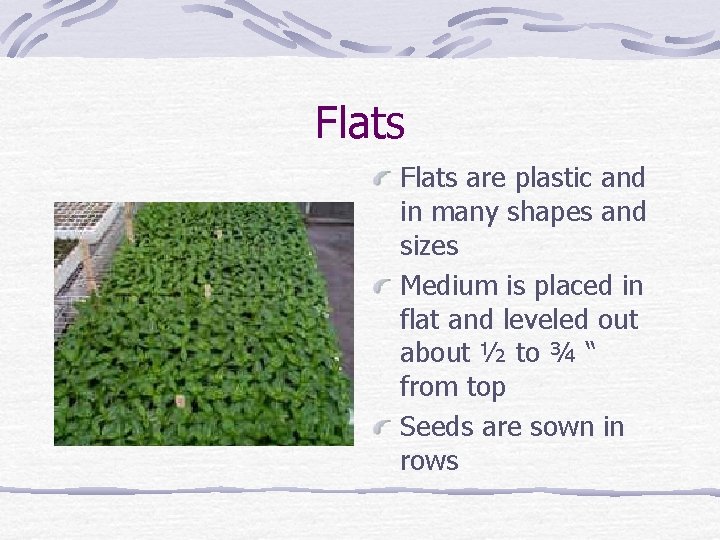
Indirect Seeding Process in which seed is sown in a place separate from where the plants will eventually grow to maturity Often grown in flats
Flats are plastic and in many shapes and sizes Medium is placed in flat and leveled out about ½ to ¾ “ from top Seeds are sown in rows
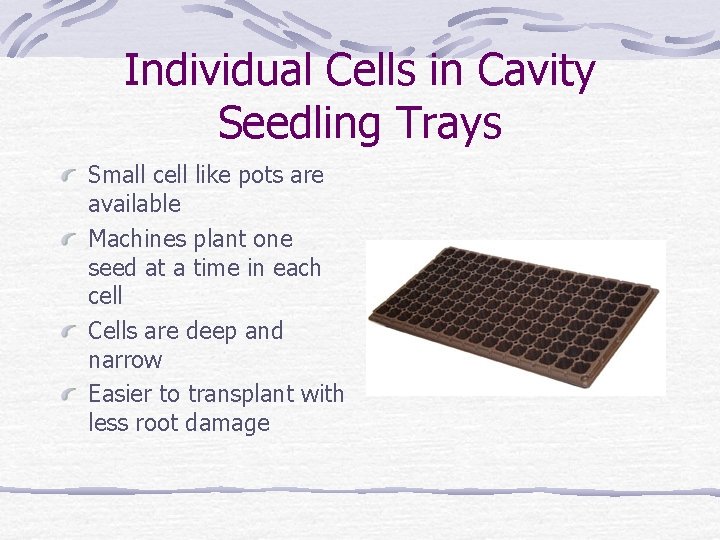
Individual Cells in Cavity Seedling Trays Small cell like pots are available Machines plant one seed at a time in each cell Cells are deep and narrow Easier to transplant with less root damage
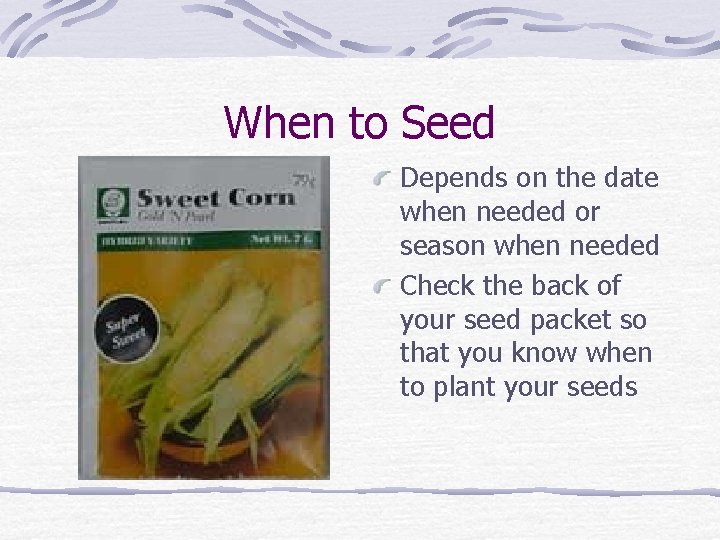
When to Seed Depends on the date when needed or season when needed Check the back of your seed packet so that you know when to plant your seeds
When to Seed Example Eggplant – 8 weeks before transplanting If you want them ready to plant outside by June 1 then you should plant them inside by April 1
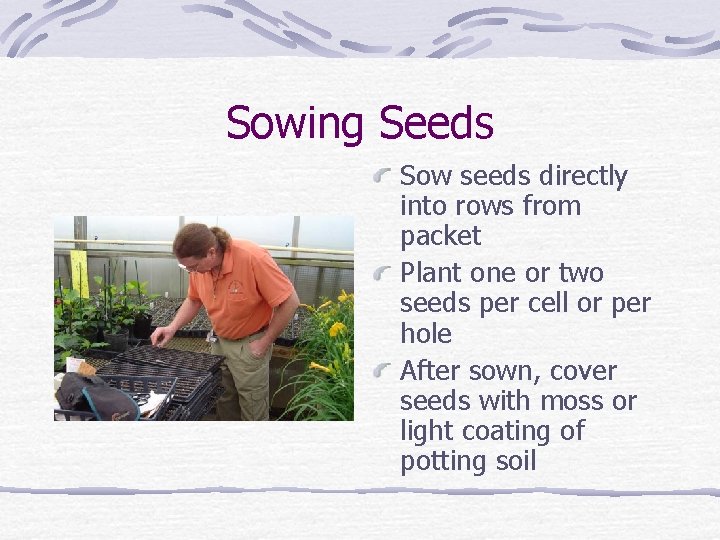
Sowing Seeds Sow seeds directly into rows from packet Plant one or two seeds per cell or per hole After sown, cover seeds with moss or light coating of potting soil
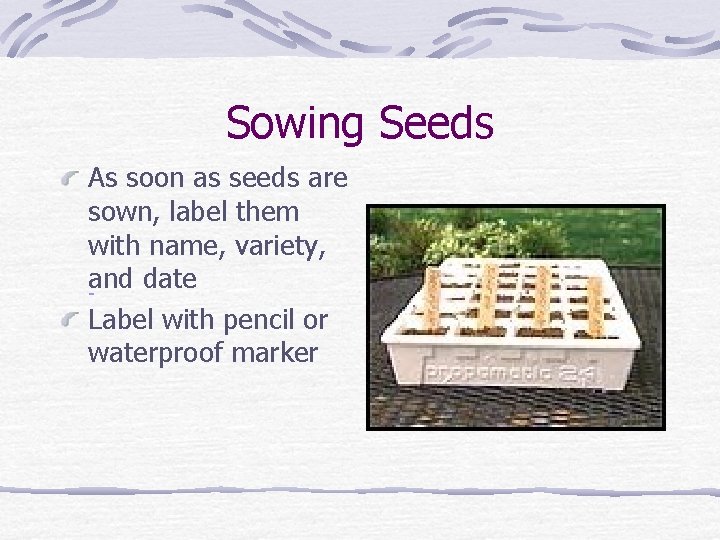
Sowing Seeds As soon as seeds are sown, label them with name, variety, and date Label with pencil or waterproof marker
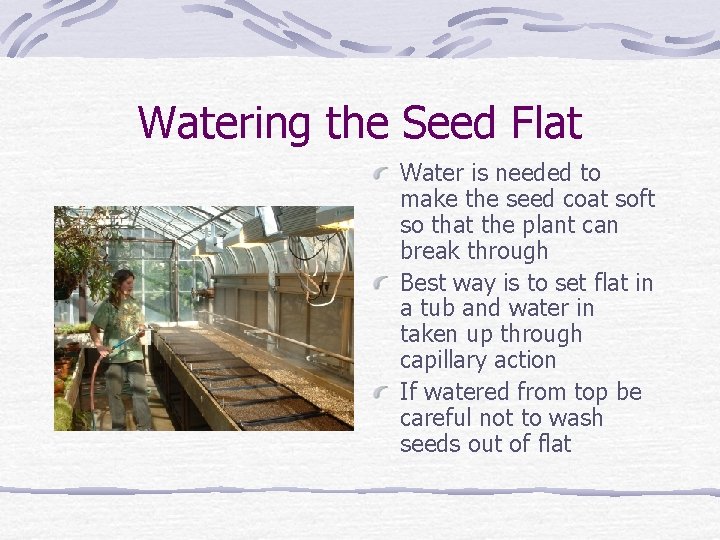
Watering the Seed Flat Water is needed to make the seed coat soft so that the plant can break through Best way is to set flat in a tub and water in taken up through capillary action If watered from top be careful not to wash seeds out of flat
Conditions for Germination Should receive a bottom heat of 6570 degree F After germination soil must be kept moist but not wet Seedlings should be fed weekly with a water-soluble fertilizer
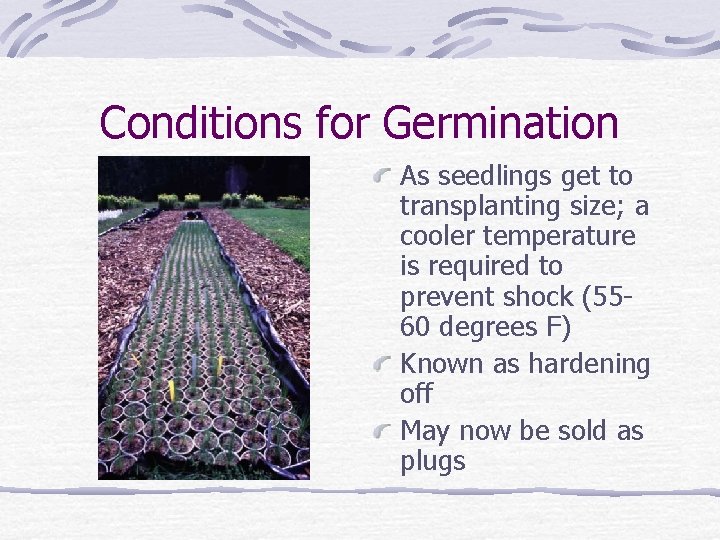
Conditions for Germination As seedlings get to transplanting size; a cooler temperature is required to prevent shock (5560 degrees F) Known as hardening off May now be sold as plugs
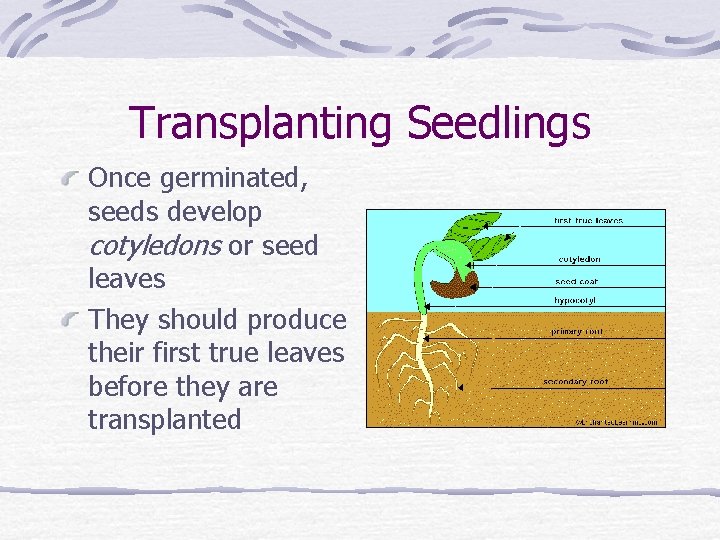
Transplanting Seedlings Once germinated, seeds develop cotyledons or seed leaves They should produce their first true leaves before they are transplanted
Transplanting Seedlings When handling; hold them by their true leaves with thumb and forefinger never by the stem Use a label to push roots out; do not yank roots out of soil Do not shake off medium from roots Plant seedlings one by one about two inches apart in a flat or in separate cells
Transplanting Seedlings Make a hole in the medium and put the seedling in the hole Gently press the medium around seedling Water soil surface with a gentle stream of warm water to allow soil to settle around roots Label pots with name, variety, and date
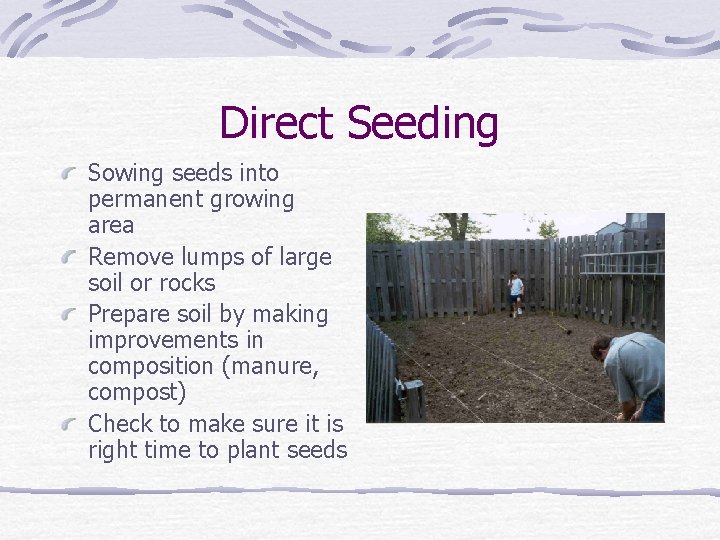
Direct Seeding Sowing seeds into permanent growing area Remove lumps of large soil or rocks Prepare soil by making improvements in composition (manure, compost) Check to make sure it is right time to plant seeds
Review Questions What is the difference between direct seeding and indirect seeding? When can you determine if plants are ready to be transplanted? What is the importance of labeling plants recently planted? Concept Question How important is growing plants from seed in regards to plant propagation?