
Plant Propagation by Division and Separation A subtle
Plant Propagation by Division and Separation
A subtle difference • Division – plant parts were not intended to be separated (at least not immediately, perhaps by death) – requires us to cut or pull plants apart • Separation – Plant parts are formed with the intention of detaching (specific abscission zone) – plant parts detach naturally (although we may help)
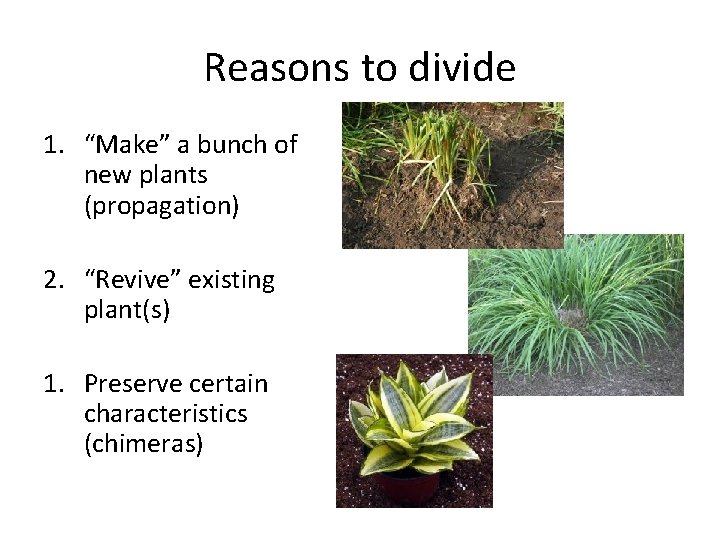
Reasons to divide 1. “Make” a bunch of new plants (propagation) 2. “Revive” existing plant(s) 1. Preserve certain characteristics (chimeras)
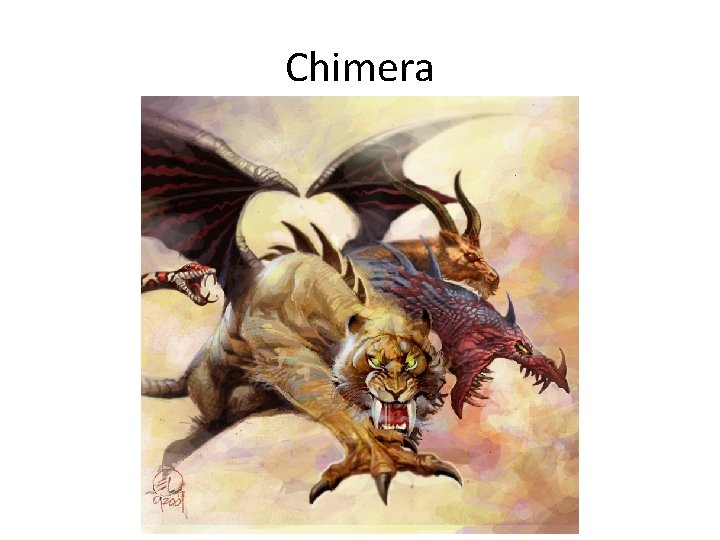
Chimera
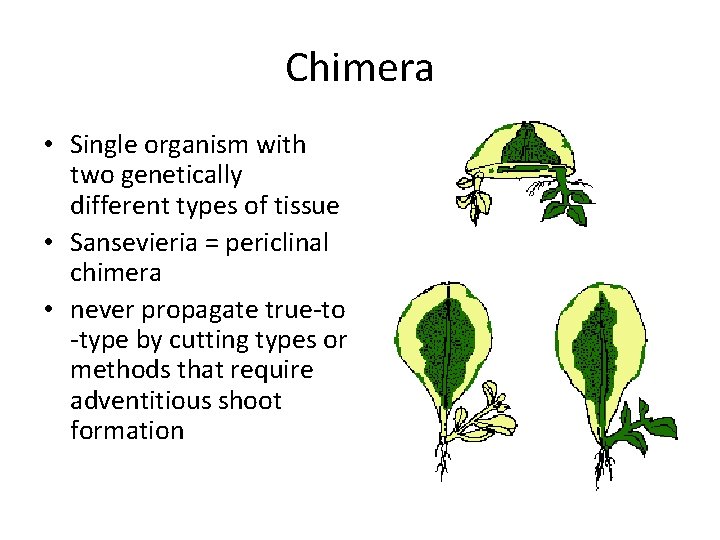
Chimera • Single organism with two genetically different types of tissue • Sansevieria = periclinal chimera • never propagate true-to -type by cutting types or methods that require adventitious shoot formation

Division • Stolons • “Runners” • Horizontal stem (usually above ground) • One of many stems • Often thin with long internodes • Develop plantlets at the nodes • Examples (Fragaria, Ajuga, Spider Plant, Cynodon, Zoysia) • Anytime you have roots or go into mist
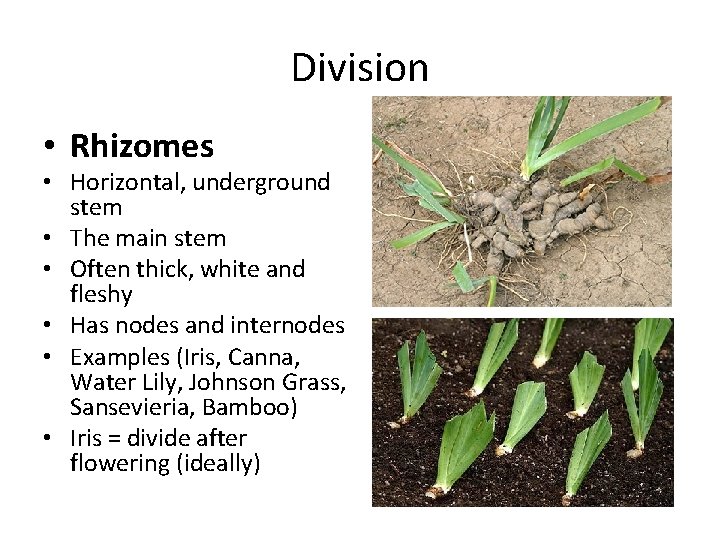
Division • Rhizomes • Horizontal, underground stem • The main stem • Often thick, white and fleshy • Has nodes and internodes • Examples (Iris, Canna, Water Lily, Johnson Grass, Sansevieria, Bamboo) • Iris = divide after flowering (ideally)
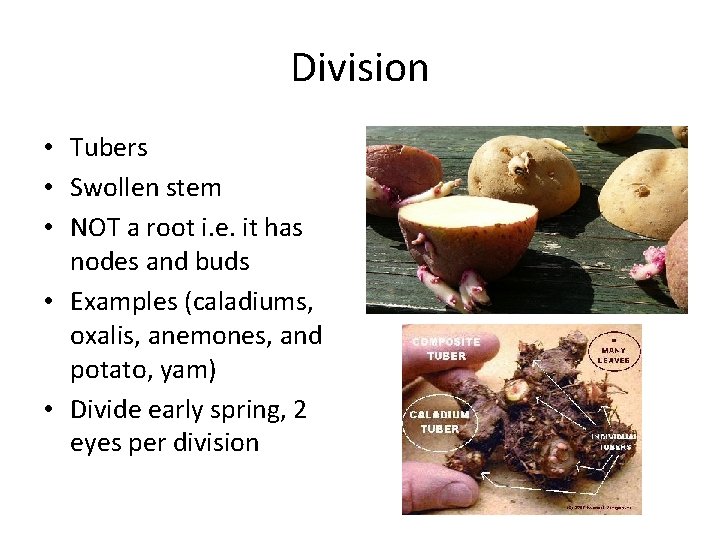
Division • Tubers • Swollen stem • NOT a root i. e. it has nodes and buds • Examples (caladiums, oxalis, anemones, and potato, yam) • Divide early spring, 2 eyes per division
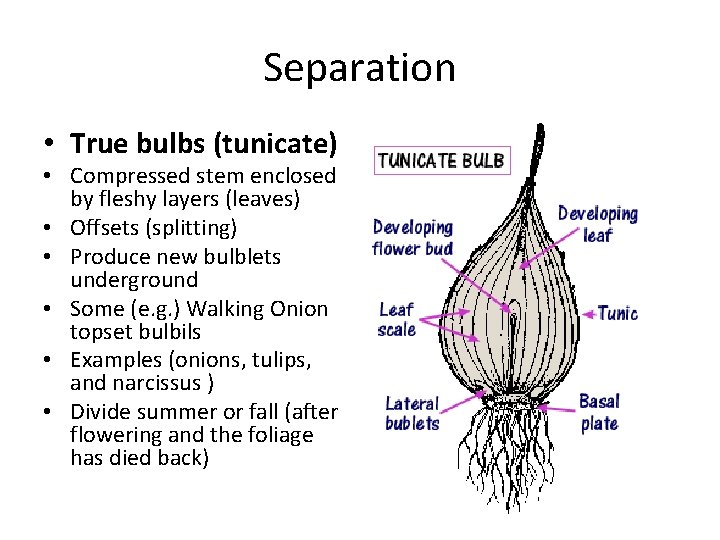
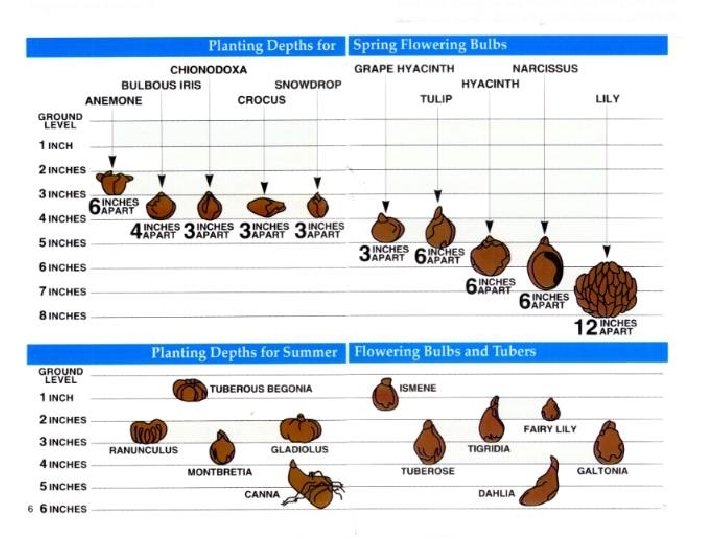
Separation • True bulbs (tunicate) • Compressed stem enclosed by fleshy layers (leaves) • Offsets (splitting) • Produce new bulblets underground • Some (e. g. ) Walking Onion topset bulbils • Examples (onions, tulips, and narcissus ) • Divide summer or fall (after flowering and the foliage has died back)

Walking Onion bulbils
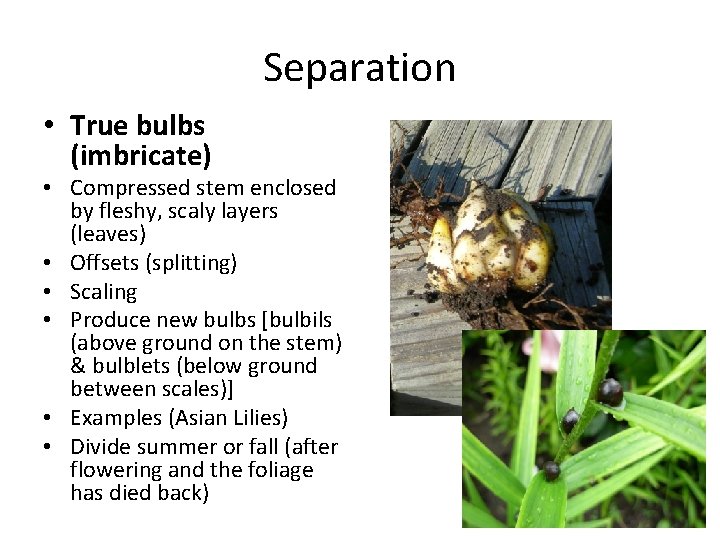
Separation • True bulbs (imbricate) • Compressed stem enclosed by fleshy, scaly layers (leaves) • Offsets (splitting) • Scaling • Produce new bulbs [bulbils (above ground on the stem) & bulblets (below ground between scales)] • Examples (Asian Lilies) • Divide summer or fall (after flowering and the foliage has died back)

Tiger Lily bulbils
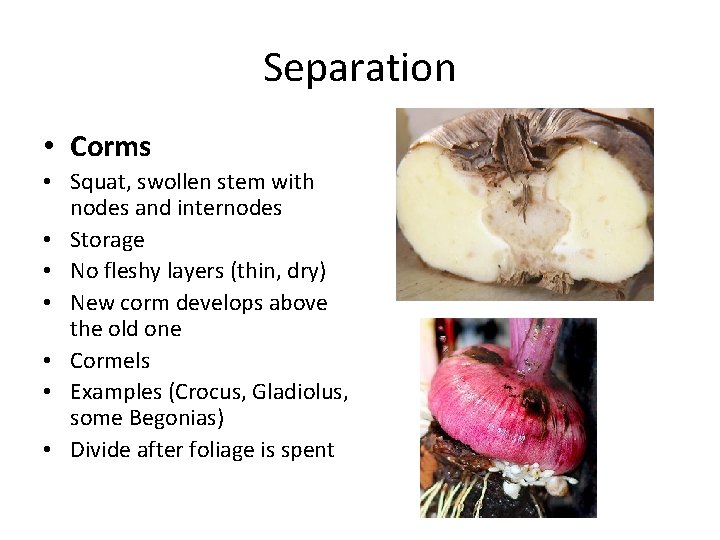
Separation • Corms • Squat, swollen stem with nodes and internodes • Storage • No fleshy layers (thin, dry) • New corm develops above the old one • Cormels • Examples (Crocus, Gladiolus, some Begonias) • Divide after foliage is spent

Division • Offsets • Examples (Date Palm, Haworthia, Bromeliads, Aloe, many Cacti) • Provide proper conditions
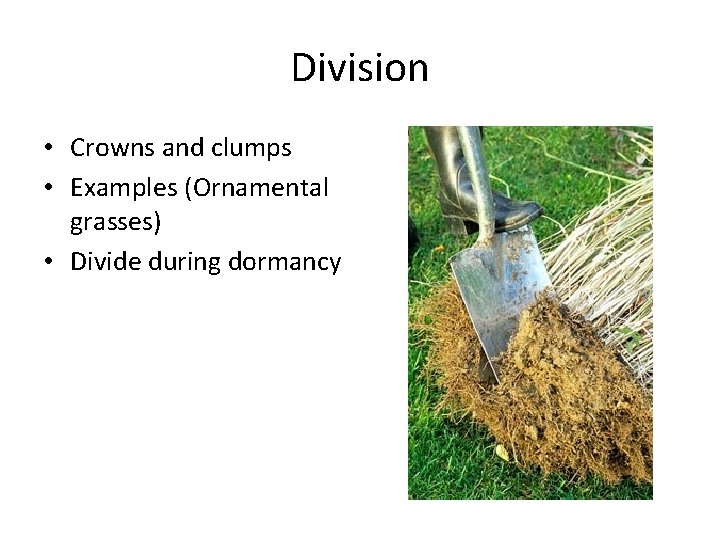
Division • Crowns and clumps • Examples (Ornamental grasses) • Divide during dormancy
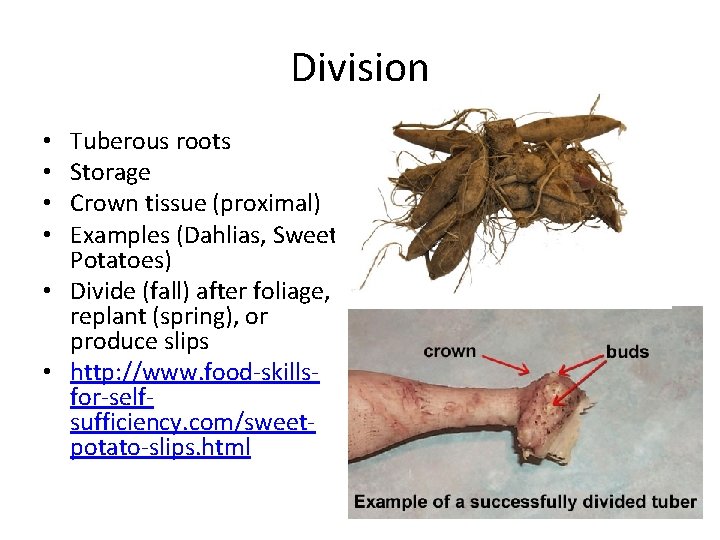
Division Tuberous roots Storage Crown tissue (proximal) Examples (Dahlias, Sweet Potatoes) • Divide (fall) after foliage, replant (spring), or produce slips • http: //www. food-skillsfor-selfsufficiency. com/sweetpotato-slips. html • •
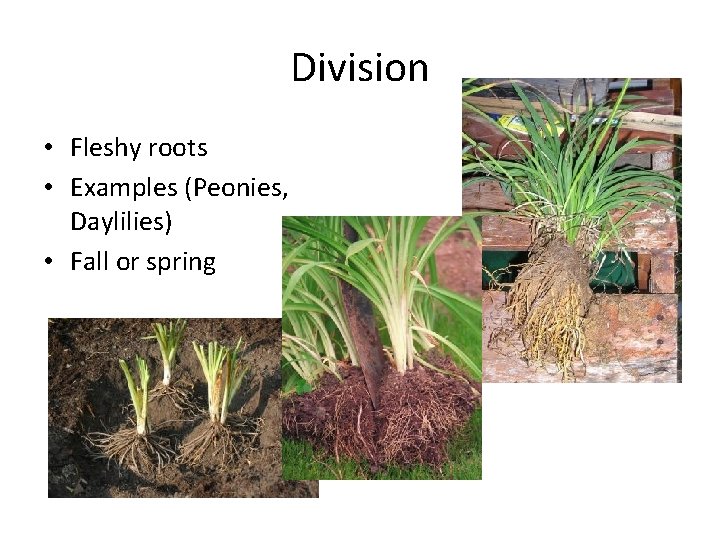
Division • Fleshy roots • Examples (Peonies, Daylilies) • Fall or spring
Yam or sweet potato • http: //aggiehorticulture. tamu. edu/archives/parsons/vege tables/sweetpotato. html
Next week • Bring a sharp knife for grafting! • Bring apple scion wood if you have special varieties you would like to graft onto the M 111 rootstock.
- Slides: 20