
Plant Parts and Functions By Alisa Kowalski Jessi
Plant Parts and Functions By : Alisa Kowalski Jessi Spry Alyson Wilson
Parts of The Plant
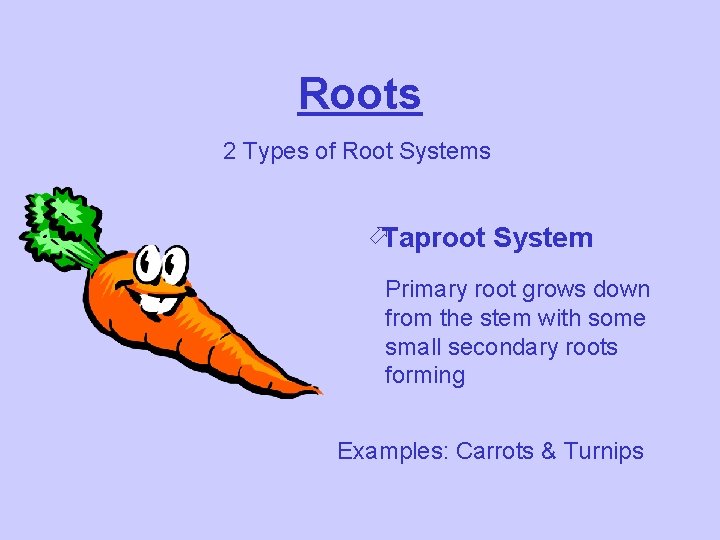
Roots 2 Types of Root Systems öTaproot System Primary root grows down from the stem with some small secondary roots forming Examples: Carrots & Turnips
Roots öFibrous System Small lateral roots that spread out just below the soil’s surface Examples: Corn & Beans
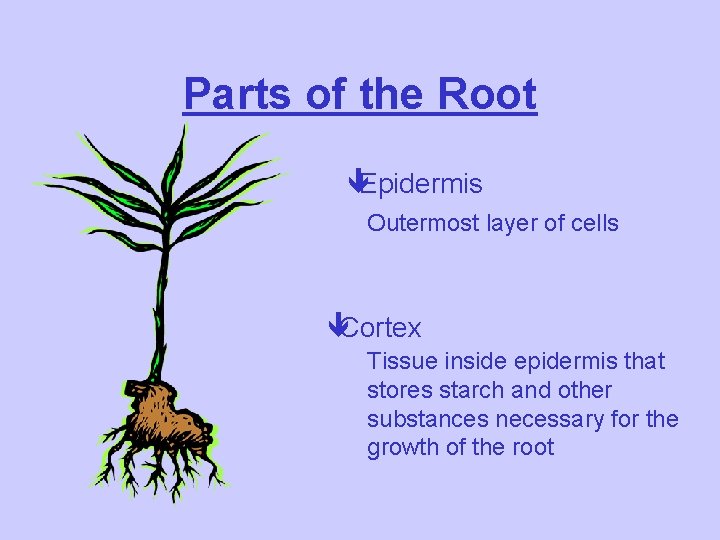
Parts of the Root êEpidermis Outermost layer of cells êCortex Tissue inside epidermis that stores starch and other substances necessary for the growth of the root
Parts of the Root êRoot Cap Provides protection for the root tip êRoot Hairs Site of absorption êVascular Tissue Within cortex, contains cells that transport water, nutrients, and minerals to all parts of the plant
Root Functions Roots have 4 primary functions 1. Absorption of water and nutrients (performed by root hairs) 2. Transportation of water and nutrients to stem 3. Anchor plant to maintain stability 4. Store food and water
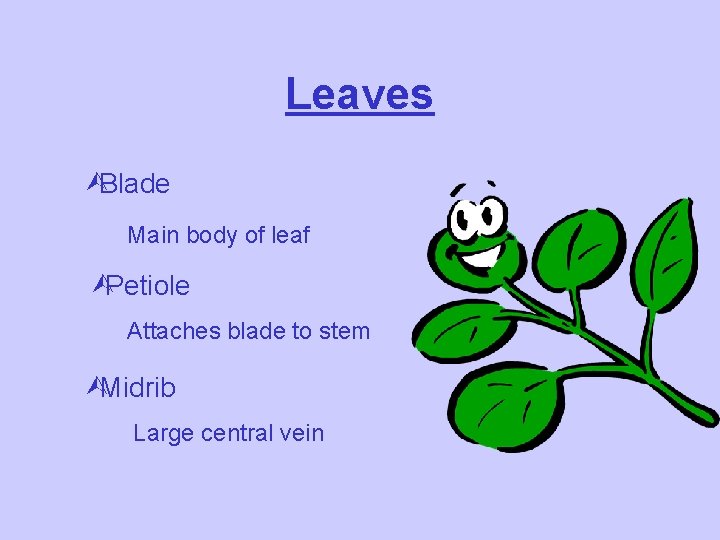
Leaves ÙBlade Main body of leaf ÙPetiole Attaches blade to stem ÙMidrib Large central vein
Leaves ÙApex Tip of leaf ÙBase Attaches to petiole, if petiole is absent attaches directly to stem ÙMargin Edge of leaf
Leaves ÙEpidermis Responsible for gas and water exchange ÙStomata Opening in epidermis where gas and water exchange ÙMesophyll Middle layer of leaf where photosynthesis occurs
Important Functions of Leaves ÀPhotosynthesis Process that plants use to produce their food 6 CO 2 + 6 H 2 O C 6 H 1206 + 6 O 2 ÁTranspiration Loss of water and exchange of carbon dioxide
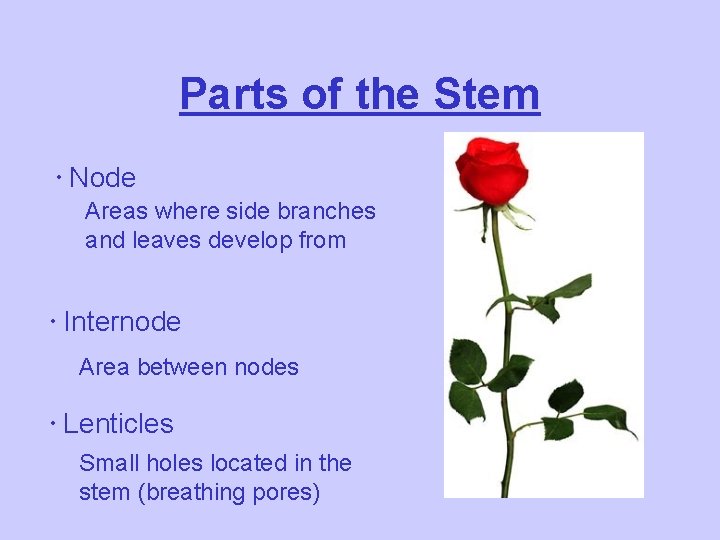
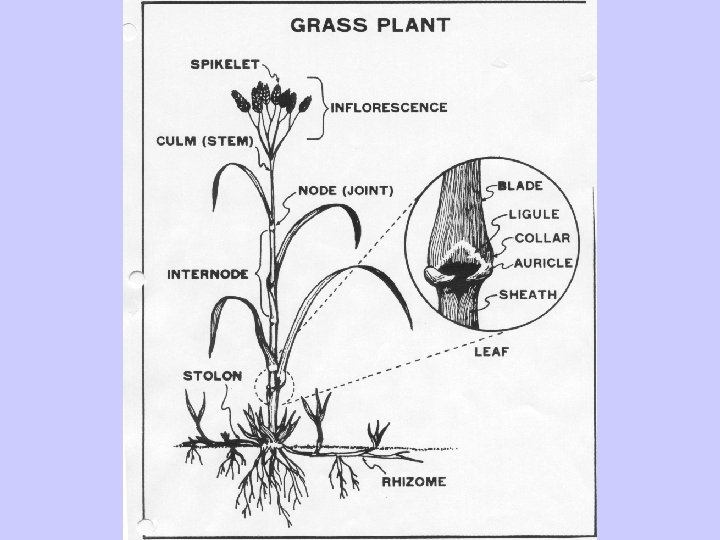
Parts of the Stem Node Areas where side branches and leaves develop from Internode Area between nodes Lenticles Small holes located in the stem (breathing pores)
Functions of the Stem 1. Transports water and nutrients from roots to leaves 2. Supports leaves, fruits and flowers 3. Food Storage
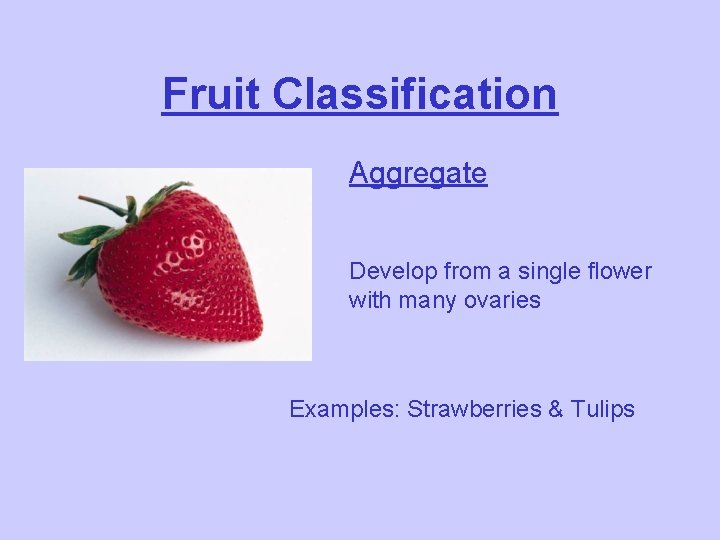
Fruit Classification Aggregate Develop from a single flower with many ovaries Examples: Strawberries & Tulips
Fruit Classification Multiple Fruit develops from a group of tightly clustered flowers Examples: Pineapples & Figs
Fruit Classification Simple Develop from a single ovary Examples: Cherries & Tomatoes
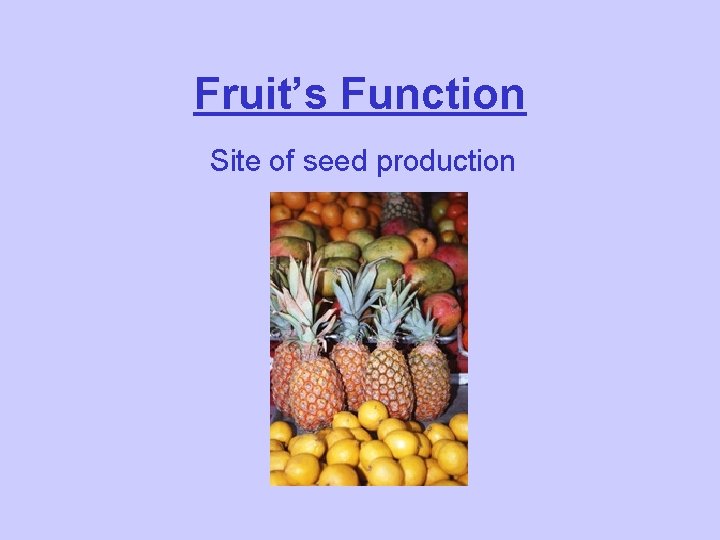
Fruit’s Function Site of seed production
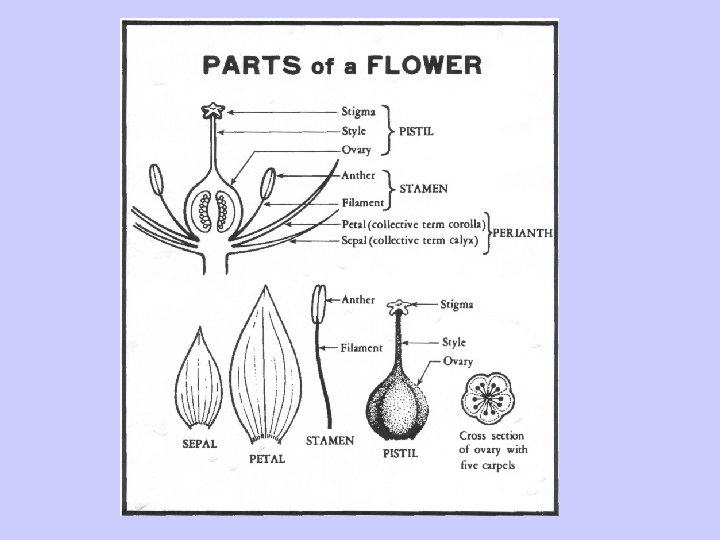
Flower Parts Pistil Female part of plant Consists of: • Stigma • Style • Ovary
Flower Parts Stamen Male reproductive organ Consists of: • Anther • Stamen
Flower Parts Petals Highly colored part of the flower, may contain perfume and/or nectar glands Sepals Small green structures on the base of a flower that protect the flower bud
Flower Classification Complete flower Has all four male and female parts Incomplete flower Missing one of the four male or female parts Perfect flower Has stamens and pistils Imperfect flower Lacking either stamens or pistils
Flower Function Sexual Reproduction is the flowers sole function Pollination by: Wind Insects and Birds
Parts of the Seed *Embryo Growing part of seed *Endosperm Tissue that provides nutrition for the developing seed *Cotyledon Food storage tissue
Parts of the Seed *Seedcoat Protective outer covering of the seed *Scutellum Absorbs the endosperm
- Slides: 26