
Plant Life Cycle Fruits and Seeds Chapter 6
- Slides: 31
Plant Life Cycle: Fruits and Seeds Chapter 6 PBIO 006 Fall 2020
Outline I. Fruit Types II. Fruit Dispersal III. Seed Structure and Germination
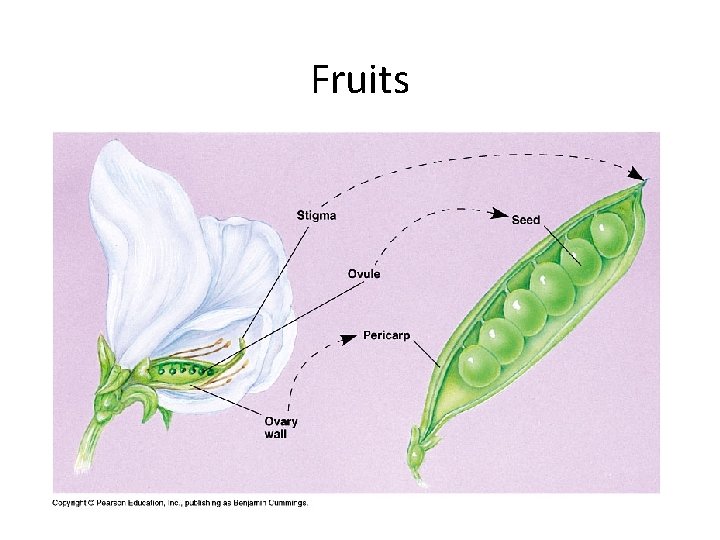
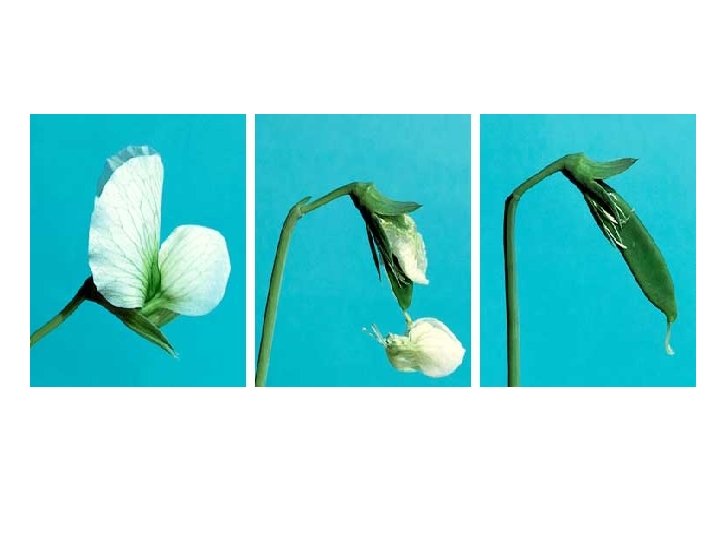
Fruits
Fruit Types Simple Fruits Fleshy Dry Dehiscent Indehiscent Accessory Fruits Aggregate Fruits Multiple Fruits
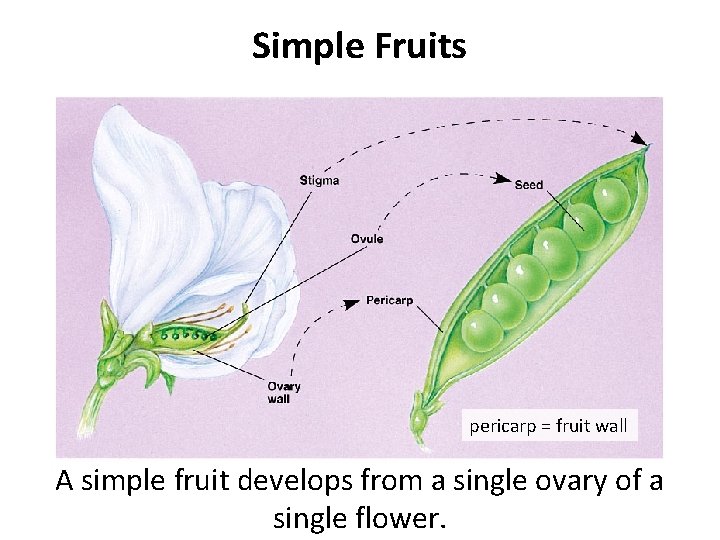
Simple Fruits pericarp = fruit wall A simple fruit develops from a single ovary of a single flower.
Fleshy fruits are indehiscent (which is to say they don’t open up to release their seeds)
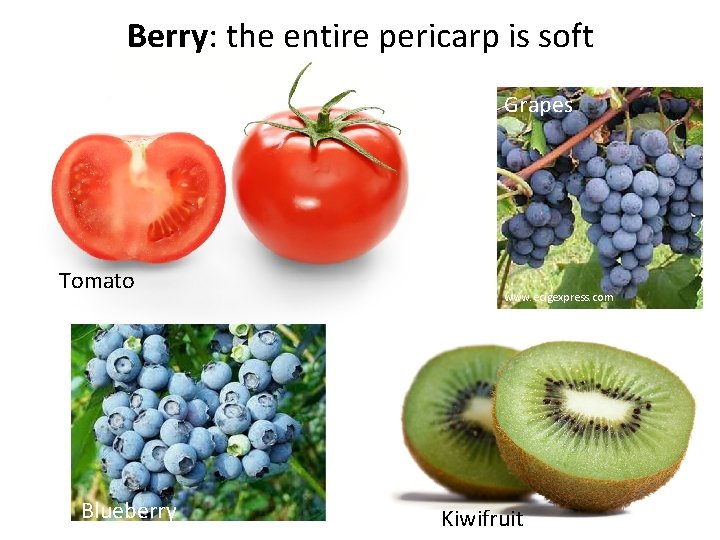
Berry: the entire pericarp is soft Grapes Tomato Blueberry www. ecigexpress. com Kiwifruit
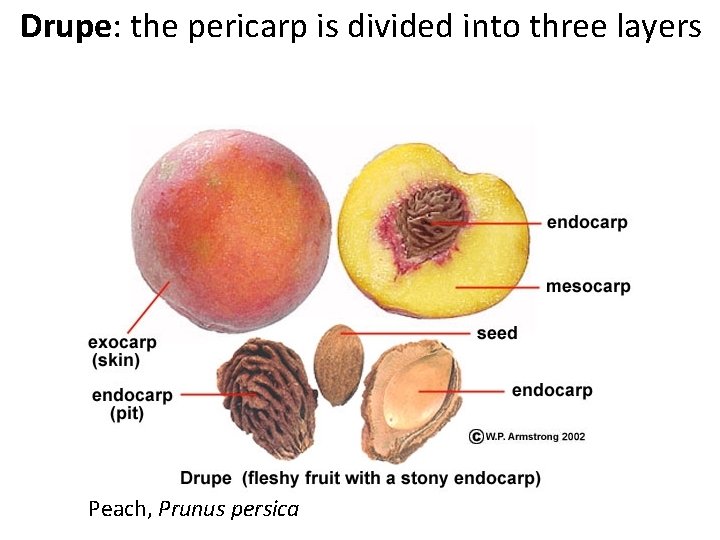
Drupe: the pericarp is divided into three layers Peach, Prunus persica
Dry dehiscent fruits
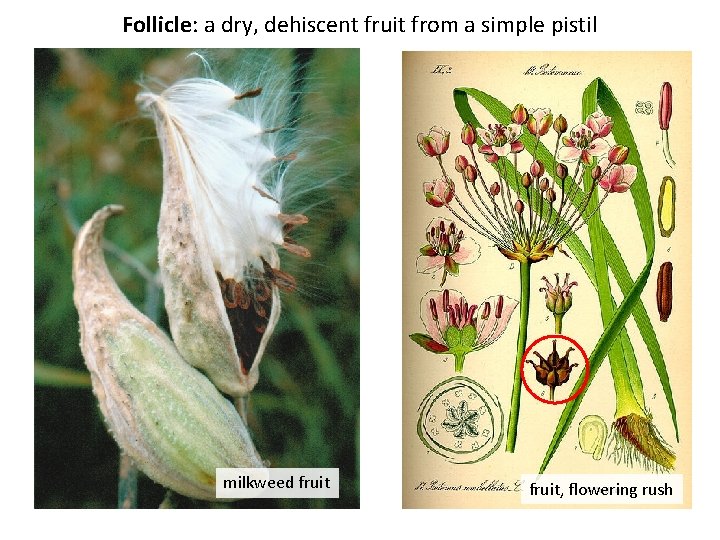
Follicle: a dry, dehiscent fruit from a simple pistil A follicle is a dry fruit that splits open to release its seeds (it’s dehiscent). milkweed fruit, flowering rush
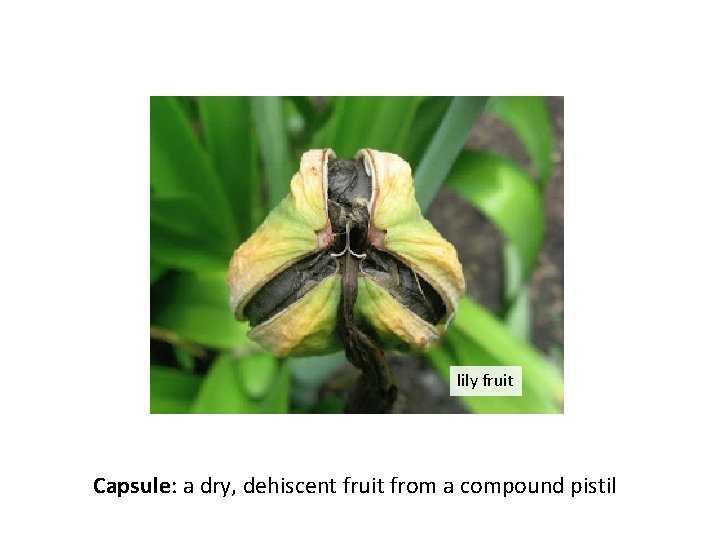
lily fruit Capsule: a dry, dehiscent fruit from a compound pistil
Dry indehiscent fruits
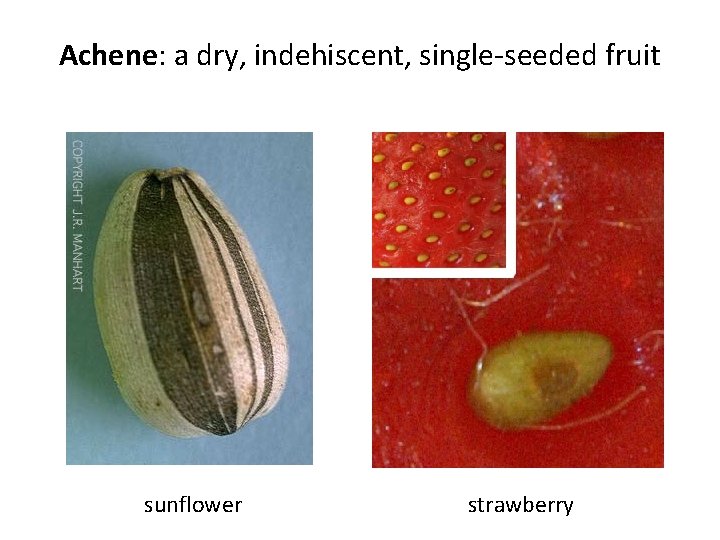
Achene: a dry, indehiscent, single-seeded fruit sunflower strawberry
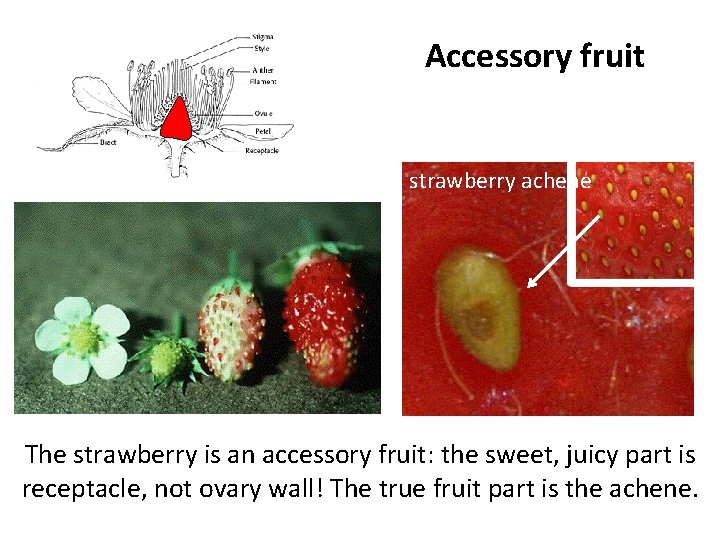
Accessory fruit strawberry achene The strawberry is an accessory fruit: the sweet, juicy part is receptacle, not ovary wall! The true fruit part is the achene.
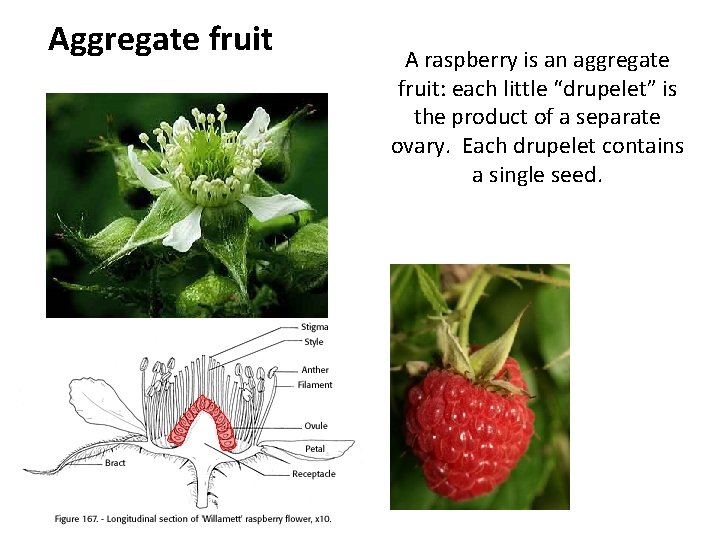
Aggregate fruit A raspberry is an aggregate fruit: each little “drupelet” is the product of a separate ovary. Each drupelet contains a single seed.
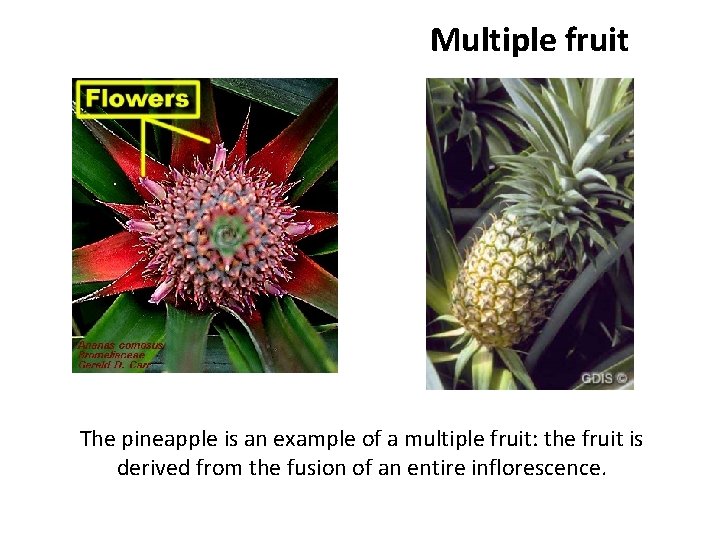
Multiple fruit The pineapple is an example of a multiple fruit: the fruit is derived from the fusion of an entire inflorescence.
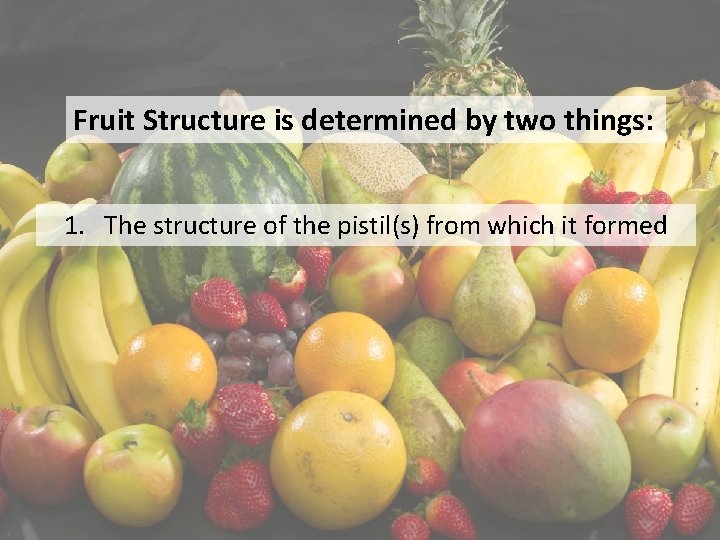
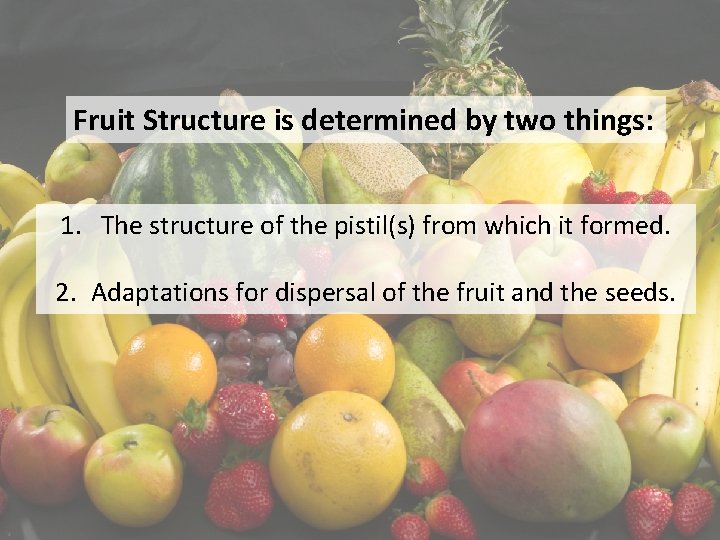
Fruit Structure is determined by two things: 1. The structure of the pistil(s) from which it formed
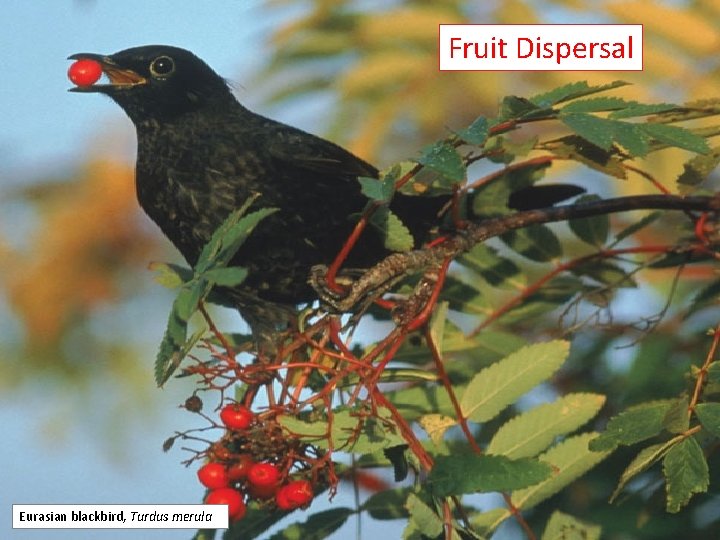
Fruit Dispersal Eurasian blackbird, Turdus merula
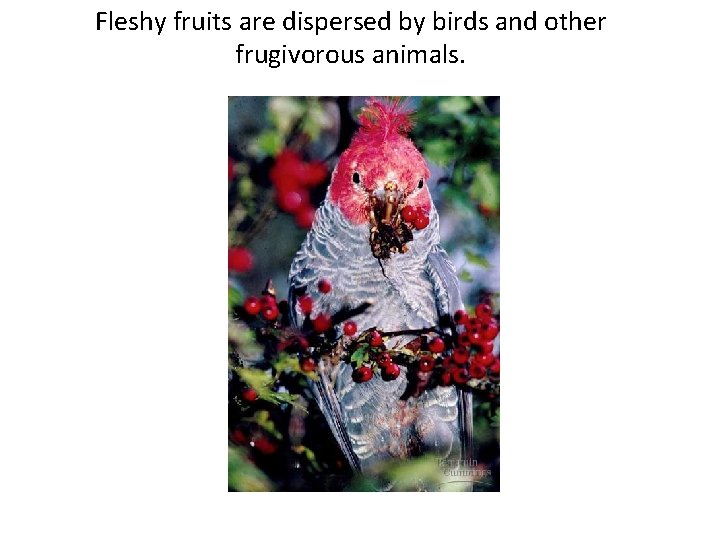
Fleshy fruits are dispersed by birds and other frugivorous animals.
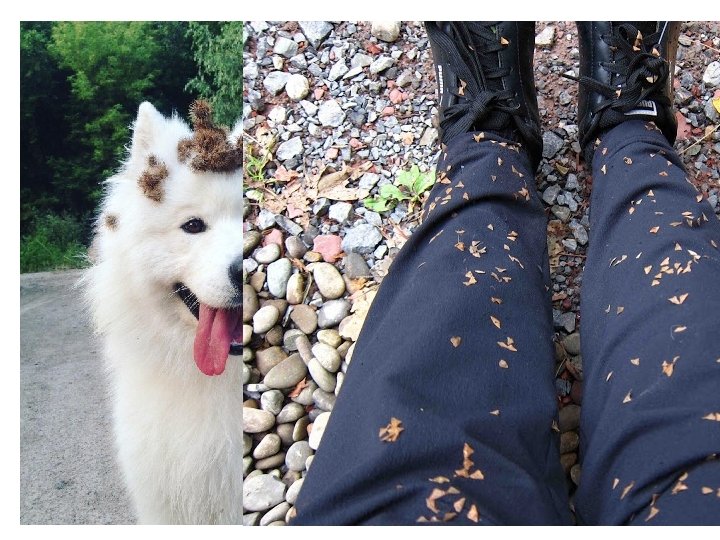
Some fruits are designed to be dispersed by unwitting animals
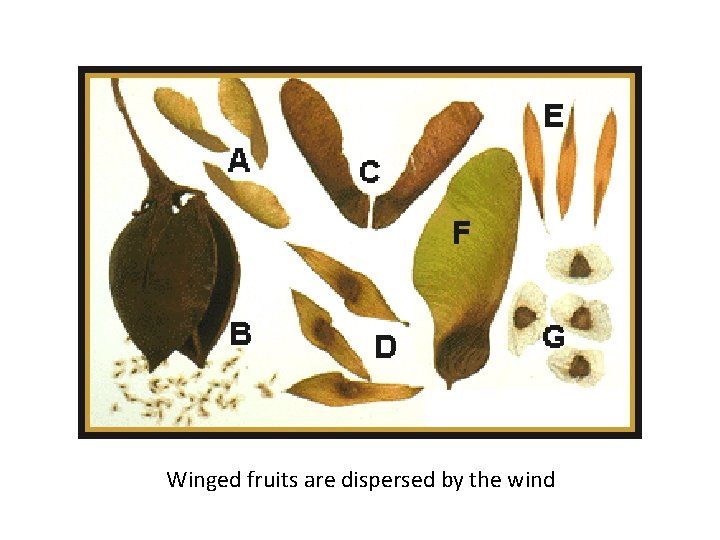
Winged fruits are dispersed by the wind
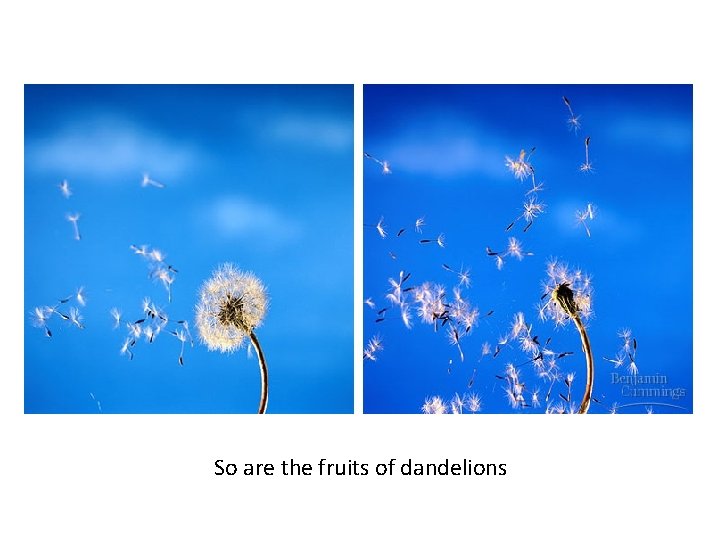
So are the fruits of dandelions
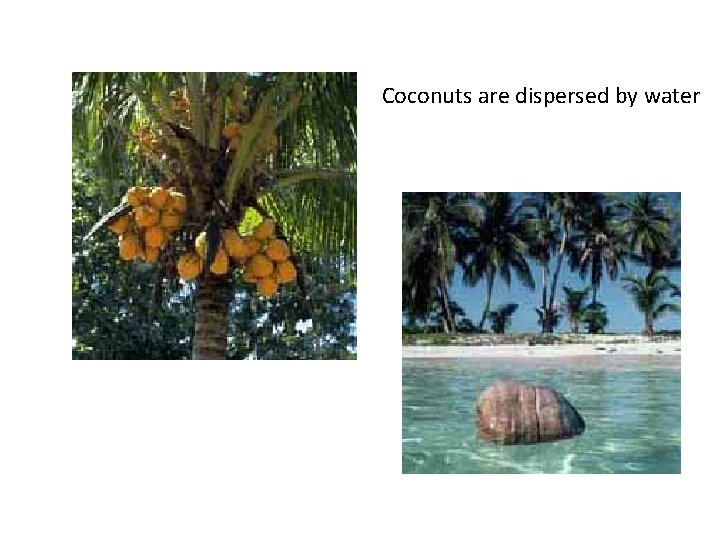
Coconuts are dispersed by water
Fruit Structure is determined by two things: 1. The structure of the pistil(s) from which it formed. 2. Adaptations for dispersal of the fruit and the seeds.
Outline I. Fruit Types II. Fruit Dispersal III. Seed Structure and Germination
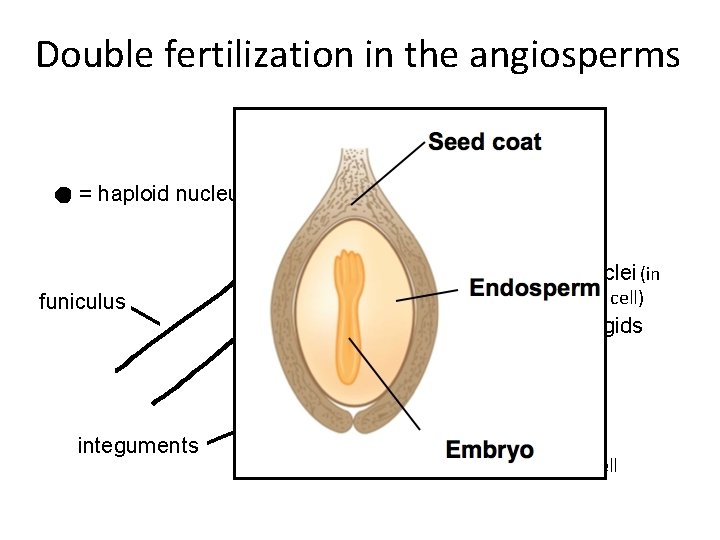
Double fertilization in the angiosperms (in central cell) cell
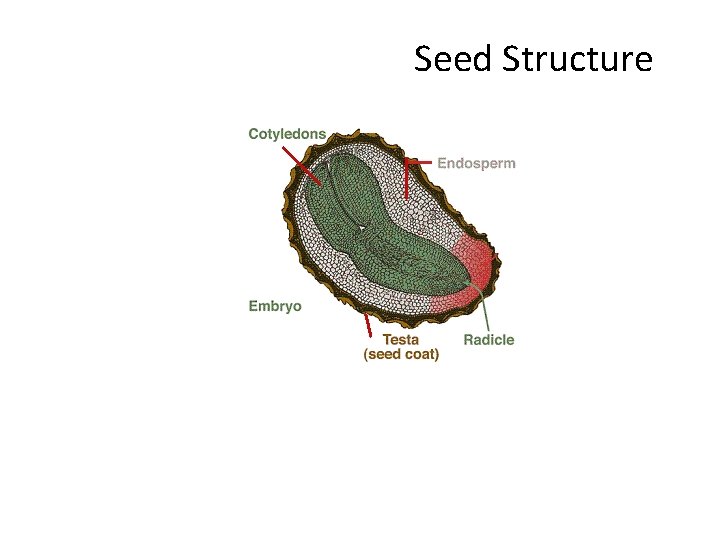
Seed Structure
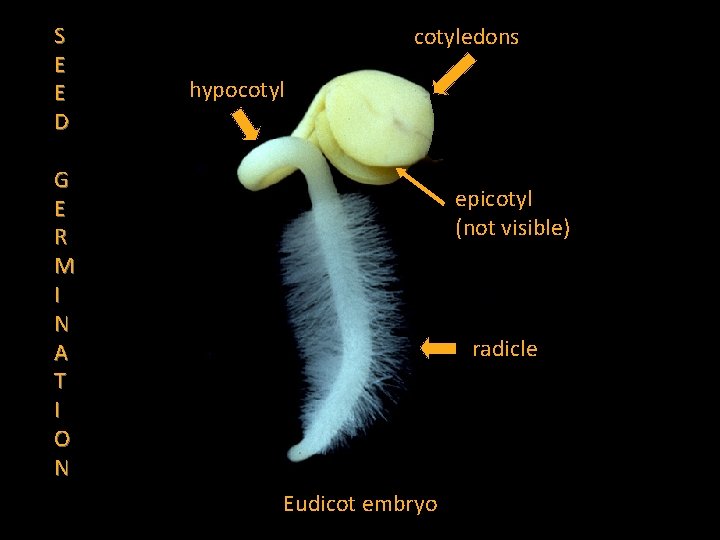
S E E D cotyledons hypocotyl G E R M I N A T I O N epicotyl (not visible) radicle Eudicot embryo
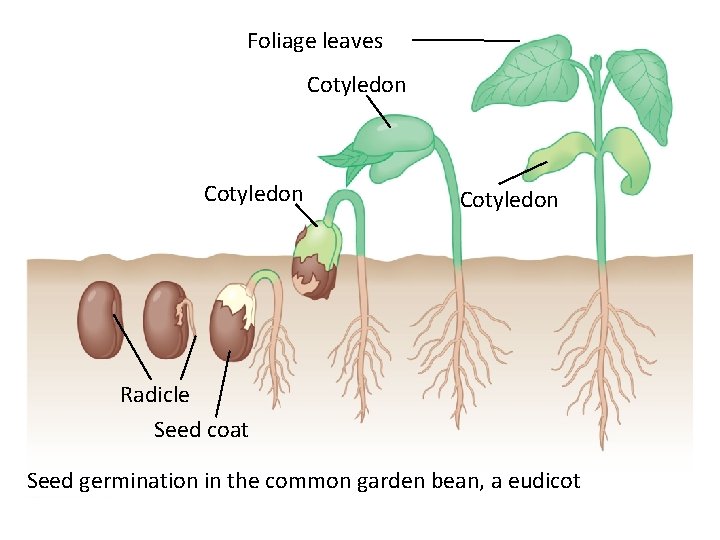
Foliage leaves Cotyledon Radicle Seed coat Seed germination in the common garden bean, a eudicot
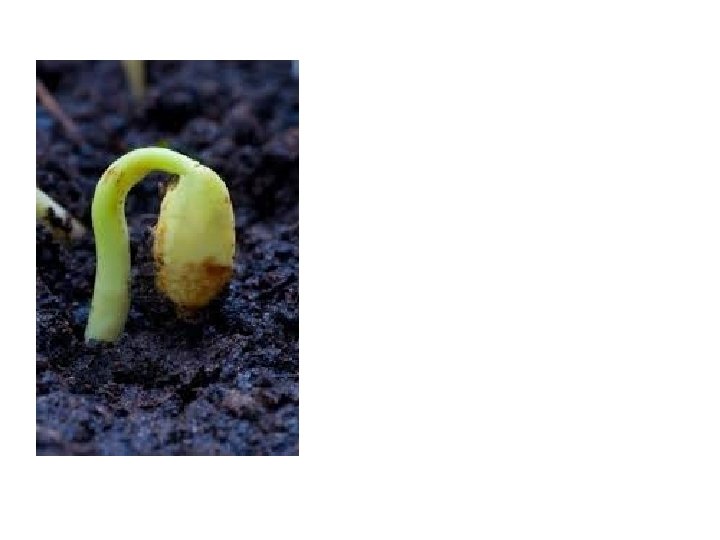
The sturdy seedling with arched body comes Shouldering its way and shedding earth crumbs. - Robert Frost Putting in the Seed