
Plant kingdom diversity Classification of plants Vascular plants

- Slides: 30
Plant kingdom diversity
Classification of plants § Vascular plants- have tubelike structures that carry water, nutrients and other substances throughout the plant. § Nonvascular- do not have these tubelike structures and use other ways to move water and substances.
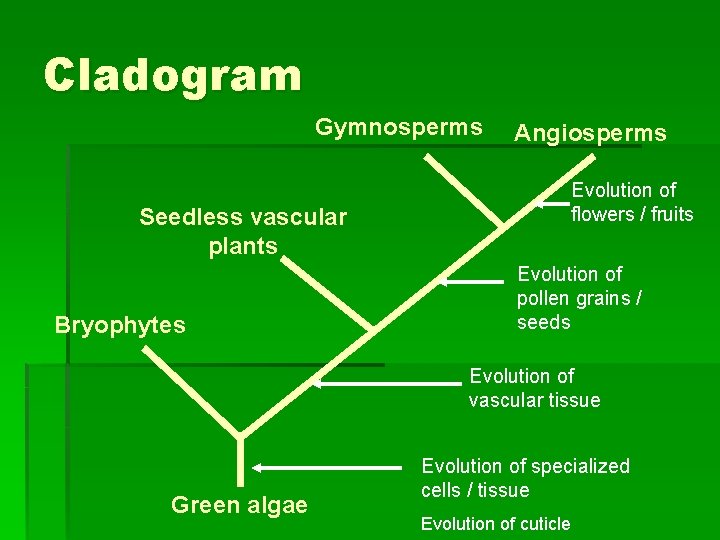
Plant Groups 1. Bryophytes-Mosses (seedless, nonvascular) 2. Seedless vascular plants-Ferns 3. Gymnosperms-Evergreens 4. Angiosperms-Flowering plants
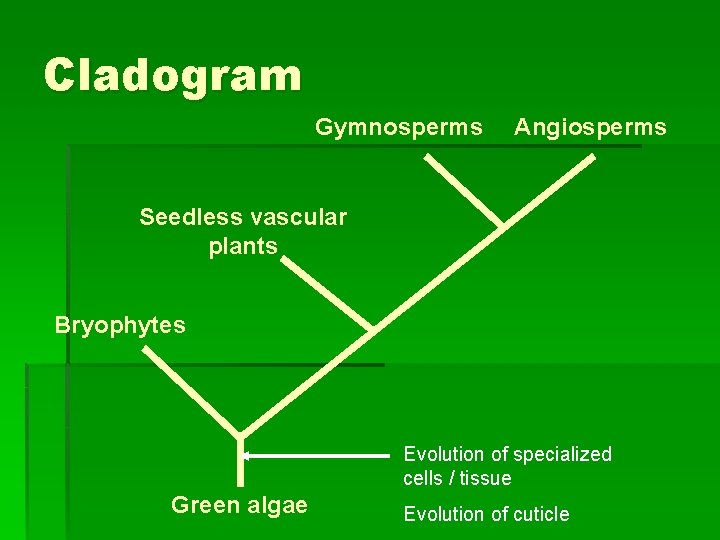
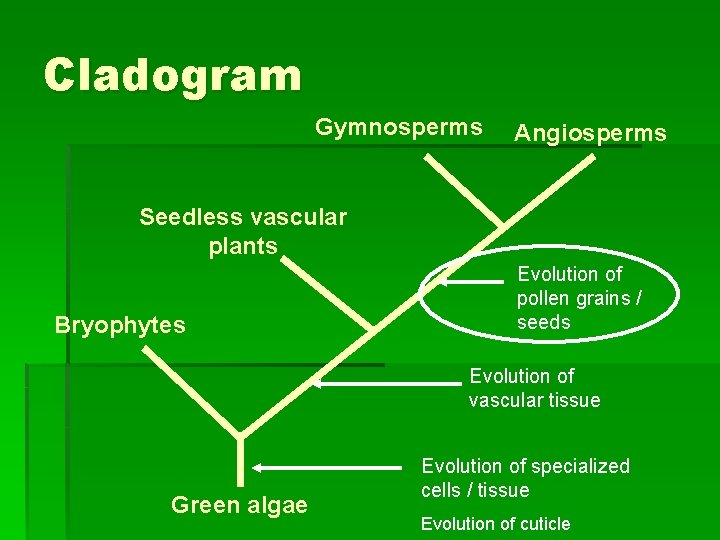
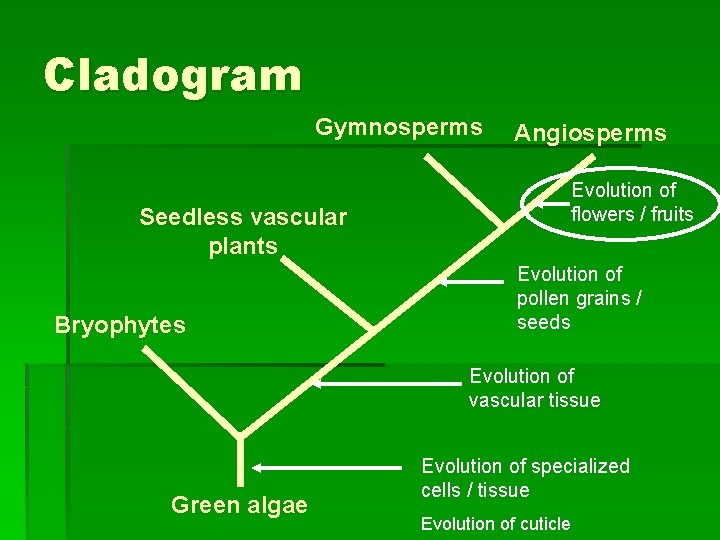
Cladogram Gymnosperms Angiosperms Seedless vascular plants Bryophytes Evolution of specialized cells / tissue Green algae Evolution of cuticle
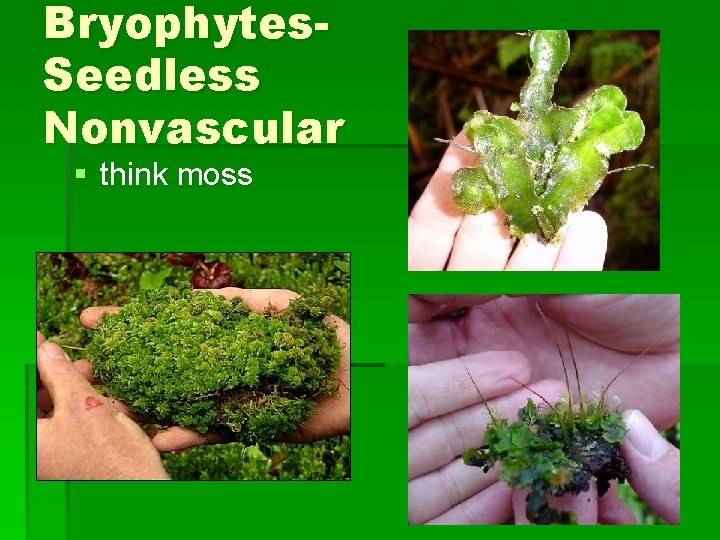
Bryophytes. Seedless Nonvascular § think moss
Seedless nonvascular plants § Small § Found only in damp, moist areas on land § 1) Leaves must touch water for photosynthesis § 2) Sperm swims through water to reach egg in gametophyte § 3) rhizoids- anchor them where they grow.
Types of seedless nonvascular plants § Mosses, liverworts and hornworts. § Pioneer Species- spores of mosses and liverworts are carried by the wind. They are usually the first to grow in a devistated area. Slowly breaks down rocks and builds soil so other organisms can move in
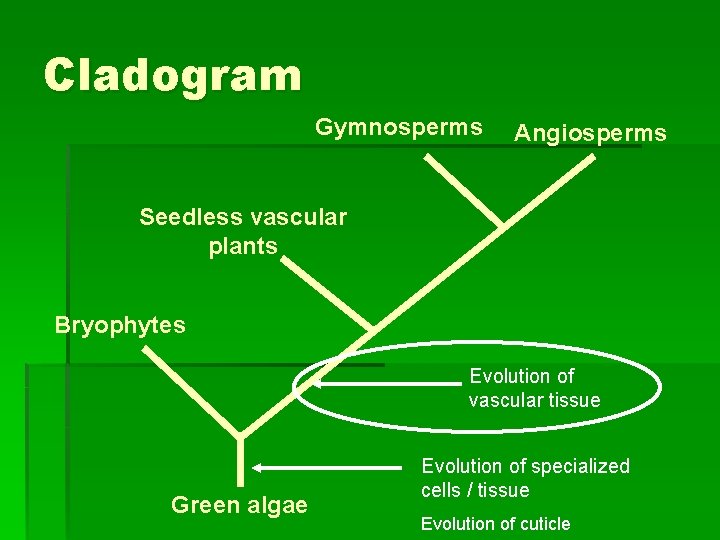
Cladogram Gymnosperms Angiosperms Seedless vascular plants Bryophytes Evolution of vascular tissue Green algae Evolution of specialized cells / tissue Evolution of cuticle
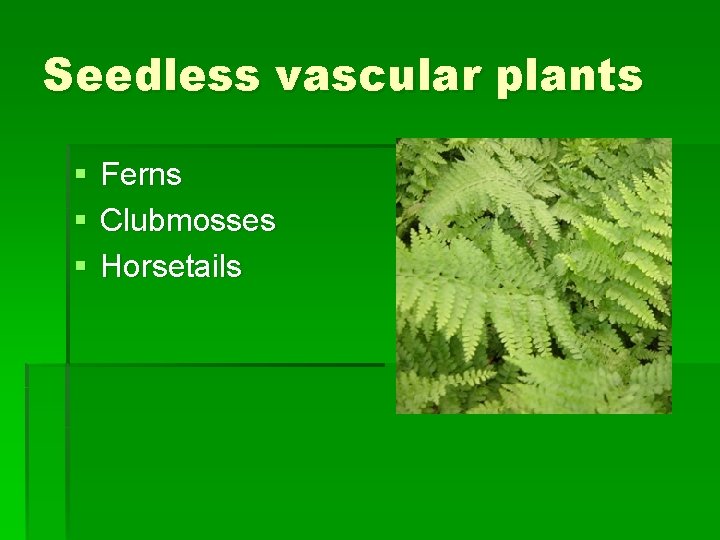
Seedless vascular plants § § § Ferns Clubmosses Horsetails
Vascular tissue § Set of tubes that transport materials around plant § Allows plants to grow taller § Water travels up through xylem § Sugar travels throughout in phloem
Three tissues make up the vascular system in a seeded plant § 1. Xylem- transports water and dissolved substances from the roots throughout the plant. Thick wall of xylem made out of stacked tubular cells helps support plant. § 2. Phloem- also made up of stacked tubular cells. Moves food from where it is made to other parts of the plant wher eit is used or stored.
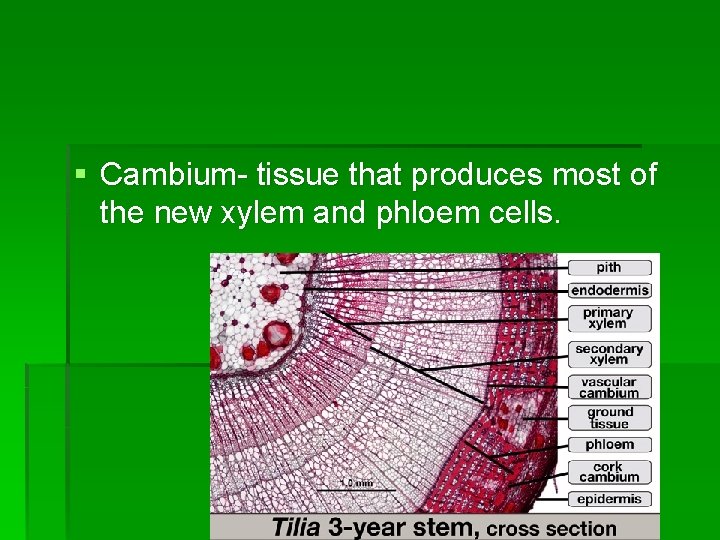
§ Cambium- tissue that produces most of the new xylem and phloem cells.
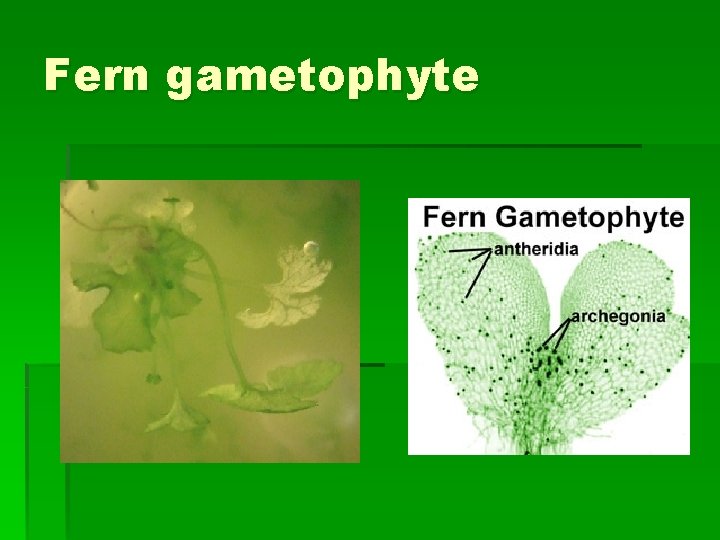
Ferns live further on land § Still must be in moist areas § Sporophyte survives fine with vascular tissue § But sperm must still swim to egg in tiny gametophyte
Fern gametophyte
Cladogram Gymnosperms Angiosperms Seedless vascular plants Bryophytes Evolution of pollen grains / seeds Evolution of vascular tissue Green algae Evolution of specialized cells / tissue Evolution of cuticle
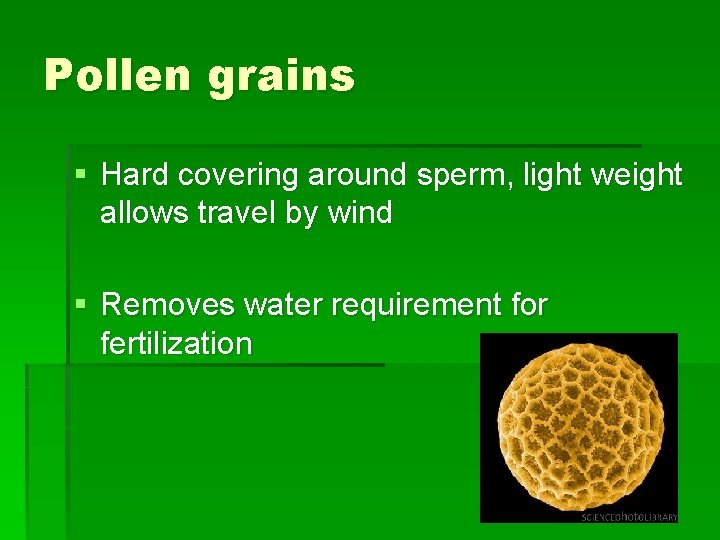
Pollen grains § Hard covering around sperm, light weight allows travel by wind § Removes water requirement for fertilization
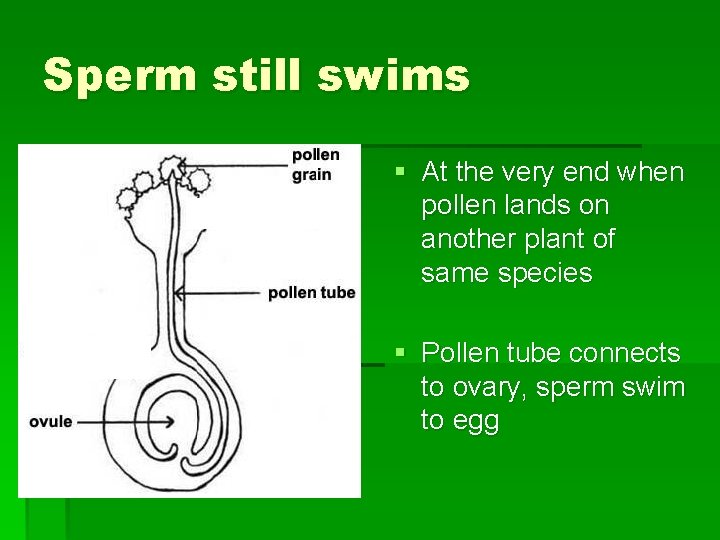
Sperm still swims § At the very end when pollen lands on another plant of same species § Pollen tube connects to ovary, sperm swim to egg
Full colonization of land § Vascular tissue §+ § Reproduction through air
Seeds § Tough coat protects newly fertilized embryo § Also contains supply of food (endosperm) to survive during dormancy period
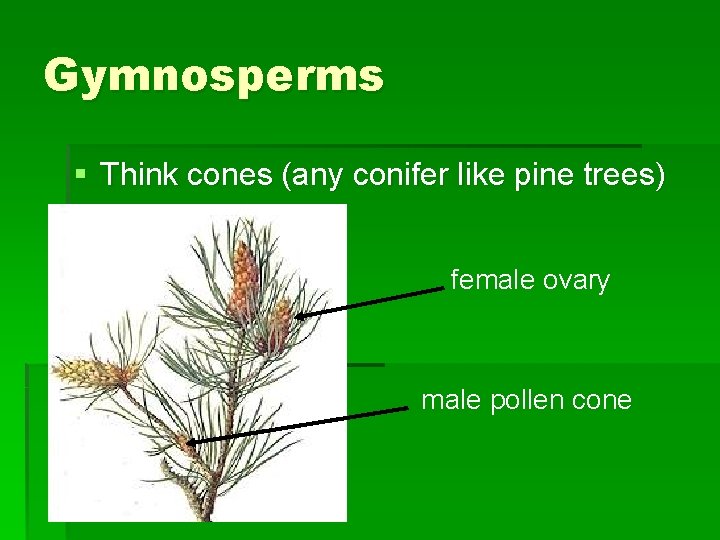
Gymnosperms § Think cones (any conifer like pine trees) female ovary male pollen cone
Gymnosperm pollen strategy § Release a lot, hope some pollinate § (Meanwhile, irritating everyone else)
Cladogram Gymnosperms Angiosperms Evolution of flowers / fruits Seedless vascular plants Bryophytes Evolution of pollen grains / seeds Evolution of vascular tissue Green algae Evolution of specialized cells / tissue Evolution of cuticle
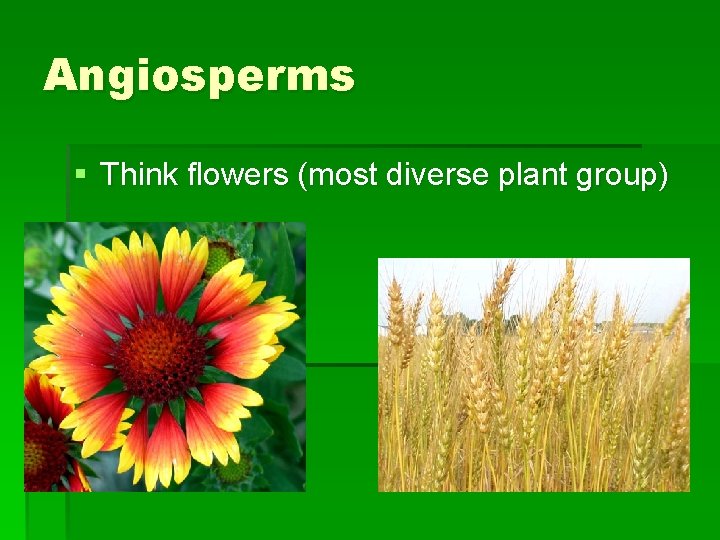
Angiosperms § Think flowers (most diverse plant group)
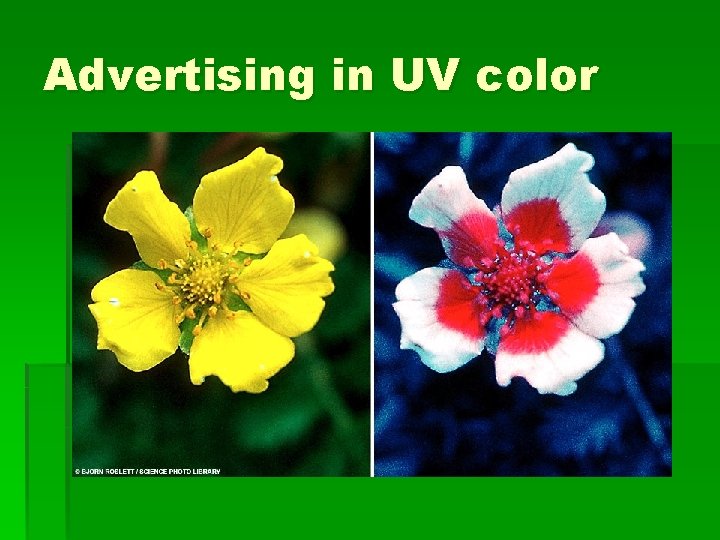
Flowers § Attract animals to help carry pollen to the next flower § Color or scent attractors guide animals to obtain sugar from plant § Oh, and while you’re at it, grab some pollen § Some angiosperms still wind pollinate (grass)
Advertising in UV color
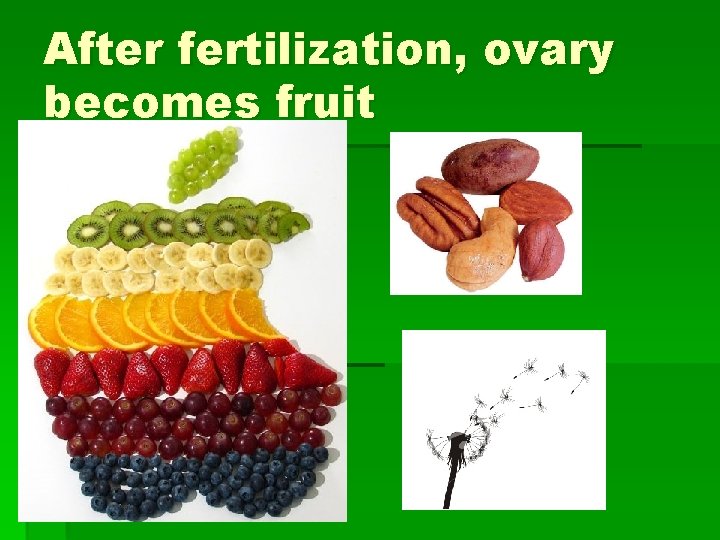
After fertilization, ovary becomes fruit
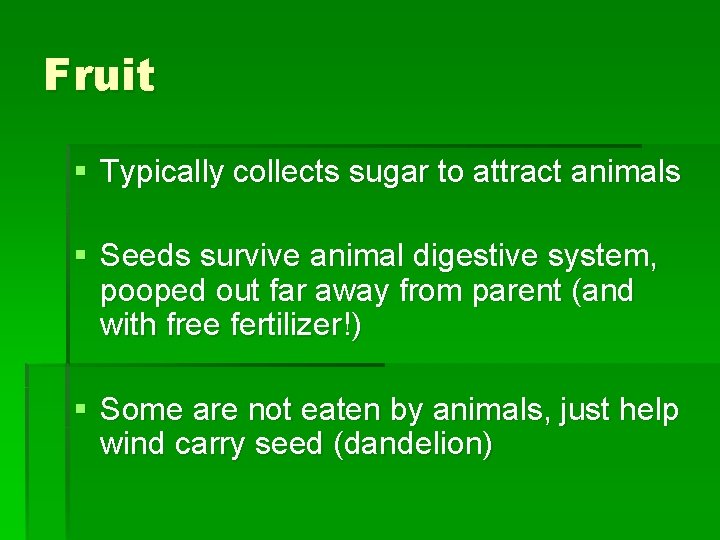
Fruit § Typically collects sugar to attract animals § Seeds survive animal digestive system, pooped out far away from parent (and with free fertilizer!) § Some are not eaten by animals, just help wind carry seed (dandelion)
Asexual reproduction § Plants can also reproduce asexually § Many plant parts can regrow to make a whole new organism when separated (vegetative reproduction)
Cladogram Gymnosperms Angiosperms Evolution of flowers / fruits Seedless vascular plants Bryophytes Evolution of pollen grains / seeds Evolution of vascular tissue Green algae Evolution of specialized cells / tissue Evolution of cuticle
Celery- Reflection- to be handed in. § § § Place celery in water with food coloring. What do you notice? How did the color move throughout the celery stalk? Xylem or phloem? § What force played a role in absorbing the water up the stalk against gravity?