
Plant kingdom diversity Chapters 20 22 Created by
Plant kingdom diversity Chapters 20 -22 Created by Kevin Bleier Milton High School
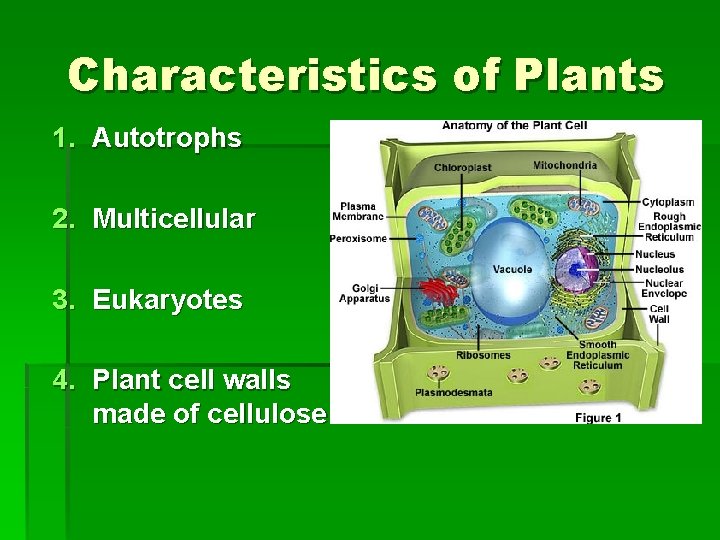
Characteristics of Plants 1. Autotrophs 2. Multicellular 3. Eukaryotes 4. Plant cell walls made of cellulose
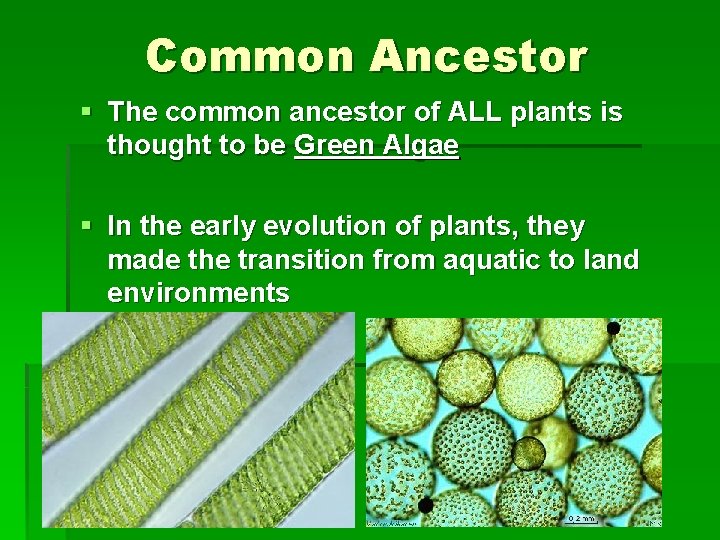
Common Ancestor § The common ancestor of ALL plants is thought to be Green Algae § In the early evolution of plants, they made the transition from aquatic to land environments
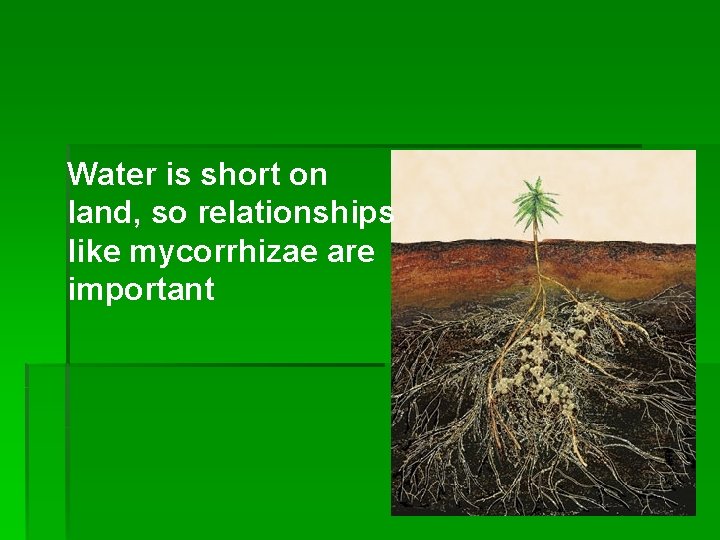
Water is short on land, so relationships like mycorrhizae are important
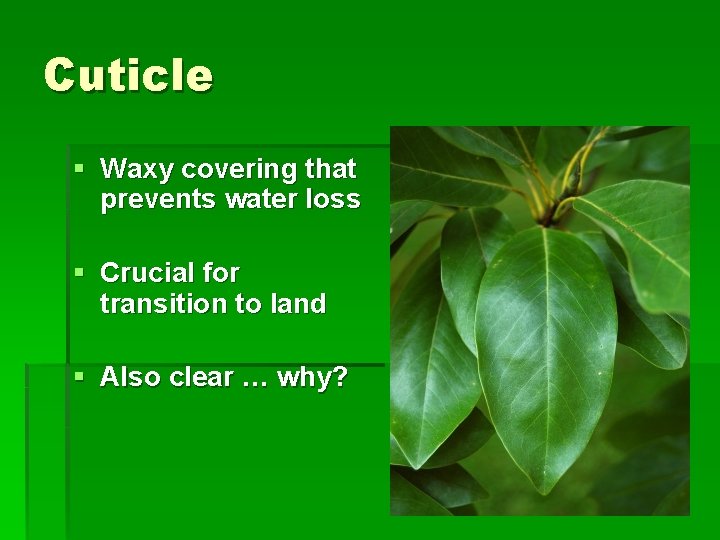
Cuticle § Waxy covering that prevents water loss § Crucial for transition to land § Also clear … why?
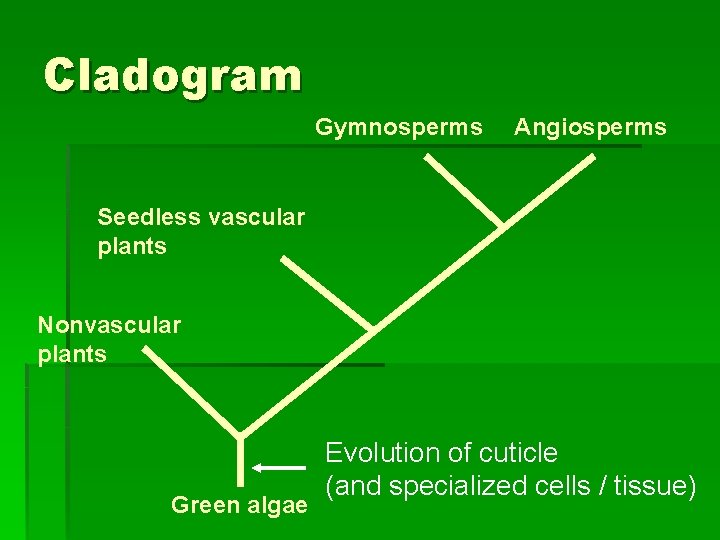
Cladogram Gymnosperms Angiosperms Seedless vascular plants Nonvascular plants Green algae Evolution of cuticle (and specialized cells / tissue)
Plant groups § Bryophytes (seedless, non-vascular) § Seedless vascular plants § Gymnosperms § Angiosperms
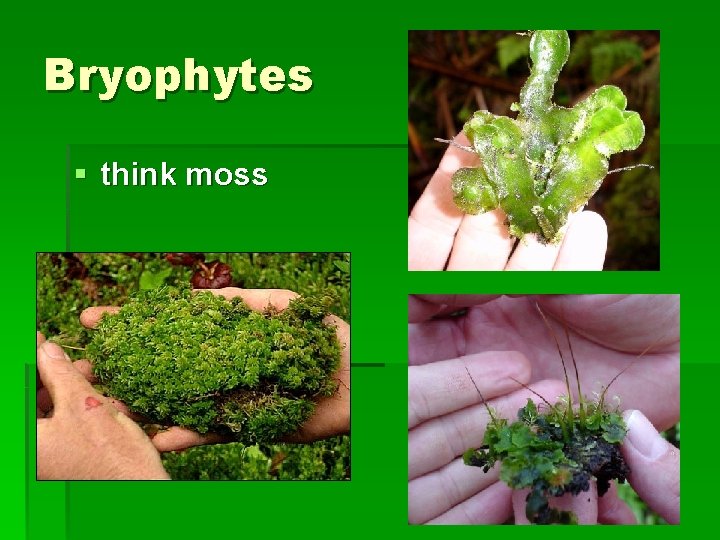
Bryophytes § think moss
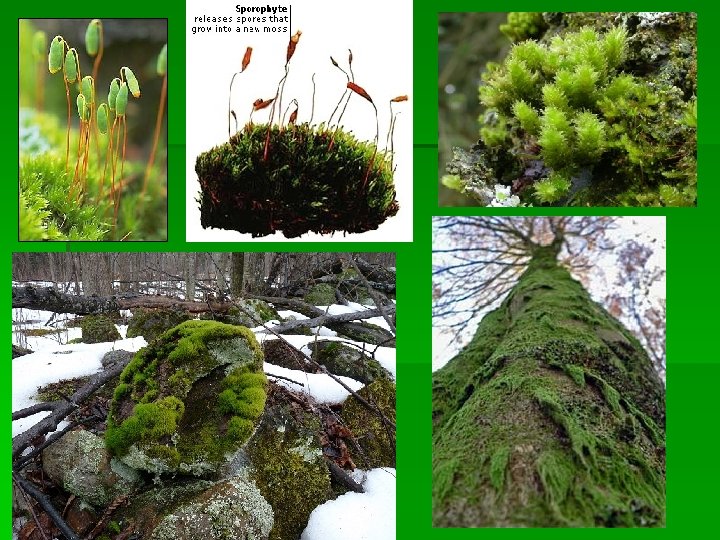
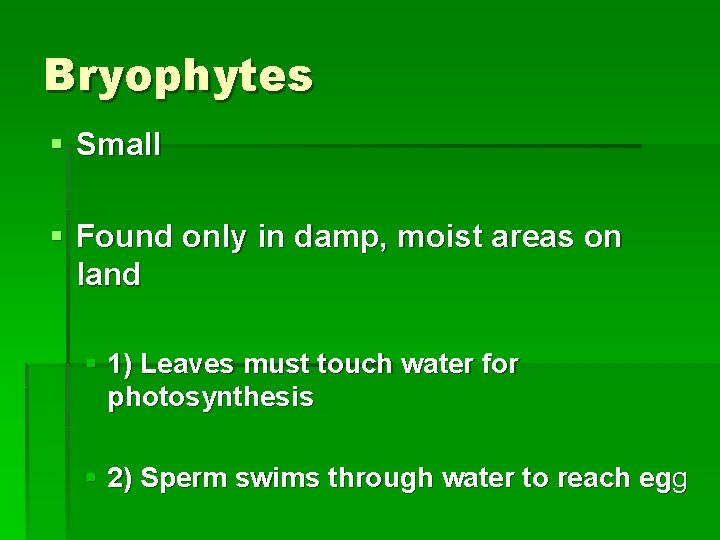
Bryophytes § Small § Found only in damp, moist areas on land § 1) Leaves must touch water for photosynthesis § 2) Sperm swims through water to reach egg
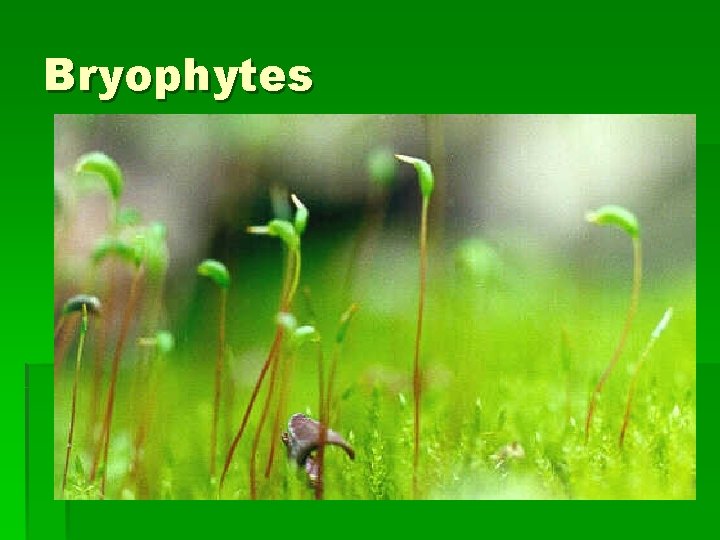
Bryophytes
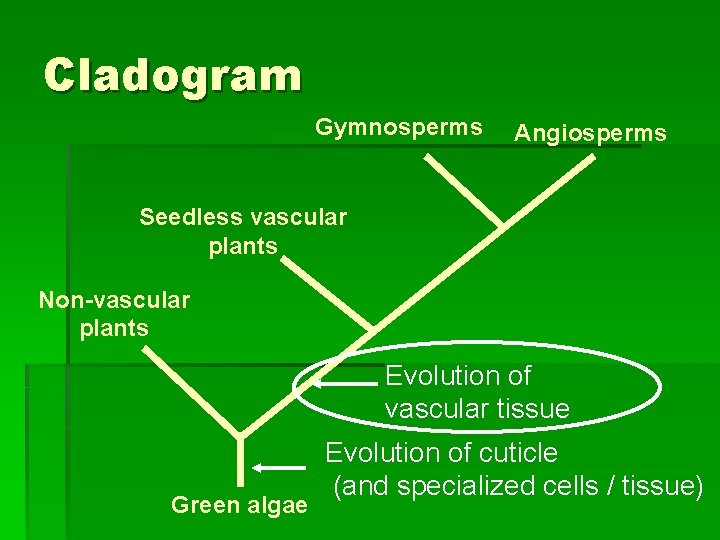
Cladogram Gymnosperms Angiosperms Seedless vascular plants Non-vascular plants Evolution of vascular tissue Green algae Evolution of cuticle (and specialized cells / tissue)
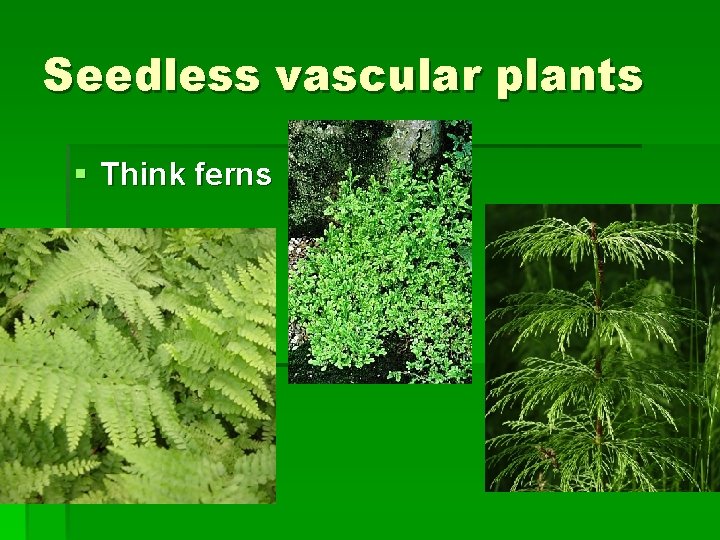
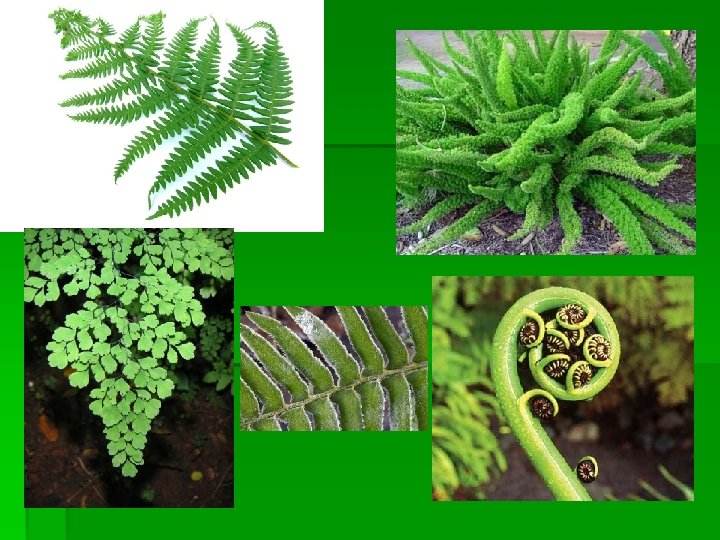
Seedless vascular plants § Think ferns
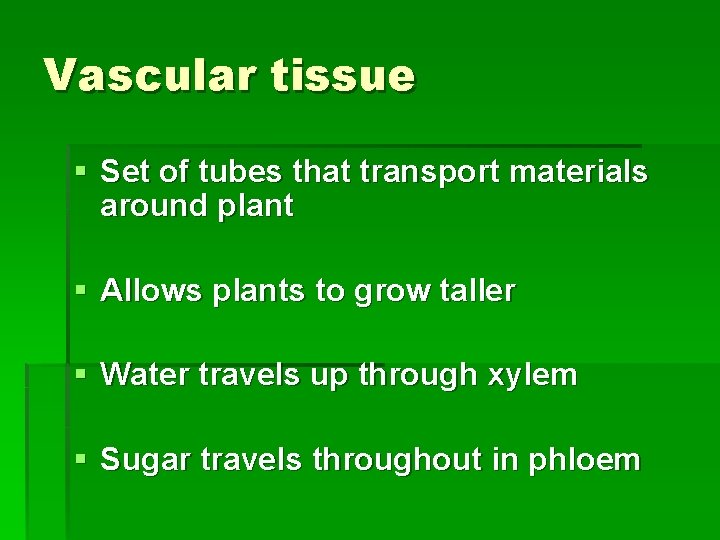
Vascular tissue § Set of tubes that transport materials around plant § Allows plants to grow taller § Water travels up through xylem § Sugar travels throughout in phloem
Ferns live further on land § Mature plant survives fine with vascular tissue § But sperm must still swim to egg (needs film of water)
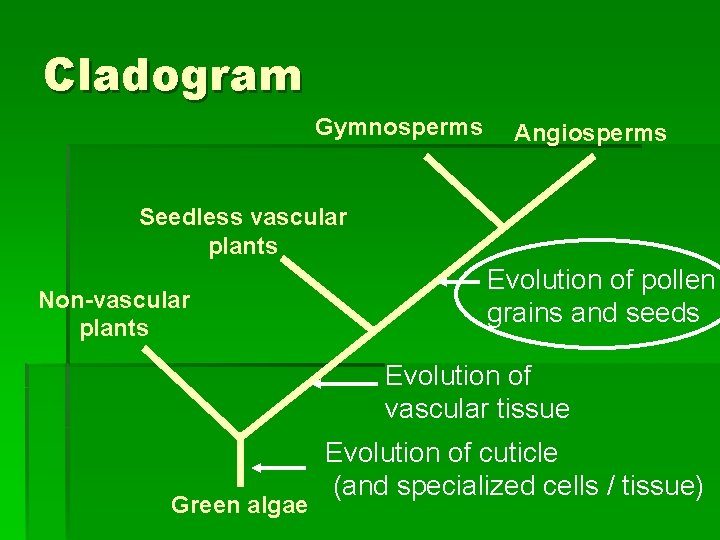
Cladogram Gymnosperms Angiosperms Seedless vascular plants Non-vascular plants Evolution of pollen grains and seeds Evolution of vascular tissue Green algae Evolution of cuticle (and specialized cells / tissue)
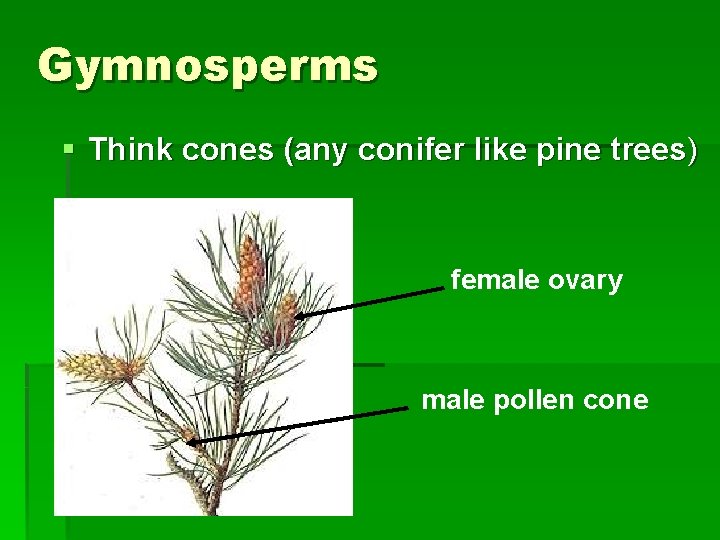
Gymnosperms § Think cones (any conifer like pine trees) female ovary male pollen cone
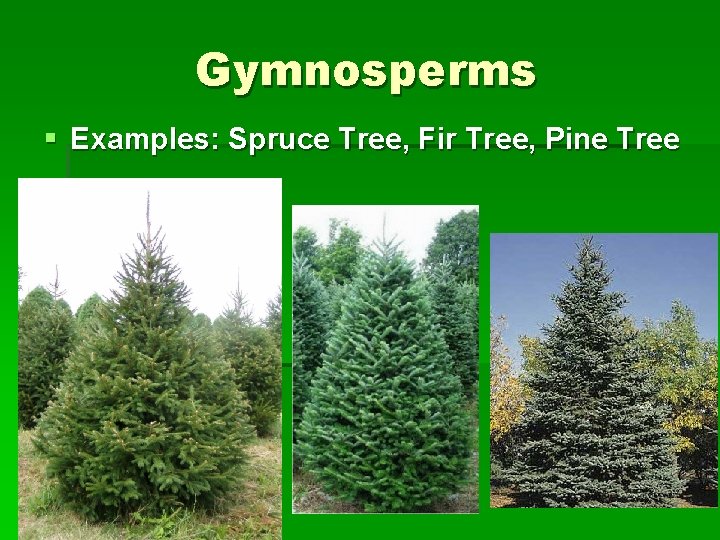
Gymnosperms § Examples: Spruce Tree, Fir Tree, Pine Tree
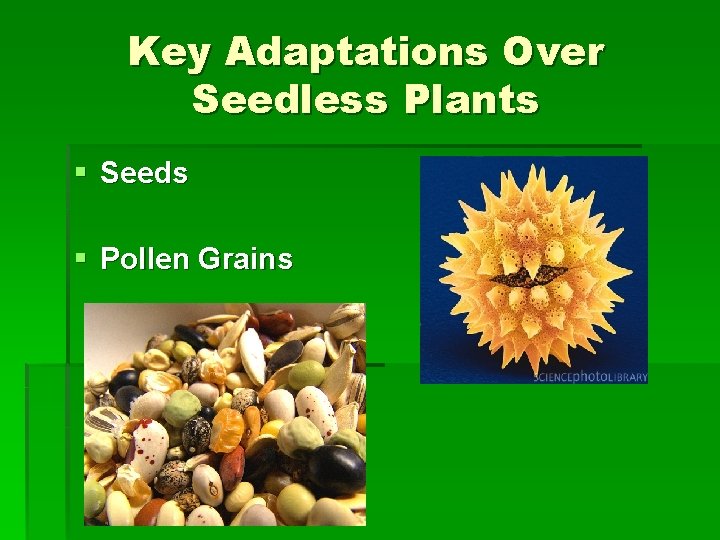
Key Adaptations Over Seedless Plants § Seeds § Pollen Grains
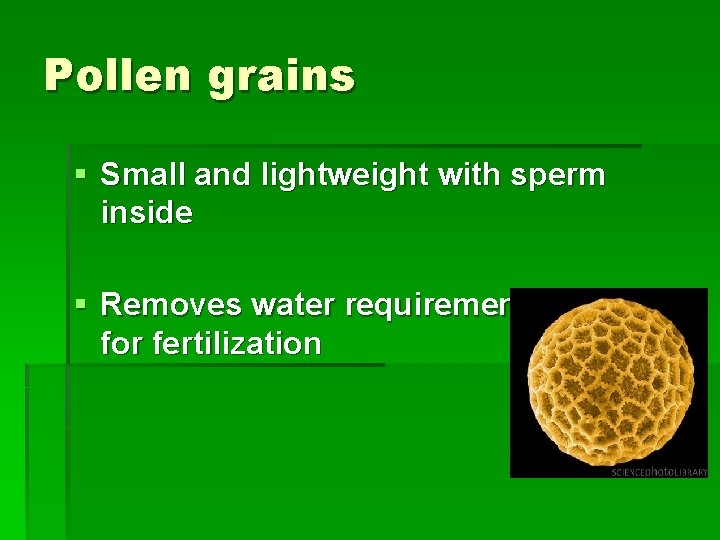
Pollen grains § Small and lightweight with sperm inside § Removes water requirement for fertilization
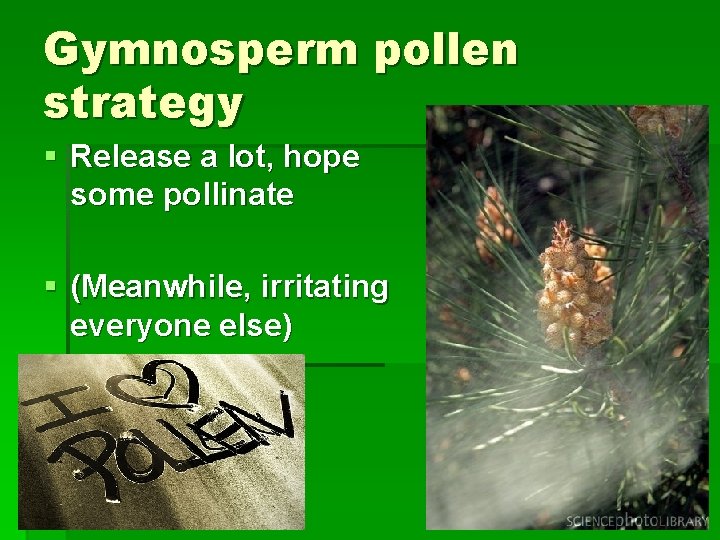
Gymnosperm pollen strategy § Release a lot, hope some pollinate § (Meanwhile, irritating everyone else)
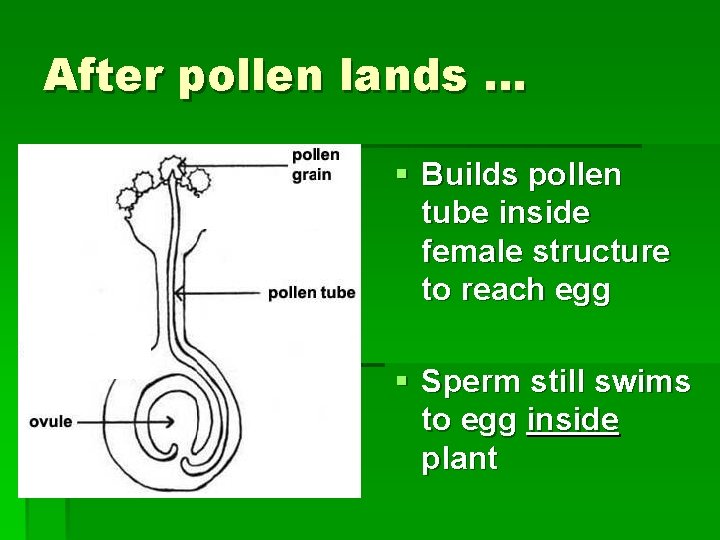
After pollen lands … § Builds pollen tube inside female structure to reach egg § Sperm still swims to egg inside plant
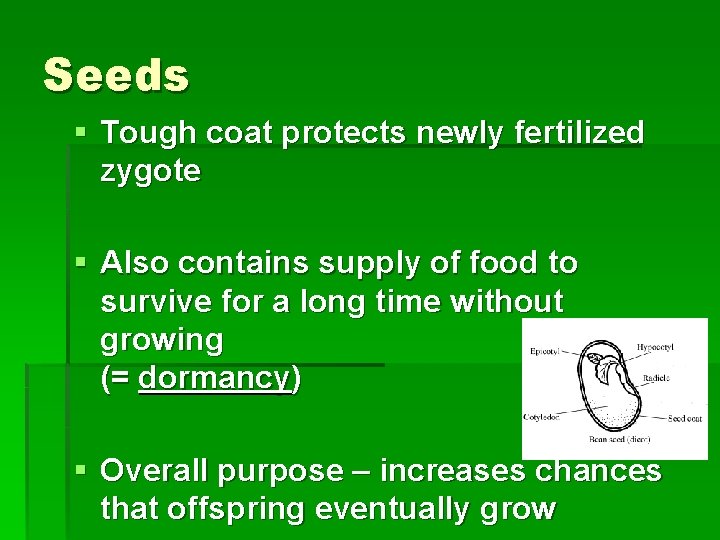
Seeds § Tough coat protects newly fertilized zygote § Also contains supply of food to survive for a long time without growing (= dormancy) § Overall purpose – increases chances that offspring eventually grow
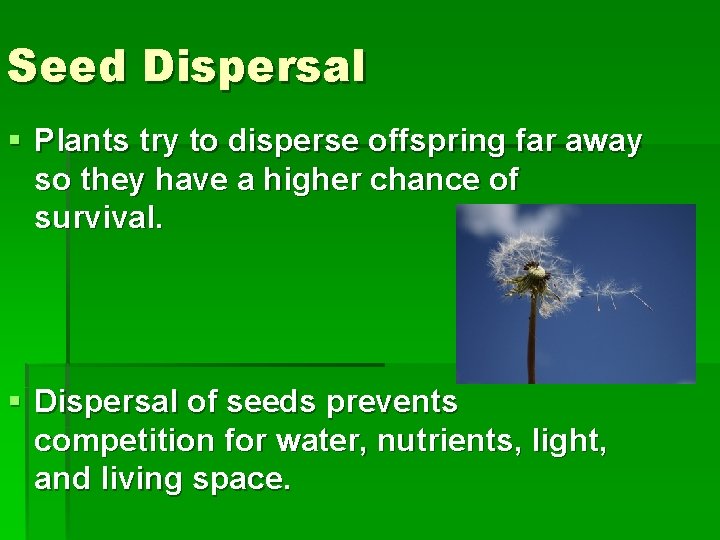
Seed Dispersal § Plants try to disperse offspring far away so they have a higher chance of survival. § Dispersal of seeds prevents competition for water, nutrients, light, and living space.
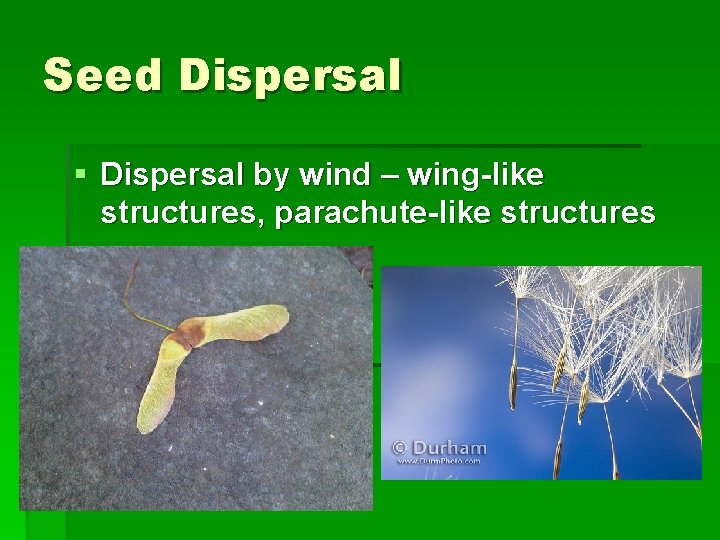
Seed Dispersal § Dispersal by wind – wing-like structures, parachute-like structures
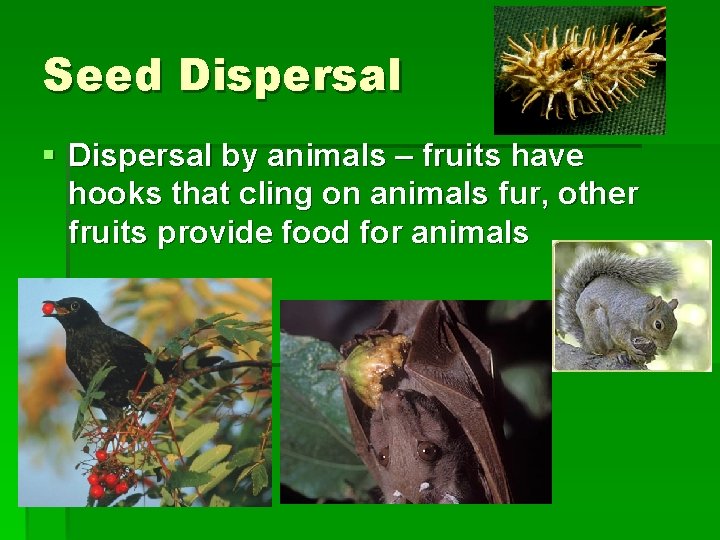
Seed Dispersal § Dispersal by animals – fruits have hooks that cling on animals fur, other fruits provide food for animals
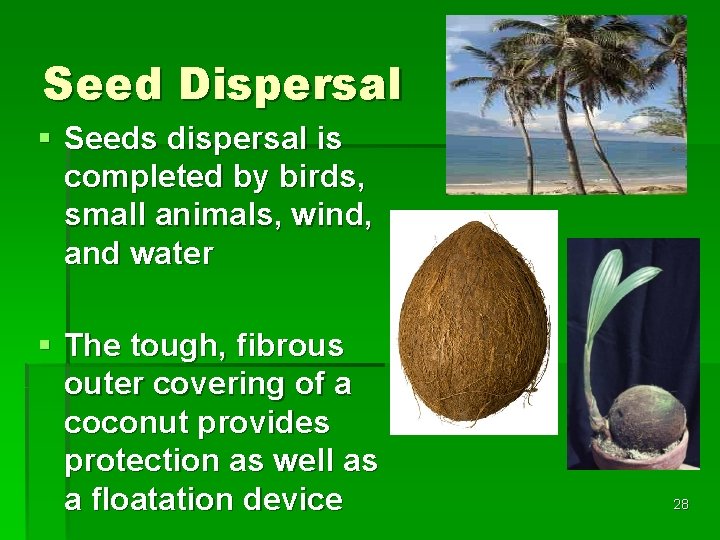
Seed Dispersal § Seeds dispersal is completed by birds, small animals, wind, and water § The tough, fibrous outer covering of a coconut provides protection as well as a floatation device 28
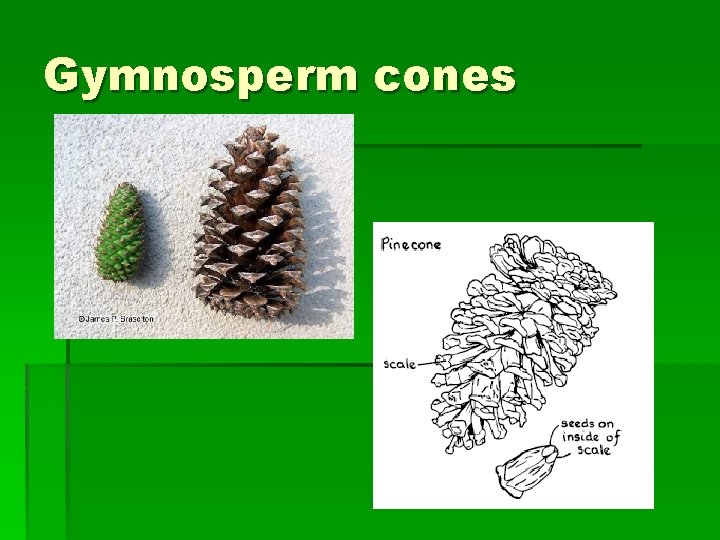
Gymnosperm cones

Full colonization of land § Vascular tissue (find water in soil) + § Reproduction through air (no need for water for sperm to swim)
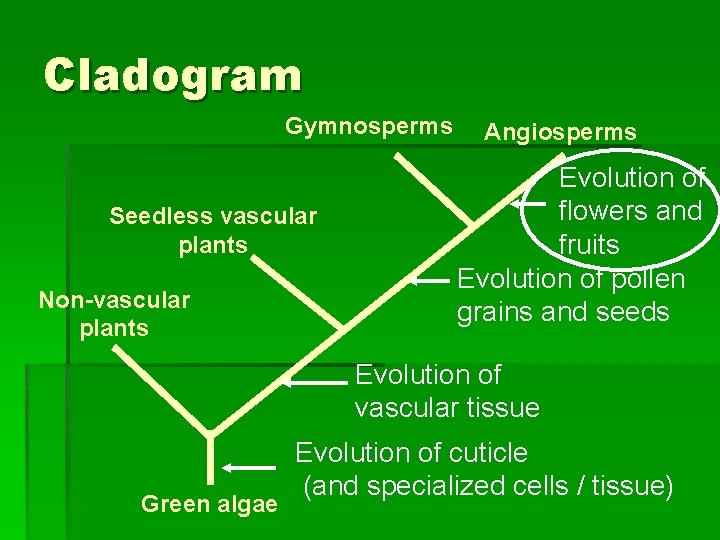
Cladogram Gymnosperms Seedless vascular plants Non-vascular plants Angiosperms Evolution of flowers and fruits Evolution of pollen grains and seeds Evolution of vascular tissue Green algae Evolution of cuticle (and specialized cells / tissue)
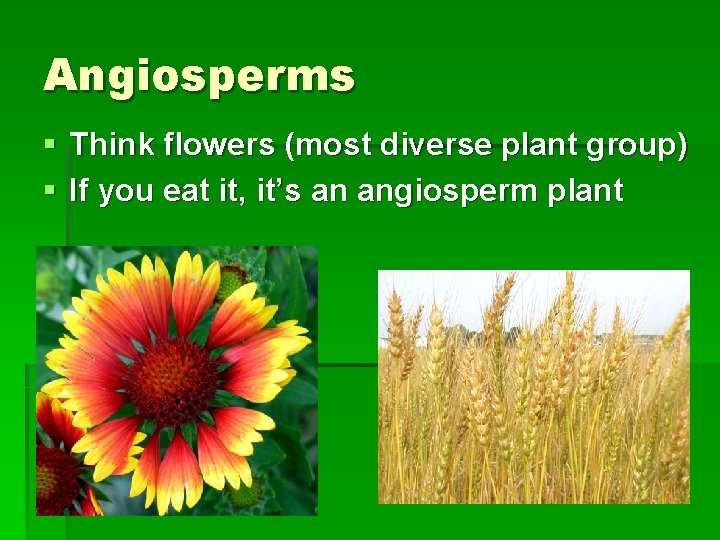
Angiosperms § Think flowers (most diverse plant group) § If you eat it, it’s an angiosperm plant
Flowers (key adaptation over gymnosperms) § Attract animals to help carry pollen to the next flower § Color or scent attractors guide animals to obtain sugar from plant § Pollinators also brush by pollen, get on body § Overall purpose: reduces amount of pollen that plant has to make (not random wind travel)
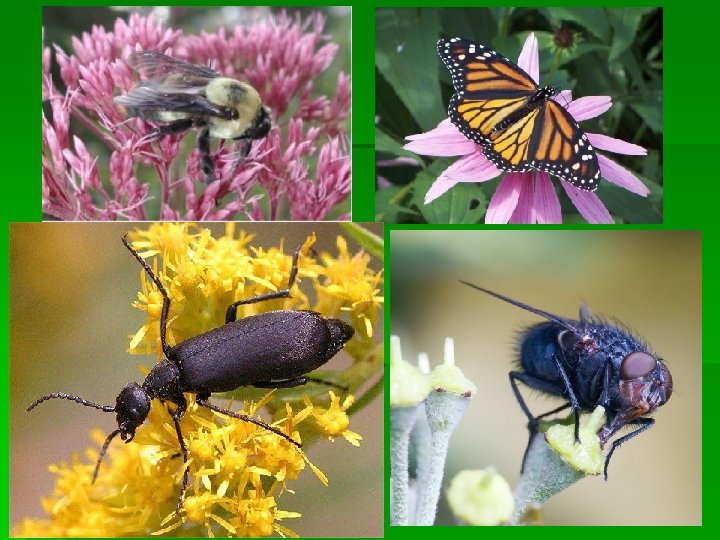
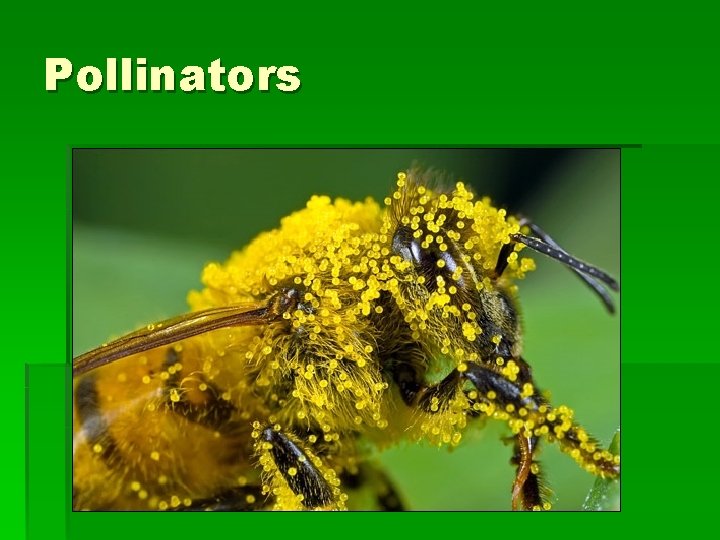
Pollinators
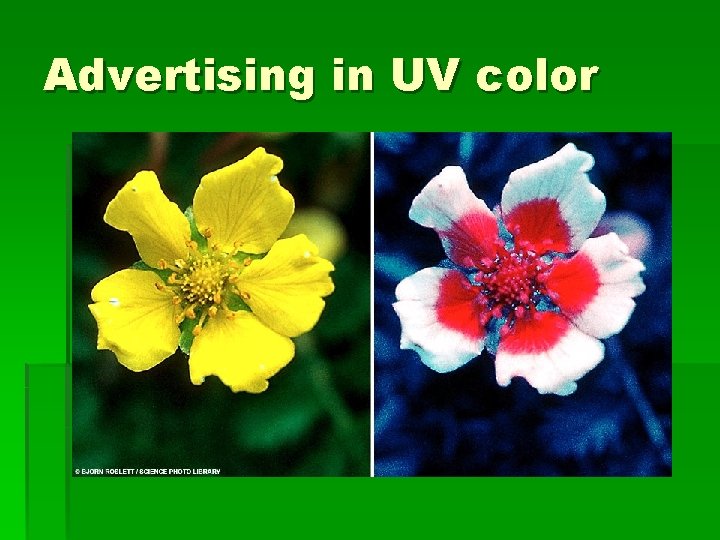
Advertising in UV color
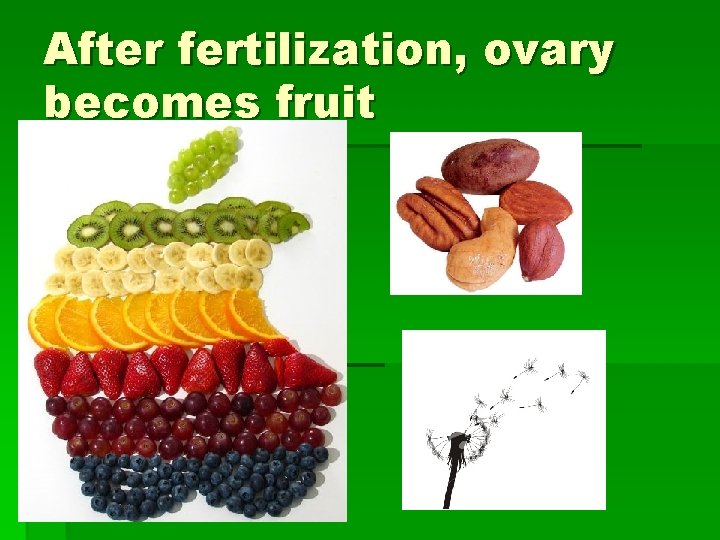
After fertilization, ovary becomes fruit
Fruits § Overall purpose: Help get seeds far away from parent plant (why? ) § Many are sugary fruits – animals eat, seeds pooped out far away from parent (and with free fertilizer!) § Other fruits use wind (dandelion fruits), water (coconut fruits)
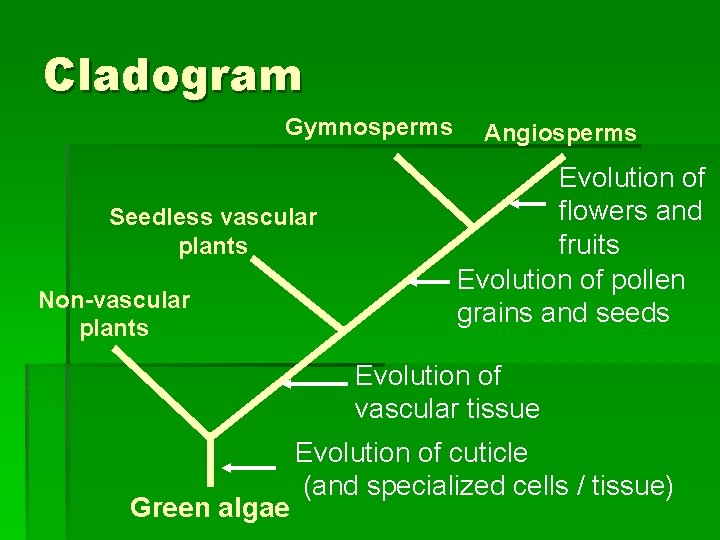
Cladogram Gymnosperms Seedless vascular plants Non-vascular plants Angiosperms Evolution of flowers and fruits Evolution of pollen grains and seeds Evolution of vascular tissue Green algae Evolution of cuticle (and specialized cells / tissue)
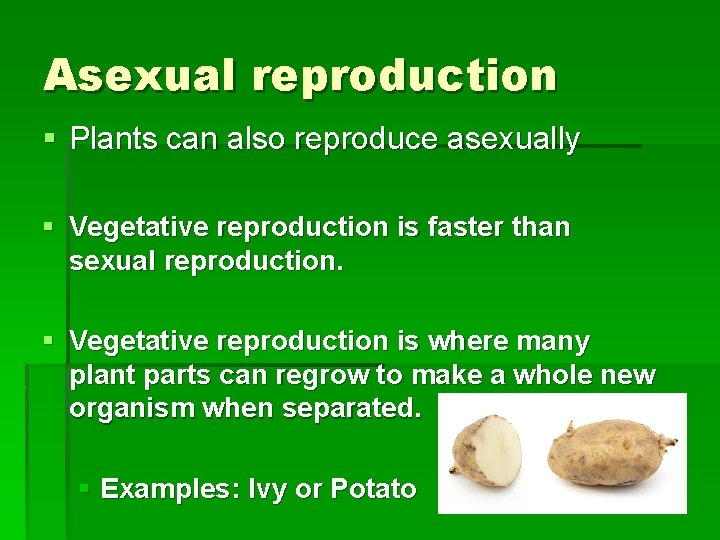
Asexual reproduction § Plants can also reproduce asexually § Vegetative reproduction is faster than sexual reproduction. § Vegetative reproduction is where many plant parts can regrow to make a whole new organism when separated. § Examples: Ivy or Potato
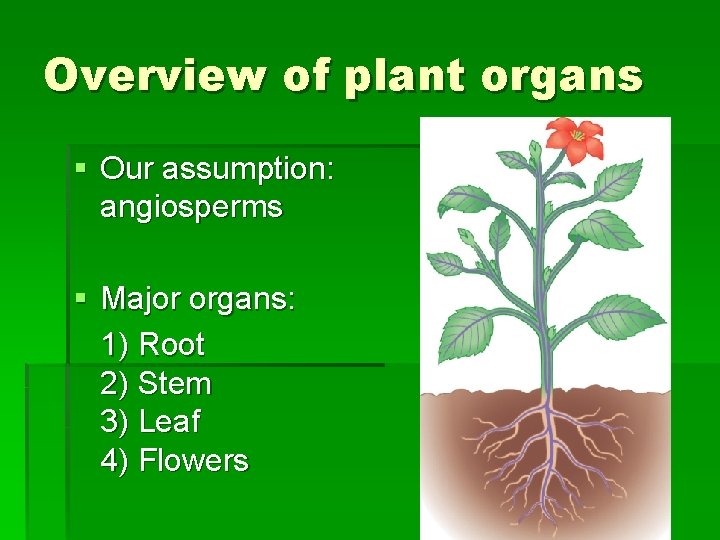
Overview of plant organs § Our assumption: angiosperms § Major organs: 1) Root 2) Stem 3) Leaf 4) Flowers
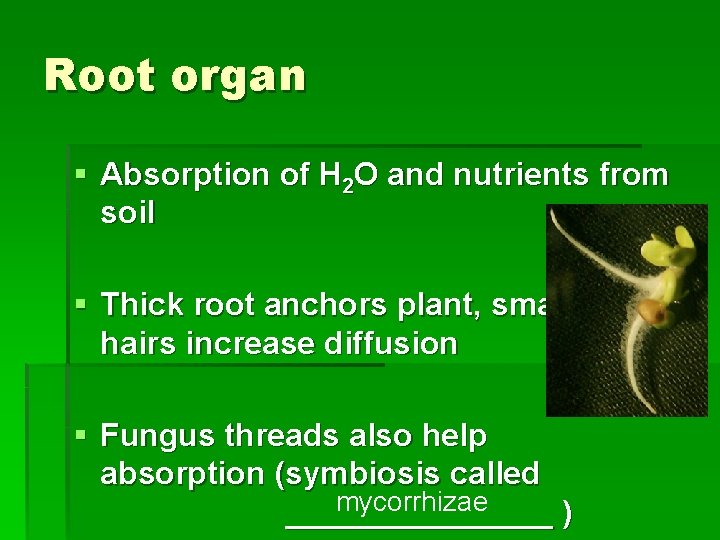
Root organ § Absorption of H 2 O and nutrients from soil § Thick root anchors plant, small hairs increase diffusion § Fungus threads also help absorption (symbiosis called mycorrhizae ________ )
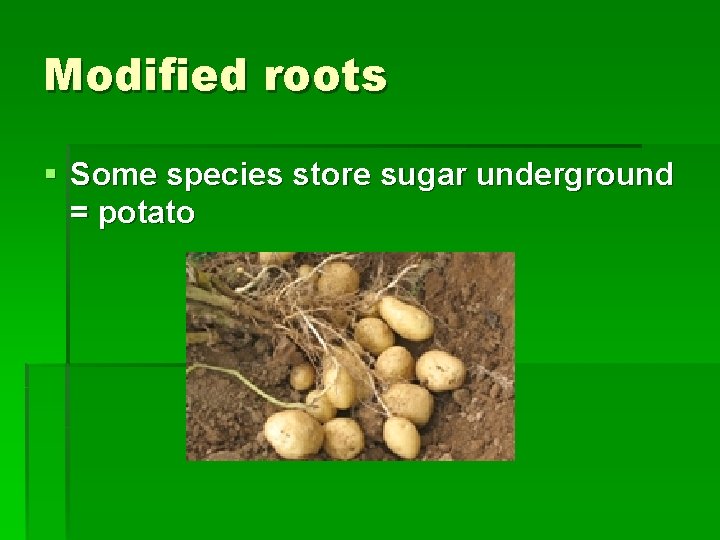
Modified roots § Some species store sugar underground = potato
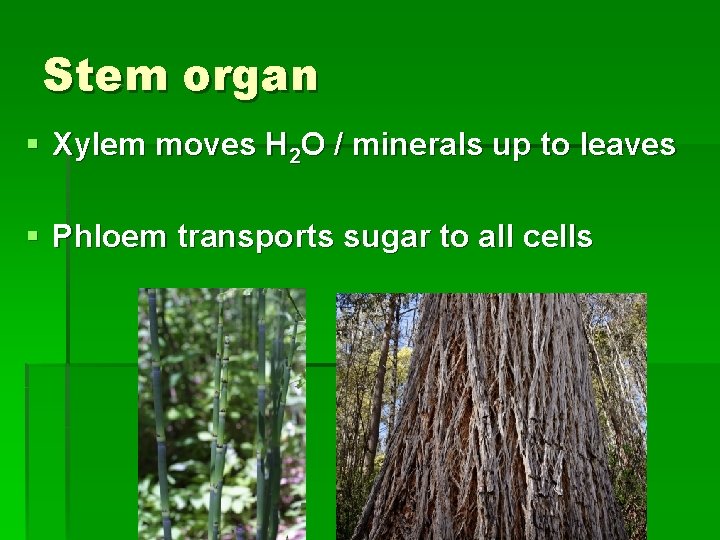
Stem organ § Xylem moves H 2 O / minerals up to leaves § Phloem transports sugar to all cells
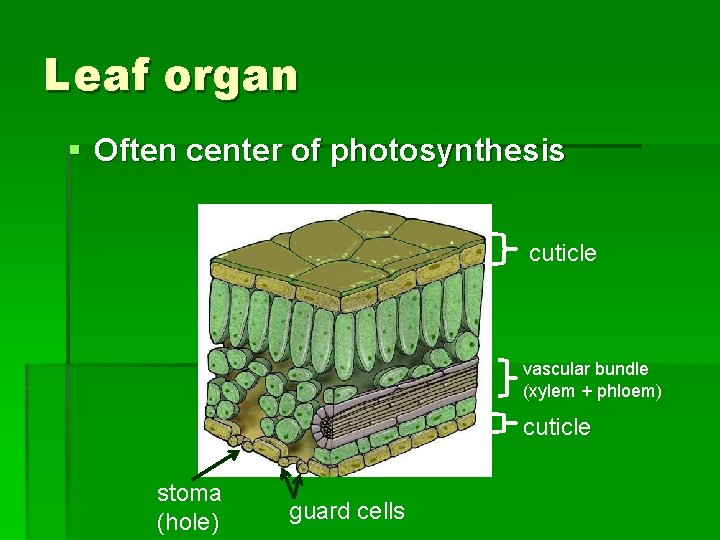
Leaf organ § Often center of photosynthesis cuticle vascular bundle (xylem + phloem) cuticle stoma (hole) guard cells
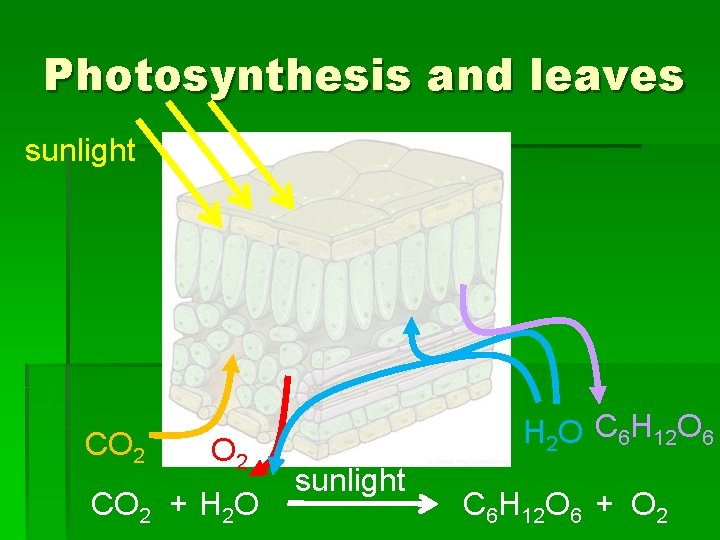
Photosynthesis and leaves sunlight CO 2 + H 2 O C 6 H 12 O 6 sunlight C 6 H 12 O 6 + O 2
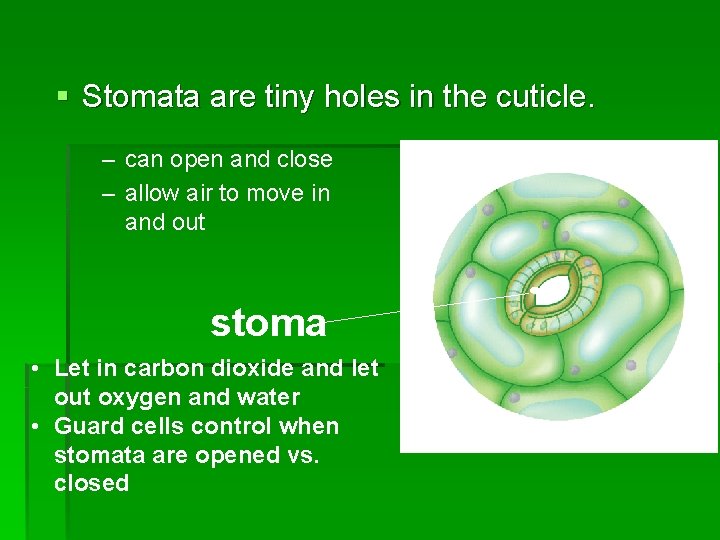
§ Stomata are tiny holes in the cuticle. – can open and close – allow air to move in and out stoma • Let in carbon dioxide and let out oxygen and water • Guard cells control when stomata are opened vs. closed
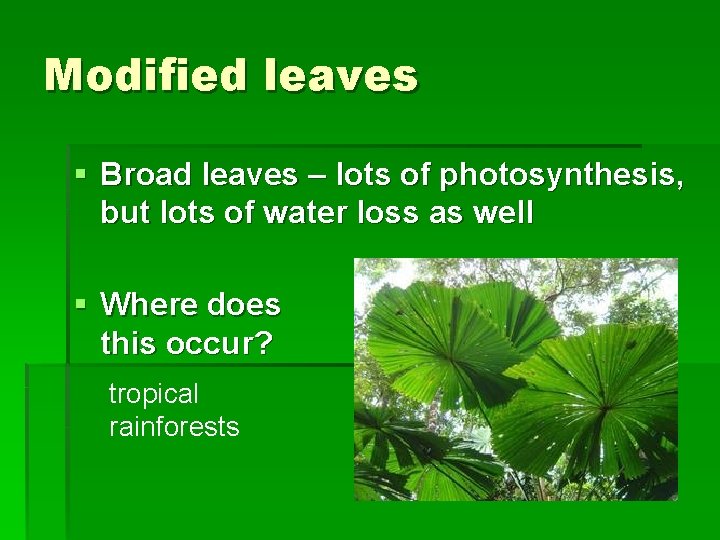
Modified leaves § Broad leaves – lots of photosynthesis, but lots of water loss as well § Where does this occur? tropical rainforests
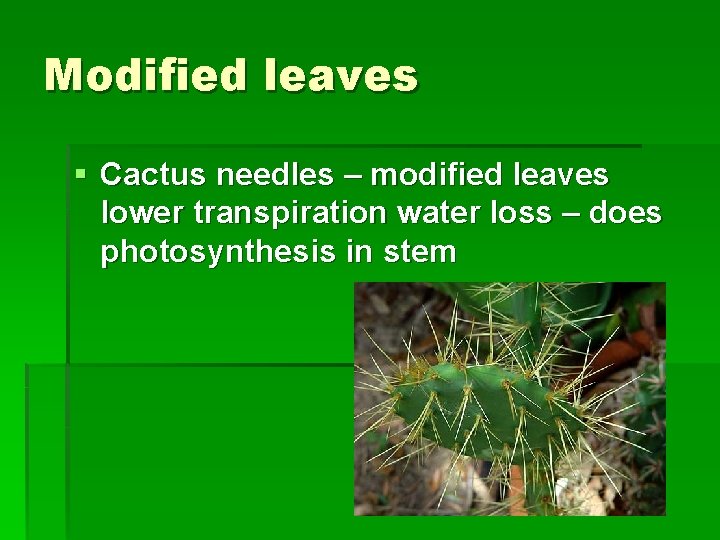
Modified leaves § Cactus needles – modified leaves lower transpiration water loss – does photosynthesis in stem
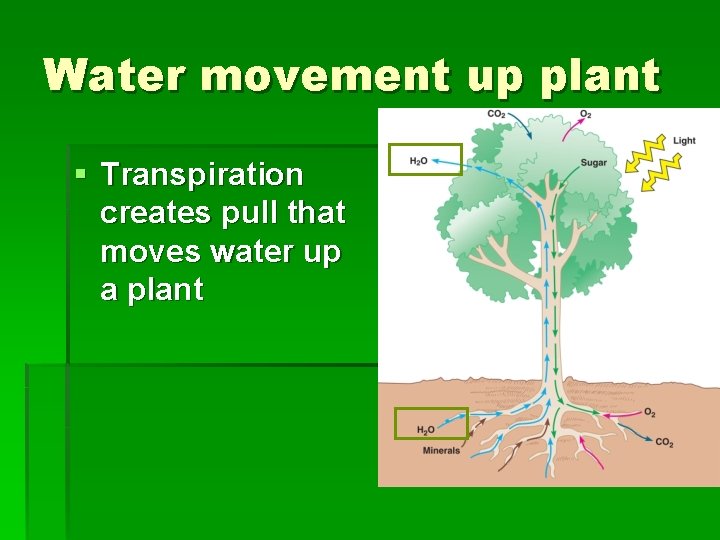
Water movement up plant § Transpiration creates pull that moves water up a plant
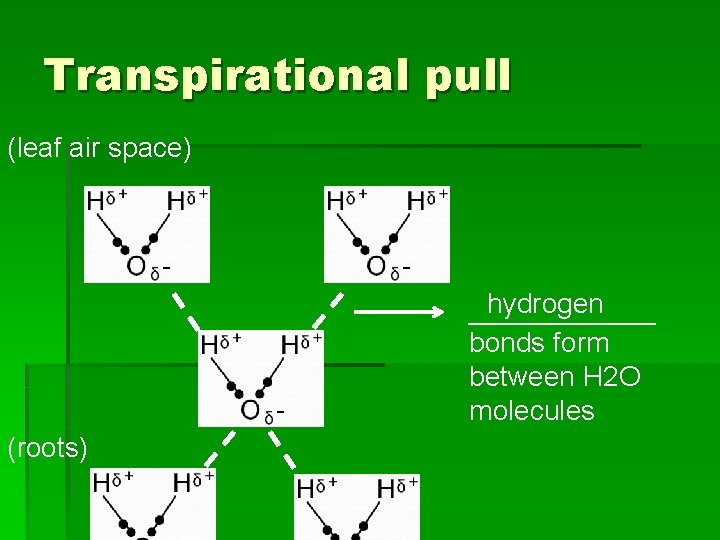
Transpirational pull (leaf air space) hydrogen ______ bonds form between H 2 O molecules (roots)
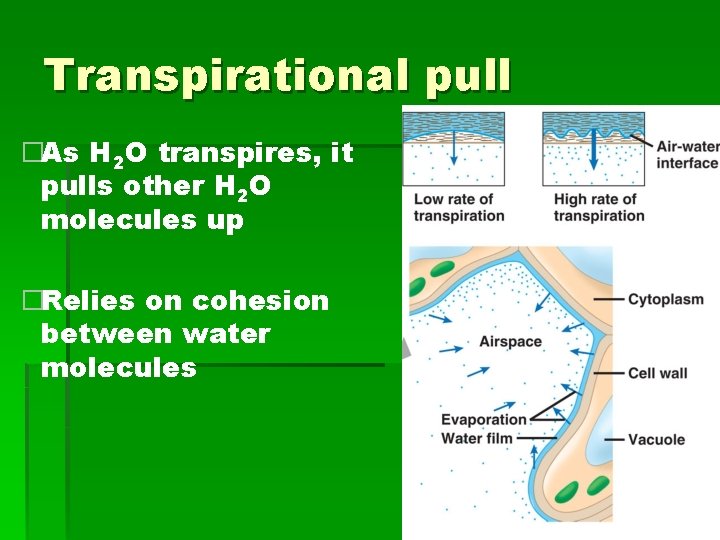
Transpirational pull �As H 2 O transpires, it pulls other H 2 O molecules up �Relies on cohesion between water molecules
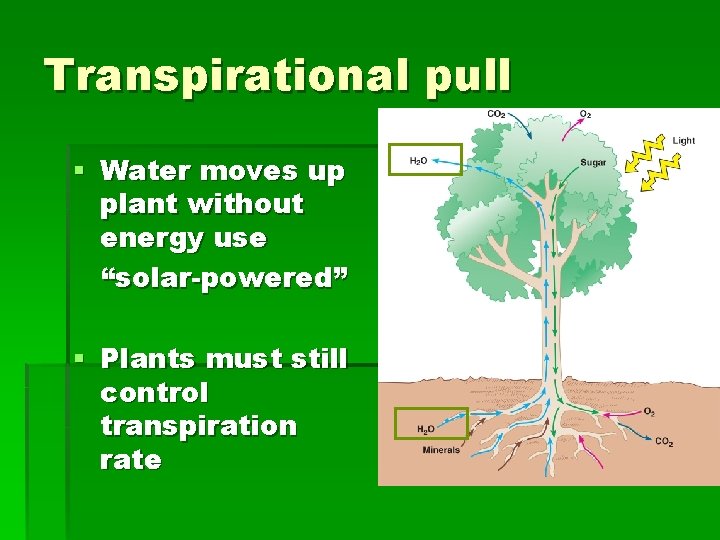
Transpirational pull § Water moves up plant without energy use “solar-powered” § Plants must still control transpiration rate
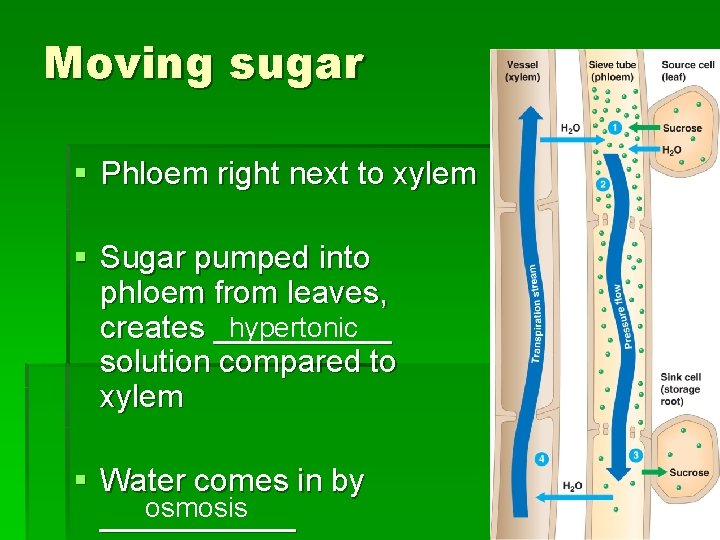
Moving sugar § Phloem right next to xylem § Sugar pumped into phloem from leaves, hypertonic creates _____ solution compared to xylem § Water comes in by osmosis ______
Plant reproduction § Recall purpose of seeds in gymnosperms and angiosperms § Recall purpose of fruits in angiosperms § Seed dormancy and triggers for germination (water, fire, etc)
Growth of plants § Meristem tissue – cells specializing in mitosis § Plant growth focused on growing taller first – why? § Tropisms – directed growth in response to a particular environmental stimulus
Plant tropisms § Phototropism – growth in response to light § Gravitropism – growth in response to gravity (roots “down”, shoots “up”)
- Slides: 57