
PLANt KINGDOM CHARACTERISTICS Eukaryotic cell Autotrophic nutrition photosynthesis
- Slides: 17
PLANt KINGDOM
CHARACTERISTICS �Eukaryotic cell �Autotrophic nutrition (photosynthesis) �Multicellular organisms. �Reproduction: Asexual (spores or fragments ) � Sexual (seeds) �Interaction: movements of growth.
Classification of plants �Plants without seeds: �Plants without flowers that reproduce trhough spores and live in wet environment to be able to reproduce. �Plants with seeds: �They have flowers that contain the reproductive organs and have seeds wich propagate better than spores. Spermatophytes
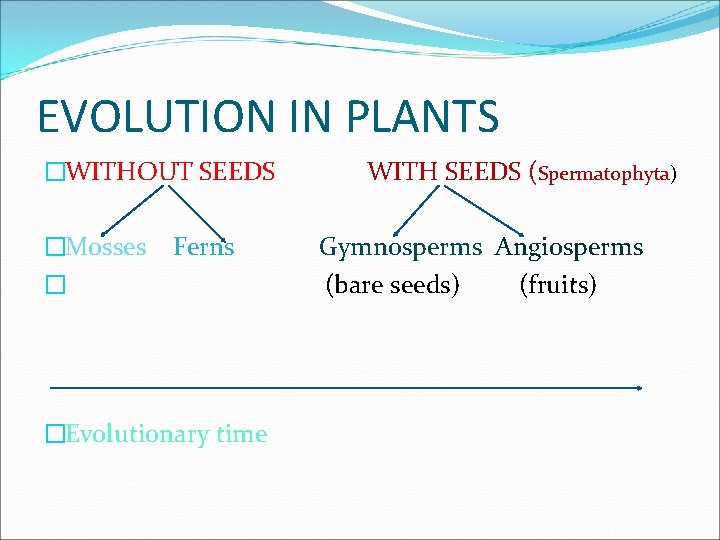
EVOLUTION IN PLANTS �WITHOUT SEEDS �Mosses � Ferns �Evolutionary time WITH SEEDS (Spermatophyta) Gymnosperms Angiosperms (bare seeds) (fruits)
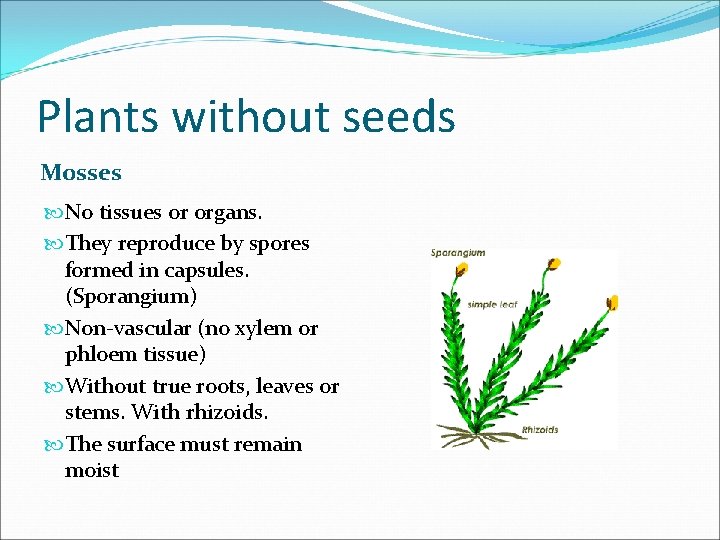
Plants without seeds Mosses No tissues or organs. They reproduce by spores formed in capsules. (Sporangium) Non-vascular (no xylem or phloem tissue) Without true roots, leaves or stems. With rhizoids. The surface must remain moist
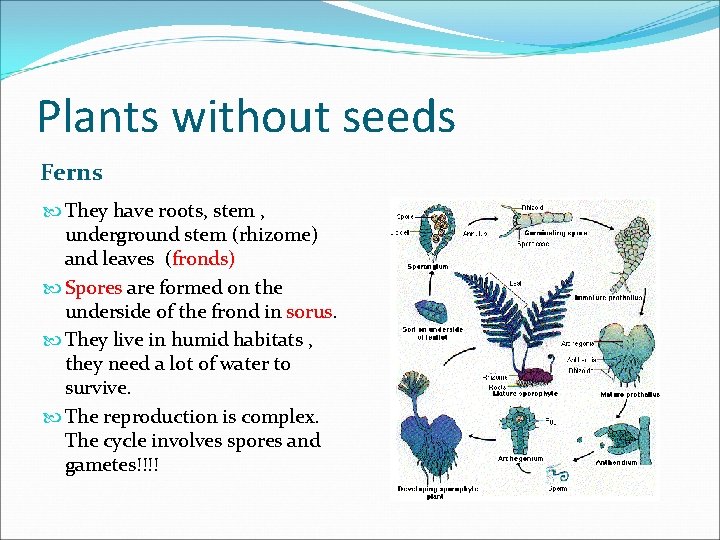
Plants without seeds Ferns They have roots, stem , underground stem (rhizome) and leaves (fronds) Spores are formed on the underside of the frond in sorus. They live in humid habitats , they need a lot of water to survive. The reproduction is complex. The cycle involves spores and gametes!!!!
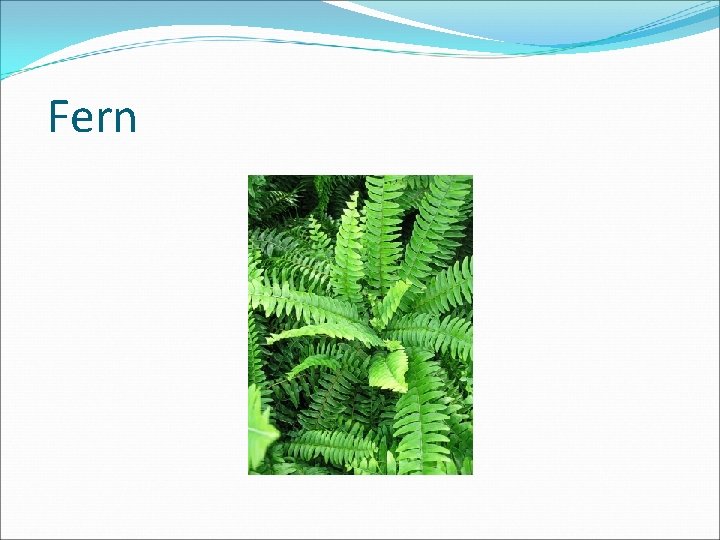
Fern
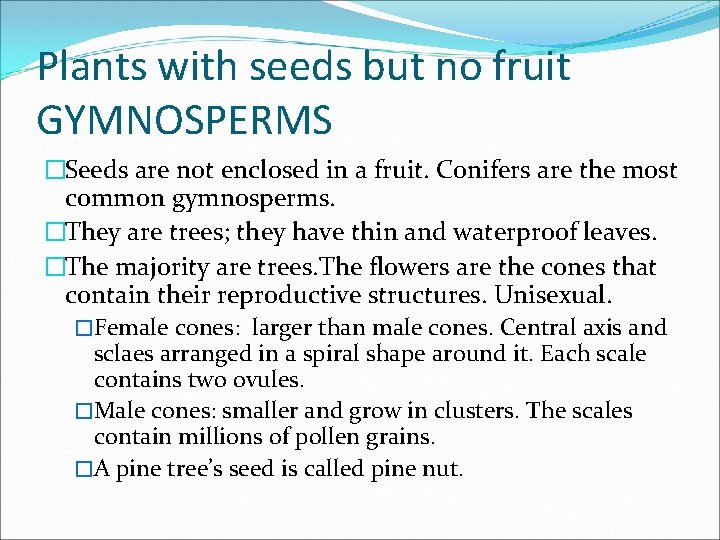
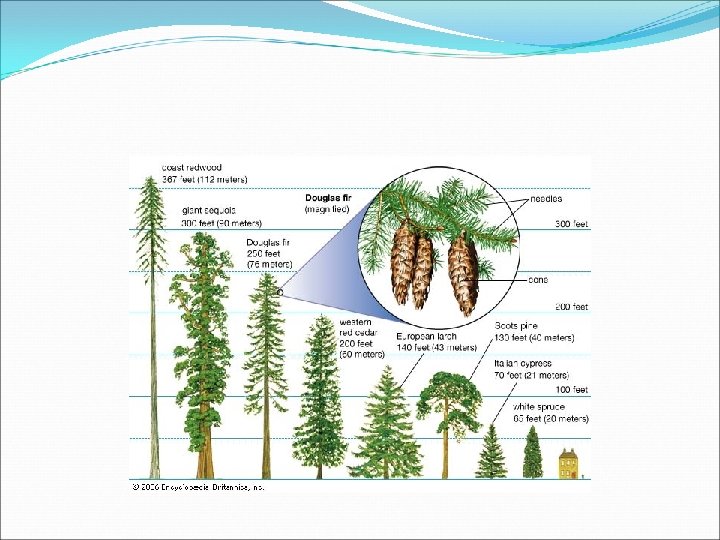
Plants with seeds but no fruit GYMNOSPERMS �Seeds are not enclosed in a fruit. Conifers are the most common gymnosperms. �They are trees; they have thin and waterproof leaves. �The majority are trees. The flowers are the cones that contain their reproductive structures. Unisexual. �Female cones: larger than male cones. Central axis and sclaes arranged in a spiral shape around it. Each scale contains two ovules. �Male cones: smaller and grow in clusters. The scales contain millions of pollen grains. �A pine tree’s seed is called pine nut.
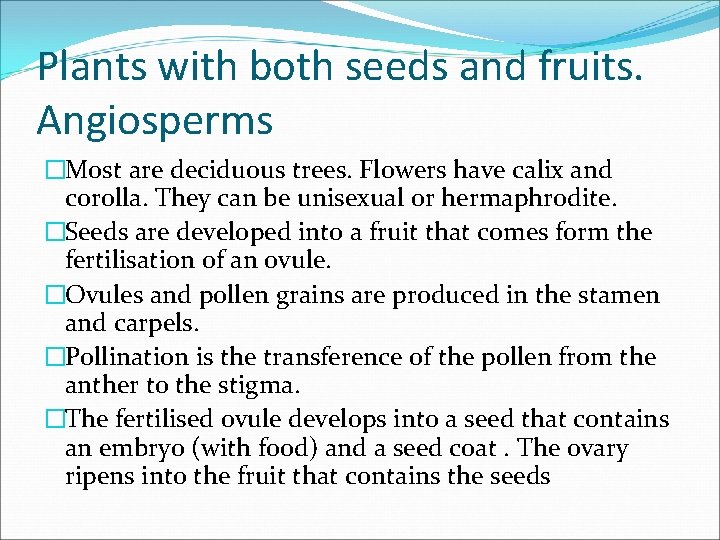
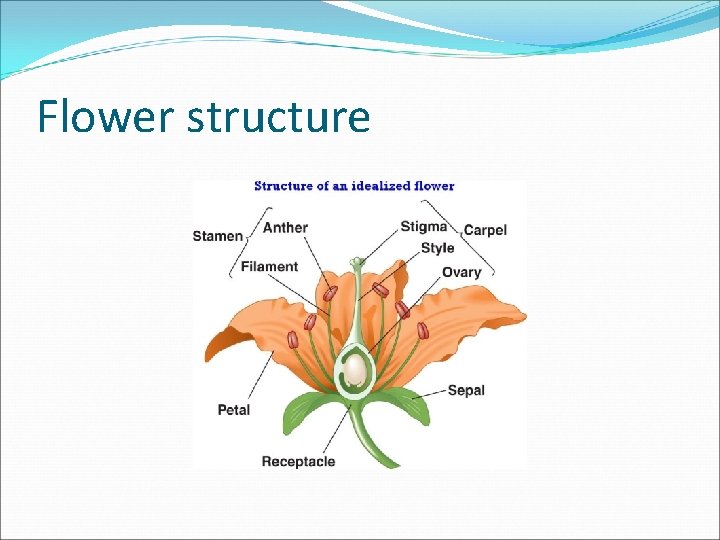
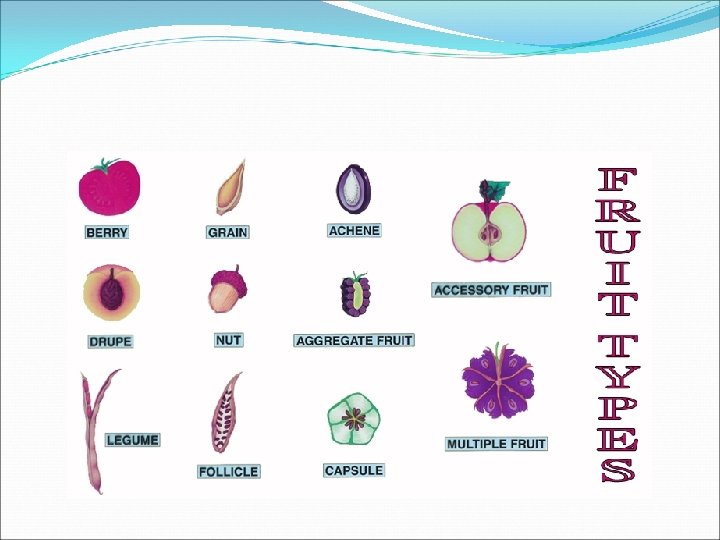
Plants with both seeds and fruits. Angiosperms �Most are deciduous trees. Flowers have calix and corolla. They can be unisexual or hermaphrodite. �Seeds are developed into a fruit that comes form the fertilisation of an ovule. �Ovules and pollen grains are produced in the stamen and carpels. �Pollination is the transference of the pollen from the anther to the stigma. �The fertilised ovule develops into a seed that contains an embryo (with food) and a seed coat. The ovary ripens into the fruit that contains the seeds
Flower structure
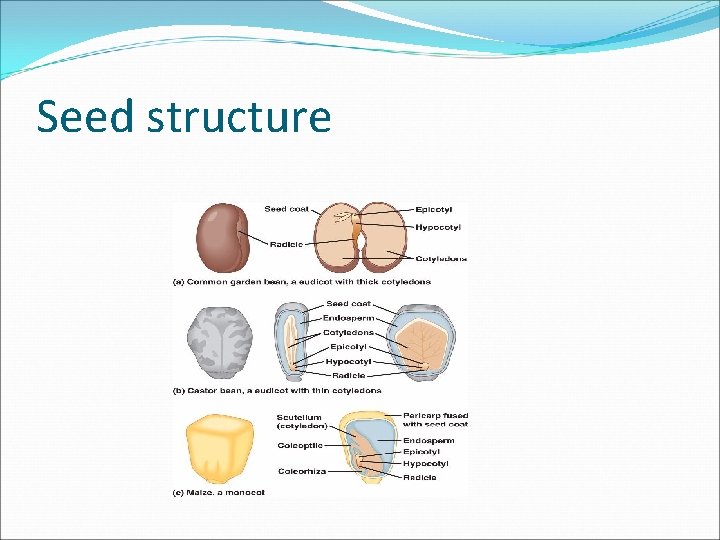
Seed structure
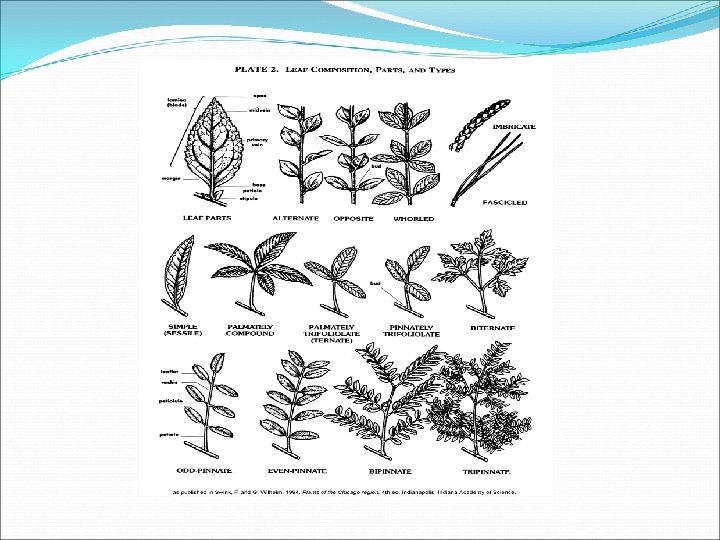
Plant structure �Organs: 1. Roots: to anchor the plant and to absorb water and mineral salts 2. Stem: to support leaves, flowers and fruits. It contains a system of vascular vessels that transport sap 1. Xylem: from roots to leaves 2. Phloem: from the leaves to everywhere 3. Leaves: with a waxy layer and stomata. Photosynthesis
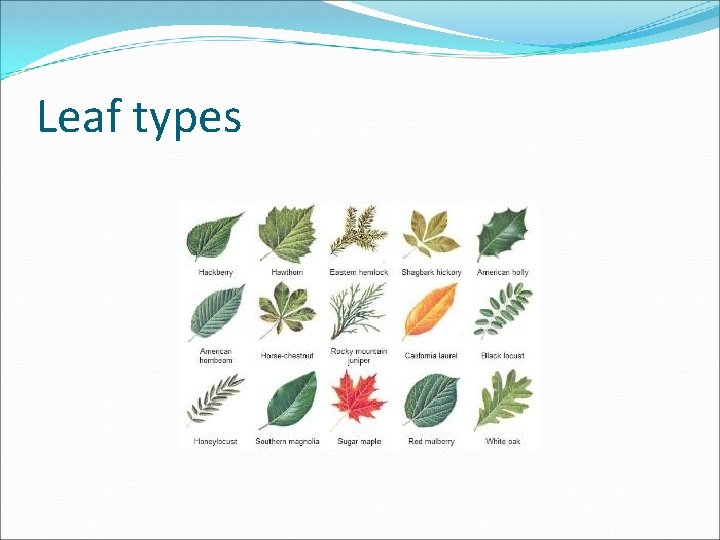
Leaf types