
Plant interactions with bacterial Pathogens Handout 1 Luis
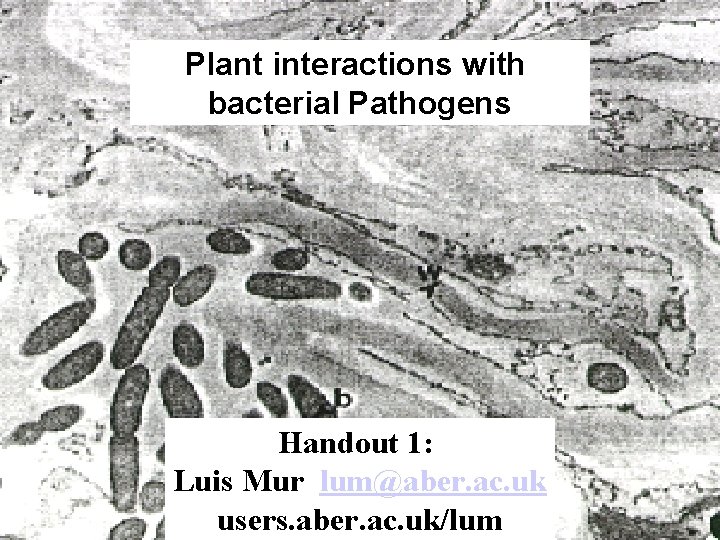
Plant interactions with bacterial Pathogens Handout 1: Luis Mur lum@aber. ac. uk users. aber. ac. uk/lum
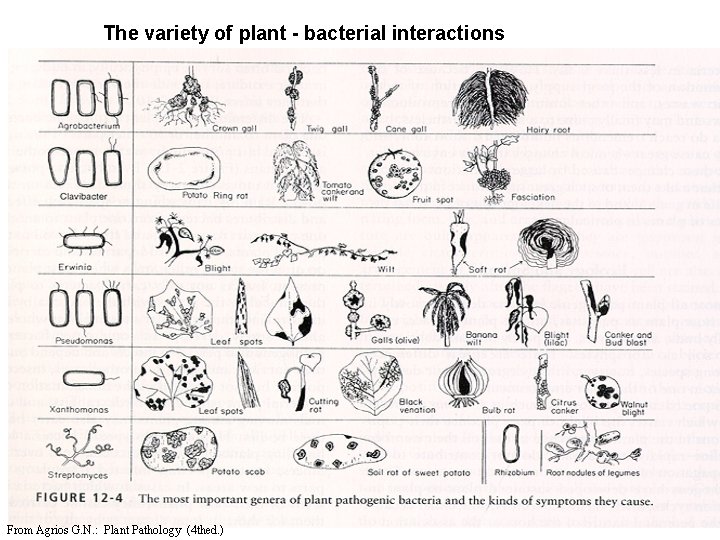
The variety of plant - bacterial interactions From Agrios G. N. : Plant Pathology (4 thed. )
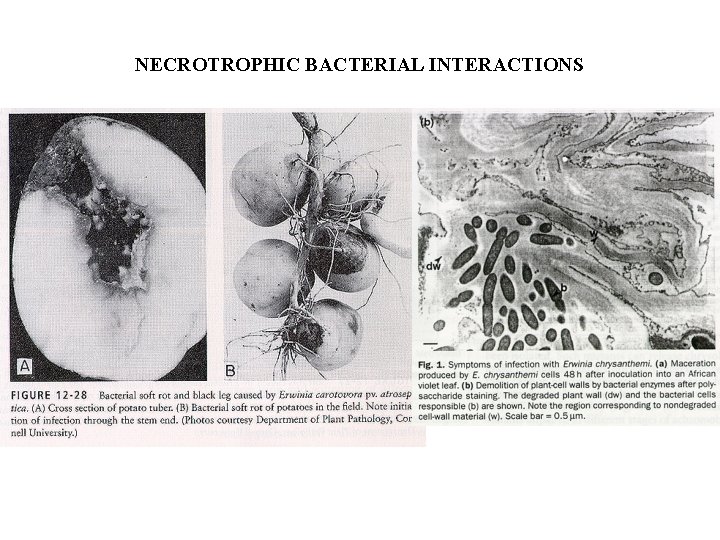
NECROTROPHIC BACTERIAL INTERACTIONS

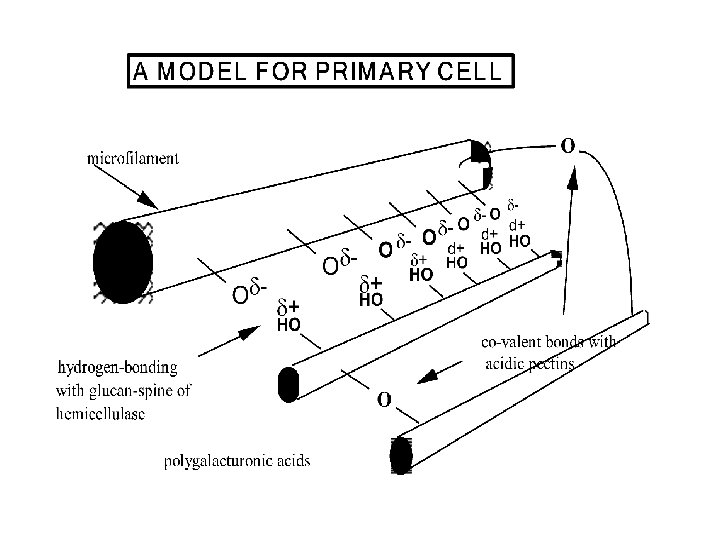
Cell-wall polymers (A) Cellulose Unbranched polymer (1000 -1500 Units) of glucose residues joined at C 1 -4 . H CH 2 OH 6 O 5 H H OH 4 O 3 O H H H 2 H HH 1 H H OH O H H H CH 2 OH OH -"molecular glue" (1) hemicellulases - mainly xyloglucans. Xylose C 5 sugar in pyranose (C 5 ring) form 2 3 HO OH 4 5 OH OH HO 1 O Further substituent sugars: e. g. galactose OH OH OH O CH O O HO OH OH O C 2 o O CH 2 o o O(H) O CH 2 o cellulose O OH (B) Matrix Polymers CH 2 OH OH o

(2) pectic polygalacturonic acids: O - O 6 C=O C 1 -4 linked galacturonic acids C=O O 5 HO O O 4 occasional rhamnose sugars in chain 1 OH 3 - O 2 OH OH
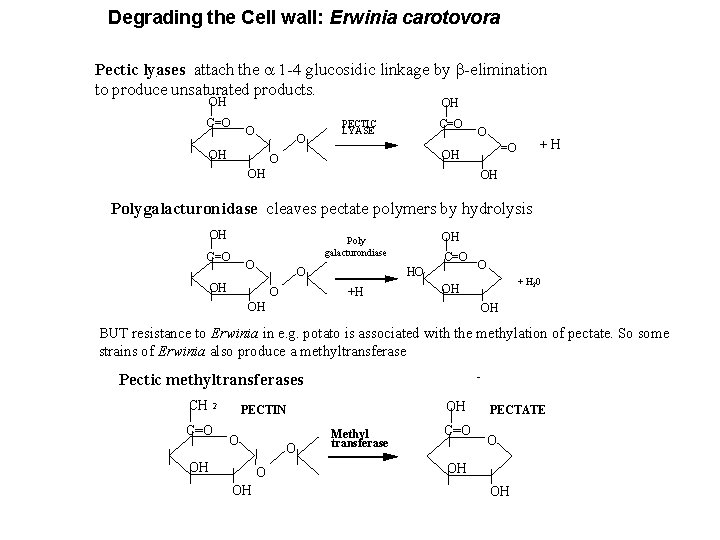
Degrading the Cell wall: Erwinia carotovora Pectic lyases attach the a 1 -4 glucosidic linkage by b-elimination · to produce unsaturated products. OH OH C=O O O OH C=O PECTIC LYASE O OH +H =O OH · Polygalacturonidase cleaves pectate polymers - by hydrolysis OH OH Poly galacturondiase C=O O HO O OH +H O C=O O + H 20 OH OH OH BUT resistance to Erwinia in e. g. potato is associated with the methylation of pectate. So some strains of Erwinia also produce a methyltransferase - Pectic methyltransferases CH 2 C=O OH PECTIN O OH O O OH Methyl transferase C=O PECTATE O OH OH
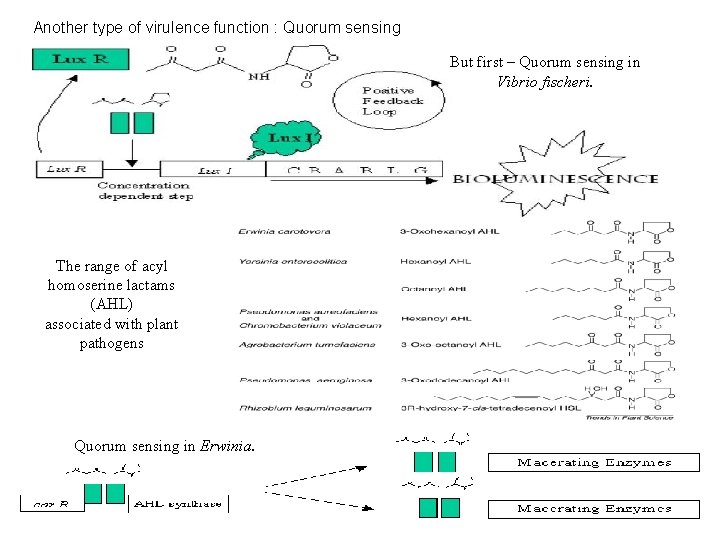
Another type of virulence function : Quorum sensing But first – Quorum sensing in Vibrio fischeri. The range of acyl homoserine lactams (AHL) associated with plant pathogens Quorum sensing in Erwinia.

BIOTROPHIC BACTERIAL INTERACTIONS
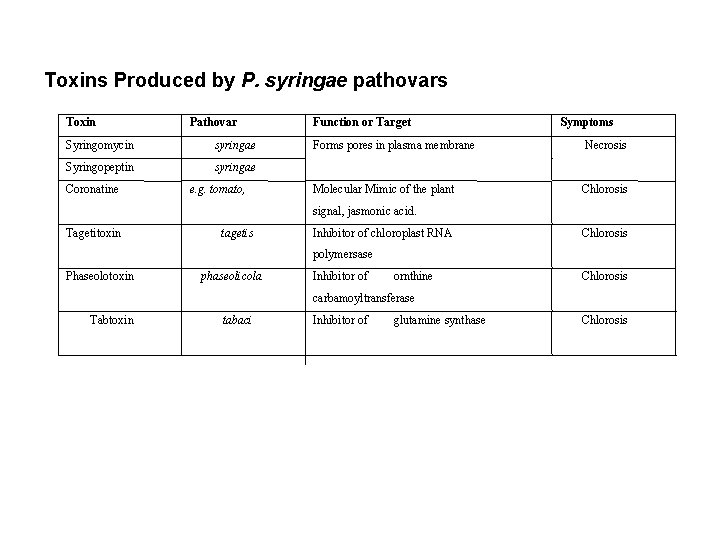
Toxins Produced by P. syringae pathovars Toxin Pathovar Syringomycin syringae Syringopeptin syringae Coronatine e. g. tomato, Function or Target Symptoms Forms pores in plasma membrane Necrosis Molecular Mimic of the plant Chlorosis signal, jasmonic acid. Tagetitoxin tagetis Inhibitor of chloroplast RNA Chlorosis polymersase Phaseolotoxin phaseolicola Inhibitor of ornthine Chlorosis carbamoyltransferase Tabtoxin tabaci Inhibitor of glutamine synthase Chlorosis
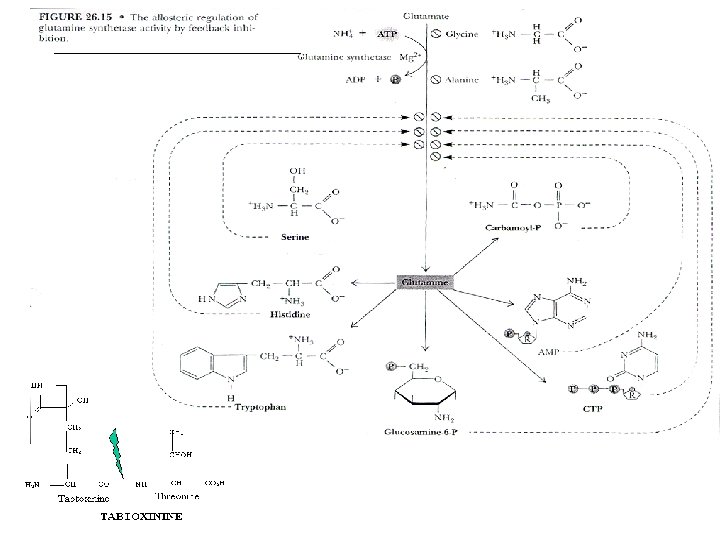
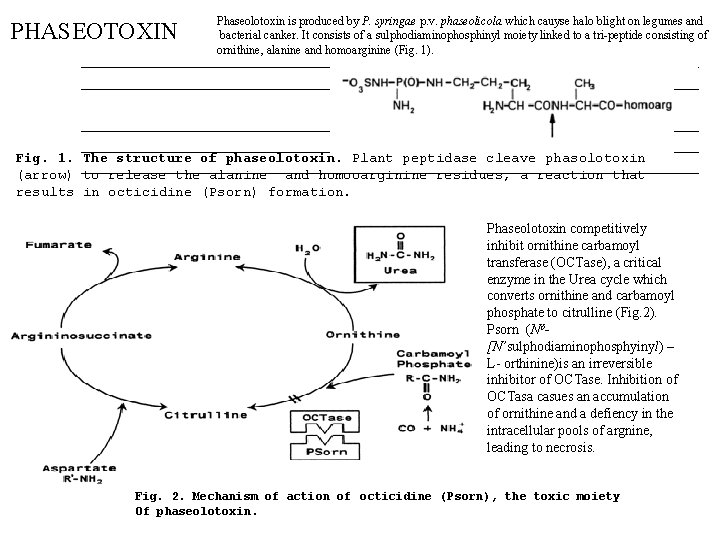
PHASEOTOXIN Phaseolotoxin is produced by P. syringae p. v. phaseolicola which cauyse halo blight on legumes and bacterial canker. It consists of a sulphodiaminophosphinyl moiety linked to a tri-peptide consisting of ornithine, alanine and homoarginine (Fig. 1). Fig. 1. The structure of phaseolotoxin. Plant peptidase cleave phasolotoxin (arrow) to release the alanine and homooarginine residues, a reaction that results in octicidine (Psorn) formation. Phaseolotoxin competitively inhibit ornithine carbamoyl transferase (OCTase), a critical enzyme in the Urea cycle which converts ornithine and carbamoyl phosphate to citrulline (Fig. 2). Psorn (Nd[N’sulphodiaminophosphyinyl) – L- orthinine)is an irreversible inhibitor of OCTase. Inhibition of OCTasa casues an accumulation of ornithine and a defiency in the intracellular pools of argnine, leading to necrosis. Fig. 2. Mechanism of action of octicidine (Psorn), the toxic moiety Of phaseolotoxin.
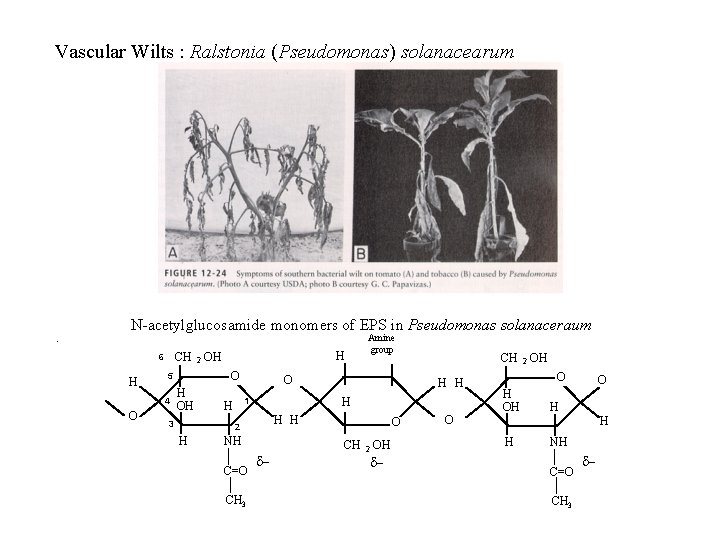
Vascular Wilts : Ralstonia (Pseudomonas) solanacearum N-acetylglucosamide monomers of EPS in Pseudomonas solanaceraum. CH 6 H O O 5 4 H 2 OH H OH 3 O NH C=O CH 3 H H 2 H CH H 1 H Amine group O CH d- 2 OH d- O 2 OH O H H H NH C=O CH 3 d-
- Slides: 13