
Plant identification and classification for Supervisors Plant naming








- Slides: 29
Plant identification and classification for Supervisors’ Plant naming and nomenclature- The importance of scientific names for plants.
Learning outcomes from this Powerpoint • Understand the basics of Plant naming and nomenclature • The advantages of use scientific names for plants • Understand the different classification of plants
• How many different plants are there in the world?
• What language do we use to describe plants? • What is the name system called. ?
The binomial system of nomenclature . This system gives a plant two names, a genus name and a species name, which provides each plant with its own unique name. . e. g. genus and species Ilex aquifolium This is the botanical name for holly.
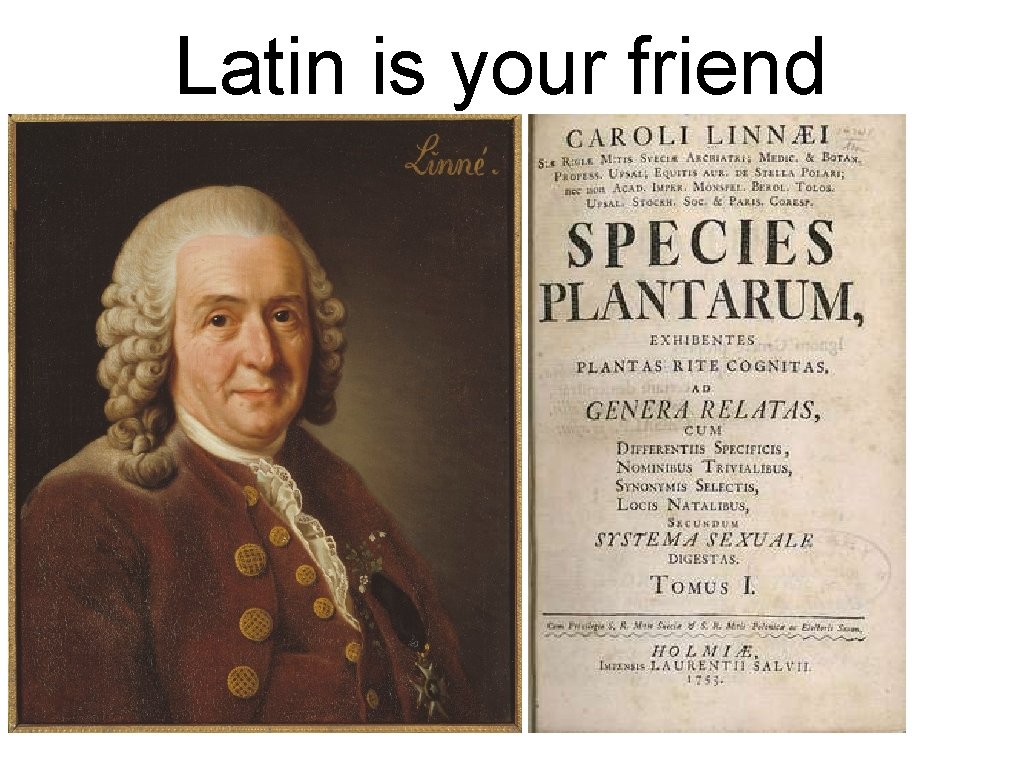
Latin is your friend
• International Code of • Nomenclature for Algae, Fungi and Plants (Melbourne Code) and International Code of • Nomenclature for Cultivated Plants (Toronto 2002)
Why use the binomial system of nomenclature?
Its an international language
• Many plants don’t have English names • English names vary, even within the same country? Do you have any examples? • Botanical names can give information about the plant • Makes you sound more professional to clients/employees?
Botanical names can give information about the plant • Can you provide examples of descriptive latin names?
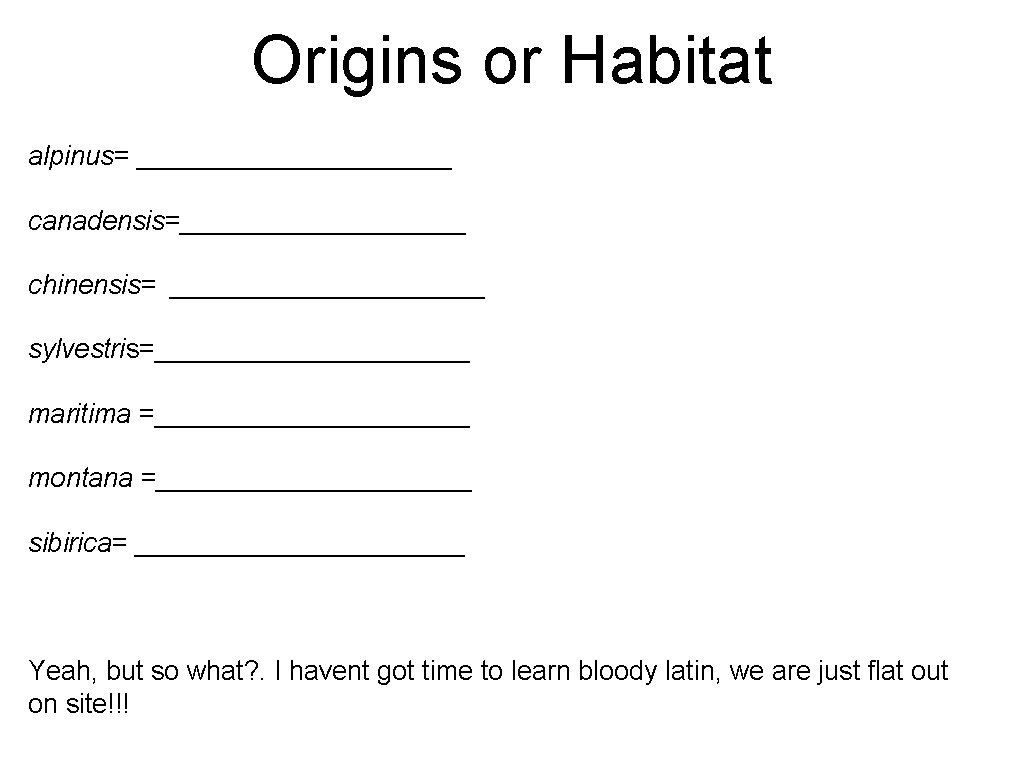
Origins or Habitat alpinus= ___________ canadensis=__________ chinensis= ___________ sylvestris=___________ maritima =___________ montana =___________ sibirica= ___________ Yeah, but so what? . I havent got time to learn bloody latin, we are just flat out on site!!!
Form or Habit nana =_______ pendula=______ reptans=_______ globosa=_______
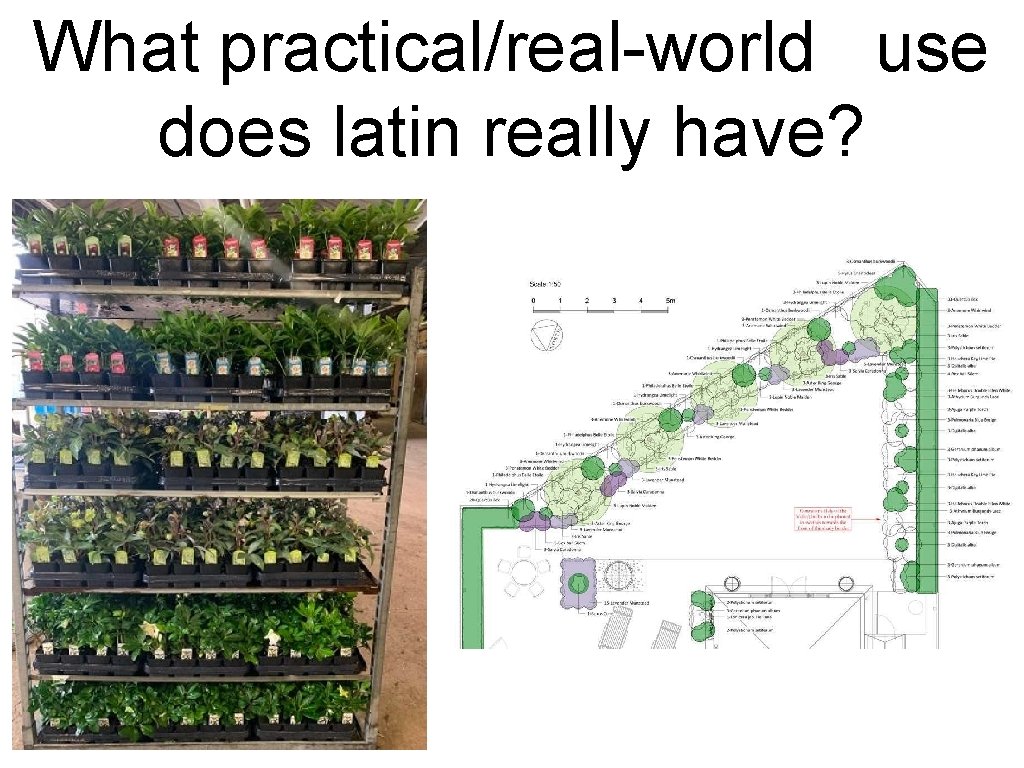
What practical/real-world use does latin really have?
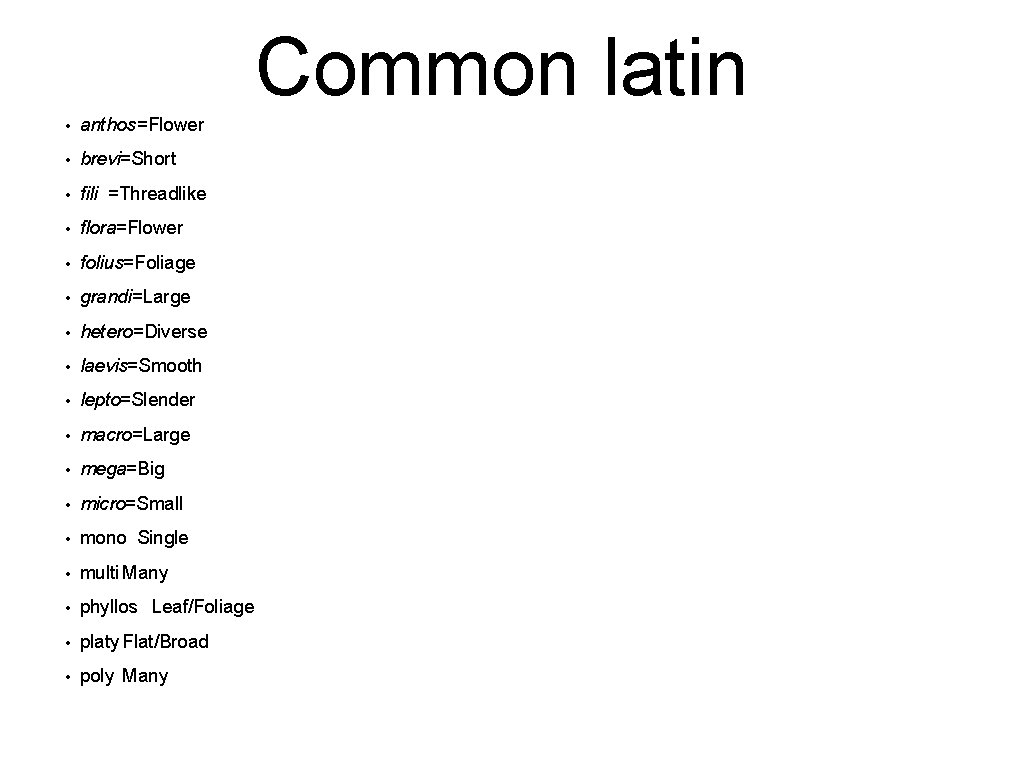
Common latin • anthos=Flower • brevi=Short • fili =Threadlike • flora=Flower • folius=Foliage • grandi=Large • hetero=Diverse • laevis=Smooth • lepto=Slender • macro=Large • mega=Big • micro=Small • mono Single • multi Many • phyllos Leaf/Foliage • platy Flat/Broad • poly Many
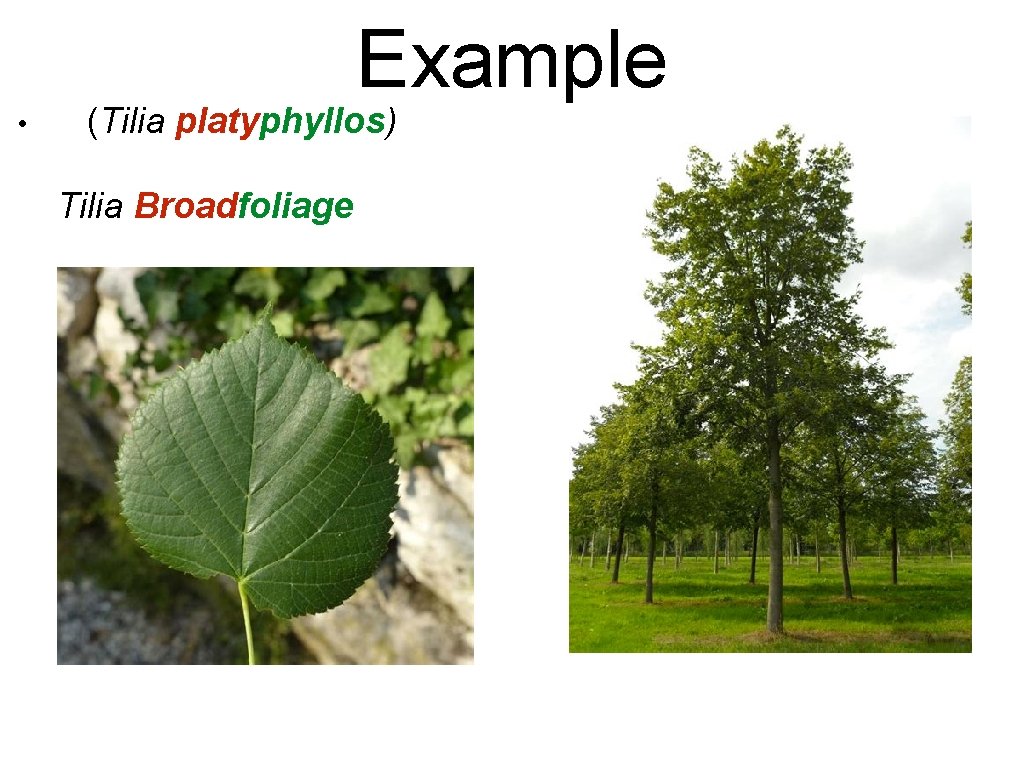
Example • (Tilia platyphyllos) Tilia Broadfoliage
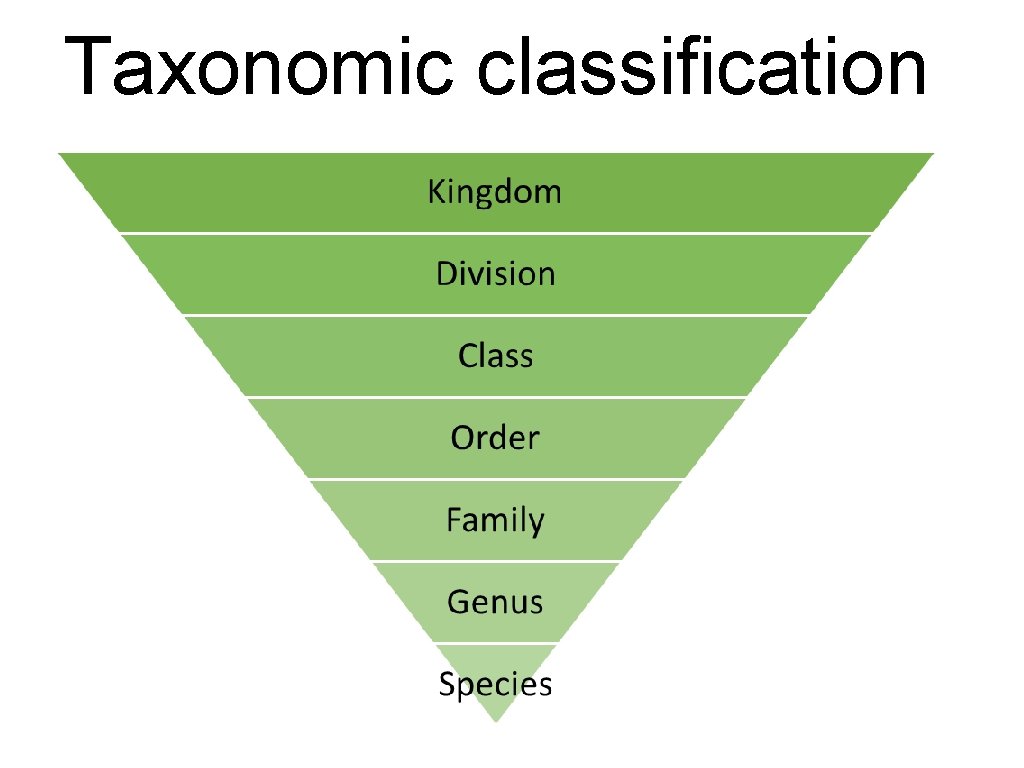
Taxonomic classification
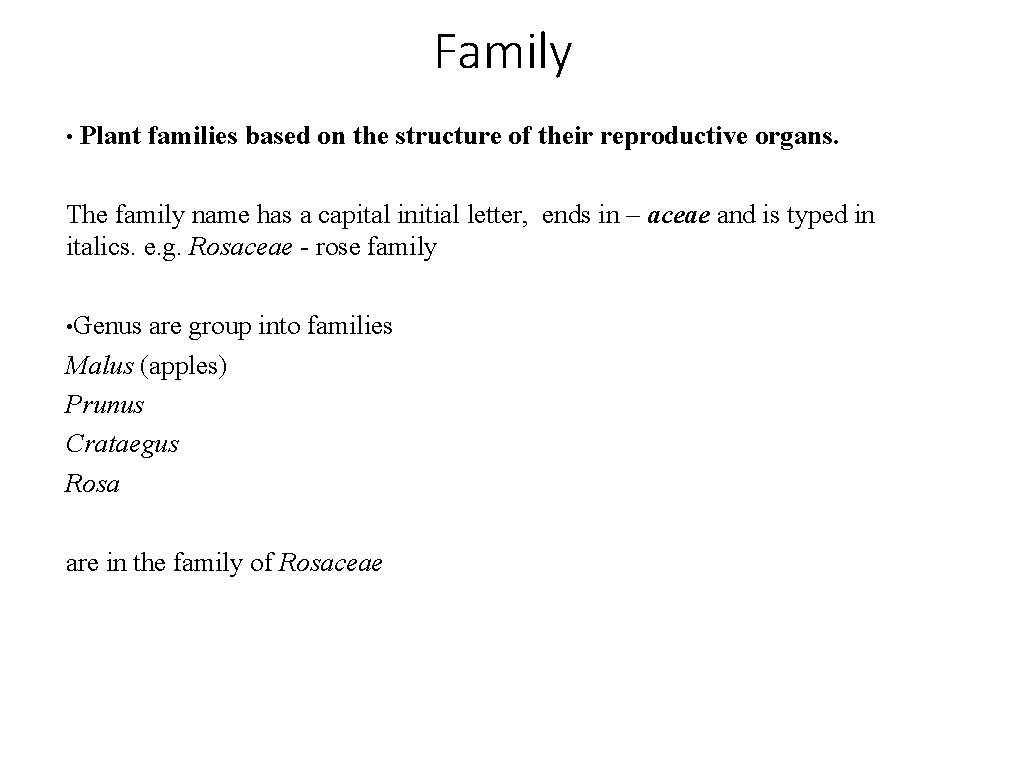
Family • Plant families based on the structure of their reproductive organs. The family name has a capital initial letter, ends in – aceae and is typed in italics. e. g. Rosaceae - rose family • Genus are group into families Malus (apples) Prunus Crataegus Rosa are in the family of Rosaceae
Genus ( genera plural) Plant families are divided into smaller groups called a genus A genus is a group of one or more species that share a range of distinct and significant characteristics. What do we men significant characteristics. ?
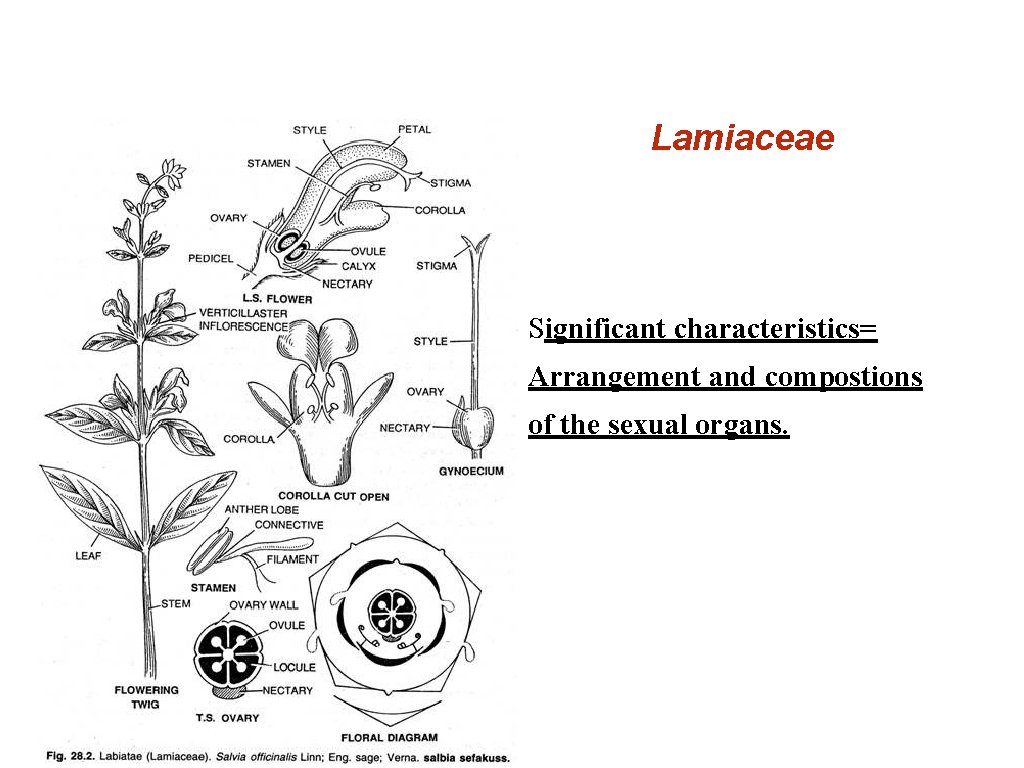
Lamiaceae Significant characteristics= Arrangement and compostions of the sexual organs.
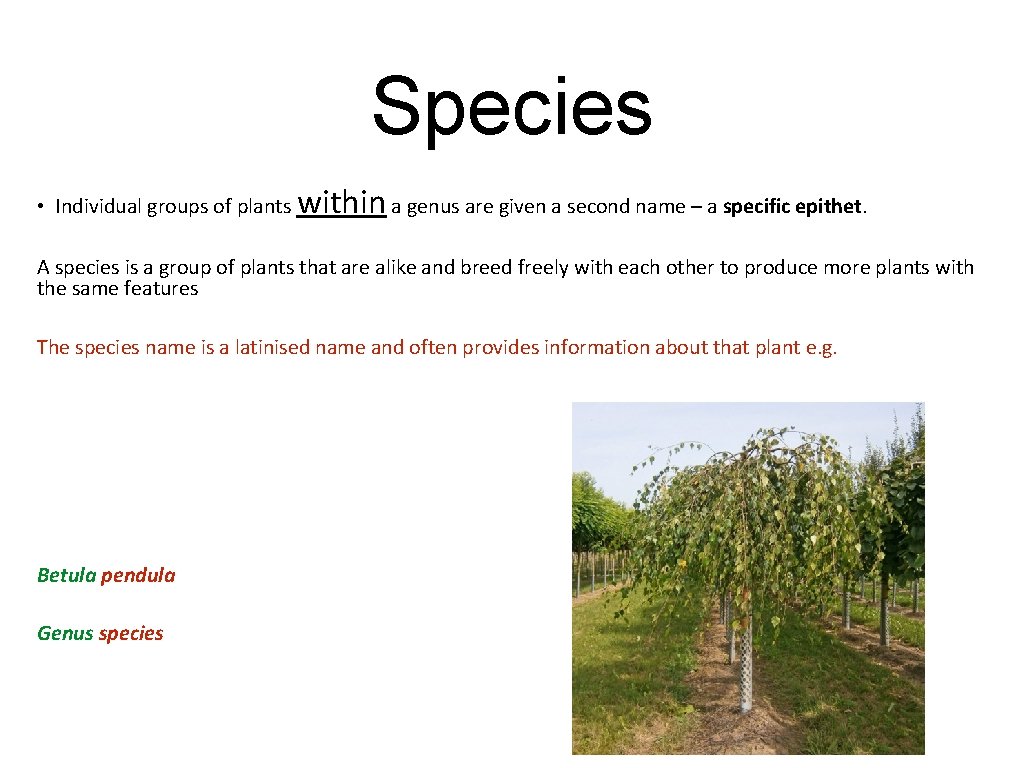
Species • Individual groups of plants within a genus are given a second name – a specific epithet. A species is a group of plants that are alike and breed freely with each other to produce more plants with the same features The species name is a latinised name and often provides information about that plant e. g. Betula pendula Genus species
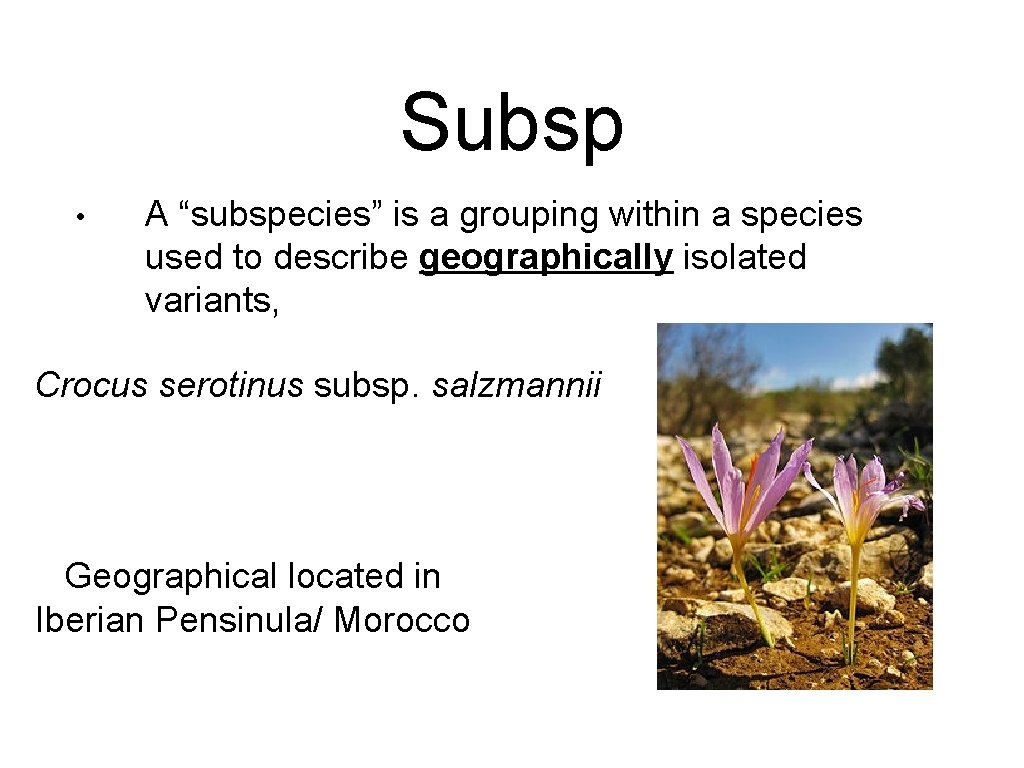
Subsp • A “subspecies” is a grouping within a species used to describe geographically isolated variants, Crocus serotinus subsp. salzmannii Geographical located in Iberian Pensinula/ Morocco
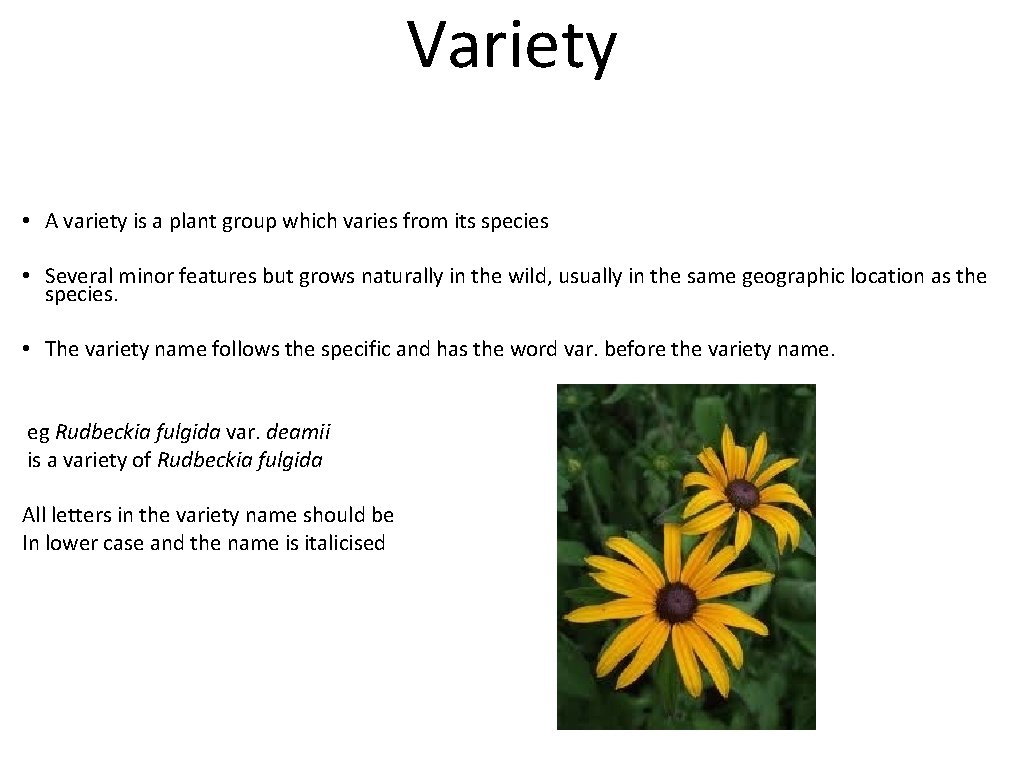
Variety • A variety is a plant group which varies from its species • Several minor features but grows naturally in the wild, usually in the same geographic location as the species. • The variety name follows the specific and has the word var. before the variety name. eg Rudbeckia fulgida var. deamii is a variety of Rudbeckia fulgida All letters in the variety name should be In lower case and the name is italicised
Variety "variety" is a natural phenomenon,
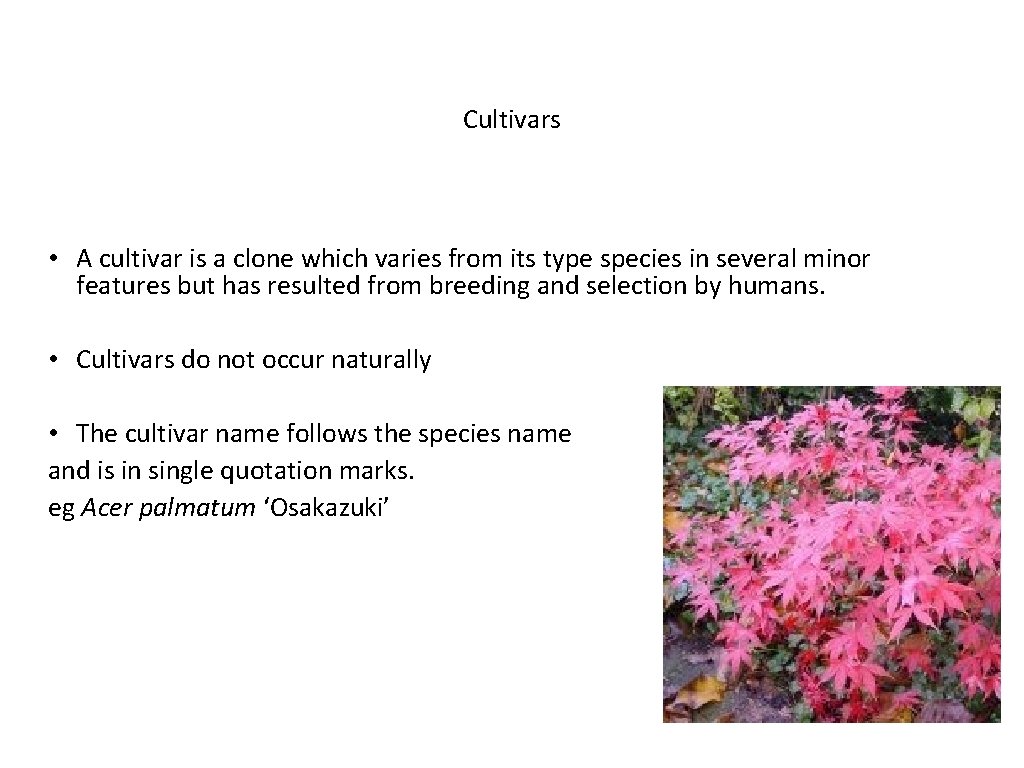
Cultivars • A cultivar is a clone which varies from its type species in several minor features but has resulted from breeding and selection by humans. • Cultivars do not occur naturally • The cultivar name follows the species name and is in single quotation marks. eg Acer palmatum ‘Osakazuki’
Propagated via human intervention, cultivated by man
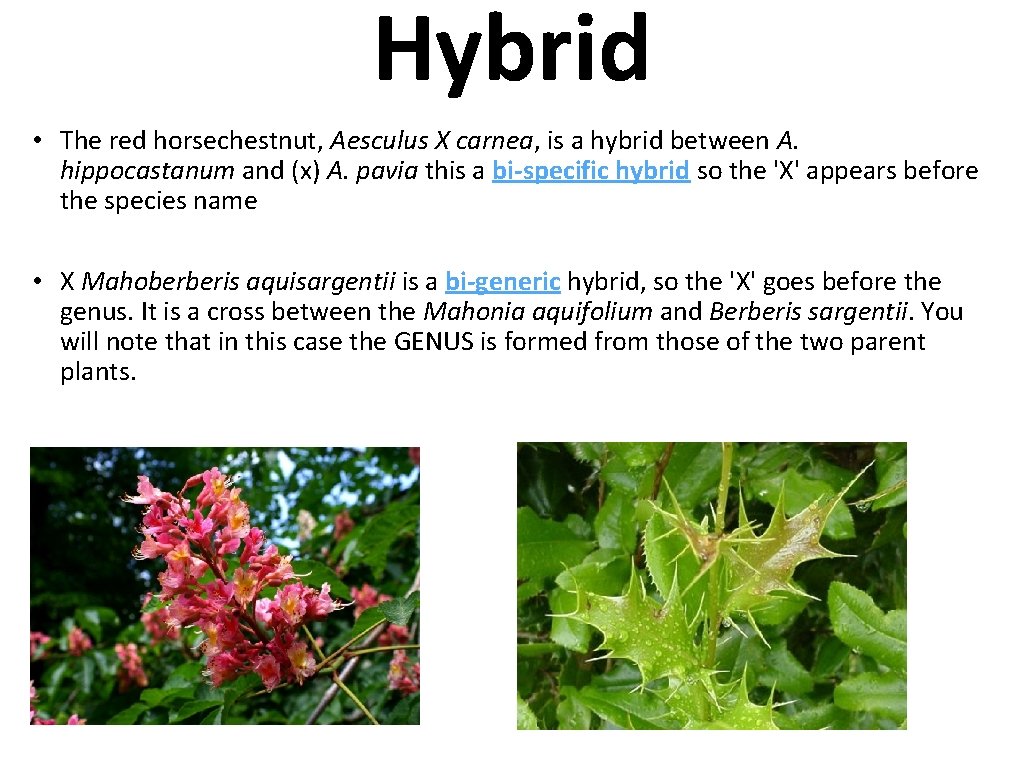
Hybrid • The red horsechestnut, Aesculus X carnea, is a hybrid between A. hippocastanum and (x) A. pavia this a bi-specific hybrid so the 'X' appears before the species name • X Mahoberberis aquisargentii is a bi-generic hybrid, so the 'X' goes before the genus. It is a cross between the Mahonia aquifolium and Berberis sargentii. You will note that in this case the GENUS is formed from those of the two parent plants.
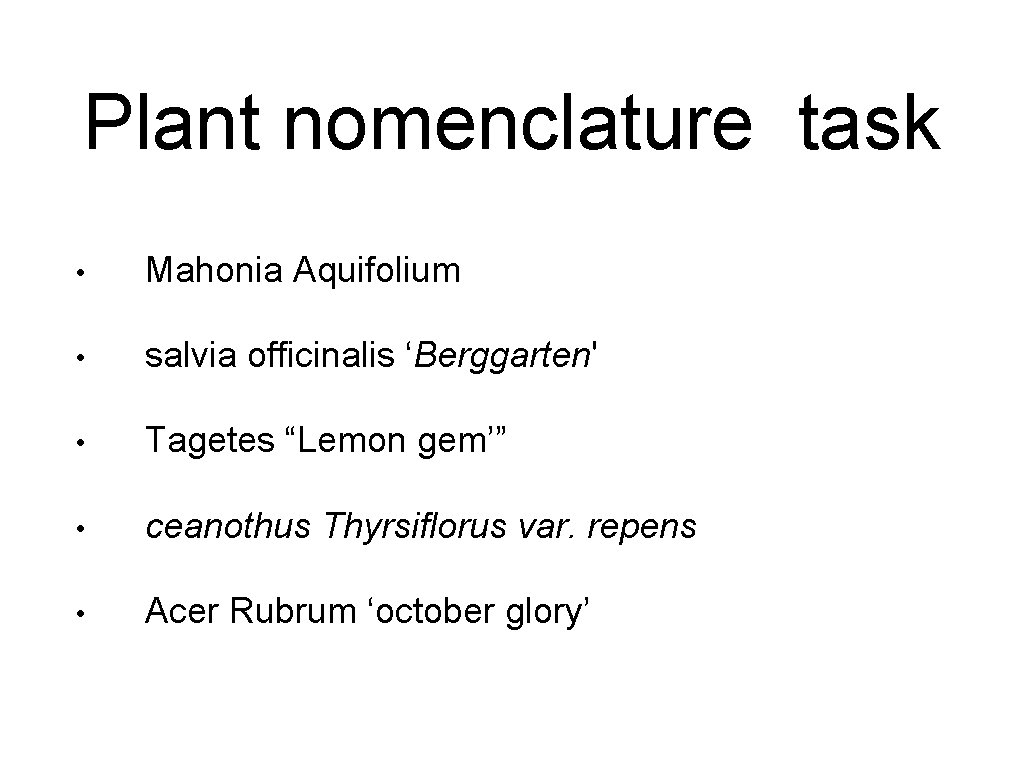
Plant nomenclature task • Mahonia Aquifolium • salvia officinalis ‘Berggarten' • Tagetes “Lemon gem’” • ceanothus Thyrsiflorus var. repens • Acer Rubrum ‘october glory’