
Plant Hormones Tissues Tropisms Agricultural Botany Biology 20
Plant Hormones, Tissues & Tropisms Agricultural Botany ~ Biology 20 ~Borrowed from Mrs. Pipke-
Plant Responses • Plant development and growth is controlled by hormones (internal chemical regulators) and external environmental factors such as light, gravity and temperature. • Hormones: are chemicals produced in one part of a plant that influence growth, cell division and other activities in another part of the plant.

Plant Hormones Plant Hormone Gibberellins Production Site Embryo, young leaves, root and shoot ends Function of Hormone -breaks seed dormancy and winter dormancy -promotes seed germination promotes cell division and expansion stimulates flowering in some plants and promotes fruit development
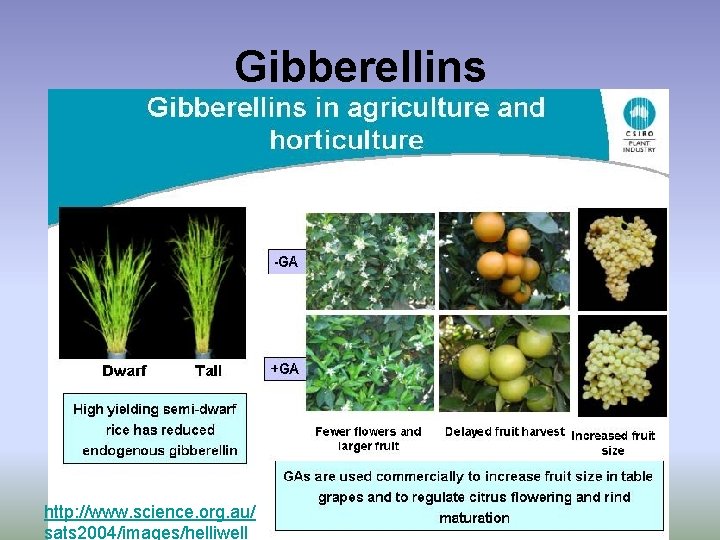
Gibberellins http: //www. science. org. au/ sats 2004/images/helliwell
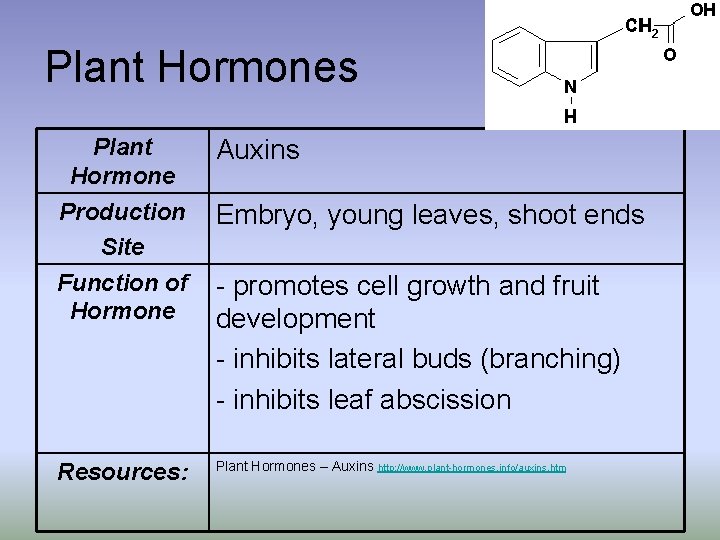
Plant Hormones Plant Hormone Auxins Production Site Embryo, young leaves, shoot ends Function of Hormone - promotes cell growth and fruit development - inhibits lateral buds (branching) - inhibits leaf abscission Resources: Plant Hormones – Auxins http: //www. plant-hormones. info/auxins. htm
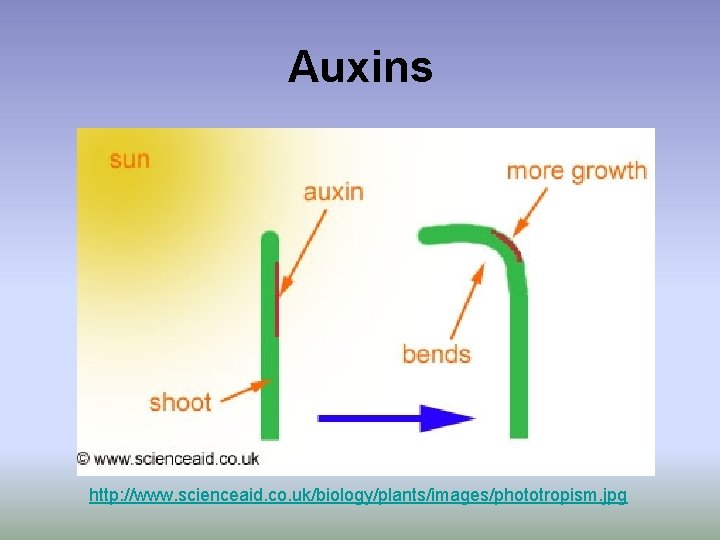
Auxins http: //www. scienceaid. co. uk/biology/plants/images/phototropism. jpg
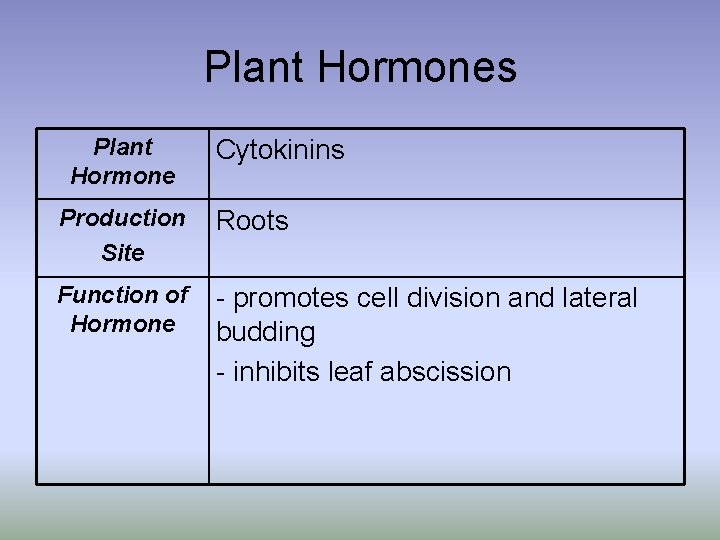
Plant Hormones Plant Hormone Cytokinins Production Site Roots Function of Hormone - promotes cell division and lateral budding - inhibits leaf abscission

Plant Hormones Plant Hormone Ethylene Production Site Ripening fruit, stem nodes, aging tissue Function of Hormone - promotes leaf abscission and fruit ripening
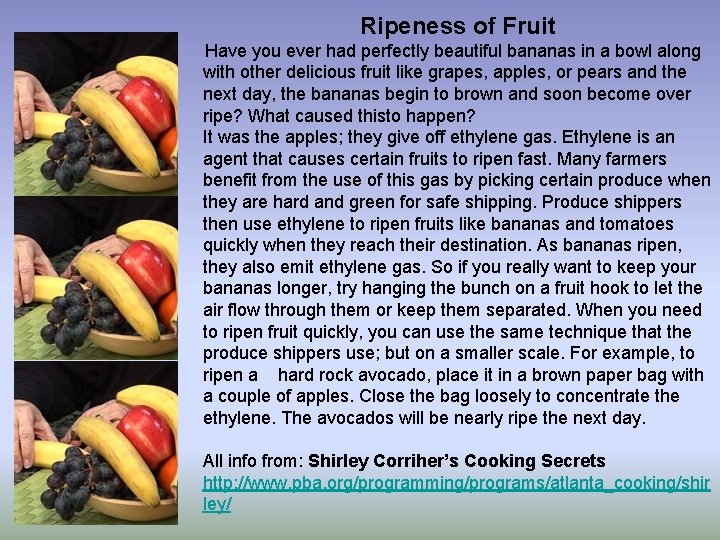
Ripeness of Fruit Have you ever had perfectly beautiful bananas in a bowl along with other delicious fruit like grapes, apples, or pears and the next day, the bananas begin to brown and soon become over ripe? What caused thisto happen? It was the apples; they give off ethylene gas. Ethylene is an agent that causes certain fruits to ripen fast. Many farmers benefit from the use of this gas by picking certain produce when they are hard and green for safe shipping. Produce shippers then use ethylene to ripen fruits like bananas and tomatoes quickly when they reach their destination. As bananas ripen, they also emit ethylene gas. So if you really want to keep your bananas longer, try hanging the bunch on a fruit hook to let the air flow through them or keep them separated. When you need to ripen fruit quickly, you can use the same technique that the produce shippers use; but on a smaller scale. For example, to ripen a hard rock avocado, place it in a brown paper bag with a couple of apples. Close the bag loosely to concentrate the ethylene. The avocados will be nearly ripe the next day. All info from: Shirley Corriher’s Cooking Secrets http: //www. pba. org/programming/programs/atlanta_cooking/shir ley/
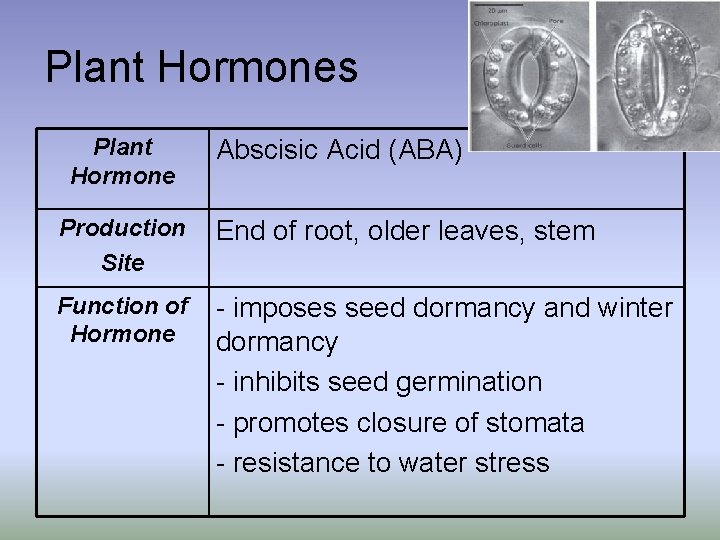
Plant Hormones Plant Hormone Abscisic Acid (ABA) Production Site End of root, older leaves, stem Function of Hormone - imposes seed dormancy and winter dormancy - inhibits seed germination - promotes closure of stomata - resistance to water stress
Tissue Types
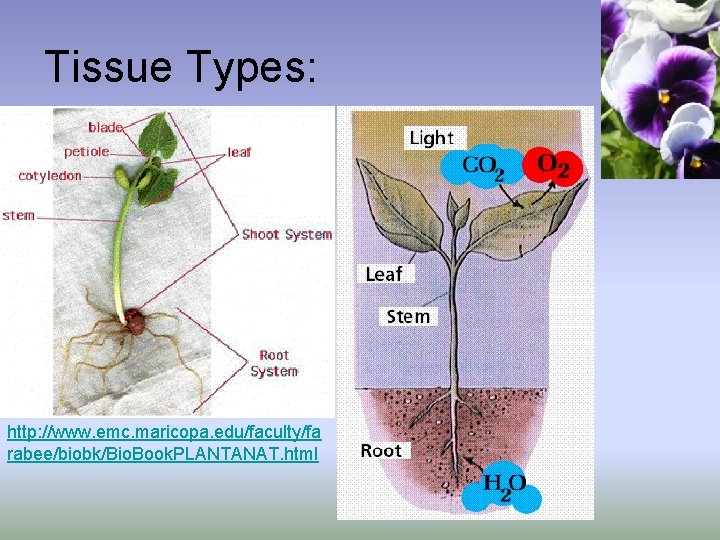
Tissue Types: http: //www. emc. maricopa. edu/faculty/fa rabee/biobk/Bio. Book. PLANTANAT. html
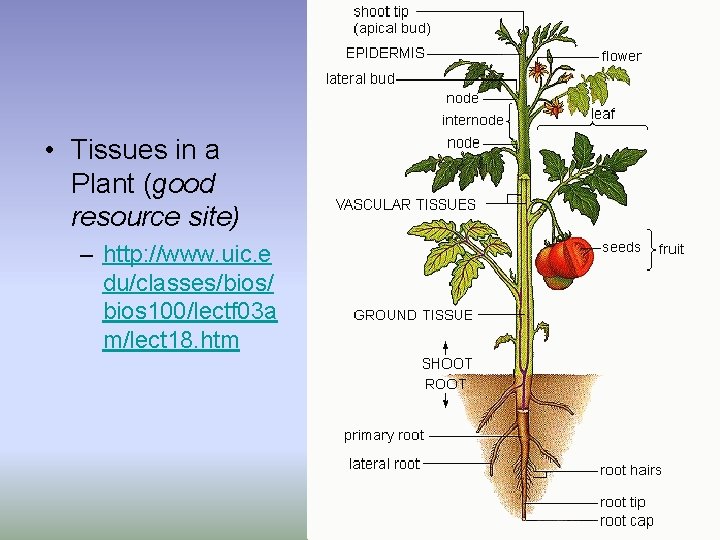
• Tissues in a Plant (good resource site) – http: //www. uic. e du/classes/bios/ bios 100/lectf 03 a m/lect 18. htm
Ground Tissue Parenchyma – most abundant tissue type • consists of living cells • makes up the bulk of the plant Functions: healing, regenerating plant parts, photosynthesis, food and water storage. Example: cacti have lots because of water storage capability Refer to website: Parenchyma: http: //www. bio. txstate. edu/~dlemke/botany/1410 lab/l ab_exercises/lab 3/tissues/parenchyma. html
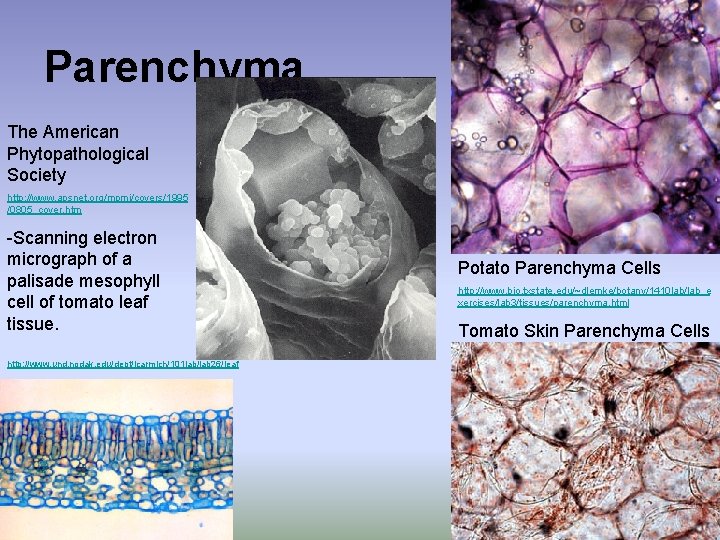
Parenchyma The American Phytopathological Society http: //www. apsnet. org/mpmi/covers/1995 /0805_cover. htm -Scanning electron micrograph of a palisade mesophyll cell of tomato leaf tissue. http: //www. und. nodak. edu/dept/jcarmich/101 lab/lab 26/leaf Potato Parenchyma Cells http: //www. bio. txstate. edu/~dlemke/botany/1410 lab/lab_e xercises/lab 3/tissues/parenchyma. html Tomato Skin Parenchyma Cells
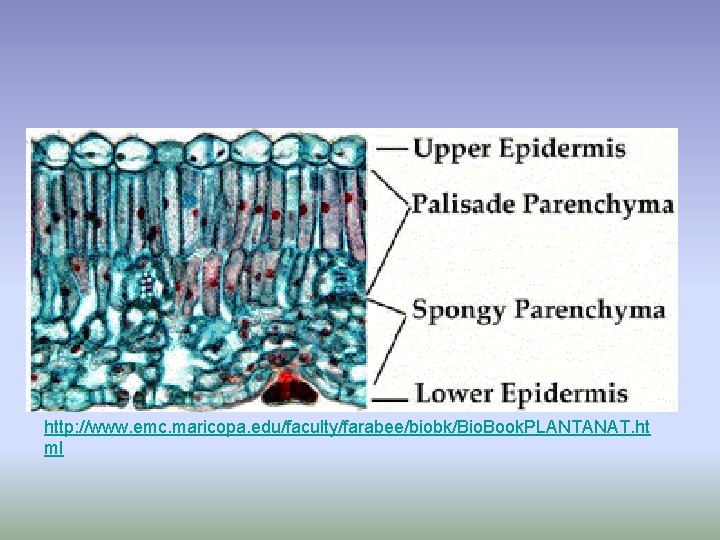
http: //www. emc. maricopa. edu/faculty/farabee/biobk/Bio. Book. PLANTANAT. ht ml
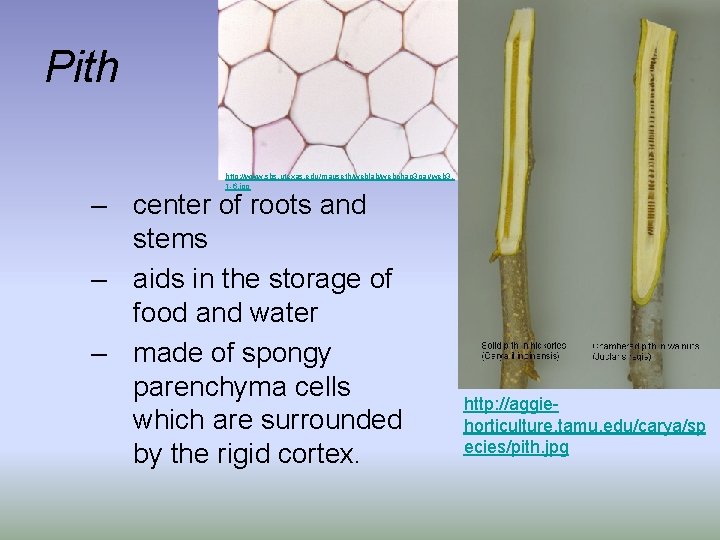
Pith http: //www. sbs. utexas. edu/mauseth/weblab/webchap 3 par/web 3. 1 -6. jpg – center of roots and stems – aids in the storage of food and water – made of spongy parenchyma cells which are surrounded by the rigid cortex. http: //aggiehorticulture. tamu. edu/carya/sp ecies/pith. jpg
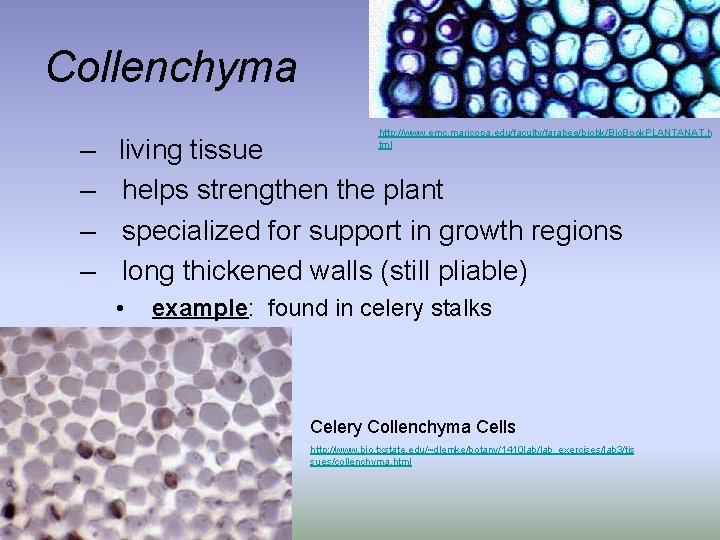
Collenchyma http: //www. emc. maricopa. edu/faculty/farabee/biobk/Bio. Book. PLANTANAT. h tml – living tissue – helps strengthen the plant – specialized for support in growth regions – long thickened walls (still pliable) • example: found in celery stalks Celery Collenchyma Cells http: //www. bio. txstate. edu/~dlemke/botany/1410 lab/lab_exercises/lab 3/tis sues/collenchyma. html
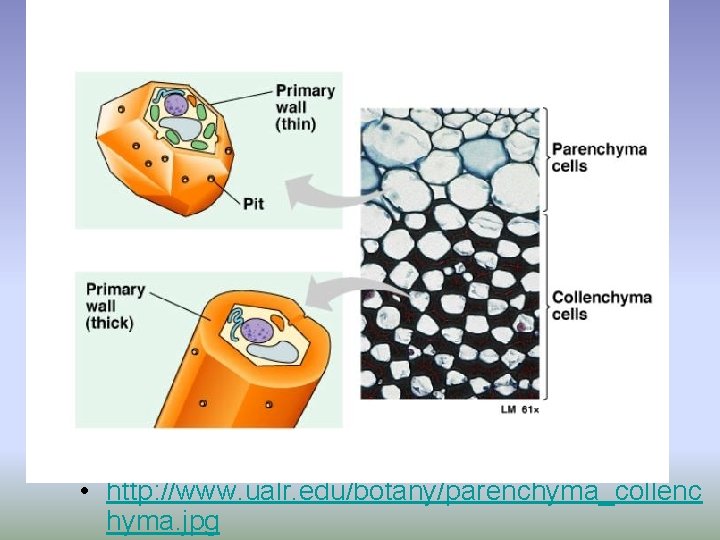
• http: //www. ualr. edu/botany/parenchyma_collenc hyma. jpg
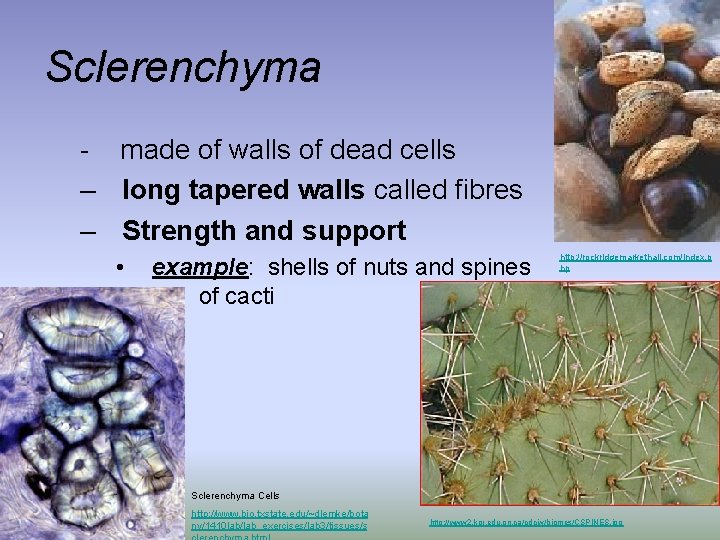
Sclerenchyma - made of walls of dead cells – long tapered walls called fibres – Strength and support • example: shells of nuts and spines of cacti http: //rockridgemarkethall. com/index. p hp Sclerenchyma Cells http: //www. bio. txstate. edu/~dlemke/bota ny/1410 lab/lab_exercises/lab 3/tissues/s http: //www 2. kpr. edu. on. ca/cdciw/biomes/CSPINES. jpg
Extra Info • Sclerids (bunches of sclerenchyma tissue) are found in the cores of apples, the shells of nuts and the stones of cherries and plums. The grittiness of pears is also due to the presence of sclerids (Wikipedia – Ground Tissue) (http: //en. wikipedia. org/wiki/Ground_tissue)
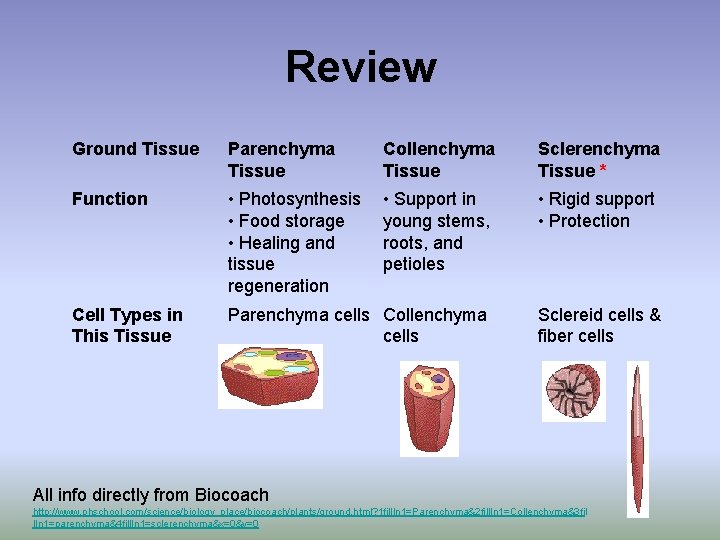
Review Ground Tissue Parenchyma Tissue Collenchyma Tissue Sclerenchyma Tissue * Function • Photosynthesis • Food storage • Healing and tissue regeneration • Support in young stems, roots, and petioles • Rigid support • Protection Cell Types in This Tissue Parenchyma cells Collenchyma cells Sclereid cells & fiber cells All info directly from Biocoach http: //www. phschool. com/science/biology_place/biocoach/plants/ground. html? 1 fill. In 1=Parenchyma&2 fill. In 1=Collenchyma&3 fil l. In 1=parenchyma&4 fill. In 1=sclerenchyma&x=0&y=0
Questions: • 1. Questions from Bio. Coach 2. The part of rhubarb that people eat is the petiole of a large leaf. Which tissue provides support for rhubarb? http: //www. phschool. com/science/biology_place/biocoach/plants/ground. html? 1 fill. In 1=Parenchyma&2 fill. In 1=Collenchyma&3 fill. In 1=parenchyma&4 fill. In 1=sclerenchyma&x=0&y=0 Potatoes contain food in the form of starch, which ground tissue are you eating when you eat mashed potatoes? Answer: parenchyma Answer: collenchyma 3. Which ground tissue is a major component of the blades of spinach leaves? Answer: parenchyma 4. Which ground tissue makes the shell of a nut hard? Answer: sclerenchyma
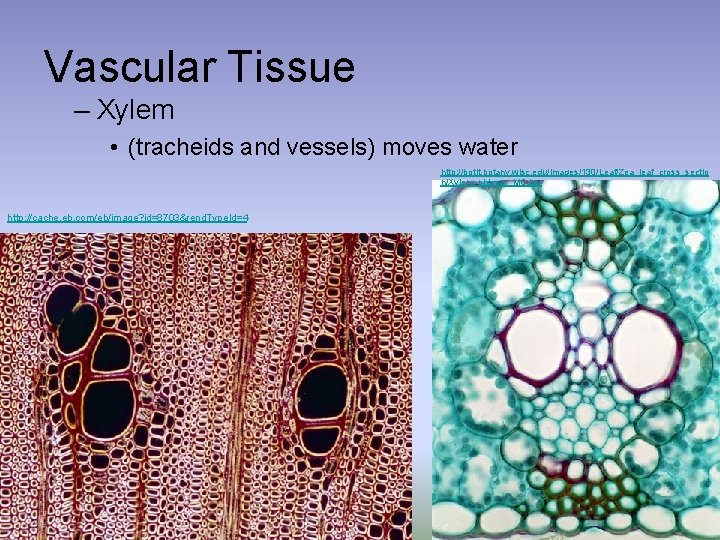
Vascular Tissue – Xylem • (tracheids and vessels) moves water http: //botit. botany. wisc. edu/images/130/Leaf/Zea_leaf_cross_sectio n/Xylem_phloem_MC. jpg http: //cache. eb. com/eb/image? id=8703&rend. Type. Id=4
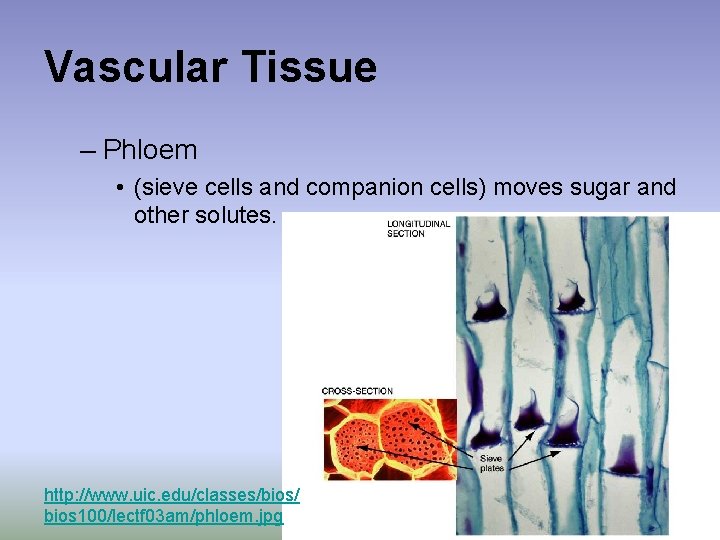
Vascular Tissue – Phloem • (sieve cells and companion cells) moves sugar and other solutes. http: //www. uic. edu/classes/bios/ bios 100/lectf 03 am/phloem. jpg
Vascular Tissue Websites • Bio. Coach: http: //www. phschool. com/science/biology_ place/biocoach/plants/vascular. html
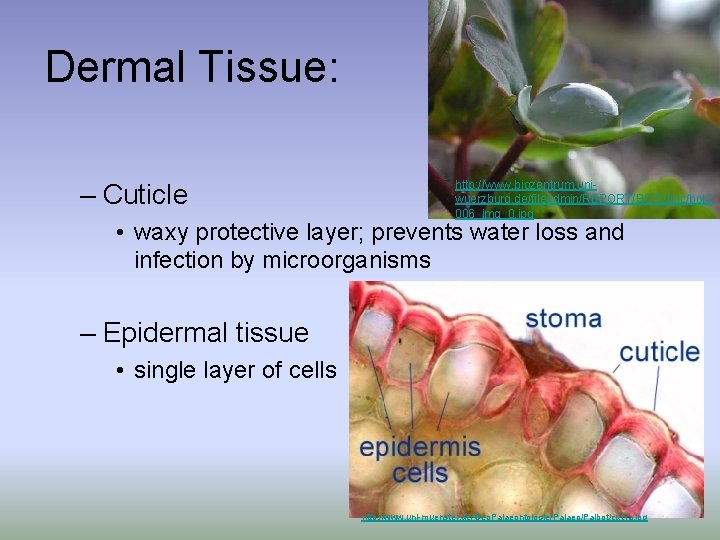
Dermal Tissue: – Cuticle http: //www. biozentrum. uniwuerzburg. de/fileadmin/REPORT/BOT 2/pic/bot 2 006_img_0. jpg • waxy protective layer; prevents water loss and infection by microorganisms – Epidermal tissue • single layer of cells http: //www. uni-muenster. de/Geo. Palaeontologie/Palaeo/Palbot/cut 1 a. jpg
Meristematic Tissue • are tissue regions of plants where some cells retain the ability to divide repeatedly – lengthwise growth is called primary growth – Secondary growth – increases diameter of stem and roots; occurs in places other than root and shoot tips.
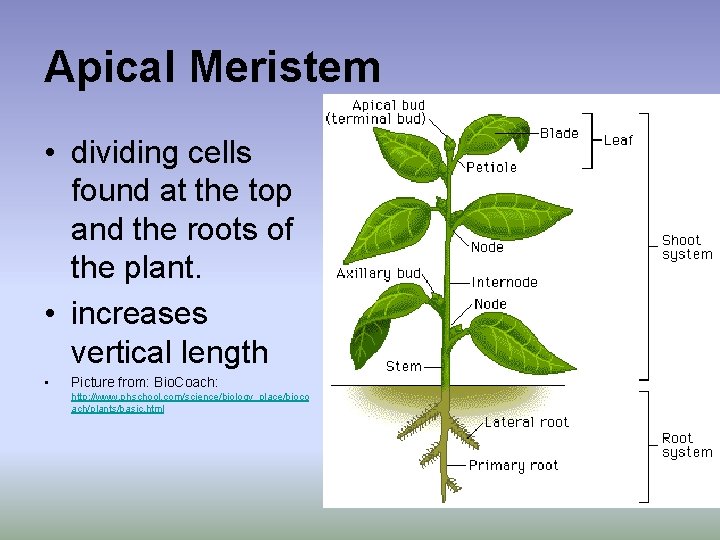
Apical Meristem • dividing cells found at the top and the roots of the plant. • increases vertical length • Picture from: Bio. Coach: http: //www. phschool. com/science/biology_place/bioco ach/plants/basic. html
Animations • Bio. Coach: http: //www. phschool. com/science/biology_ place/biocoach/plants/primary. html
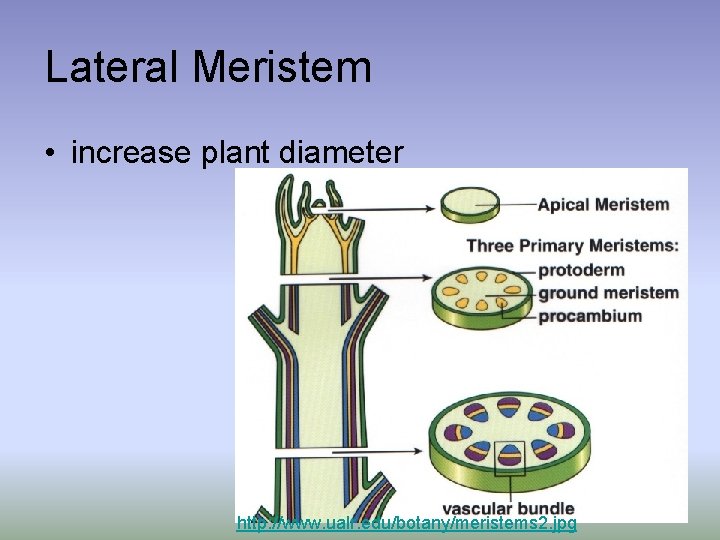
Lateral Meristem • increase plant diameter http: //www. ualr. edu/botany/meristems 2. jpg
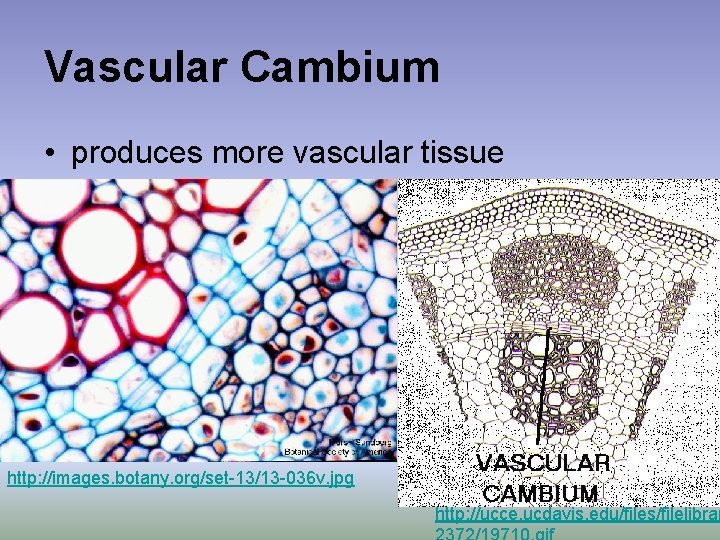
Vascular Cambium • produces more vascular tissue http: //images. botany. org/set-13/13 -036 v. jpg http: //ucce. ucdavis. edu/files/filelibrar
http: //quorumsensing. ifas. ufl. edu/HCS 200/images/stems&roots/ra gwst. jpg
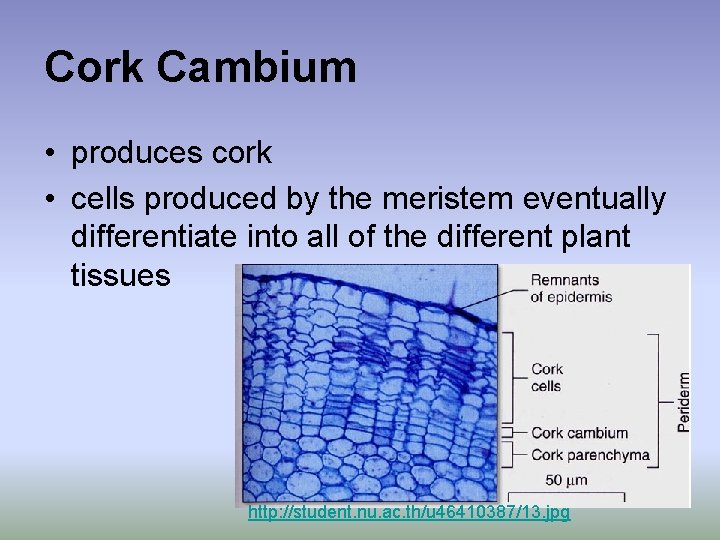
Cork Cambium • produces cork • cells produced by the meristem eventually differentiate into all of the different plant tissues http: //student. nu. ac. th/u 46410387/13. jpg
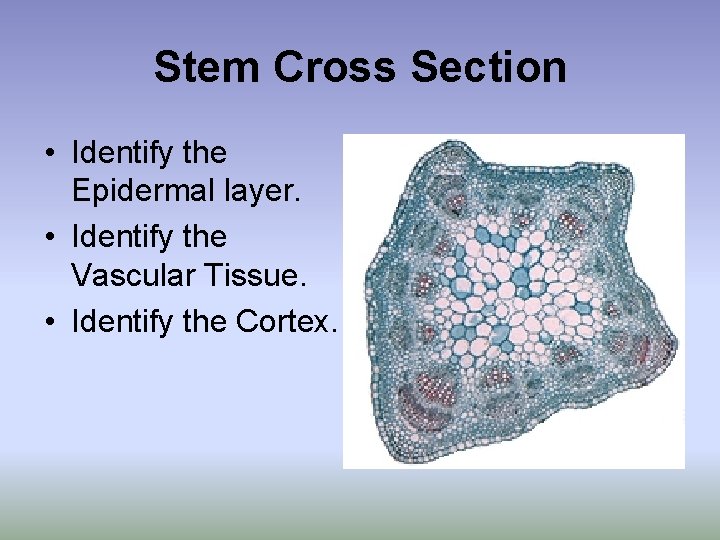
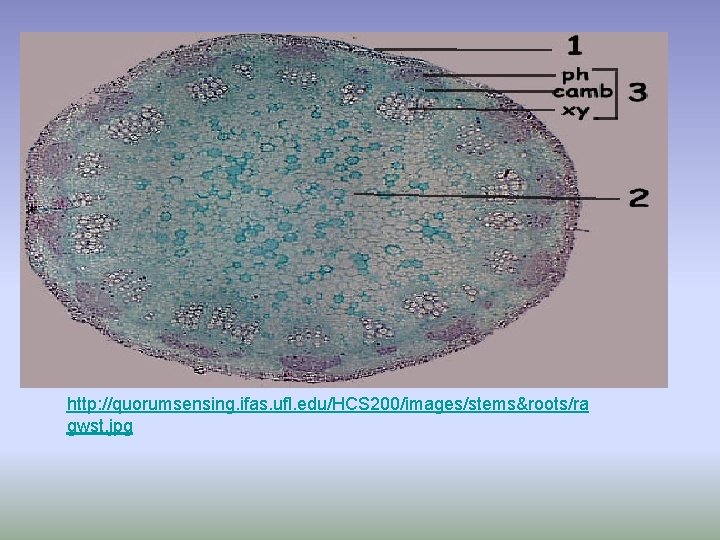
Stem Cross Section • Identify the Epidermal layer. • Identify the Vascular Tissue. • Identify the Cortex.
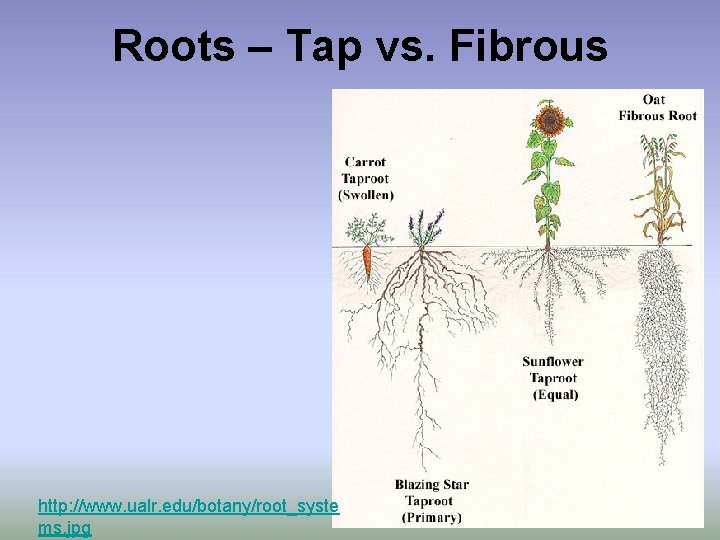
Roots – Tap vs. Fibrous http: //www. ualr. edu/botany/root_syste ms. jpg
Tropisms • Definition: Growth or movement of plants toward or away from an environmental stimulus. – Negative tropism: movement away from the stimulus – Positive tropism: movement toward the environmental stimulus – Nastic movements: responses to stimuli are independent of the direction of the stimuli.
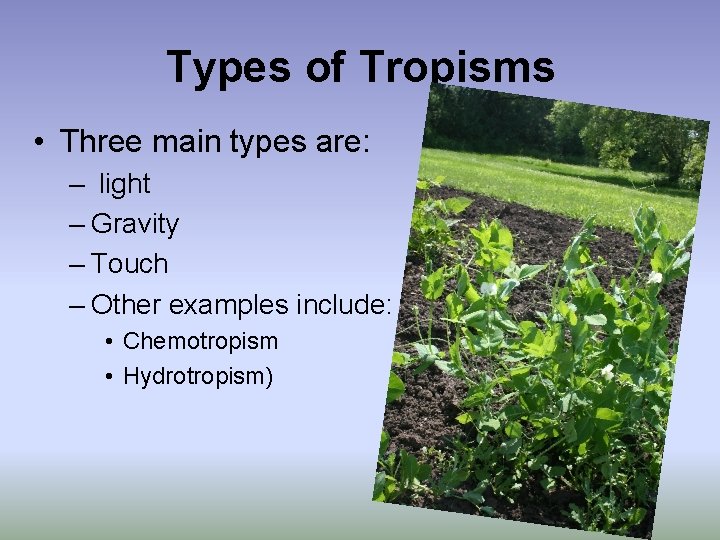
Types of Tropisms • Three main types are: – light – Gravity – Touch – Other examples include: • Chemotropism • Hydrotropism)
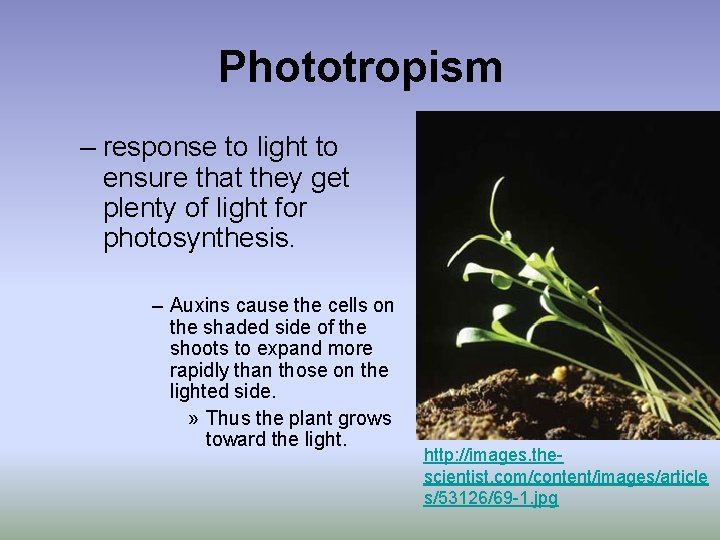
Phototropism – response to light to ensure that they get plenty of light for photosynthesis. – Auxins cause the cells on the shaded side of the shoots to expand more rapidly than those on the lighted side. » Thus the plant grows toward the light. http: //images. thescientist. com/content/images/article s/53126/69 -1. jpg
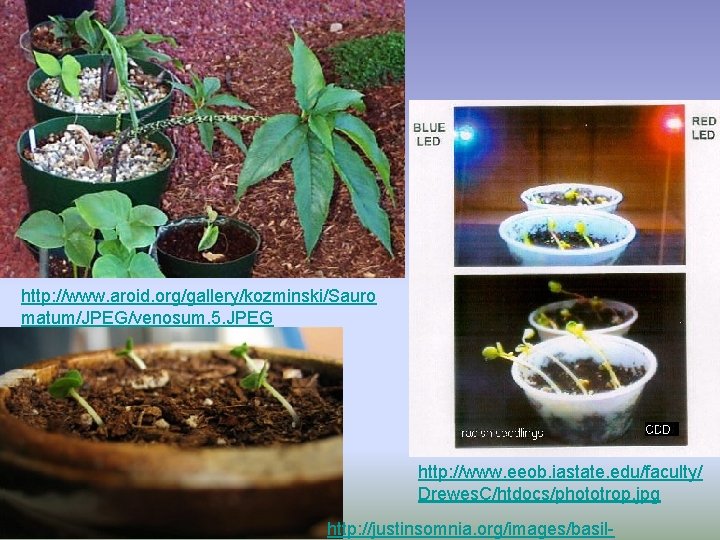
http: //www. aroid. org/gallery/kozminski/Sauro matum/JPEG/venosum. 5. JPEG http: //www. eeob. iastate. edu/faculty/ Drewes. C/htdocs/phototrop. jpg http: //justinsomnia. org/images/basil-
Videos • Videos: 1. Plant Physiology: Phototropic Response (Britannica. com) – Good (Takes a while to load) • http: //www. youtube. com/watch? v=zct. M_TWg 5 Ik 2. Quick video of phototropism http: //www. youtube. com/watch? v=Ze 8 NV 7 cv. W 8 k – Explanation of phototropism • • http: //www. youtube. com/watch? v=w. Xx. WOOEcy. KQ Animation: – http: //www. epress. com/w 3 jbio/vol 7/firn/video_1. htm – http: //www. biosci. missouri. edu/liscum/phototropism. html
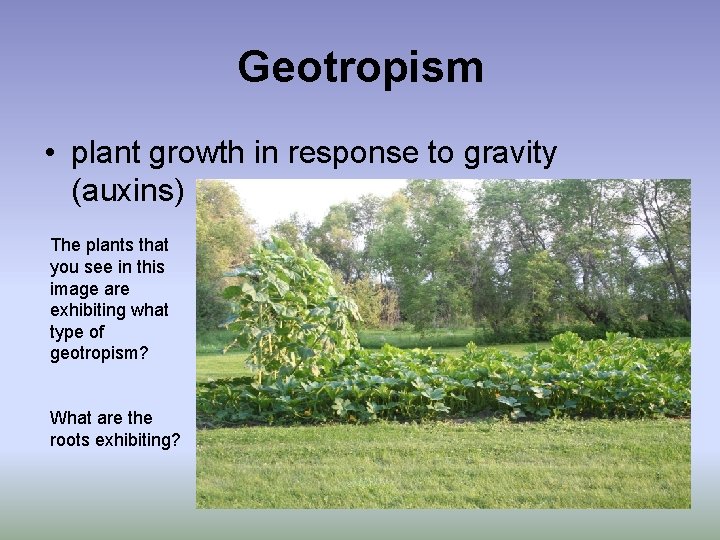
Geotropism • plant growth in response to gravity (auxins) The plants that you see in this image are exhibiting what type of geotropism? What are the roots exhibiting?
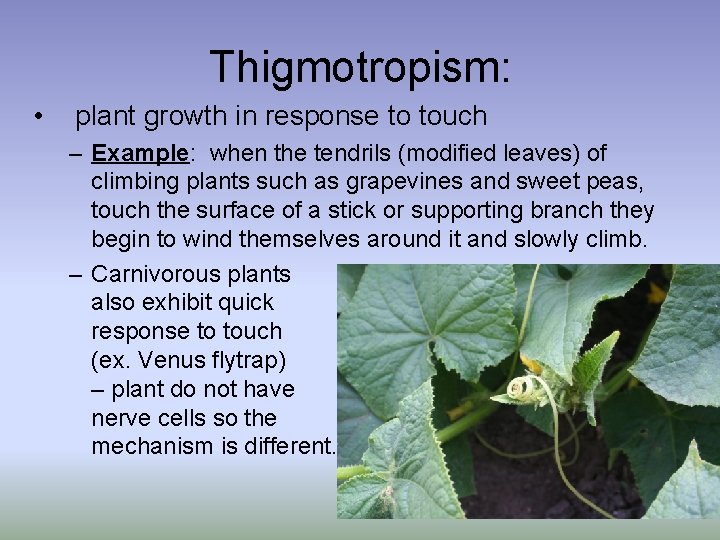
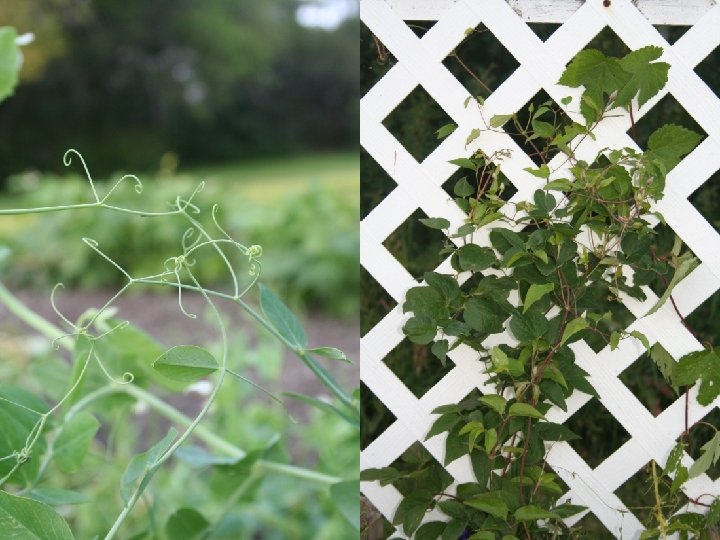
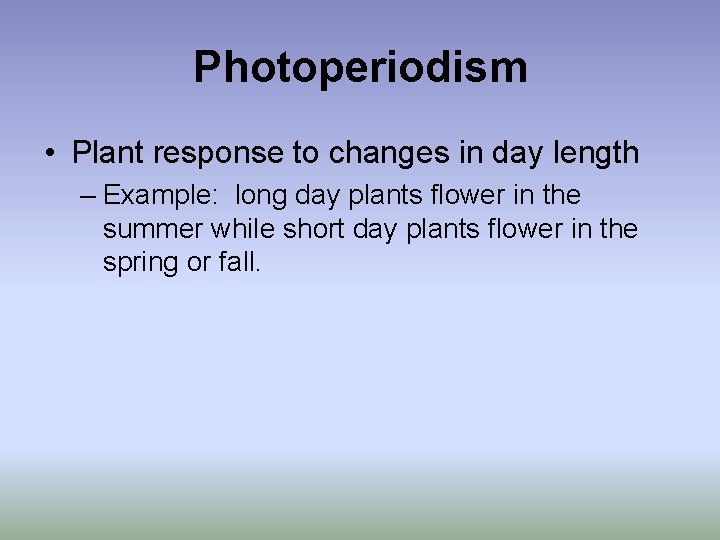
Thigmotropism: • plant growth in response to touch – Example: when the tendrils (modified leaves) of climbing plants such as grapevines and sweet peas, touch the surface of a stick or supporting branch they begin to wind themselves around it and slowly climb. – Carnivorous plants also exhibit quick response to touch (ex. Venus flytrap) – plant do not have nerve cells so the mechanism is different.
Photoperiodism • Plant response to changes in day length – Example: long day plants flower in the summer while short day plants flower in the spring or fall.
TEMPERATURE: – is a critical factor – some seeds and/or spores have to be exposed to the cold temperature before they will germinate (called vernalization) – some flowers have to be chilled before they will flower ex. Beets and celery will not flower until the second season (after the winter)
Review Websites • Bio. Coach: • http: //www. phschool. com/science/biology_place/bi ocoach/plants/structure. html? blah=&step=1 • Bio. Coach – Plant Tissue Systems • http: //www. phschool. com/science/biology_place/bi ocoach/plants/tissue. html • Plant Structure and Function: Good Review Website • http: //www. uic. edu/classes/bios 100/lectf 03 am/ lect 18. htm
Good Resource Sites • Plant Hormones Summary: – http: //www. ualr. edu/botany/hormtable. gif • Plant Ripening Experiment: – http: //chemistry. about. com/od/chemistryexperi ments/ss/ethyleneexp_5. htm • Plant Hormones – – http: //www. plant-hormones. info/Index. htm • University of Arkansas at Little Rock – http: //www. ualr. edu/botany/botimages. html

Images from: • ~ Mrs. S. Pipke-Painchaud
- Slides: 49