
Plant Homeostasis Structure and Function Flowers Organs of
- Slides: 14
Plant Homeostasis Structure and Function
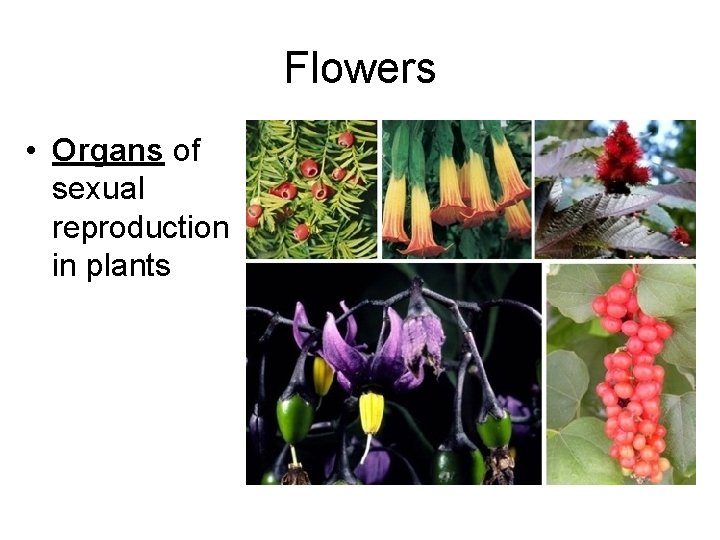
Flowers • Organs of sexual reproduction in plants
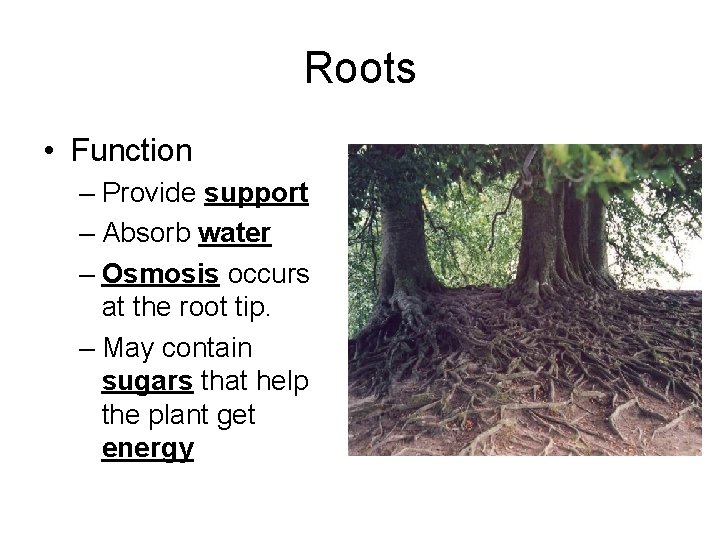
Roots • Function – Provide support – Absorb water – Osmosis occurs at the root tip. – May contain sugars that help the plant get energy
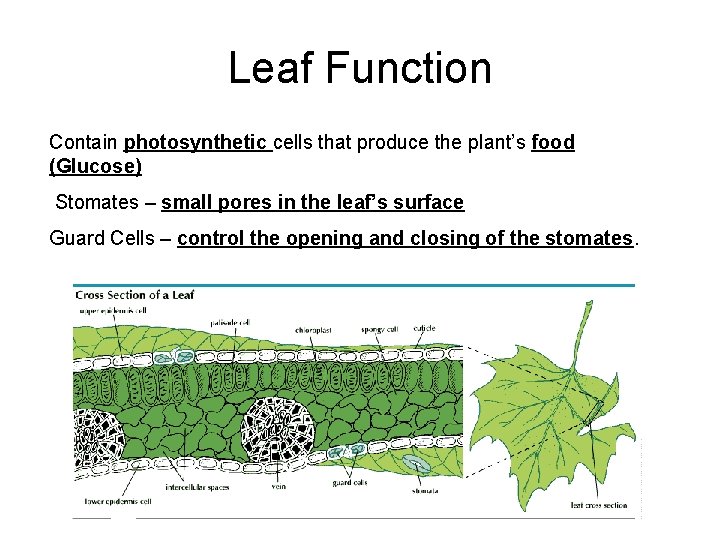
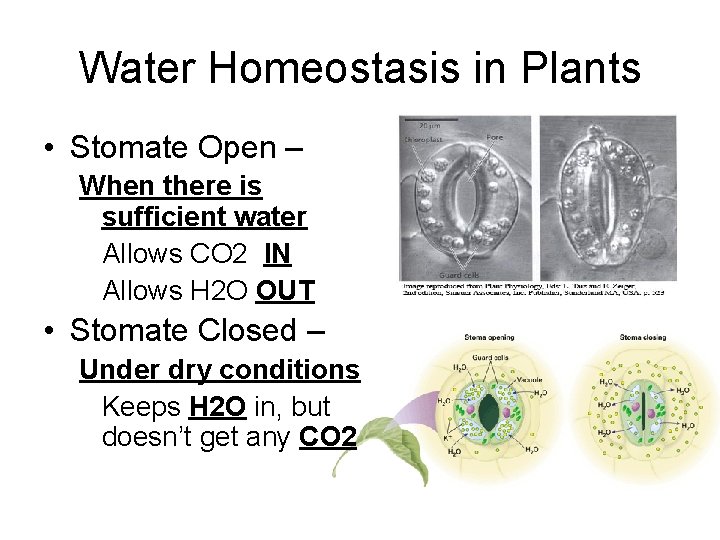
Leaf Function Contain photosynthetic cells that produce the plant’s food (Glucose) Stomates – small pores in the leaf’s surface Guard Cells – control the opening and closing of the stomates.
Water Homeostasis in Plants • Stomate Open – When there is sufficient water Allows CO 2 IN Allows H 2 O OUT • Stomate Closed – Under dry conditions Keeps H 2 O in, but doesn’t get any CO 2
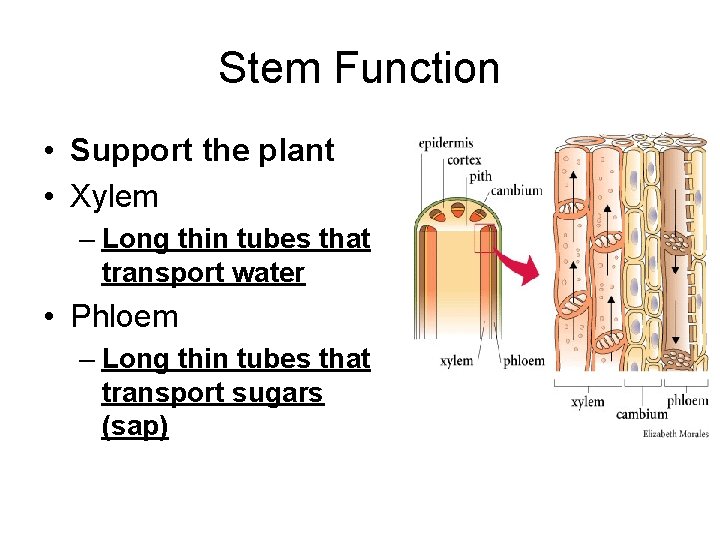
Stem Function • Support the plant • Xylem – Long thin tubes that transport water • Phloem – Long thin tubes that transport sugars (sap)
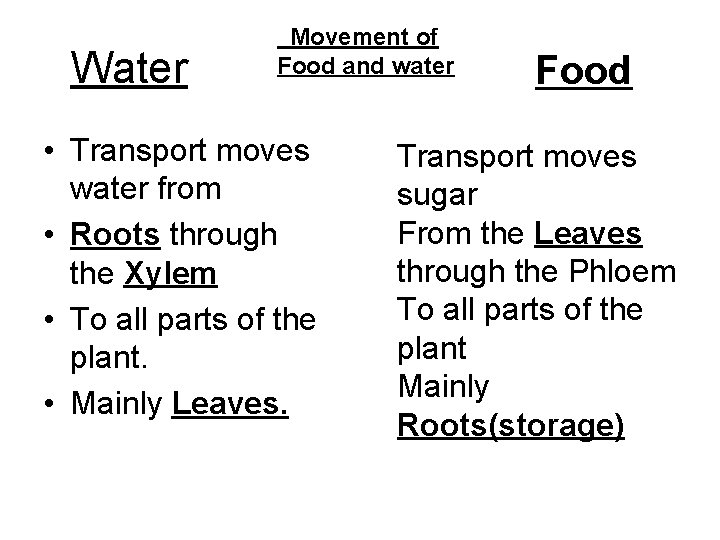
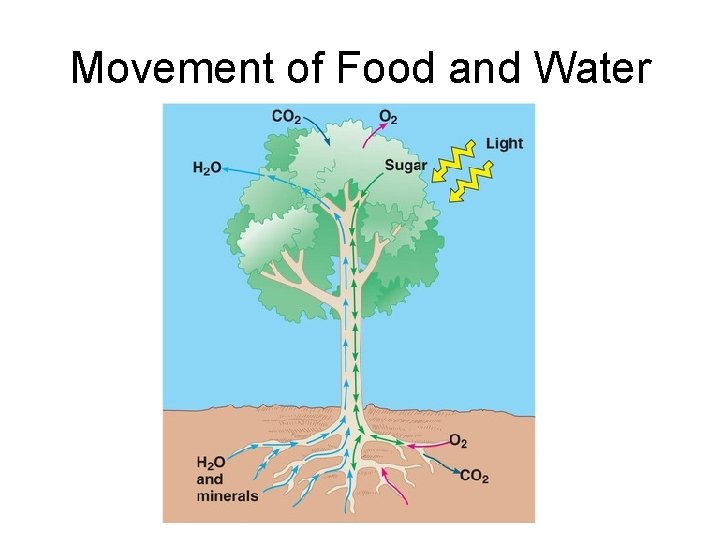
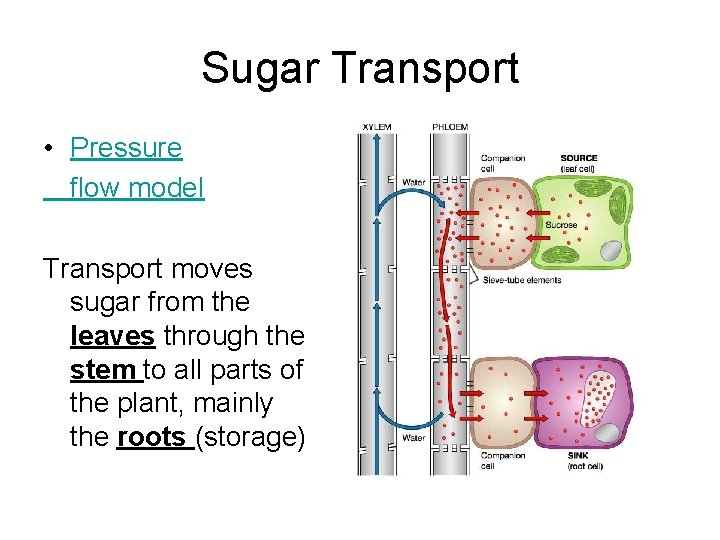
Water Movement of Food and water • Transport moves water from • Roots through the Xylem • To all parts of the plant. • Mainly Leaves. Food Transport moves sugar From the Leaves through the Phloem To all parts of the plant Mainly Roots(storage)
Movement of Food and Water
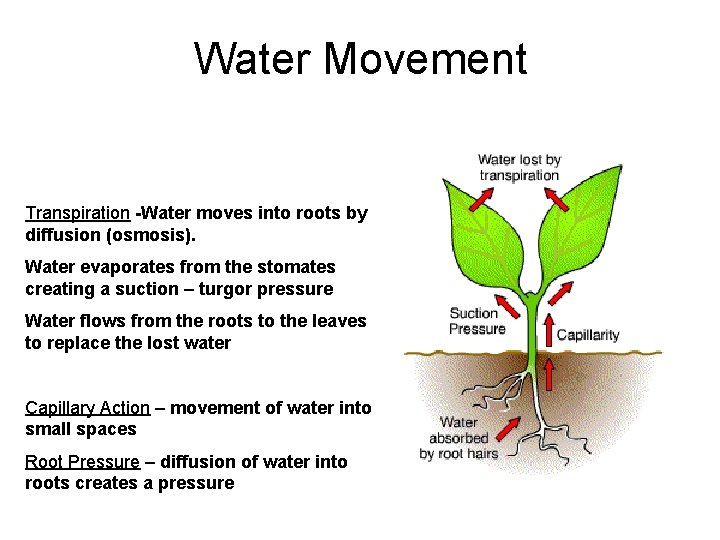
Water Movement Transpiration -Water moves into roots by diffusion (osmosis). Water evaporates from the stomates creating a suction – turgor pressure Water flows from the roots to the leaves to replace the lost water Capillary Action – movement of water into small spaces Root Pressure – diffusion of water into roots creates a pressure
Sugar Transport • Pressure flow model Transport moves sugar from the leaves through the stem to all parts of the plant, mainly the roots (storage)
Regulation of Plant Growth • Photoperiodism- the response a plant has to the light and dark hours • Hormones- chemical messengers that regulate plant function • Auxins- hormones that stimulate plant growth. Located at root tips and stems. • Tropism- Plant growth towards a stimulus • Phototropism- growth towards sun(leaves) • Geotropism- growth towards earth(roots)
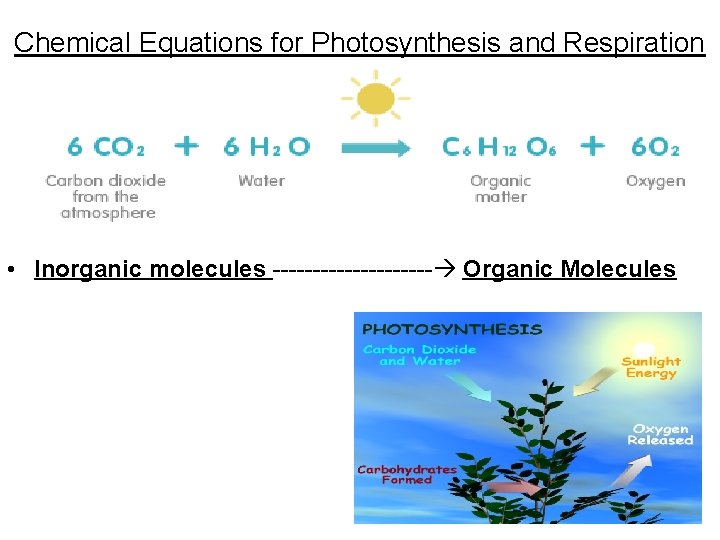
Plant Nutrition • Photosynthesis- Capturing of sunlight to make food (glucose) • Photosynthesis is the source of most of the oxygen in the air. • Occurs within the Chloroplasts Which contains Chlorophyll (green pigment) It absorbs light energy from the sun to make glucose • Chorophyll absorbs red & blue and reflects Green light
Chemical Equations for Photosynthesis and Respiration • Inorganic molecules ---------- Organic Molecules
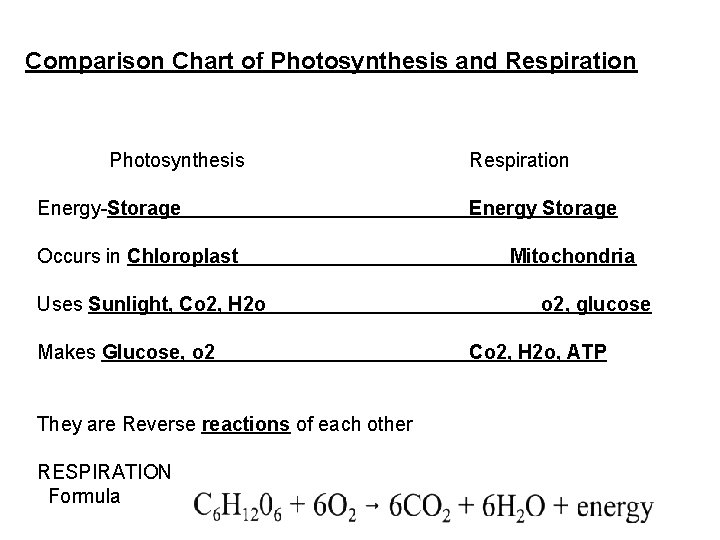
Comparison Chart of Photosynthesis and Respiration Photosynthesis Energy-Storage Occurs in Chloroplast Uses Sunlight, Co 2, H 2 o Makes Glucose, o 2 They are Reverse reactions of each other RESPIRATION Formula Respiration Energy Storage Mitochondria o 2, glucose Co 2, H 2 o, ATP