
Plant Growth Size shape depends on cell cell

- Slides: 33
Plant Growth Size & shape depends on cell # & cell size Decide when, where and which way to divide
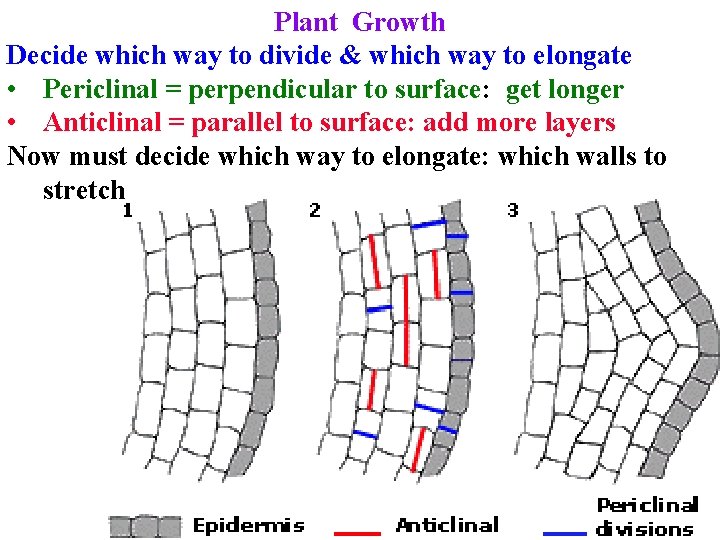
Plant Growth Decide which way to divide & which way to elongate • Periclinal = perpendicular to surface: get longer • Anticlinal = parallel to surface: add more layers Now must decide which way to elongate: which walls to stretch
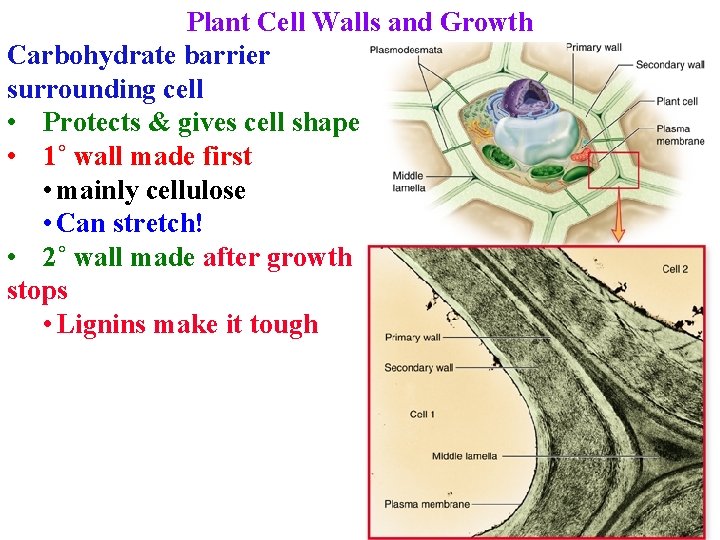
Plant Cell Walls and Growth Carbohydrate barrier surrounding cell • Protects & gives cell shape • 1˚ wall made first • mainly cellulose • Can stretch! • 2˚ wall made after growth stops • Lignins make it tough
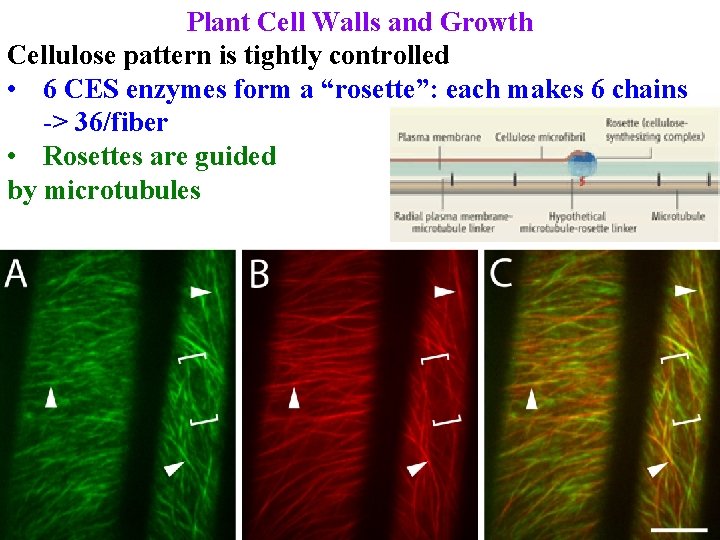
Plant Cell Walls and Growth Cellulose pattern is tightly controlled • 6 CES enzymes form a “rosette”: each makes 6 chains -> 36/fiber • Rosettes are guided by microtubules
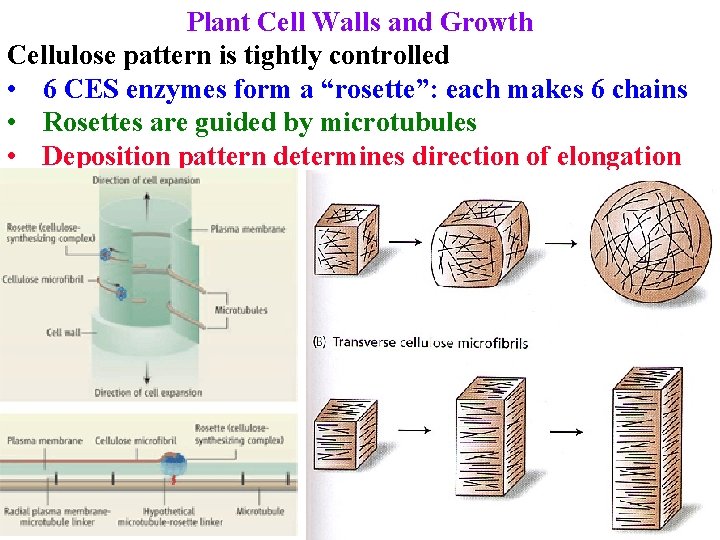
Plant Cell Walls and Growth Cellulose pattern is tightly controlled • 6 CES enzymes form a “rosette”: each makes 6 chains • Rosettes are guided by microtubules • Deposition pattern determines direction of elongation
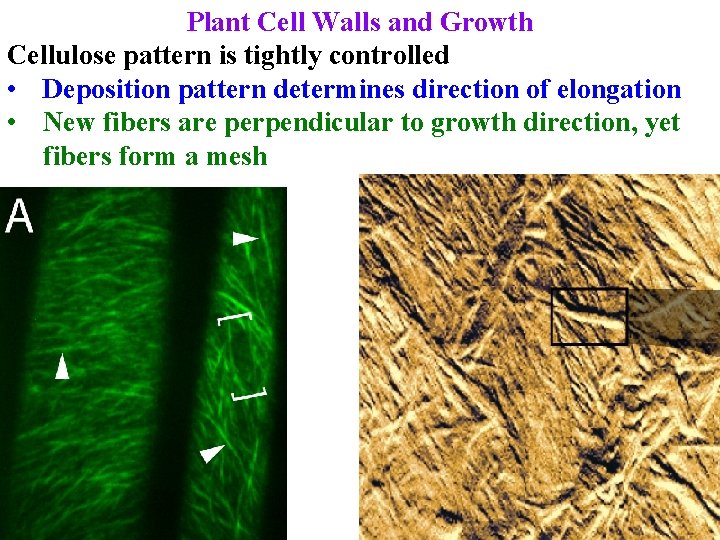
Plant Cell Walls and Growth Cellulose pattern is tightly controlled • Deposition pattern determines direction of elongation • New fibers are perpendicular to growth direction, yet fibers form a mesh
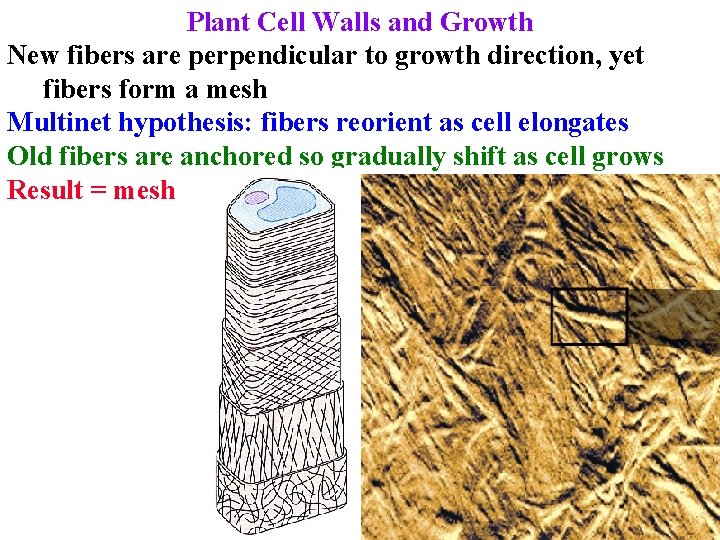
Plant Cell Walls and Growth New fibers are perpendicular to growth direction, yet fibers form a mesh Multinet hypothesis: fibers reorient as cell elongates Old fibers are anchored so gradually shift as cell grows Result = mesh
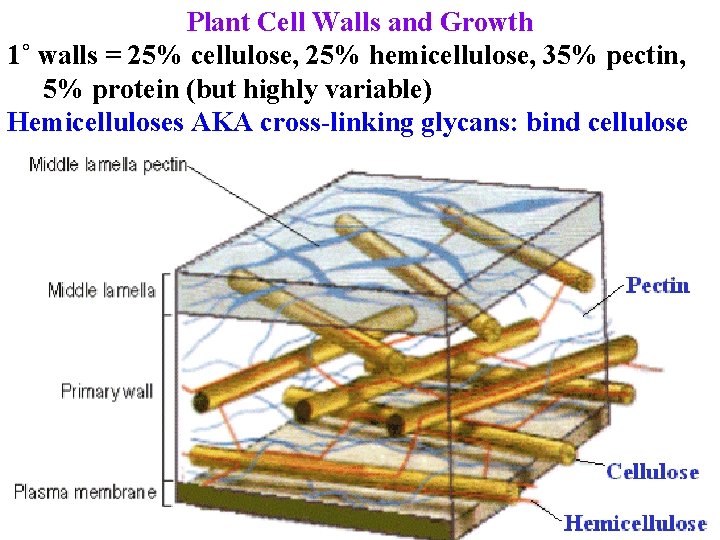
Plant Cell Walls and Growth 1˚ walls = 25% cellulose, 25% hemicellulose, 35% pectin, 5% protein (but highly variable) Hemicelluloses AKA cross-linking glycans: bind cellulose
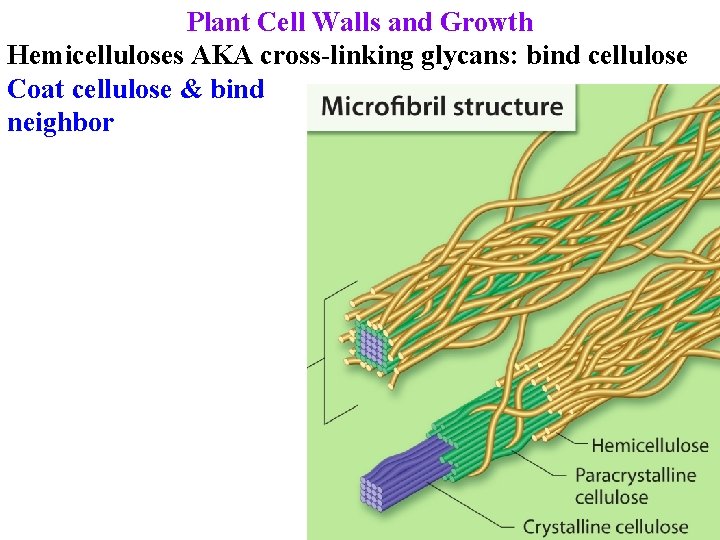
Plant Cell Walls and Growth Hemicelluloses AKA cross-linking glycans: bind cellulose Coat cellulose & bind neighbor
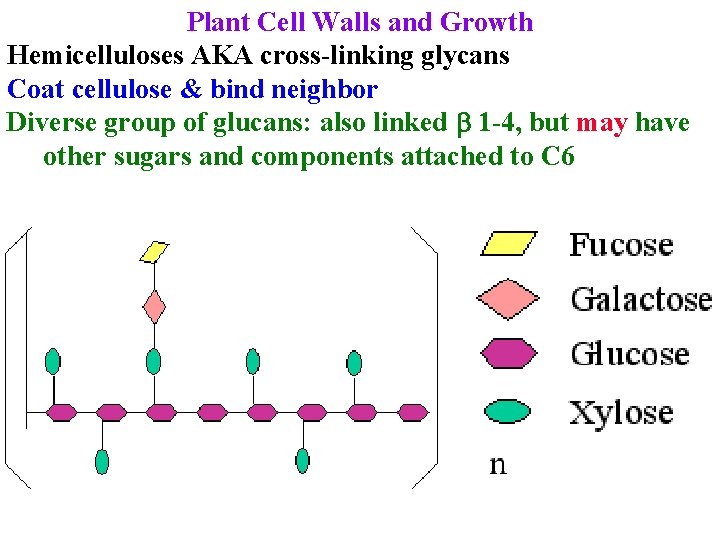
Plant Cell Walls and Growth Hemicelluloses AKA cross-linking glycans Coat cellulose & bind neighbor Diverse group of glucans: also linked b 1 -4, but may have other sugars and components attached to C 6
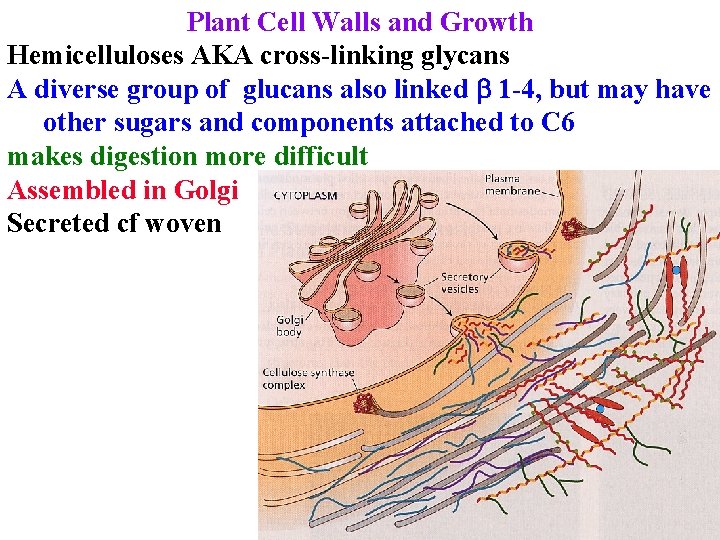
Plant Cell Walls and Growth Hemicelluloses AKA cross-linking glycans A diverse group of glucans also linked b 1 -4, but may have other sugars and components attached to C 6 makes digestion more difficult Assembled in Golgi Secreted cf woven
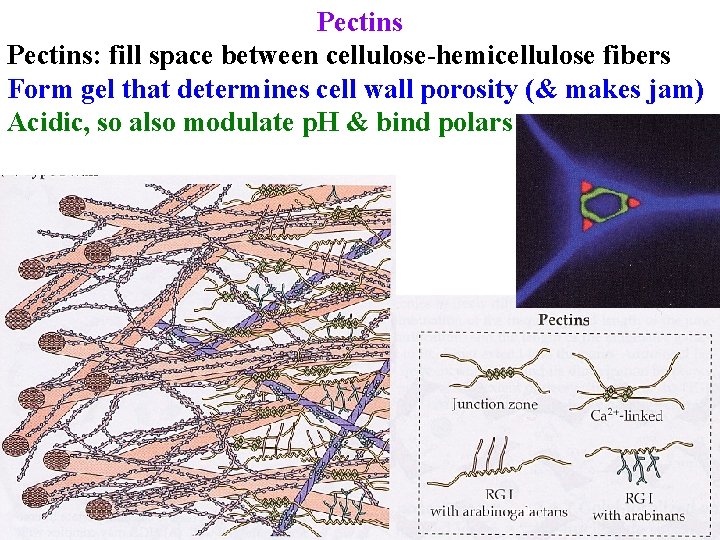
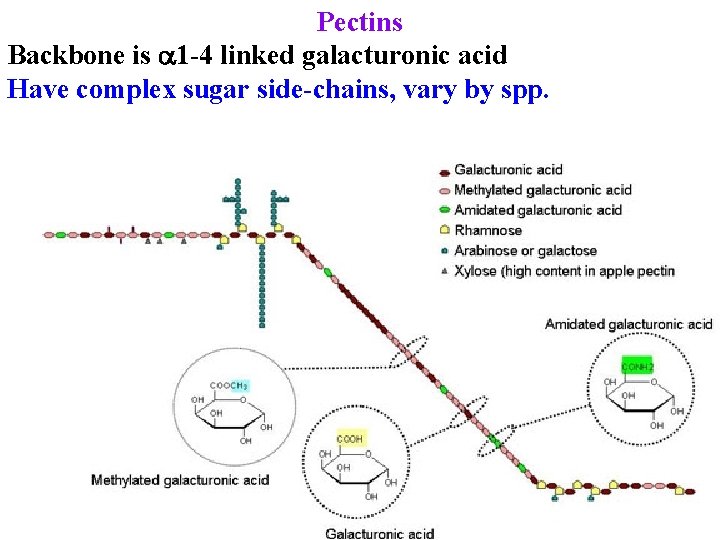
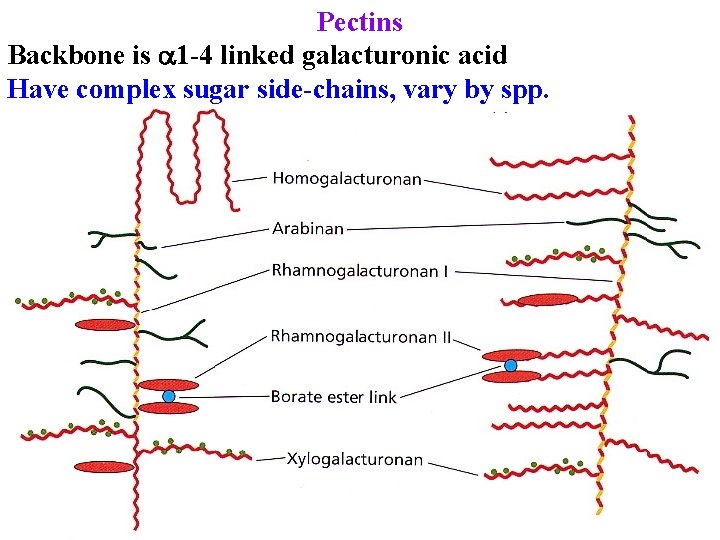
Pectins: fill space between cellulose-hemicellulose fibers Form gel that determines cell wall porosity (& makes jam) Acidic, so also modulate p. H & bind polars
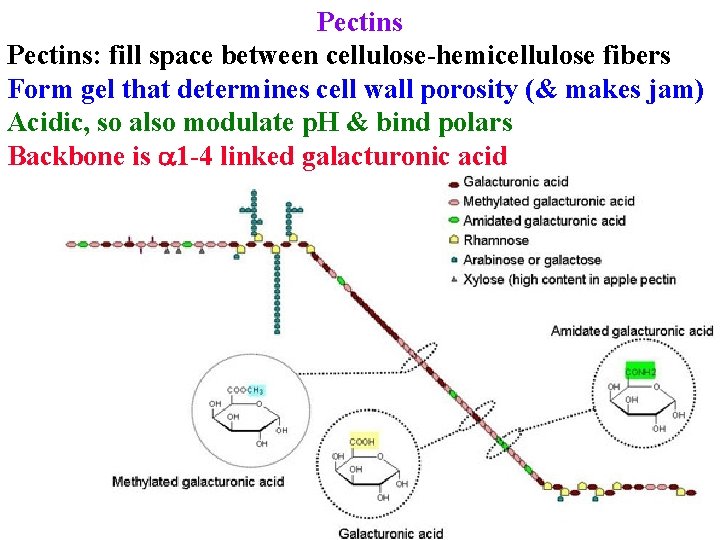
Pectins: fill space between cellulose-hemicellulose fibers Form gel that determines cell wall porosity (& makes jam) Acidic, so also modulate p. H & bind polars Backbone is 1 -4 linked galacturonic acid
Pectins Backbone is 1 -4 linked galacturonic acid Have complex sugar side-chains, vary by spp.
Pectins Backbone is 1 -4 linked galacturonic acid Have complex sugar side-chains, vary by spp.
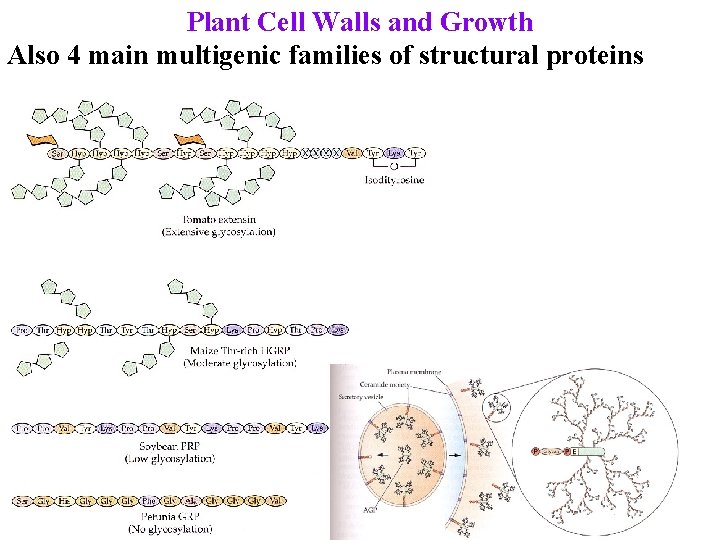
Plant Cell Walls and Growth Also 4 main multigenic families of structural proteins
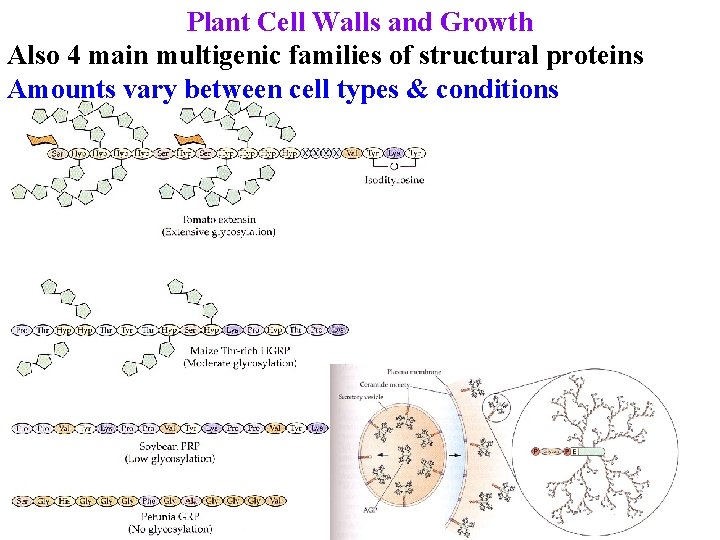
Plant Cell Walls and Growth Also 4 main multigenic families of structural proteins Amounts vary between cell types & conditions
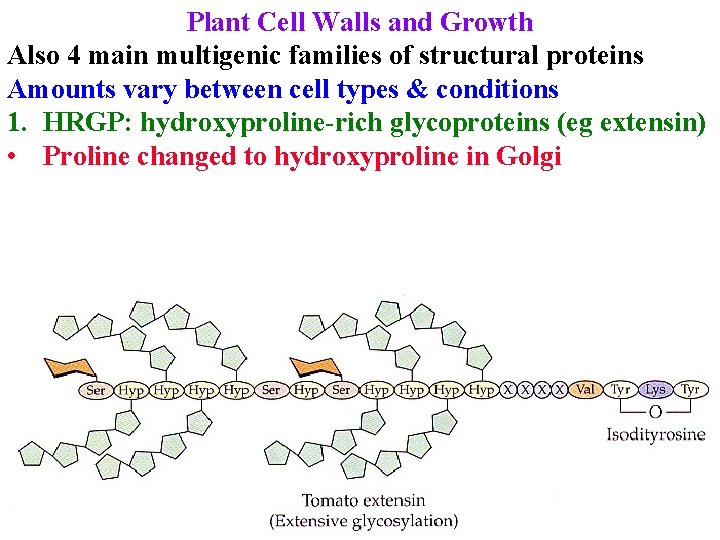
Plant Cell Walls and Growth Also 4 main multigenic families of structural proteins Amounts vary between cell types & conditions 1. HRGP: hydroxyproline-rich glycoproteins (eg extensin) • Proline changed to hydroxyproline in Golgi
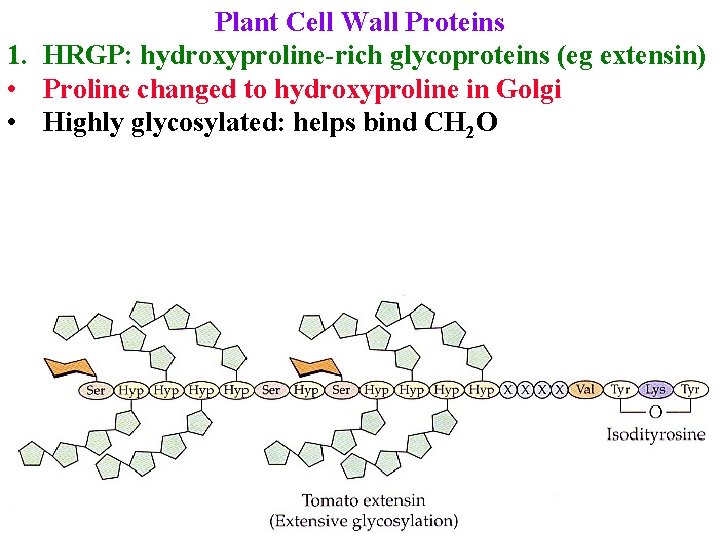
Plant Cell Wall Proteins 1. HRGP: hydroxyproline-rich glycoproteins (eg extensin) • Proline changed to hydroxyproline in Golgi • Highly glycosylated: helps bind CH 2 O
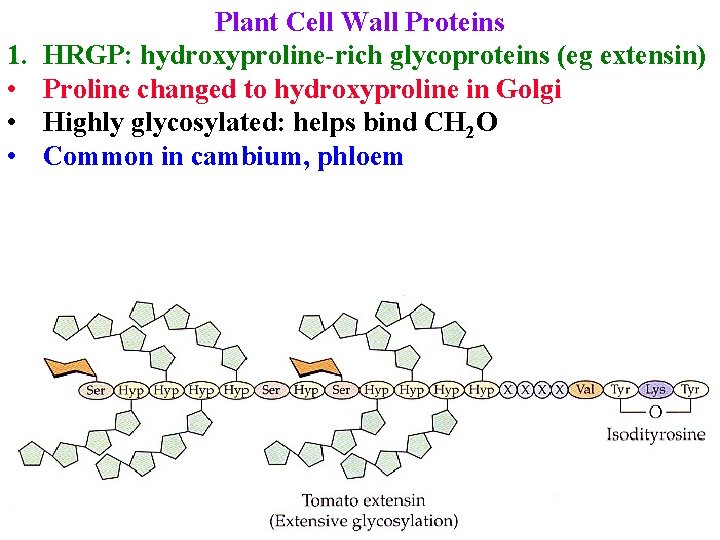
1. • • • Plant Cell Wall Proteins HRGP: hydroxyproline-rich glycoproteins (eg extensin) Proline changed to hydroxyproline in Golgi Highly glycosylated: helps bind CH 2 O Common in cambium, phloem
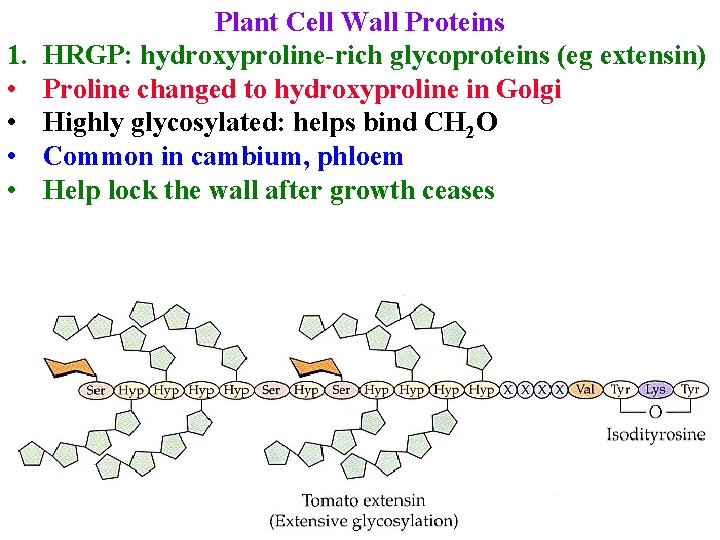
1. • • Plant Cell Wall Proteins HRGP: hydroxyproline-rich glycoproteins (eg extensin) Proline changed to hydroxyproline in Golgi Highly glycosylated: helps bind CH 2 O Common in cambium, phloem Help lock the wall after growth ceases
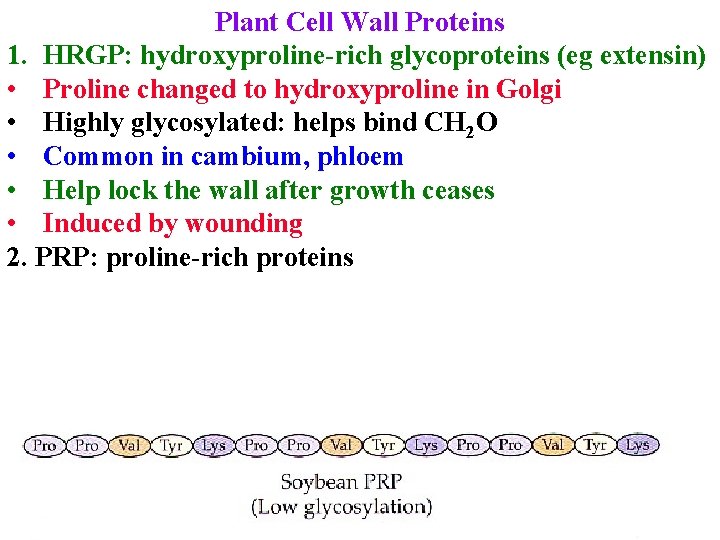
Plant Cell Wall Proteins 1. HRGP: hydroxyproline-rich glycoproteins (eg extensin) • Proline changed to hydroxyproline in Golgi • Highly glycosylated: helps bind CH 2 O • Common in cambium, phloem • Help lock the wall after growth ceases • Induced by wounding 2. PRP: proline-rich proteins
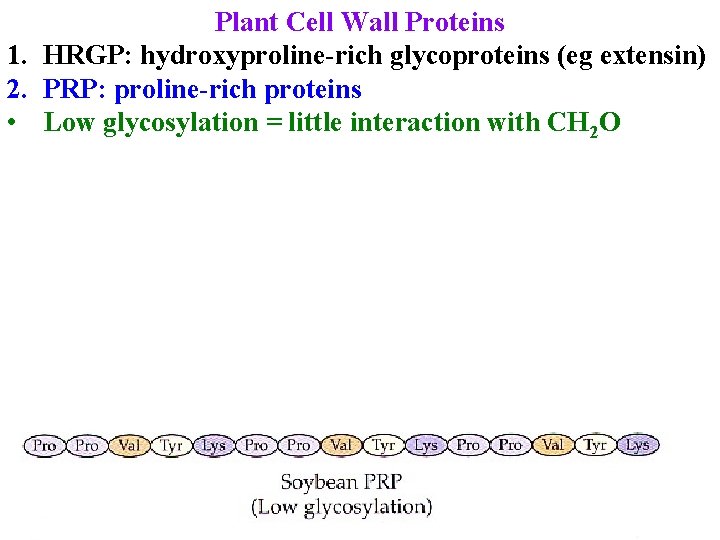
Plant Cell Wall Proteins 1. HRGP: hydroxyproline-rich glycoproteins (eg extensin) 2. PRP: proline-rich proteins • Low glycosylation = little interaction with CH 2 O
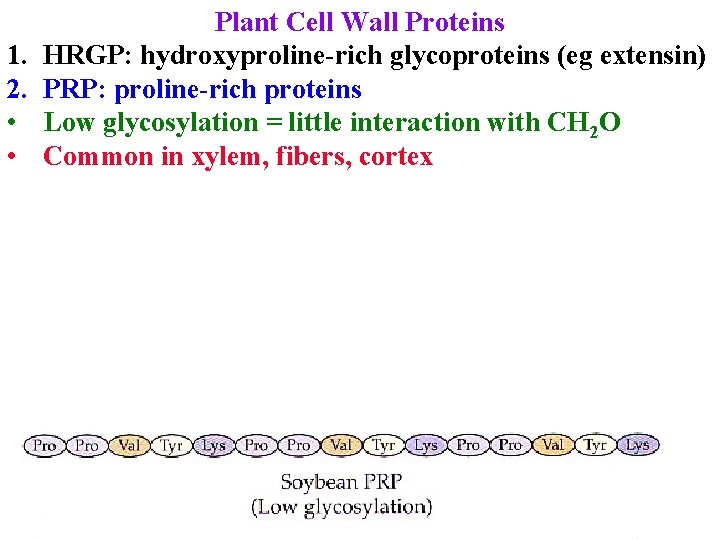
1. 2. • • Plant Cell Wall Proteins HRGP: hydroxyproline-rich glycoproteins (eg extensin) PRP: proline-rich proteins Low glycosylation = little interaction with CH 2 O Common in xylem, fibers, cortex
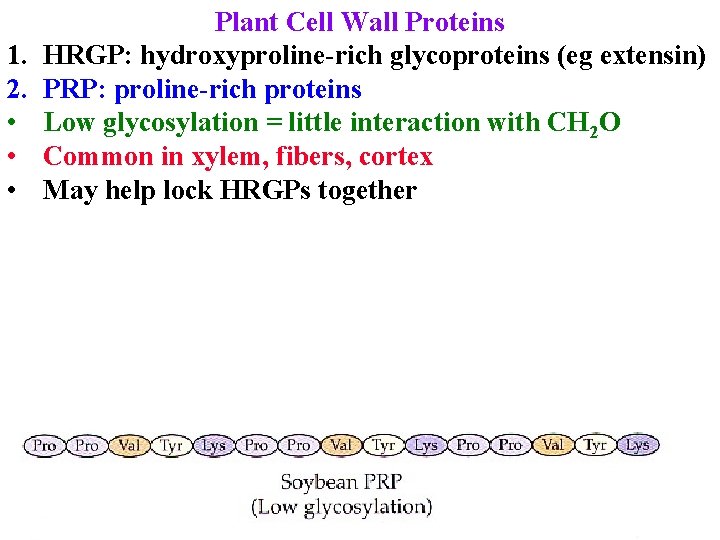
1. 2. • • • Plant Cell Wall Proteins HRGP: hydroxyproline-rich glycoproteins (eg extensin) PRP: proline-rich proteins Low glycosylation = little interaction with CH 2 O Common in xylem, fibers, cortex May help lock HRGPs together
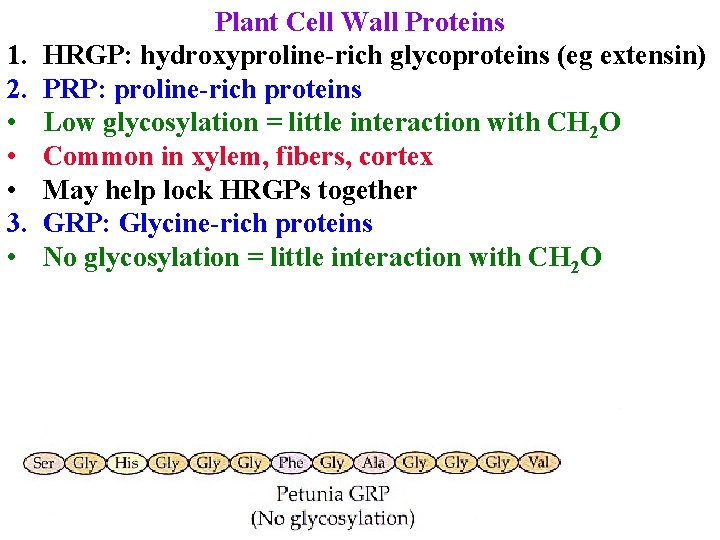
1. 2. • • • 3. • Plant Cell Wall Proteins HRGP: hydroxyproline-rich glycoproteins (eg extensin) PRP: proline-rich proteins Low glycosylation = little interaction with CH 2 O Common in xylem, fibers, cortex May help lock HRGPs together GRP: Glycine-rich proteins No glycosylation = little interaction with CH 2 O
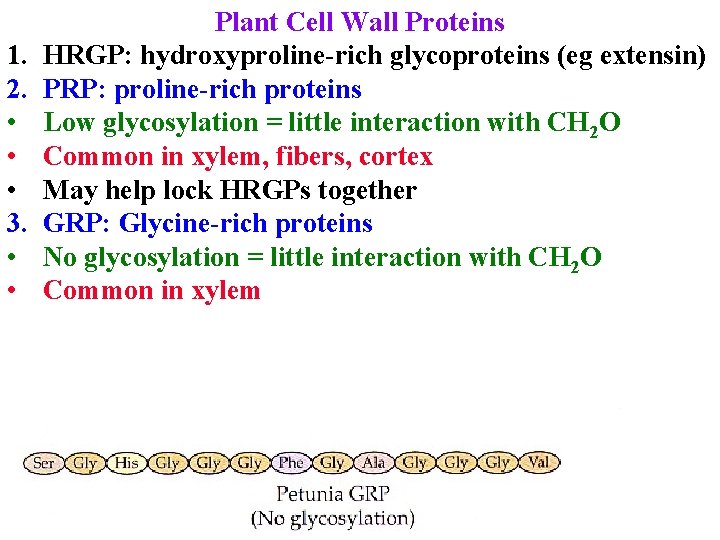
1. 2. • • • 3. • • Plant Cell Wall Proteins HRGP: hydroxyproline-rich glycoproteins (eg extensin) PRP: proline-rich proteins Low glycosylation = little interaction with CH 2 O Common in xylem, fibers, cortex May help lock HRGPs together GRP: Glycine-rich proteins No glycosylation = little interaction with CH 2 O Common in xylem
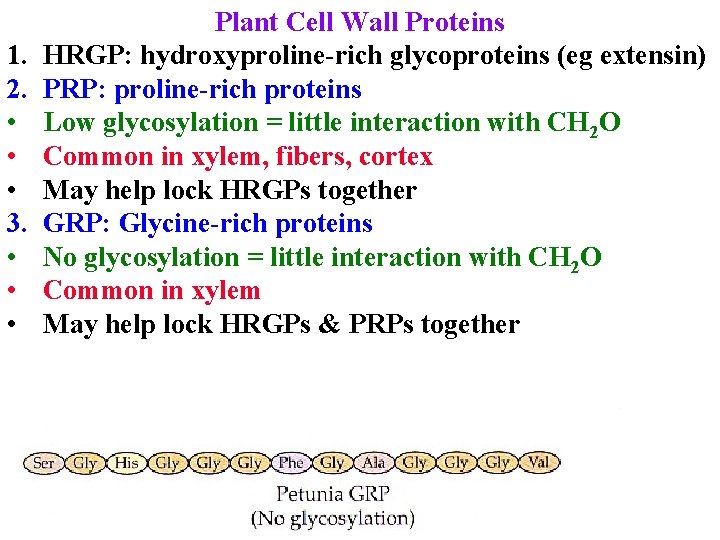
1. 2. • • • 3. • • • Plant Cell Wall Proteins HRGP: hydroxyproline-rich glycoproteins (eg extensin) PRP: proline-rich proteins Low glycosylation = little interaction with CH 2 O Common in xylem, fibers, cortex May help lock HRGPs together GRP: Glycine-rich proteins No glycosylation = little interaction with CH 2 O Common in xylem May help lock HRGPs & PRPs together
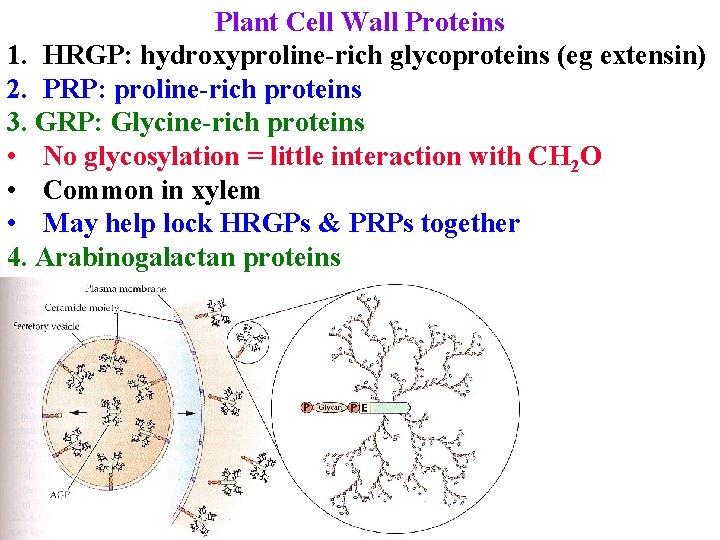
Plant Cell Wall Proteins 1. HRGP: hydroxyproline-rich glycoproteins (eg extensin) 2. PRP: proline-rich proteins 3. GRP: Glycine-rich proteins • No glycosylation = little interaction with CH 2 O • Common in xylem • May help lock HRGPs & PRPs together 4. Arabinogalactan proteins
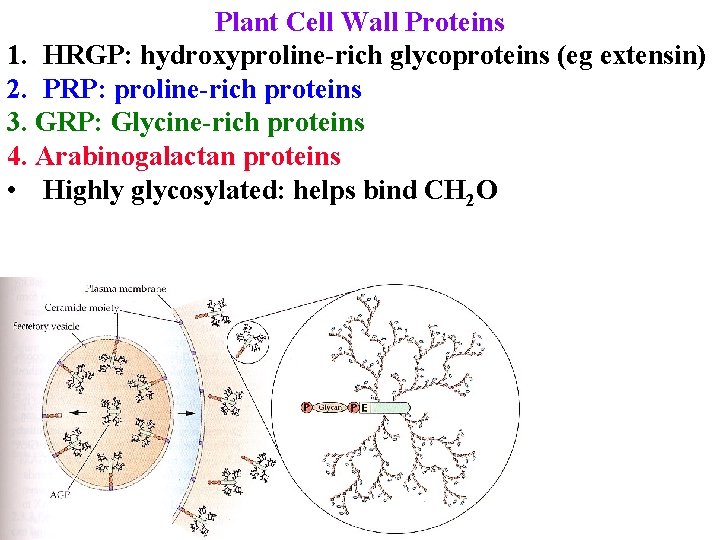
Plant Cell Wall Proteins 1. HRGP: hydroxyproline-rich glycoproteins (eg extensin) 2. PRP: proline-rich proteins 3. GRP: Glycine-rich proteins 4. Arabinogalactan proteins • Highly glycosylated: helps bind CH 2 O
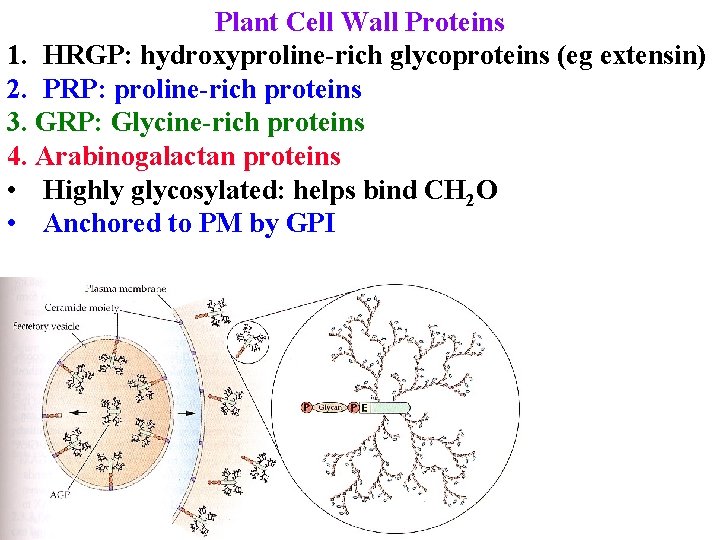
Plant Cell Wall Proteins 1. HRGP: hydroxyproline-rich glycoproteins (eg extensin) 2. PRP: proline-rich proteins 3. GRP: Glycine-rich proteins 4. Arabinogalactan proteins • Highly glycosylated: helps bind CH 2 O • Anchored to PM by GPI
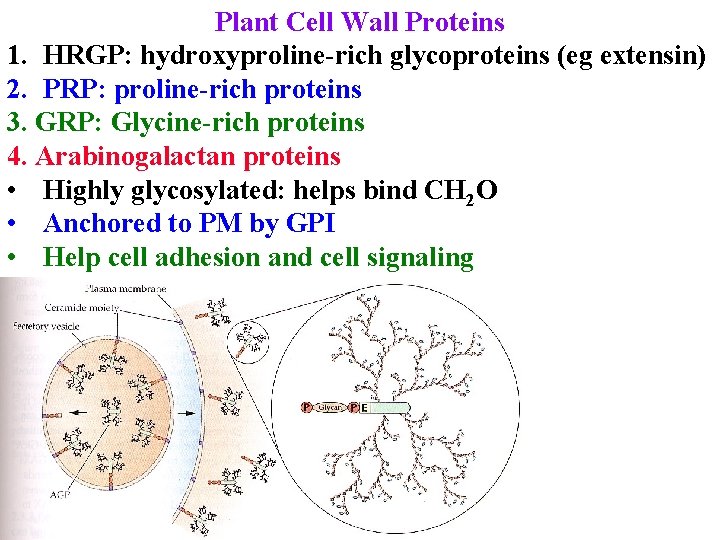
Plant Cell Wall Proteins 1. HRGP: hydroxyproline-rich glycoproteins (eg extensin) 2. PRP: proline-rich proteins 3. GRP: Glycine-rich proteins 4. Arabinogalactan proteins • Highly glycosylated: helps bind CH 2 O • Anchored to PM by GPI • Help cell adhesion and cell signaling
Plant Cell Wall Proteins 1. HRGP: hydroxyproline-rich glycoproteins (eg extensin) 2. PRP: proline-rich proteins 3. GRP: Glycine-rich proteins 4. Arabinogalactan proteins • Highly glycosylated: helps bind CH 2 O • Anchored to PM by GPI • Help cell adhesion and cell signaling 5. Also many enzymes involved in cell wall synthesis and loosening