
Plant Growth Factors Starter Name three stimuli that

- Slides: 17
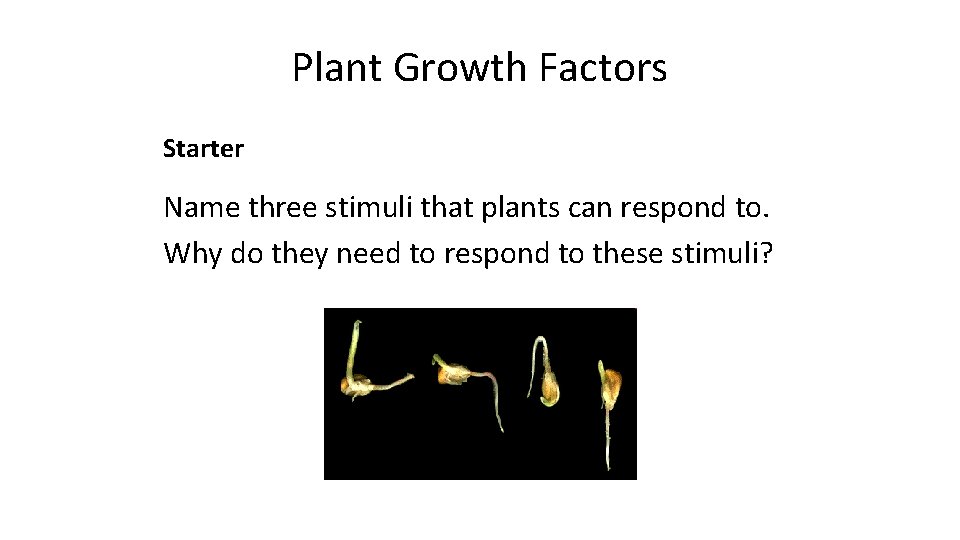
Plant Growth Factors Starter Name three stimuli that plants can respond to. Why do they need to respond to these stimuli?
What do plants respond to? • Light – shoots are positively phototropic to absorb more light for photosynthesis • Gravity – roots are positively geo/gravitropic to help them anchor into the soil • Water – roots are positively hydrotropic to absorb water for photosynthesis and to provide support
Plant Growth Factors • Plants respond to these stimuli through the use of hormone-like substances called plant growth factors. • They exert their influence by affecting growth. • They are made by cells throughout the plant. • They can have effects in the same tissues that produce them or further away.
Indoleacetic acid (IAA) • Plant growth factor • Type of auxin • Controls cell elongation
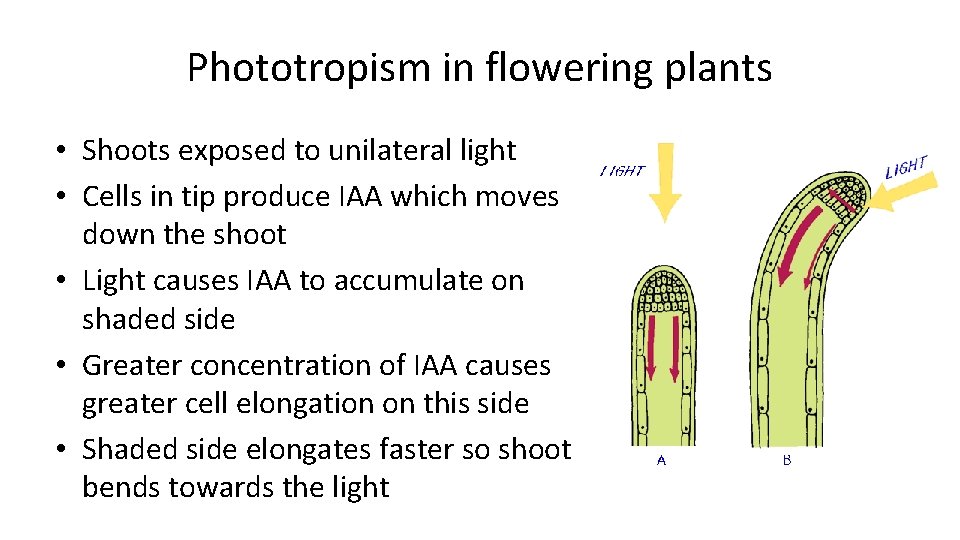
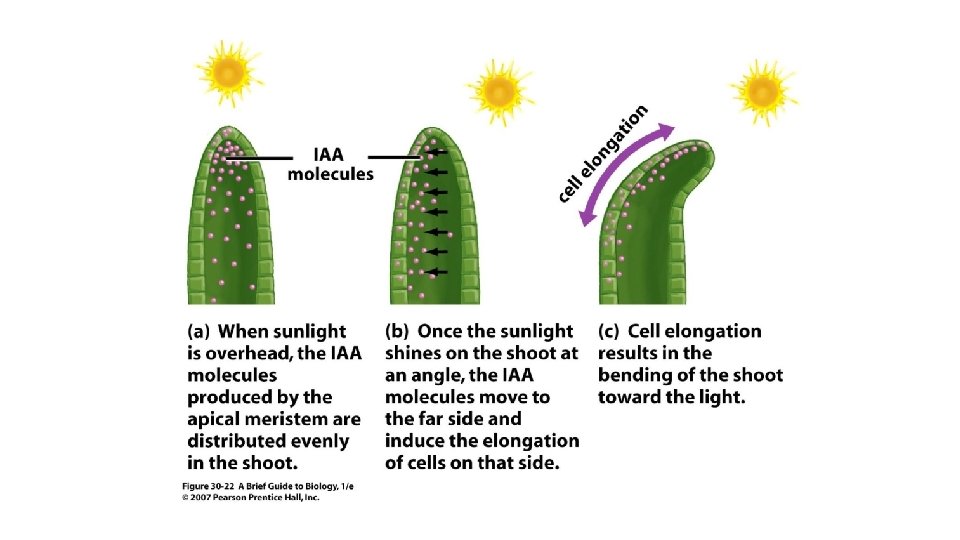
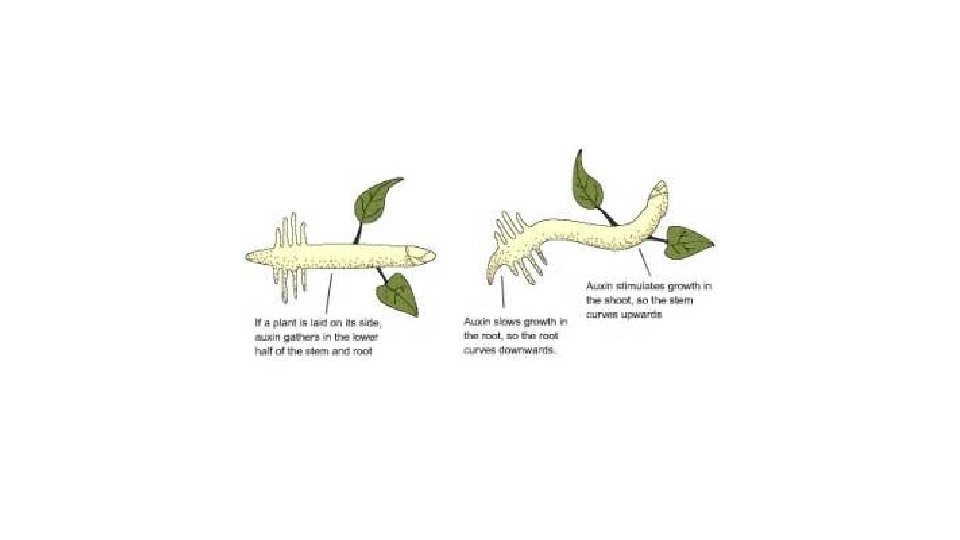
Phototropism in flowering plants • Shoots exposed to unilateral light • Cells in tip produce IAA which moves down the shoot • Light causes IAA to accumulate on shaded side • Greater concentration of IAA causes greater cell elongation on this side • Shaded side elongates faster so shoot bends towards the light
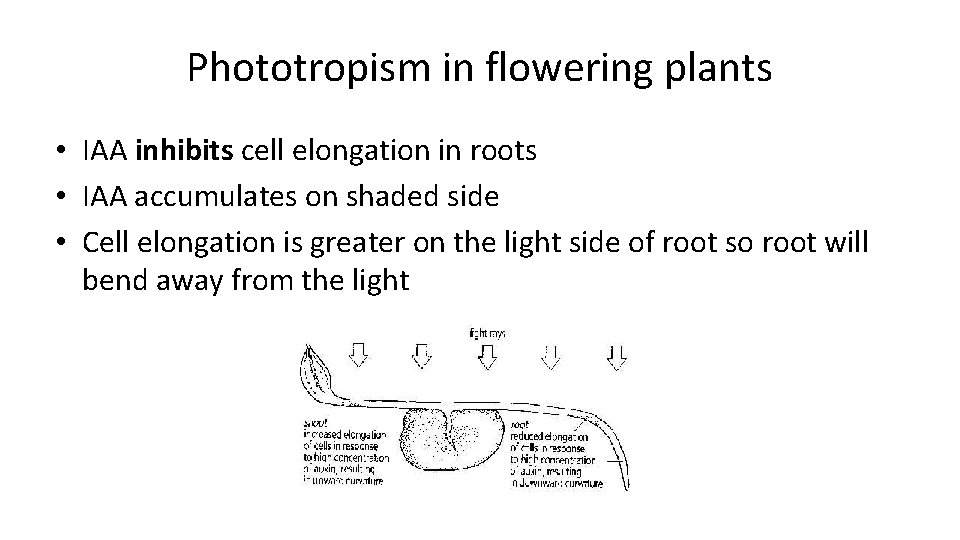
Phototropism in flowering plants • IAA inhibits cell elongation in roots • IAA accumulates on shaded side • Cell elongation is greater on the light side of root so root will bend away from the light
Gravitropism in flowering plant • • Root tip cells produce IAA Gravity causes IAA to accumulate on lower side of root This inhibits cell elongation on the lower side Greater cell elongation on upper side causes root to bend downwards
Role of IAA • IAA increases plasticity of cell walls • Response only occurs in young cells walls where cells are able to elongate • Acid growth hypothesis suggests that H+ ions are actively transported from the cytoplasm into spaces between cell walls causing them to become more plastic
What questions did scientists have? • • • How is the light detected? What from of communication occurs (electrical or chemical)? Where does the messenger originate? Where does the message travel to? What effect does it have?
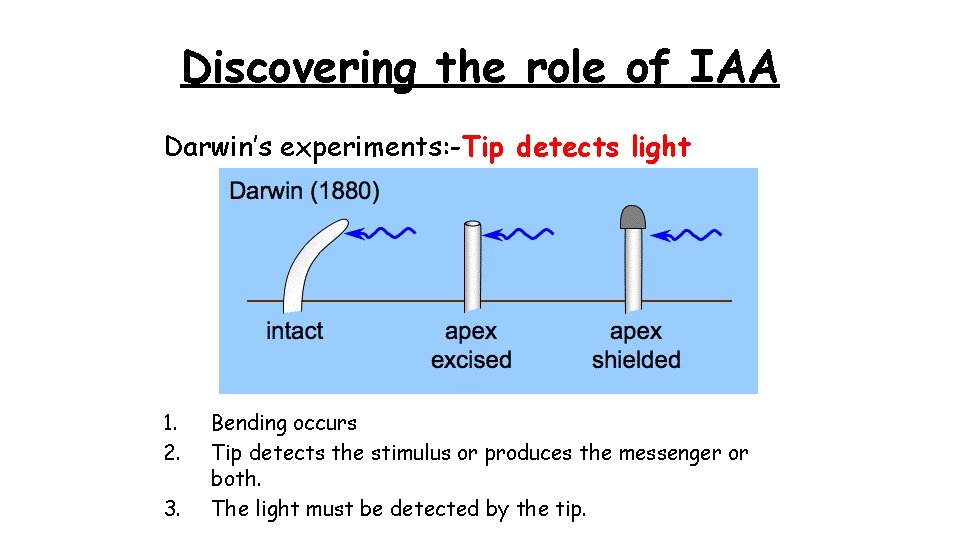
Discovering the role of IAA Darwin’s experiments: -Tip detects light 1. 2. 3. Bending occurs Tip detects the stimulus or produces the messenger or both. The light must be detected by the tip.
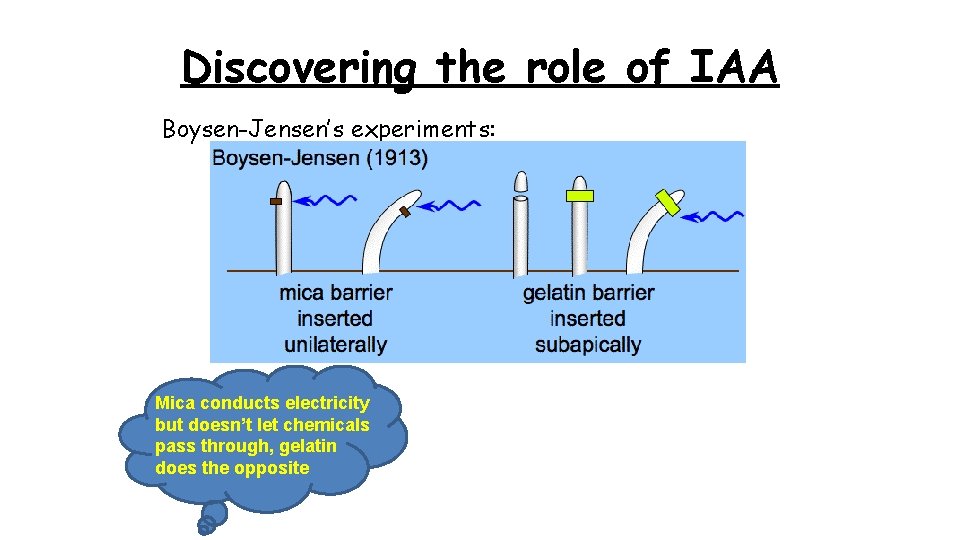
Discovering the role of IAA Boysen-Jensen’s experiments: Mica conducts electricity but doesn’t let chemicals pass through, gelatin does the opposite
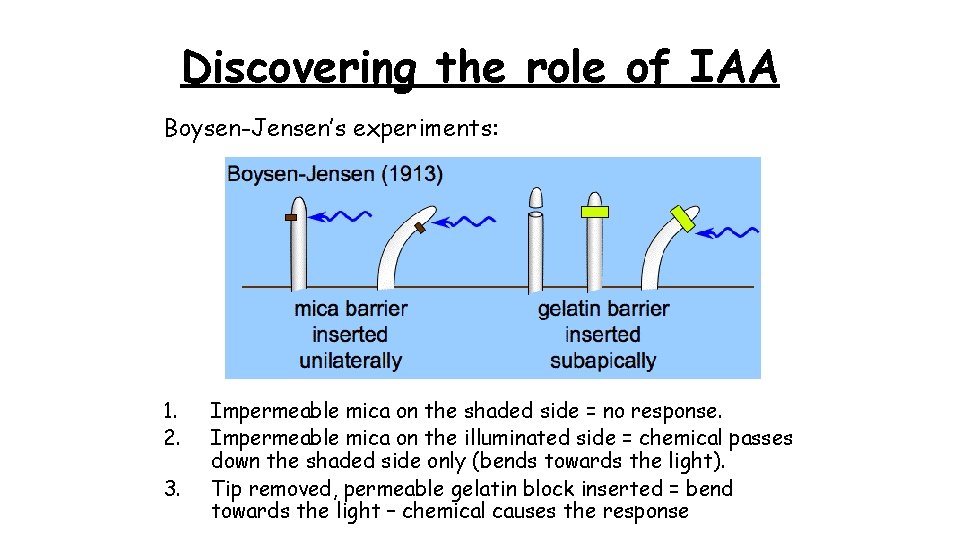
Discovering the role of IAA Boysen-Jensen’s experiments: 1. 2. 3. Impermeable mica on the shaded side = no response. Impermeable mica on the illuminated side = chemical passes down the shaded side only (bends towards the light). Tip removed, permeable gelatin block inserted = bend towards the light – chemical causes the response
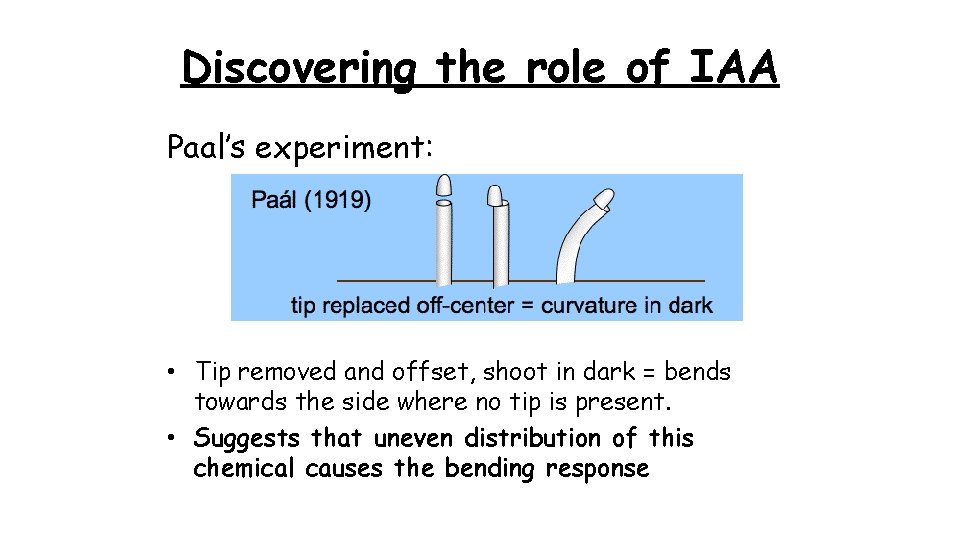
Discovering the role of IAA Paal’s experiment: • Tip removed and offset, shoot in dark = bends towards the side where no tip is present. • Suggests that uneven distribution of this chemical causes the bending response
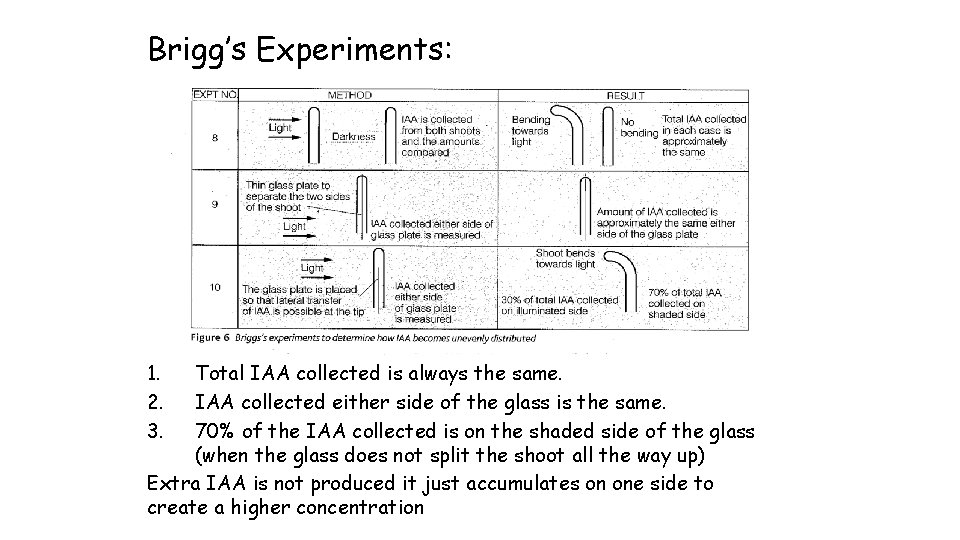
Brigg’s Experiments: 1. 2. 3. Total IAA collected is always the same. IAA collected either side of the glass is the same. 70% of the IAA collected is on the shaded side of the glass (when the glass does not split the shoot all the way up) Extra IAA is not produced it just accumulates on one side to create a higher concentration
Exam Questions