
Plant Gene Expression Genome Genes Expression Same genome
- Slides: 54
Plant Gene Expression Genome Genes Expression Same genome in somatic cells Different structures and functions Differential gene expression Spatial: organs Temporal: time
Differential Gene Expression Same proteins for Common processes Some abundant proteins in certain cell types Some minor proteins in certain cells at certain times 20, 000 - 10, 000 proteins in cells 15 -20% as tissue-specific proteins
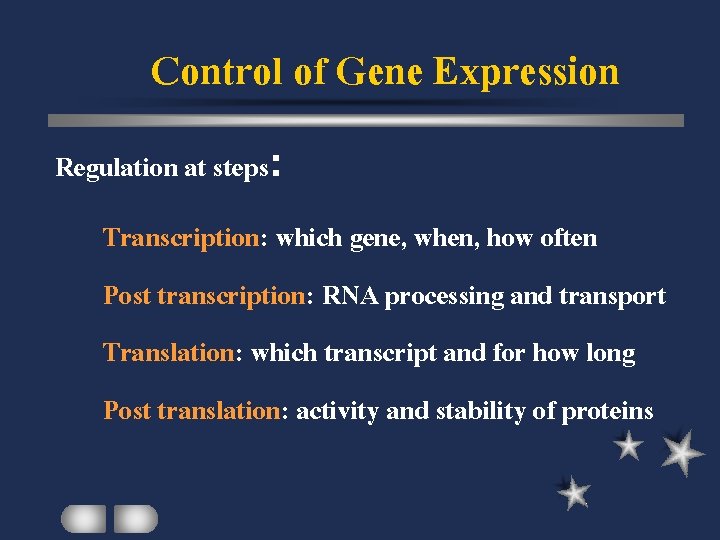
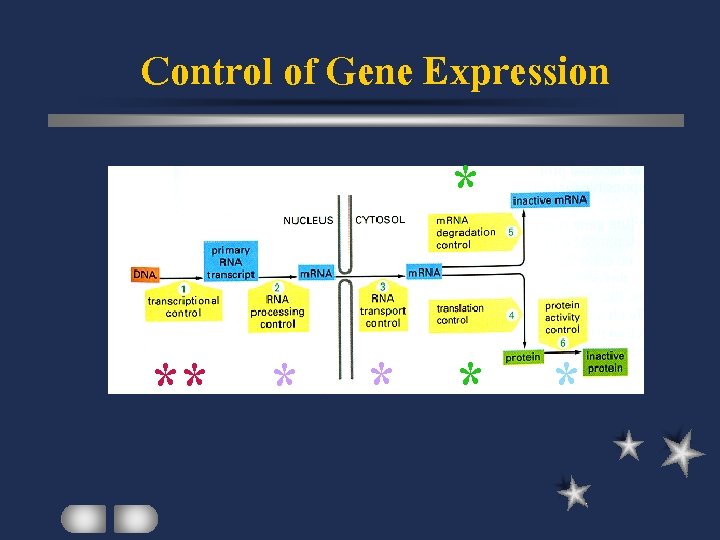
Control of Gene Expression Regulation at steps: Transcription: which gene, when, how often Post transcription: RNA processing and transport Translation: which transcript and for how long Post translation: activity and stability of proteins
Control of Gene Expression * ** * *
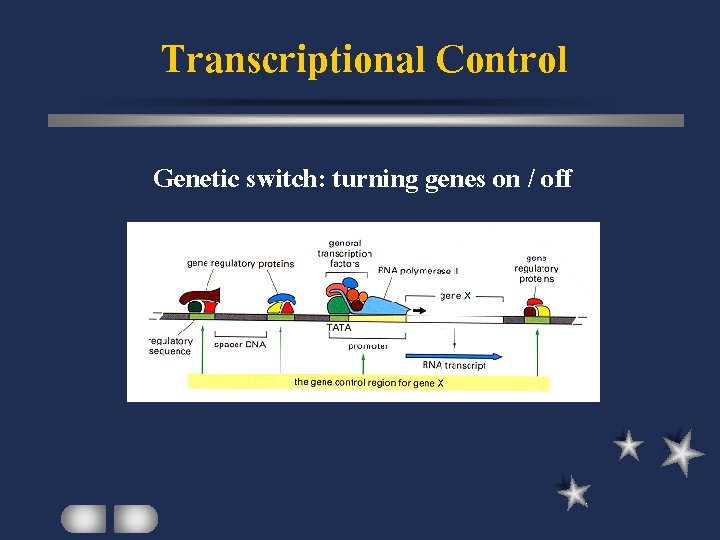
Transcriptional Control I Gene control regions & Regulatory protein components of genetic switch Gene control regions ’ 5 Promoter and 3’ Terminator ’ 5 Regulatory sequence )some inside or at 3(’
Proximal promoter ’ 5 promoter or proximal promoter Common sequence: TATA / CAAT box Binding site for transcription machinery RNA Pol and general transcription factors
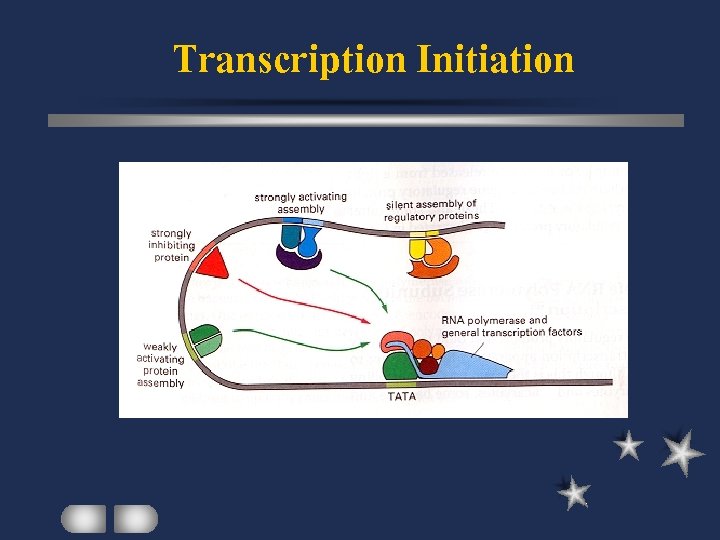
Distal promoter Regulatory sequences or distal promoter or cis element or responsive element Specific and consensus for gene expression Binding site for gene regulatory proteins or trans acting element or trans element or specific transcription factor
Transcriptional Control Genetic switch: turning genes on / off
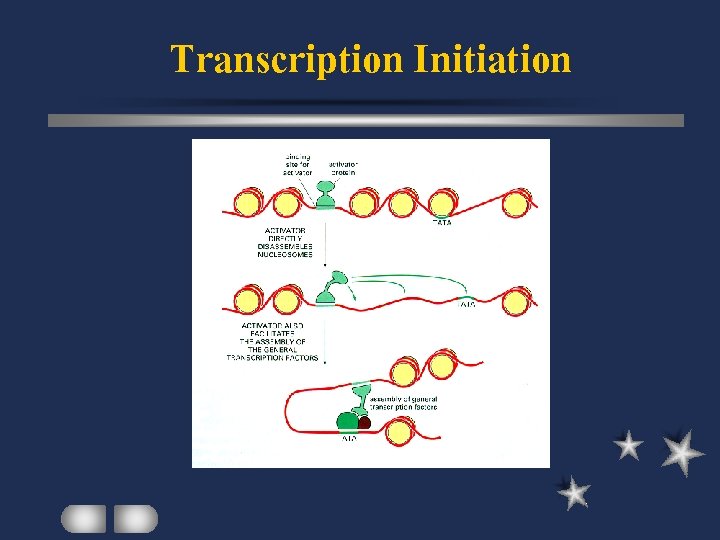
Transcription Initiation
Transcription Initiation
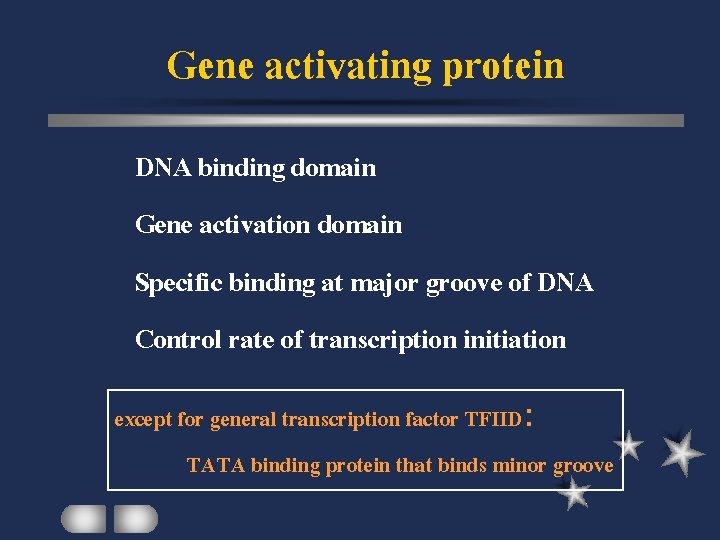
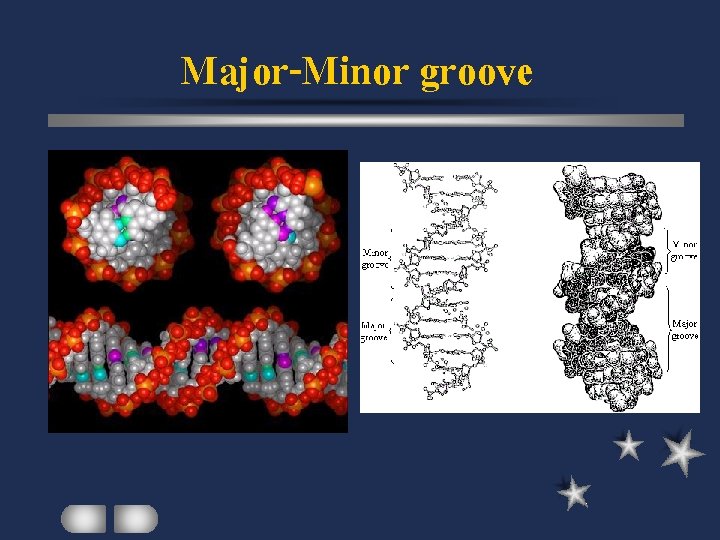
Gene activating protein DNA binding domain Gene activation domain Specific binding at major groove of DNA Control rate of transcription initiation except for general transcription factor TFIID: TATA binding protein that binds minor groove
Major-Minor groove
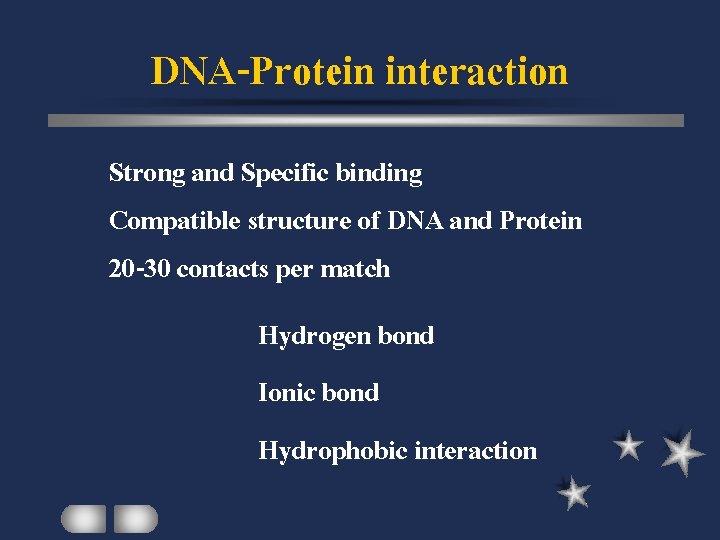
DNA-Protein interaction Strong and Specific binding Compatible structure of DNA and Protein 20 -30 contacts per match Hydrogen bond Ionic bond Hydrophobic interaction
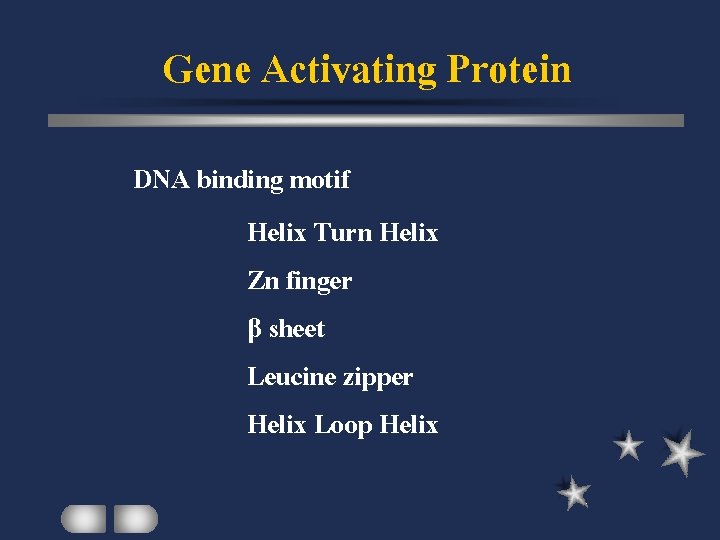
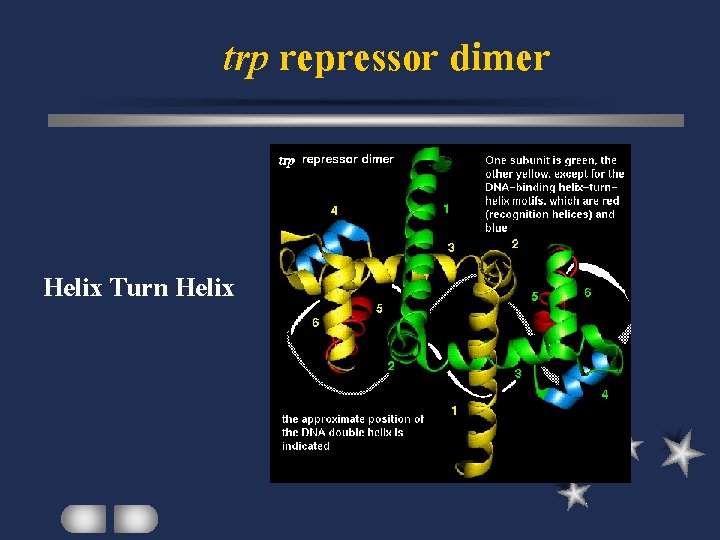
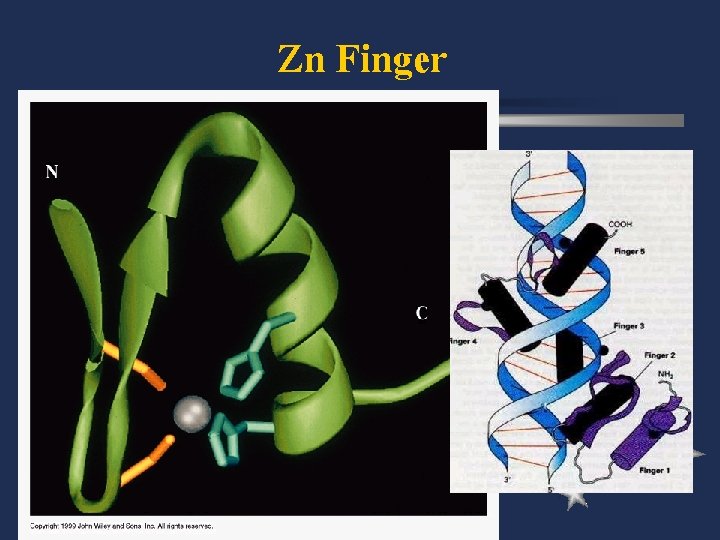
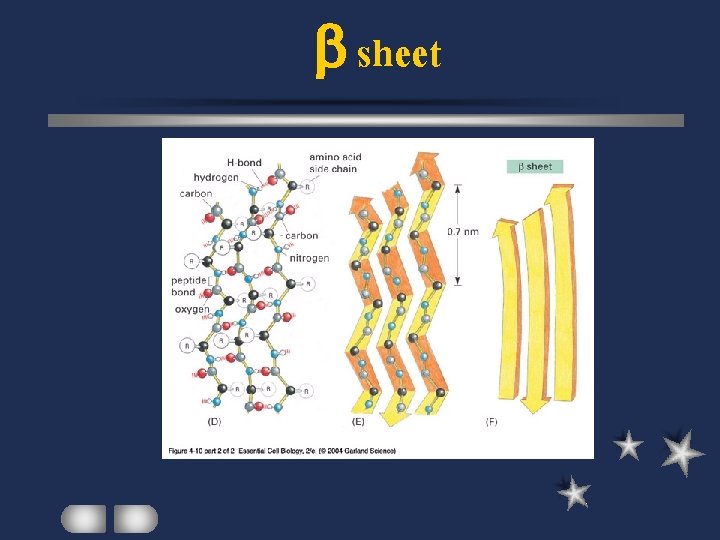
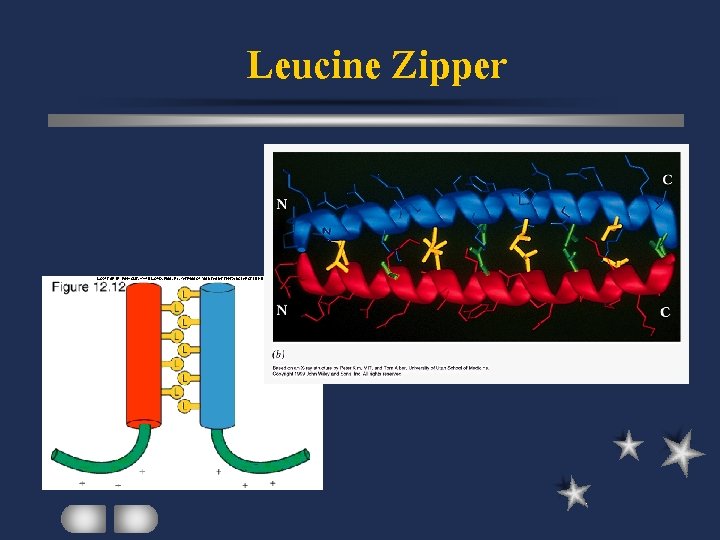
Gene Activating Protein DNA binding motif Helix Turn Helix Zn finger β sheet Leucine zipper Helix Loop Helix
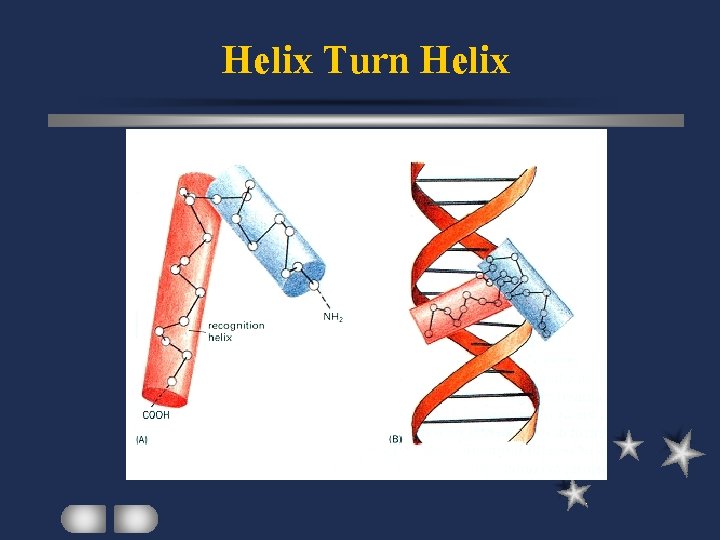
Helix Turn Helix
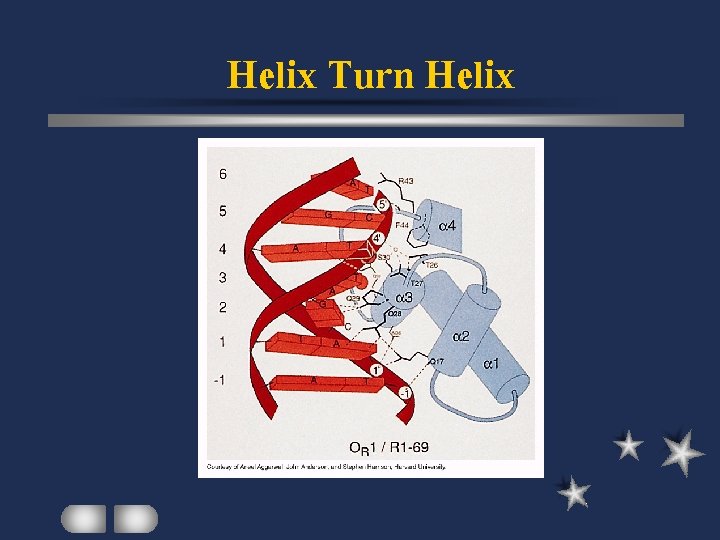
Helix Turn Helix
trp repressor dimer Helix Turn Helix
Zn Finger
b sheet
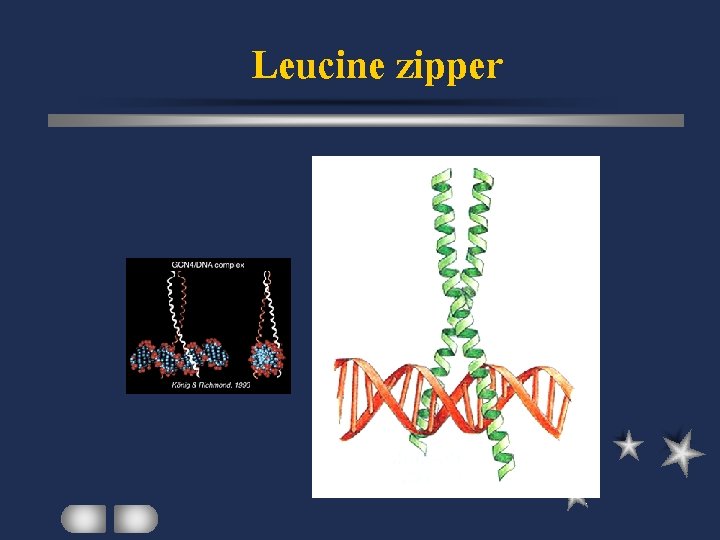
Leucine Zipper
Leucine zipper
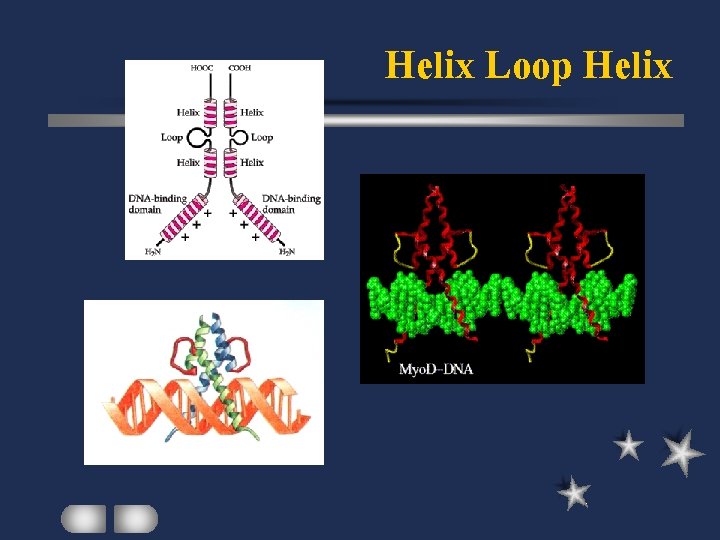
Helix Loop Helix
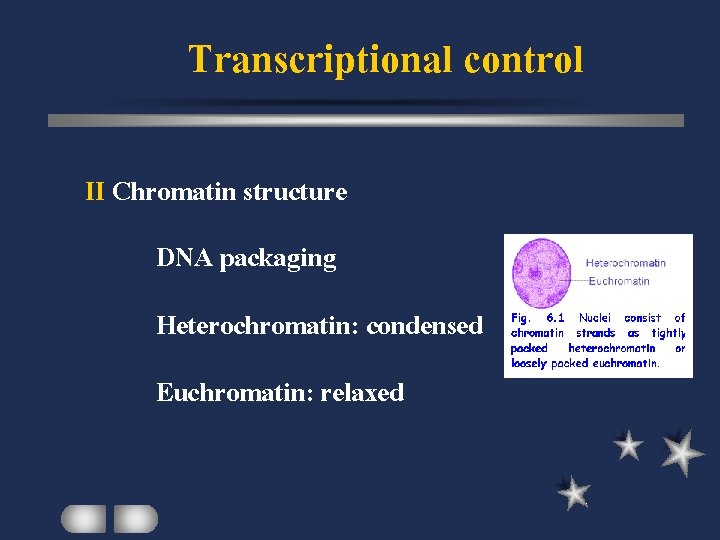
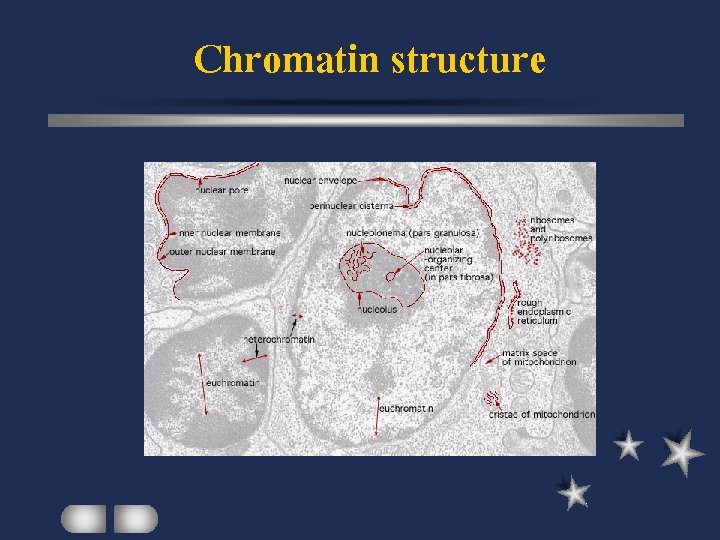
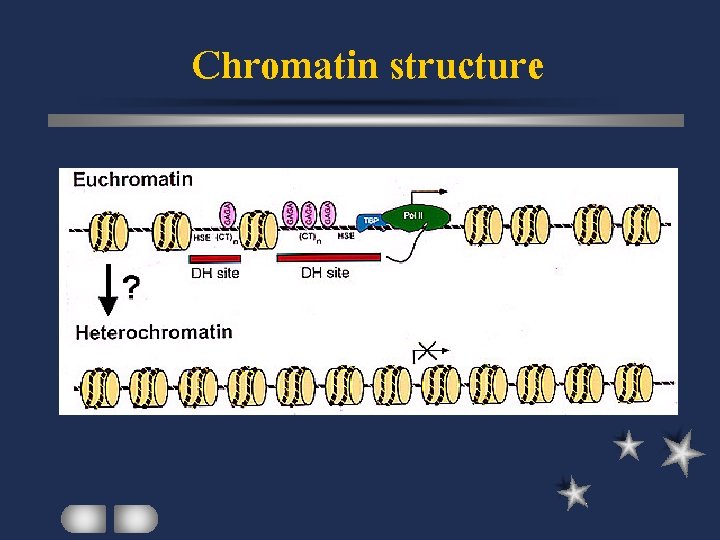
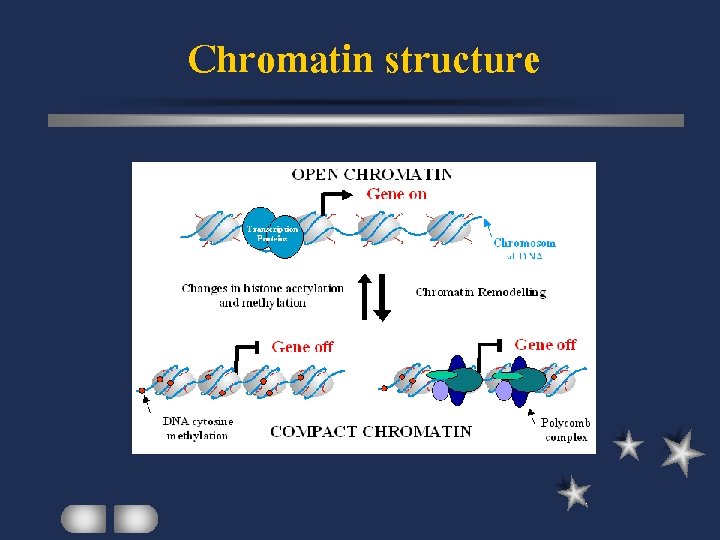
Transcriptional control II Chromatin structure DNA packaging Heterochromatin: condensed Euchromatin: relaxed
Chromatin structure Most organisms have both types Except for yeast: euchromatin some algae and maize B chromosome: heterochromatin
Chromatin structure
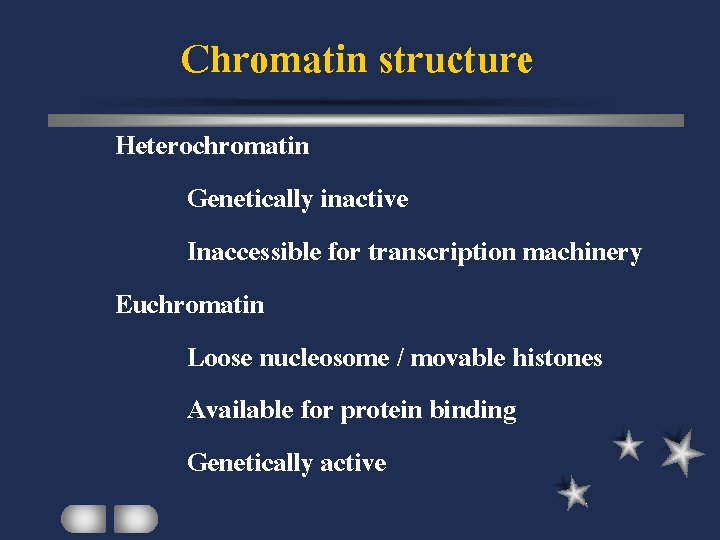
Chromatin structure Heterochromatin Genetically inactive Inaccessible for transcription machinery Euchromatin Loose nucleosome / movable histones Available for protein binding Genetically active
Chromatin structure
Chromatin structure
Transcriptional control III DNA methylation Hypermethylation: Gene inactivation Methyl group on Base Methylase
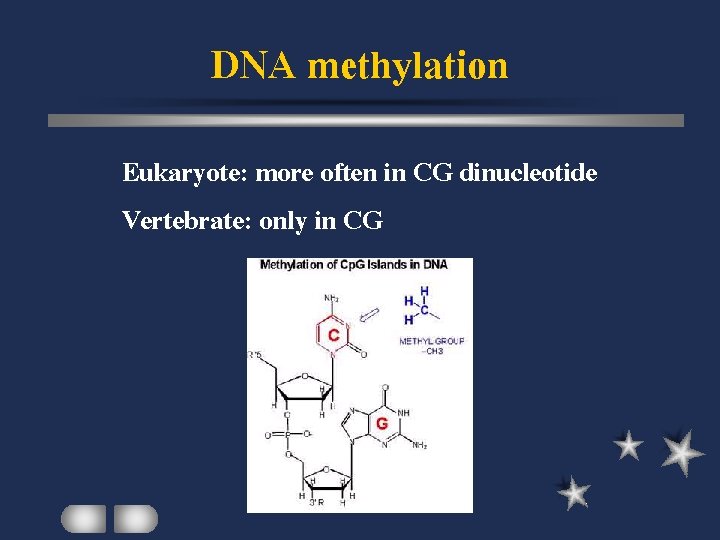
DNA methylation Eukaryote: more often in CG dinucleotide Vertebrate: only in CG
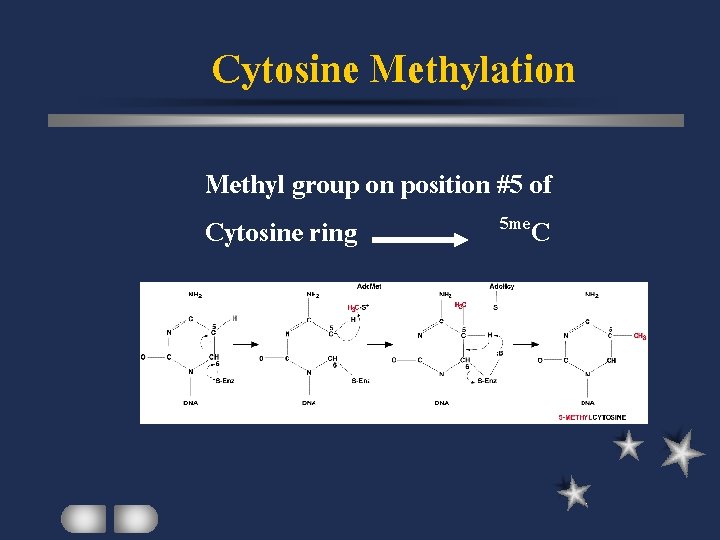
Cytosine Methylation Methyl group on position #5 of 5 me. C Cytosine ring
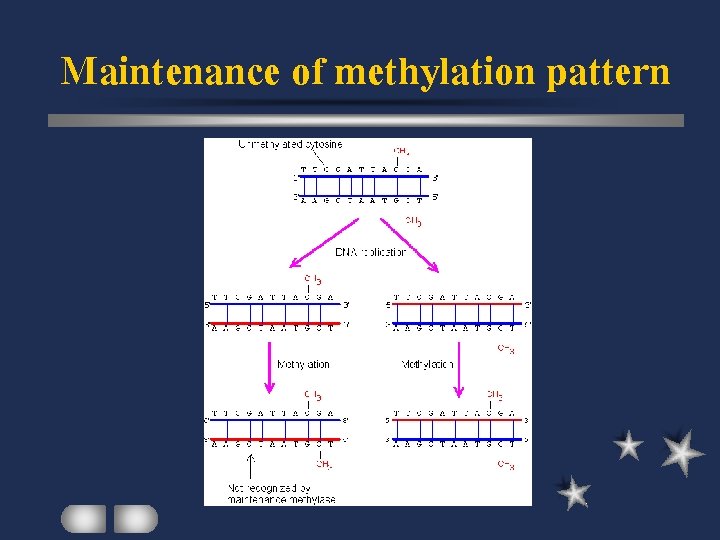
Maintenance of methylation pattern
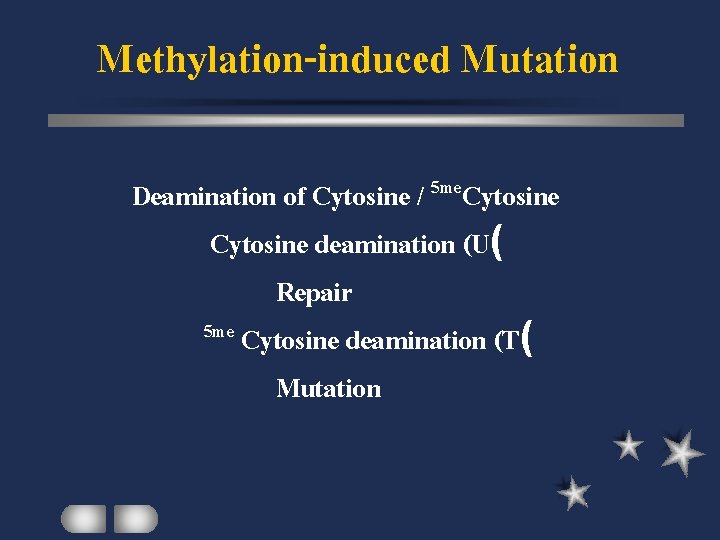
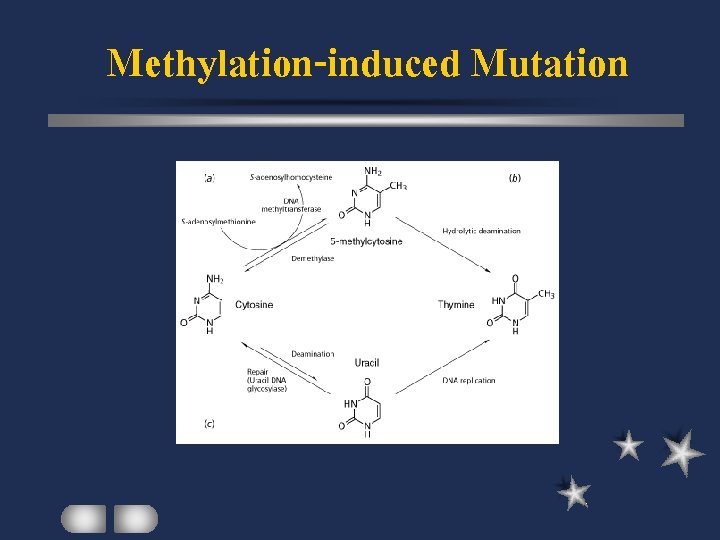
Methylation-induced Mutation Deamination of Cytosine / 5 me. Cytosine deamination (U( Repair 5 me Cytosine deamination (T( Mutation
Methylation-induced Mutation
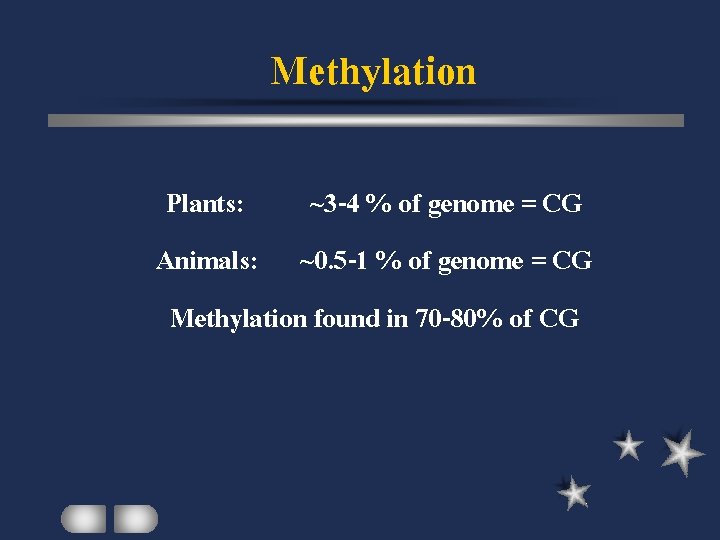
Methylation Plants: ~3 -4 % of genome = CG Animals: ~0. 5 -1 % of genome = CG Methylation found in 70 -80% of CG
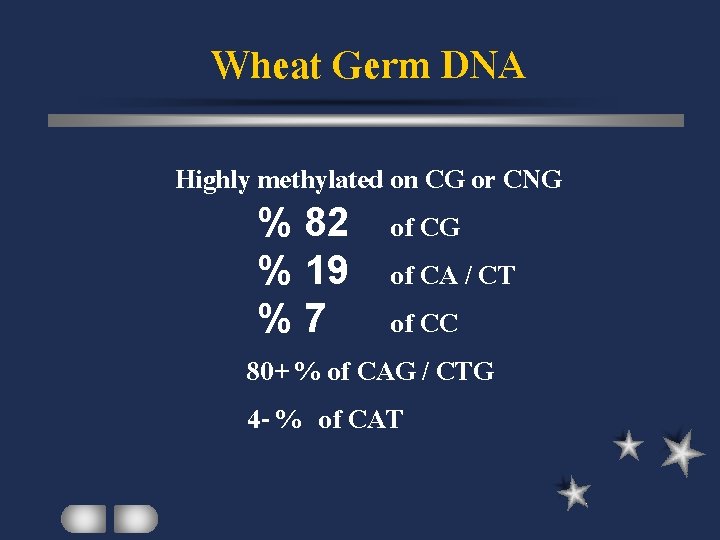
Wheat Germ DNA Highly methylated on CG or CNG % 82 of CG % 19 of CA / CT %7 of CC 80+ % of CAG / CTG 4 - % of CAT
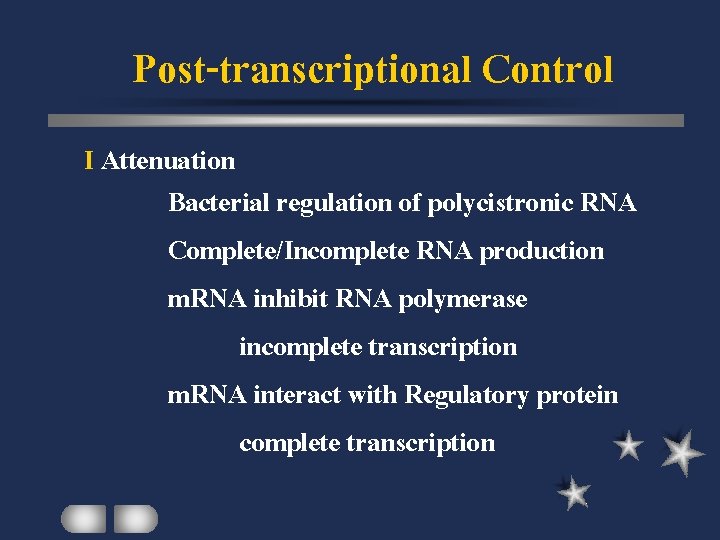
Post-transcriptional Control I Attenuation Bacterial regulation of polycistronic RNA Complete/Incomplete RNA production m. RNA inhibit RNA polymerase incomplete transcription m. RNA interact with Regulatory protein complete transcription
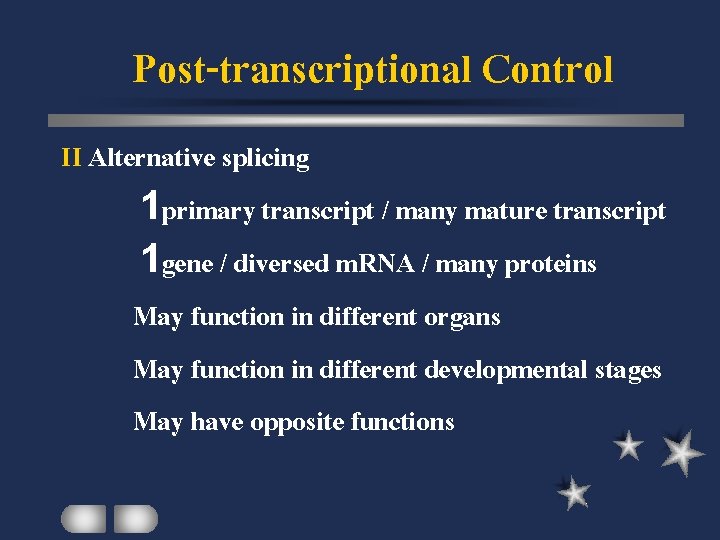
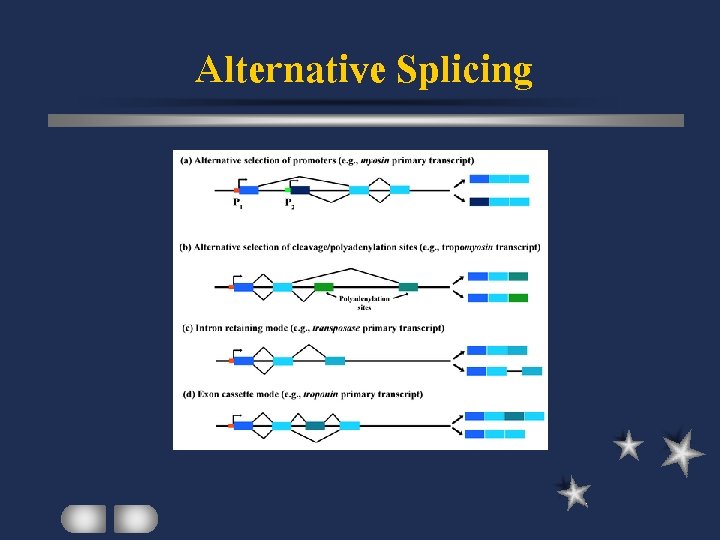
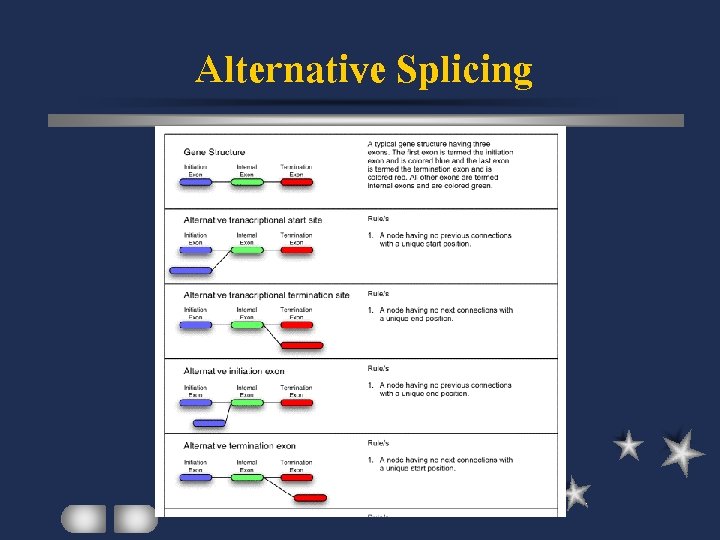
Post-transcriptional Control II Alternative splicing 1 primary transcript / many mature transcript 1 gene / diversed m. RNA / many proteins May function in different organs May function in different developmental stages May have opposite functions
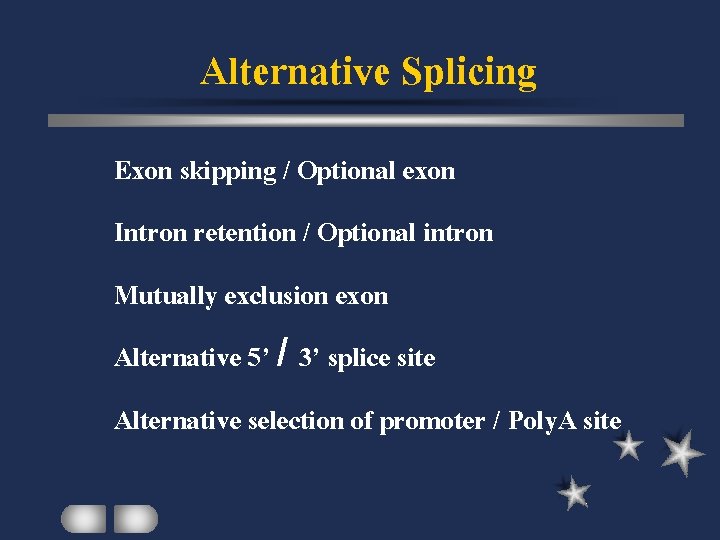
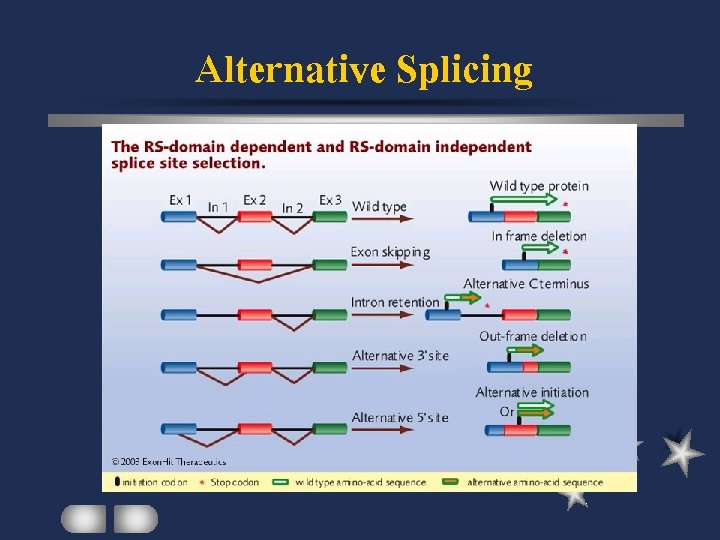
Alternative Splicing Exon skipping / Optional exon Intron retention / Optional intron Mutually exclusion exon Alternative 5’ / 3’ splice site Alternative selection of promoter / Poly. A site
Alternative Splicing
Alternative Splicing
Alternative Splicing
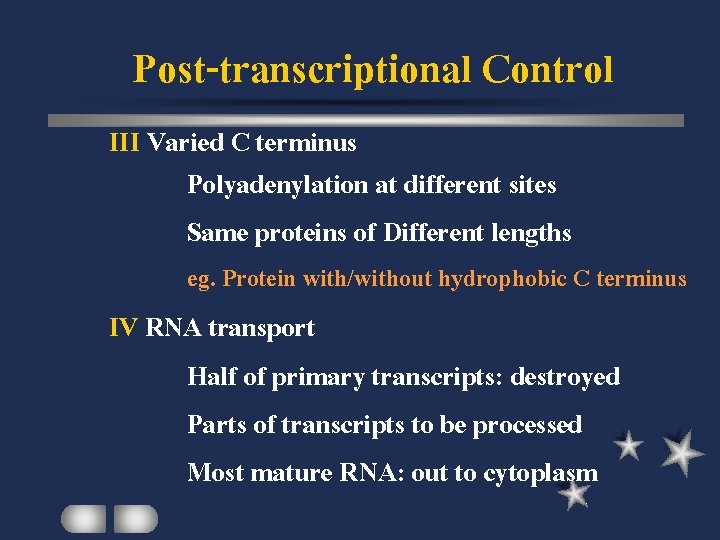
Post-transcriptional Control III Varied C terminus Polyadenylation at different sites Same proteins of Different lengths eg. Protein with/without hydrophobic C terminus IV RNA transport Half of primary transcripts: destroyed Parts of transcripts to be processed Most mature RNA: out to cytoplasm
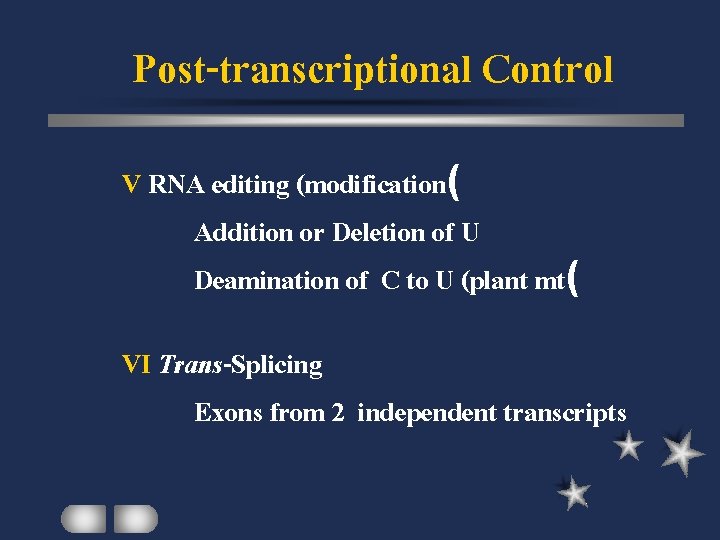
Post-transcriptional Control V RNA editing (modification( Addition or Deletion of U Deamination of C to U (plant mt( VI Trans-Splicing Exons from 2 independent transcripts
Post-transcriptional Gene Silencing PTGS: transcription without translation Found in plants and animals Also in protozoa, insects and nematodes Caused by transgene, virus or homologous ds. RNA
Transgene-induced PTGS Cosuppression Silencing of Endogenous gene Triggered by Transgene Silencing occurs at post-transcriptional level Homologous transcripts made & exported Rapid degradation in cytoplasm
Transgene-induced PTGS Petunia Transformed with pigment-producing gene Expected deep purple color Appeared variegated to white Transgene-induced gene silencing also at transcription gene-specific methylation
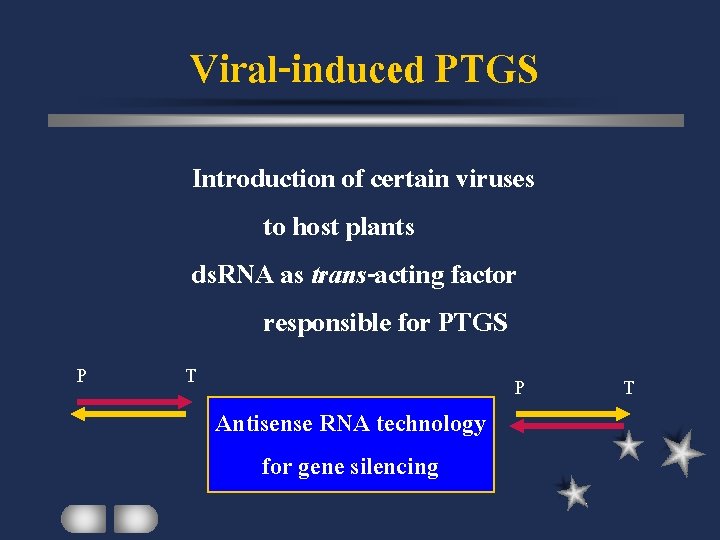
Viral-induced PTGS Introduction of certain viruses to host plants ds. RNA as trans-acting factor responsible for PTGS P T Antisense RNA technology for gene silencing P T
application RNA interference ds. RNA to knock out gene expression so called RNA interference or RNAi by initiating Small Interfering RNA (si. RNA( to induce silencing of endogenous transcript
RNAi Much more efficient than using either strand as in cosuppression or antisense technology Good for Gene Knockout studies easily and quickly create Loss-of-Function phenotypes Tool for Functional Genomics Study of Expressed Regions of Genome
Translational Control I m. RNA stability Bacterial RNA: 3 -minute half life Eukaryote: more stable esp. housekeeping m. RNA except for tx of regulatory proteins AU stretch at 3’ UTR activates RNA degradation by removing Poly A tail
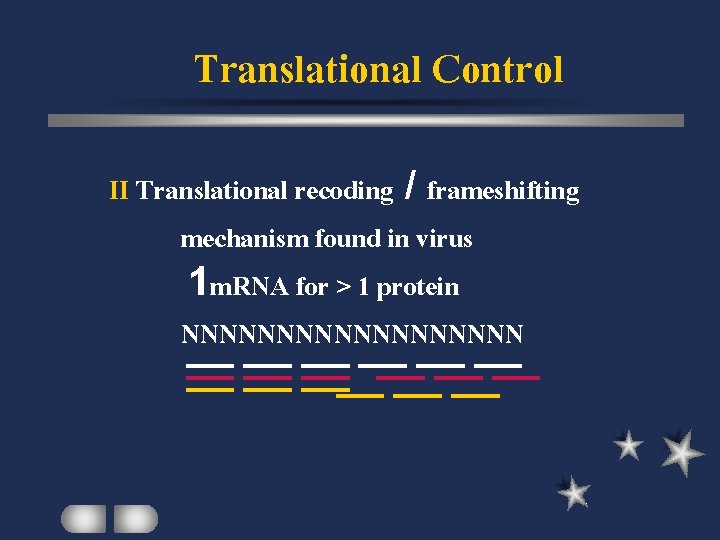
Translational Control II Translational recoding / frameshifting mechanism found in virus 1 m. RNA for > 1 protein NNNNNNNNN
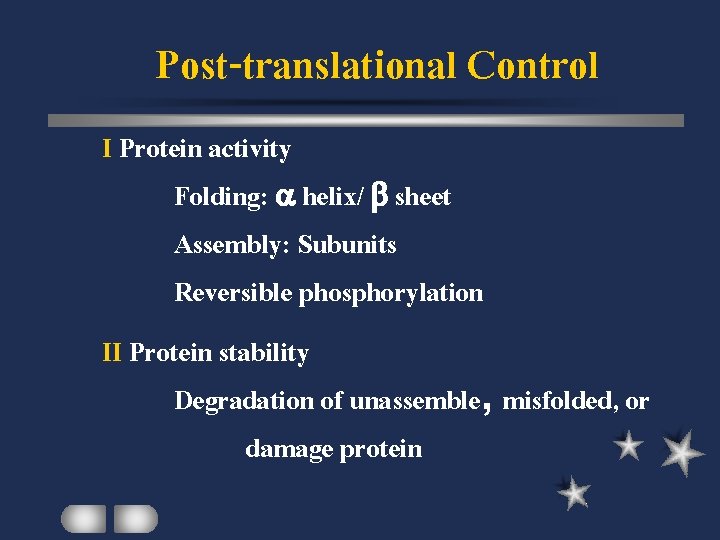
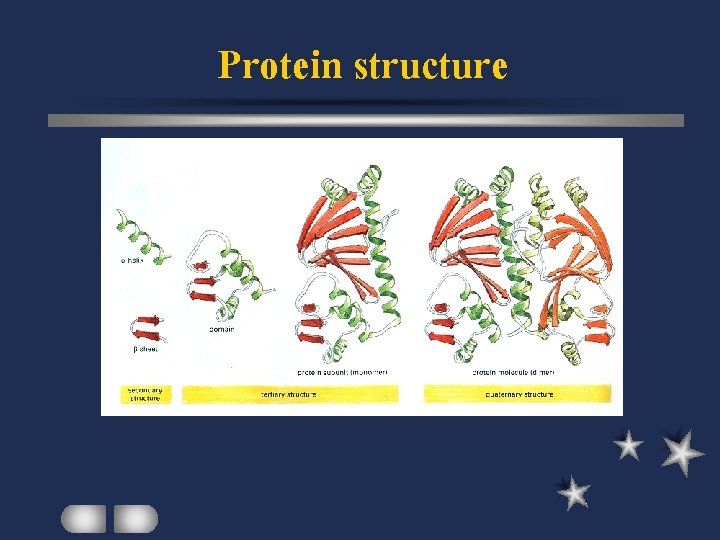
Post-translational Control I Protein activity Folding: a helix/ b sheet Assembly: Subunits Reversible phosphorylation II Protein stability Degradation of unassemble, misfolded, or damage protein
Protein structure