
PLANT Evolution Structural Adaptations n Vascular system roots
- Slides: 18
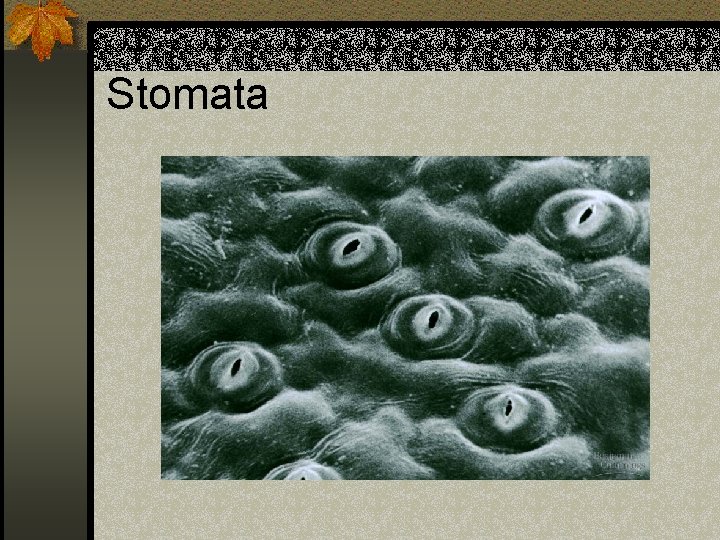
PLANT Evolution Structural Adaptations n Vascular system – roots and shoots (tracheophytes) n Mycorrhizae – fungal associations n Stomata and cuticle n Lignin – hardens cell walls – preventing water loss n Vascular tissues – xylem and phloem
Stomata
Reproductive Adaptations n Must keep gametes from drying out. n Gametangia – jacket surrounding moist chamber where gametes can develop n Sperm encased in pollen and egg in ovule
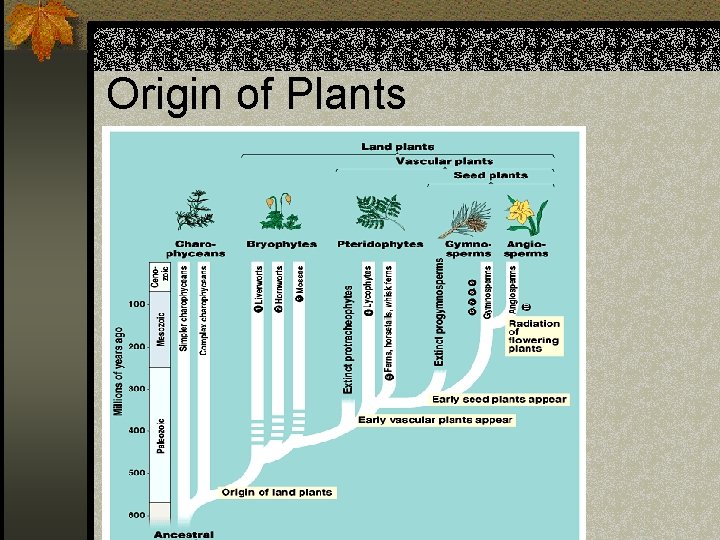
Origin from Algae n Charophytes – closest to plants in molecular studies n Natural selection favored those who could survive when not submerged in water
Origin of Plants
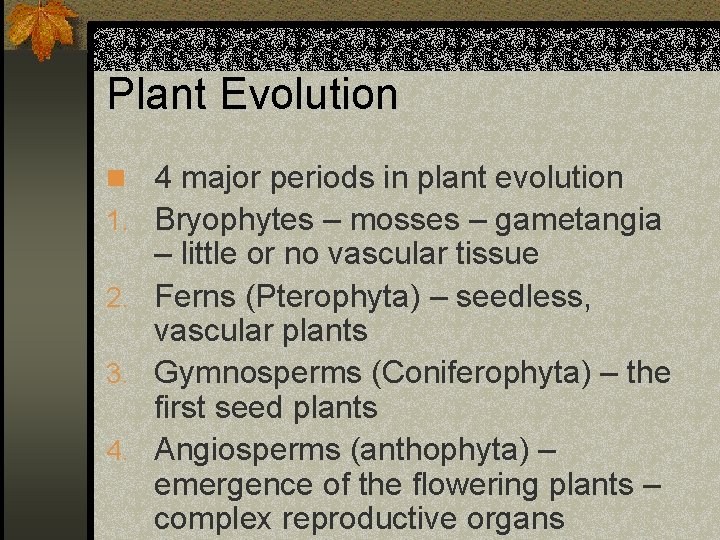
Plant Evolution n 4 major periods in plant evolution 1. Bryophytes – mosses – gametangia – little or no vascular tissue 2. Ferns (Pterophyta) – seedless, vascular plants 3. Gymnosperms (Coniferophyta) – the first seed plants 4. Angiosperms (anthophyta) – emergence of the flowering plants – complex reproductive organs
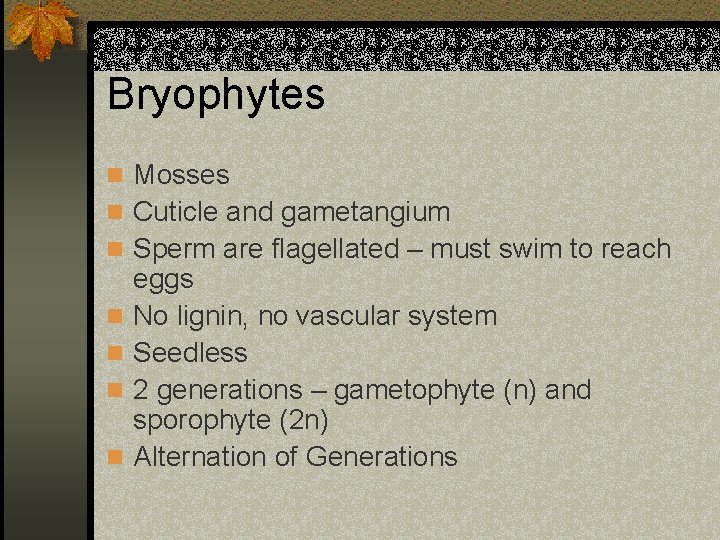
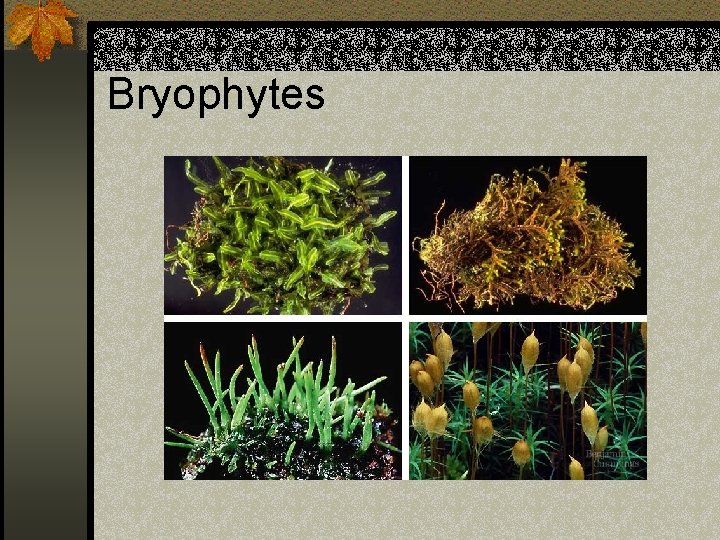
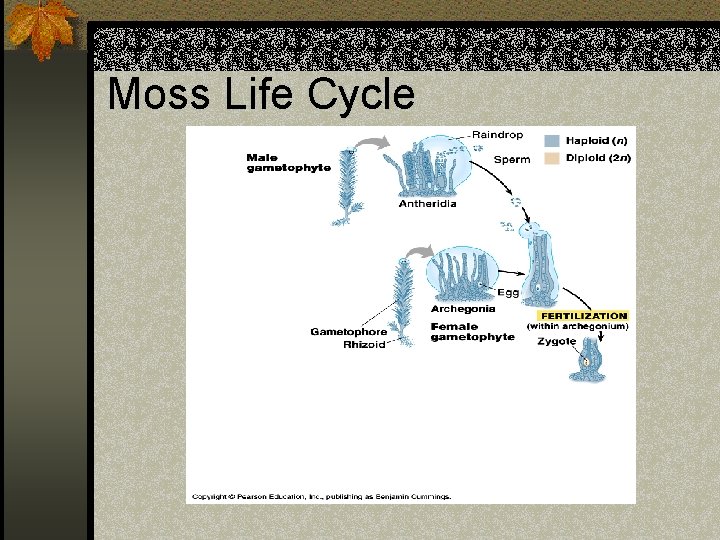
Bryophytes n Mosses n Cuticle and gametangium n Sperm are flagellated – must swim to reach n n eggs No lignin, no vascular system Seedless 2 generations – gametophyte (n) and sporophyte (2 n) Alternation of Generations
Bryophytes
Moss Life Cycle
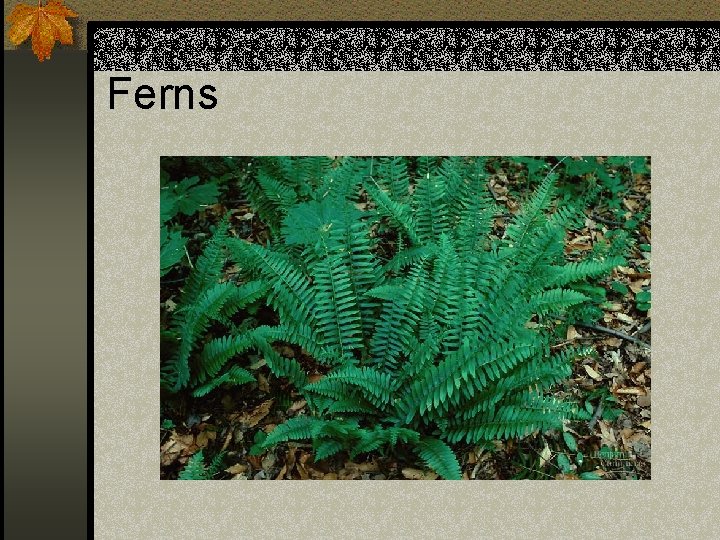
Ferns n Have vascular tissue n Sperm must swim through water to reach eggs n Seedless n Inhabit tropical areas
Ferns
Gymnosperms n At the end of the Carboniferous period – climate became cold and dry. n Provided opportunity for seed plants n Conifers – pine, spruce, firs, redwoods n Nearly all conifers are evergreen n Thick cuticle – stomata in pits
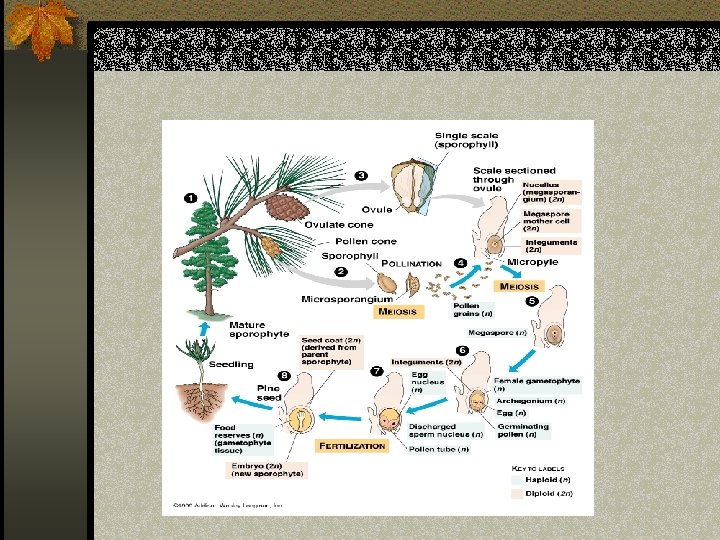
Life Cycle of Conifer n Sporophyte generation and gametophyte generation. n Use pollen grains to transport sperm n Seeds can remain dormant for years n Fire, rain, and animals can crack seeds and cause germination.
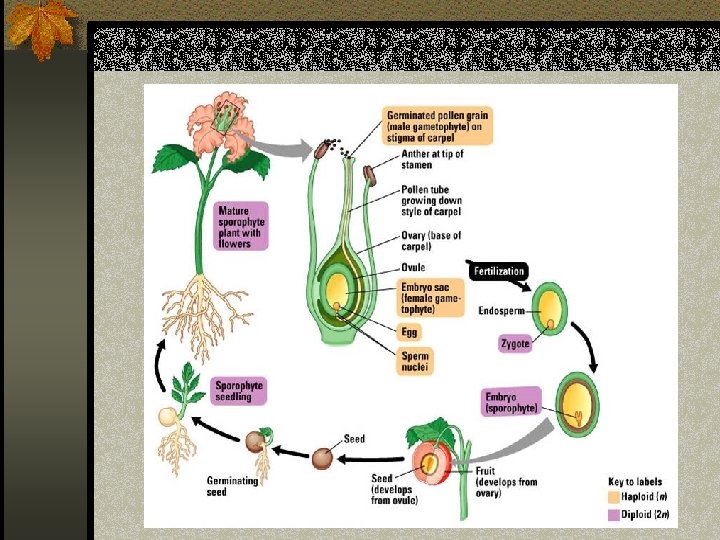
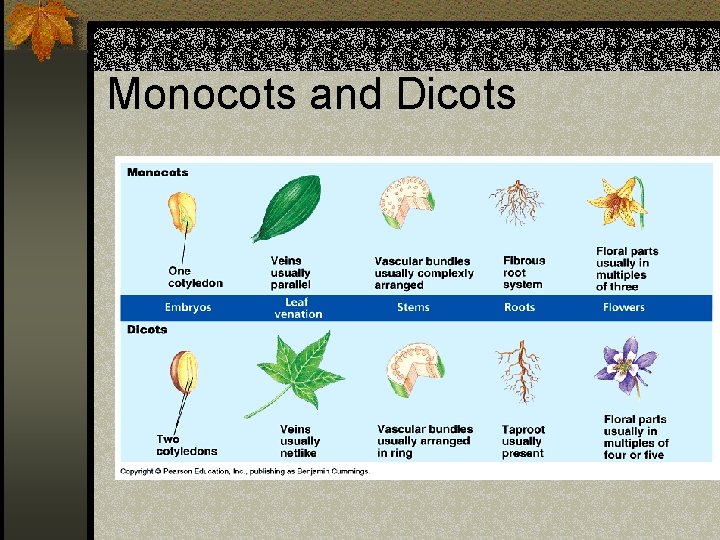
Angiosperms n 2 types of flowering plants – Monocots and Dicots n Undergo double fertilization Pollen deposits two sperm nuclei in the female gametophyte n One sperm fertilizes an egg- produces a zygote and develops into an embryo n The second fertilizes another female gametophyte cell which develops into an endosperm (nutrient storing tissue) n n A mature ovule is a seed, a mature ovary is the fruit
Monocots and Dicots
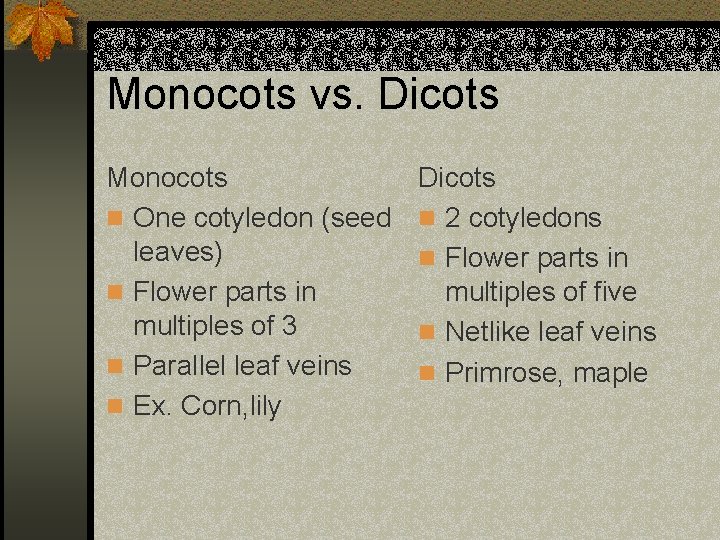
Monocots vs. Dicots Monocots n One cotyledon (seed leaves) n Flower parts in multiples of 3 n Parallel leaf veins n Ex. Corn, lily Dicots n 2 cotyledons n Flower parts in multiples of five n Netlike leaf veins n Primrose, maple