
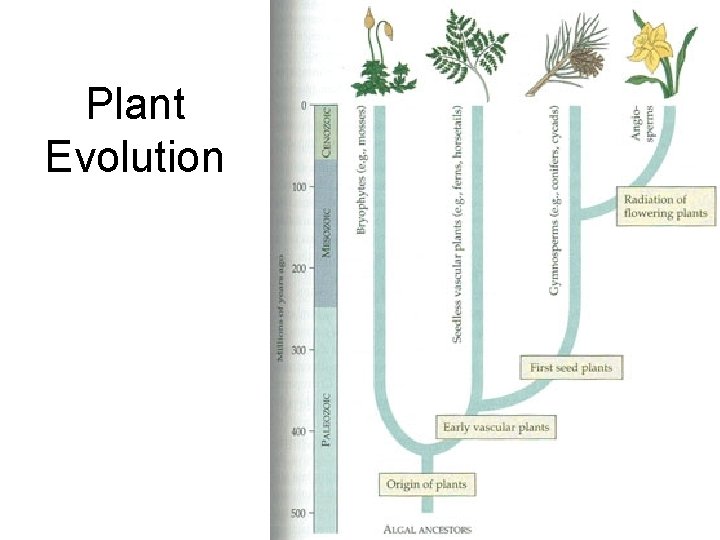
Plant Evolution Plant Evolution Evolved from green algae
- Slides: 9
Plant Evolution
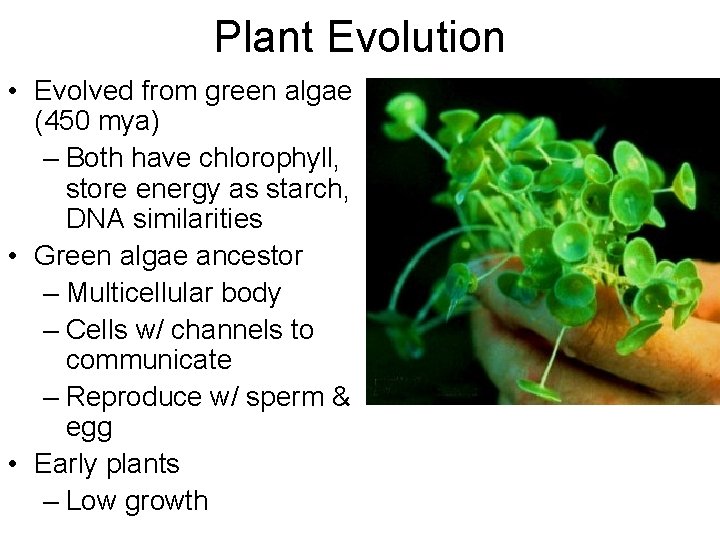
Plant Evolution • Evolved from green algae (450 mya) – Both have chlorophyll, store energy as starch, DNA similarities • Green algae ancestor – Multicellular body – Cells w/ channels to communicate – Reproduce w/ sperm & egg • Early plants – Low growth
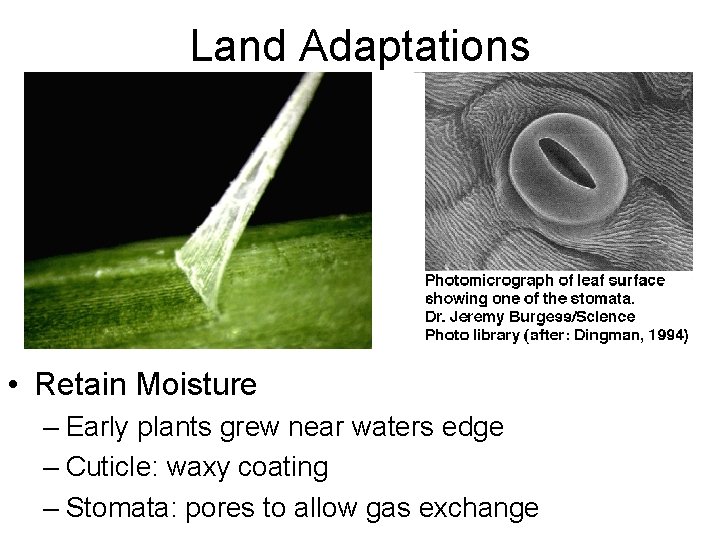
Land Adaptations • Retain Moisture – Early plants grew near waters edge – Cuticle: waxy coating – Stomata: pores to allow gas exchange
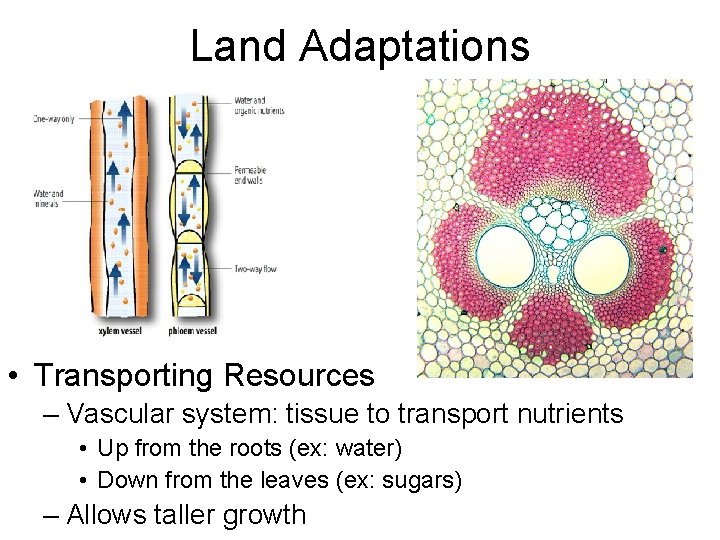
Land Adaptations • Transporting Resources – Vascular system: tissue to transport nutrients • Up from the roots (ex: water) • Down from the leaves (ex: sugars) – Allows taller growth
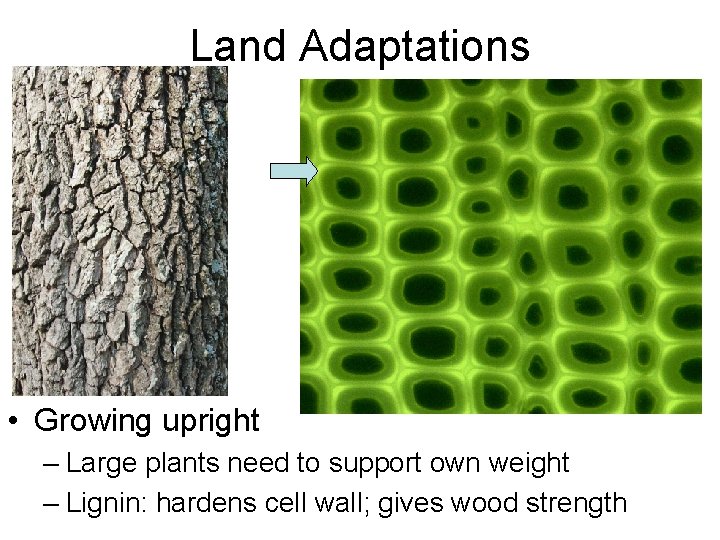
Land Adaptations • Growing upright – Large plants need to support own weight – Lignin: hardens cell wall; gives wood strength
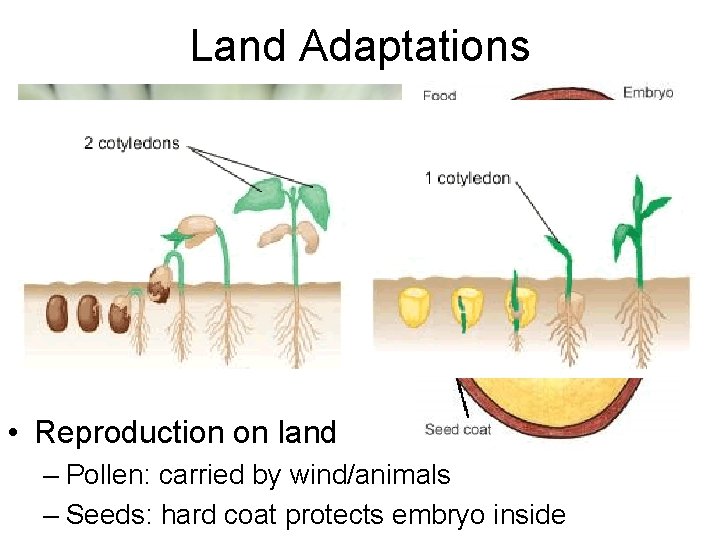
Land Adaptations • Reproduction on land – Pollen: carried by wind/animals – Seeds: hard coat protects embryo inside
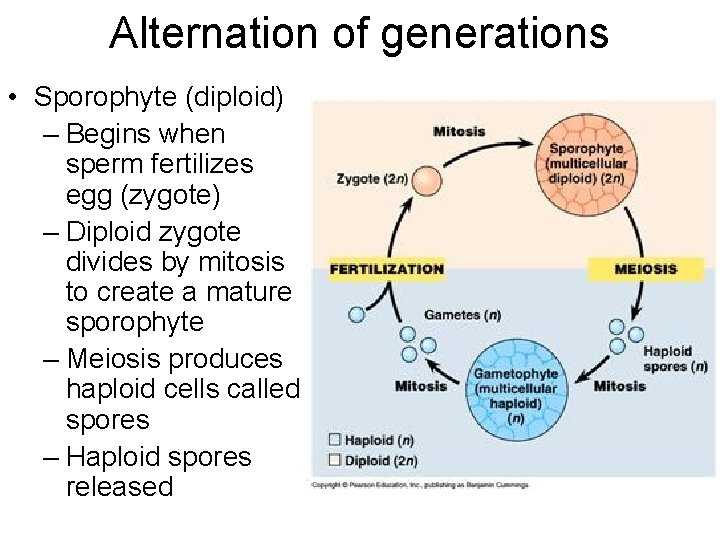
Alternation of generations • Sporophyte (diploid) – Begins when sperm fertilizes egg (zygote) – Diploid zygote divides by mitosis to create a mature sporophyte – Meiosis produces haploid cells called spores – Haploid spores released
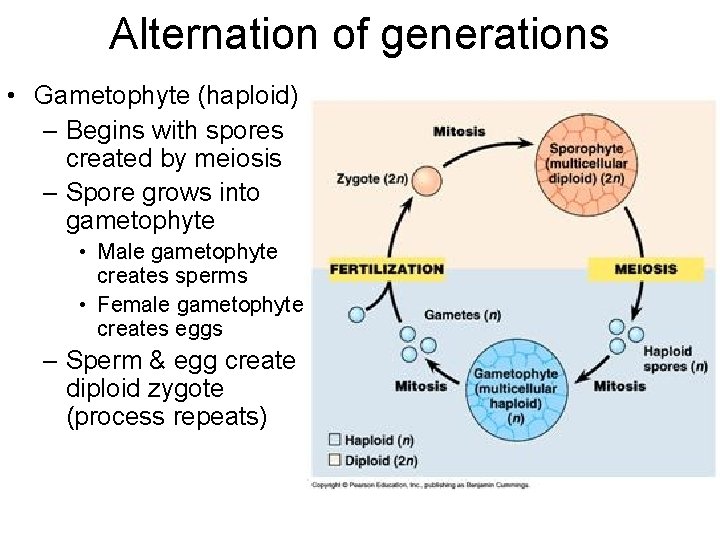
Alternation of generations • Gametophyte (haploid) – Begins with spores created by meiosis – Spore grows into gametophyte • Male gametophyte creates sperms • Female gametophyte creates eggs – Sperm & egg create diploid zygote (process repeats)
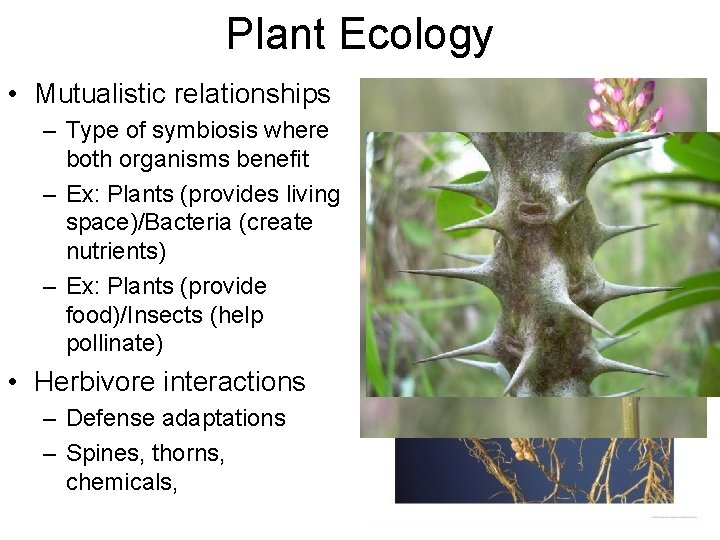
Plant Ecology • Mutualistic relationships – Type of symbiosis where both organisms benefit – Ex: Plants (provides living space)/Bacteria (create nutrients) – Ex: Plants (provide food)/Insects (help pollinate) • Herbivore interactions – Defense adaptations – Spines, thorns, chemicals,