
PLANT EVOLUTION Evolutionary Trends Bryophytes The rise of
PLANT EVOLUTION Evolutionary Trends Bryophytes The rise of the vascular plants The rise of the seed plants
KINGDOM PLANTAE: GENERAL CHARACTERISTICS Eukaryotic, photosynthetic autotrophs Cell walls made of cellulose Unicellular or Multicellular Sexual & Asexual reproduction All plants undergo a life cycle that takes them through both haploid and diploid generations, called alternation of generations
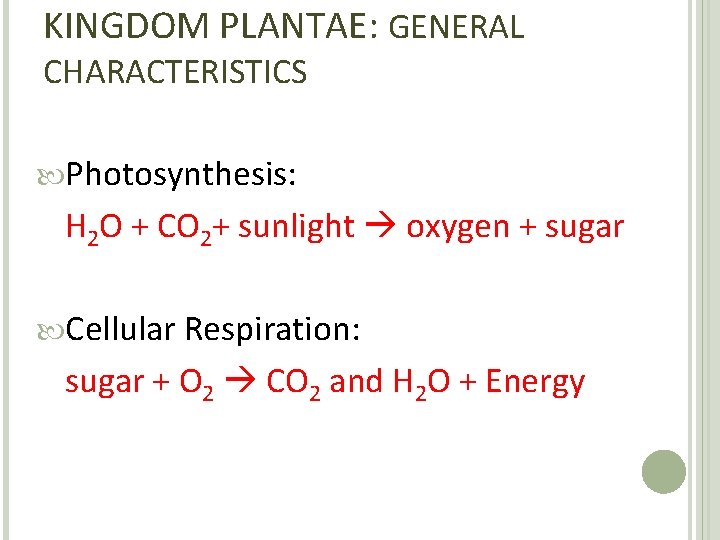
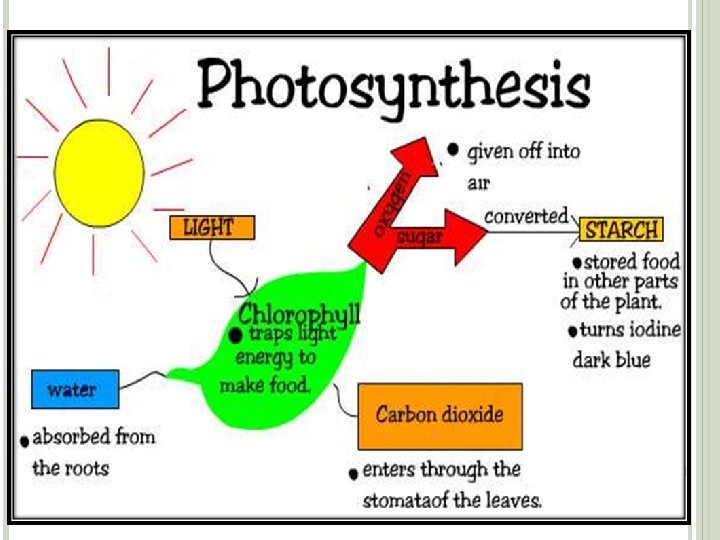
KINGDOM PLANTAE: GENERAL CHARACTERISTICS Photosynthesis: H 2 O + CO 2+ sunlight oxygen + sugar Cellular Respiration: sugar + O 2 CO 2 and H 2 O + Energy
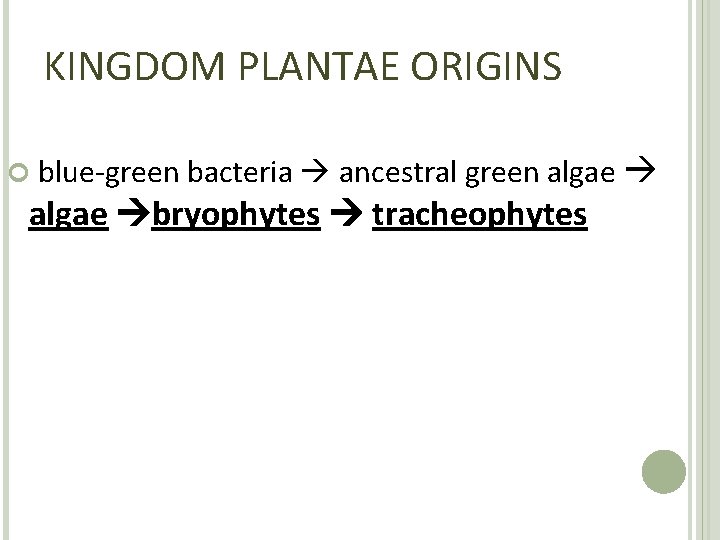
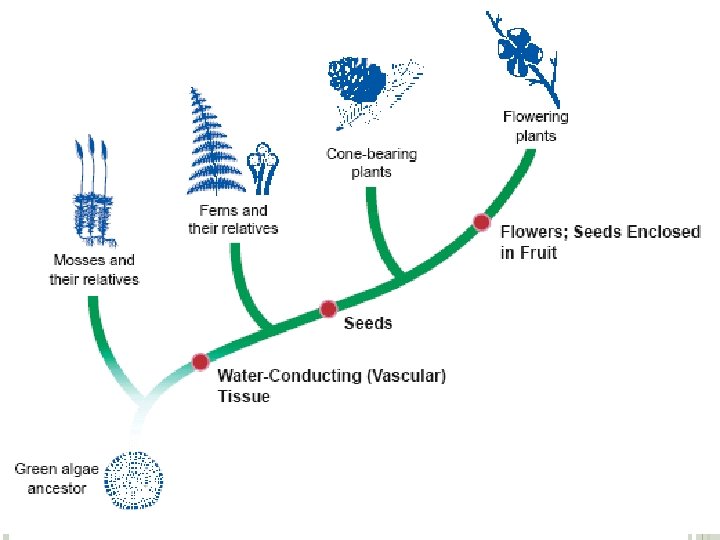
KINGDOM PLANTAE ORIGINS blue-green bacteria ancestral green algae bryophytes tracheophytes
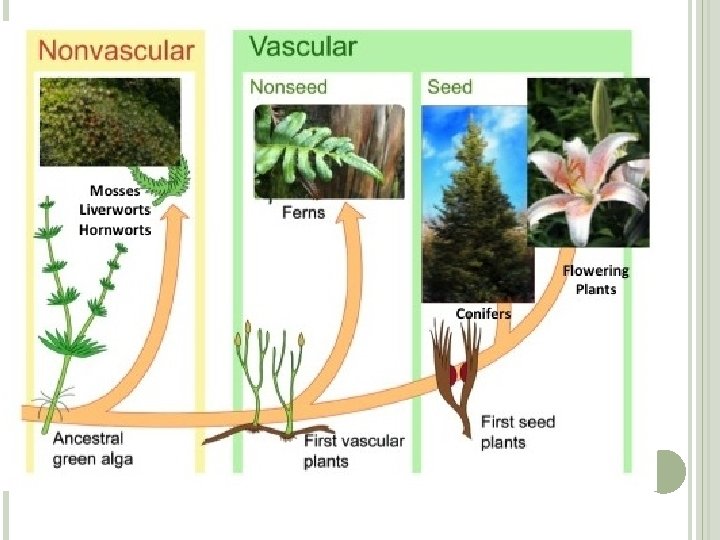
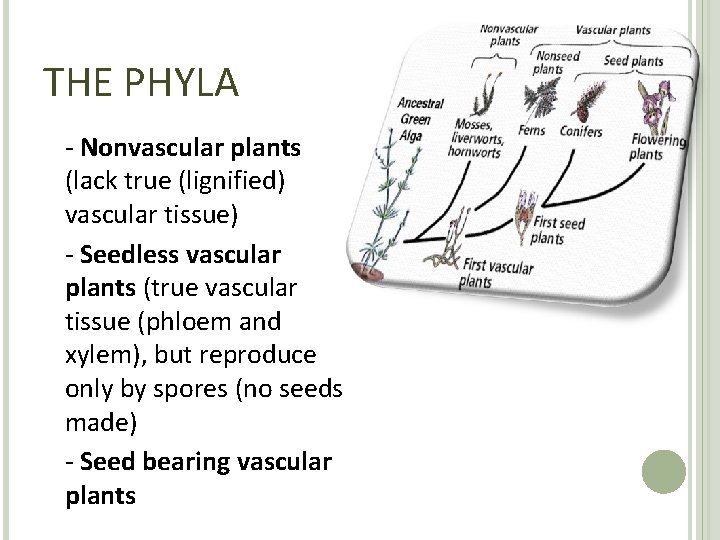
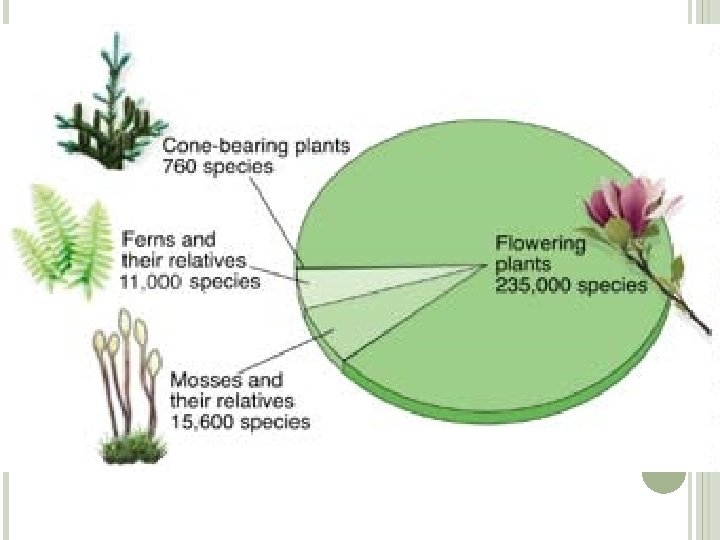
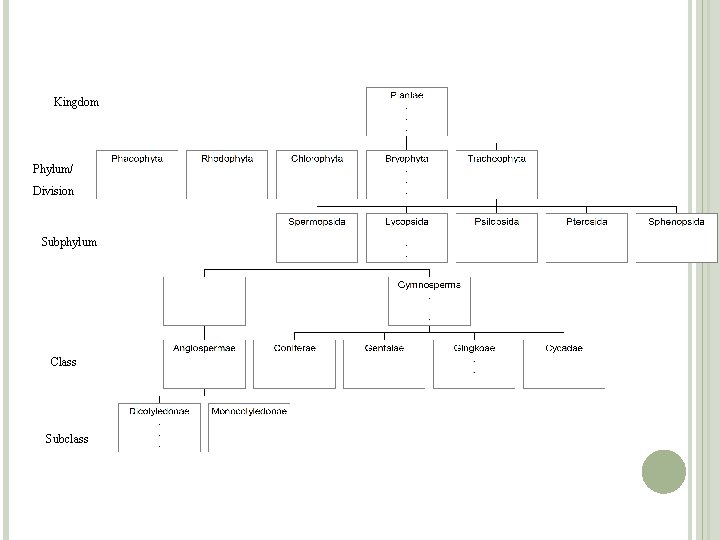
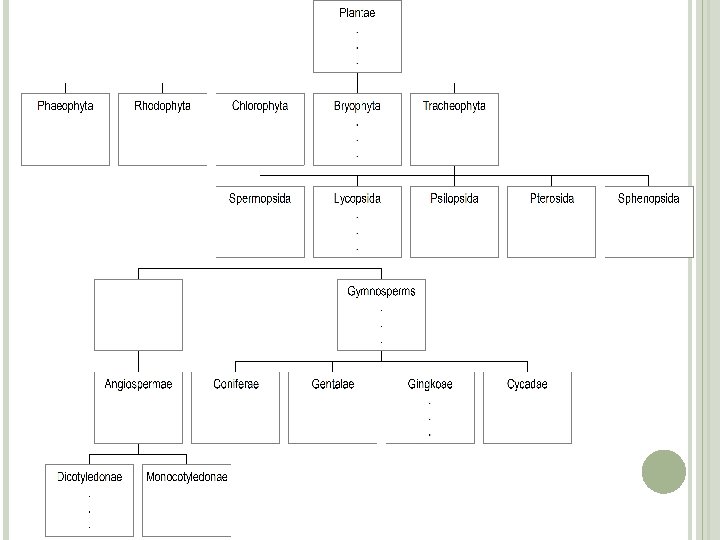
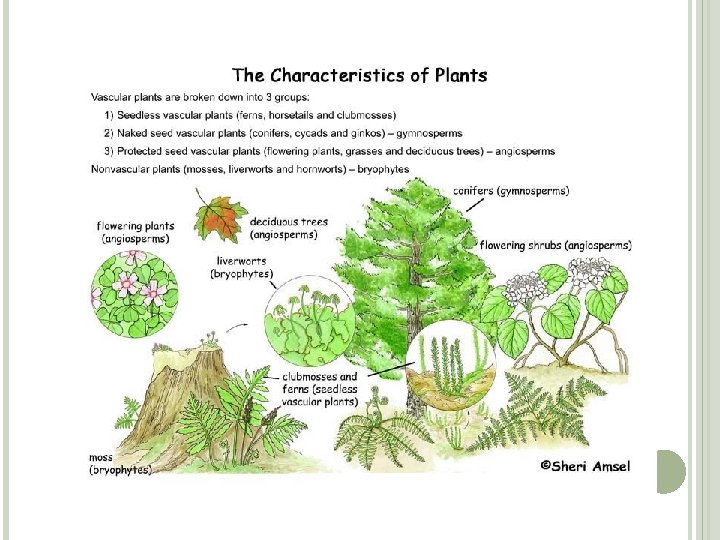
THE PHYLA - Nonvascular plants (lack true (lignified) vascular tissue) - Seedless vascular plants (true vascular tissue (phloem and xylem), but reproduce only by spores (no seeds made) - Seed bearing vascular plants
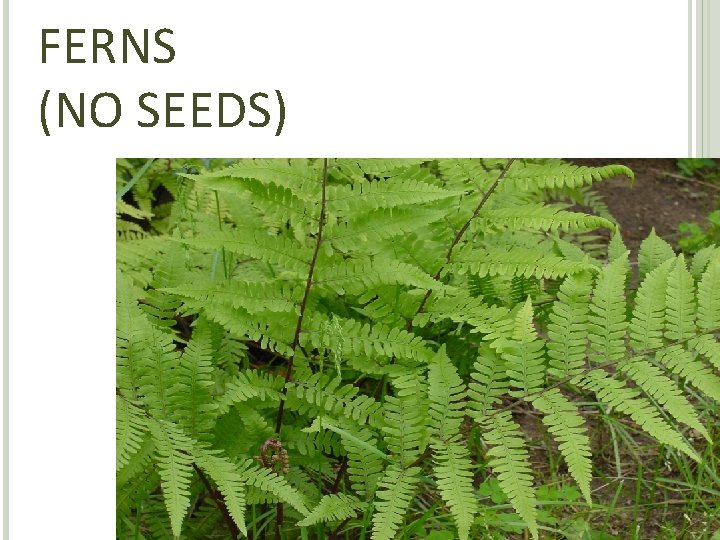
FERNS (NO SEEDS)
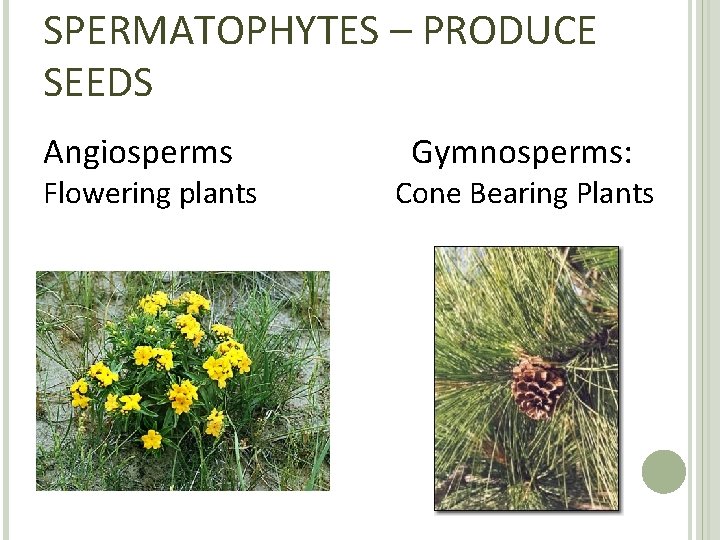
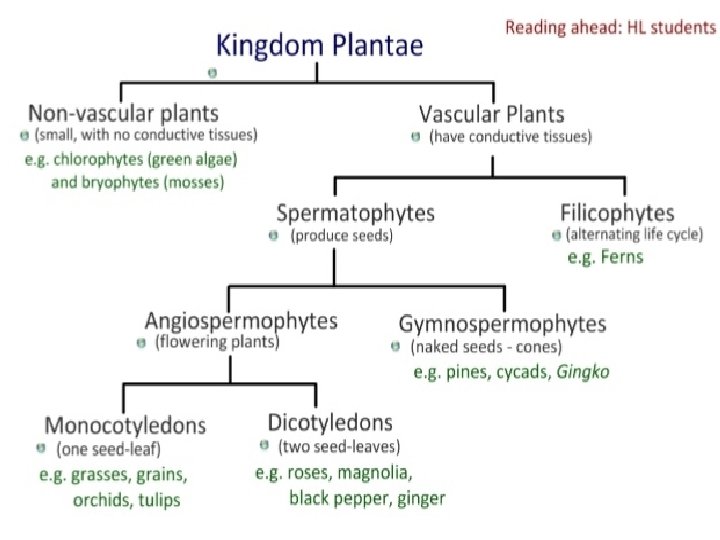
SPERMATOPHYTES – PRODUCE SEEDS Angiosperms Flowering plants Gymnosperms: Cone Bearing Plants

EVOLUTIONARY TRENDS
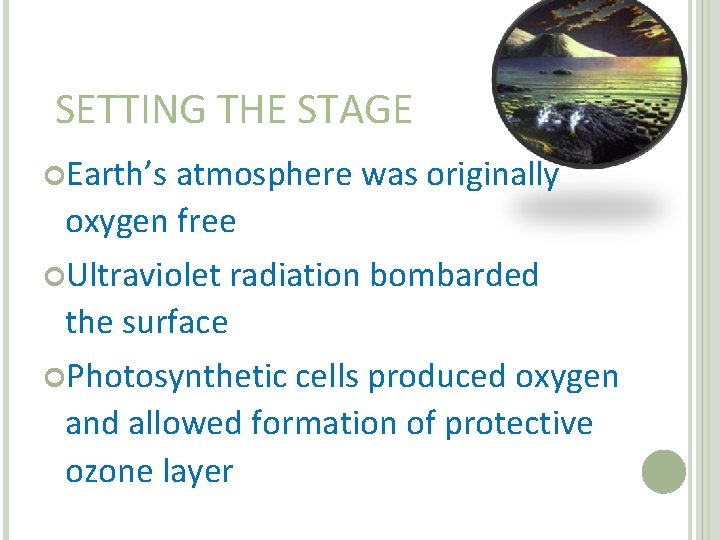
SETTING THE STAGE Earth’s atmosphere was originally oxygen free Ultraviolet radiation bombarded the surface Photosynthetic cells produced oxygen and allowed formation of protective ozone layer
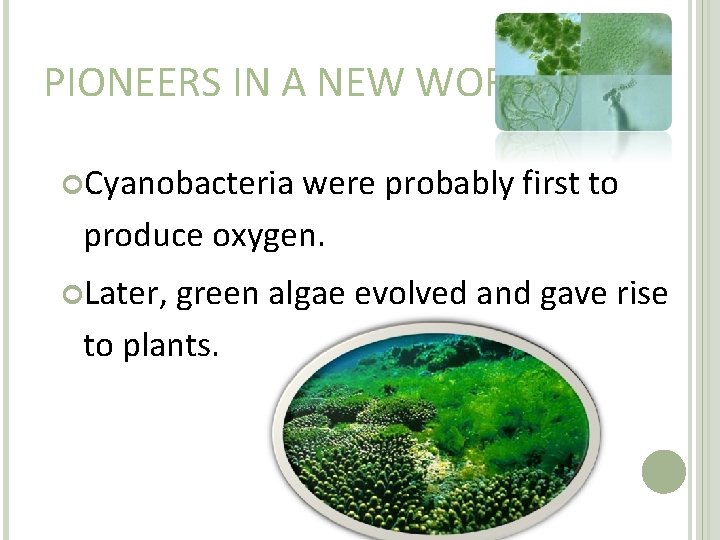
PIONEERS IN A NEW WORLD Cyanobacteria were probably first to produce oxygen. Later, green algae evolved and gave rise to plants.
STRUCTURE: AQUATIC PLANTS Plants originated from the sea which provided: support, Constant temperature, bathe whole plant with nutrients, Medium for reproduction.
ADVANTAGES AND DISADVANTAGES OF LIFE ON LAND Advantages: Disadvantages: Sunlight Relative unfiltered by water and plankton more CO 2 in atmosphere than water Soil was rich in mineral nutrients Originally relatively few herbivores and pathogens scarcity of water Need structural support against gravity
STRUCTURAL ADAPTATIONS Plants that live on land need to support themselves. What structural adaptations would be needed to stay upright? Where do they get their nutrients from? What do they need to get these? How to get the water up to the leaves? How do they get sunlight? How will they prevent water loss?
STRUCTURAL ADAPTATIONS TO TERRESTRIAL LIFE Roots to anchor and absorb water and nutrients Specialized tissue for transporting water and dissolved nutrients from roots to the plants' leaves and stem. Stiffening lignin to support the plant Waxy cuticle on leaves and stem to prevent evaporation. Pores in leaves called Stomata open to allow gas exchange, but close to prevent water loss
EVOLUTIONARY TRENDS IN REPRODUCTION: Algae live and reproduce in water: gametes released into and carried by water, Gametes meet in water Zygotes disperse in water. What do land plants need?
EVOLUTIONARY TRENDS IN REPRODUCTION: Land plants needed: Flowers, pollen to transport gametes Seeds to protect gametes from drying out Seed coats and fruits for zygote dispersal
AMEBA SISTERS Plant structure and Adaptations https: //www. youtube. com/watch? v=DGp. PHr. LF-5 M
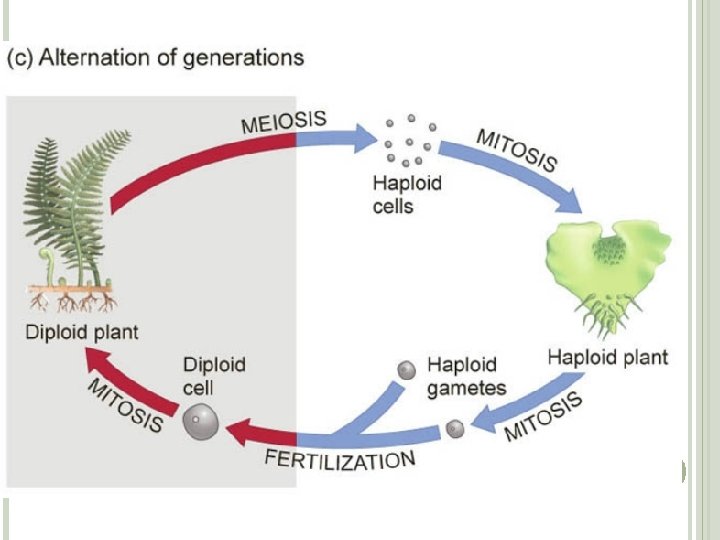
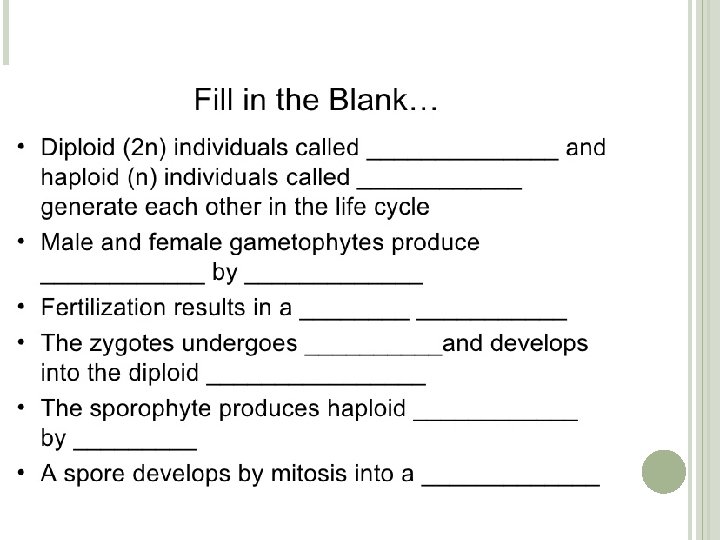
REVIEW SEXUAL AND ASEXUAL REPRO Asexual – one parent, new cells/individuals created by cells splitting in two (mitosis) Sexual – two parents, specialized cells (haploid gametes, created by meiosis) fuse to make diploid zygote. Haploid (n) – 1 set eg. gametes Diploid (2 n) – 2 sets of chromosomes

Ameba Sisters: Asexual vs Sexual Repro, 5 min https: //www. youtube. com/watch? v=fc. GDUc. Gjcyk Forms of Asexual Repro https: //www. youtube. com/watch? v=i 9 zj 9 V 8 OWRk
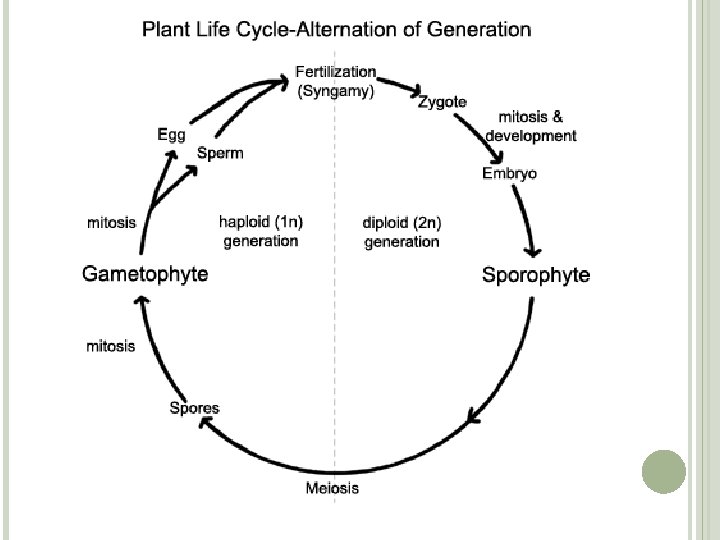
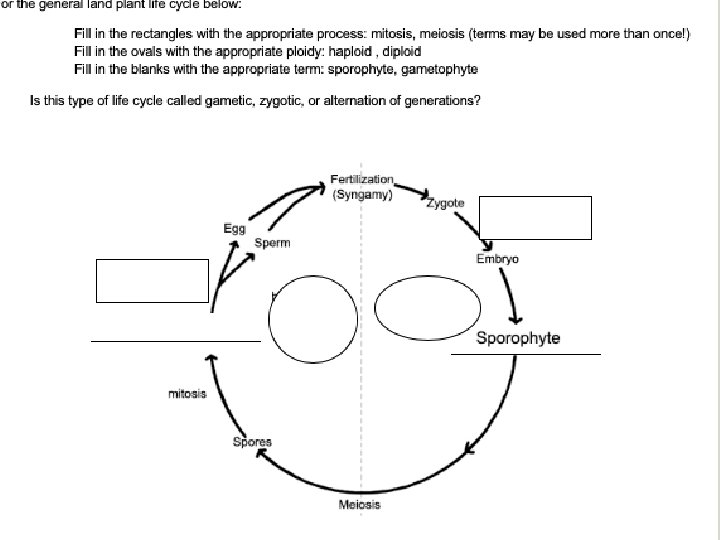
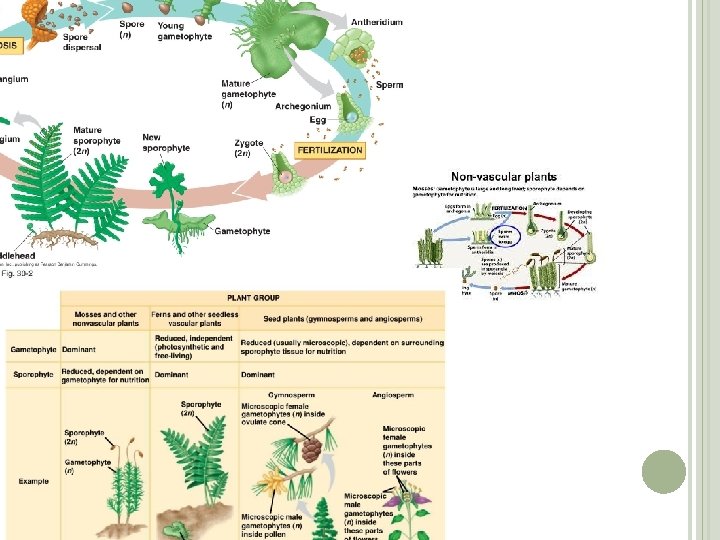
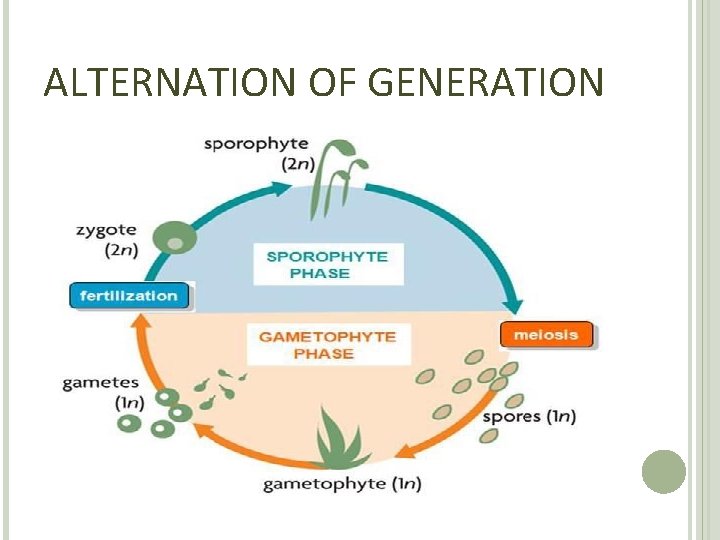
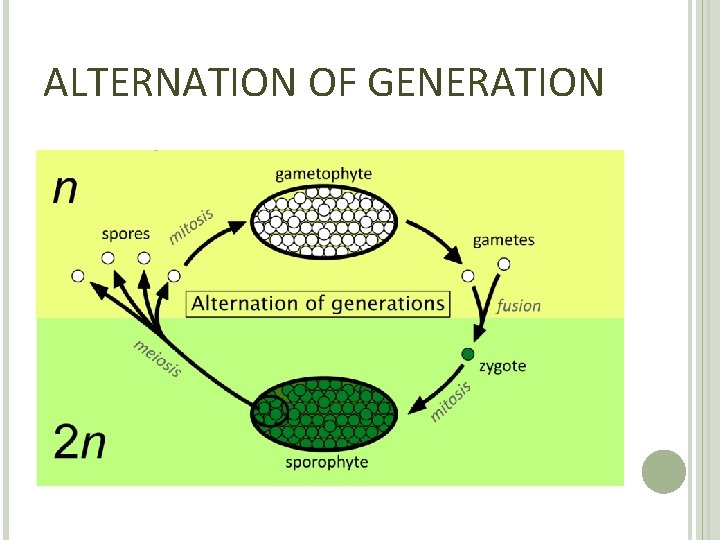
ALTERNATION OF GENERATIONS Also called metagenesis or heterogenesis The alternation of a sexual phase and an asexual phase in the life cycle. The two phases, or generations, are often morphologically, and chromosomally, distinct. Unique to plants
HAPLOID TO DIPLOID Gametophyte – produces gametes, Haploid (n) individual Sporophyte - produces spores (spore = resting structure), Diploid (2 n) product of fused gametes, The most recently evolved groups produce seeds and pollen grains which were the key innovations that allowed the seed plants to spread widely into diverse habitats.
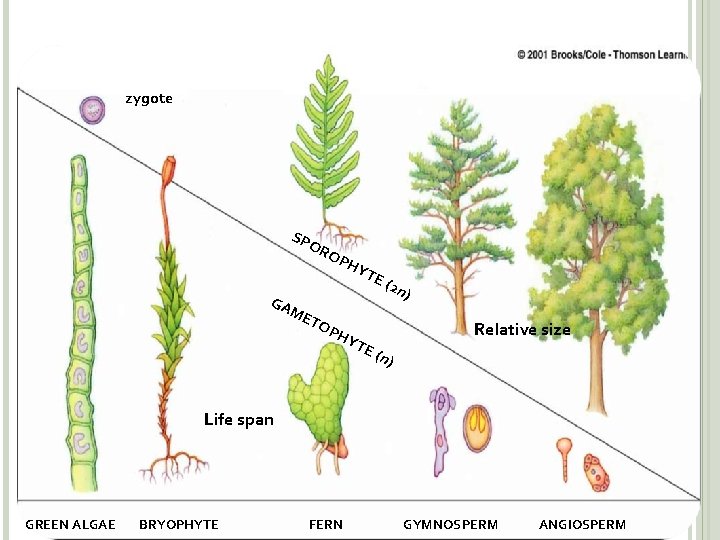
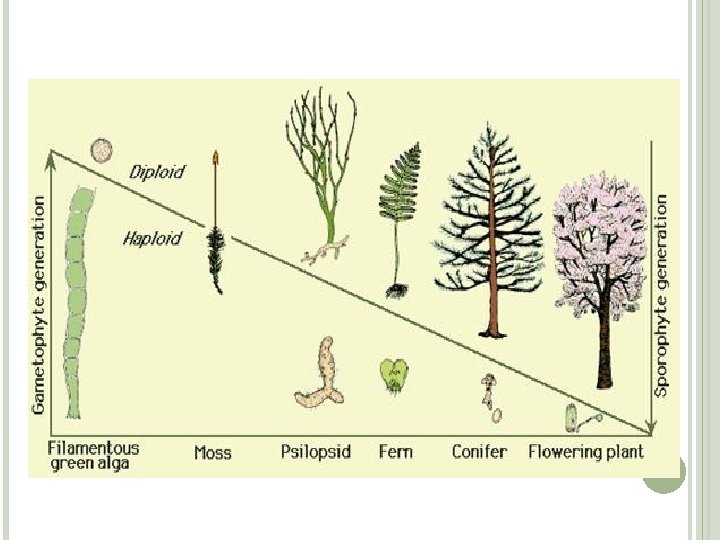
EVOLUTIONARY TREND zygote SP OR GA OP H ME T YT E (2 OP HY TE n) Relative size ( n) Life span GREEN ALGAE BRYOPHYTE FERN GYMNOSPERM ANGIOSPERM
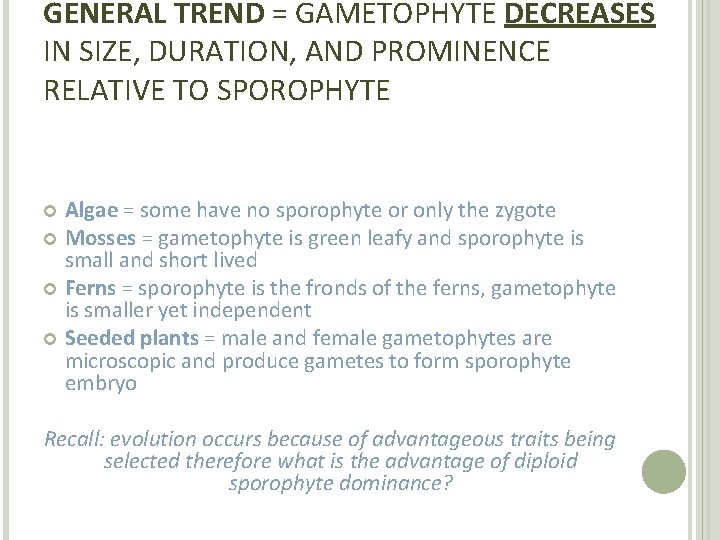
GENERAL TREND = GAMETOPHYTE DECREASES IN SIZE, DURATION, AND PROMINENCE RELATIVE TO SPOROPHYTE Algae = some have no sporophyte or only the zygote Mosses = gametophyte is green leafy and sporophyte is small and short lived Ferns = sporophyte is the fronds of the ferns, gametophyte is smaller yet independent Seeded plants = male and female gametophytes are microscopic and produce gametes to form sporophyte embryo Recall: evolution occurs because of advantageous traits being selected therefore what is the advantage of diploid sporophyte dominance?
SPOROPHYTE The generation in the life cycle of a plant that produces spores. Is diploid but its spores are haploid. Either completely or partially dependent on the gametophyte generation in mosses and liverworts, but is the dominant plant in the life cycle of clubmosses, horsetails, ferns and seed plants.
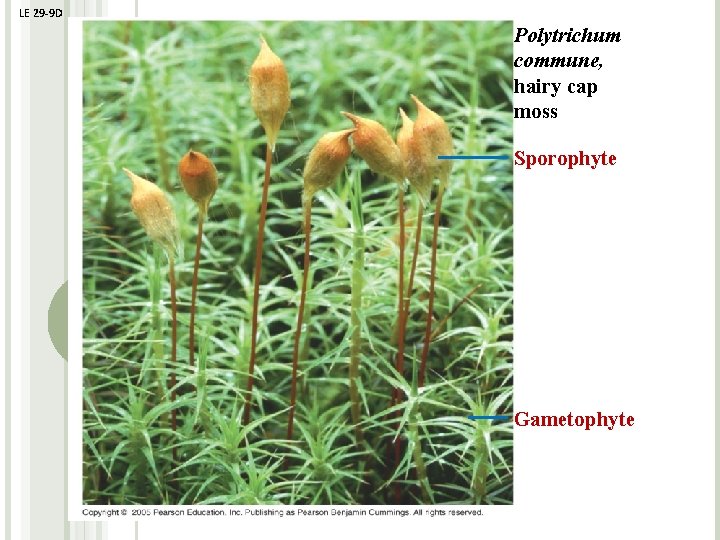
LE 29 -9 D Polytrichum commune, hairy cap moss Sporophyte Gametophyte
WHY BOTHER? Plants alternate between diploid sporophyte and haploid gametophyte generations, and between sexual and asexual reproduction. The ability to reproduce both sexually and asexually gives plants the flexibility to adapt to changing environments. Their complex life cycle allows for great variation.

PRACTICE Alternating Generation WS

EXTRAS
Kingdom Phylum/ Division Subphylum Class Subclass
ALTERNATION OF GENERATION
ALTERNATION OF GENERATION
- Slides: 44