
Plant Evolution and Classification Natural Selection Adapting To

- Slides: 11
Plant Evolution and Classification Natural Selection
Adapting To Land • First plants had no roots – Aquatic plants took nutrients from surrounding water – Land plants had symbiotic relationship with fungi
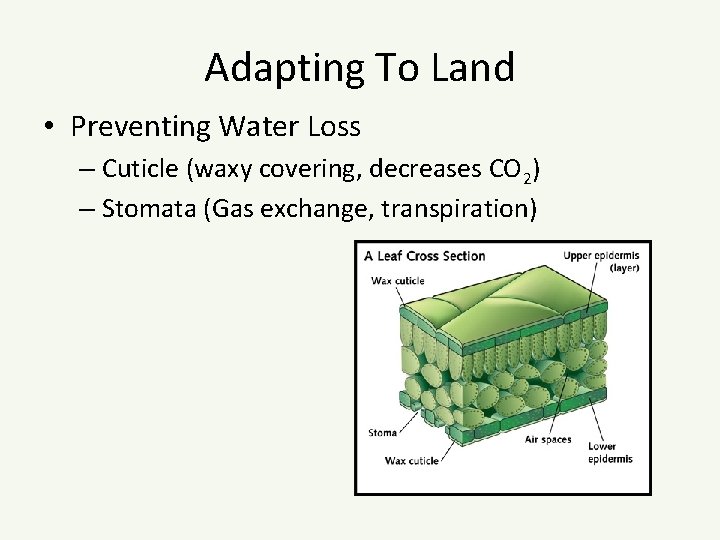
Adapting To Land • Preventing Water Loss – Cuticle (waxy covering, decreases CO 2) – Stomata (Gas exchange, transpiration)
Adapting To Land • Reproducing by Spores and Seeds – Spore haploid cell with protective covering – Seed is embryo with protective covering • Some have endosperm that act as nutrients for embryo • Absorbing and Transporting Materials – Vascular tissue, support plants • Xylem, transports H 2 O and inorganic nutrients , one way • Phloem, transports carbohydrates and inorganic nutrients, wherever needed
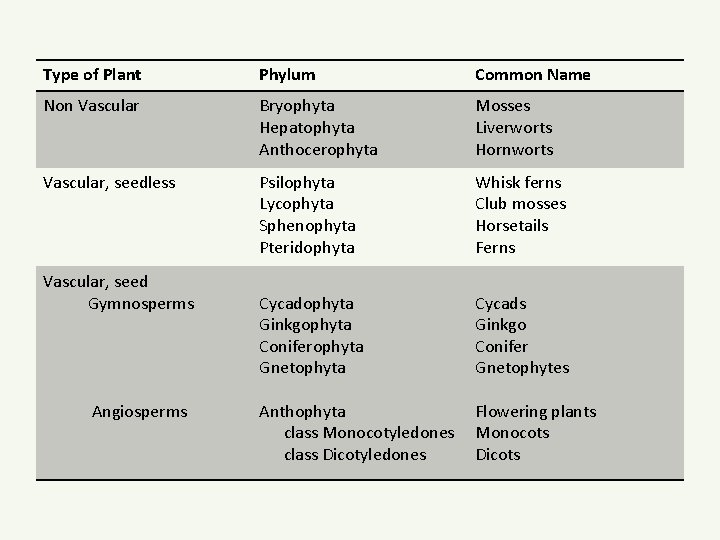
Classifying Plants • Plants evolved from algal ancestors • Evidence of this relationship • common photosynthetic pigments • Store energy as starch • Cell walls made of cellulose • Nonvascular – Does not have vascular tissue or true roots, stems, or leaves • Vascular – Has vascular tissue, true roots, stems, and leaves – seedless (spore) or seed
Type of Plant Phylum Common Name Non Vascular Bryophyta Hepatophyta Anthocerophyta Mosses Liverworts Hornworts Vascular, seedless Psilophyta Lycophyta Sphenophyta Pteridophyta Whisk ferns Club mosses Horsetails Ferns Cycadophyta Ginkgophyta Coniferophyta Gnetophyta Cycads Ginkgo Conifer Gnetophytes Anthophyta class Monocotyledones class Dicotyledones Flowering plants Monocots Dicots Vascular, seed Gymnosperms Angiosperms
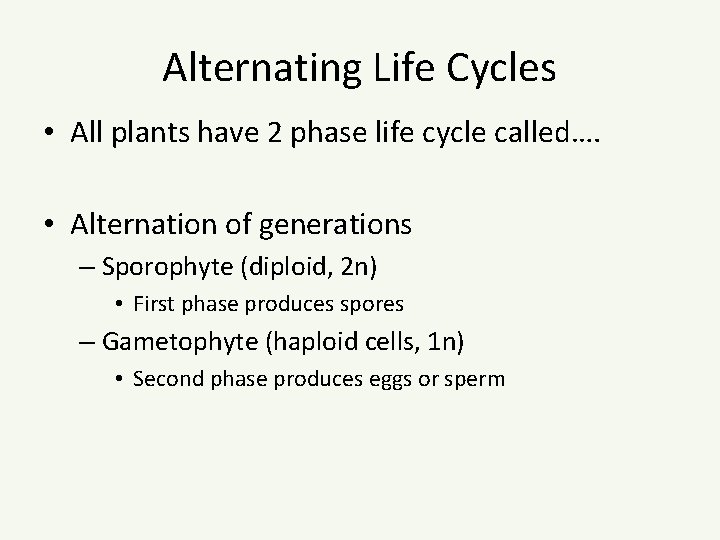
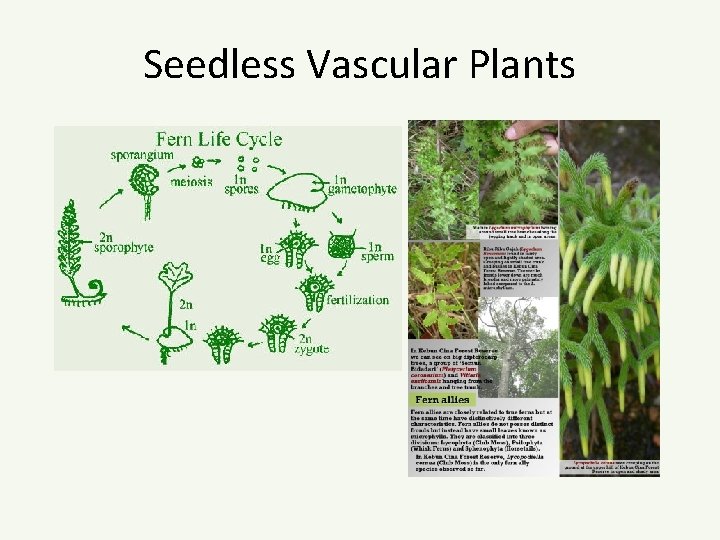
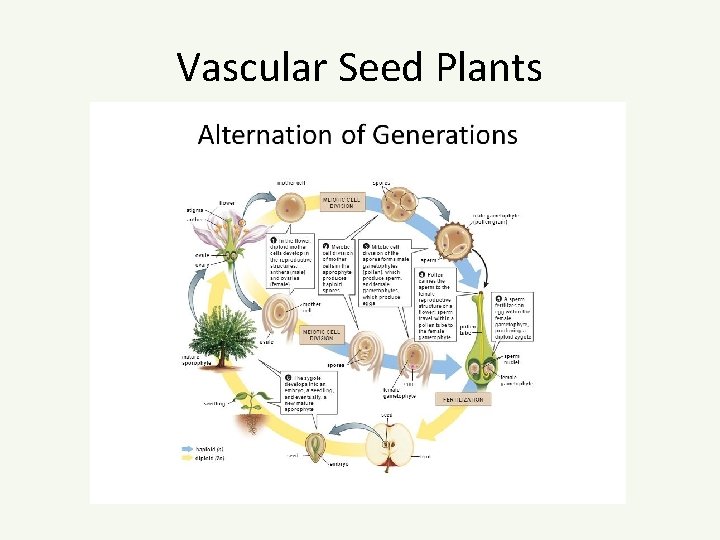
Alternating Life Cycles • All plants have 2 phase life cycle called…. • Alternation of generations – Sporophyte (diploid, 2 n) • First phase produces spores – Gametophyte (haploid cells, 1 n) • Second phase produces eggs or sperm
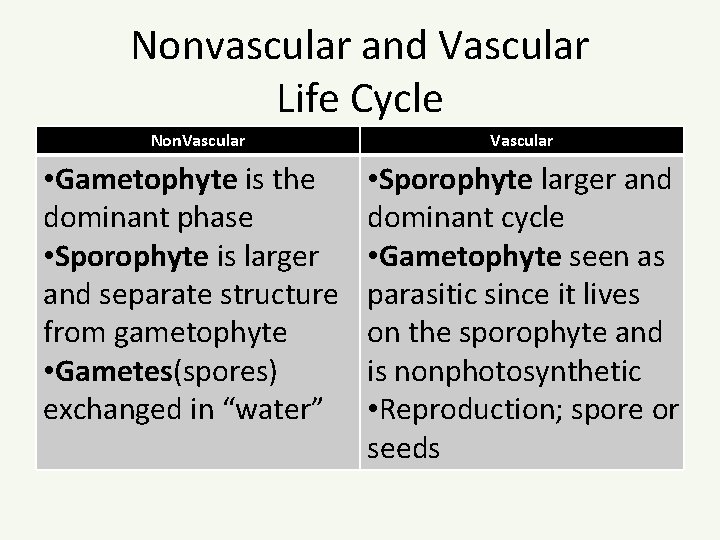
Nonvascular and Vascular Life Cycle Non. Vascular • Gametophyte is the dominant phase • Sporophyte is larger and separate structure from gametophyte • Gametes(spores) exchanged in “water” Vascular • Sporophyte larger and dominant cycle • Gametophyte seen as parasitic since it lives on the sporophyte and is nonphotosynthetic • Reproduction; spore or seeds
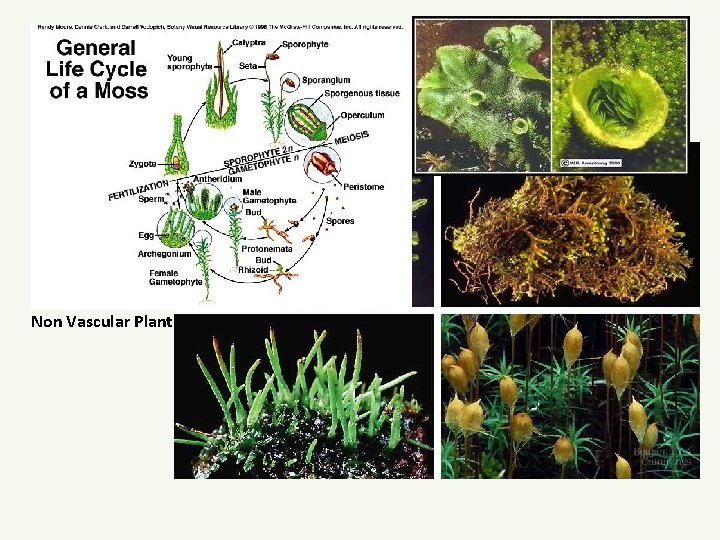
Non Vascular Plant
Seedless Vascular Plants
Vascular Seed Plants