
Plant Evolution and Classification Chapter 24 Key Concepts

- Slides: 21
Plant Evolution and Classification Chapter 24
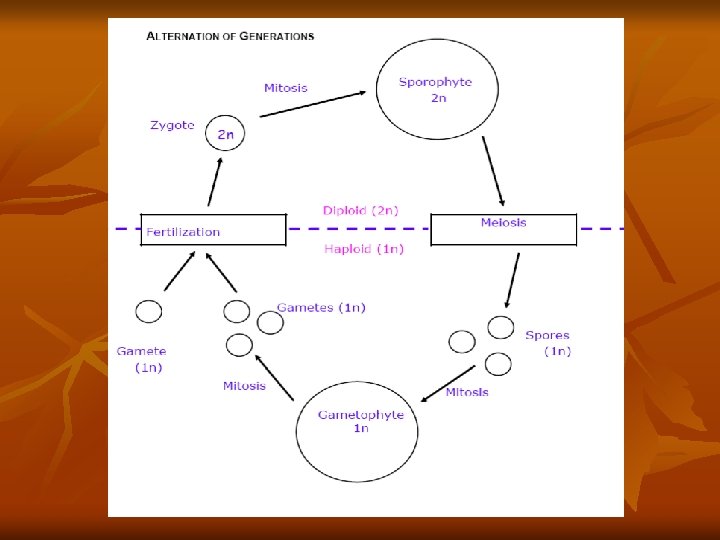
Key Concepts n n n Plants moving from water to land Classification of plants Alternation of generations
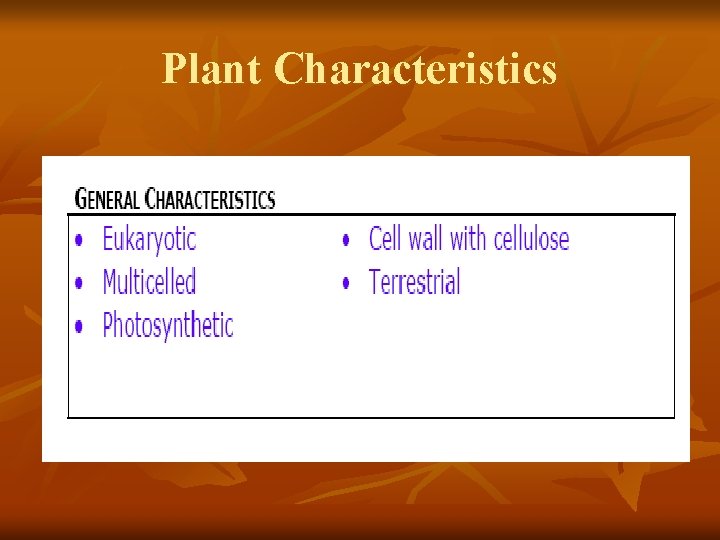
Plant Characteristics
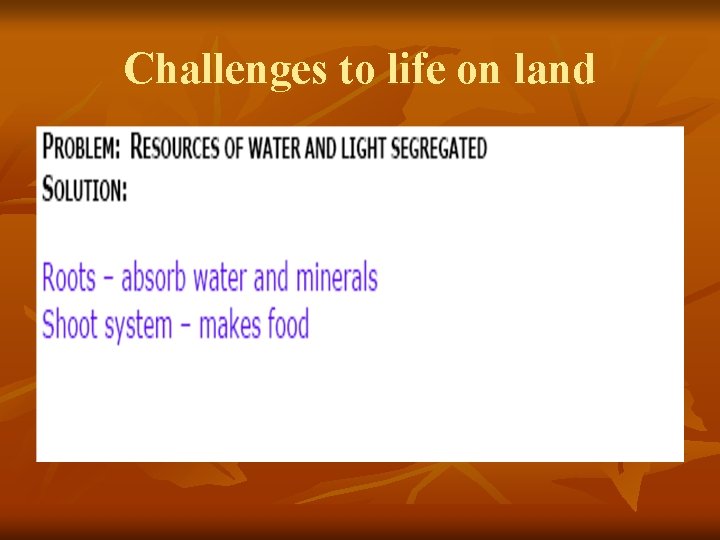
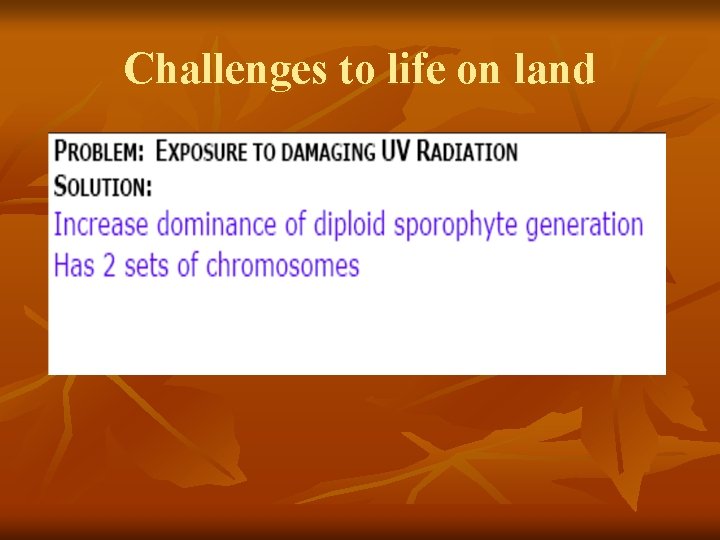
Challenges to life on land
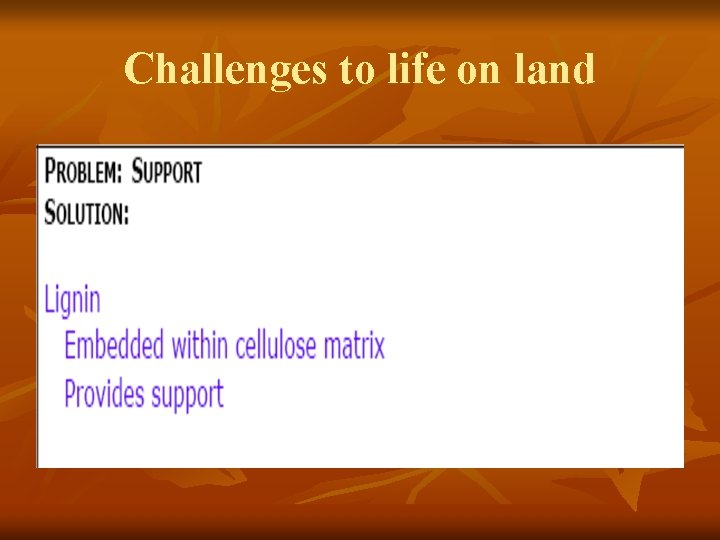
Challenges to life on land
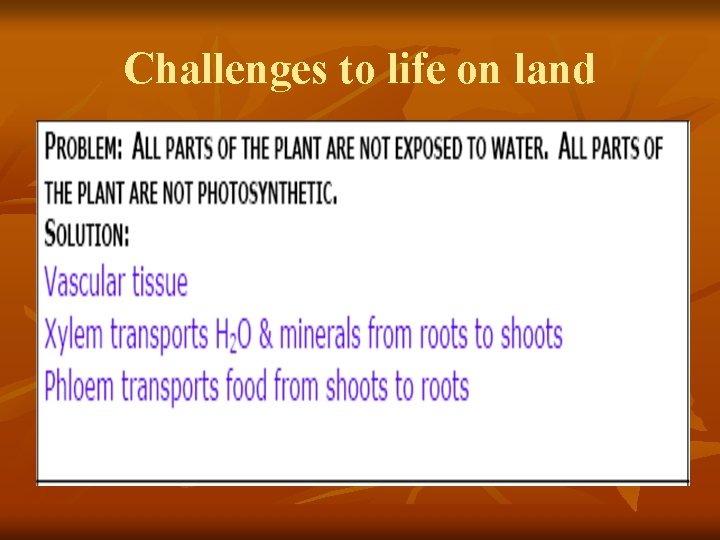
Challenges to life on land
Challenges to life on land
Challenges to life on land
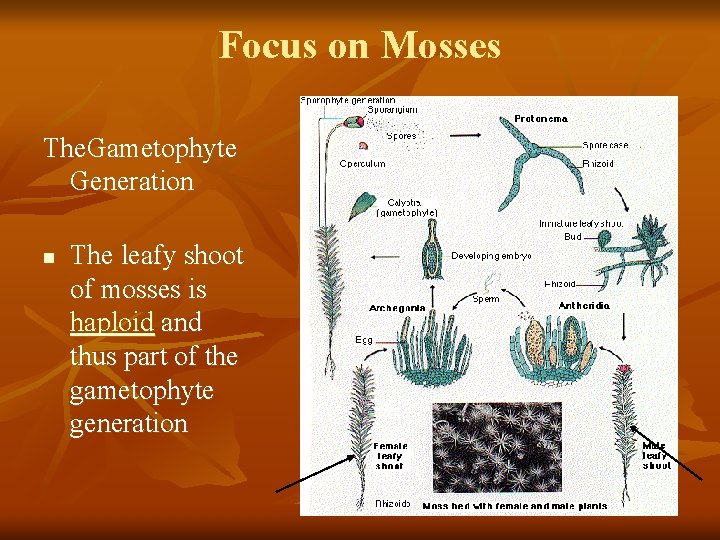
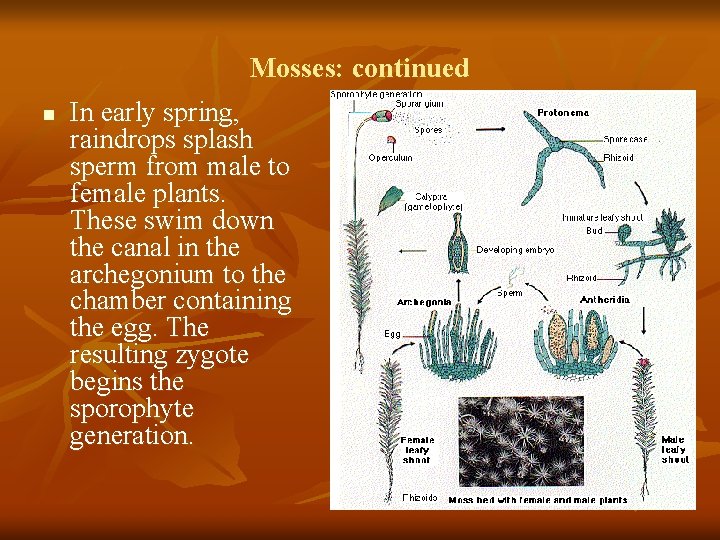
Focus on Mosses The. Gametophyte Generation n The leafy shoot of mosses is haploid and thus part of the gametophyte generation
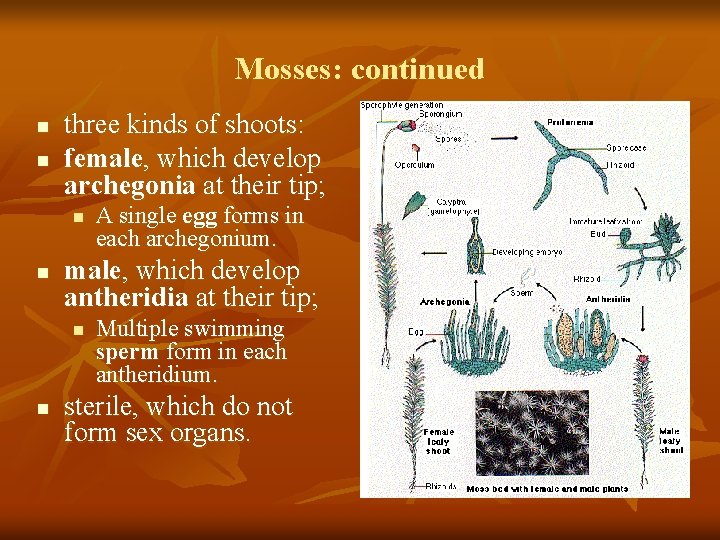
Mosses: continued n n three kinds of shoots: female, which develop archegonia at their tip; n n male, which develop antheridia at their tip; n n A single egg forms in each archegonium. Multiple swimming sperm form in each antheridium. sterile, which do not form sex organs.
Mosses: continued n In early spring, raindrops splash sperm from male to female plants. These swim down the canal in the archegonium to the chamber containing the egg. The resulting zygote begins the sporophyte generation.
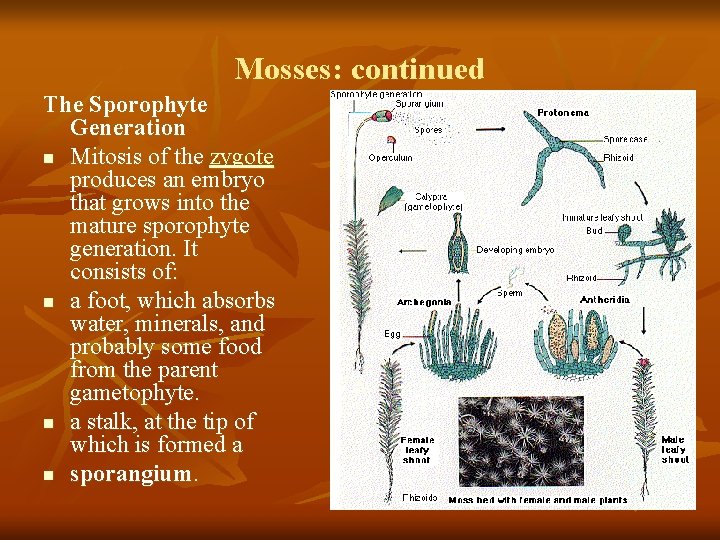
Mosses: continued The Sporophyte Generation n Mitosis of the zygote produces an embryo that grows into the mature sporophyte generation. It consists of: n a foot, which absorbs water, minerals, and probably some food from the parent gametophyte. n a stalk, at the tip of which is formed a n sporangium.
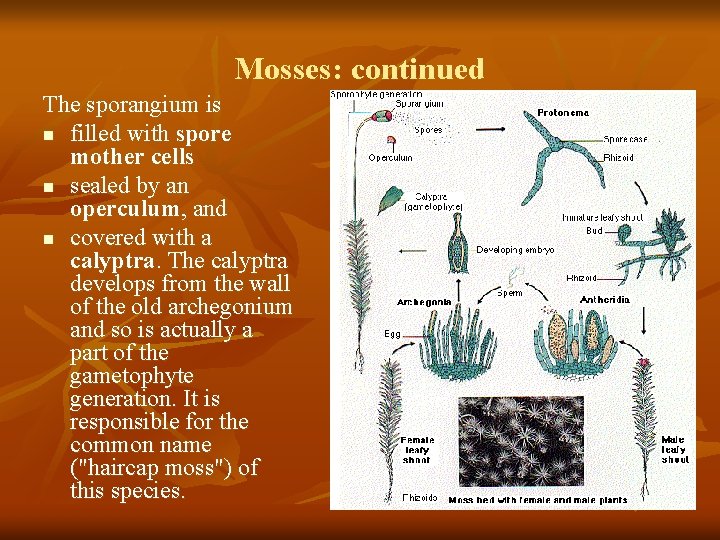
Mosses: continued The sporangium is n filled with spore mother cells n sealed by an operculum, and n covered with a calyptra. The calyptra develops from the wall of the old archegonium and so is actually a part of the gametophyte generation. It is responsible for the common name ("haircap moss") of this species.
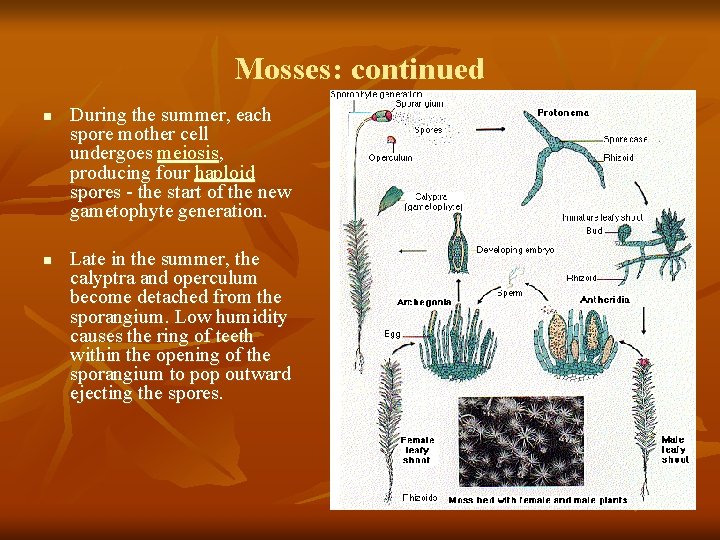
Mosses: continued n n During the summer, each spore mother cell undergoes meiosis, producing four haploid spores - the start of the new gametophyte generation. Late in the summer, the calyptra and operculum become detached from the sporangium. Low humidity causes the ring of teeth within the opening of the sporangium to pop outward ejecting the spores.
Mosses: summary n n These tiny spores are dispersed so effectively by the wind that many mosses are worldwide in their distribution. If a spore reaches a suitable habitat, it germinates to form a filament of cells called a protonema. Soon buds appear and develop into the mature leafy shoots. The gametophyte generation is responsible for sexual reproduction The sporophyte generation is responsible for dispersal.
n http: //www. sirinet. net/~jgjohnso/lifecyclesplan ts. html
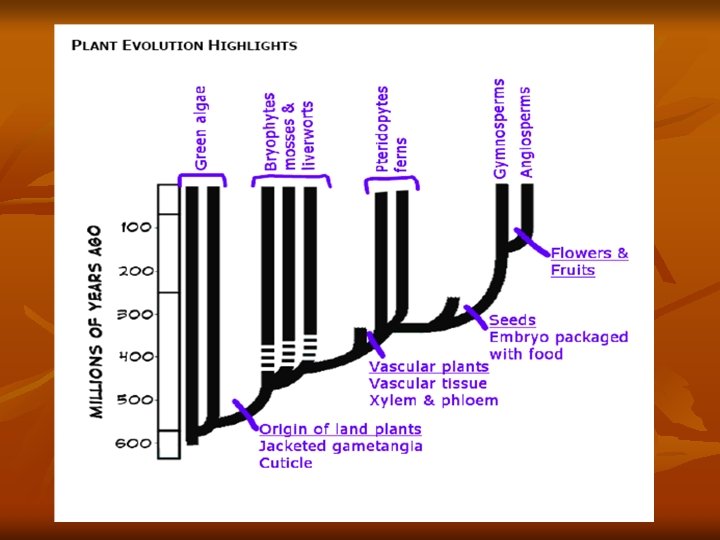
Classification n Non-vascular vs. vascular n What does vascular mean? Xylem= transports water from roots to rest of plant n Phloem= transports sugars and nutrients throughout plant n
Classification n Seedless vs Seeds n What is a seed? Plant embryo packaged with a store of food within a resistant coat n http: //www. sirinet. net/~jgjohnso/lifecyclesplants. html n
PLANT STATIONS n n I. Bryophytes II. Ferns III. Pine Life Cycle IV. Angiosperms