
Plant Diversity Objectives v v Learn the basic
Plant Diversity
Objectives v v Learn the basic characteristics of 10 plant phyla belonging to the following groups: the non-vascular plants (3 phyla), the seedless vascular plants (2 phyla), and the vascular seed plants (5 phyla) Describe the basic plant life cycle and details of the angiosperm life cycle Observe the body plans of liverworts, mosses, ferns, gymnosperms, and angiosperms Compare the morphology of monocots vs. dicots
Plant Evolution v What adaptations allow plants to live on land? – Vascular tissue – Seeds – Pollen – A waxy cuticle – Lignin – stomata
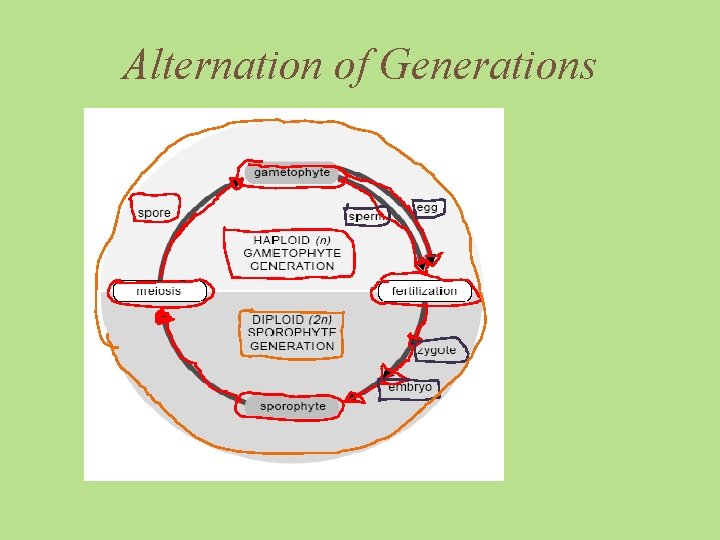
Alternation of Generations
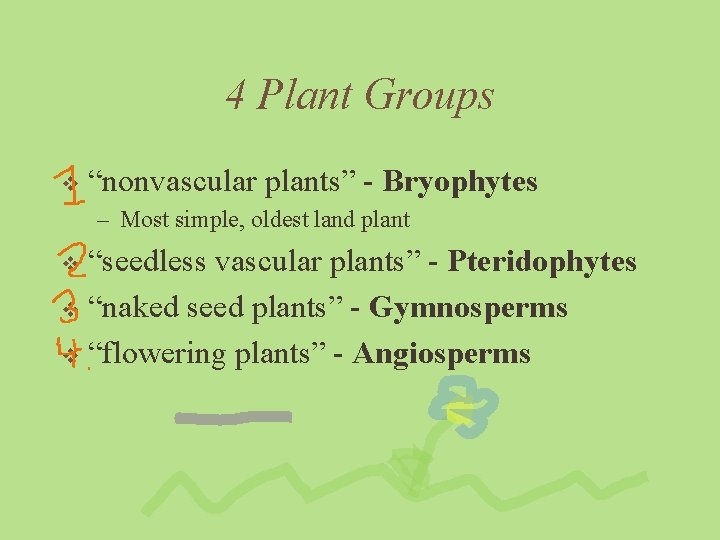
4 Plant Groups v “nonvascular plants” - Bryophytes – Most simple, oldest land plant “seedless vascular plants” - Pteridophytes v “naked seed plants” - Gymnosperms v “flowering plants” - Angiosperms v
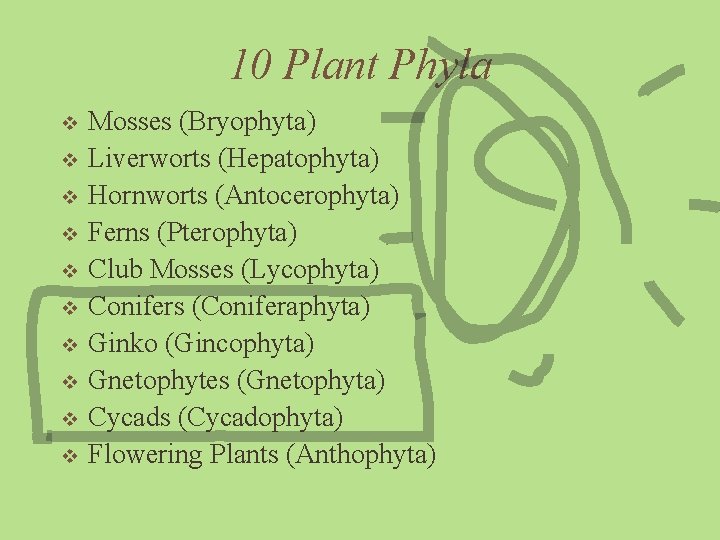
10 Plant Phyla v v v v v Mosses (Bryophyta) Liverworts (Hepatophyta) Hornworts (Antocerophyta) Ferns (Pterophyta) Club Mosses (Lycophyta) Conifers (Coniferaphyta) Ginko (Gincophyta) Gnetophytes (Gnetophyta) Cycads (Cycadophyta) Flowering Plants (Anthophyta)
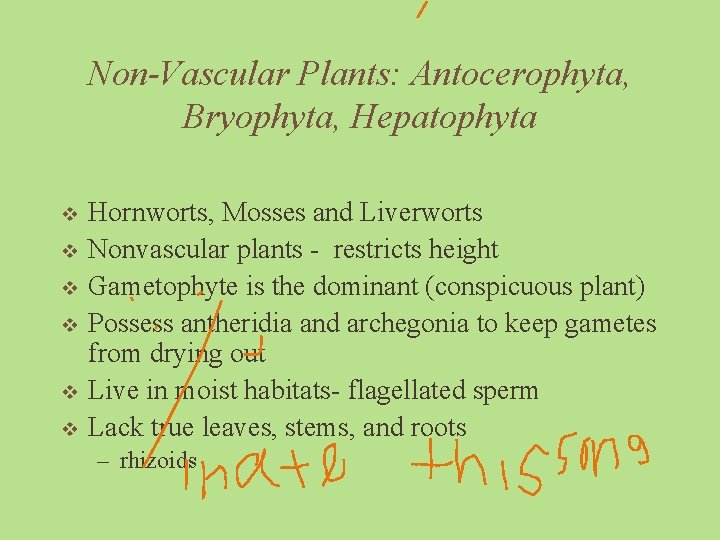
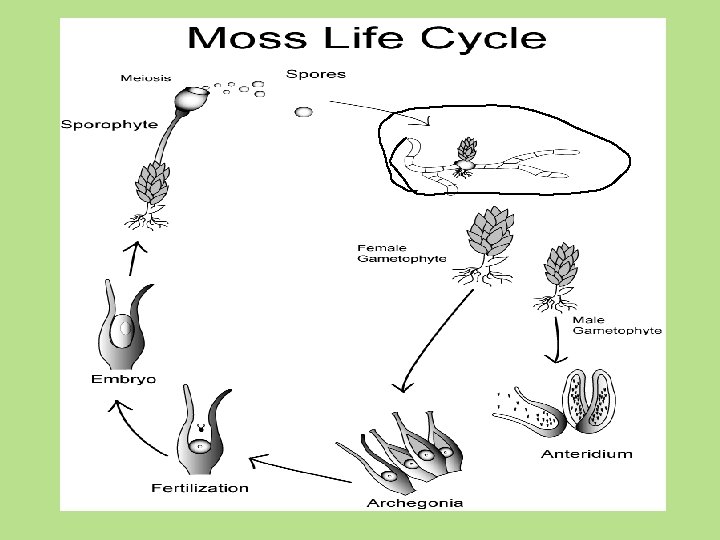
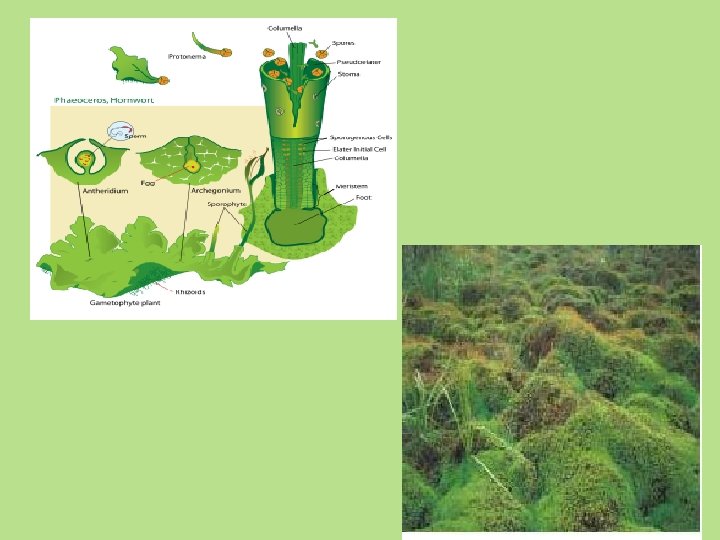
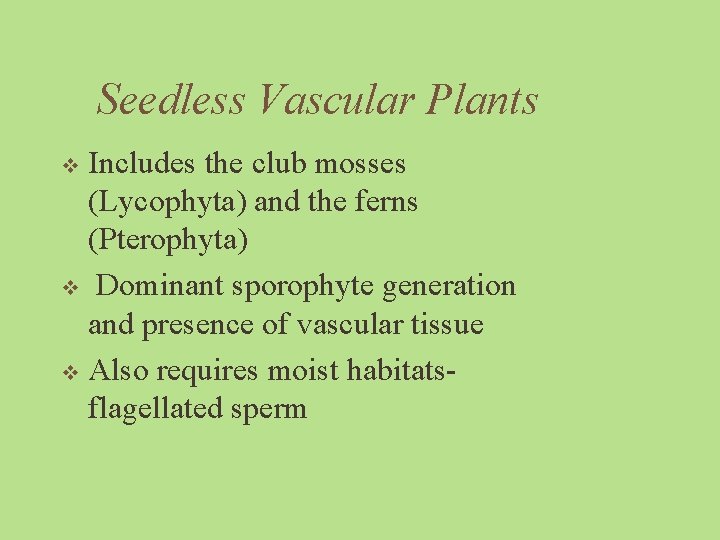
Non-Vascular Plants: Antocerophyta, Bryophyta, Hepatophyta v v v Hornworts, Mosses and Liverworts Nonvascular plants - restricts height Gametophyte is the dominant (conspicuous plant) Possess antheridia and archegonia to keep gametes from drying out Live in moist habitats- flagellated sperm Lack true leaves, stems, and roots – rhizoids
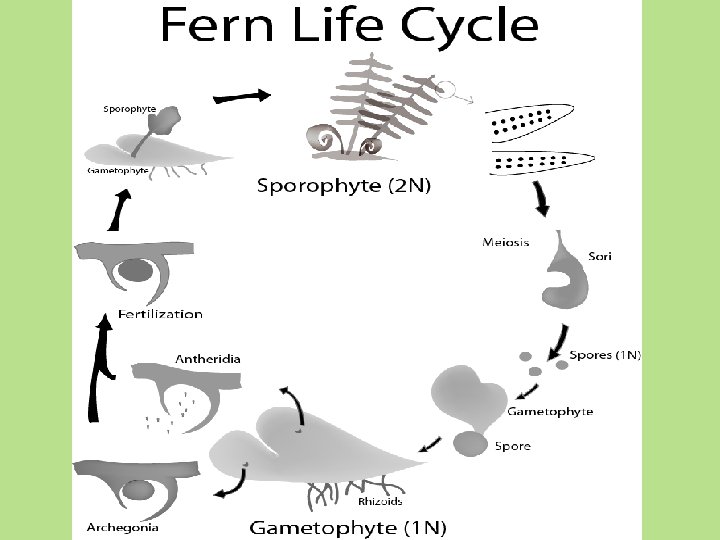
Seedless Vascular Plants Includes the club mosses (Lycophyta) and the ferns (Pterophyta) v Dominant sporophyte generation and presence of vascular tissue v Also requires moist habitatsflagellated sperm v
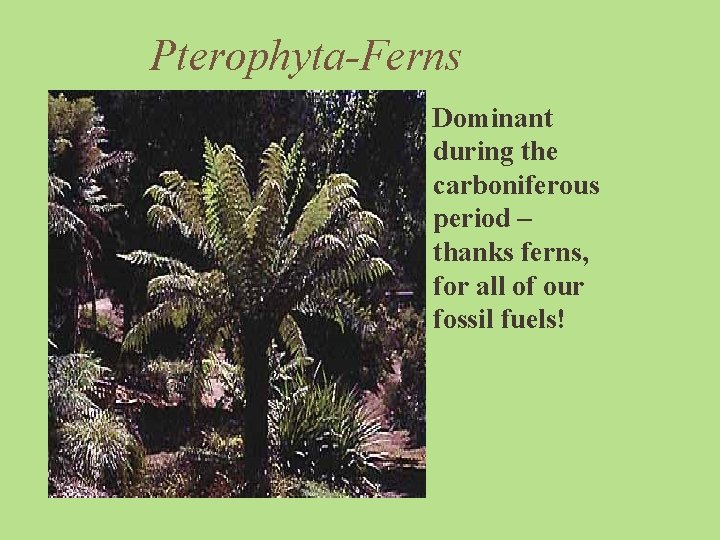
Pterophyta-Ferns Dominant during the carboniferous period – thanks ferns, for all of our fossil fuels!
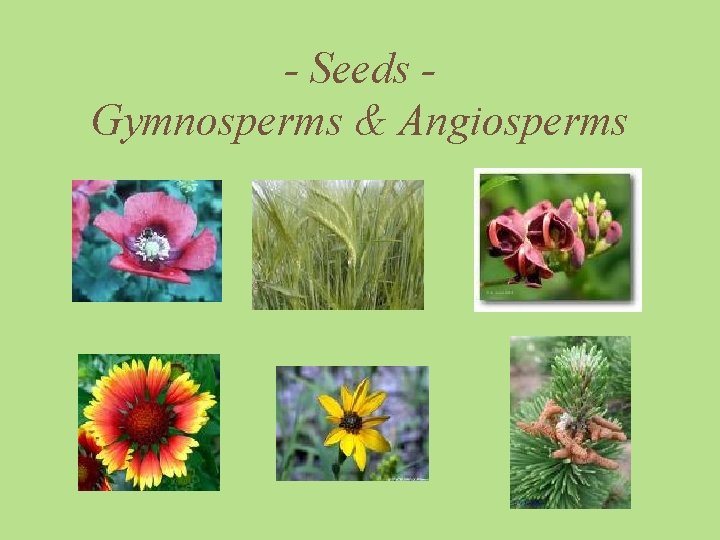
- Seeds Gymnosperms & Angiosperms
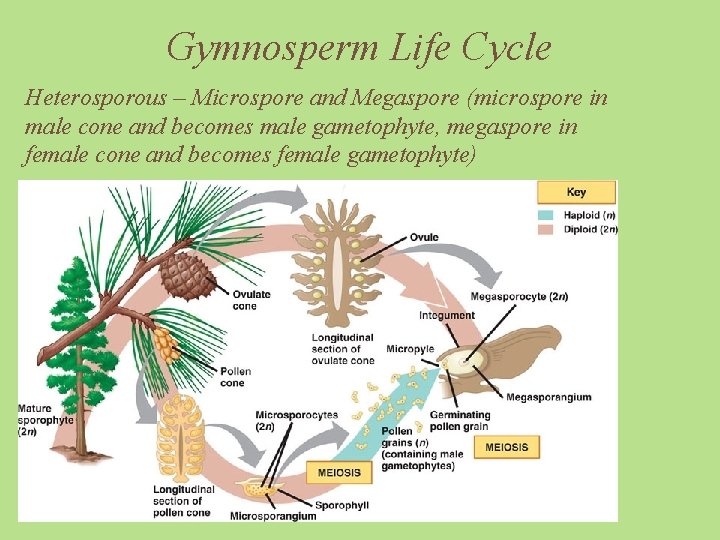
Gymnosperm Life Cycle Heterosporous – Microspore and Megaspore (microspore in male cone and becomes male gametophyte, megaspore in female cone and becomes female gametophyte)
Gymnosperms: Coniferophyta, the Cycadophyta, Gnetophyta, and the Ginkgophyta Reproduce via Cones (equivalent to flowers) v The name means “naked seeds” – no fruits v
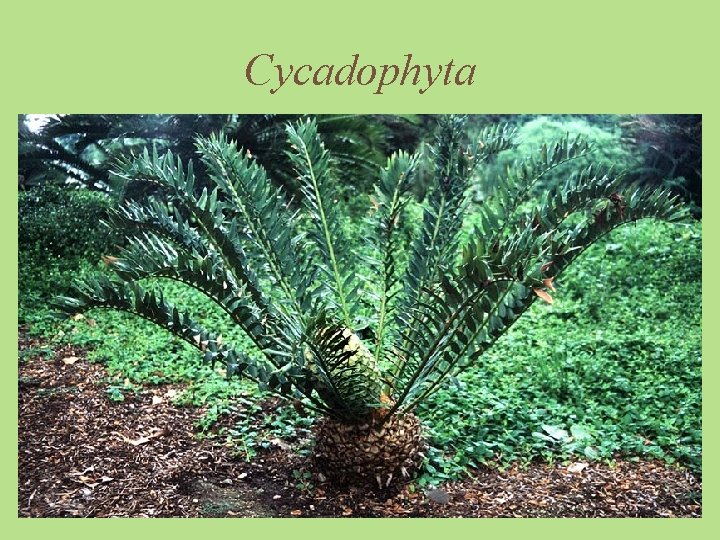
Cycadophyta
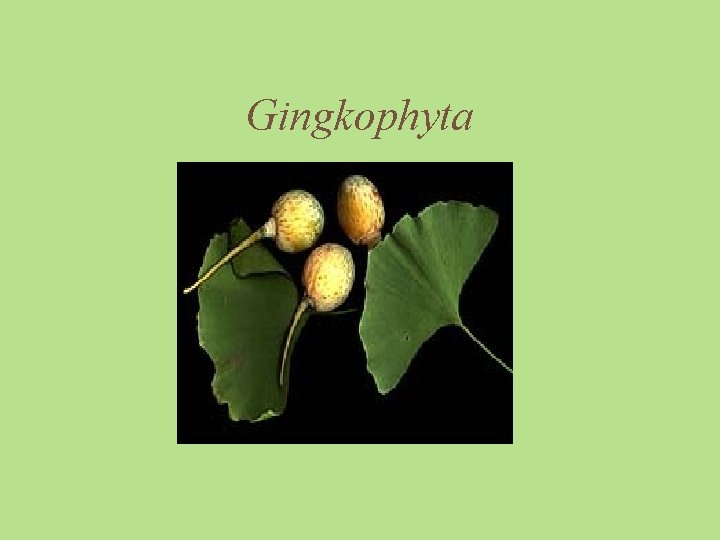
Gingkophyta
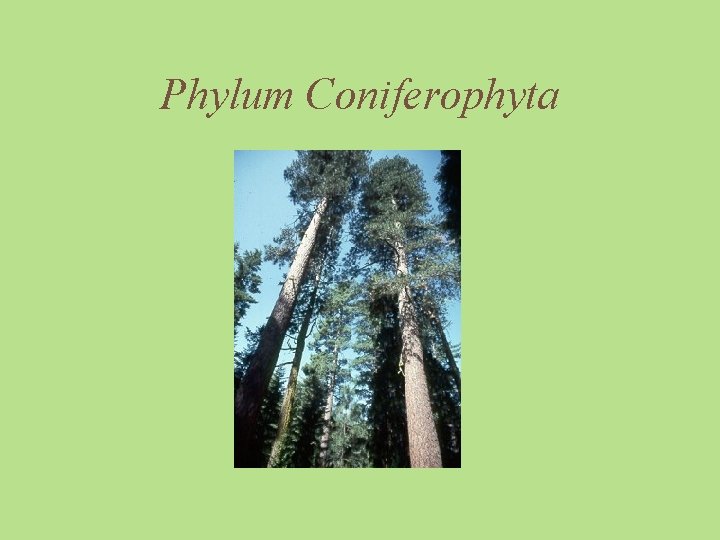
Phylum Coniferophyta
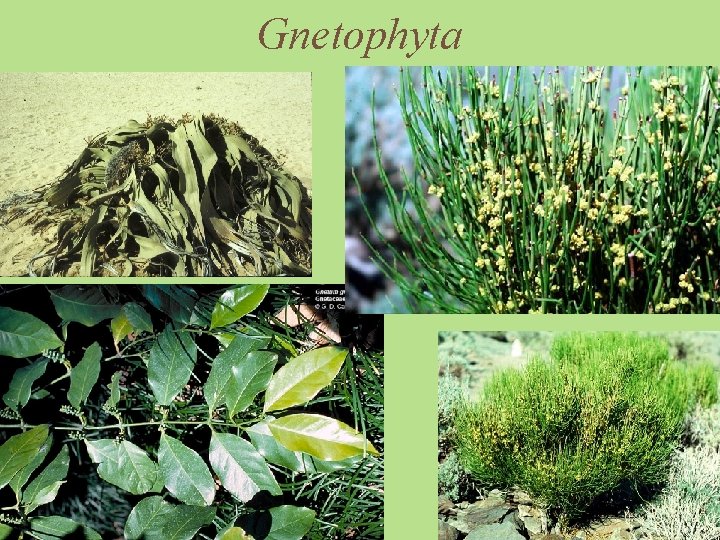
Gnetophyta
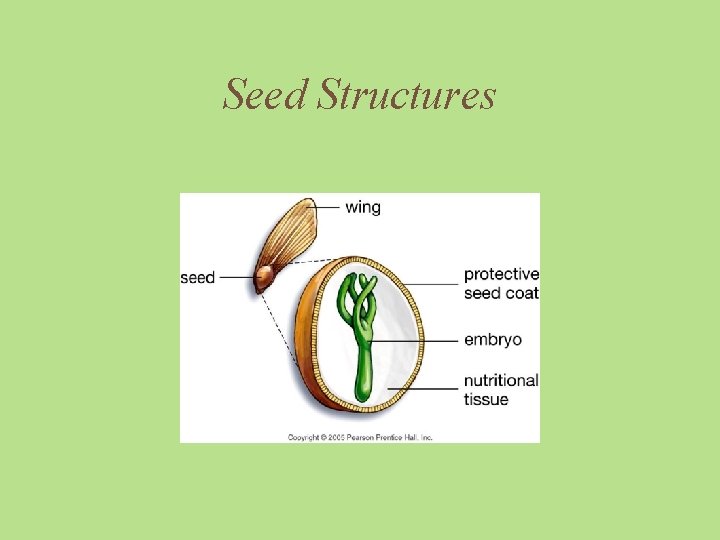
Seed Structures
Phylum Anthophyta (Angiosperms) Flowering plants v Most diversified and abundant plant group (more than 230, 000 species) – good for humans! v Have flowers used for reproduction v Produce their seeds enclosed in a fruit v Includes both herbaceous and woody plants v
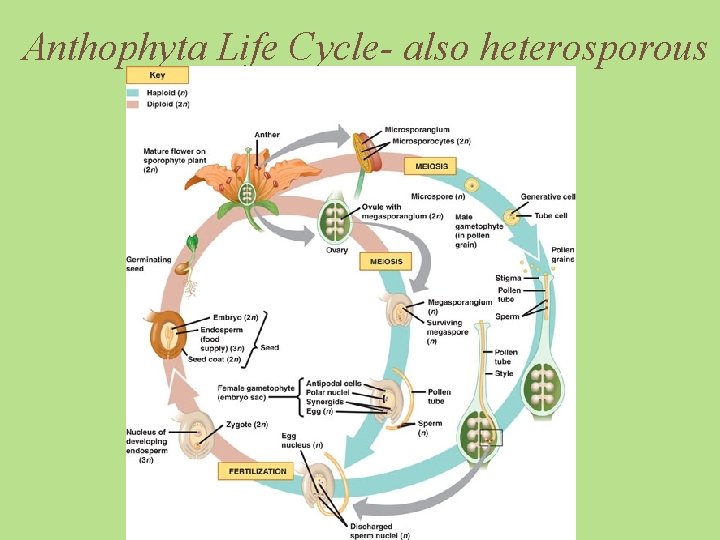
Anthophyta Life Cycle- also heterosporous
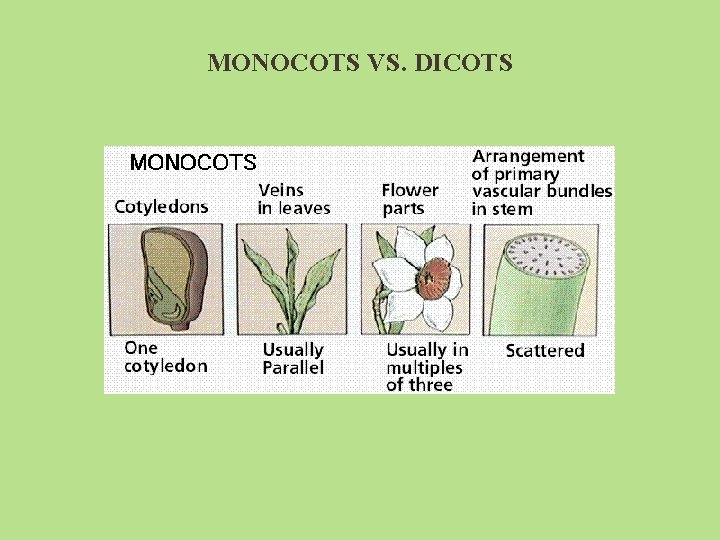
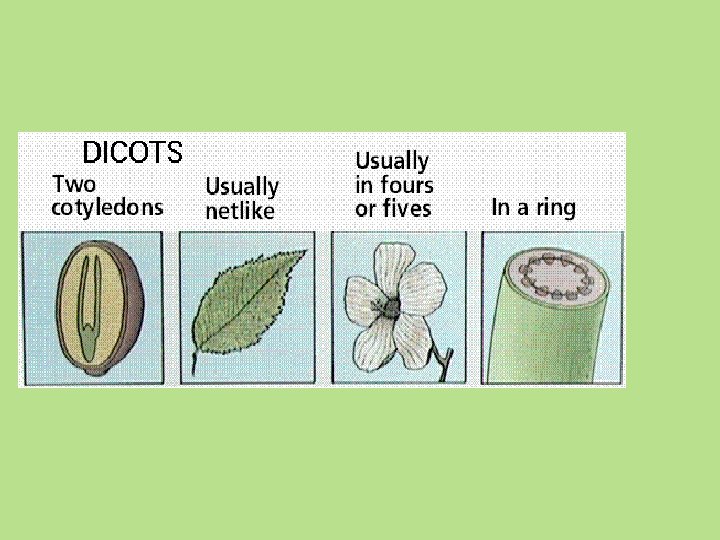
MONOCOTS VS. DICOTS
- Slides: 24