
Plant Diseases Presented by Terry Ferriss Ph D

Plant Diseases Presented by Terry Ferriss, Ph. D University of Wisconsin—River Falls
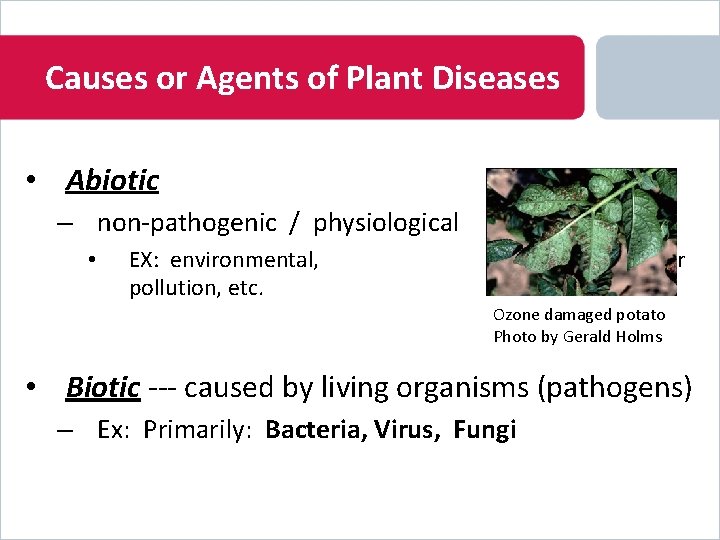
Causes or Agents of Plant Diseases • Abiotic – non-pathogenic / physiological • EX: environmental, pollution, etc. cultural, air Ozone damaged potato Photo by Gerald Holms • Biotic --- caused by living organisms (pathogens) – Ex: Primarily: Bacteria, Virus, Fungi
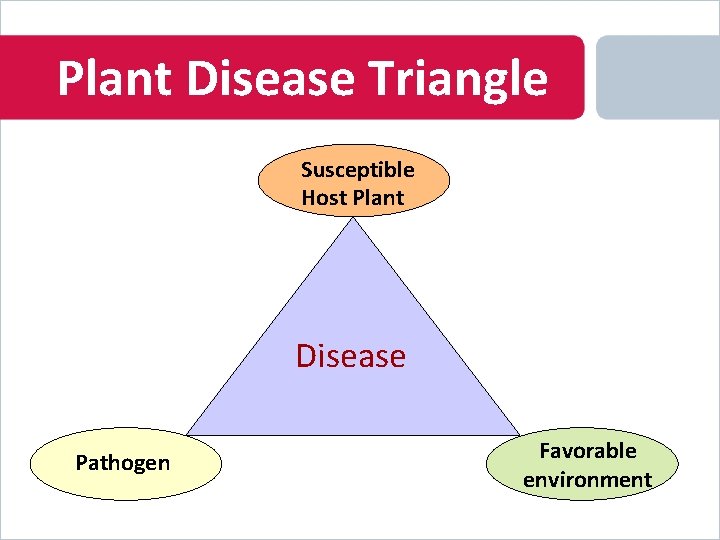
Plant Disease Triangle Susceptible Host Plant Disease Pathogen Favorable environment
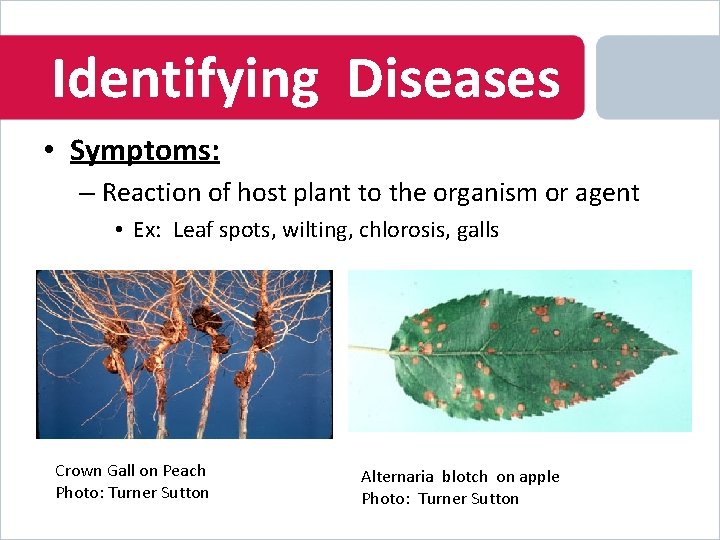
Identifying Diseases • Symptoms: – Reaction of host plant to the organism or agent • Ex: Leaf spots, wilting, chlorosis, galls Crown Gall on Peach Photo: Turner Sutton Alternaria blotch on apple Photo: Turner Sutton
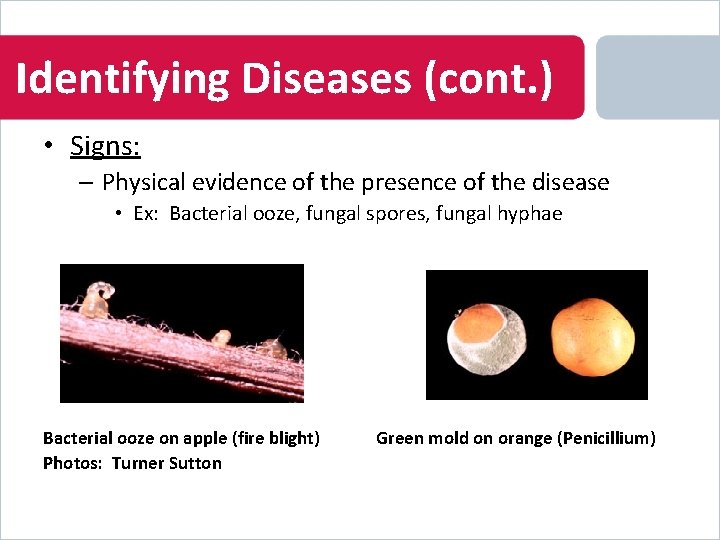
Identifying Diseases (cont. ) • Signs: – Physical evidence of the presence of the disease • Ex: Bacterial ooze, fungal spores, fungal hyphae Bacterial ooze on apple (fire blight) Photos: Turner Sutton Green mold on orange (Penicillium)
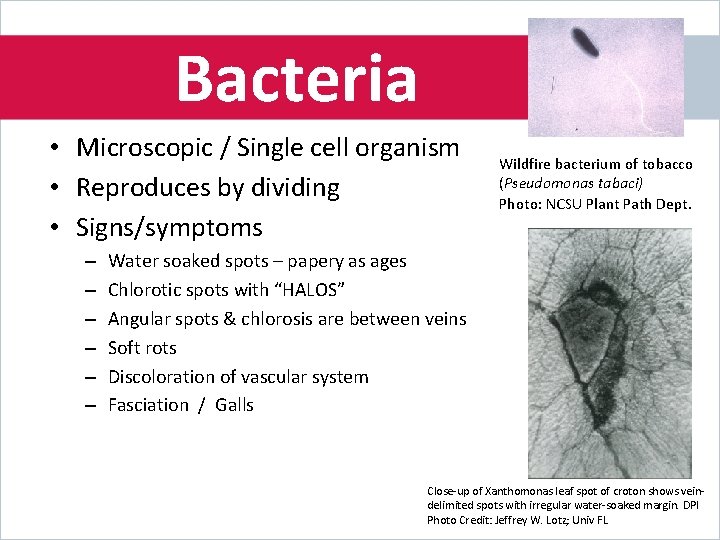
Bacteria • Microscopic / Single cell organism • Reproduces by dividing • Signs/symptoms – – – Wildfire bacterium of tobacco (Pseudomonas tabaci) Photo: NCSU Plant Path Dept. Water soaked spots – papery as ages Chlorotic spots with “HALOS” Angular spots & chlorosis are between veins Soft rots Discoloration of vascular system Fasciation / Galls Close-up of Xanthomonas leaf spot of croton shows veindelimited spots with irregular water-soaked margin. DPI Photo Credit: Jeffrey W. Lotz; Univ FL
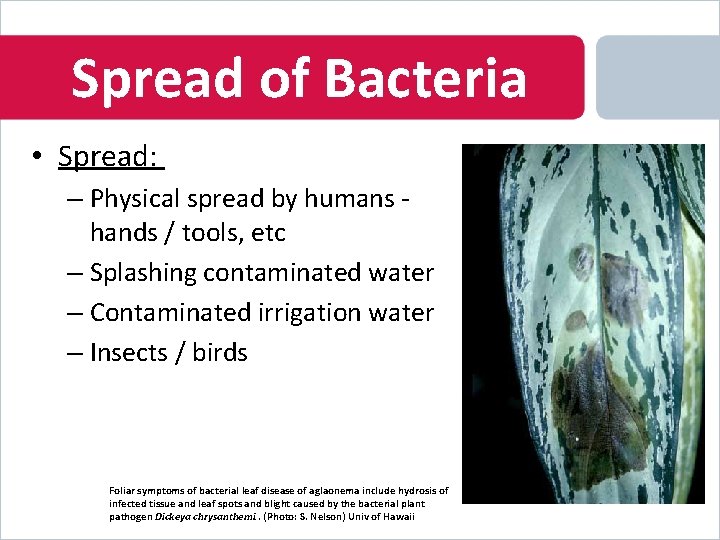
Spread of Bacteria • Spread: – Physical spread by humans hands / tools, etc – Splashing contaminated water – Contaminated irrigation water – Insects / birds Foliar symptoms of bacterial leaf disease of aglaonema include hydrosis of infected tissue and leaf spots and blight caused by the bacterial plant pathogen Dickeya chrysanthemi. . (Photo: S. Nelson) Univ of Hawaii
Control of Bacteria “DIFFICULT” Therefore Prevention is BEST Sanitation Rogue infected plants Insect control Clean stock/ seed Common Bacteria: Xanthomonas; Pseudomonas (Ralstonia) Erwinia
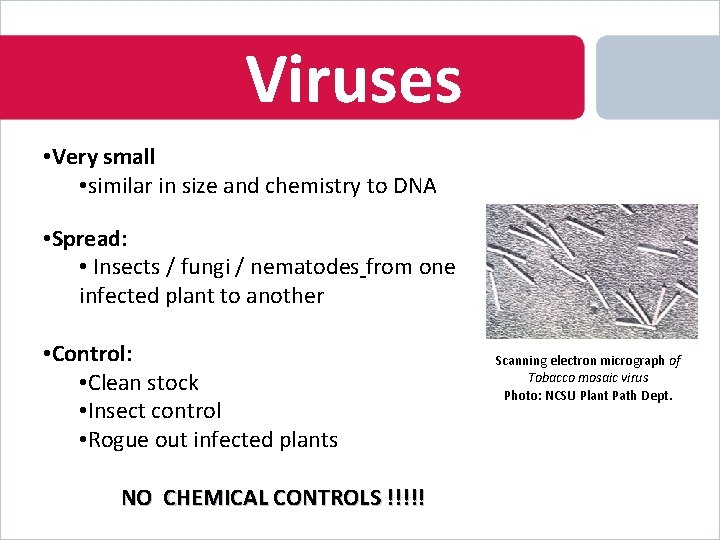
Viruses • Very small • similar in size and chemistry to DNA • Spread: • Insects / fungi / nematodes from one infected plant to another • Control: • Clean stock • Insect control • Rogue out infected plants NO CHEMICAL CONTROLS !!!!! Scanning electron micrograph of Tobacco mosaic virus Photo: NCSU Plant Path Dept.
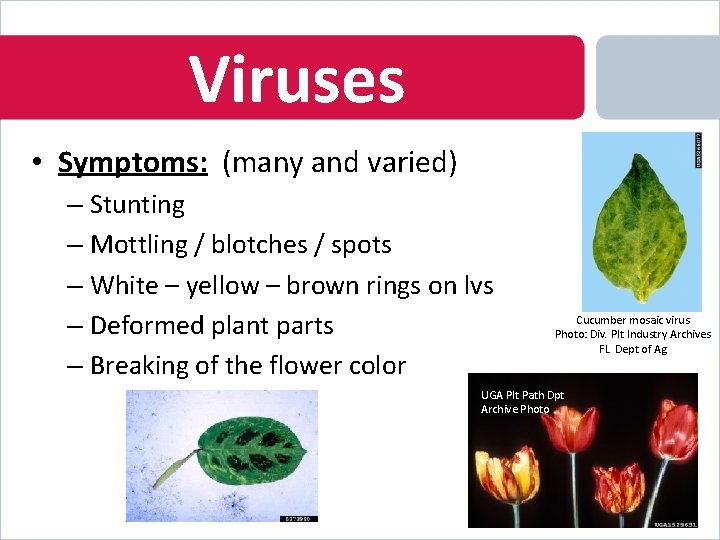
Viruses • Symptoms: (many and varied) – Stunting – Mottling / blotches / spots – White – yellow – brown rings on lvs – Deformed plant parts – Breaking of the flower color Cucumber mosaic virus Photo: Div. Plt Industry Archives FL Dept of Ag UGA Plt Path Dpt Archive Photo
Virus Notable Examples: TSWV: Tomato spotted wilt virus INSV: Impatiens necrotic spot virus TMV: Tobacco mosaic virus TMV can be transmitted via cigarettes Ring spot virus on tropical foliage plants
Fungal Diseases 1 = Fungus 2+ = fungi Hyphae = single thread Mycelium = mass of hyphae Spores = fruiting or reproductive structures asexual and sexual spores possible
Root Rot Diseases Water Mold Fungi Pythium Phytophora Characteristics: • soil born • Favored by cool, wet soil • Encouraged by: low O 2, hi NH 4+, hi SS • Low O 2 root exudate = stimulates spore germination Non-water Mold Fungi Rhizoctonia : drier, brown rot intermediate moisture Fusarium: Dk brown - black favored by dry-interm. H 2 O collapsed roots, stunted plt Thielaviopsis: drier, BLACK rot likes hi p. H (6. 5 +) Stunted plt; excessive lf drop Older plts / pansy / poinsettia
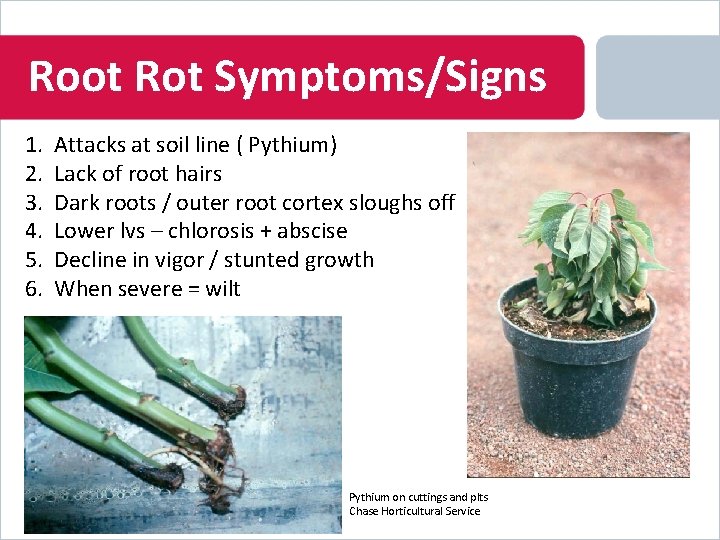
Root Rot Symptoms/Signs 1. 2. 3. 4. 5. 6. Attacks at soil line ( Pythium) Lack of root hairs Dark roots / outer root cortex sloughs off Lower lvs – chlorosis + abscise Decline in vigor / stunted growth When severe = wilt Pythium on cuttings and plts Chase Horticultural Service
Control of root rots 1. Sanitation 2. Well aerated medium 3. Avoid excessive moisture in medium 4. Biological: Protective fungi (ex: Trichoderma sp in Root. Shield / Plant. Shield & others) 5. Chemical: Water molds: Subdue; Benlate, Aliette, etc Non-water molds: Truban, Chipco, Medallion, Daconil, Cleary 3336, Heritage, etc
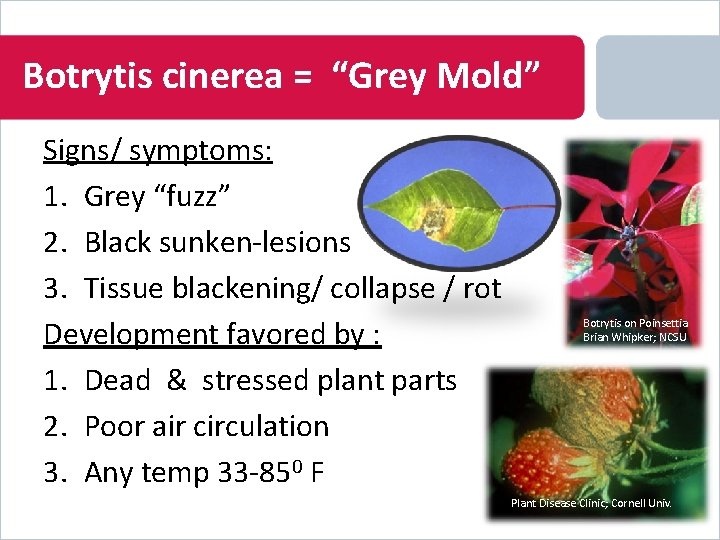
Botrytis cinerea = “Grey Mold” Signs/ symptoms: 1. Grey “fuzz” 2. Black sunken-lesions 3. Tissue blackening/ collapse / rot Development favored by : 1. Dead & stressed plant parts 2. Poor air circulation 3. Any temp 33 -850 F Botrytis on Poinsettia Brian Whipker; NCSU Plant Disease Clinic; Cornell Univ.
Controlling Botrytis 1. Air circulation 2. Watch stressed plants 3. Chemical : Termil (fumigant) Chipco , Daconil, Medallion, etc
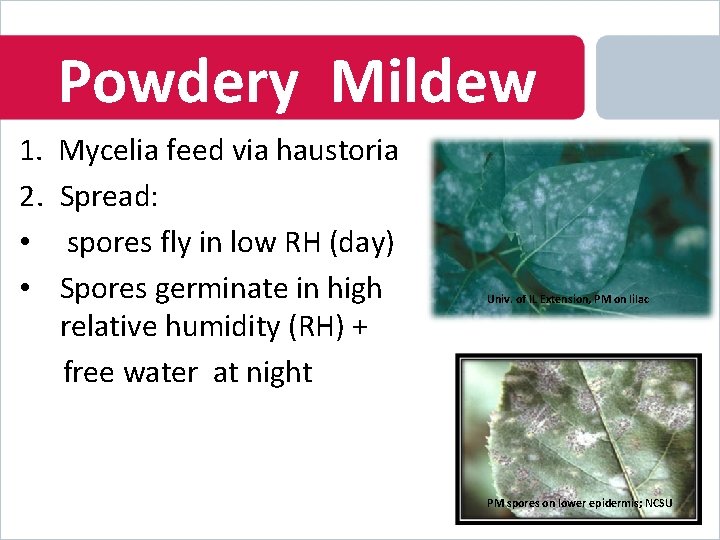
Powdery Mildew 1. 2. • • Mycelia feed via haustoria Spread: spores fly in low RH (day) Spores germinate in high relative humidity (RH) + free water at night Univ. of IL Extension, PM on lilac PM spores on lower epidermis; NCSU
Controlling Powdery Mildew 1. Reduce RH 2. Sanitation 3. Increase air circulation 4. Biological: Horticultural oil potassium bicarbonate (baking soda) Neem oil Bacillis subtilis sulfur 5. Chemical: Copper based fungicides, also: Banner, Eagle, Heritage, Pipron, Strike Terraguard, Compass O
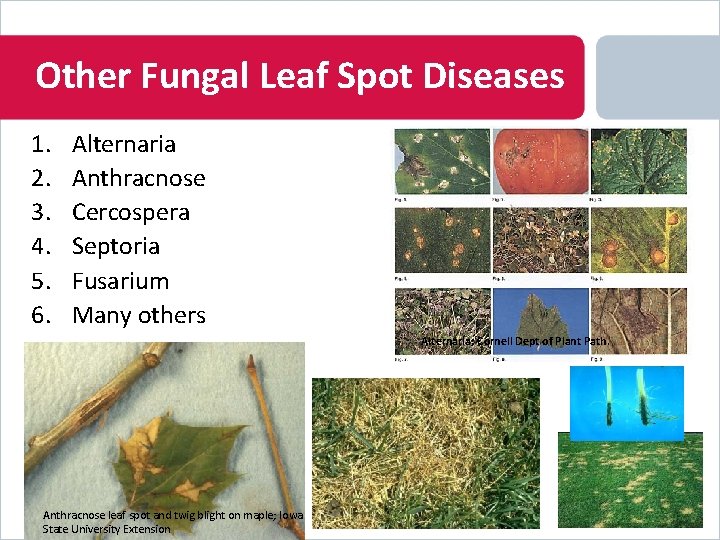
Other Fungal Leaf Spot Diseases 1. 2. 3. 4. 5. 6. Alternaria Anthracnose Cercospera Septoria Fusarium Many others Alternaria; Cornell Dept of Plant Path. Fusarium : UCDavis Anthracnose leaf spot and twig blight on maple; Iowa State University Extension
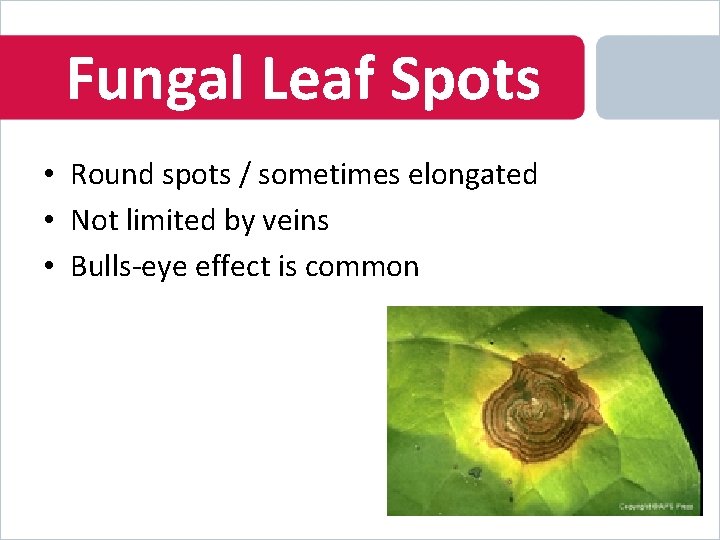
Fungal Leaf Spots • Round spots / sometimes elongated • Not limited by veins • Bulls-eye effect is common

University of Wisconsin—River Falls Thank you Terry Ferriss, Ph. D
- Slides: 22